India is a cheap escape from winter. But it’s much more than that…the attraction to a country that is so large and so diverse physically, economically and spiritually is powerful. To those of us who are attracted, India can be addictive.
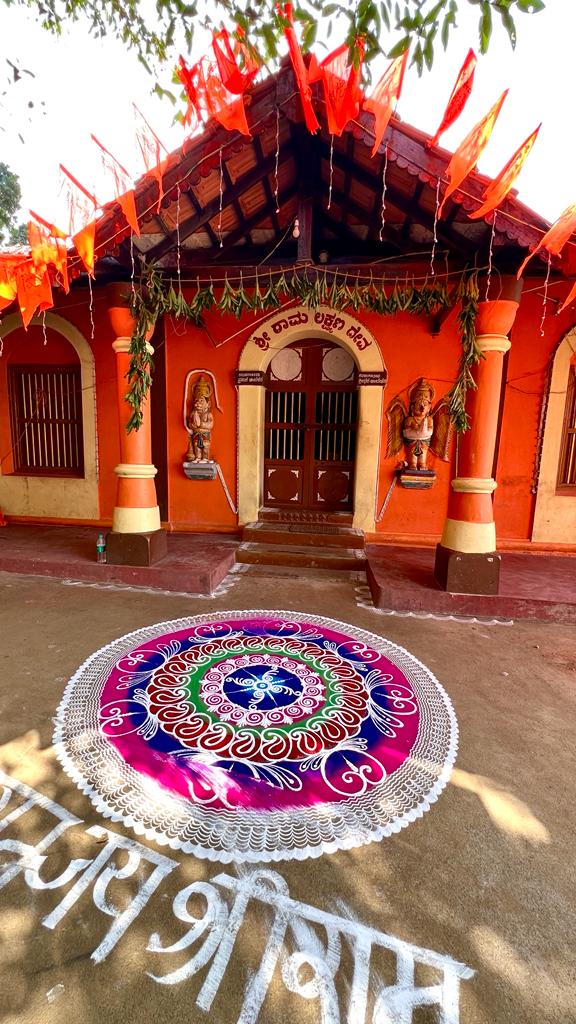
The other day we chose not to go into town because the Hindus were celebrating the consecration of the new Ram Mandir or temple built on a long-disputed site between Hindus and Moslems, in Ayodhya, northern India. You may have already heard about this since the national media gave it quite prominent coverage.
The Hindus believe Ayodhya is the birthplace of Ram, a major Hindu deity, and considered a Supreme Being. After Mogul rulers destroyed an earlier Hindu temple back in 1528, they built Babri Mosque on the same site. In 1858 waves of communal rioting for the site began, culminating in 1992 when Hindu nationalists destroyed the mosque. Then in 2002, 58 Hindu activists returning from Ayodhya were burned to death when their train was set on fire in the state of Gujarat. Days of brutal violence were unleashed that left more than 1,000 people dead, the majority of them Muslims. Narendra Modi, chief minister of Gujarat at the time, was accused of complicity by allowing the Hindu groups to carry out the revenge and turning a blind eye to police involvement. Modi denies any wrongdoing.
All too nationalistic for our liking. And how did the country’s 200 million Muslims feel? Not to mention the Buddhists, and Christians that also inhabit India? How can Modi’s slogan ‘1.4 Billion One Dream’ apply to a subcontinent as diverse as India.
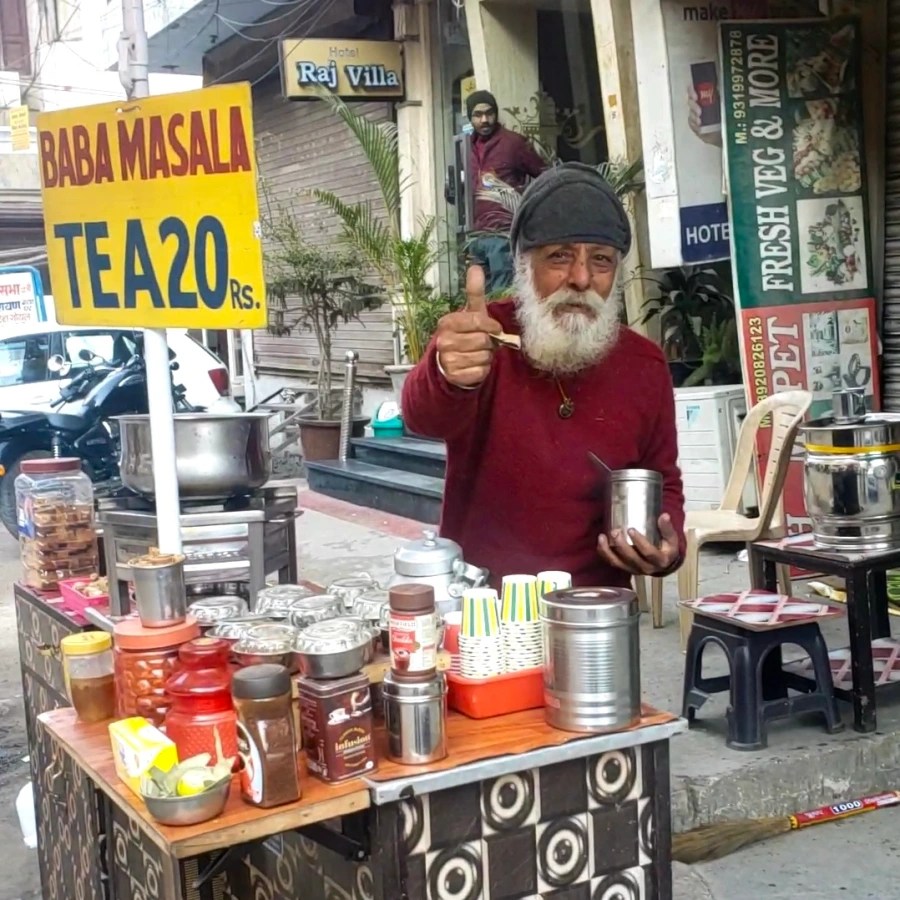
The following day, we were in the local chai shop when we overheard an animated conversation between a distinguished elderly gentlemen and young man.
Both agreed that Modi’s Ram is quite different from Mahatma Gandhi’s Ram. The young man accused the BJP of mixing religion and politics and exploiting the wave of religious sentiments for maximum electoral gains. The BJP has harnessed Hindu people’s devotion towards Ram and weaponized it,” The older man agreed and quoted Gandhi saying, by Rama Rajya (Kingdom) he did not mean a Hindu state. What he meant was the rule of God, where the weakest would secure justice.” The young man continued with: “For Gandhi, Ram was not an angry god, but a symbol of benevolent divine power.”
Gerard and I are disturbed by the drift globally toward extremism on the right, as personified by Trump, Putin, Netanyahu,. Orban and Modi. We are living in a strange time.
Gerard and I are disturbed by the drift globally toward extremism on the right, as personified by Trump, Putin, Netanyahu, Orban and Modi. We are living in a strange time.
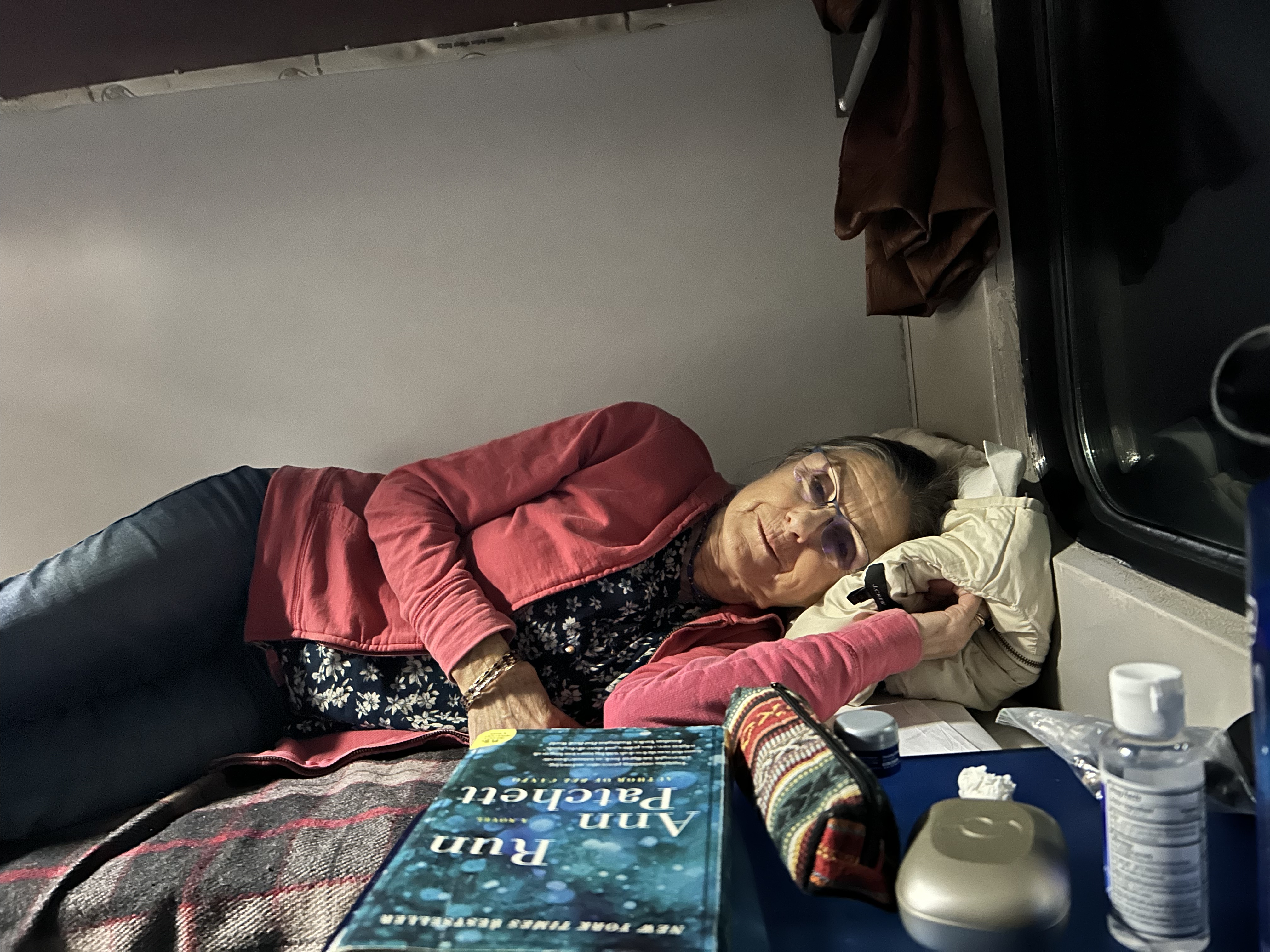
After a rewarding ten-day meditation retreat at a small ashram in the country outside Bangalore, a taxi took us the two hour drive to Bangalore railway station where we caught an overnight train direct to Gokarna. We arrived at 7 am quite refreshed from an unusually good night’s sleep.
Gerard was looking forward to the train ride, his preferred mode of transportation ,and it didn’t let him down. The train left on time, and even I was impressed by the cleanliness and comfort of the Panchaganga Express. As usual our 2AC compartment was chilly but quiet: no snoring sleepers or wailing children. Marina, our English friend and already in Gokarna, had messaged us saying she thought her partner’s sister, Anita, was on our train and included a photo. Sure enough, we woke to Anita peering around the compartment curtain, and though we hadn’t met before she was easy to recognize from her photo. Anita’s an interesting woman, part Indian/part English, living in CA and married to an Algerian. She speaks seven languages fluently and has been a United Airline hostess for many years. The taxi ride to our guesthouse flew by as we got to know each other. And I was very happy to see Marina, our London friend, again.
We reserved the same room as last year. The guest house has only a few patrons and two are longterm regulars. An interesting addition is an Indian family with two small children who has set up housekeeping in a room at the top of the stairs. The father is a masseuse who we pass on the way to the beach. “Oil massage today, Madam?”
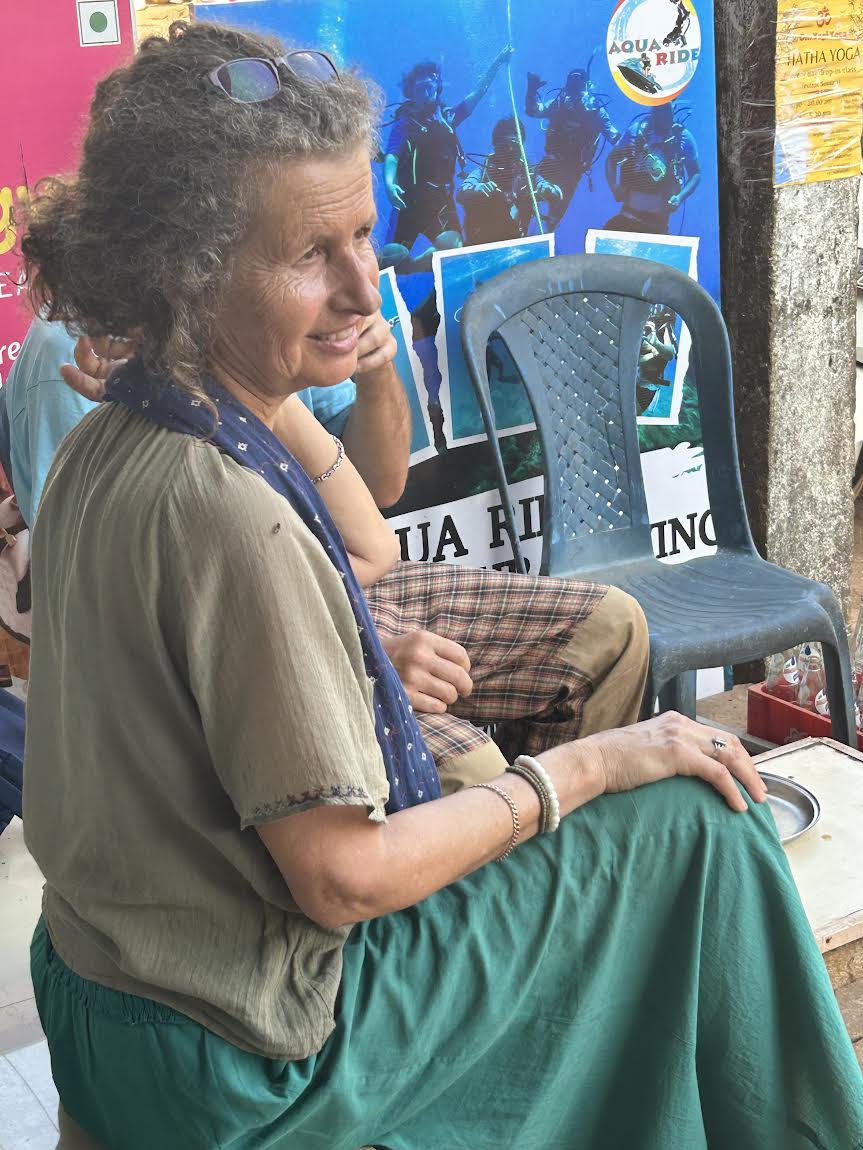
Dropping of our cases, we went straight to our breakfast stall down the road. The young owner greeted us warmly and immediately served up chai and idli. His sister makes the best samba we’ve ever had (a spicy vegetable stew with chickpeas) and coconut chutney eaten with steamed rice patties. An idli plate is a substantial South Indian breakfast. Since opening last year, the boy’s business has grown and he’s able to make enough to shut up shop at 10 am and pends the rest of the day preparing food for the following day. Unfortunately, his small premise holds only a couple of tables, barely enough to support the influx of customers. This gives us the opportunity to meet a variety of people. Today a portly Swedish gentleman shared our table. He used to be a vegetarian chef, now retired. He says Sweden is perhaps 20% vegetarian. Living almost in the center of Stockholm, he has his housing paid for by the government because he has no bank account. Of the $900 he gets in social security each month he manages to save $300. In Sweden, it doesn’t pay to save for retirement!
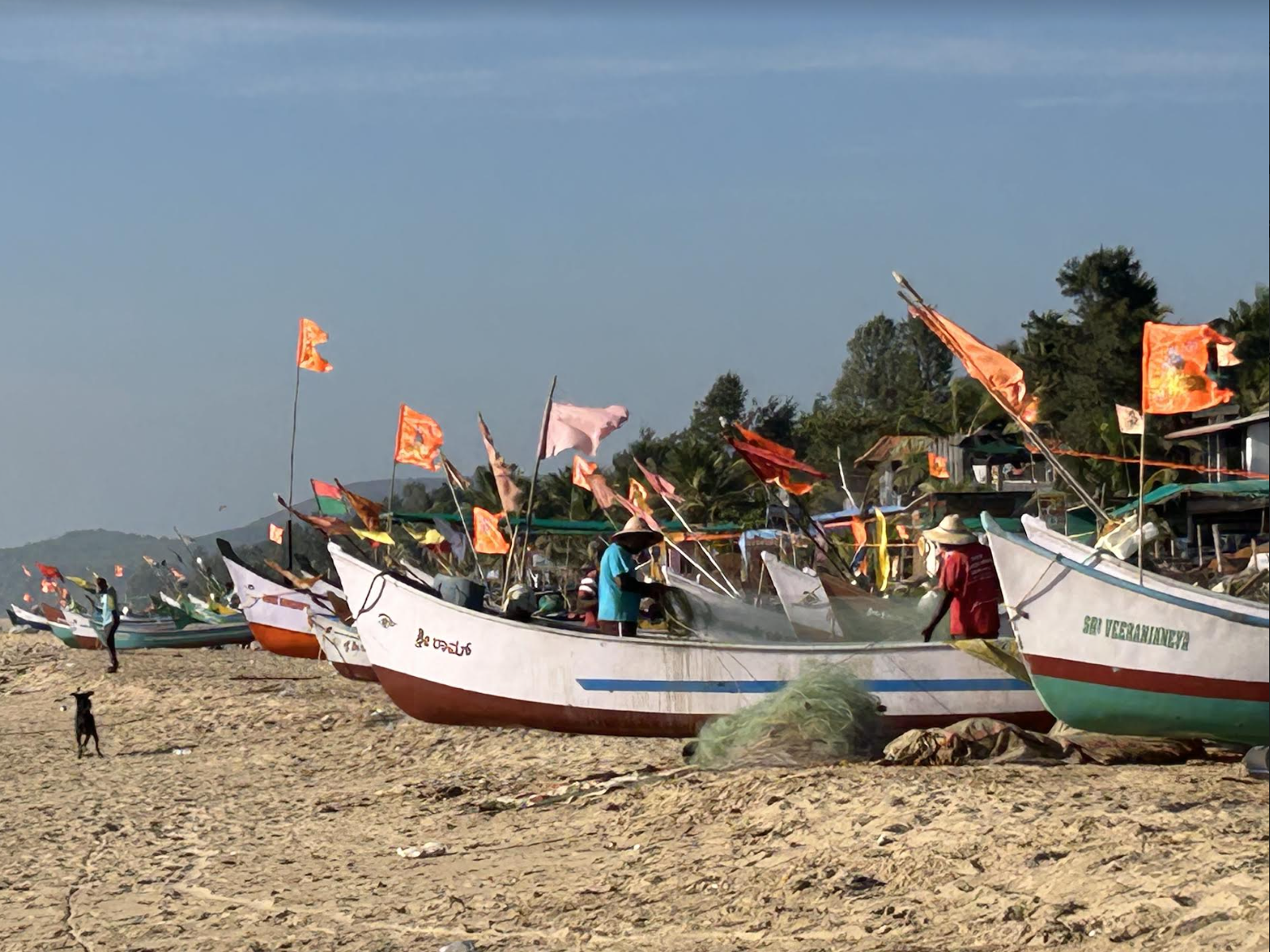
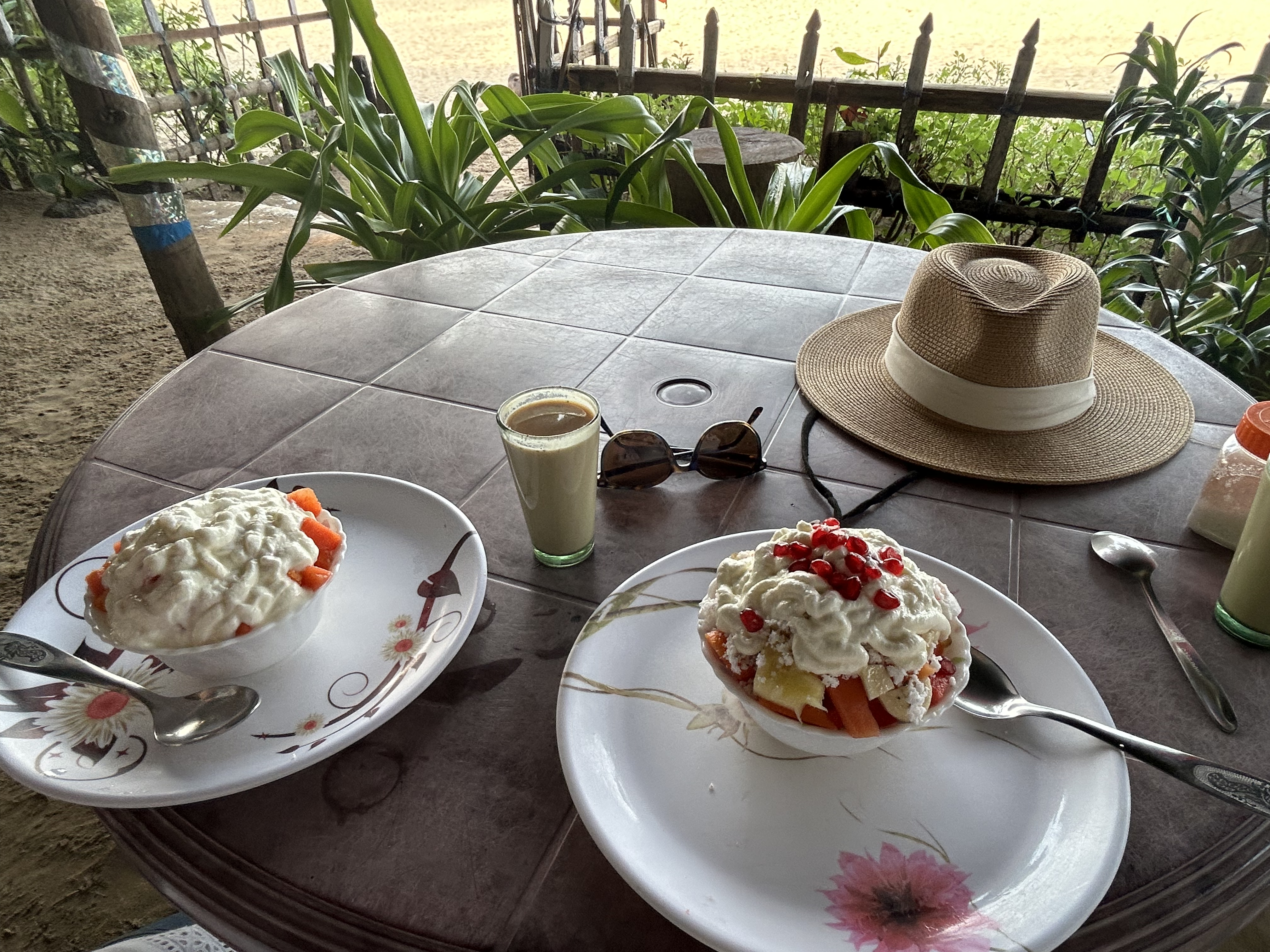
We hustled back to the room, put on our swimsuits and went straight to the beach. At a quick glance, the beach had hardly changed since last year. The sea was typically warm and clear. I swam until my hands wrinkled. At our favorite beachside cafe, Shankar and his wife gave us another friendly greeting. Curd and papaya followed by a glass of strong masala chai.
Back in our dusty room, Gerard spent a couple of hours scrubbing the place down, hung the washing line, pinned the mosquito net across the window, and then we unpacked. Now the room feels like home.
Except for the wild life! We’re surrounded by birds, animals and insects. I love hearing birds chirping in the early morning (thankful my reverse slope hearing loss doesn’t extend to high frequency sounds), until their song is overpowered by the cawing of a raucous craven and the shriek of the chipmunk. How can such a small animal make such a piercing noise? And of course there’s the dogs. This time, below our room a Labrador puppy is an addition to the guesthouse dogs. Easy to train, says Gerard. But nobody does anything about this puppy’s shrill and constant barking – particularly as we’re about to go off to sleep. And then the neighboring dogs, part domestic, part wild arrive and add their howl. Dogs in India as everywhere are highly territorial. In the middle of the night there can be an outburst of ten or more dogs barking at once. A benefit of hearing loss is I don’t usually hear the dogs.
The day after we arrived we made the 30 minute excursion into town for fruit, rice cakes and peanut butter. With the exception of increased traffic, the town has changed remarkably little since last year. No new restaurants, the same tourist cheap clothing shops, and stalls selling offerings for the pilgrims to take to the temple. While there may be fewer westerners, there does seem to be many more Indian visitors in town, but it’s a long weekend celebrating one of many Indian holidays.
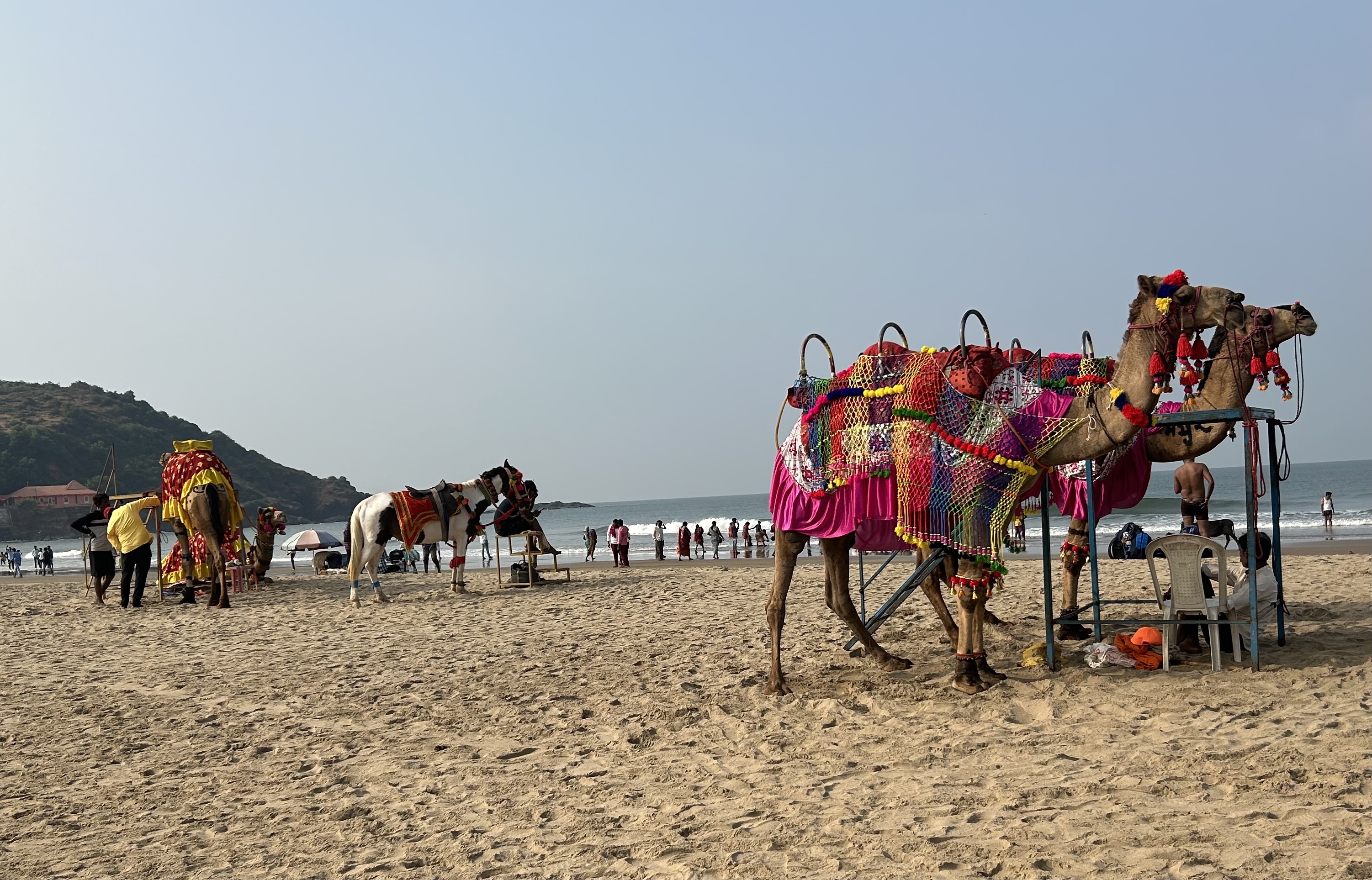
No one can explain exactly what it is and usually resort to: “It’s an Indian holiday.” At the end of the beach near the town, there’s ample amusement for the Indian pilgrims/tourists, including camel rides and ice cream vendors on bicycles.
We have a choice of restaurants on the beach for dinner. After several days we returned to a favorite from last year and there was the couple we knew sitting at their usual table with a prime sunset view. Daniel is American but left in 1969 and landed in Israel just as the War of Attrition broke out. He freaked out and fled to Norway where he married and still lives. In the richest country in Europe they enjoy a good lifestyle, but have been coming to Gokarna for many years for four months at a time. Leaving the US the same time as Gerard and staying for similar reasons, he has some interesting stories.
Eclipsing our joy of being at the beach was the news that our good friend, Arthur, had suddenly died while we were at the retreat. One of Gerard’s oldest friends, they met on Beacon Hill in Boston back in 1966 and he has written much about their relationship in his memoir, Beyond Black and White. Although Arthur moved to Florida, he and Gerard remained in contact, the more so during the last decade when they would talk by phone at least twice a week. Arthur was the first of Gerard’s friends I met in 1973 and I immediately loved him. Gerard’s been in constant contact with mutual friends and helped write the obituary and a speech to be read at Arthur’s funeral. None of which has helped him deal with reality. That will come in time.
I also lost a good friend shortly before we left. Unlike Arthur, Chris had struggled with cancer for over six years and we knew it was highly unlikely she’d survive before we returned. Fortunately, I had the opportunity to say goodbye to her. I was expecting to play the role of cheering her up, as she lay paralyzed from the waist down in a hospital bed. But instead she was surprisingly animated. Our visit was full of light and joy. After we left, I looked up at the winter sky which was clearing after a night of rain, and watched a large bird slowly circling. I felt a tremendous peace. Chris died a few days later.
The decision of how to spend the winter was avoided until I finally asked Gerard if he was happy to just stay home.
“I can think of worst places to be but no, I think we should go to India one more time.”
Then the reality set in that our life might not fit into that small case any more with all the pills and supplements that old age now requires. Even my chiropractor questioned our decision. “My parents who are your age wouldn’t consider traveling at all, what to speak of India! You’re sure it’s a good idea?”
He didn’t put me off. I knew there’s one more trip in us.
There was going to be a 10 day meditation retreat near Bangalore starting in January that I was more keen to attend than Gerard, but with gentle persuasion, he came around to the idea. Just after Christmas we would fly to Delhi, rest for a day then visit our Indian family for another day before flying to Bangalore.
Typical for international flights to Delhi we arrived at 2.30 am. After 50+ years of traveling, we have yet to lose a bag. And good luck was with us once again. We waited for first light (there was none due to smog), to book a taxi to our hotel in Pahargunj, hoping the hotel staff would be awake by then. Not only were they awake, but they greeted us with friendly smiles. ”Nice to see you again, Mr and Mrs Wiggins.”
The masala chai wallah was in his usual spot. He touched his heart, and said, “One sugar, one no sugar.” Just then, the sound of a chanting voice echoed down the street. A blind woman, her hand resting on the head of a young boy as her guide emerged around the corner. If she had been born into a different place and time, she would have dominated a world stage with her angelic voice. But here on the grimy streets of Delhi, she would have to settle for meager handouts. What a strange world this can be!
The Mahajans had moved during the summer and were anxious for us to see their new house. As we sat around the dining table drinking strong chai, the eight months since we last saw them seemed like yesterday. Kamal reminded us that by chance we first met nearly twenty years ago at our house in Boston.
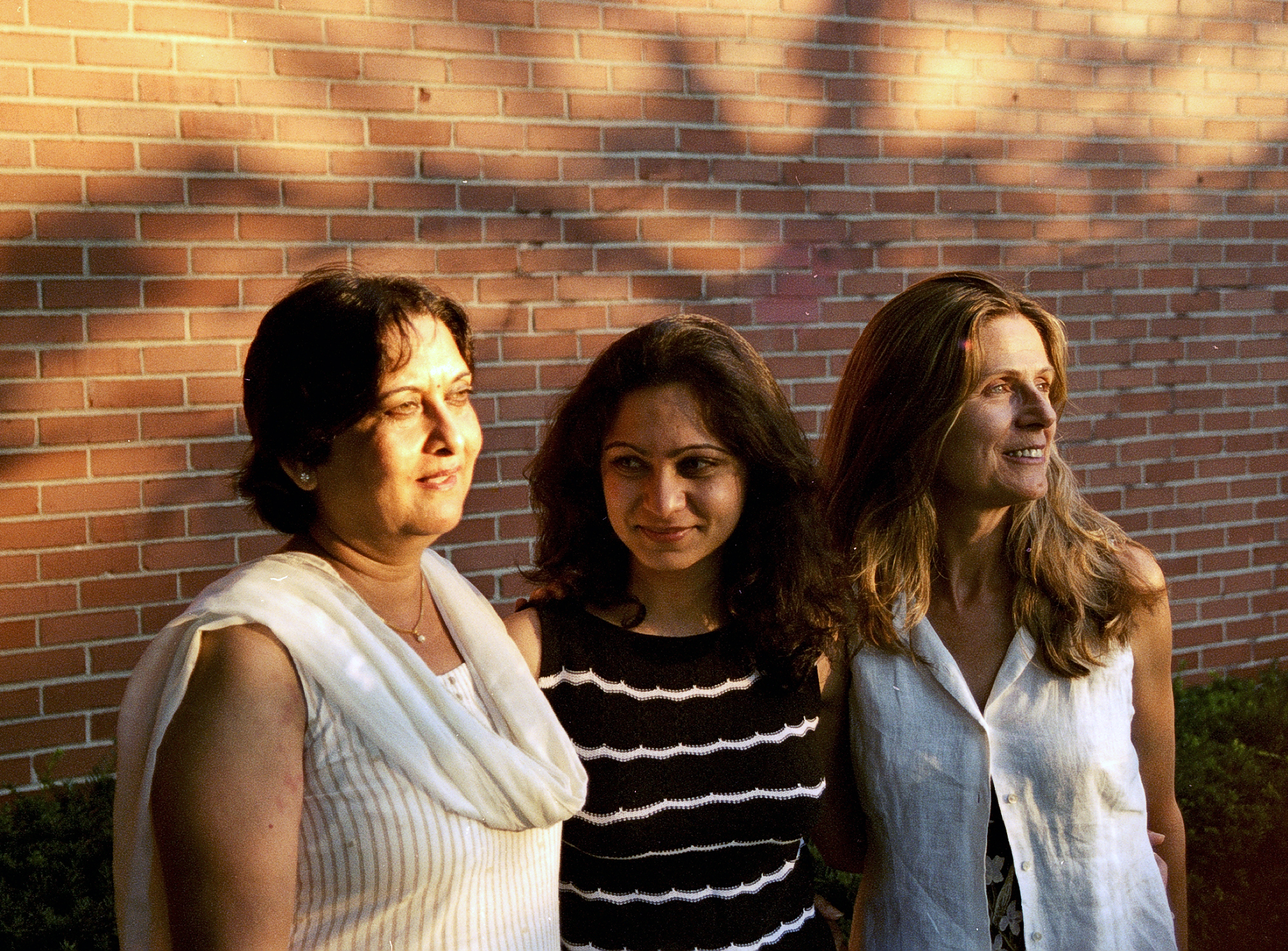
Kamal and Shruti with me in Boston in 2004
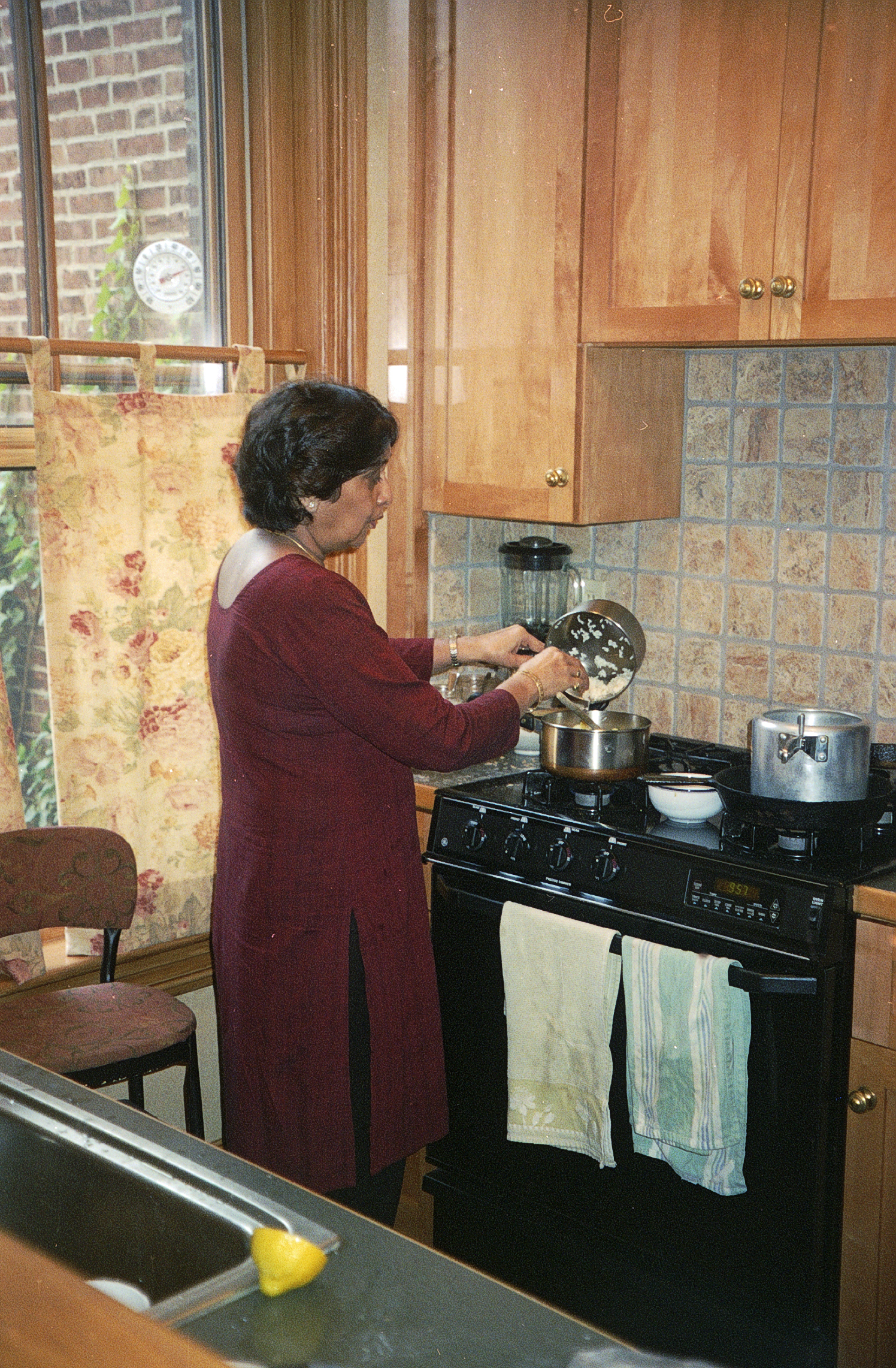
She had come to visit her daughter, Shruti, who had started a new job. Just as Kamal arrived, Shruti was asked to vacate her apartment. Through a friend, we had met her only once. But when she told us her predicament, Gerard insisted she and her mother should stay with us. Kamal was reluctant to impose on strangers but there was no alternative. The first night she barely spoke. The following morning, Shruti and I went off to work, Gerard was free for a few days. When I got home that evening, he and Kamal were sitting at the dining room table carrying on gas if they had known each other for years! She said to me, “Since you’re working and I am not, now I will do the cooking. I hope you like Indian food.” That was like asking if the sun rose in the east!
Kamal in our kitchen
For the next five weeks, we learned what Indian home cooking is all about, very different from the usual restaurant fare. Ever since then, the Mahajans have welcomed us in like family.
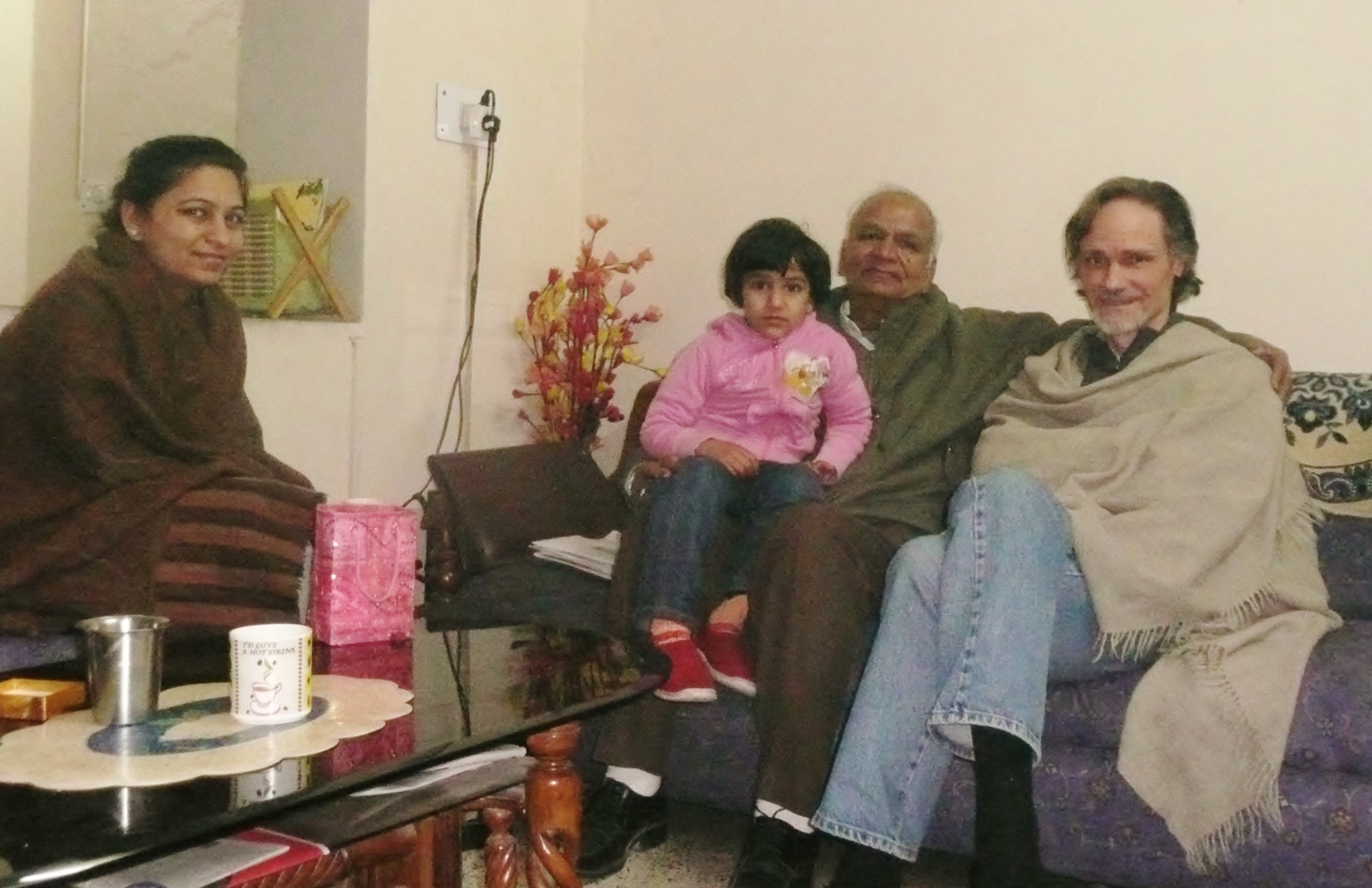
Shruti with daugher, Simrita and father, Bhushan in 2009.
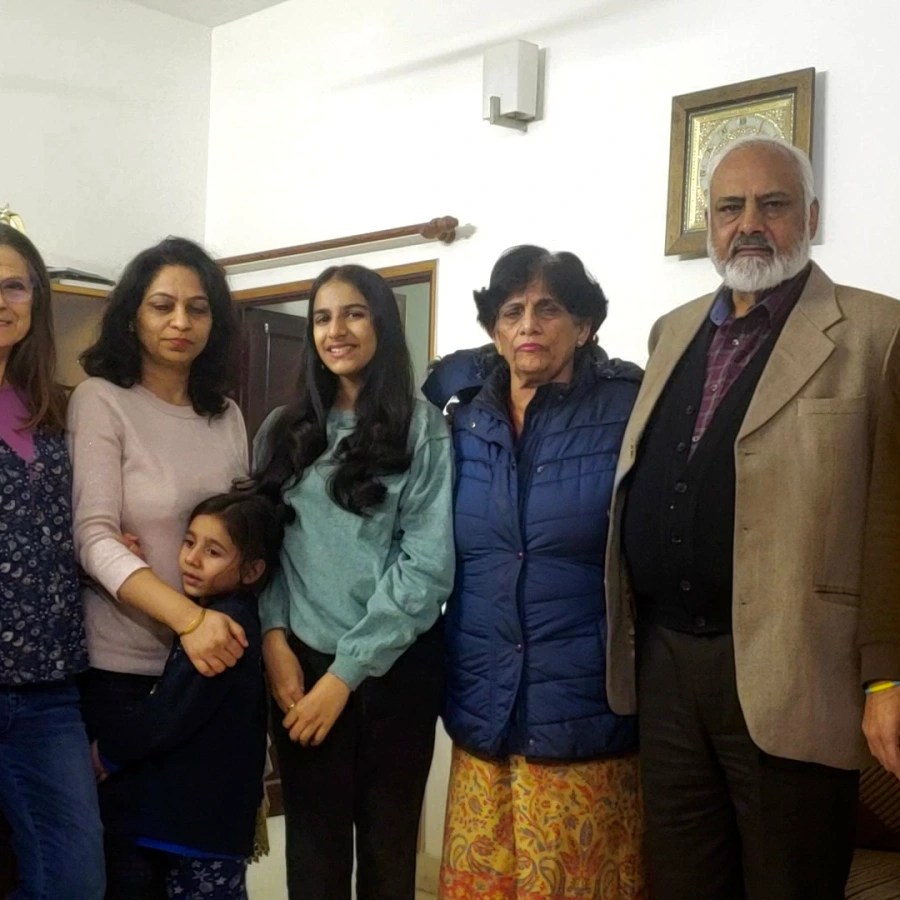
Shruti, Tanya and Simrita and Swarn auntie and Ravi uncle in 2022.




 A Small Case Across India