Room with a View

The overnight bus ride from Delhi to Mandi was surprisingly smooth. A new bus left on time. We stopped for dinner at an all veg restaurant and arrived at 6.45 am. As we jostled our way up the hillside in the local bus, the sun rose and the mountains were clear. After Katmandu and then Delhi, the air felt unbelievably fresh and clean.
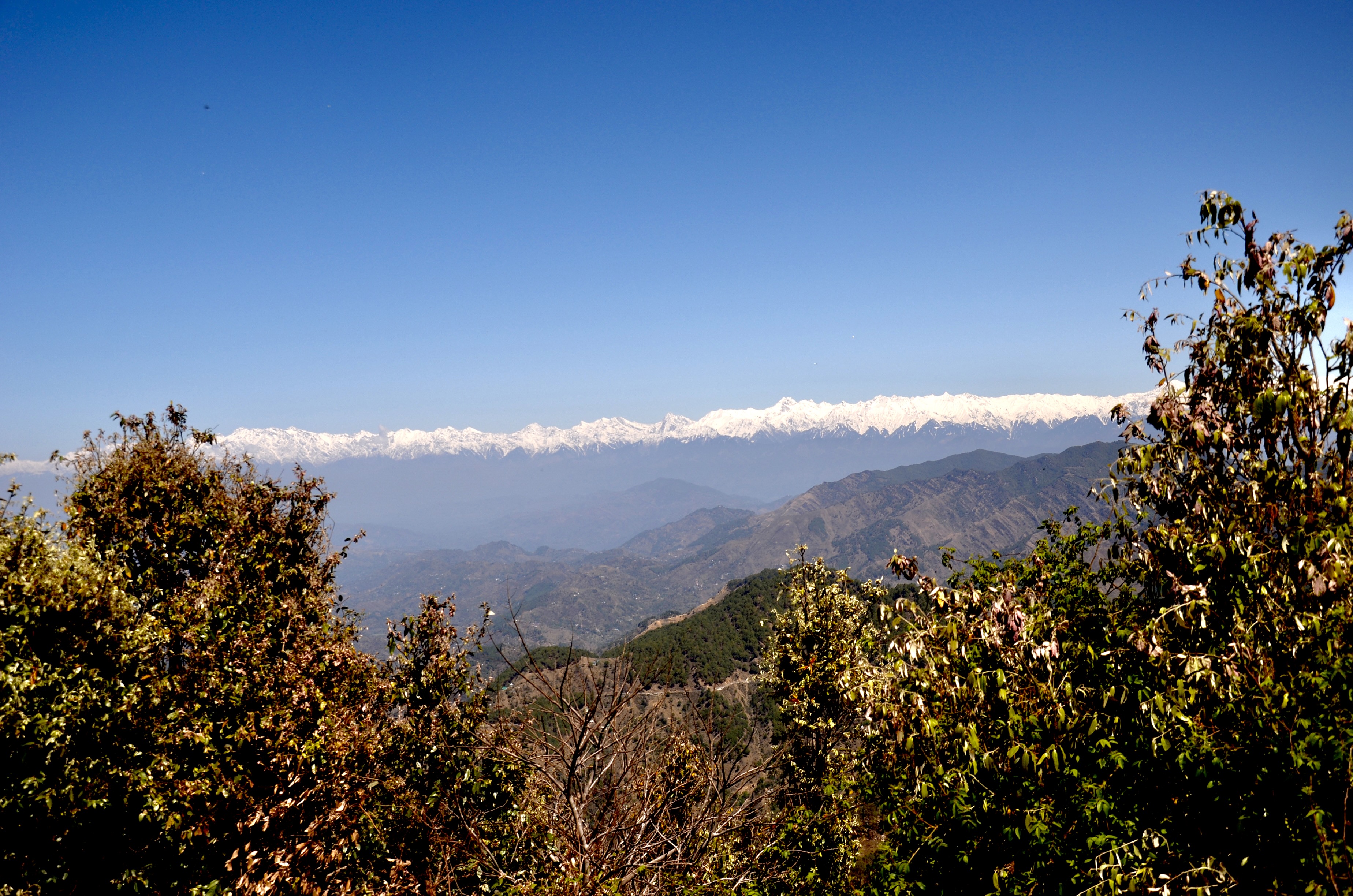
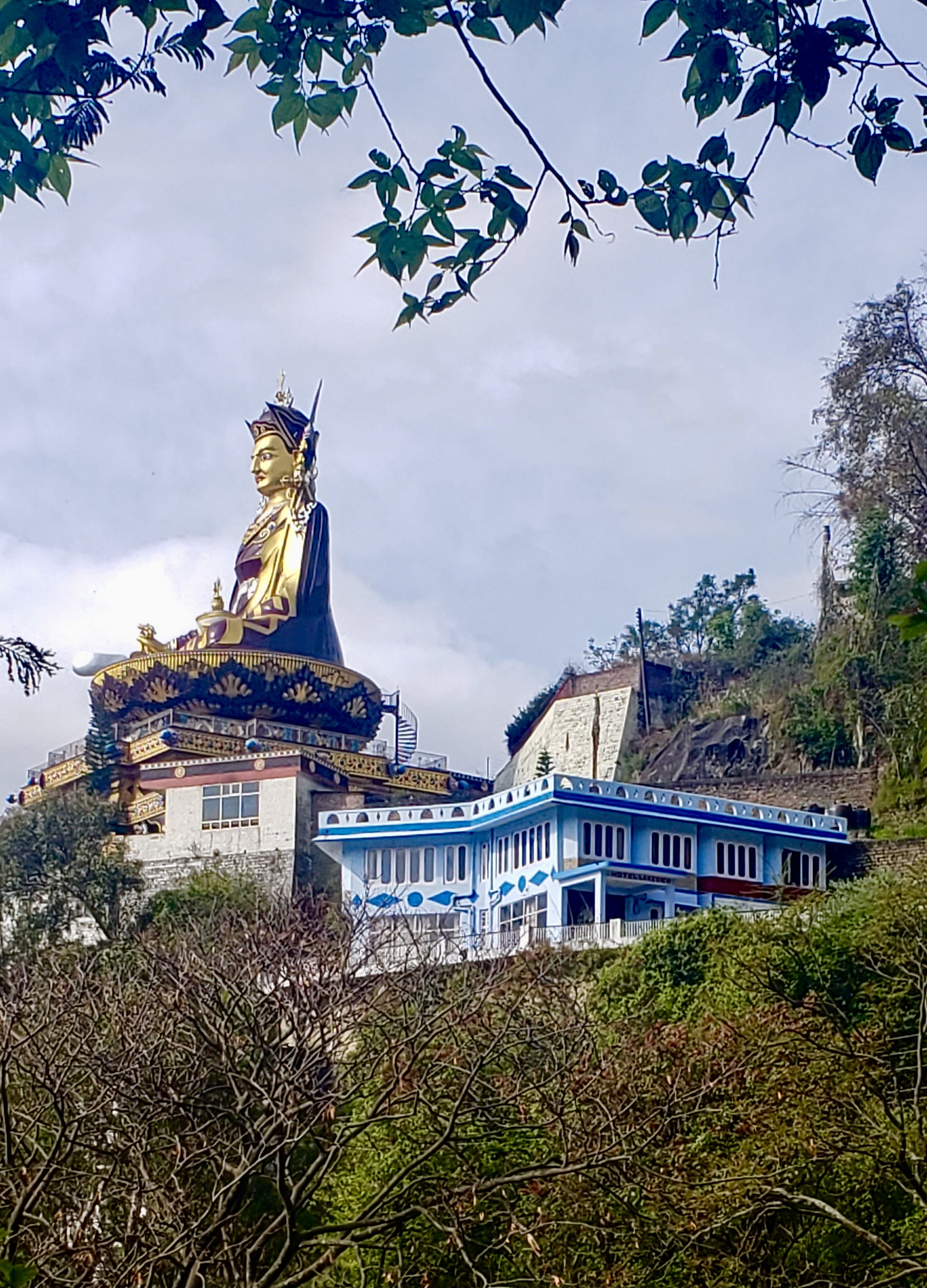
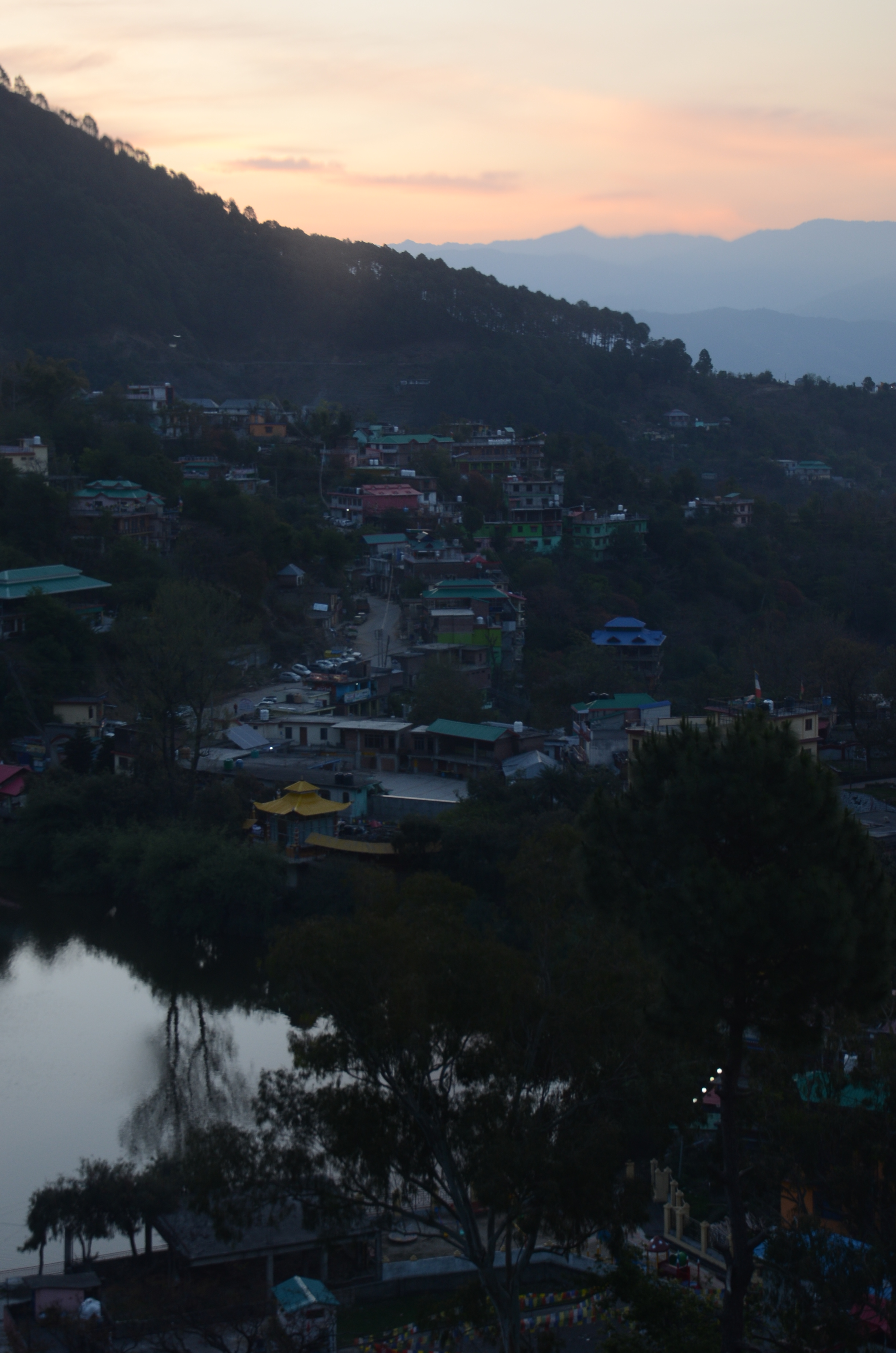
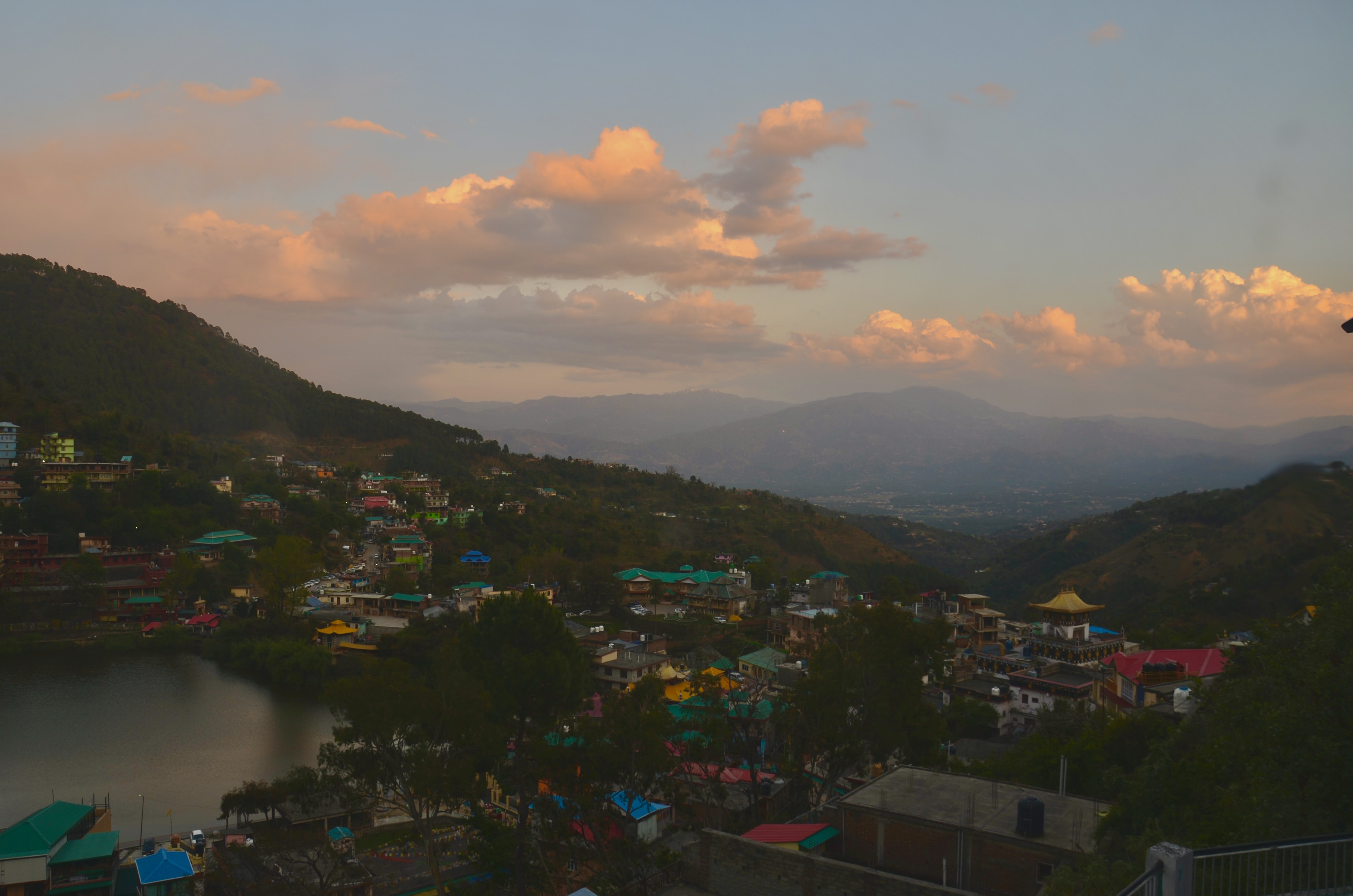
Our legs could no longer take the steep climb up to our previous lodging with its spectacular view of the town. Lakeview Guesthouse on the opposite side of Lotus Lake, and gave us an equally stunning view, with less effort. But as usual at this time of year, by noon the mountains get obscured by the rising mist from the valley obscuring the mountains. The guesthouse happens to sit beside the huge statue of the Buddhist Guru, Padmasambhava, who took Buddhism to Tibet and is recognized as the second Buddha. The statue was consecrated by the Dalai Lama in 2012.
The town has changed little. Some new building but mostly on the perimeter. As before, only a few westerners are here to practice Buddhism. We asked how it had been during covid. The locals gave it little recognition; lockdown was only two or three months, and very few were sick.

As we sat eating our aloo parathas (fried chapatis stuffed with mashed potatoes and spices) the small restaurant was filled with a cross section of this town: Tibetan Buddhists, Hindus, Sikhs–and ourselves. We can’t think of another place with such a diverse population, exemplifying that people actually can get along. Rewalsar’s spiritual significance for the Hindus is that the Pandavas from the Mahabharata supposedly came here; for the Sikhs, Guru Gobind Singh visited to consult with the king of nearby Mandi for support against the Mughal Emperor Aurangzeb. For the Buddhists there are several legends, one that Padmasambhava was burnt alive by the king of Mandi because his daughter was visiting the Guru for spiritual guidance. The spot where he was burned turned into Lotus Lake.
Our guest house owner invited us for lunch, and we sat in his room and talked over tea afterwards. He’s lived almost his whole life in Rewalsar. At 15 years old he asked his mother why she went to the temple. To worship Shiva, who will give you everything. This started him down the road of questioning who he was and why he was here. Now 66 years old, fit and healthy, dressed in spotless white Punjabi shirt and pants, he sat in yoga pose on his bed. Beside him was a small altar, including a picture of his Buddhist Master, the Hindu book of the Vedas lying beside it. He’s an interesting man, but the conversation became one sided. In fact, it wasn’t a conversation and after three hours we excused ourselves.
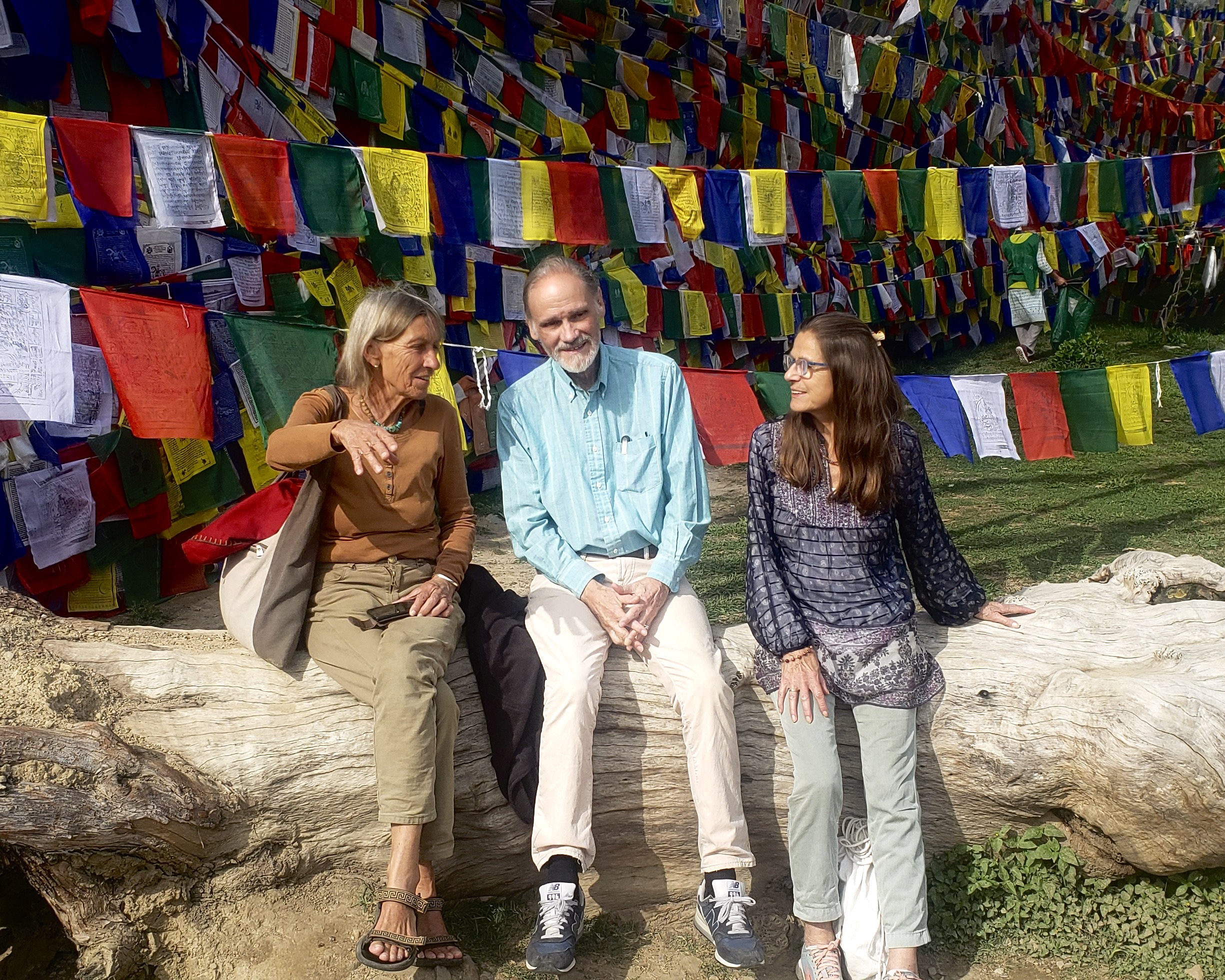
Our friends Marion and Juergen, were already here and as before, they took us hiking. We hadn’t walked as far since we accompanied them on a “walk” back in Gokarna. But this time it was a climb up the mountainside. We clambered up to a shrine where a wedding happened to be taking place. A band played, people danced for a short while and then it was all over. They got back in the cars and drove back down the mountain road.
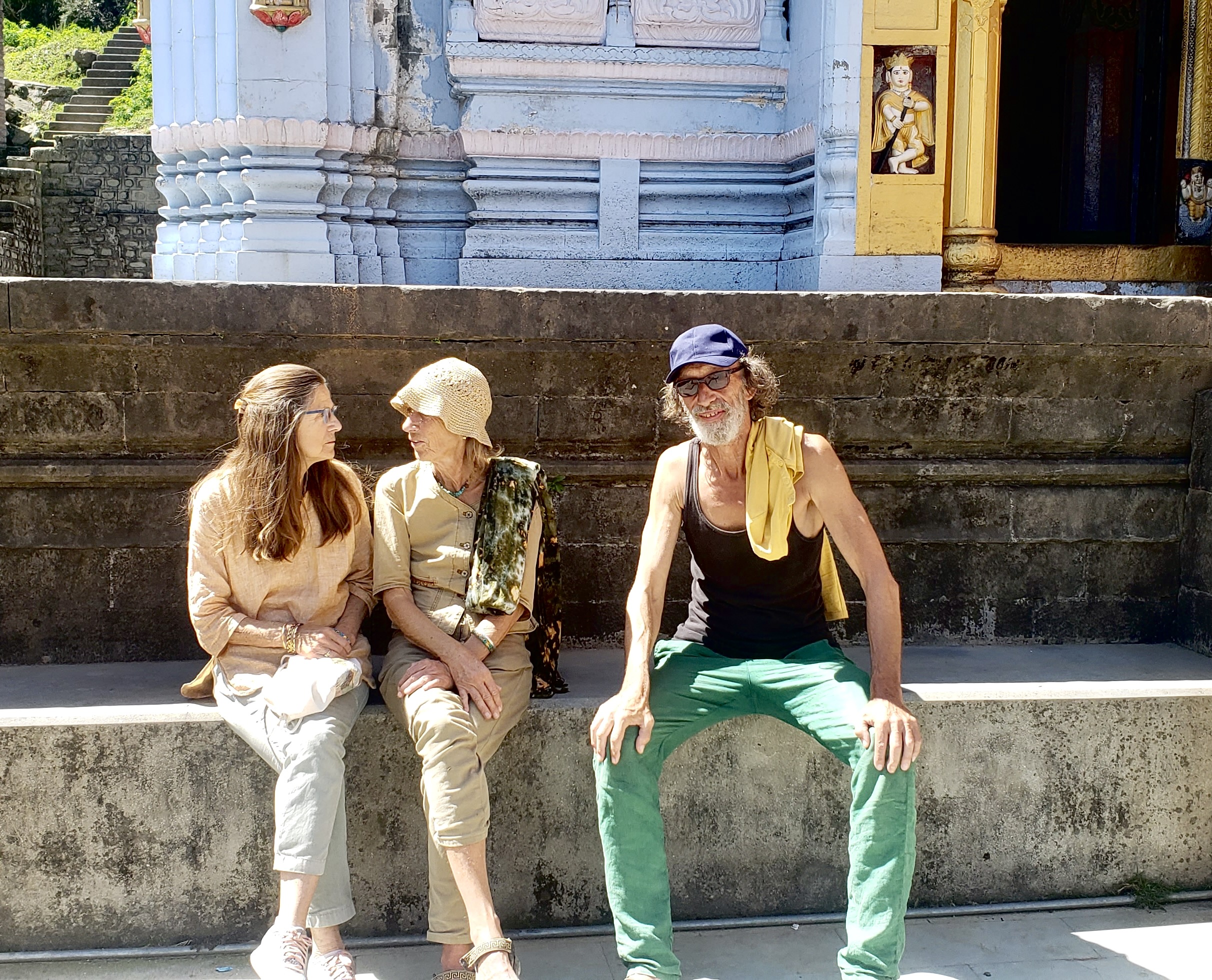
Following them, we found a tea shop and were lucky to catch the local bus back to town. Just managing to wedge ourselves in, standing in the doorway and clinging on to anything available; it’s a clear indication of how many hill people depend on public transportation.
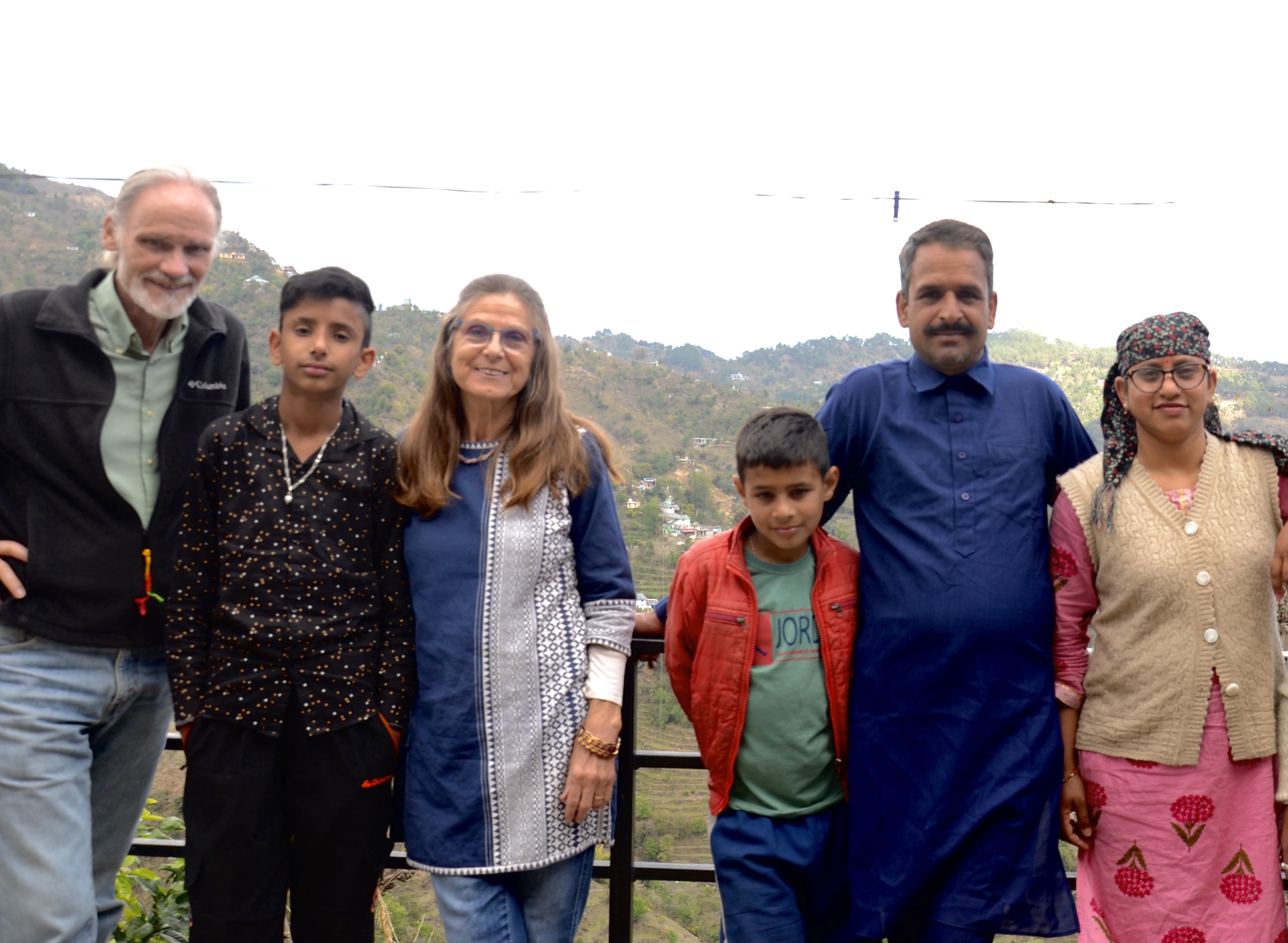
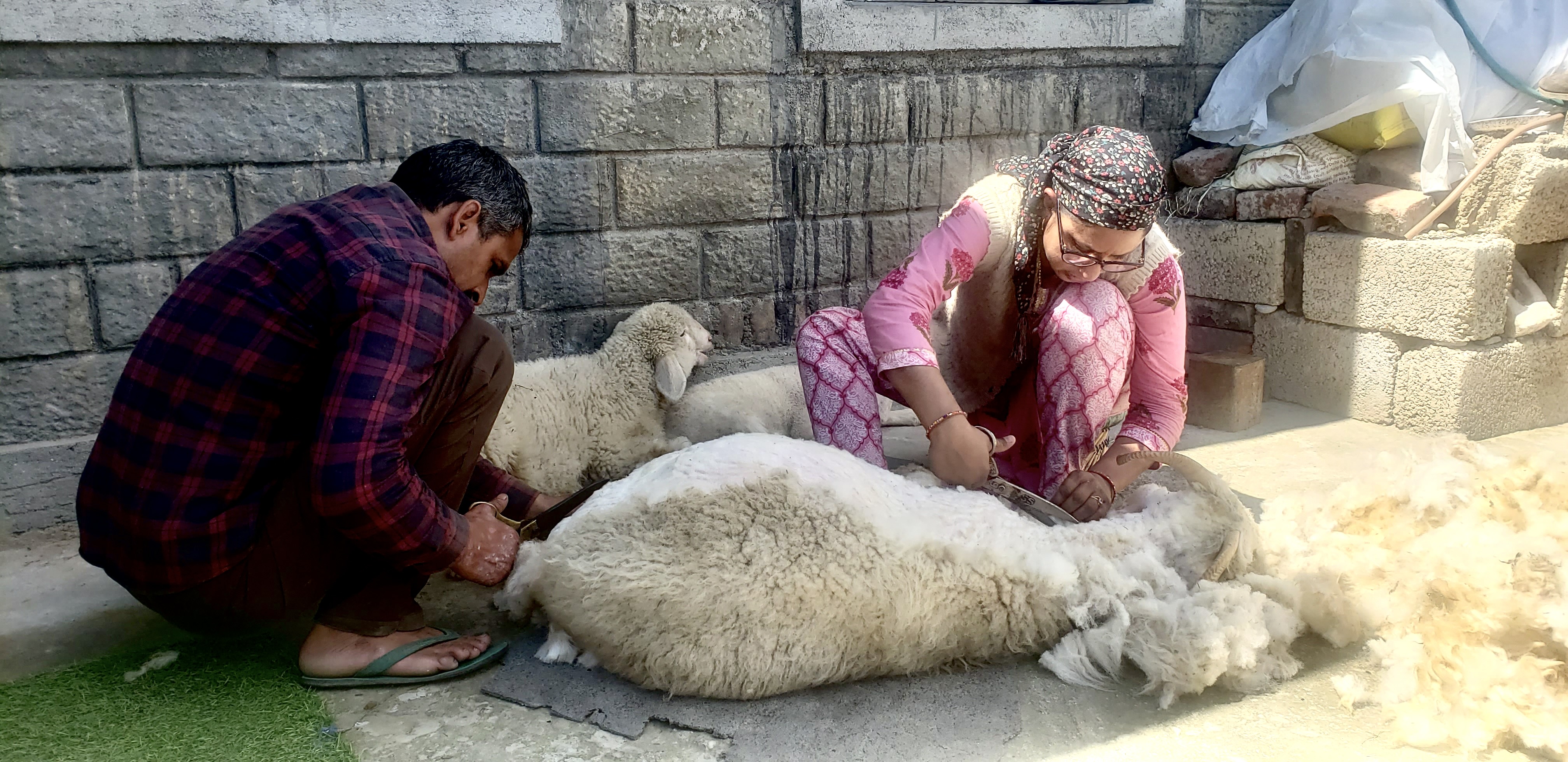
As in Varanasi, we’ve made lasting friends in Rewalsar; Sapna and her family from our first visit. On cold mornings we warmed ourselves in her little restaurant while she fed us parathas, her two young children, Prya and Priksu, watching TV before school. Today, we visited the family in the home her husband built with very little money. The progress made in the last four years impressed us. Outside of town and balanced on the hillside, it’s a steep climb down to the simple four rooms, little kitchen with an open cooking fire, outside toilet, a further climb down, challenging to my aging knees! Three sheep and two cows live below, and a docile German Shepherd fed on a pure veg diet. Indians do not pet their guard dogs and it was hard for us to refrain. Their balcony, afforded a panoramic view of the mountains and surrounding countryside of terraced fields. After lunch Sapna and her husband took at least two hours shearing their largest sheep.
To say the weather is changeable in the mountains is an understatement. This year it is especially unpredictable and days of sunshine have been interspersed with lots of rain. Without the sun to warm our room, the cold seeps in. We were glad to be invited to dinner by the taxi driver who for several years has driven us up to Nagar. We sat beside an electric heater, throwing off plenty of heat, and ate a delicious meal. In usual Indian fashion, instead of joining us, the family merely watched us eat.

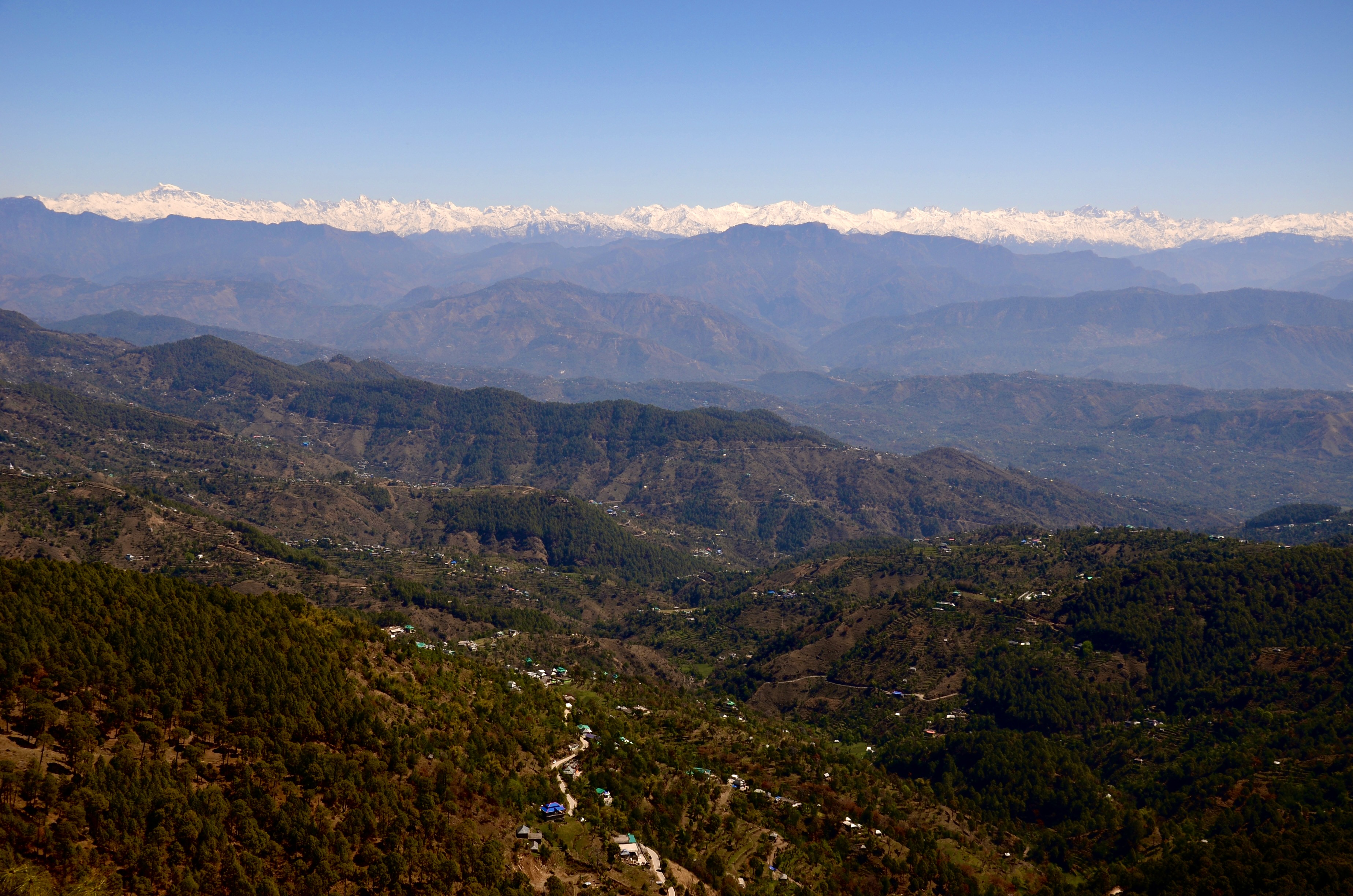
A few days before we left, we took the bus up to Maha Naina Devi Temple an altitude of 1650 feet above the town (6,000 feet above sea level). The views of the Himalayas was unprecedented. Our legs felt the downhill walk back to town.
Two days before we moved on, Marion and Jurgen left for Delhi on their return to Germany. It was a sad farewell.
Kathmandu: Eight Years Later

Flying toward Kathmandu, the line of snow-capped mountains on the horizon looked more like a bank of clouds in the blue sky. But then we dipped down for landing into a blanket of smog. Once on the ground, we were glad of our face masks. Traffic was heavy, with mostly motorbikes, but unlike in India, Nepalis don’t sit on their horns. The level of street noise was more bearable for my now noise-sensitive ears. The population has exploded like in India.

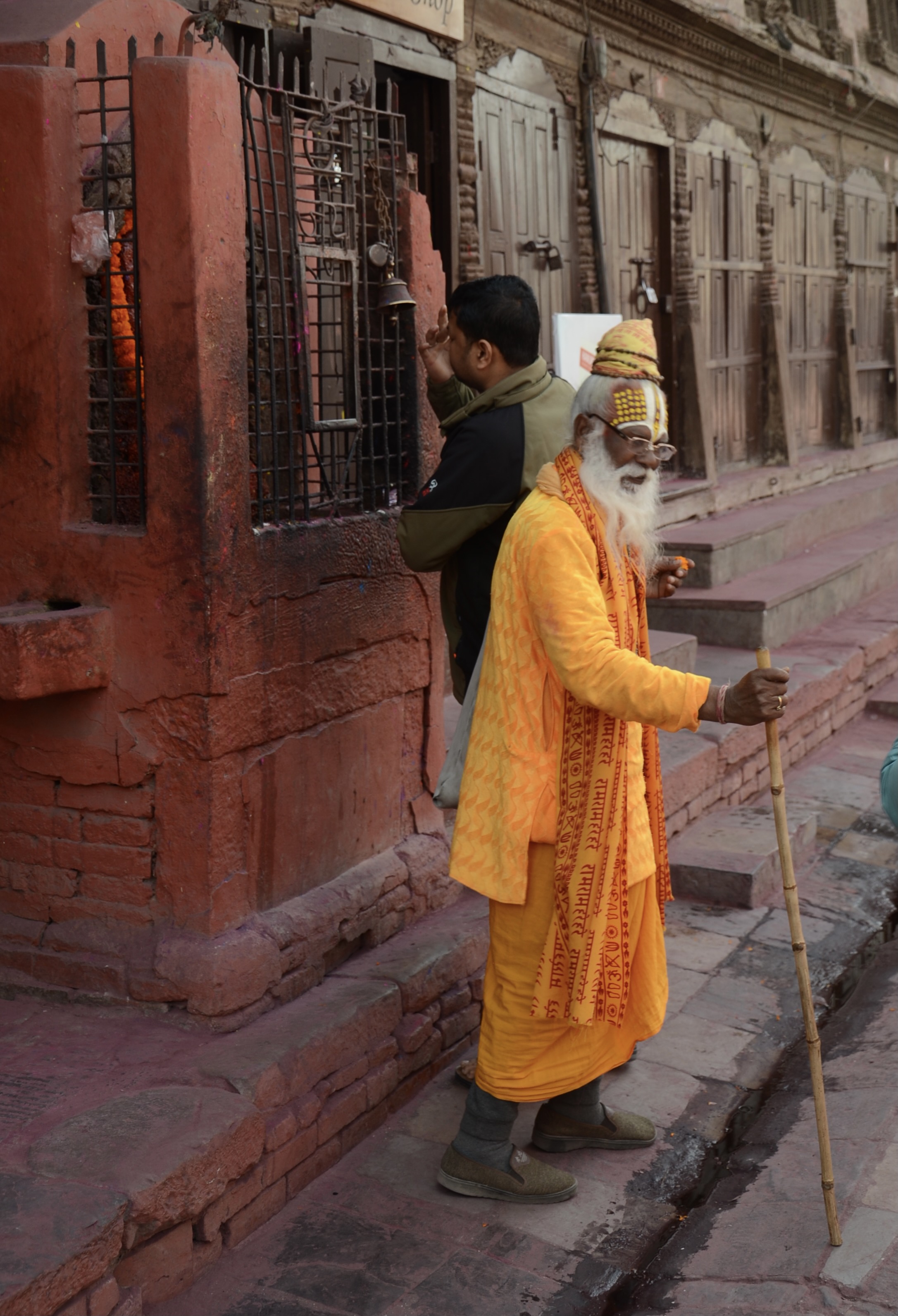
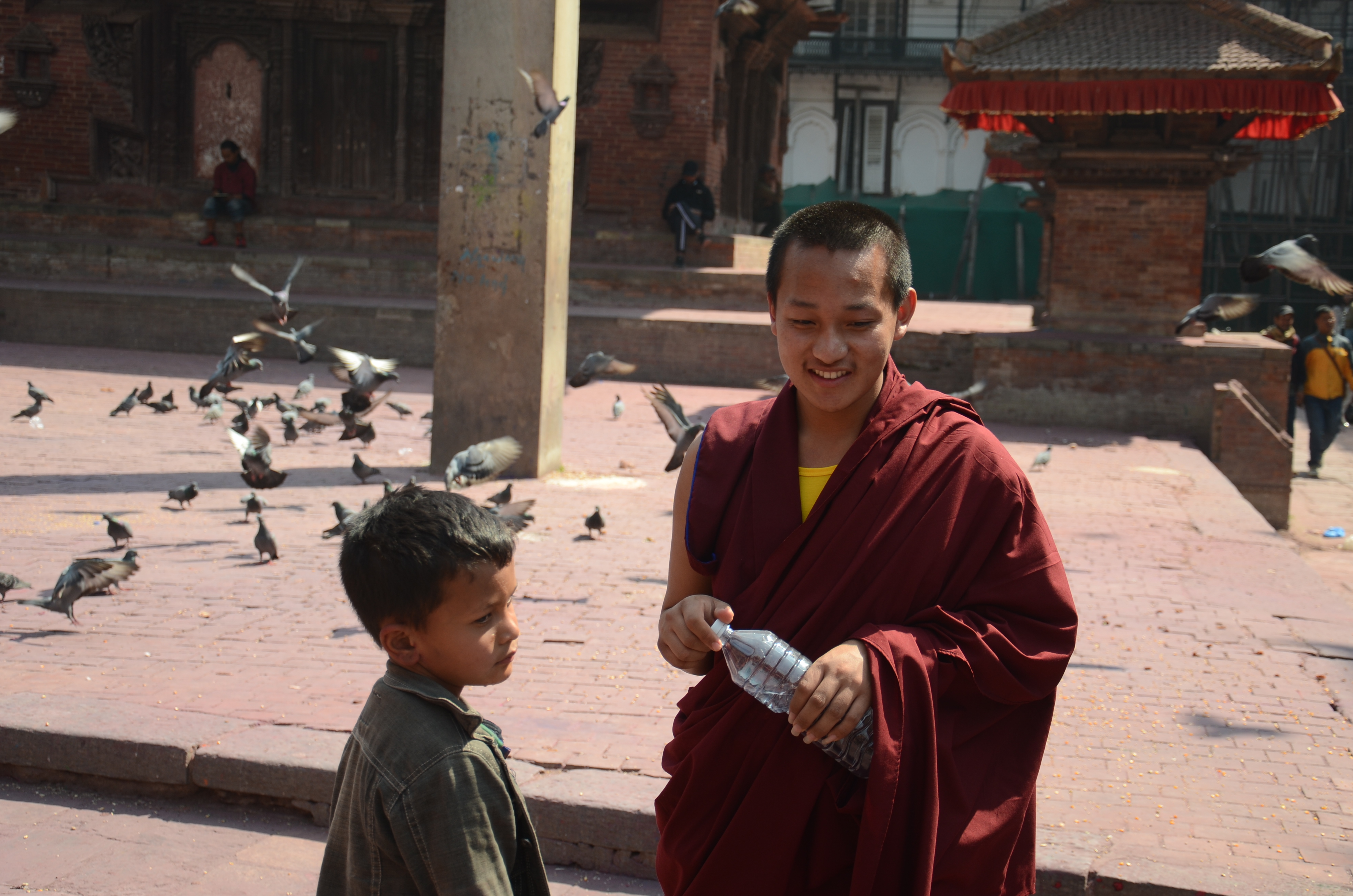
Happy at leaving Varanasi before Holi (not our favorite festival), only to find the Nepalis also celebrating. Youth and children roamed the streets throwing color until evening when things calmed down. We should’t have been surprised since Hinduism and Buddhism are practiced side by side in Nepal. Buddhist statues sit alongside Hindu deities at all the monuments.
Nine years ago, just before the 2015 earthquake, we came here not knowing what to expect. How could we have known history would come alive through the architectural wonder of Durbar Square in both Patan and Kathmandu? We were apprehensive about returning, to face the devastation coupled with reports of increased crime and prostitution in Kathmandu. But we didn’t see it and were glad to be back.

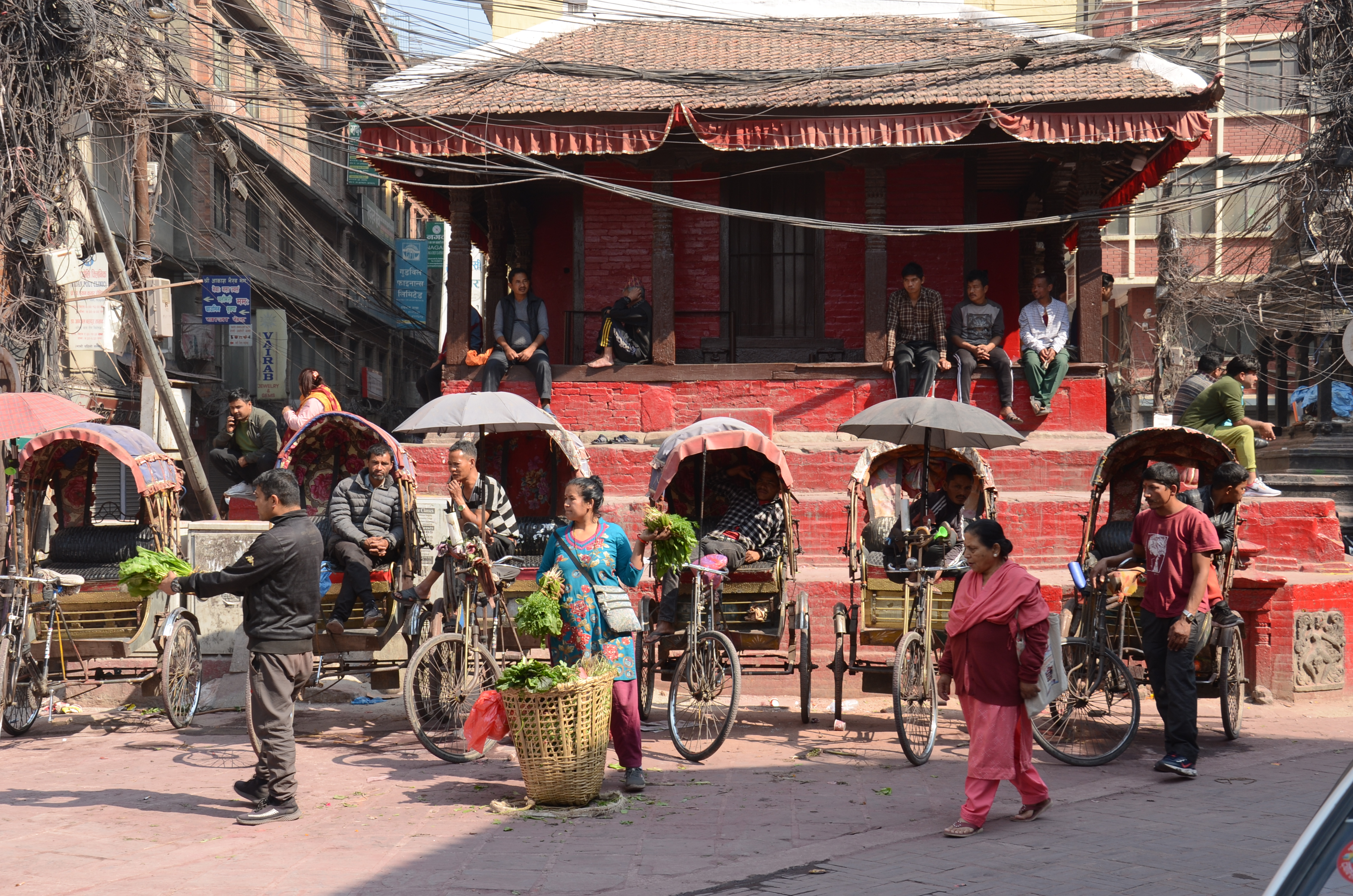
Thamel, where the budget hotels are located, is still a rabbit warren of narrow cobblestoned streets. Tourists and trekkers seem way down but maybe because the season hasn’t started yet. Everybody seems to be on the hustle but you can’t blame them; tourism and so much else hasn’t recovered since the earthquake.

Gerard asked a few locals where they were when the earthquake hit. Among those we spoke to, no one knew anyone who died. Today the city is still a mix between empty lots and construction. In spite of foreign aid pouring in, it’s rumored that rebuilding didn’t start for years. One explanation: “If we did the repair work, the money would stop coming.” But there are other reasons including lack of organization and finding skilled artisans..

Still vibrating with the impressions of Varanasi, Durbar Square with its intricate architecture and wood carving required a cultural shift in our attention. Even though this was our second visit, the beauty of this 3rdC Royal Palace complex was a feast for our eyes and in much better condition than we’d expected.

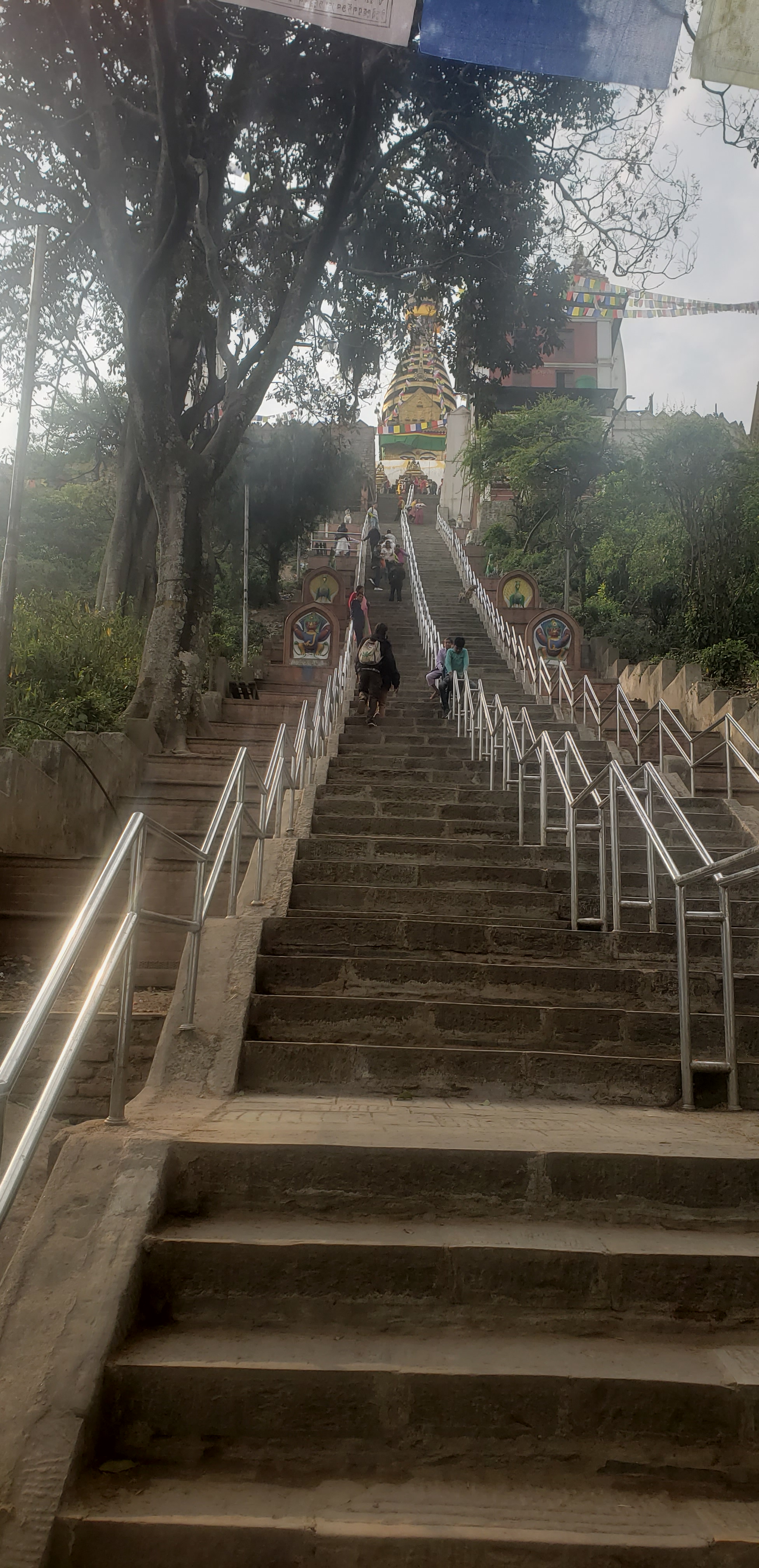
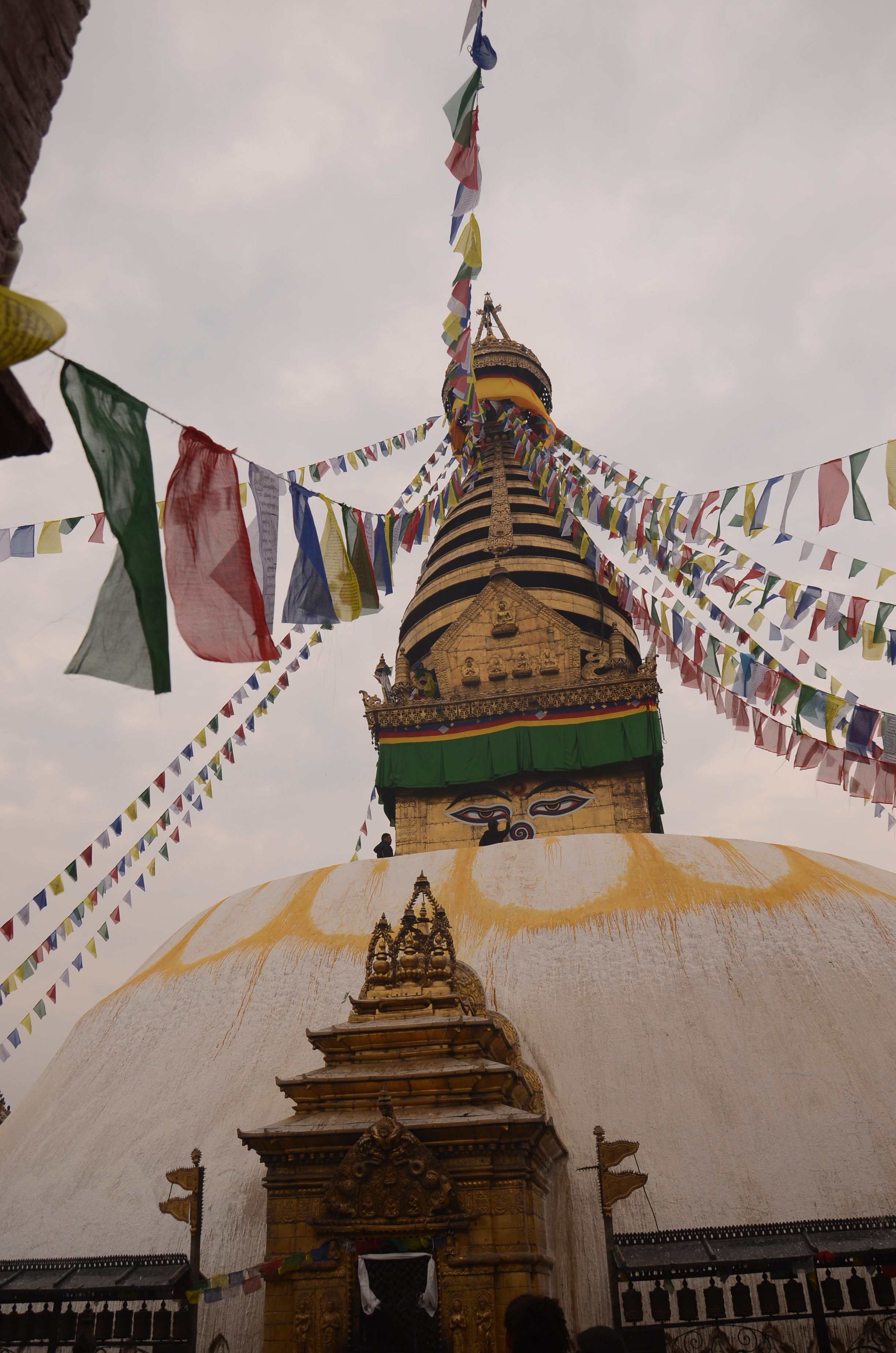
Next day we waited for the drizzle to stop, then climbed up the 365 steps to the Swayambhunath or Monkey Temple.

Nine years ago, the steps were of no consequence. So many changes during those years. Surprisingly, the hundreds of stone deities of both religions surrounding the large Buddhist stupa, escaped unscathed.

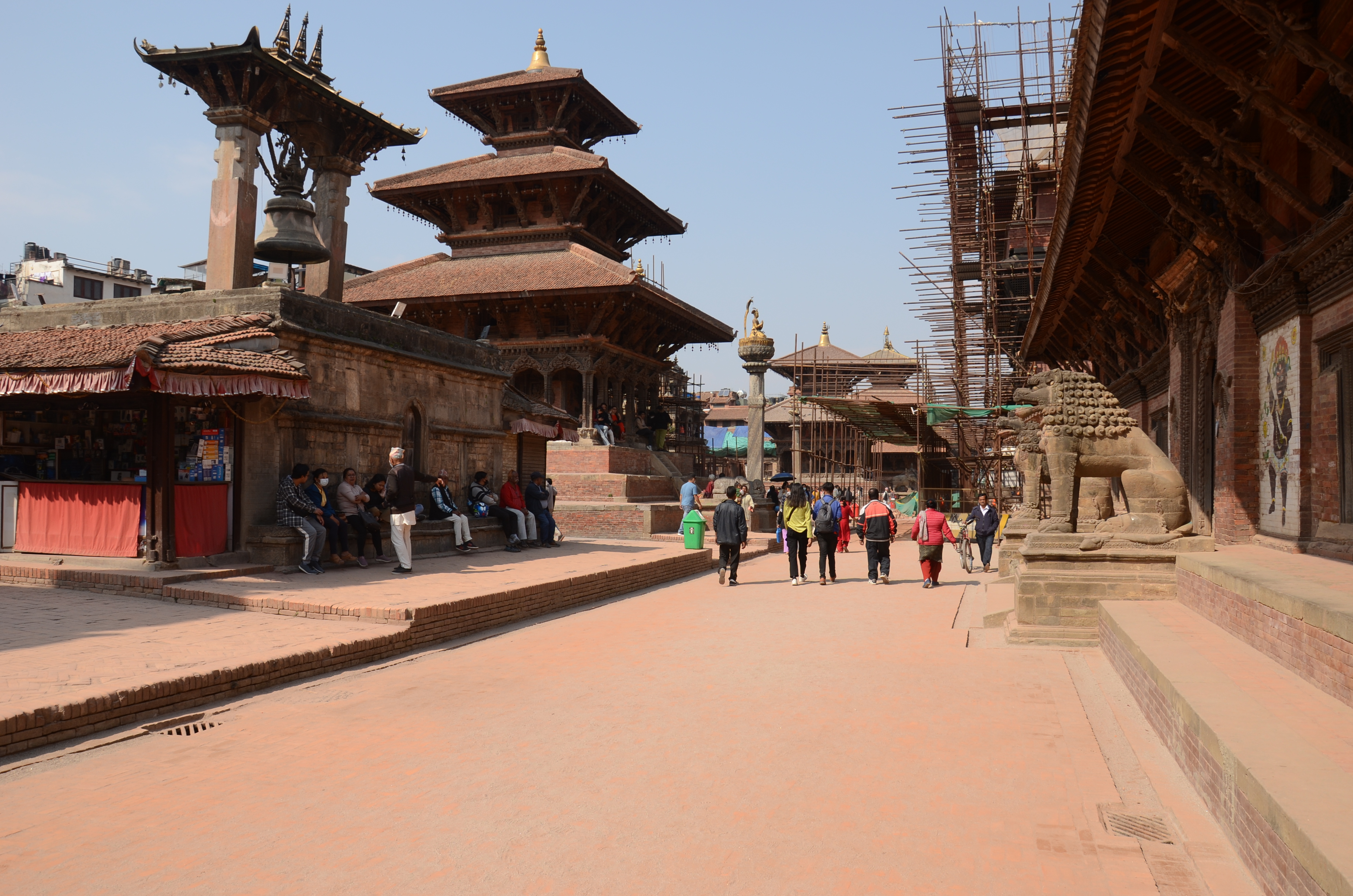
Unfortunately the nearby Patan Durbar wasn’t as restored as Kathmandu because either it suffered more damage or has taken longer to recover. It was hard to see the deterioration of what had impressed us so much before—some of the finest Newari temples and palaces in Nepal.

Posters around the complex boasted the involvement of Germany, Japan, China etc., then why is it taking so long compared to Kathmandu?

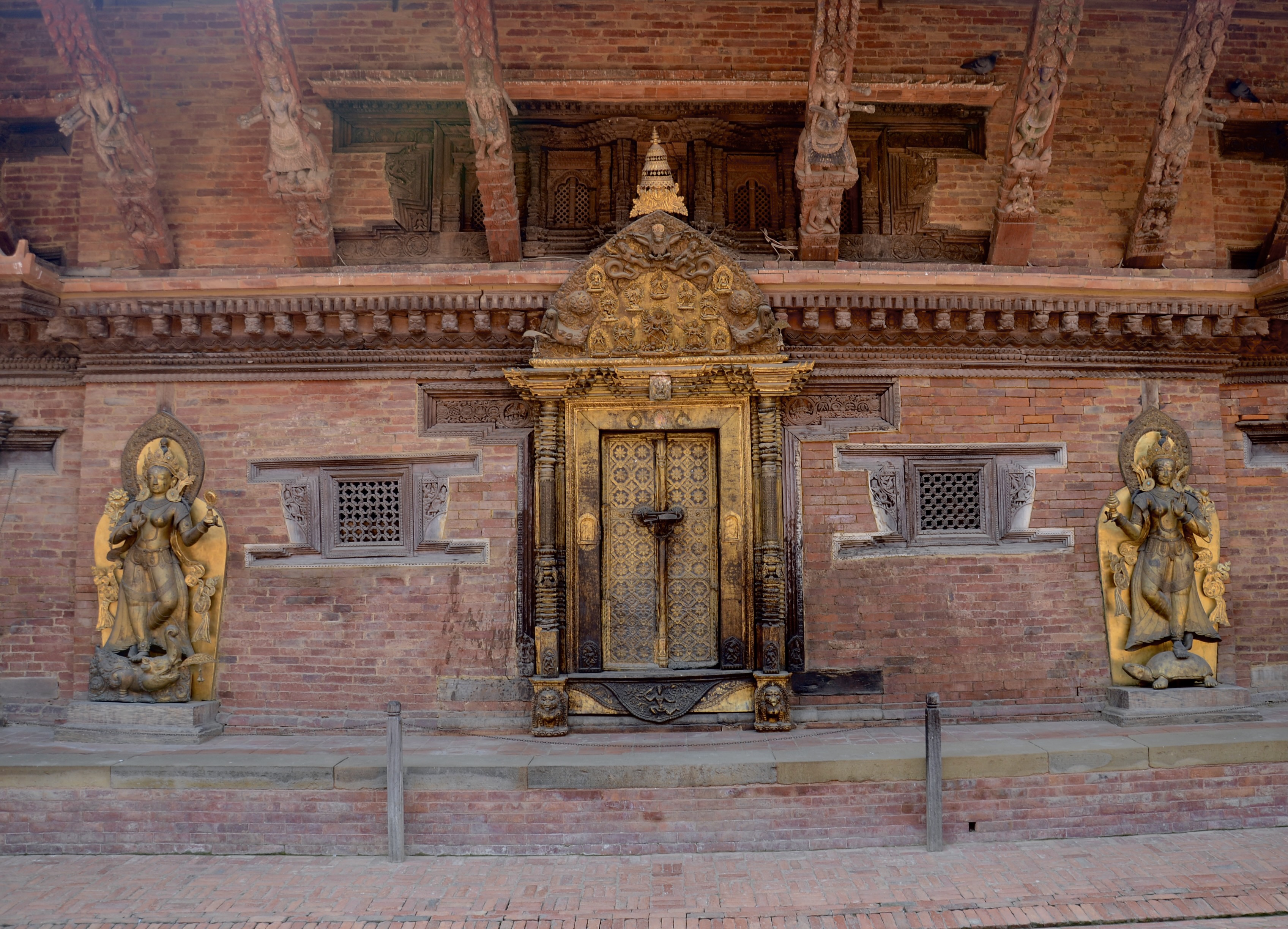
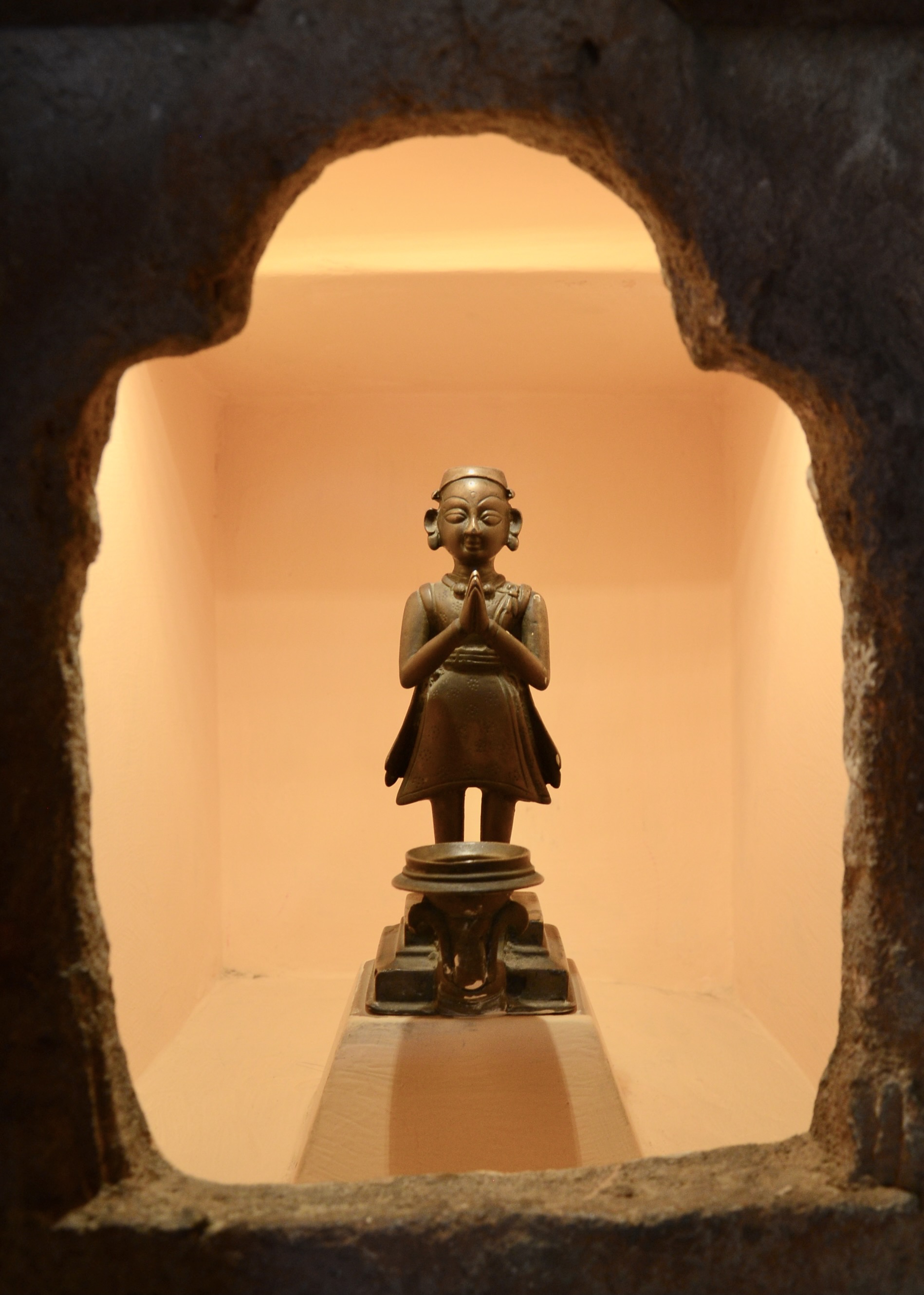
Thankfully, the Patan Museum, with financial help from Austria, has reopened its gilded entryway and still contains a wonderful collection of Newari sculptures and artifacts.

Varanasi Succumbs to Overt Tourism

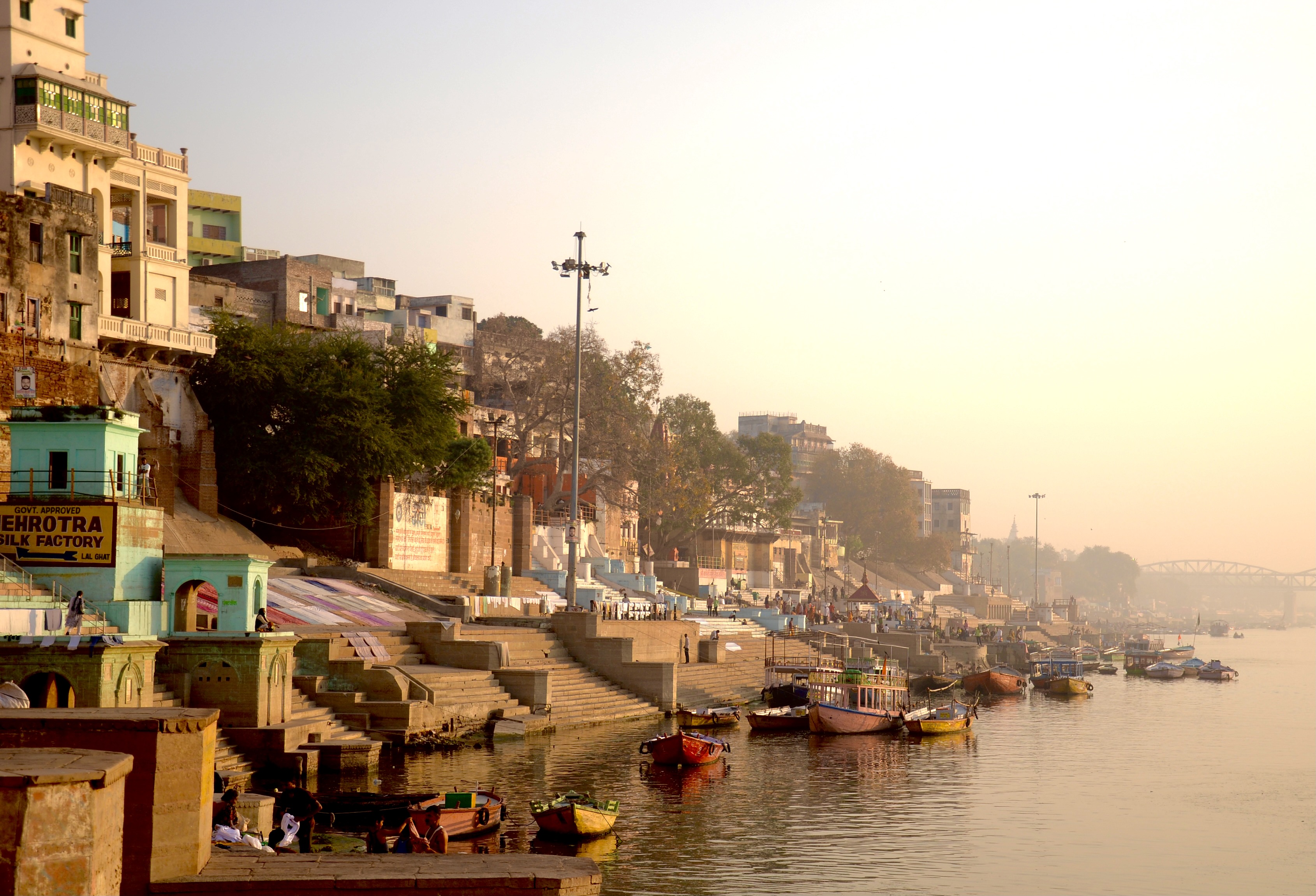
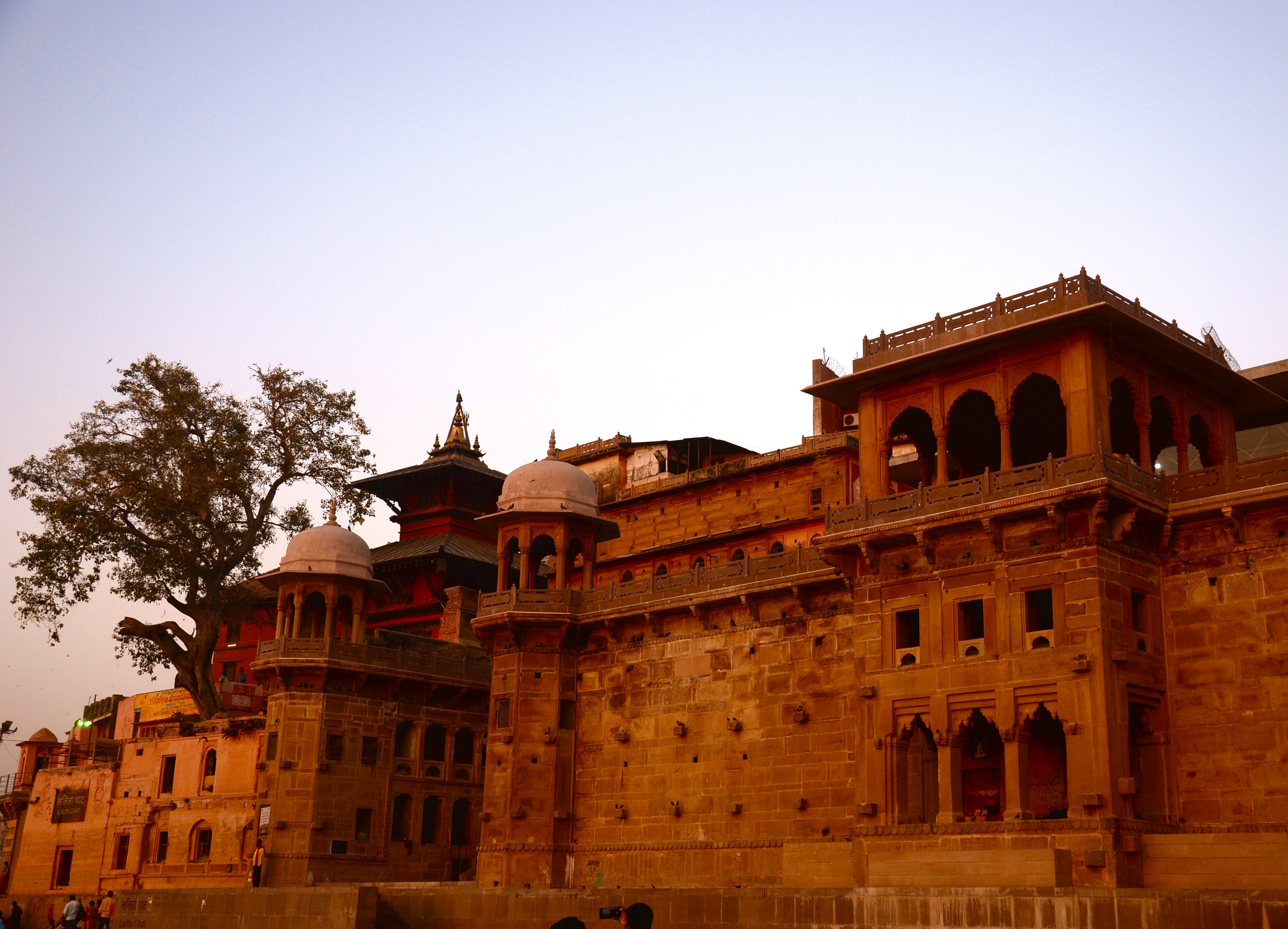
We weren’t prepared for all the changes in Varanasi. Perhaps they seemed more extreme after three years’ absence. Getting from the airport to the ghats through the clogged streets was a major feat, our taxi took twice the time. We crawled along, directing the driver to our familiar way of entering the ghat through the Moslem quarter. The hotel we’d booked online was a mistake–the photographs were totally misleading, it was a dump! But fortunately we found another literally next door. Under renovation, we were able to book an unfinished but nice room for a bargain.

We quickly dropped our bags and hustled out to embrace Mother Ganges. There she was in all her splendor. But wait! What is happening on the sandbar across the river? A young Indian boy seeing our perplexed expression, said, “How do you like our Tent City?” A mass of white tents are lined up like an army barracks, a protective fence surrounding the ‘compound.’ Gerard asked the boy, “Who wants to stay in a tent in the blazing sun?” He replied, “The same people who will pay up to 4K rupees a night.” We all had a good laugh.

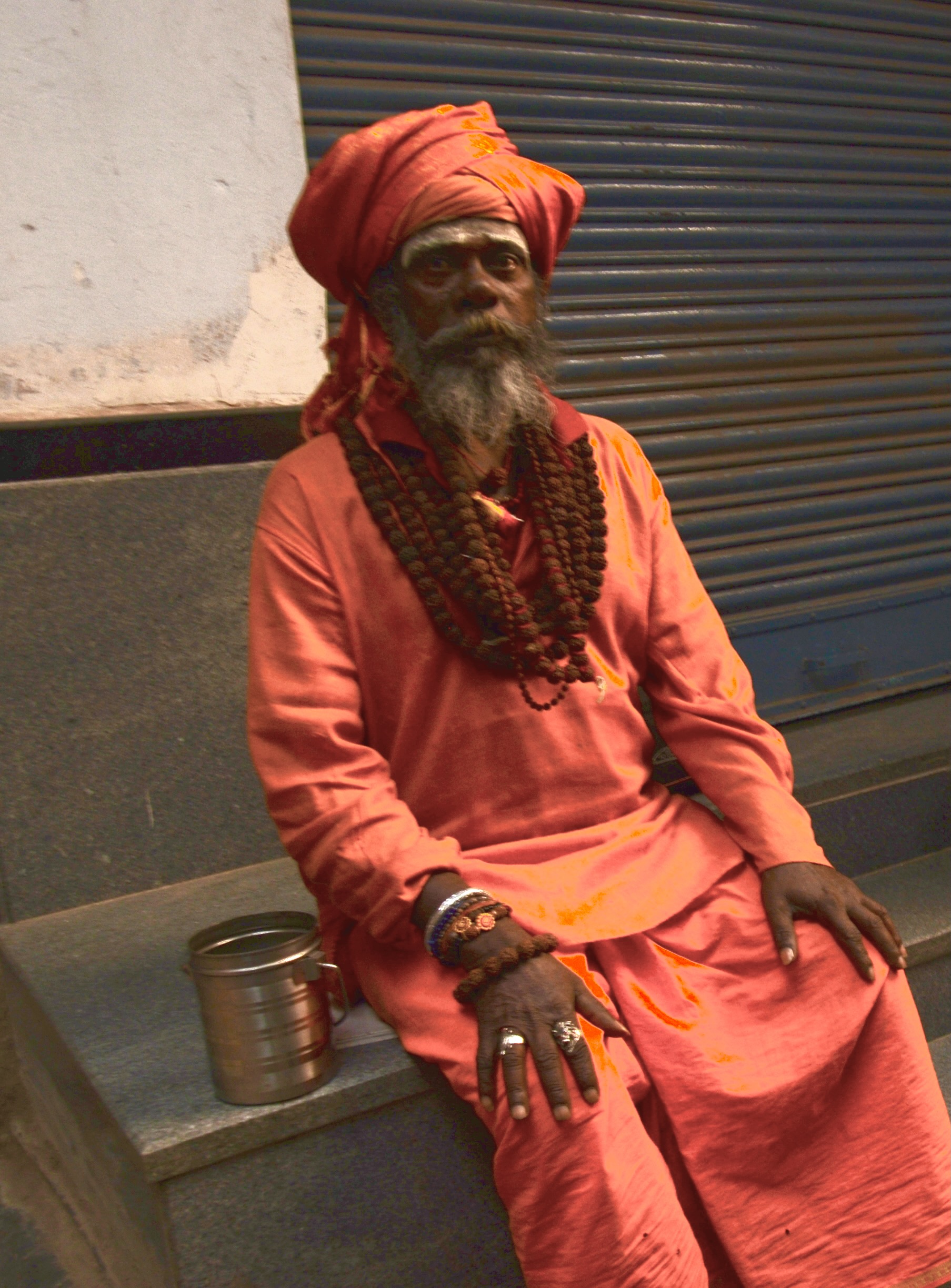
On our first foray out we didn’t even notice no washermen drying laundry on the ghat, no more stately water buffaloes wading in the river. The ghats could certainly stand to be cleaner, but we miss the activity and color. For several years, the government tried to stop clothes washing in the river with little effect. The police are now offering a free ‘bamboo massage’ (beating) to all offenders!

Our friends along the lane were all smiles. Gerard thought they they were pleased to see us but also that it also meant business was resuming. If these two old people can make it back then there’s hope! Just about everyone we talked to had stories about the covid lockdown. With few exceptions (naysayers), most told the same story: initially, there was a sense of camaraderie, the community fed the beggars and dogs. Some restaurants continued to pay their staff; they were the lucky ones.

Then the lockdown dragged on more than a year. With no money coming in, utilities and food still had to be paid for. Ironically, property owners were exempt from the government food subsidies, but still had to pay their property tax. Price of food continued climbing; from pre to post covid the price of cooking oil and flour has doubled.

I was surprised to see a beggar we’ve known for years, to have actually put on weight and look healthier. Maybe he’d benefited from the government handout/? He was also missing his thick glasses—perhaps he’d qualified for free cataract surgery!

Our friend Santosh, a native of Varanasi, said he noticed in the tree outside his window many bird species he’d not seen before. And because the streets were so quiet, he could actually hear the birds sing. The only other sound breaking the silence was the muezzin’s call for prayer at the mosque. Someone else mentioned the surface of the Ganges was like glass with no boats carrying tourists up and down the river.

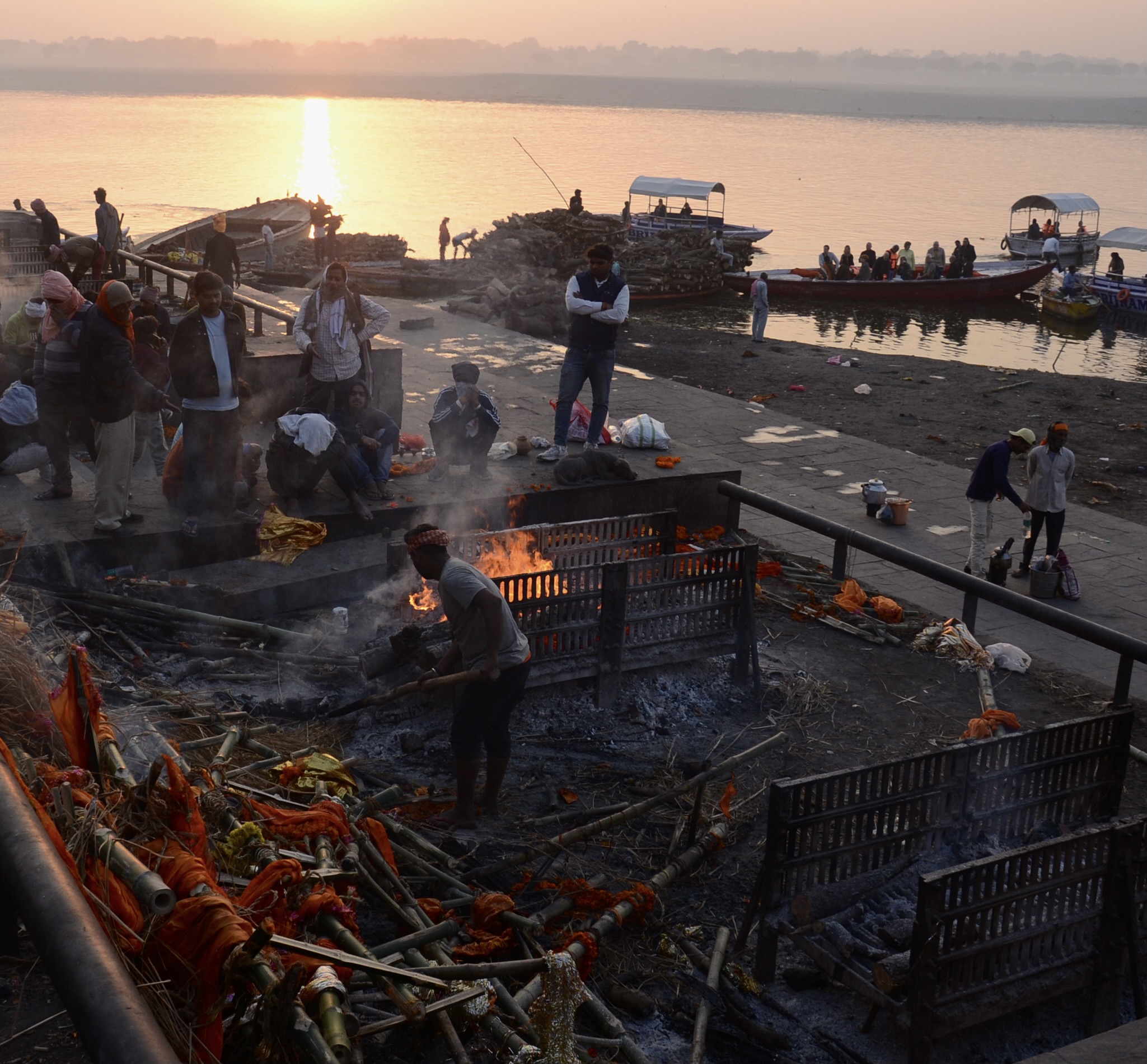
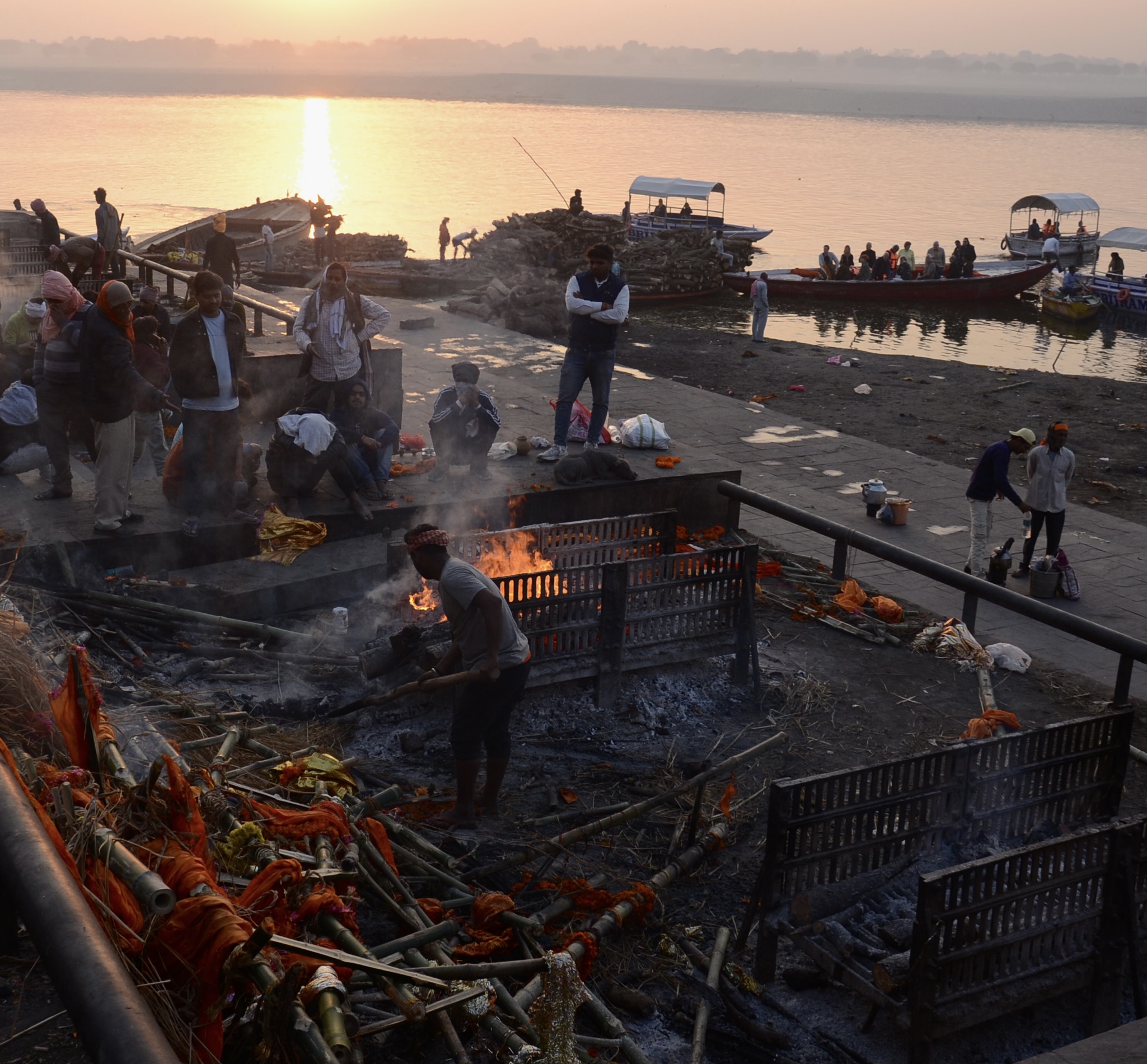
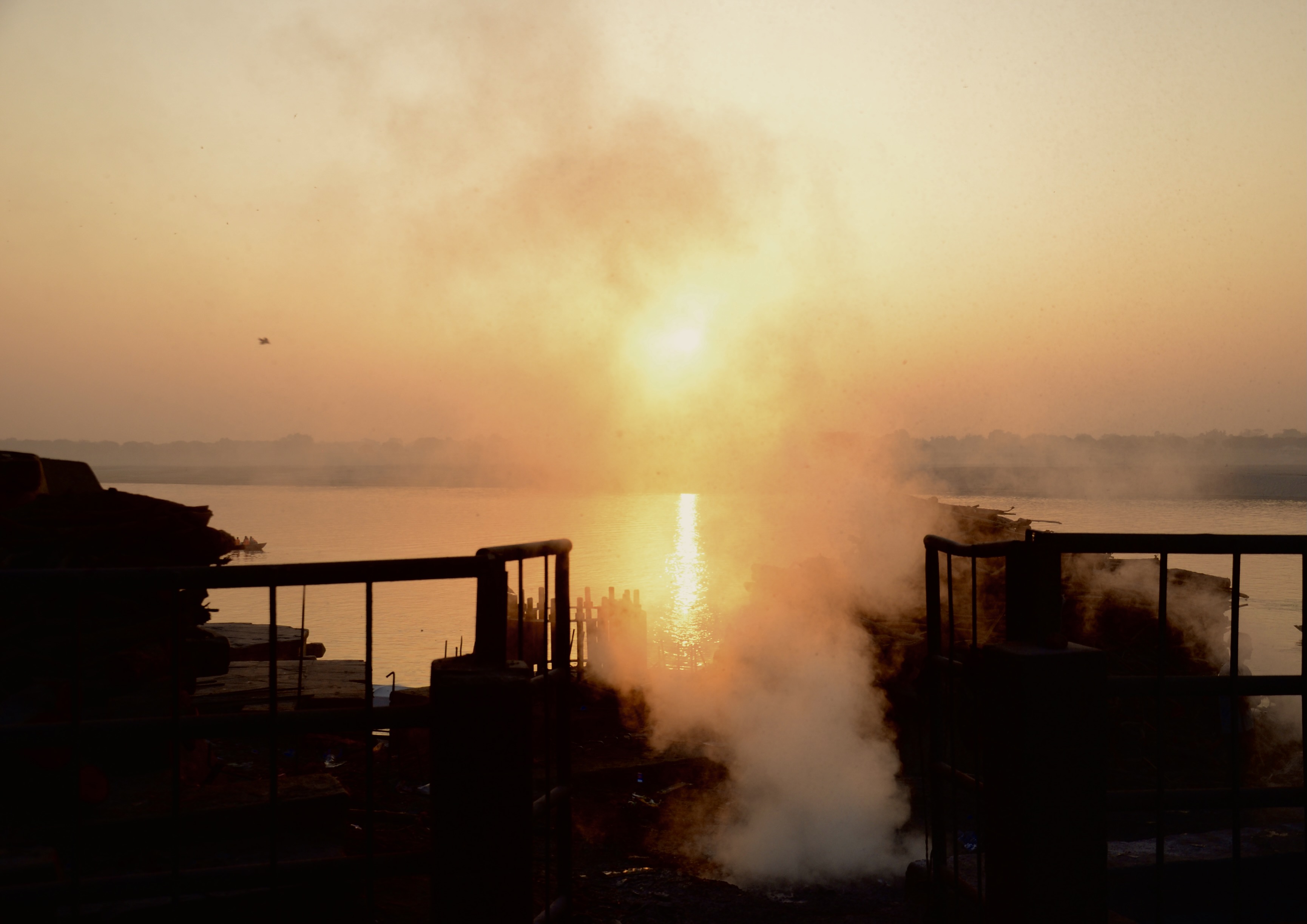
Manikarnika, main burning ghat

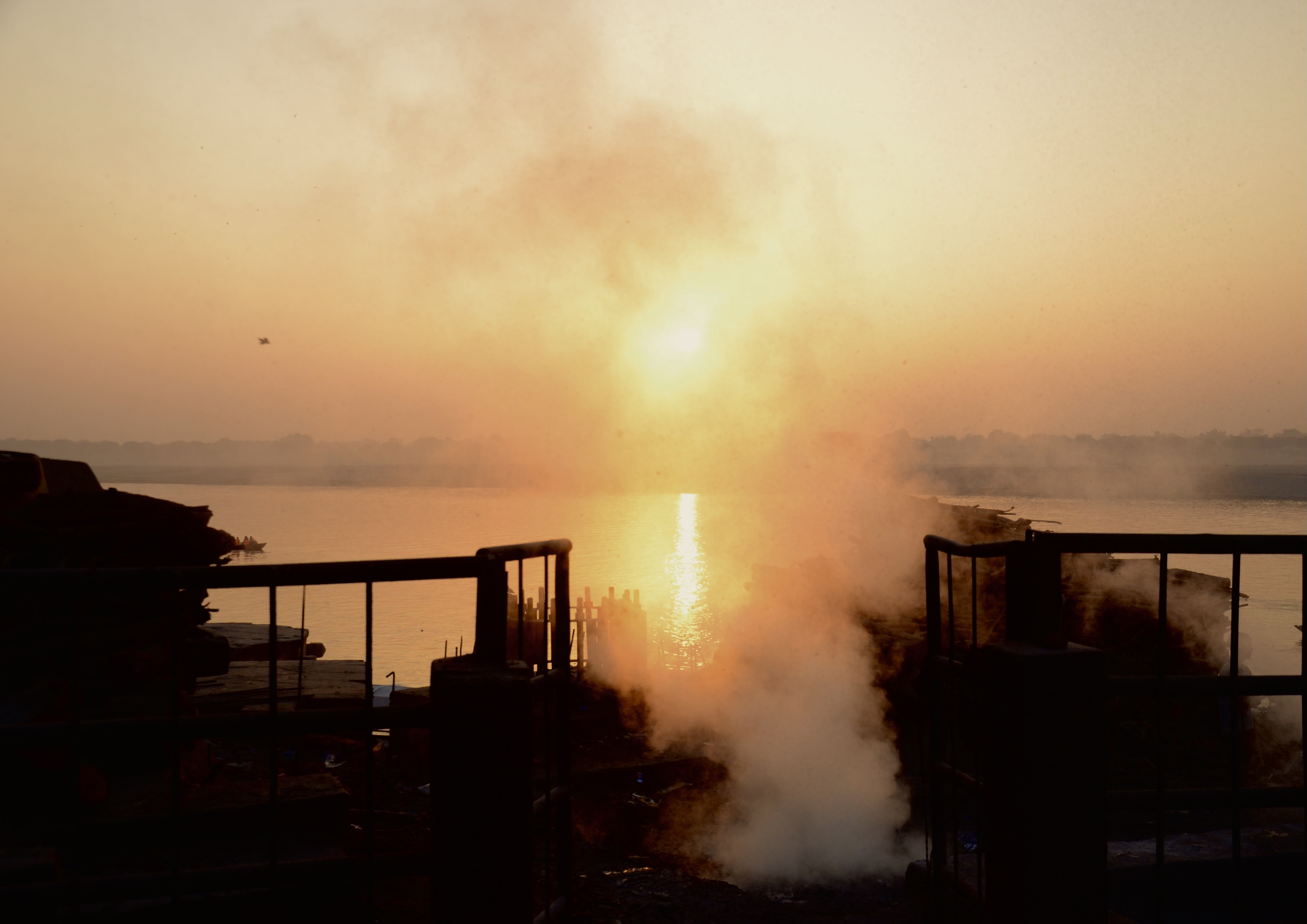
The smoke rising from the dead and the dust of ancient Varansi

Three additional ghats were relegated for burning and to keep up with the demand, instead of one body per pyre, five to ten bodies were burned at once. No vaccines were available at first, the irony when India was making a massive amount but selling it abroad! The only activity was cremation.

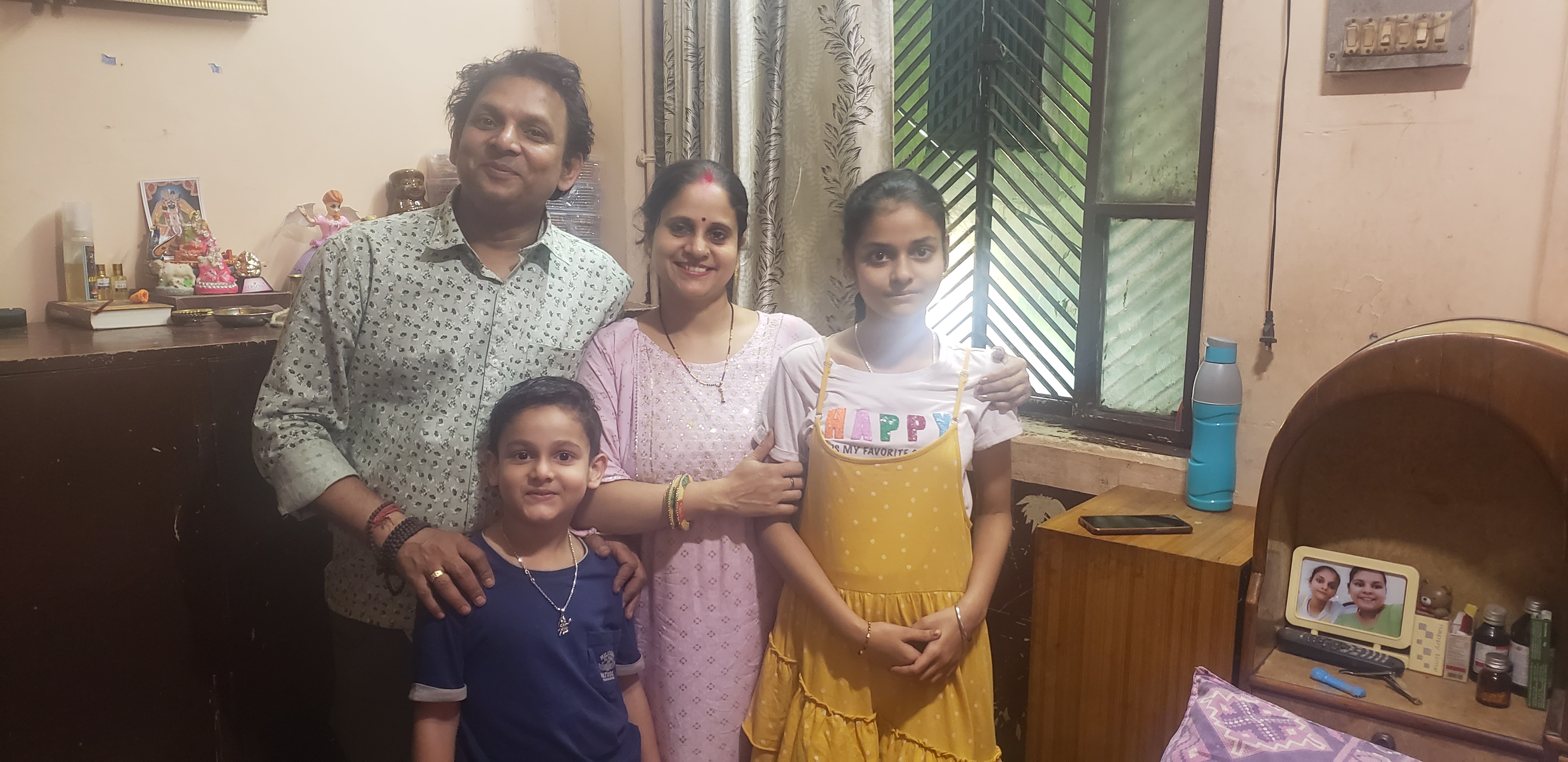
We’ve known Rajesh for about 15 years, even before he was married. He and Gerard connected over the classical Hindustani CDs he sold. Then there was only demand for religious music at his stall on the way to the Golden Temple. Today, he just sells bangles and necklaces. His wife invited us to dinner; it was very sweet to be with his whole family.

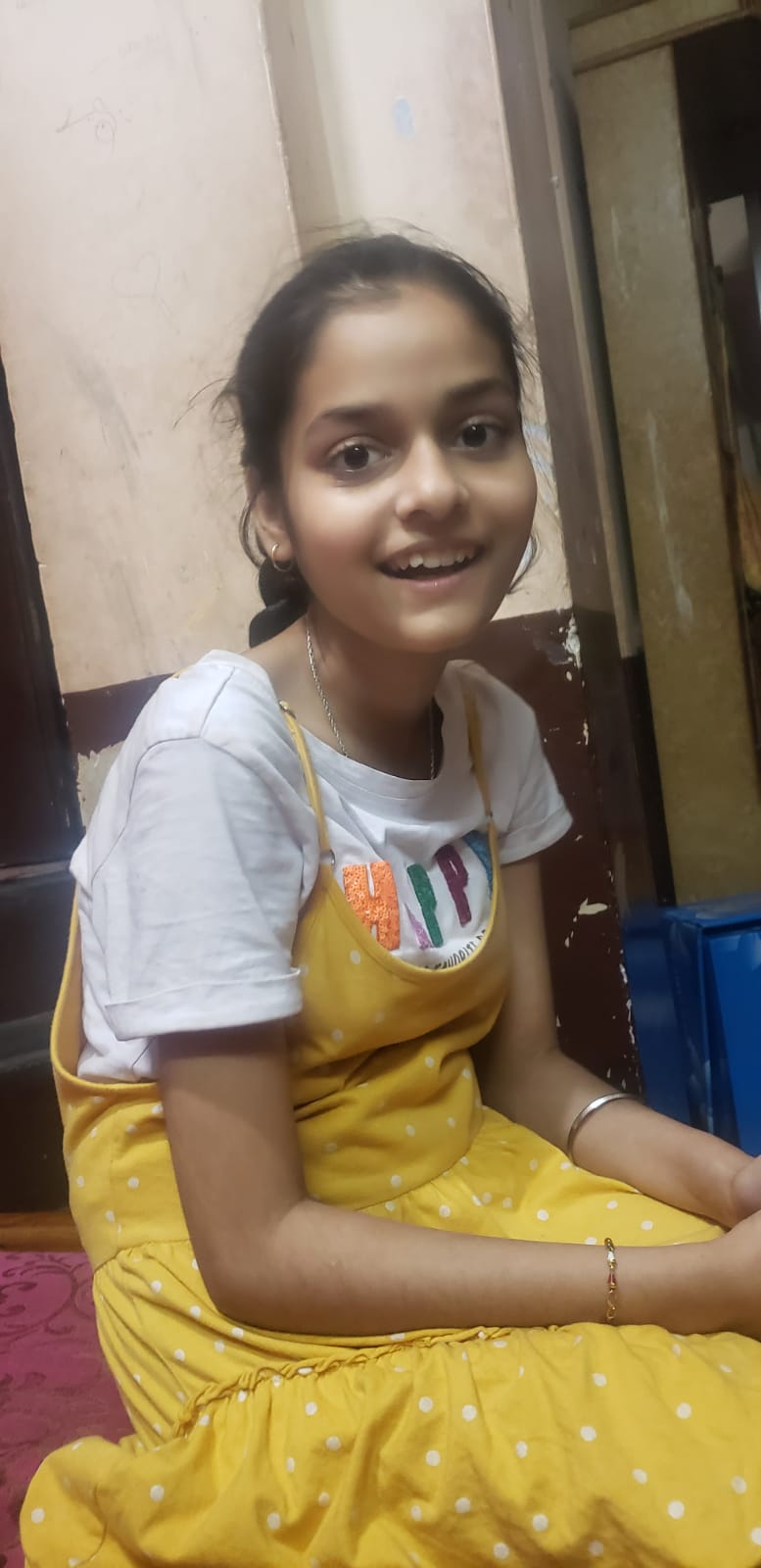
His 12 year old daughter, Sagan, was engaging, showing me her English language test book with almost 100% scores, while her rambunctious young brother, Vinayak, vied for attention.

Durin

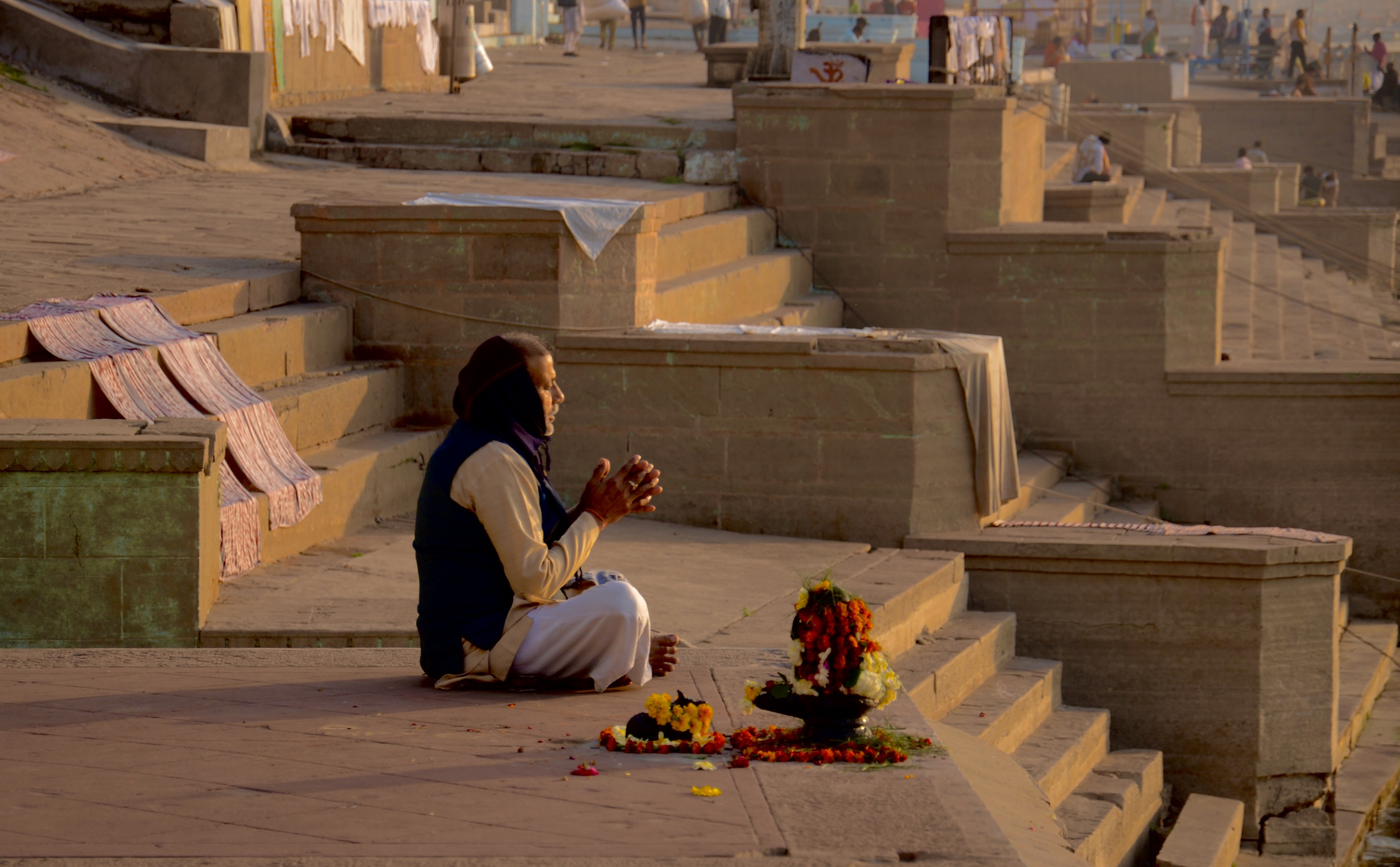
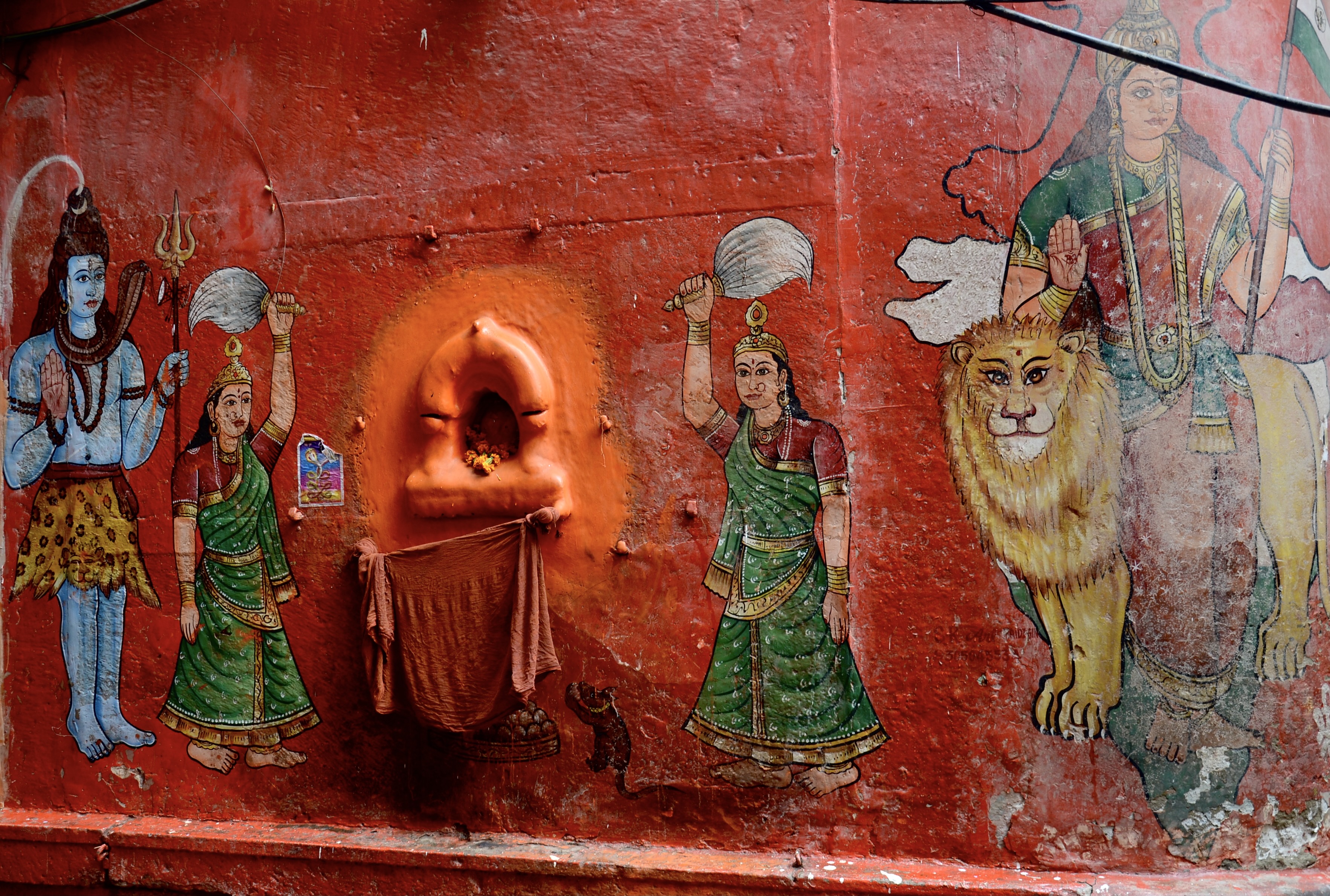
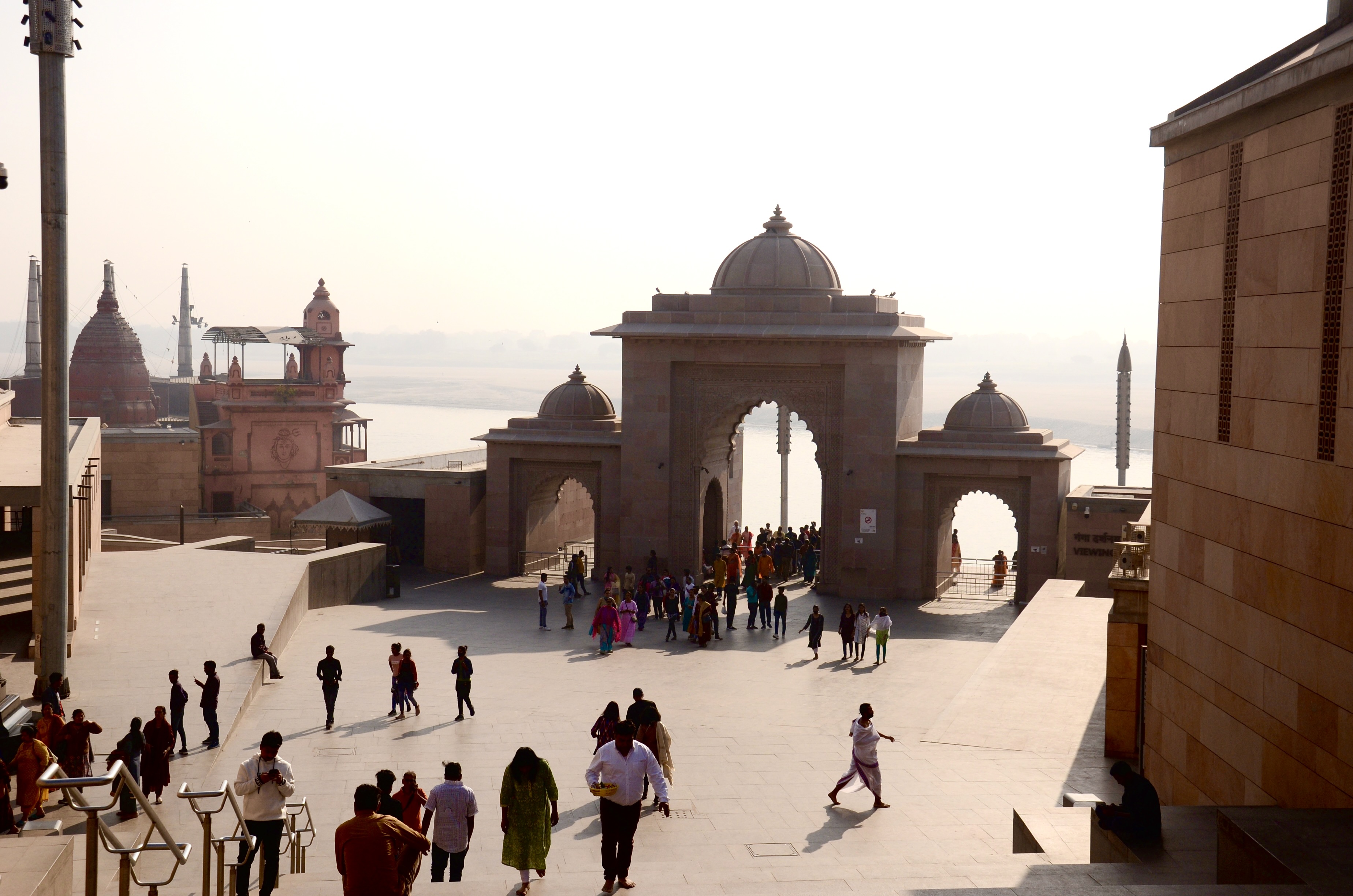
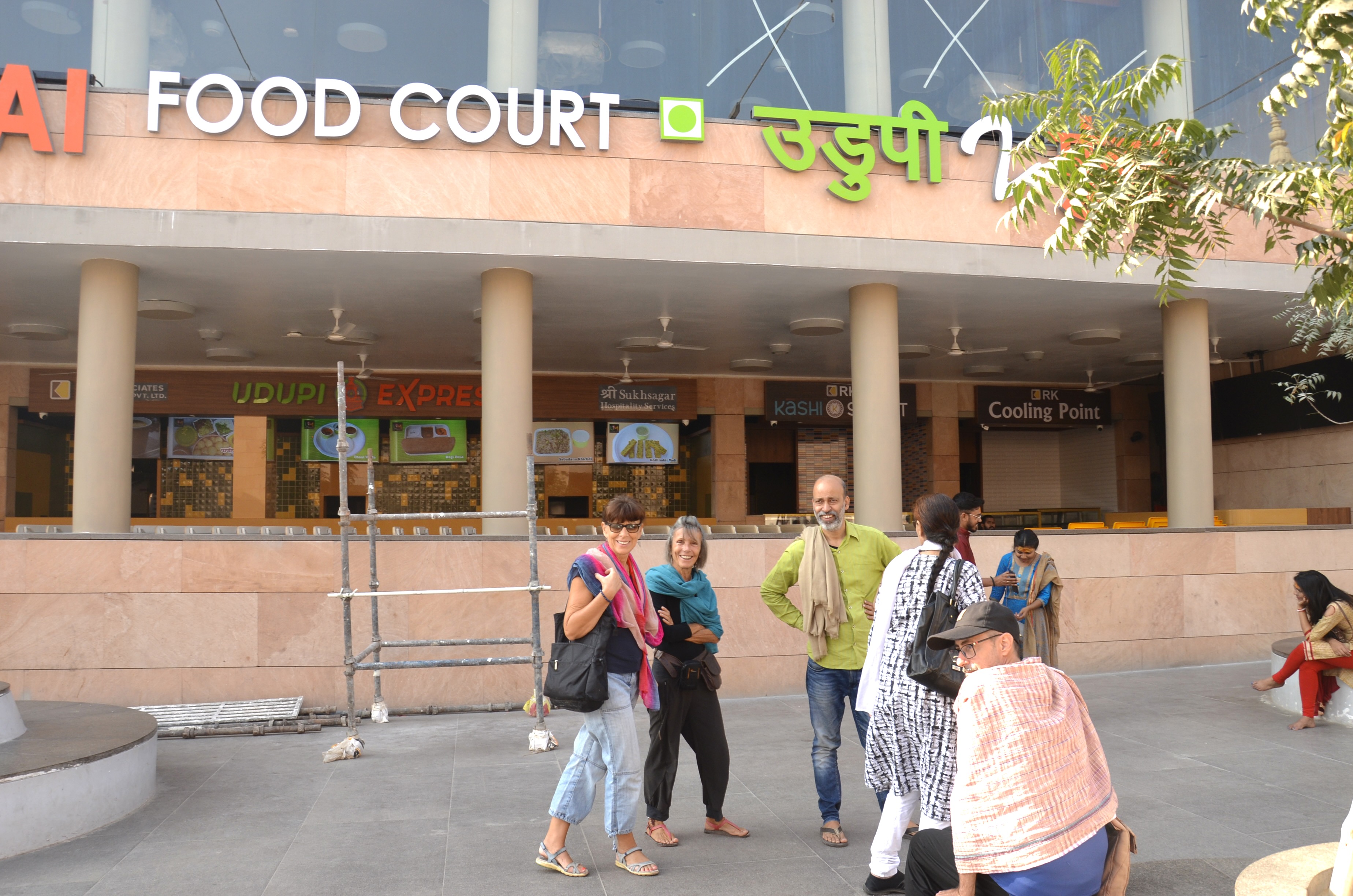
As we have done previously, we accompanied Santosh an accomplished photographer, to watch the sunrise over the river and the pilgrims do their morning puja. We’ve done that many times before and it still remains spectacular. During Covid, many walls were decorated with murals, some better than others. But our sense of awe turned to dismay as the new corridor loomed. A wide stone staircase lead up to the entry way and a fast food court. An admission fee is required to go further into the corridor leading to the Golden Temple.

Three years ago when the project began, we were deeply perplexed that they could tear down part of this ancient city. Now 500 old houses have been destroyed to create this gaping hole of modernity and capitalism.

Just past the corridor, Manikarnika, the rambling main Burning Ghat has been contained. I used to find it mysterious and almost threatening with its confusion of burning bodies, sadhus and pseudo policemen forbidding photography at threat of large fines. Now I can walk by unaccosted.

Manikarnika main burning ghat
The smoke rises from the dead and the ancient city

Admittedly, Modi’s a controversial figure but it seems he wants to turn Varanasi into a tourist attraction. Pilgrims have been coming here to worship and to die for thousands of years. They will continue to come but they will have to compete with the well-heeled tourists.

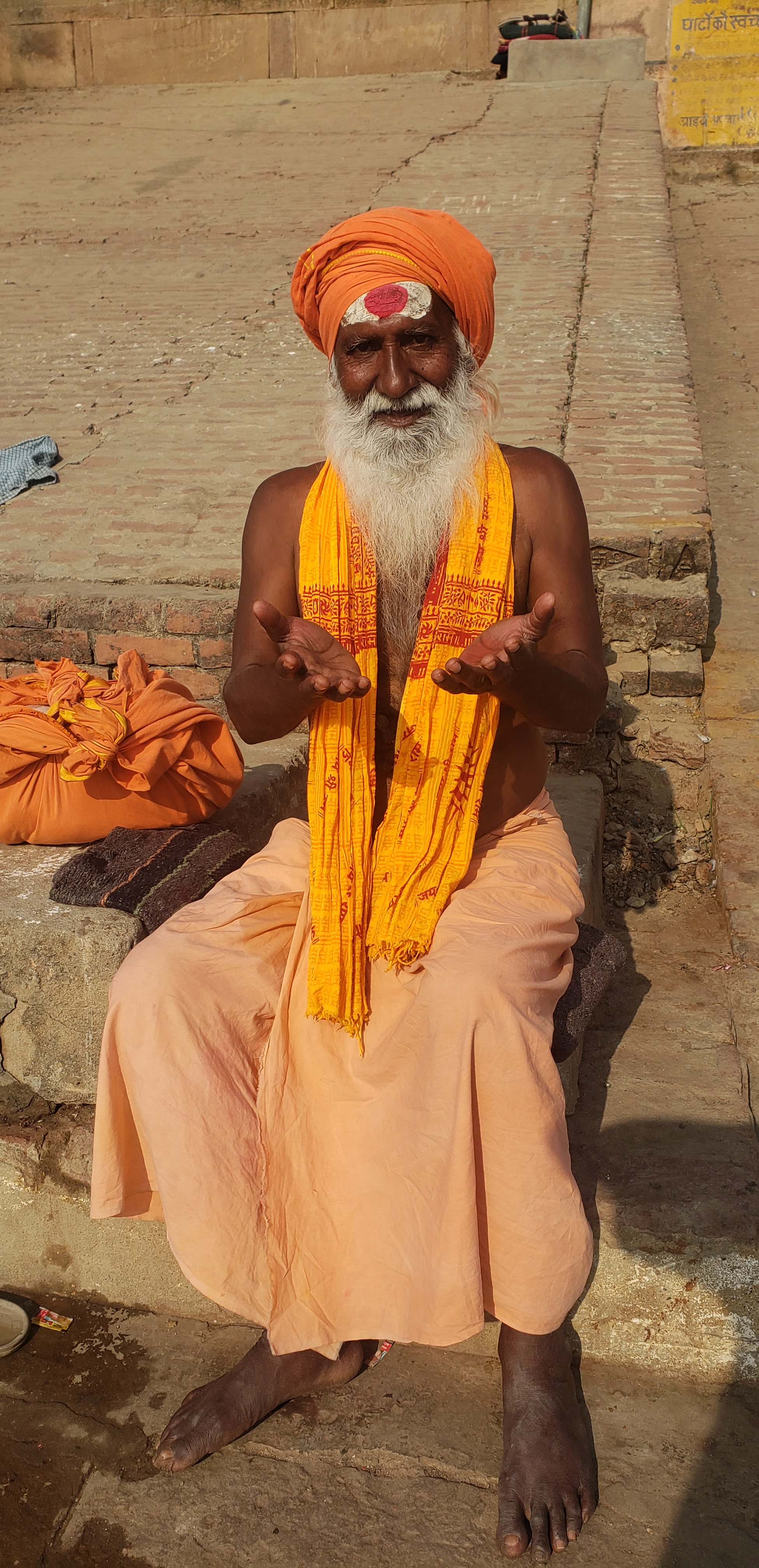
For us, we continue to meet old friends. From the first time we arrived fifteen years ago, we connected with our congenial guesthouse manager, Sanjiv, restaurant owners, shopkeepers, music lovers, chai wallahs, and even beggars. Unimpeded with language difficulties, the friendships strengthened with each visit.

In spite of the encroaching modern world, Varanasi remains remarkably unique: the sun rising over the Ganges, the boats darting back and forth, sadhus performing their spiritual practices.

Shivratri in Gokarna

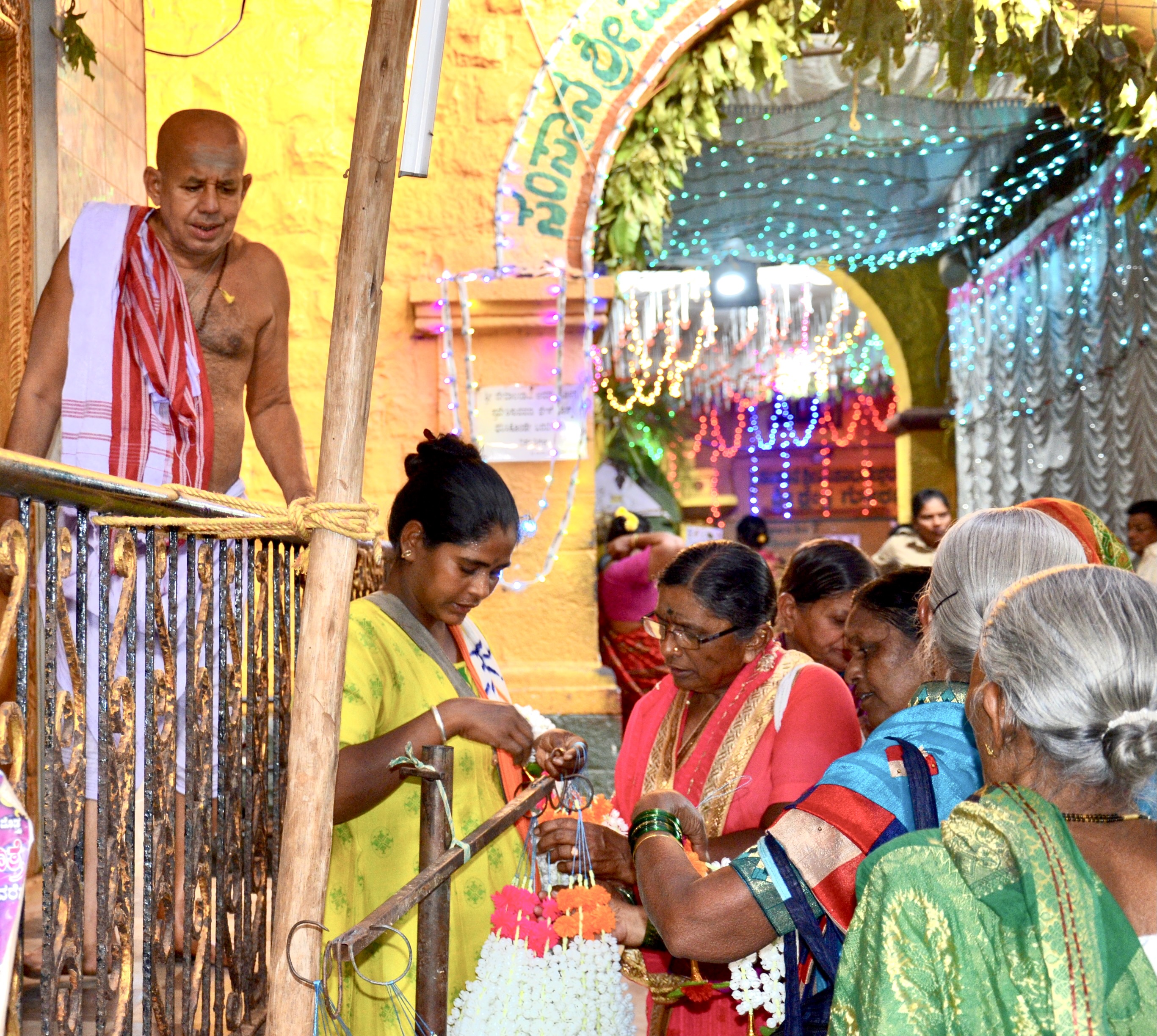
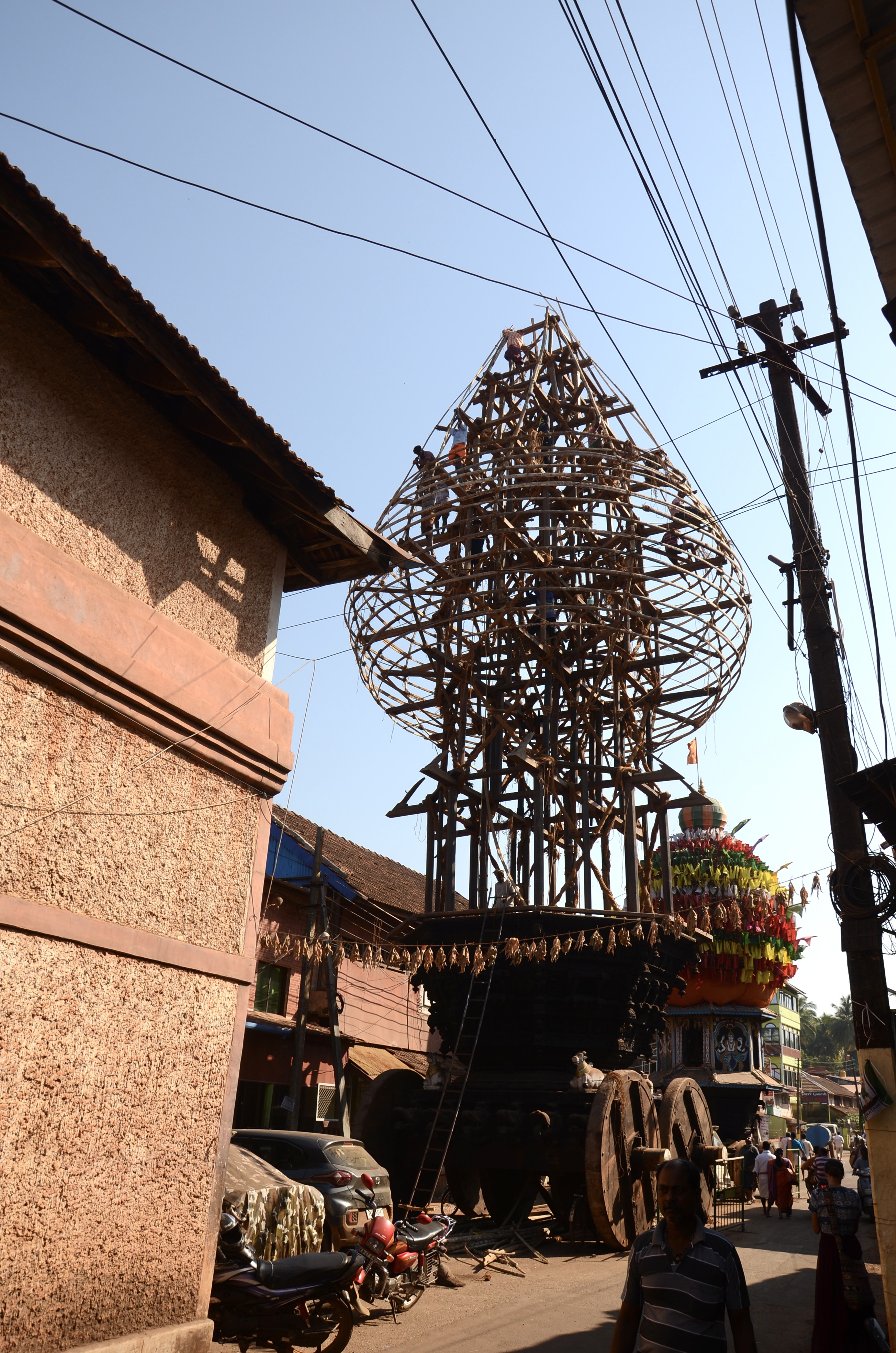
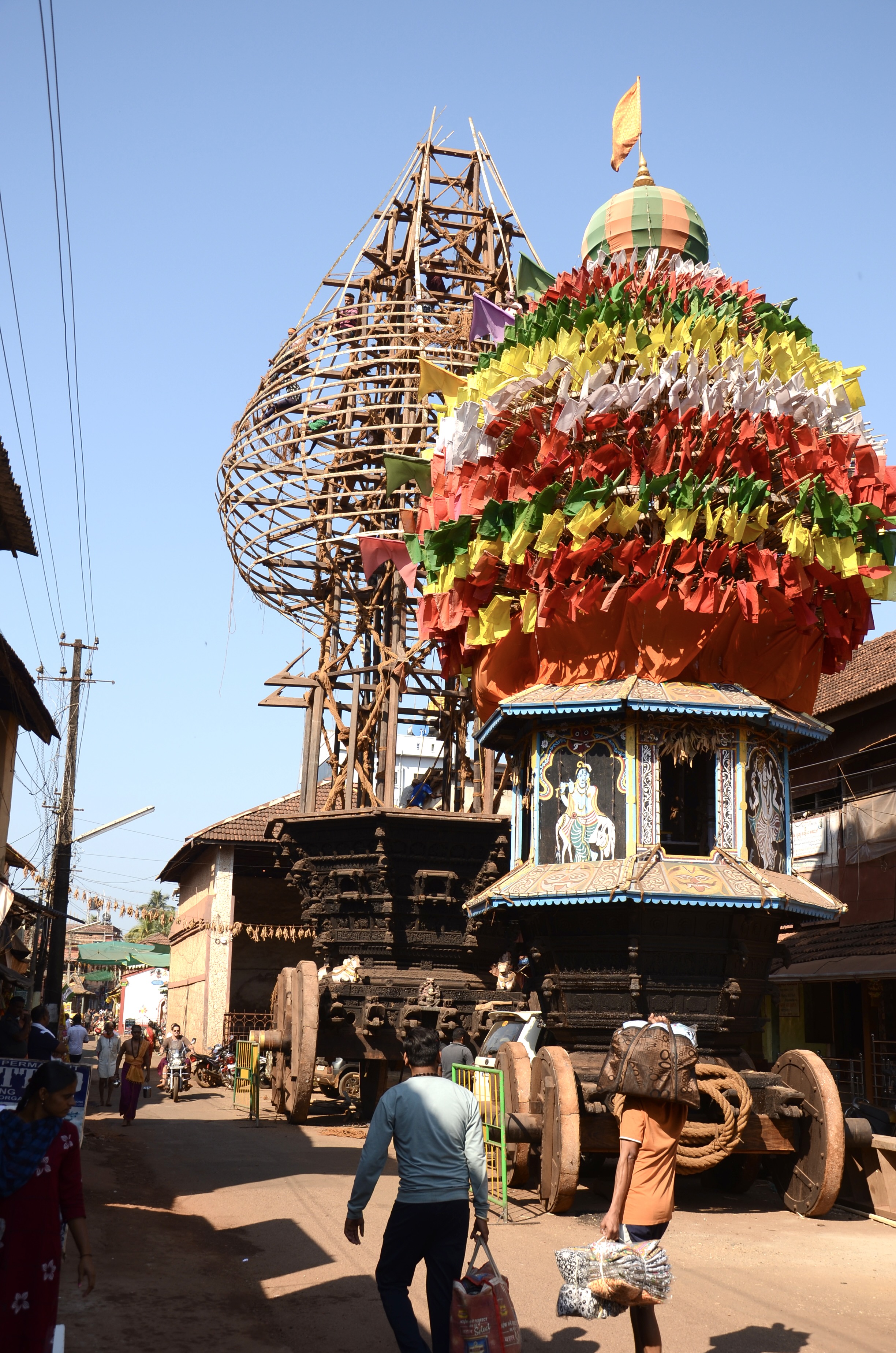
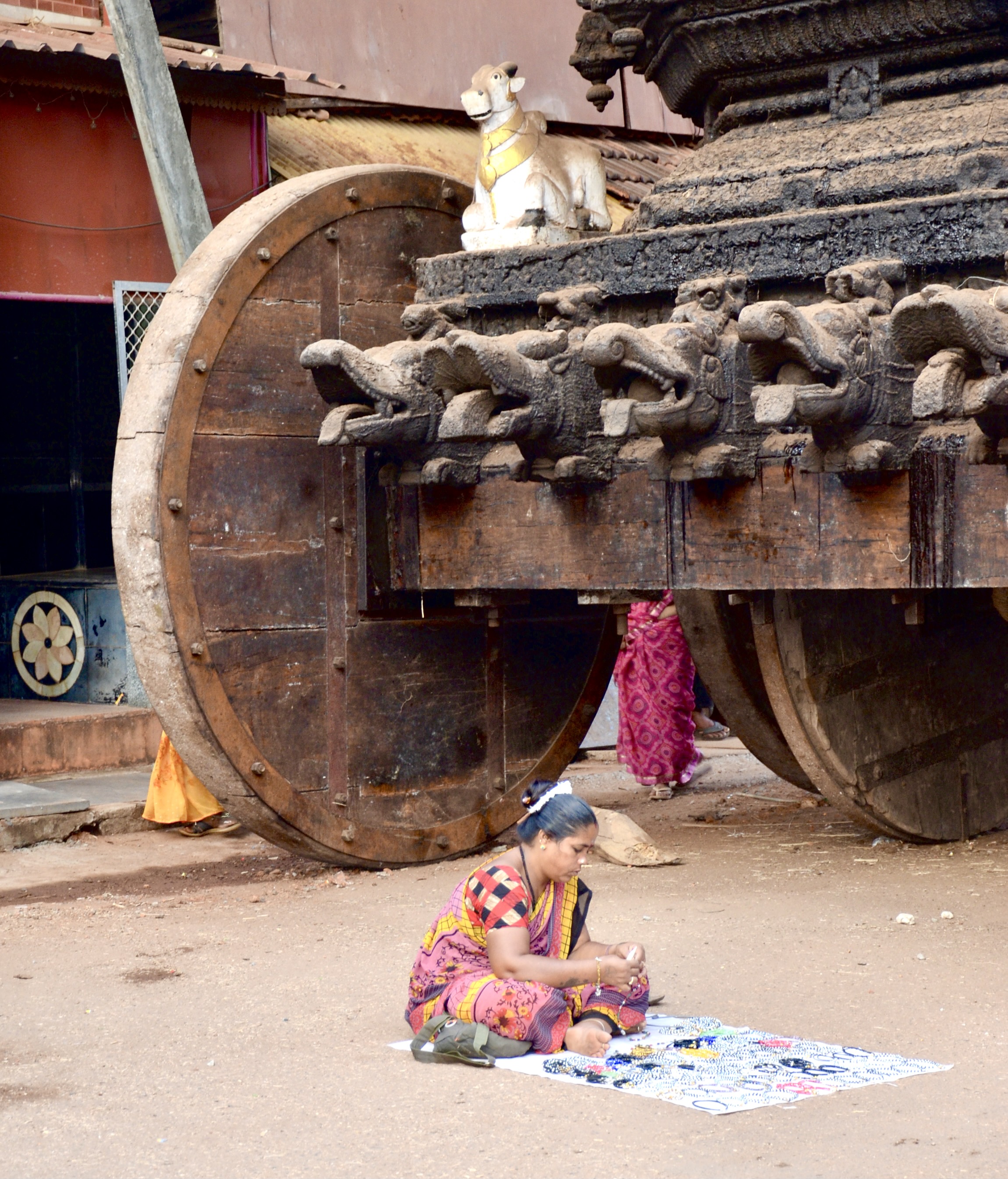
Our last few days in Gokarna coincided with the beginning of the Hindu festival, Shivratri, in honor of Lord Shiva’s birthday. Anticipating much congestion and noise, we were not excited, but we were in for a surprise. Wandering the town we noticed the huge wooden chariot had been pulled out of its parking spot beside the temple. Men clambered on top to build a ballon-shaped super structure, which was then decorated with brightly colored strips of cloth.

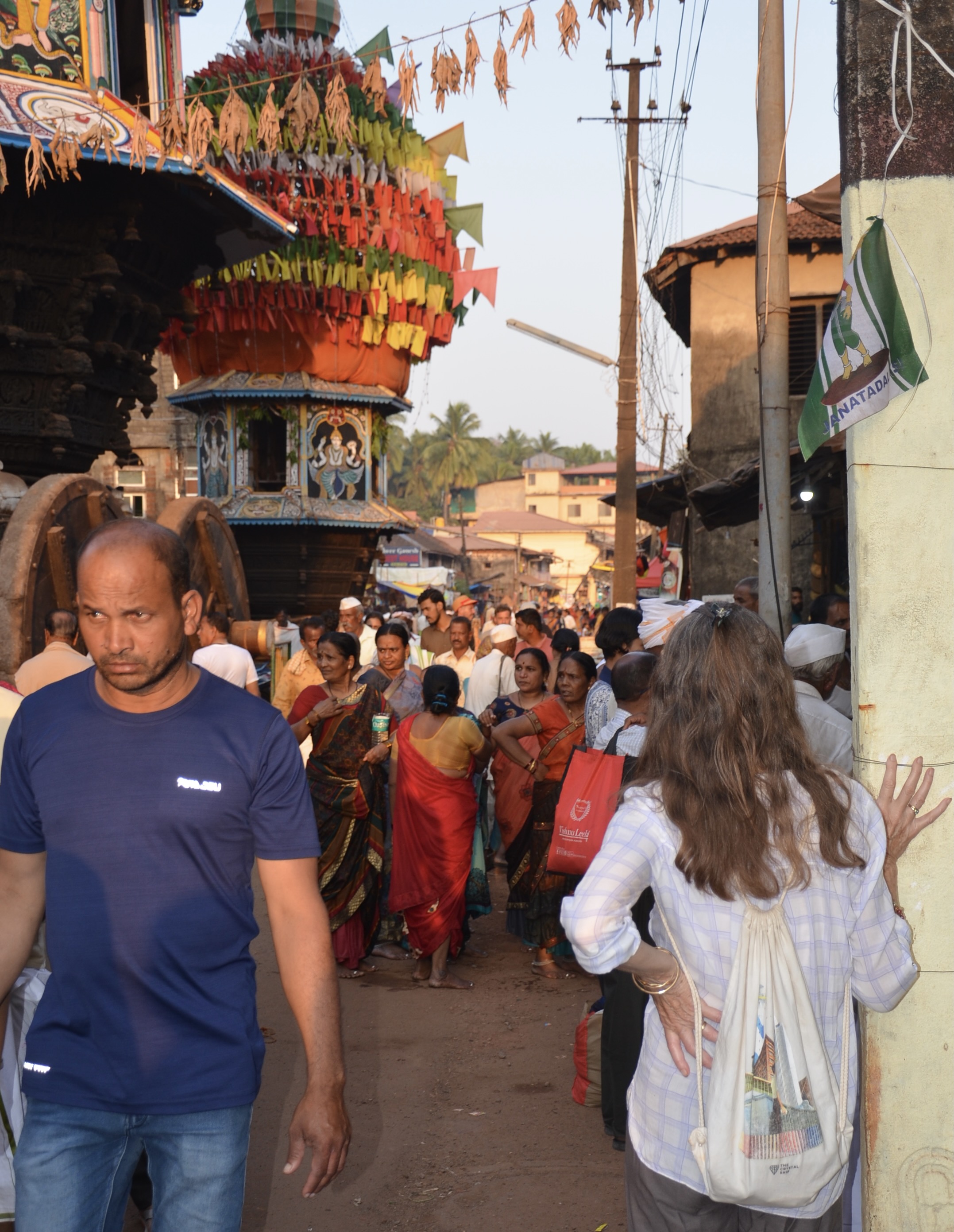
Gokarna was transformed into a busy cacophony of color, people and noise. Stages set up for dance performances, music blasting from loudspeakers. Thousands of devotees queued to perform puja and purchase offerings of flowers and coconuts.

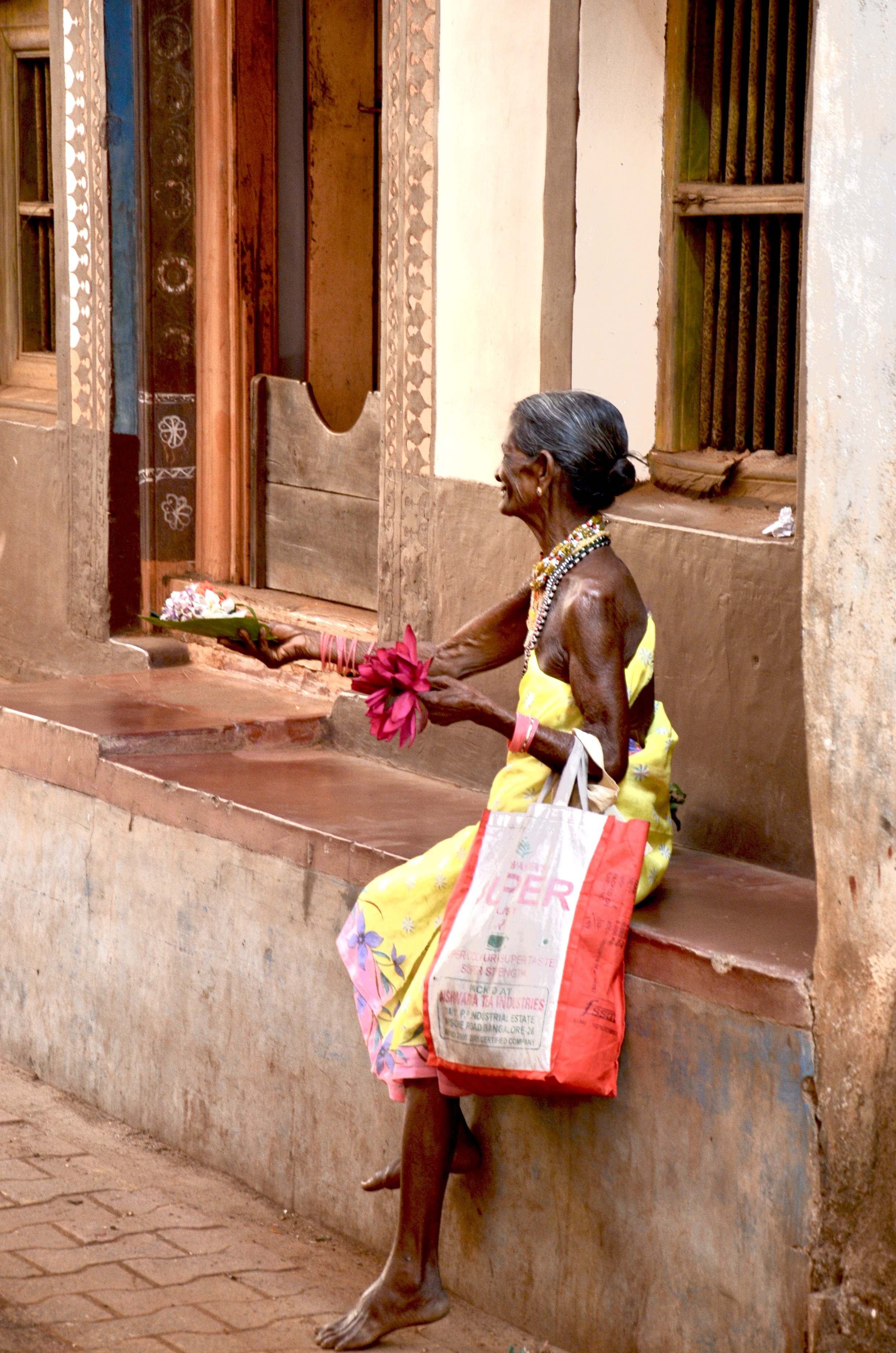
The path from the temple to the beach was covered with a decorated cloth canopy giving some shade to the devotees patiently waiting. Each day the crowd built and the queue grew longer. To enter the temple, they all stood barefoot, their sandals discarded in a large pile. Will they ever find them again? I wonder.

We left town before the finale, when an estimated 20,000 filled the short narrow street to watch the chariot pulled on ropes while onlookers threw bananas at the brahmin priests sitting inside. The reason why has been lost in translation. But the idea of thousands of people throwing bananas and the smell of the overripe fruit did not entice me to want to stay.

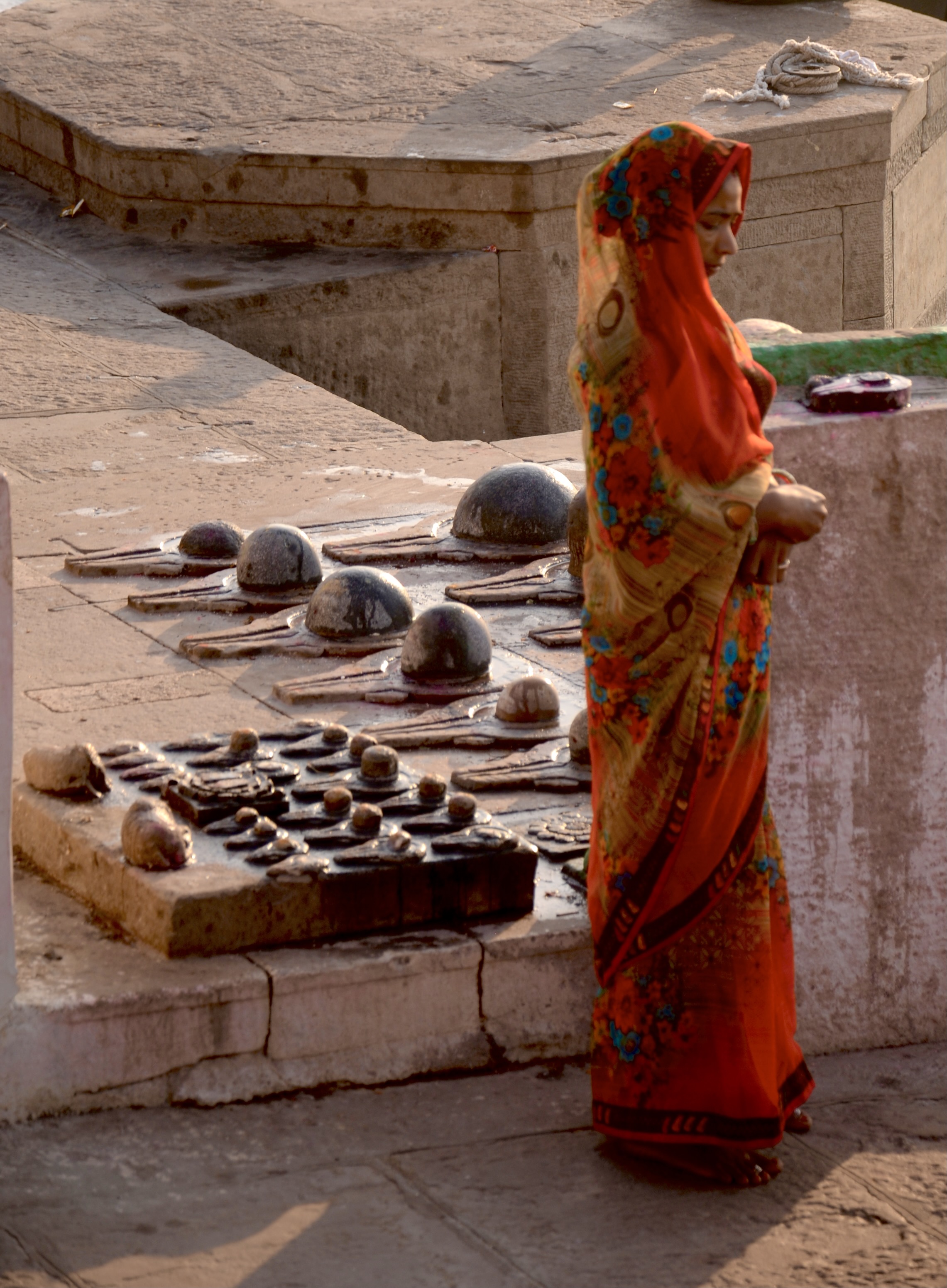
The temple significance lies in a legend associated with Ravana, a mythical demon king. The temple supposedly contains one of the powerful Shivalingam, the center point of worship. Ravana wanted the lingam and through his devotion impressed Shiva to give it to him, but on the condition that wherever Ravana placed the lingam it would be stuck there. In Gokarna, Ravana met Ganesh and asked him to hold the lingam while he prayed. But Ganesh put it down and vanished. Finishing his prayers, Ravana tried to pull it out without success. Tearing the outer covering of the lingam, he threw the pieces in different directions, which became the sites of the different temples in Gokarna.

In the usual Hindu combination of the sacred and secular, the small town became a carnival. Packed in beside the regular shops, a multitude of stalls were set up selling an assortment of plastic kitsch, aluminum kitchen ware, women’s “inner wear”, sugary sweets…and so on. We’ve seen this type of carnival often in Indian towns at the time of the many Hindu festivals.

The near side of the beach, beside the town, was flooded with Indians. They stood crowded together at the edge of the water, some venturing to play in the waves. Instead of sand castles, they built lingams and adorned them with flowers.

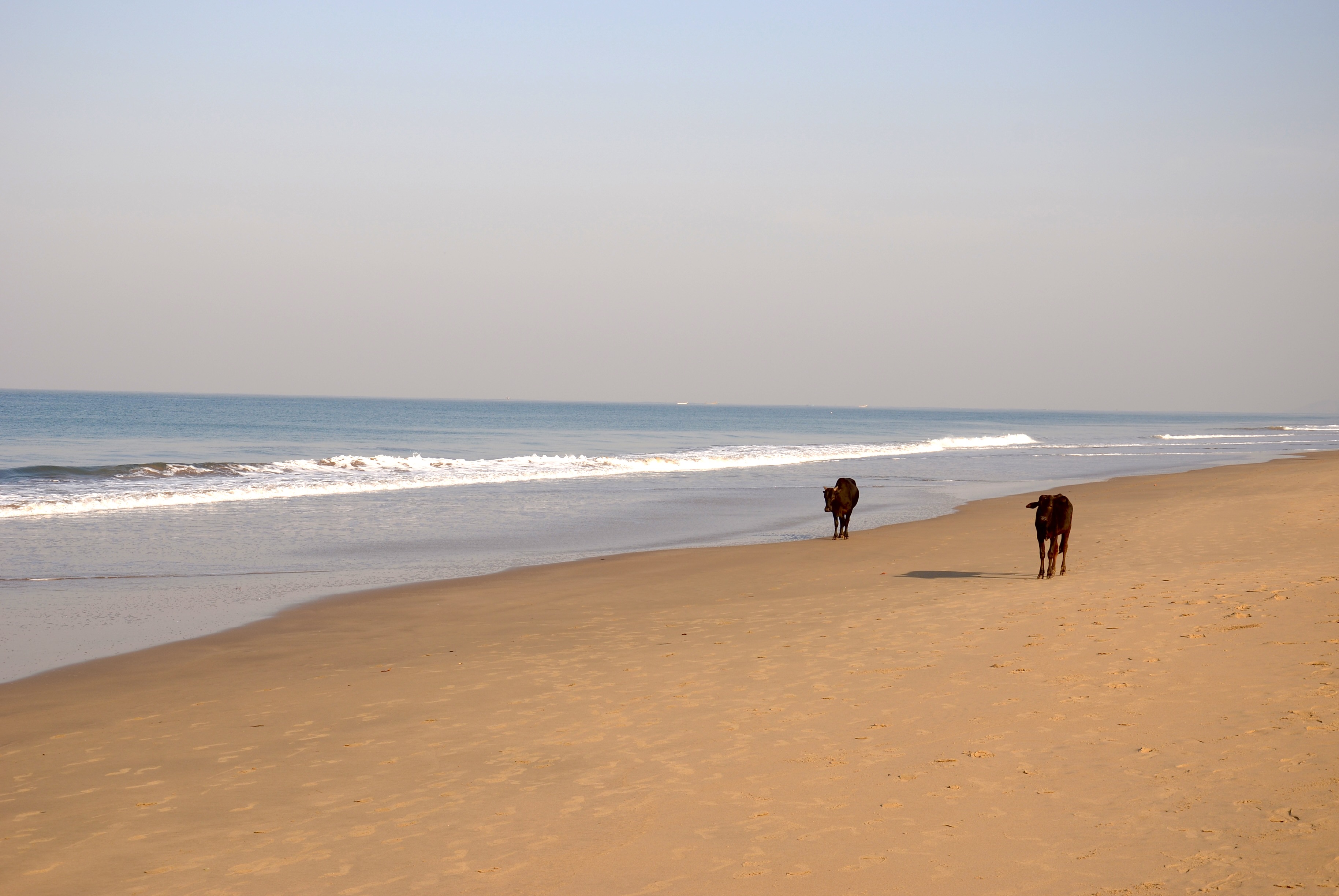
But down at our end, nothing much changed. The dogs and cows still owned the beach, the restaurants remained relatively empty. We continued swimming until the morning of our departure, then packed up. I said goodbye to the beach that had been my friend for the past month, and we took a rickshaw to the train station. Once again, to find our train was too hours late. Finally, it arrived and we found our seats among an extended family returning home to Mumbai. Gerard quickly entered into conversation with them. Dinner time came and they spread out a feast with paper plates and wooden spoons. Even the chapatis were wrapped in newspaper tied with string. I was intrigued by no sign of plastic. Even the vendor walking up down the corridor sold us clay pots of yoghurt with wooden spoons. It seems in this part of India, the notion of no plastic is taking root. Still talking, Gerard remarked that we won’t find such camaraderie on tomorrow’s airplane!