India is a cheap escape from winter. But it’s much more than that…the attraction to a country that is so large and so diverse physically, economically and spiritually is powerful. To those of us who are attracted, India can be addictive.
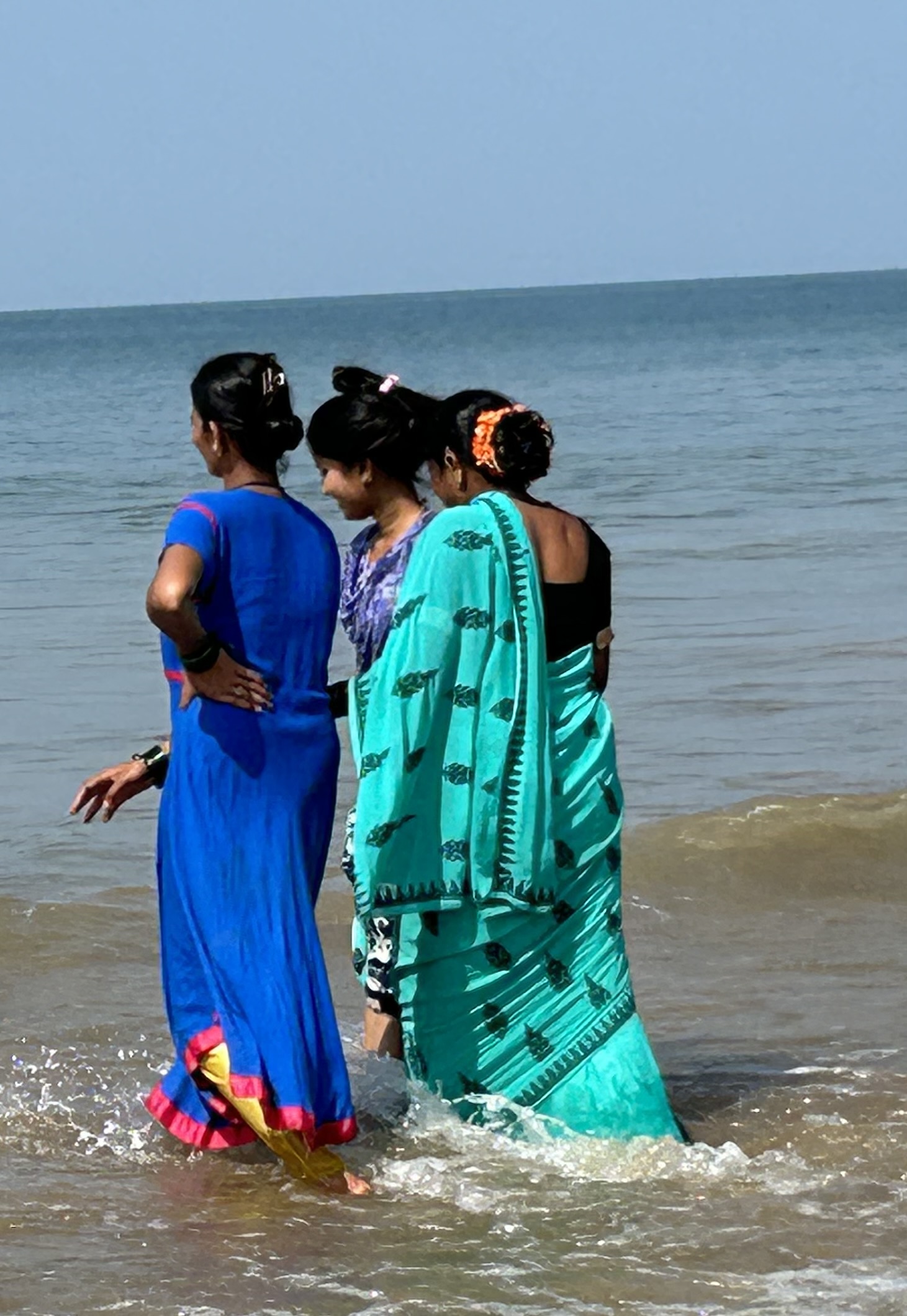
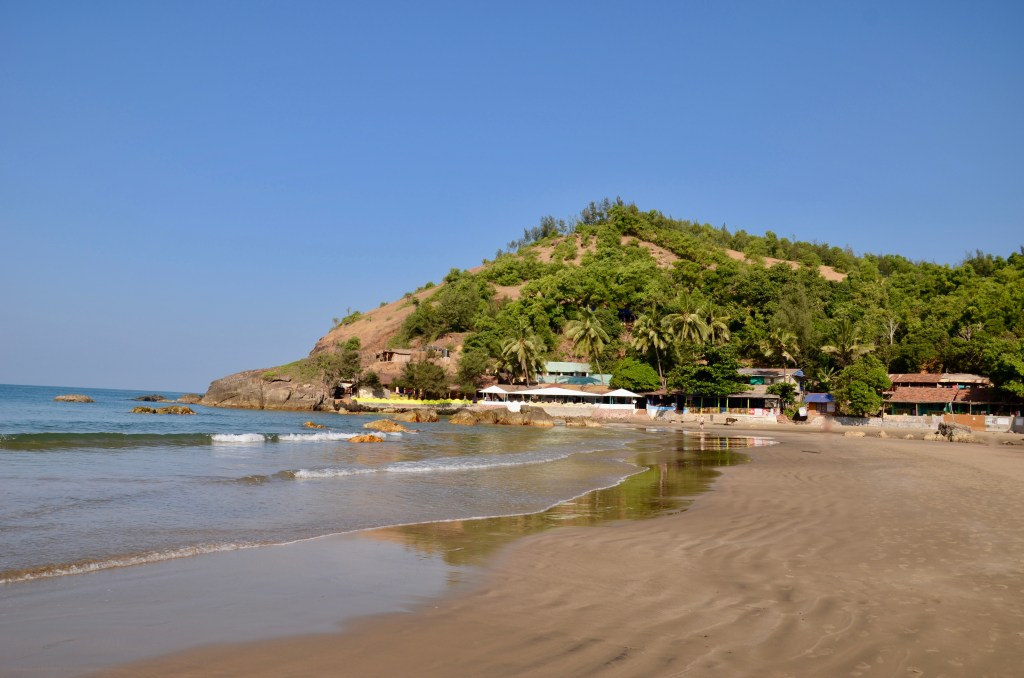
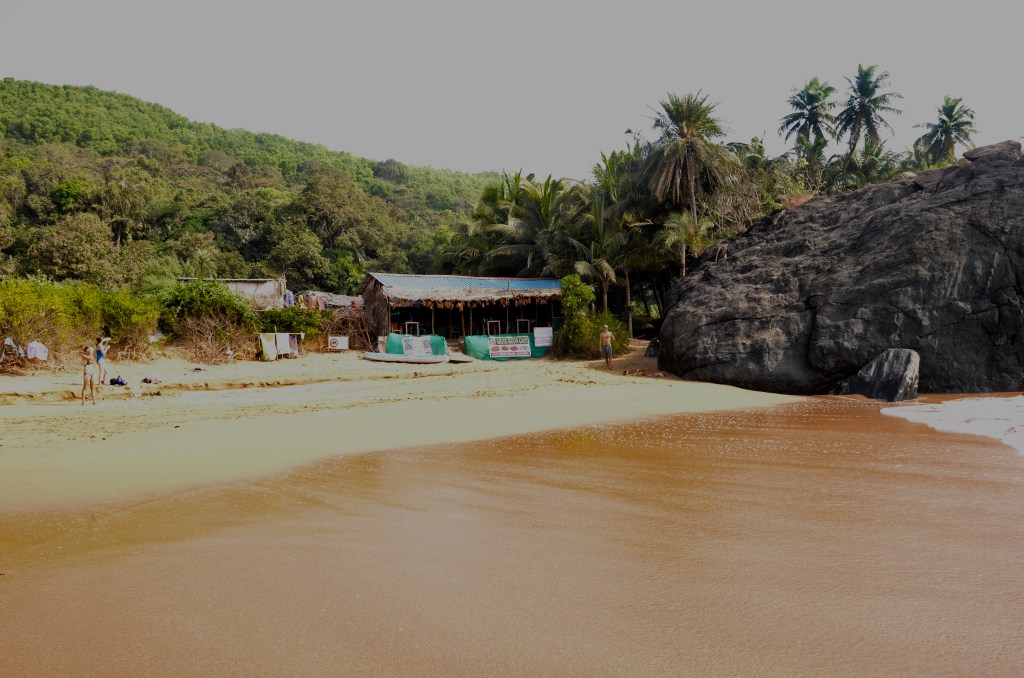
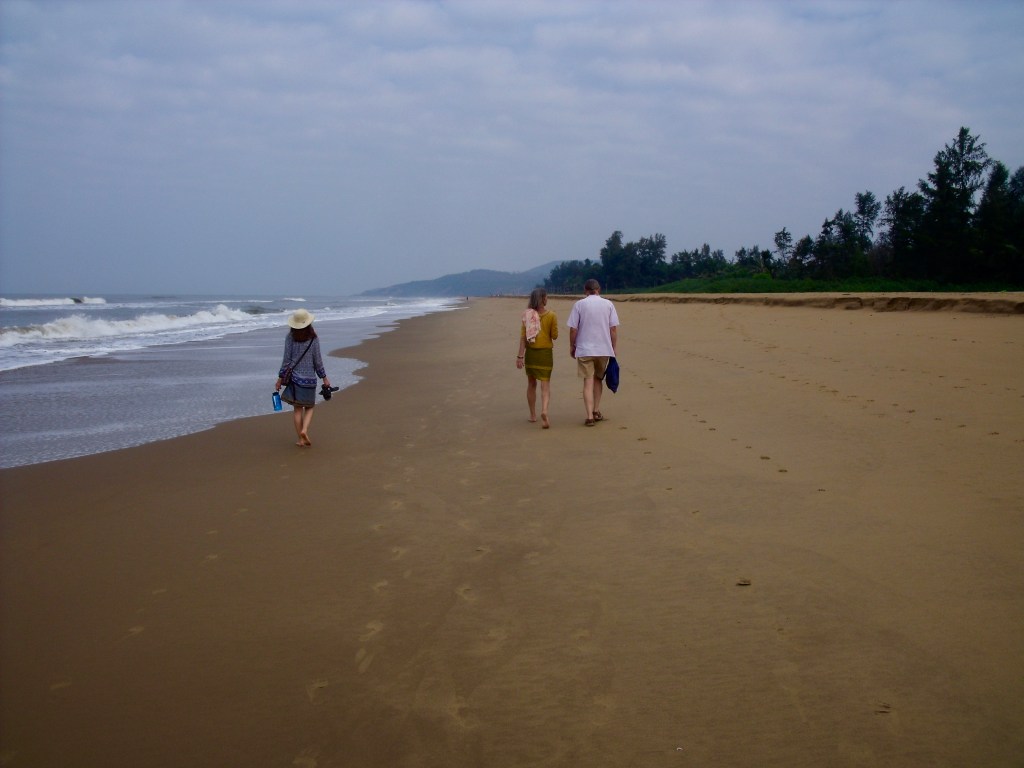
Here at the beach my life revolves around the sea. We swim every morning, in the afternoon I walk along the water’s edge (one swim a day is enough for my dry aging skin), and in the evening we go back to the beach before sunset for dinner at one of the restaurants there. I’m drawn to the sea like a magnet. Today there were high waves that made it too difficult for swimming, but I still had to play in the surf. I share my love affair with other westerners who return year after year and now more Indian tourists are joining in.
Even though they don’t generally swim, they love to splash around in the water fully clothed.
A few days ago, a large water turtle was washed up at the edge of the sea. I knew it was dead because its head was fully extended from its shell. But the turtle could only have died a short while ago because its scaly head and fins were still pristine. Later that evening I was relieved to see it gone. I didn’t like to imagine this noble creature being picked at by birds or dogs.
Last week, I was reminded about how dangerous the sea can be. A Russian woman out swimming by herself ran into a boat. No one knows if it was a fishing boat, pleasure boat, large or small. Her face was badly cut but there was also fear of brain damage and she was taken to a Goan hospital. The strange thing was even though she’d been coming here for three years, no one knew her. The Russian living in a hut next door accompanied her to the hospital but didn’t even know her name.
Marion and Juergen have arrived from Germany. They’ve been in the country for two weeks, and have a nightmarish story of sickness. They had just arrived in Mysore when Juergen had what seemed to be a heart attack. They went to the hospital and he was kept for several days while all kinds of tests were done. Fortunately there was no evidence of a heart attack, but no conclusive explanation. And of course quite a large bill. All too familiar to Gerard’s mysterious heart episode last summer.
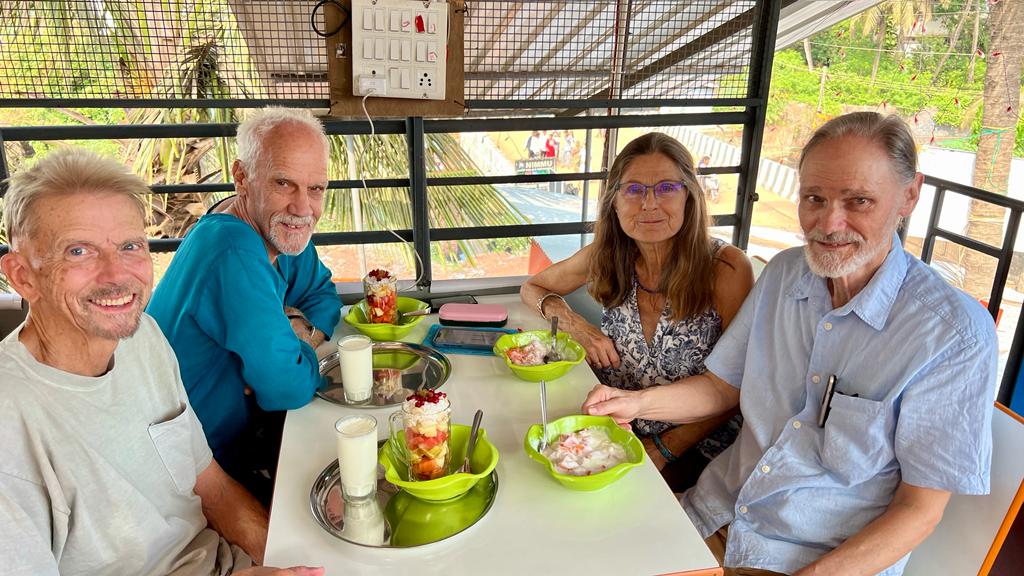
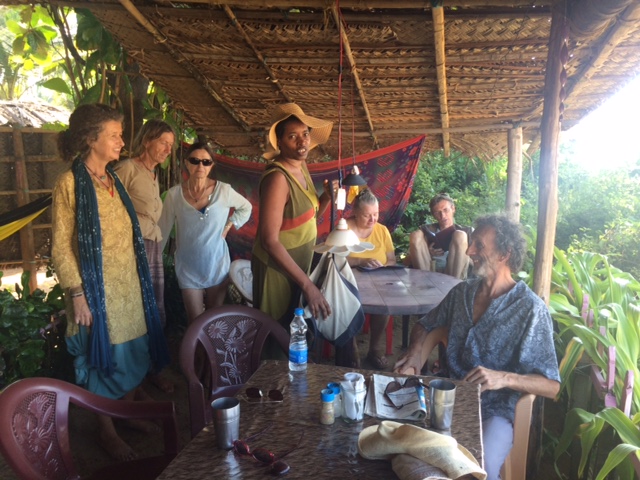
Frank, Peter, me and Gerard
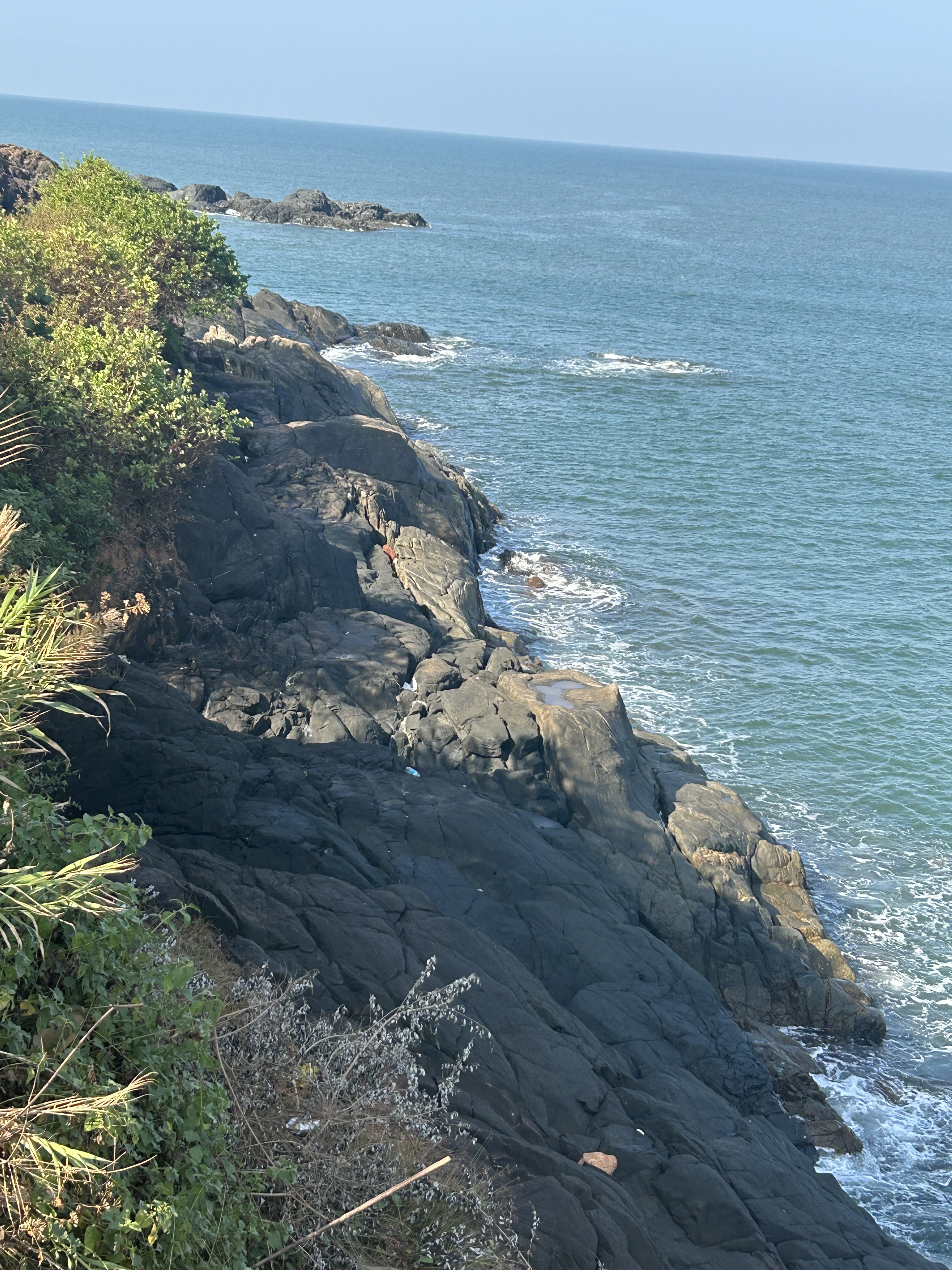
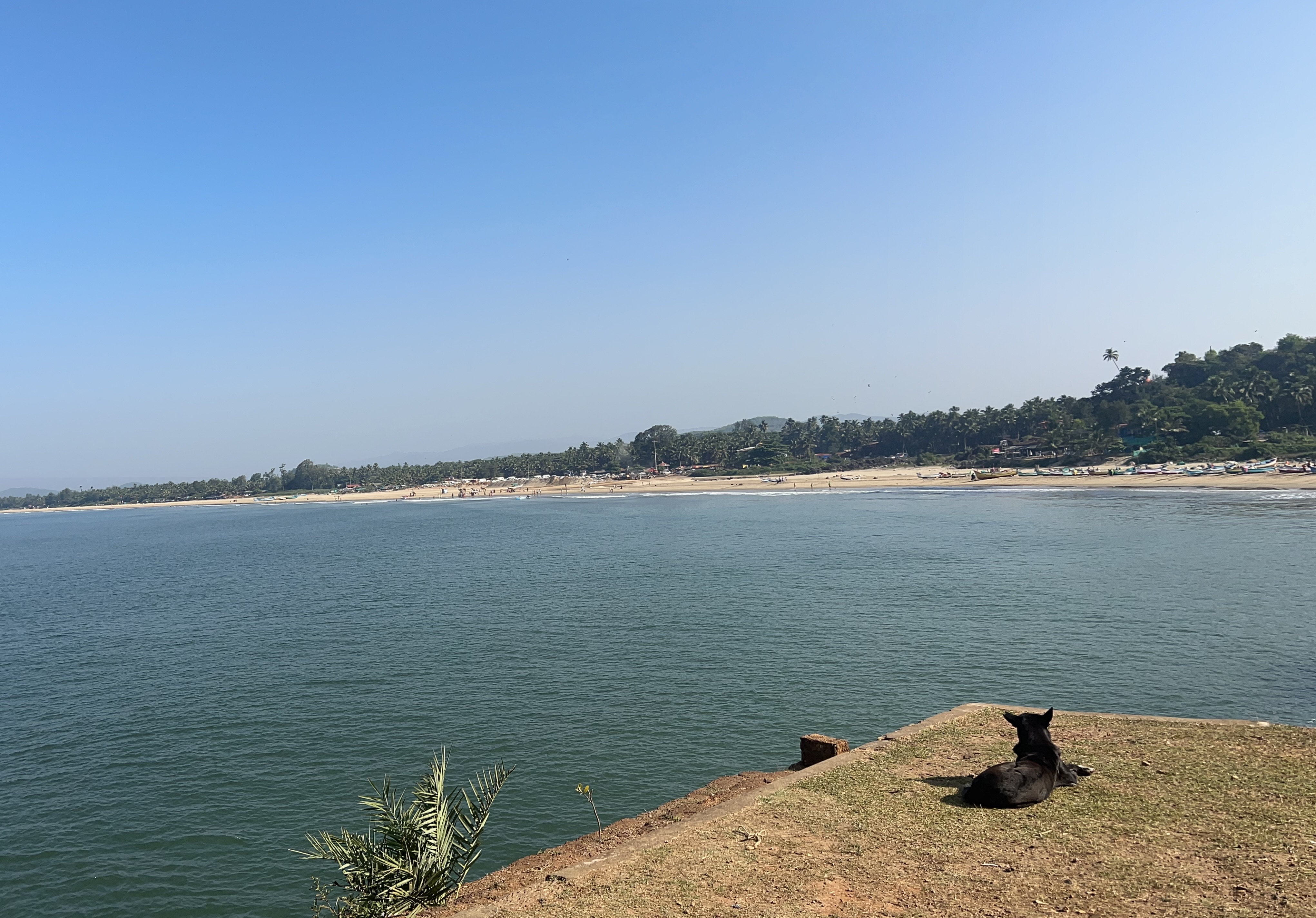
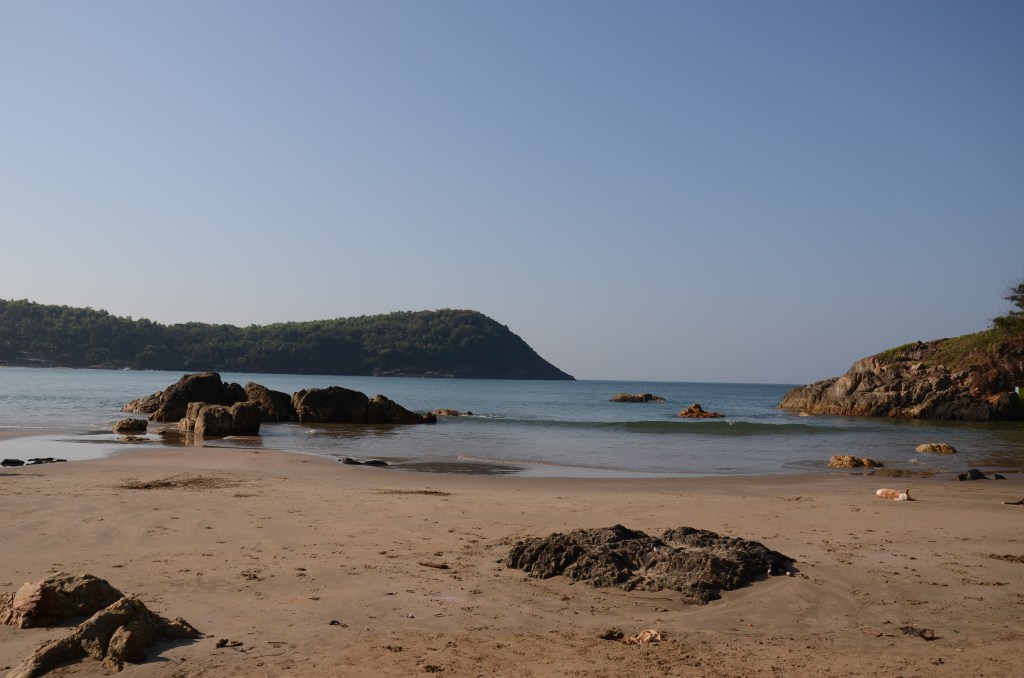
Peter, our friend who lives in Auroville, has arrived to stay for a week. He came with a long time friend who had never been to India before but in a few months was covering a lot of the country, from Kashmir in the north, to Kerrala in the south. They’re staying at the far end of the beach from us. A beautiful spot, but too rocky for swimming. Looking back down the coast to where we are staying, I was impressed at the long and relatively empty beach.
The opportunity to talk with women one-on-one offsets the hearing difficulties of loud India. Assuntina, a friend of Marina’s, is here for ten days and we walk the beach together in the afternoon. I tell her I’m too dependent on Gerard since my hearing loss. A social worker, she suggests I begin taking measures now in case he dies before me. I give serious thought to her advice. But when I see her again she tells me she had worried she’d gone too far in talking about Gerard dying and upset me. I welcomed her encouragement for me to contemplate Gerard’s death, or my own for that matter. At the cafe, I approach Iris an elderly lady from Germany, who I’d notice wears hearing aids. When I question her on how she deals with traveling here alone, she assures me, “Of course you could manage too! I saw you talking with a woman,” and she motions over to Assuntina. “Yes,” I say, “ but I was doing all the talking; it was a one-way conversation.” Even at the beach, it’s a noisy world but I’m glad I’m here.
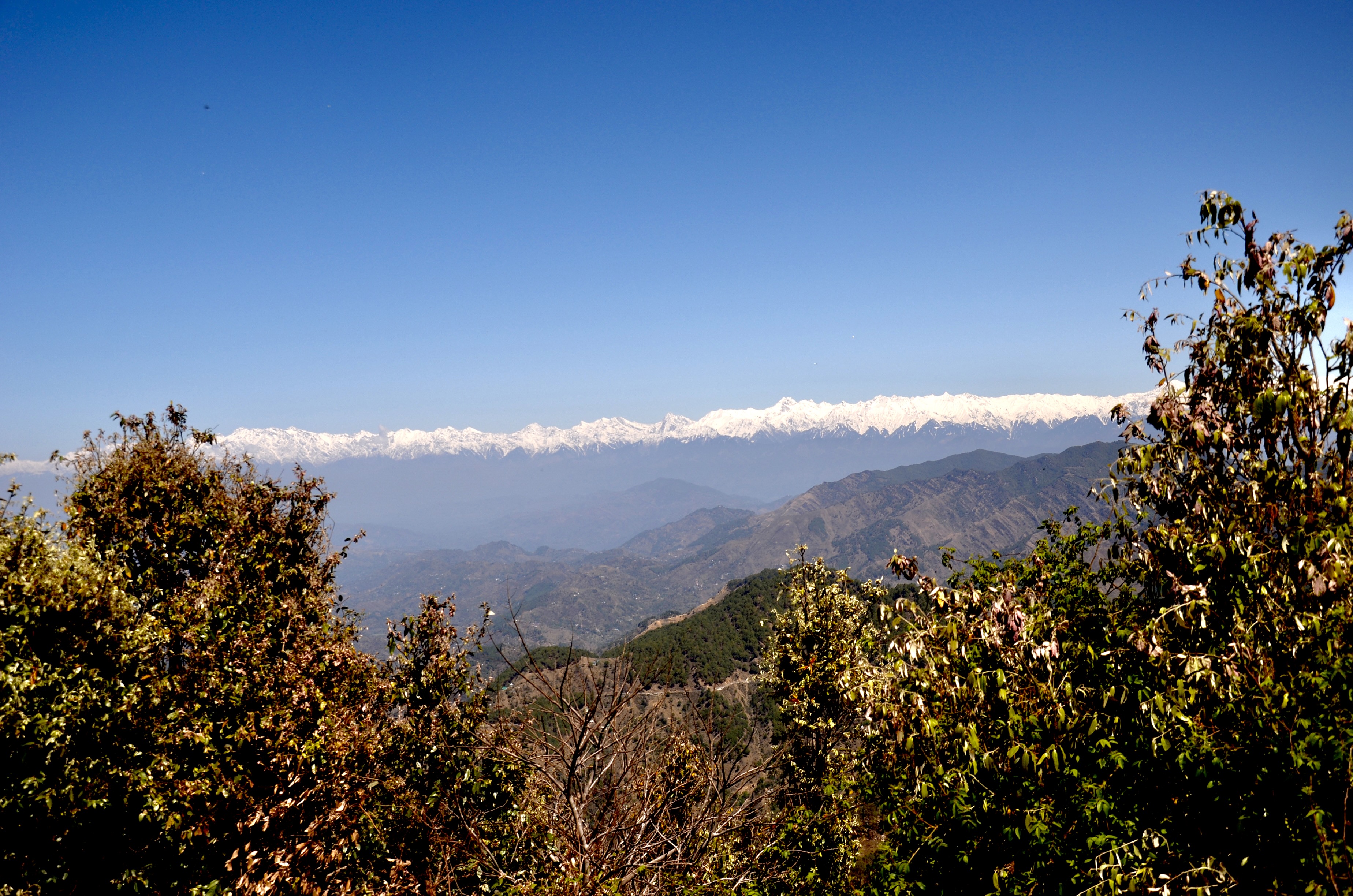
The overnight bus ride from Delhi to Mandi was surprisingly smooth. A new bus left on time. We stopped for dinner at an all veg restaurant and arrived at 6.45 am. As we jostled our way up the hillside in the local bus, the sun rose and the mountains were clear. After Katmandu and then Delhi, the air felt unbelievably fresh and clean.
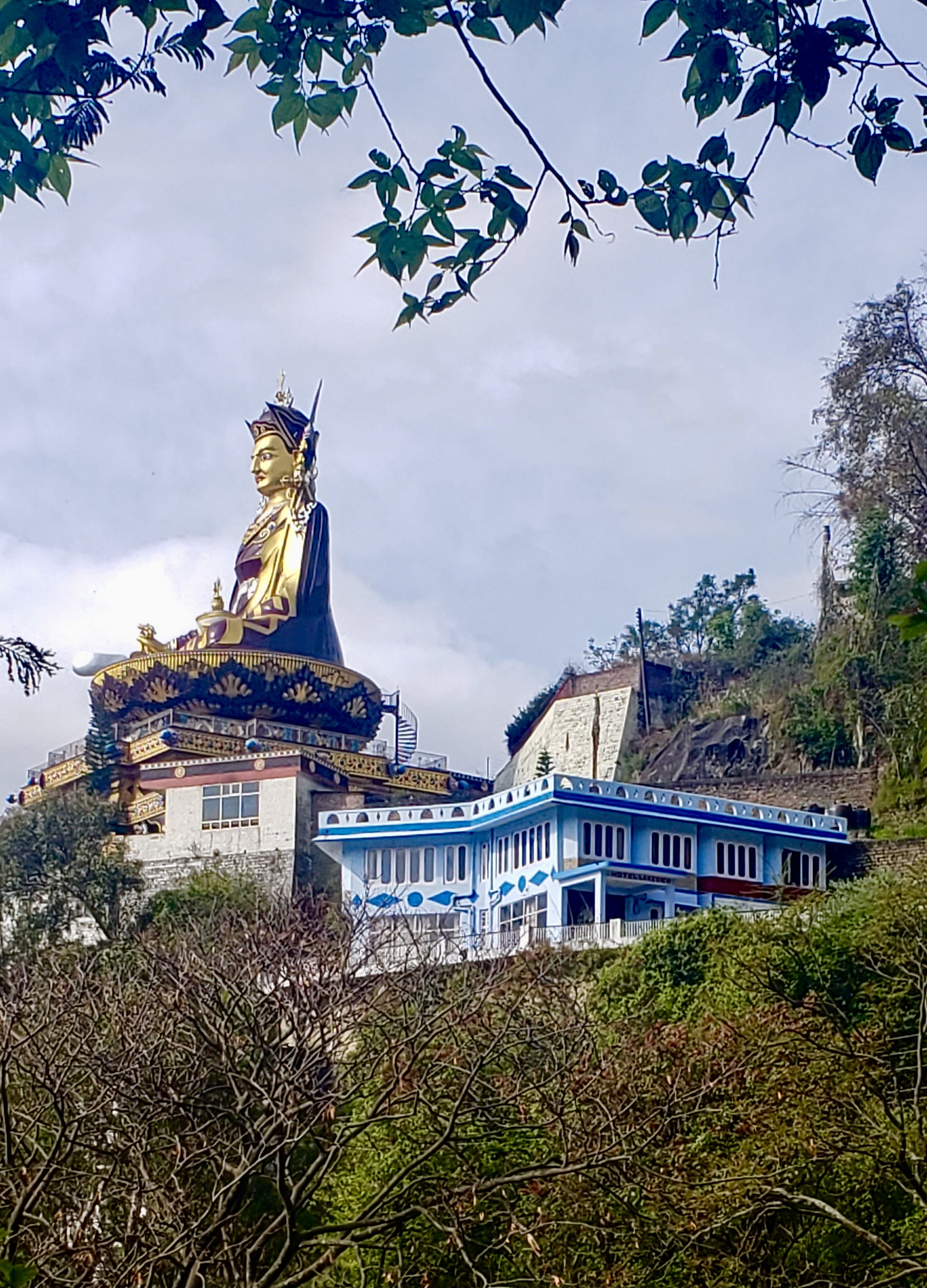
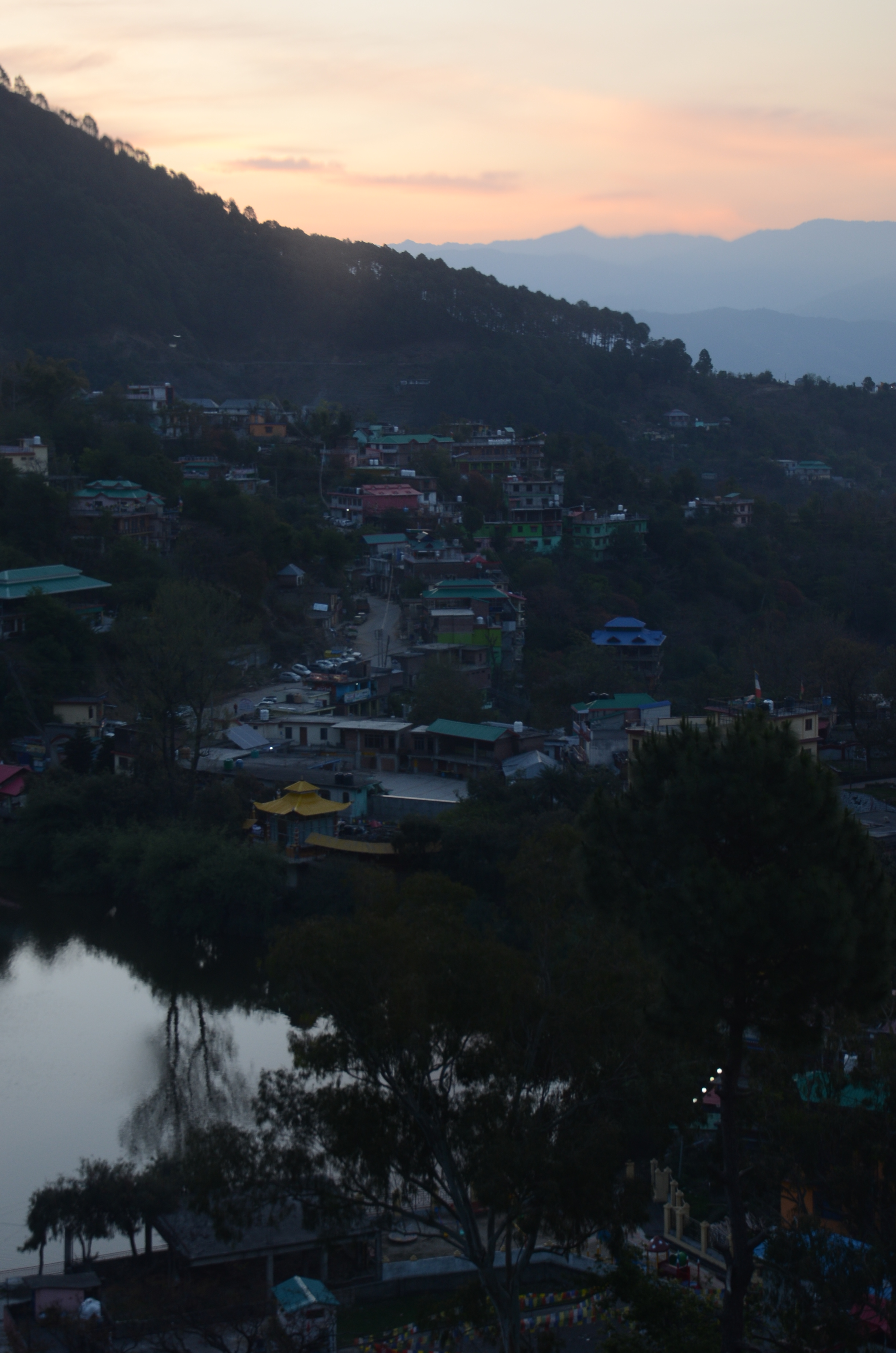
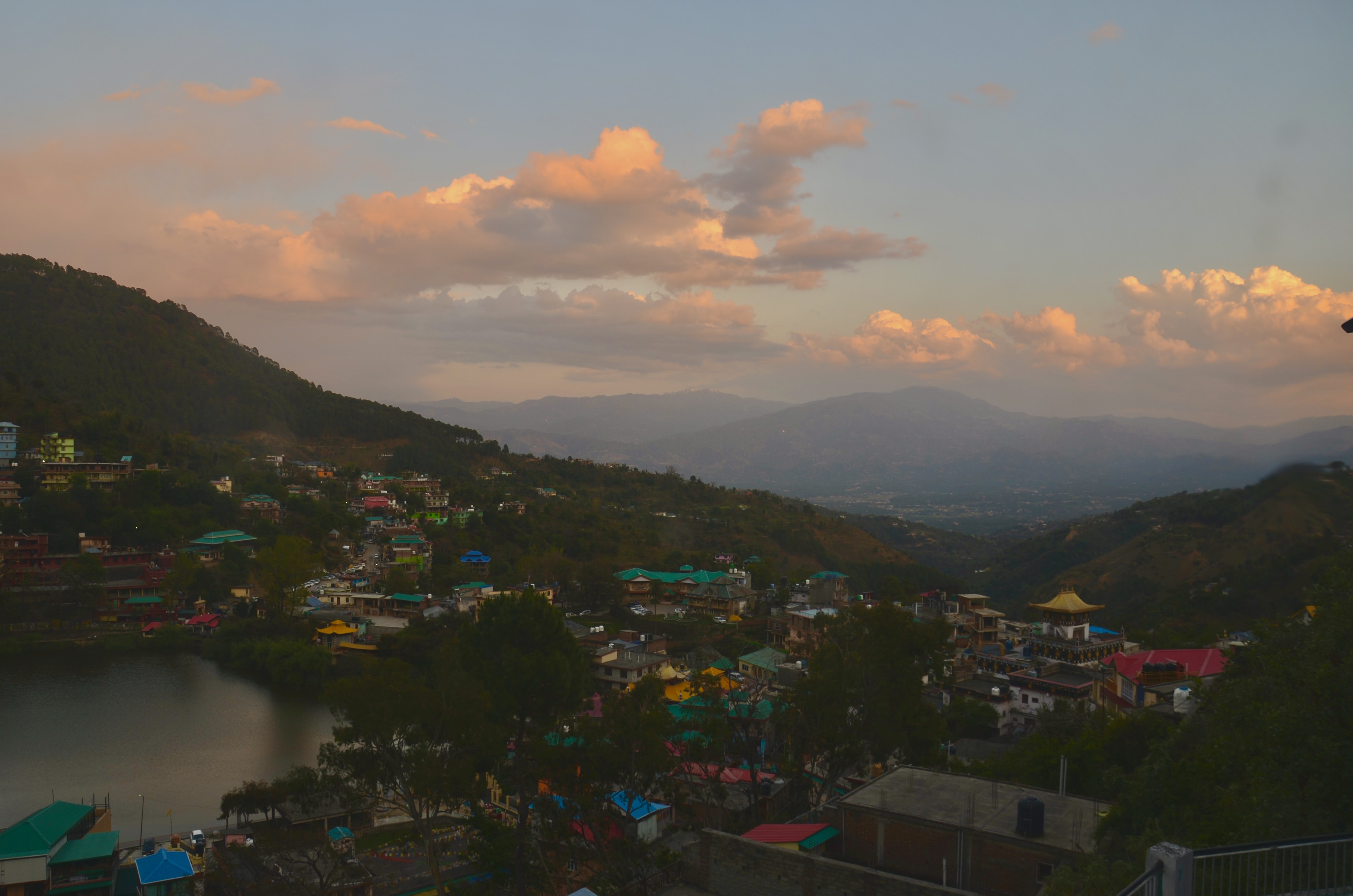
Our legs could no longer take the steep climb up to our previous lodging with its spectacular view of the town. Lakeview Guesthouse on the opposite side of Lotus Lake, and gave us an equally stunning view, with less effort. But as usual at this time of year, by noon the mountains get obscured by the rising mist from the valley obscuring the mountains. The guesthouse happens to sit beside the huge statue of the Buddhist Guru, Padmasambhava, who took Buddhism to Tibet and is recognized as the second Buddha. The statue was consecrated by the Dalai Lama in 2012.
The town has changed little. Some new building but mostly on the perimeter. As before, only a few westerners are here to practice Buddhism. We asked how it had been during covid. The locals gave it little recognition; lockdown was only two or three months, and very few were sick.
As we sat eating our aloo parathas (fried chapatis stuffed with mashed potatoes and spices) the small restaurant was filled with a cross section of this town: Tibetan Buddhists, Hindus, Sikhs–and ourselves. We can’t think of another place with such a diverse population, exemplifying that people actually can get along. Rewalsar’s spiritual significance for the Hindus is that the Pandavas from the Mahabharata supposedly came here; for the Sikhs, Guru Gobind Singh visited to consult with the king of nearby Mandi for support against the Mughal Emperor Aurangzeb. For the Buddhists there are several legends, one that Padmasambhava was burnt alive by the king of Mandi because his daughter was visiting the Guru for spiritual guidance. The spot where he was burned turned into Lotus Lake.
Our guest house owner invited us for lunch, and we sat in his room and talked over tea afterwards. He’s lived almost his whole life in Rewalsar. At 15 years old he asked his mother why she went to the temple. To worship Shiva, who will give you everything. This started him down the road of questioning who he was and why he was here. Now 66 years old, fit and healthy, dressed in spotless white Punjabi shirt and pants, he sat in yoga pose on his bed. Beside him was a small altar, including a picture of his Buddhist Master, the Hindu book of the Vedas lying beside it. He’s an interesting man, but the conversation became one sided. In fact, it wasn’t a conversation and after three hours we excused ourselves.
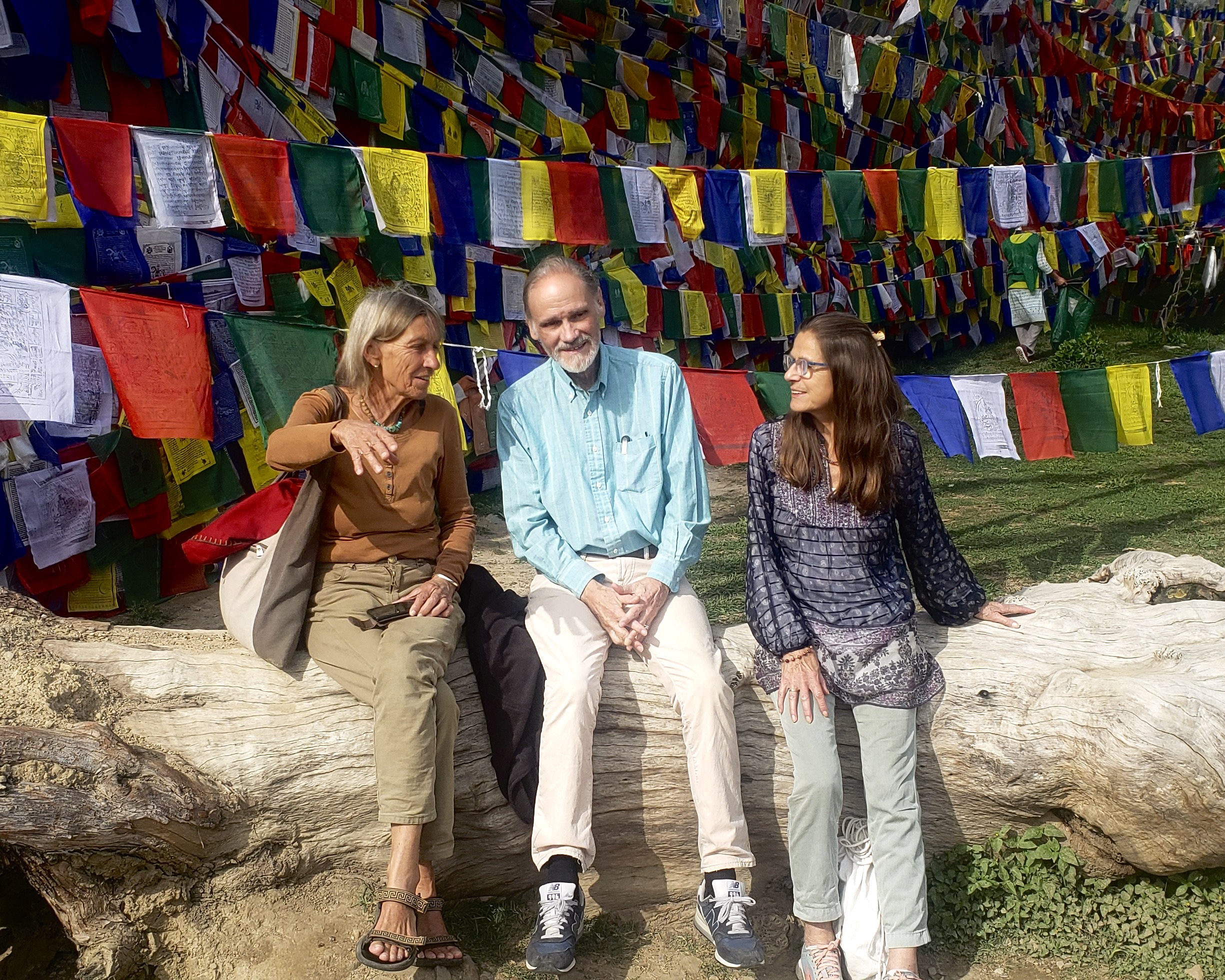
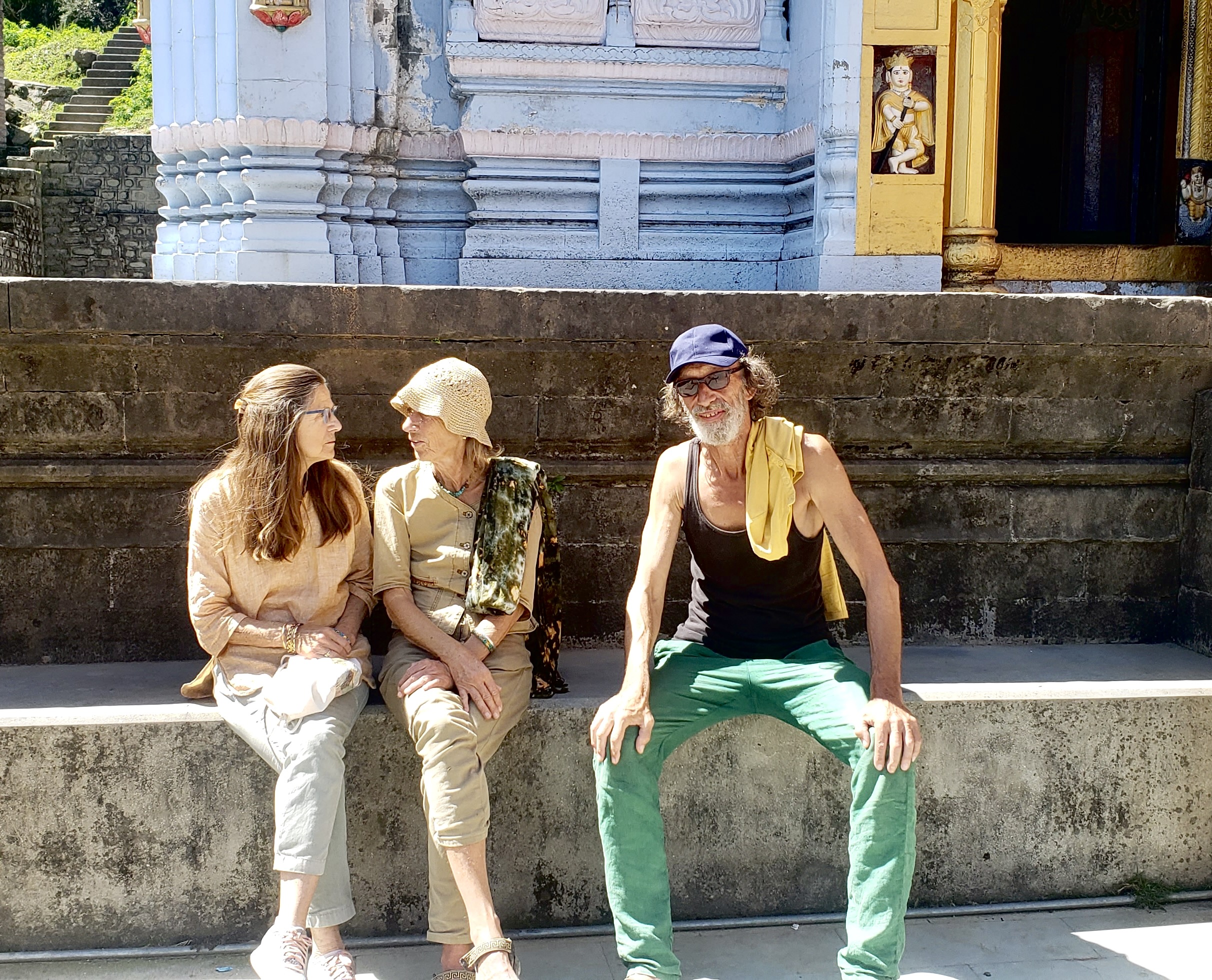
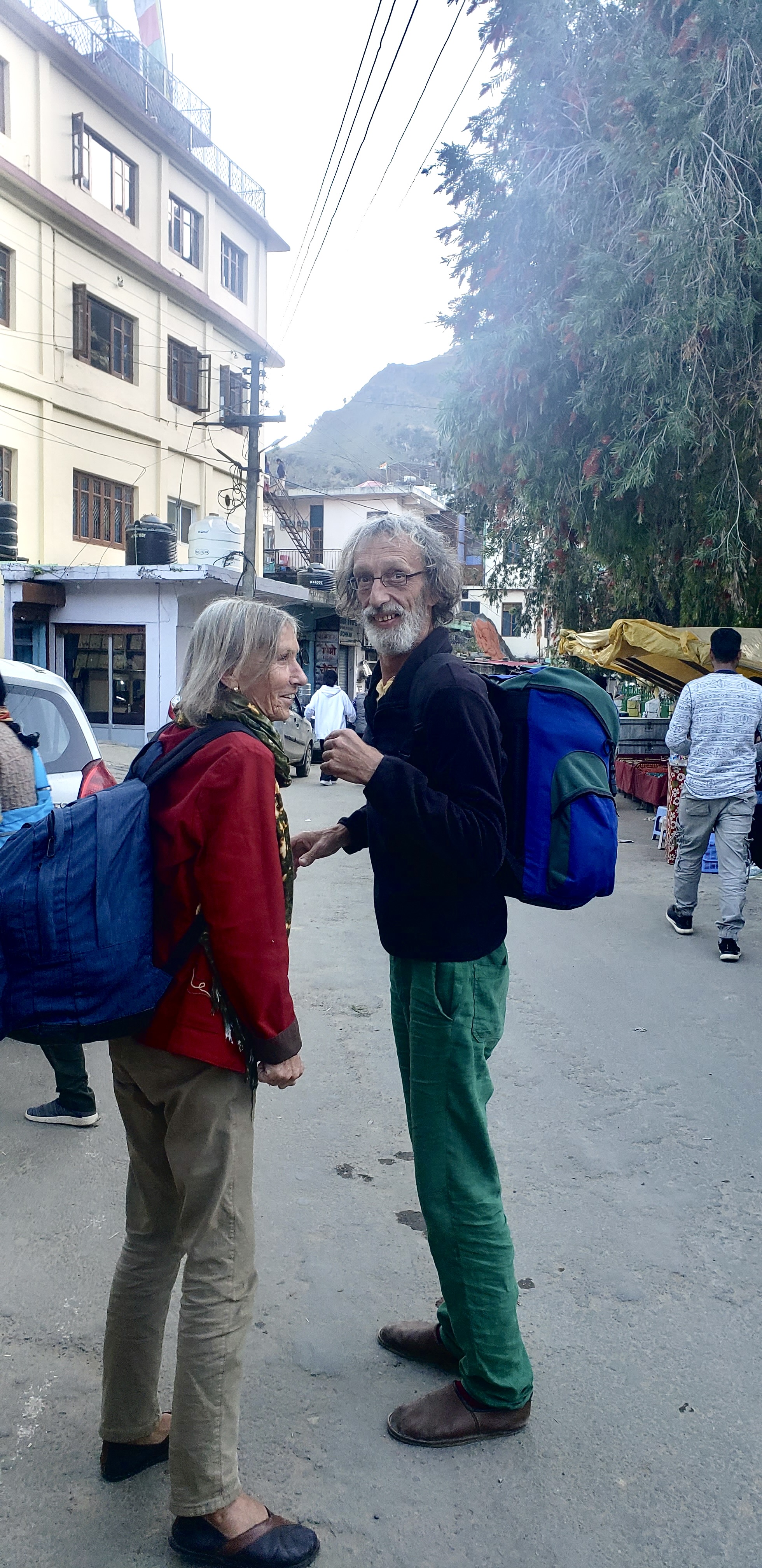
Our friends Marion and Juergen, were already here and as before, they took us hiking. We hadn’t walked as far since we accompanied them on a “walk” back in Gokarna. But this time it was a climb up the mountainside. We clambered up to a shrine where a wedding happened to be taking place. A band played, people danced for a short while and then it was all over. They got back in the cars and drove back down the mountain road.
Following them, we found a tea shop and were lucky to catch the local bus back to town. Just managing to wedge ourselves in, standing in the doorway and clinging on to anything available; it’s a clear indication of how many hill people depend on public transportation.
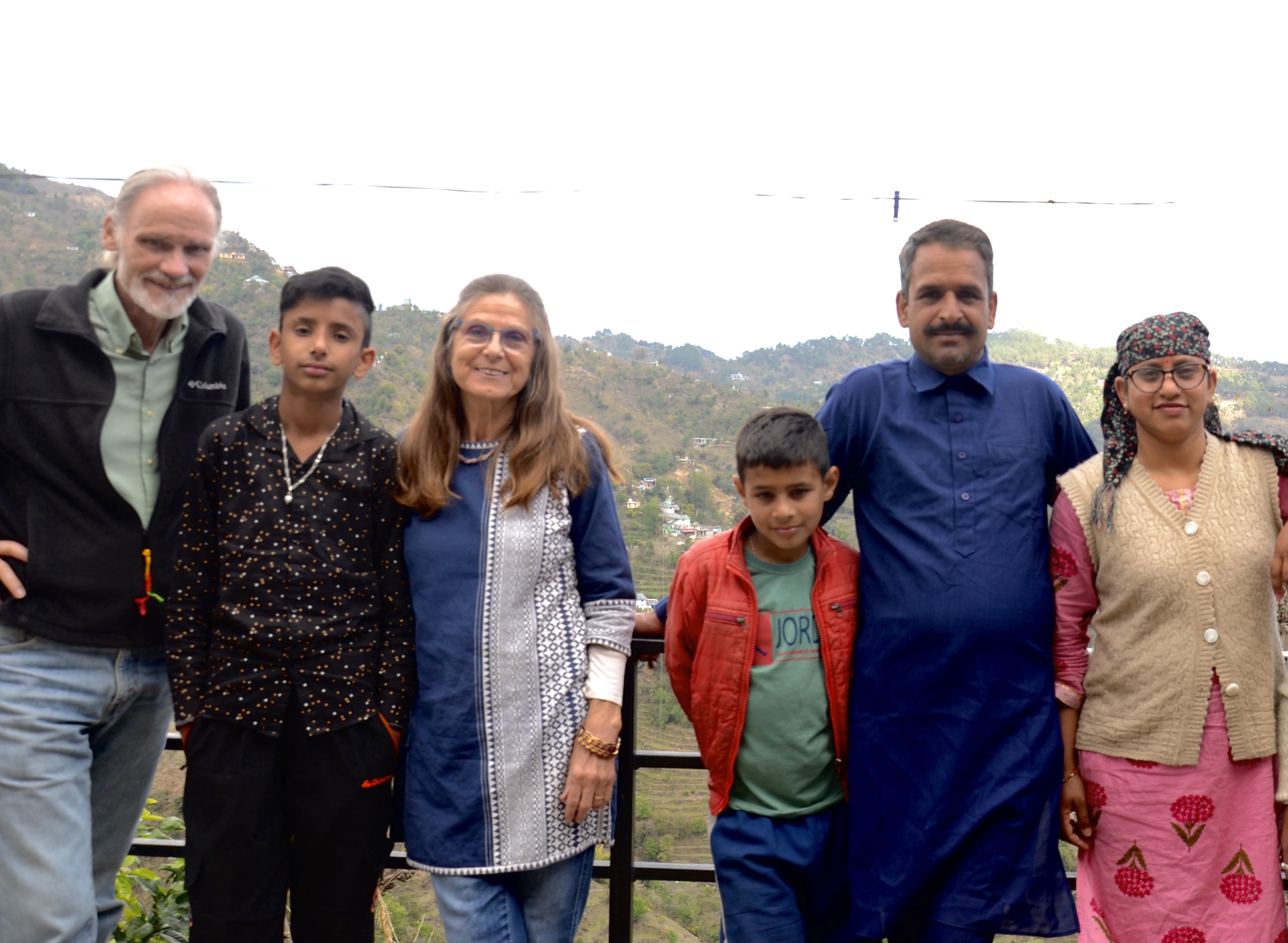
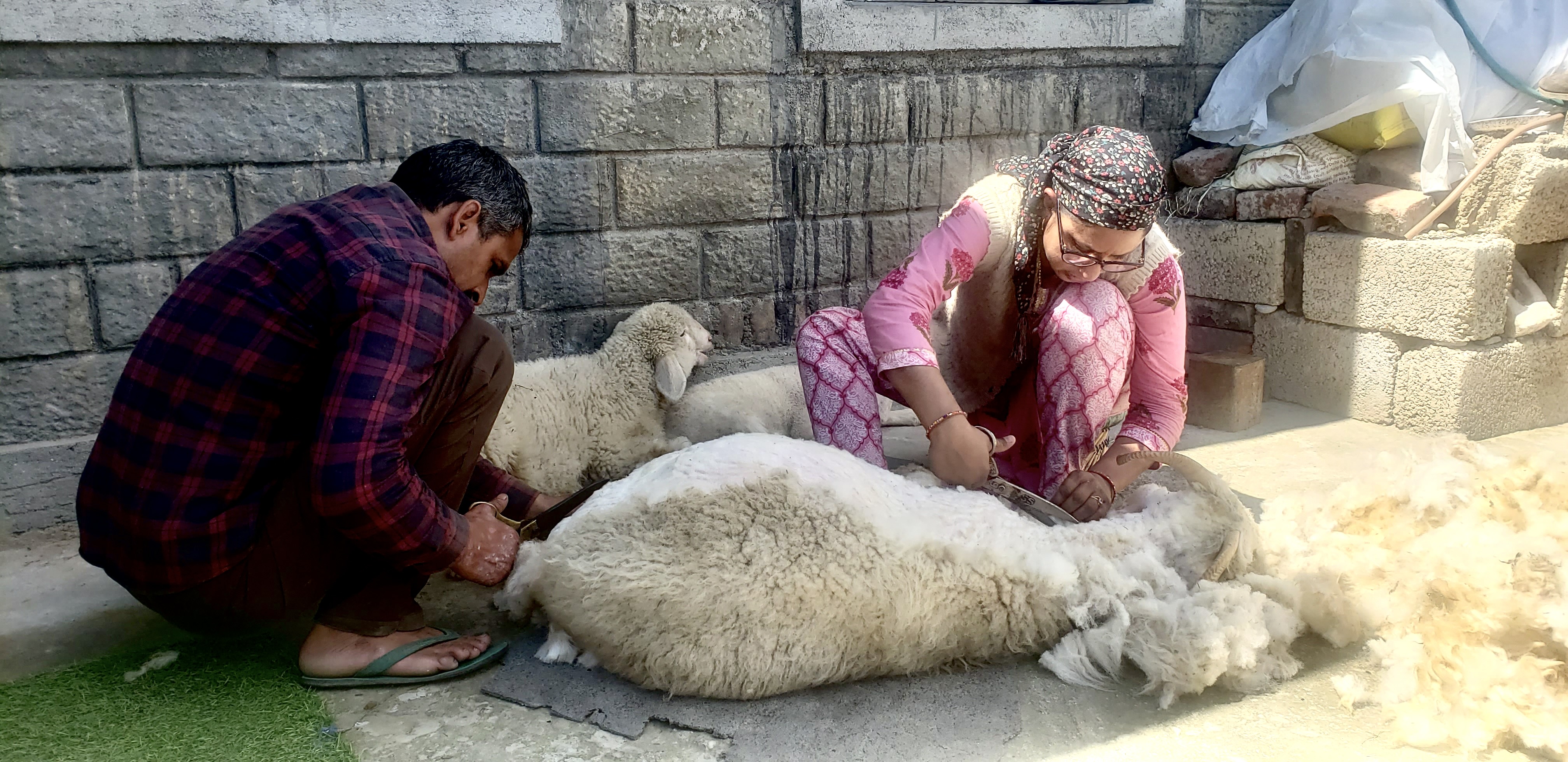
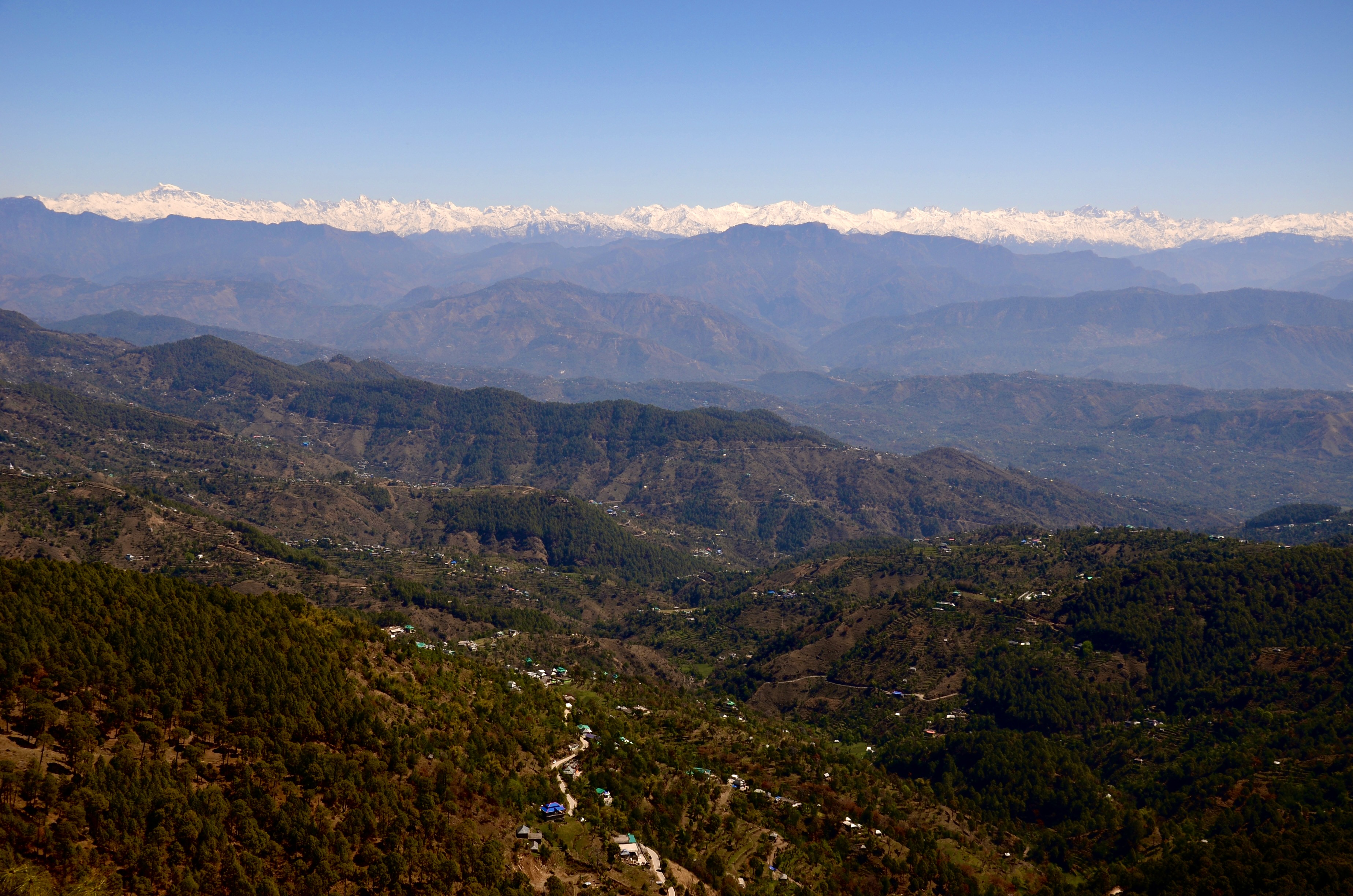
As in Varanasi, we’ve made lasting friends in Rewalsar; Sapna and her family from our first visit. On cold mornings we warmed ourselves in her little restaurant while she fed us parathas, her two young children, Prya and Priksu, watching TV before school. Today, we visited the family in the home her husband built with very little money. The progress made in the last four years impressed us. Outside of town and balanced on the hillside, it’s a steep climb down to the simple four rooms, little kitchen with an open cooking fire, outside toilet, a further climb down, challenging to my aging knees! Three sheep and two cows live below, and a docile German Shepherd fed on a pure veg diet. Indians do not pet their guard dogs and it was hard for us to refrain. Their balcony, afforded a panoramic view of the mountains and surrounding countryside of terraced fields. After lunch Sapna and her husband took at least two hours shearing their largest sheep.
To say the weather is changeable in the mountains is an understatement. This year it is especially unpredictable and days of sunshine have been interspersed with lots of rain. Without the sun to warm our room, the cold seeps in. We were glad to be invited to dinner by the taxi driver who for several years has driven us up to Nagar. We sat beside an electric heater, throwing off plenty of heat, and ate a delicious meal. In usual Indian fashion, instead of joining us, the family merely watched us eat.
A few days before we left, we took the bus up to Maha Naina Devi Temple an altitude of 1650 feet above the town (6,000 feet above sea level). The views of the Himalayas was unprecedented. Our legs felt the downhill walk back to town.
Two days before we moved on, Marion and Jurgen left for Delhi on their return to Germany. It was a sad farewell.
Flying toward Kathmandu, the line of snow-capped mountains on the horizon looked more like a bank of clouds in the blue sky. But then we dipped down for landing into a blanket of smog. Once on the ground, we were glad of our face masks. Traffic was heavy, with mostly motorbikes, but unlike in India, Nepalis don’t sit on their horns. The level of street noise was more bearable for my now noise-sensitive ears. The population has exploded like in India.
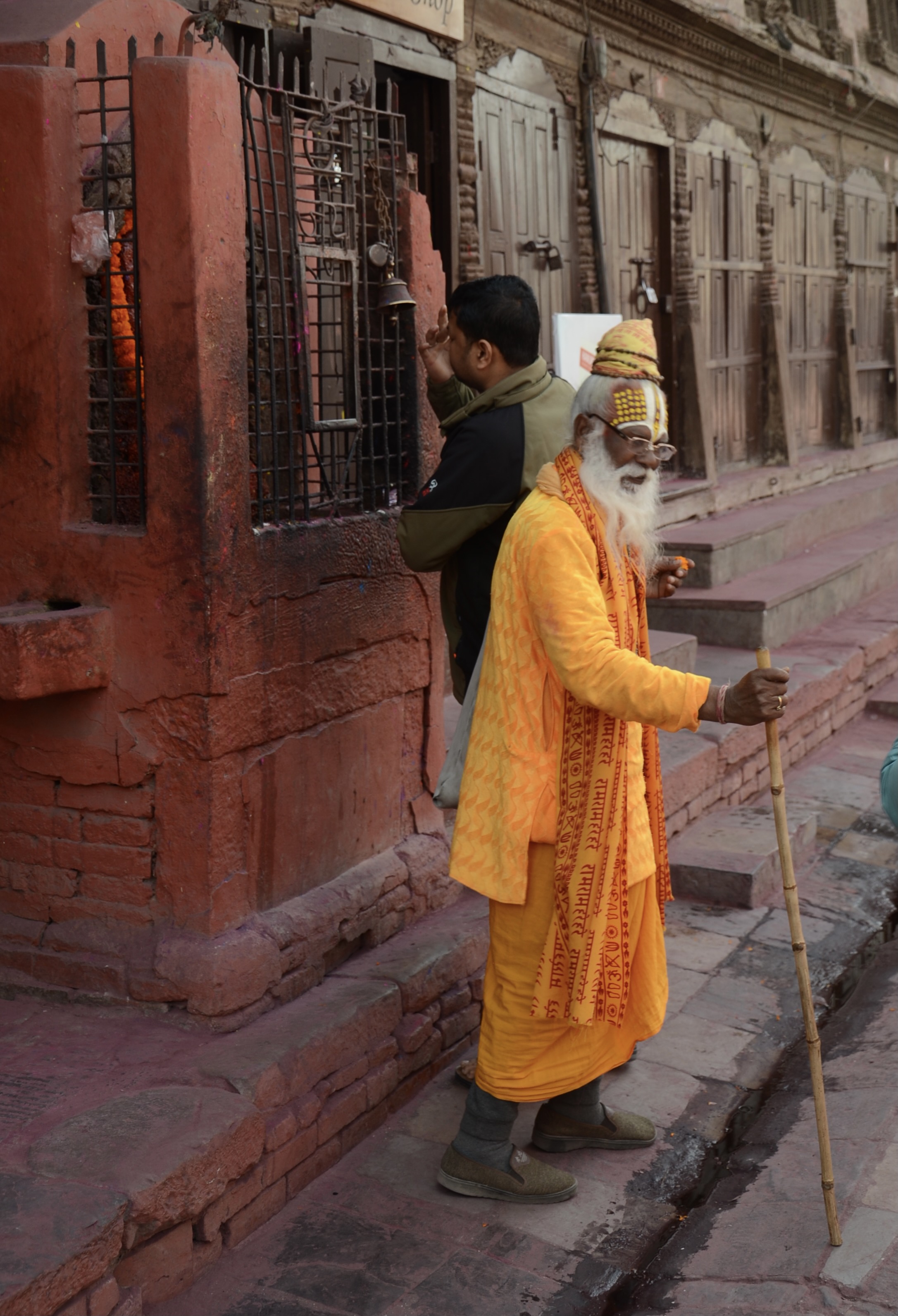
Happy at leaving Varanasi before Holi (not our favorite festival), only to find the Nepalis also celebrating. Youth and children roamed the streets throwing color until evening when things calmed down. We should’t have been surprised since Hinduism and Buddhism are practiced side by side in Nepal. Buddhist statues sit alongside Hindu deities at all the monuments.
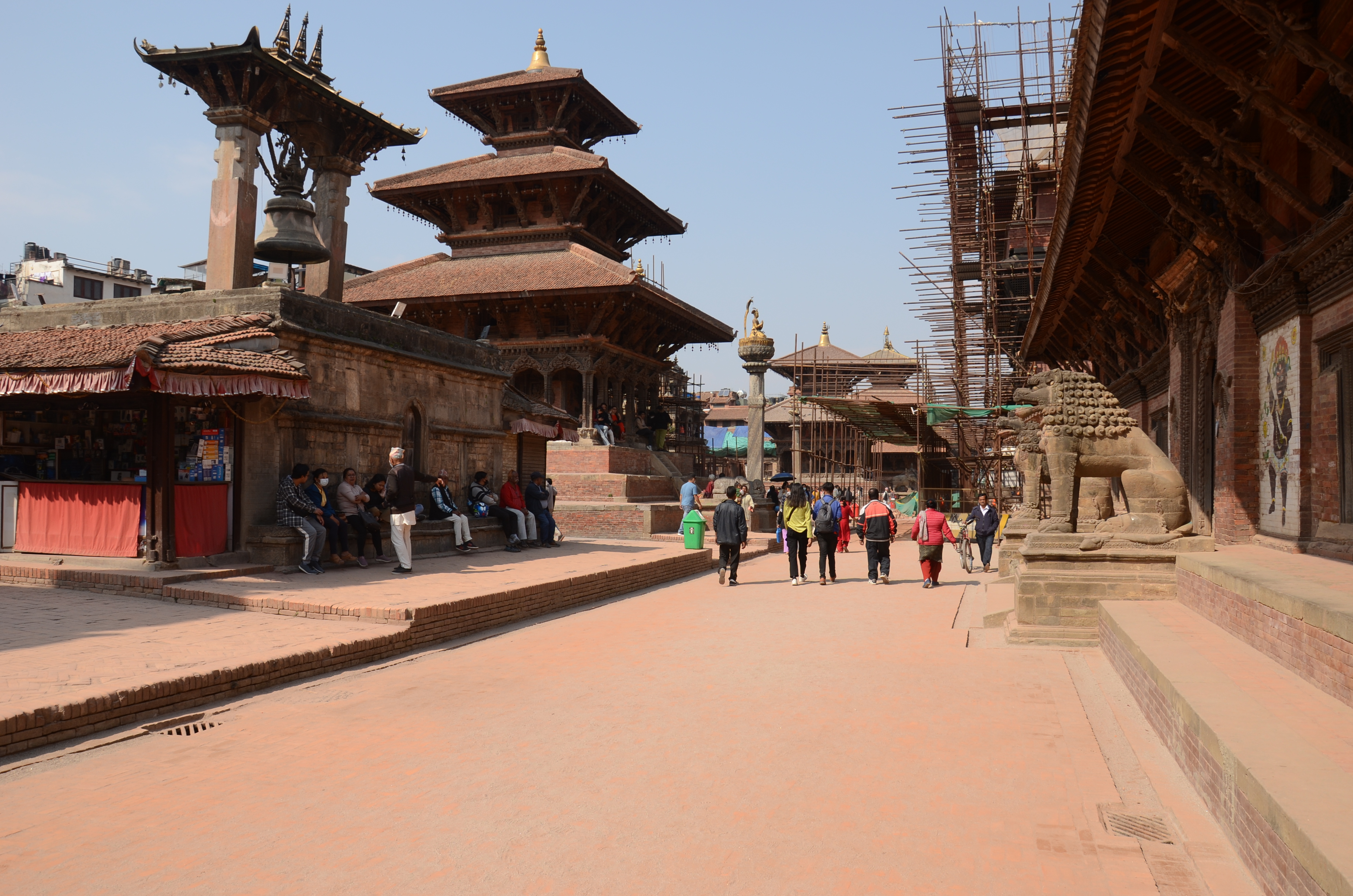
Nine years ago, just before the 2015 earthquake, we came here not knowing what to expect. How could we have known history would come alive through the architectural wonder of Durbar Square in both Patan and Kathmandu? We were apprehensive about returning, to face the devastation coupled with reports of increased crime and prostitution in Kathmandu. But we didn’t see it and were glad to be back.
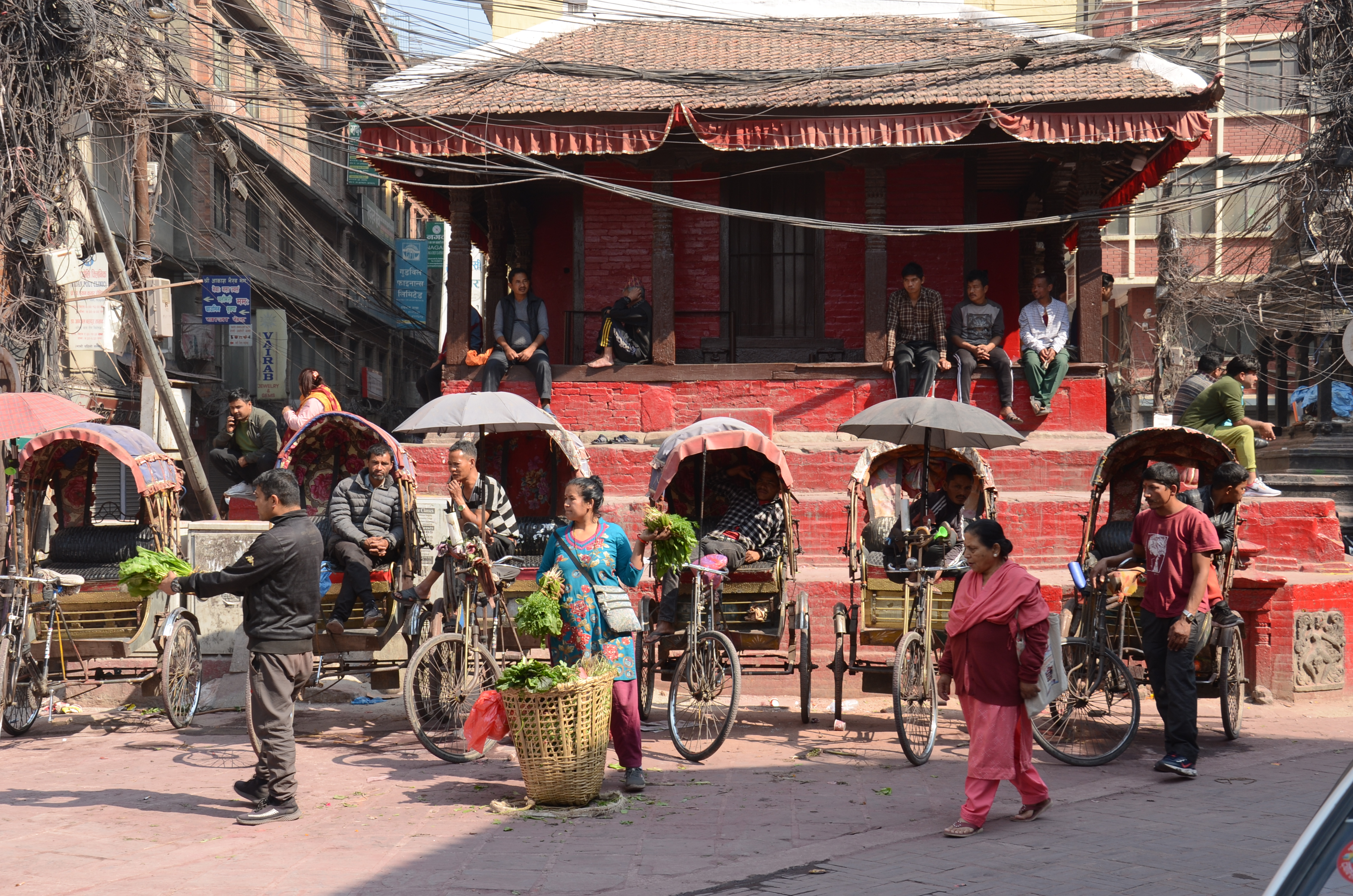
Thamel, where the budget hotels are located, is still a rabbit warren of narrow cobblestoned streets. Tourists and trekkers seem way down but maybe because the season hasn’t started yet. Everybody seems to be on the hustle but you can’t blame them; tourism and so much else hasn’t recovered since the earthquake.
Gerard asked a few locals where they were when the earthquake hit. Among those we spoke to, no one knew anyone who died. Today the city is still a mix between empty lots and construction. In spite of foreign aid pouring in, it’s rumored that rebuilding didn’t start for years. One explanation: “If we did the repair work, the money would stop coming.” But there are other reasons including lack of organization and finding skilled artisans..
Still vibrating with the impressions of Varanasi, Durbar Square with its intricate architecture and wood carving required a cultural shift in our attention. Even though this was our second visit, the beauty of this 3rdC Royal Palace complex was a feast for our eyes and in much better condition than we’d expected.
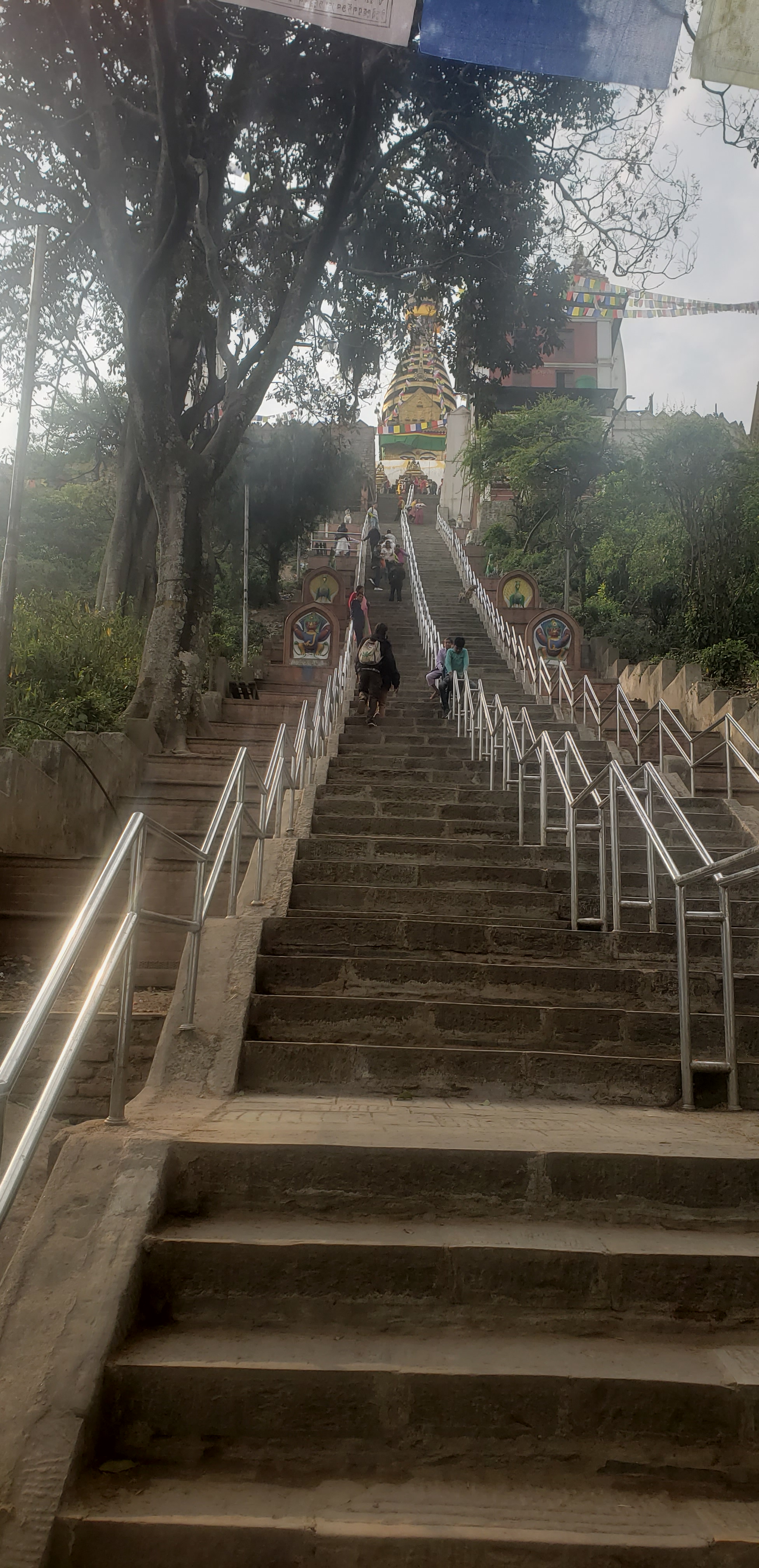
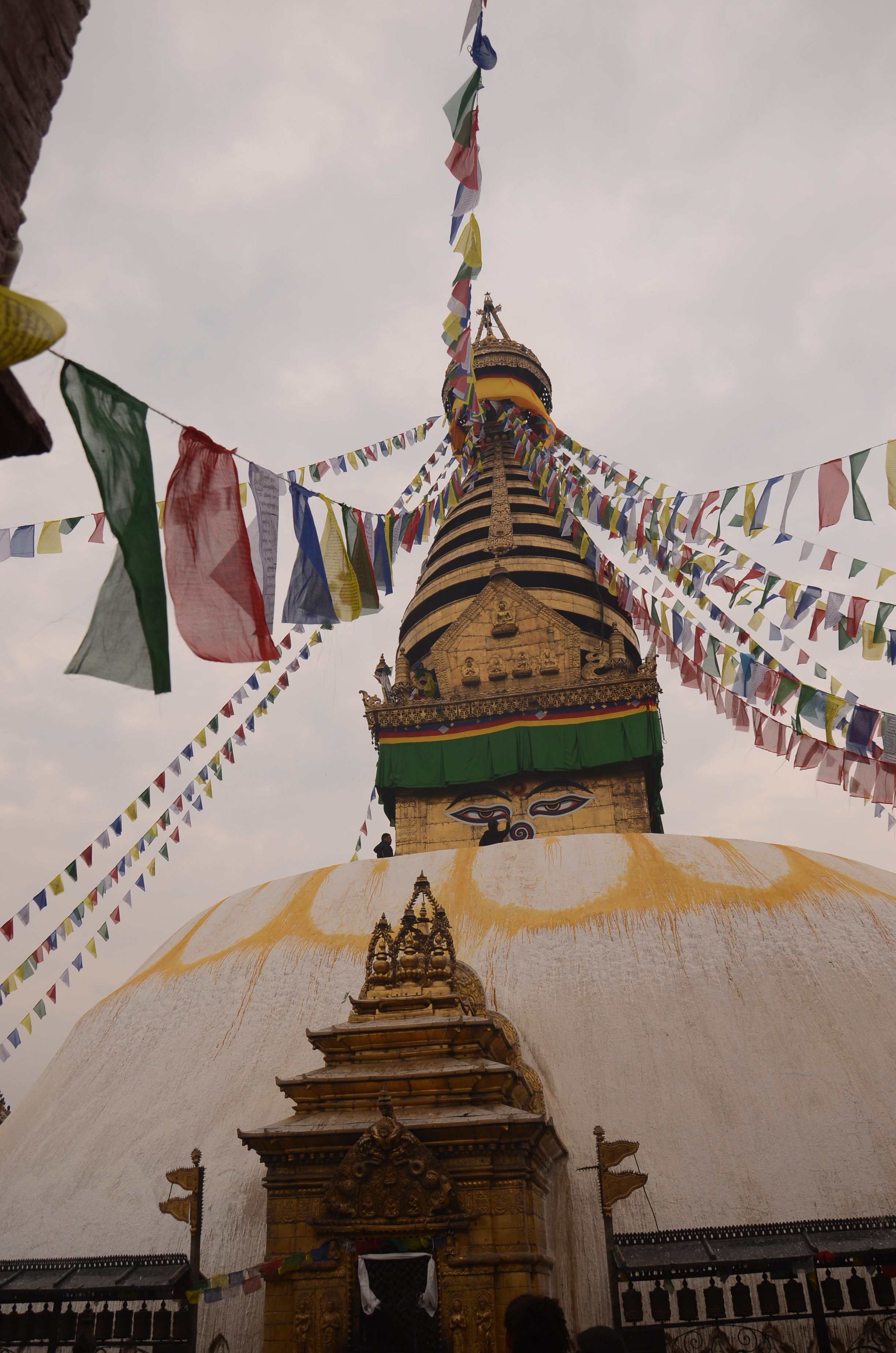
Next day we waited for the drizzle to stop, then climbed up the 365 steps to the Swayambhunath or Monkey Temple.
Nine years ago, the steps were of no consequence. So many changes during those years. Surprisingly, the hundreds of stone deities of both religions surrounding the large Buddhist stupa, escaped unscathed.
Unfortunately the nearby Patan Durbar wasn’t as restored as Kathmandu because either it suffered more damage or has taken longer to recover. It was hard to see the deterioration of what had impressed us so much before—some of the finest Newari temples and palaces in Nepal.
Posters around the complex boasted the involvement of Germany, Japan, China etc., then why is it taking so long compared to Kathmandu?
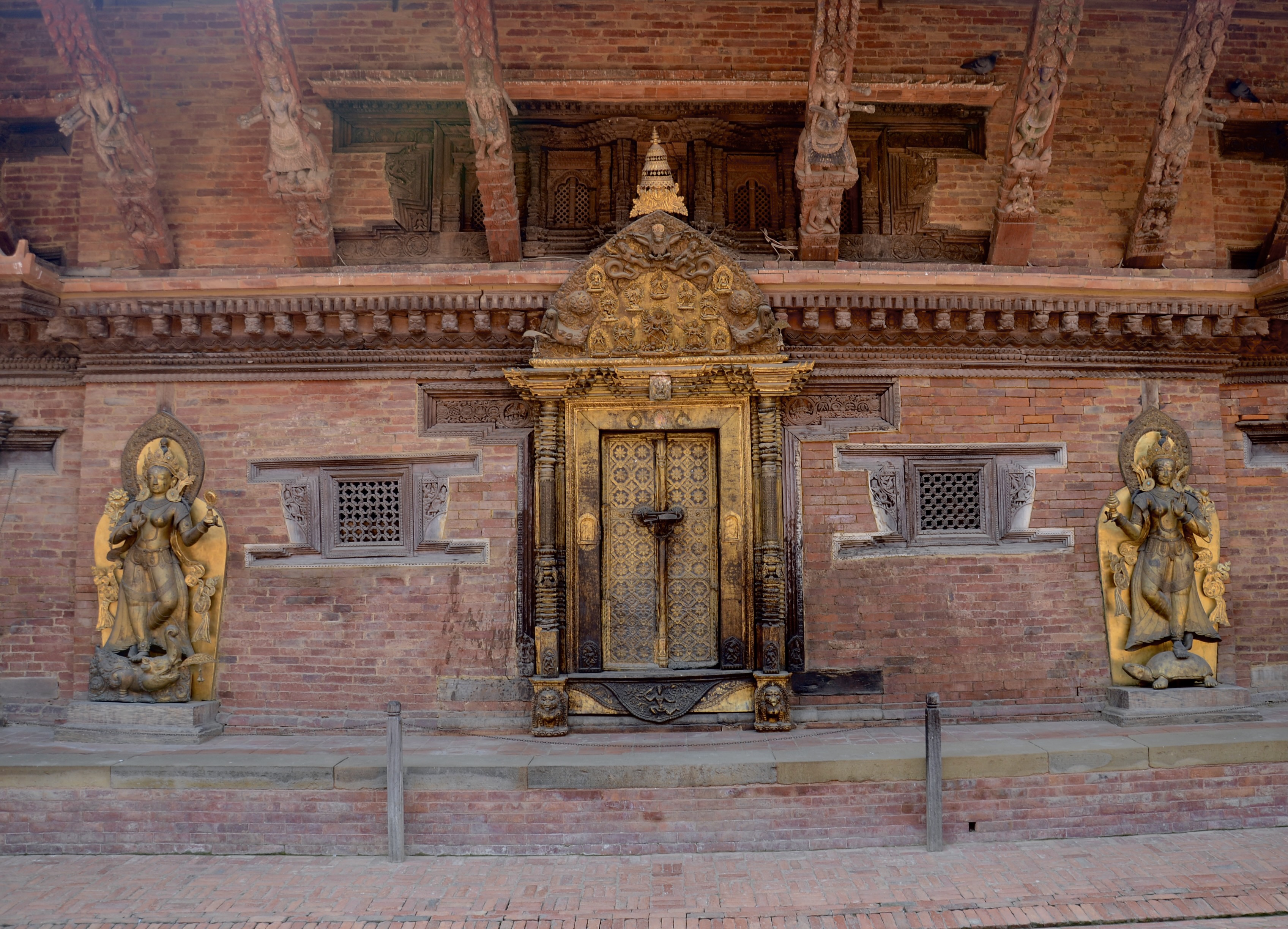
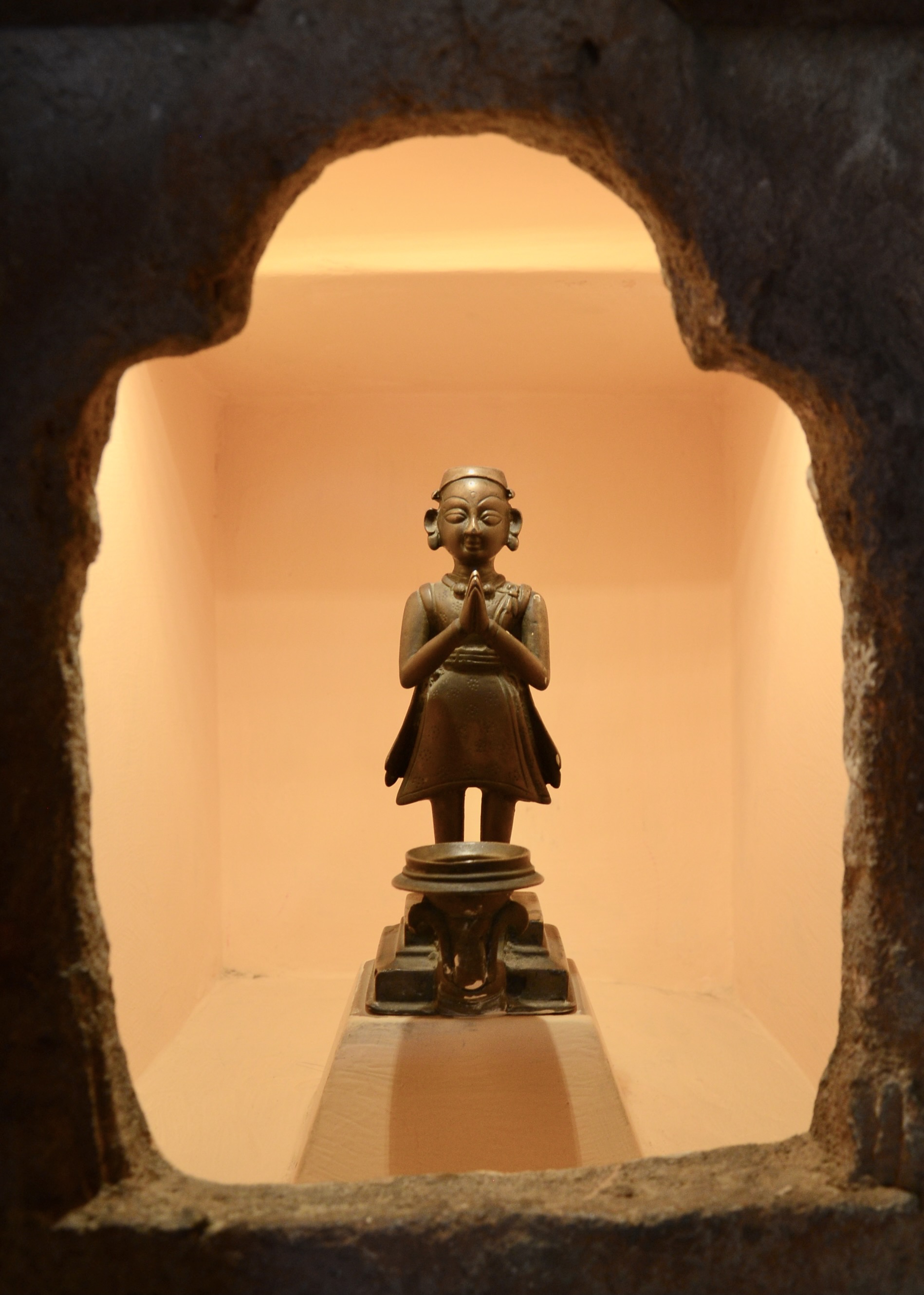
Thankfully, the Patan Museum, with financial help from Austria, has reopened its gilded entryway and still contains a wonderful collection of Newari sculptures and artifacts.
We weren’t prepared for all the changes in Varanasi. Perhaps they seemed more extreme after three years’ absence. Getting from the airport to the ghats through the clogged streets was a major feat, our taxi took twice the time. We crawled along, directing the driver to our familiar way of entering the ghat through the Moslem quarter. The hotel we’d booked online was a mistake–the photographs were totally misleading, it was a dump! But fortunately we found another literally next door. Under renovation, we were able to book an unfinished but nice room for a bargain.
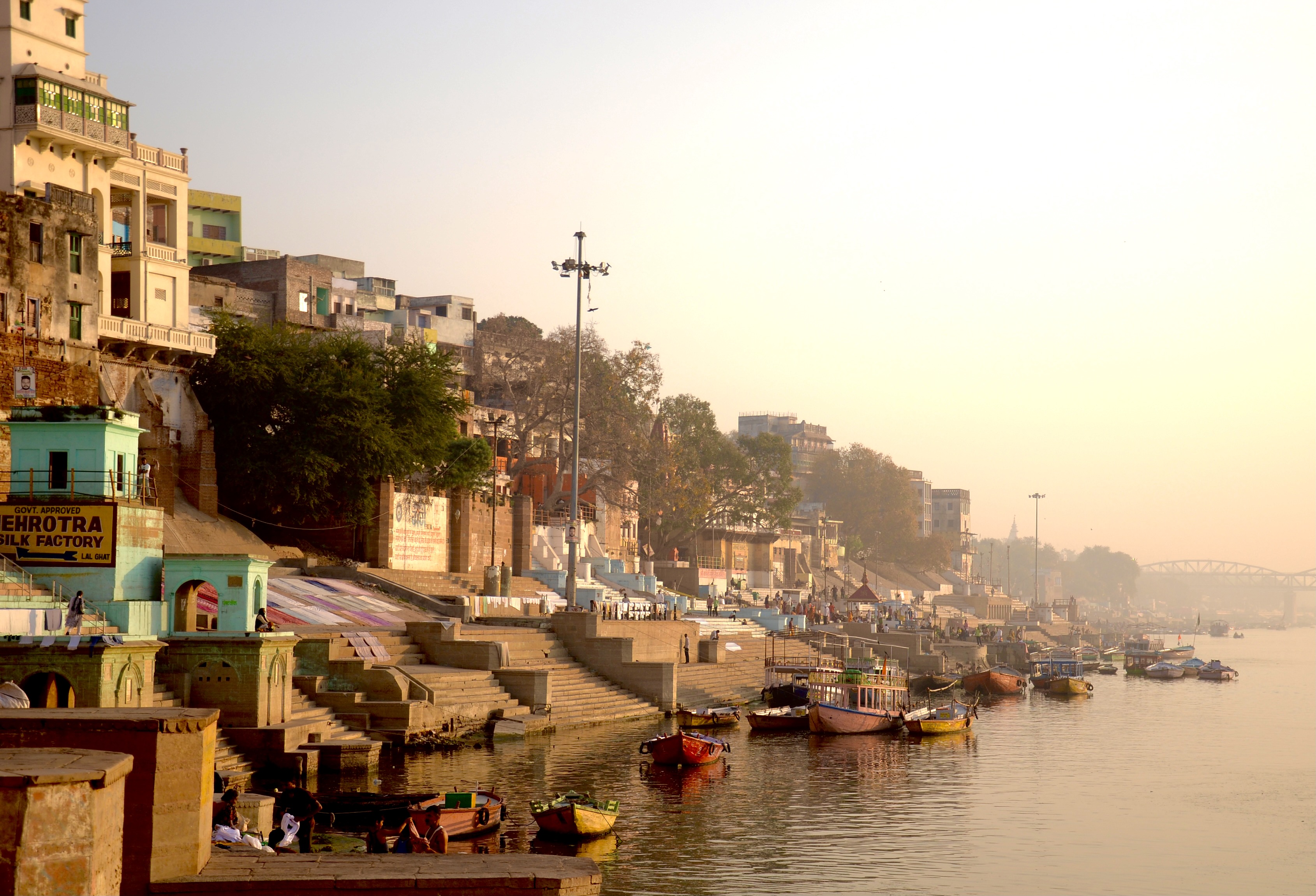
We quickly dropped our bags and hustled out to embrace Mother Ganges. There she was in all her splendor. But wait! What is happening on the sandbar across the river? A young Indian boy seeing our perplexed expression, said, “How do you like our Tent City?” A mass of white tents are lined up like an army barracks, a protective fence surrounding the ‘compound.’ Gerard asked the boy, “Who wants to stay in a tent in the blazing sun?” He replied, “The same people who will pay up to 4K rupees a night.” We all had a good laugh.
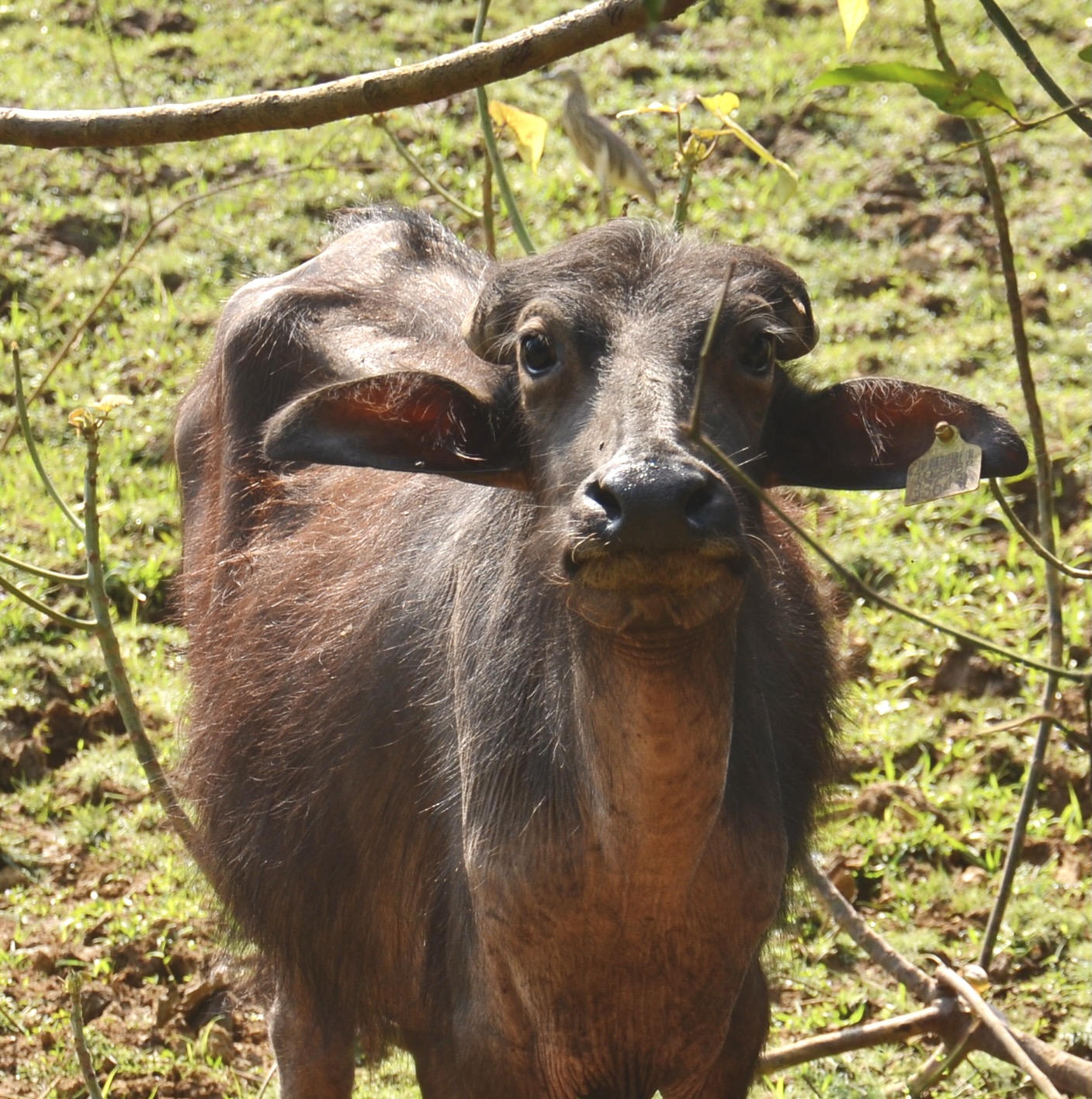
On our first foray out we didn’t even notice no washermen drying laundry on the ghat, no more stately water buffaloes wading in the river. The ghats could certainly stand to be cleaner, but we miss the activity and color. For several years, the government tried to stop clothes washing in the river with little effect. The police are now offering a free ‘bamboo massage’ (beating) to all offenders!
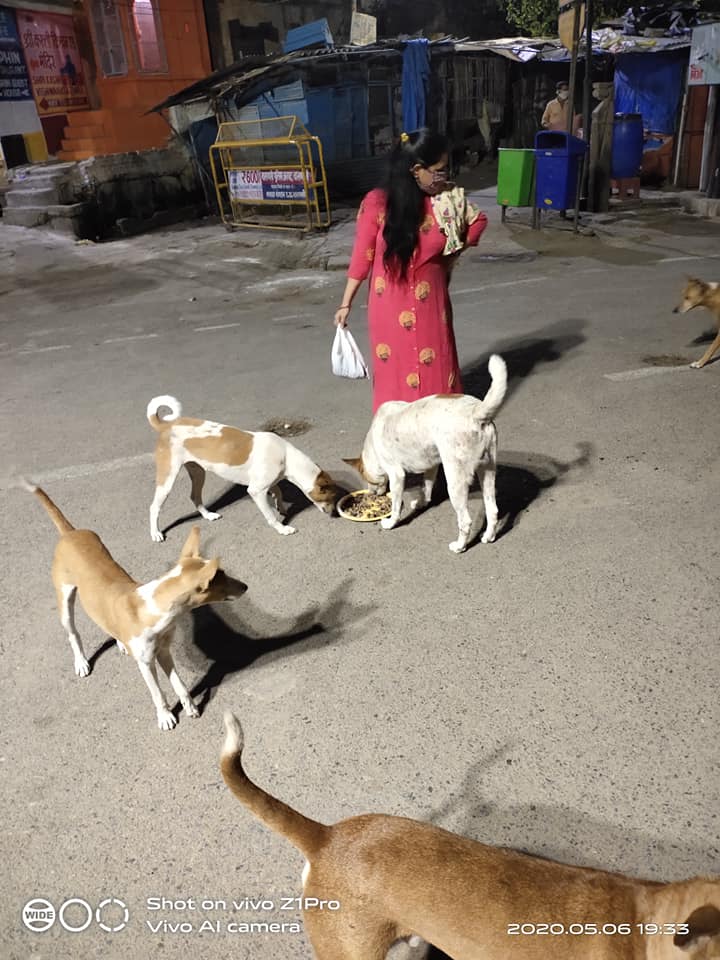
Our friends along the lane were all smiles. Gerard thought they they were pleased to see us but also that it also meant business was resuming. If these two old people can make it back then there’s hope! Just about everyone we talked to had stories about the covid lockdown. With few exceptions (naysayers), most told the same story: initially, there was a sense of camaraderie, the community fed the beggars and dogs. Some restaurants continued to pay their staff; they were the lucky ones.
Then the lockdown dragged on more than a year. With no money coming in, utilities and food still had to be paid for. Ironically, property owners were exempt from the government food subsidies, but still had to pay their property tax. Price of food continued climbing; from pre to post covid the price of cooking oil and flour has doubled.
I was surprised to see a beggar we’ve known for years, to have actually put on weight and look healthier. Maybe he’d benefited from the government handout/? He was also missing his thick glasses—perhaps he’d qualified for free cataract surgery!
Our friend Santosh, a native of Varanasi, said he noticed in the tree outside his window many bird species he’d not seen before. And because the streets were so quiet, he could actually hear the birds sing. The only other sound breaking the silence was the muezzin’s call for prayer at the mosque. Someone else mentioned the surface of the Ganges was like glass with no boats carrying tourists up and down the river.
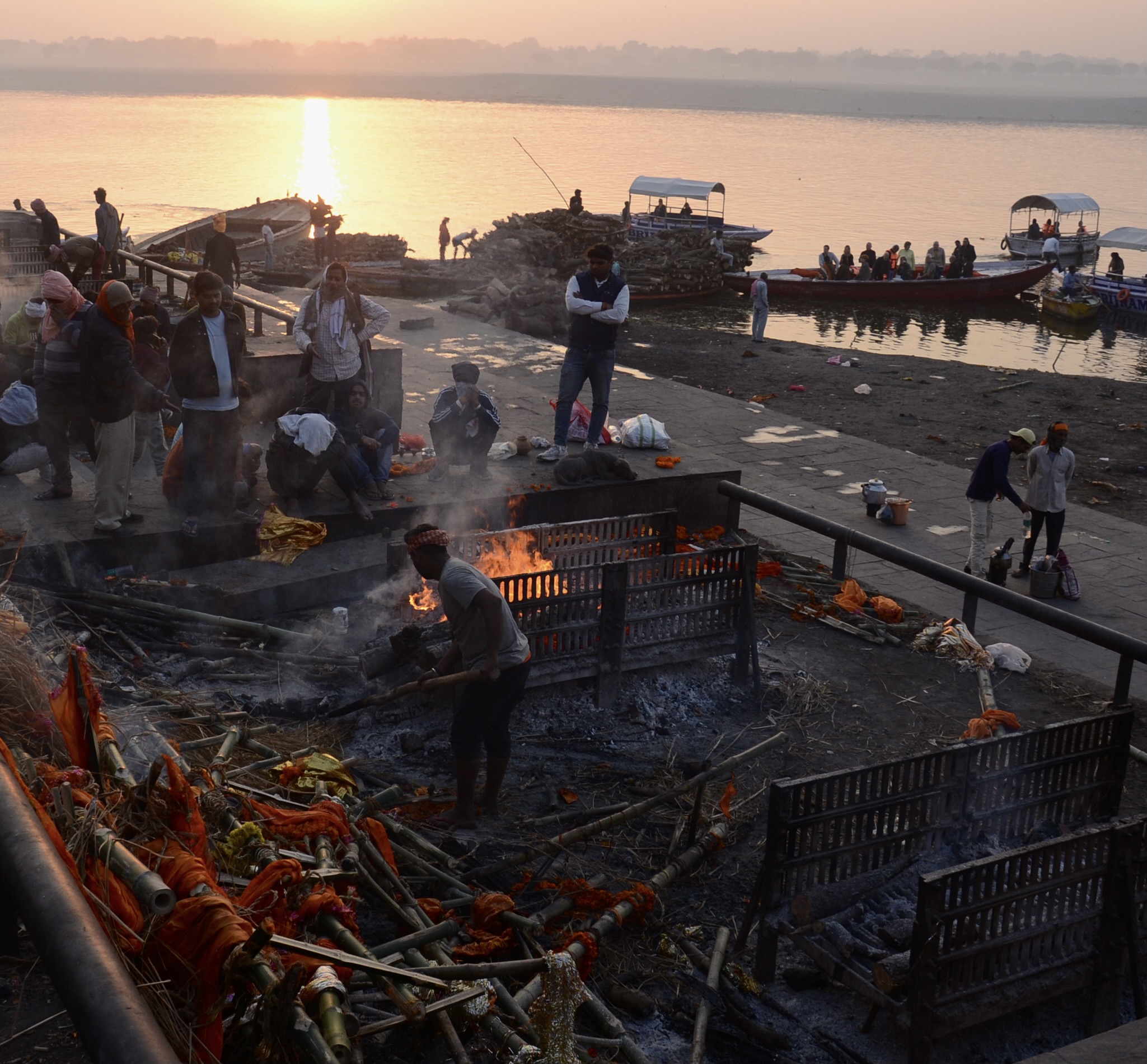
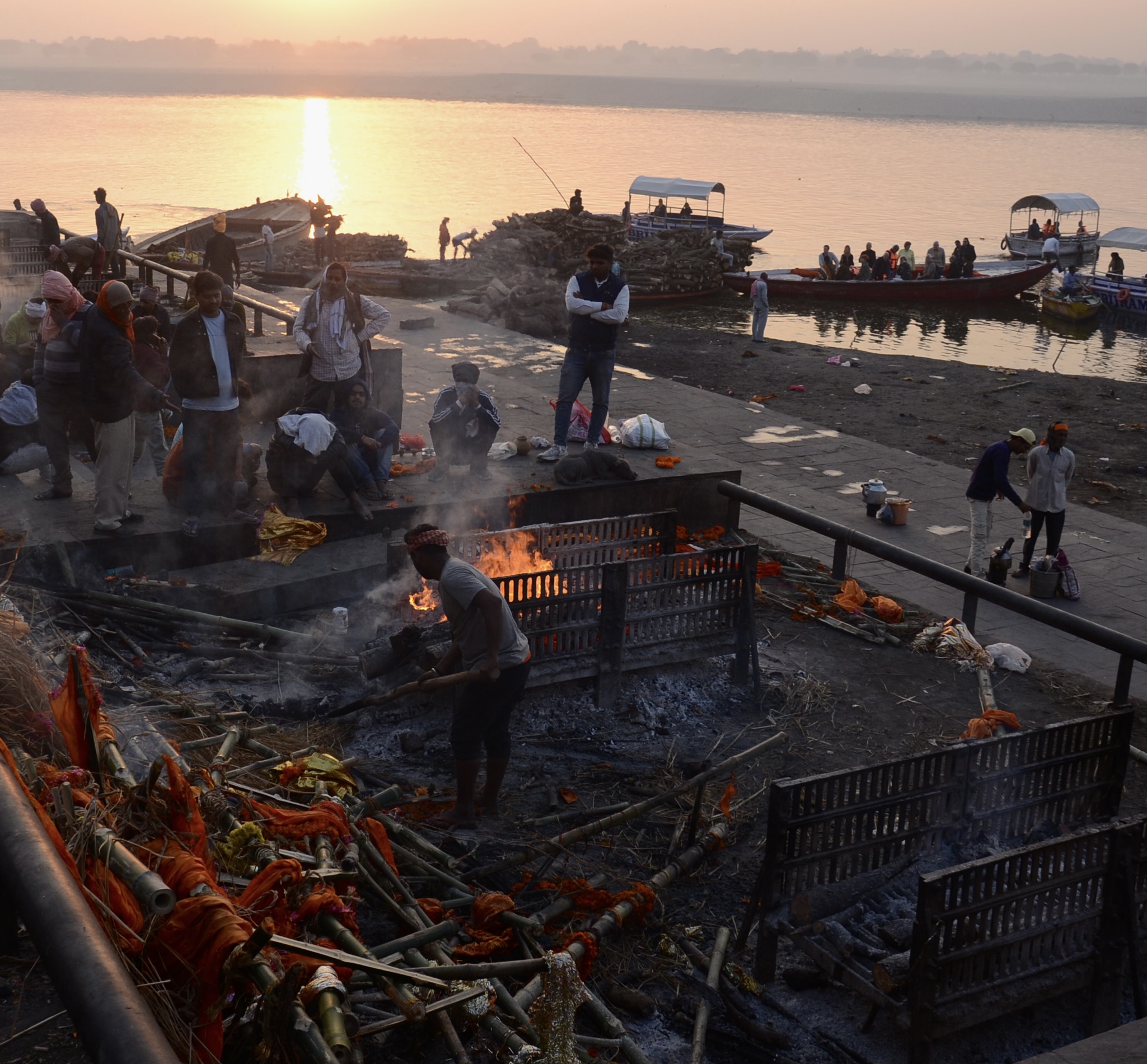
Manikarnika, main burning ghatThe smoke rising from the dead and the dust of ancient Varansi
Three additional ghats were relegated for burning and to keep up with the demand, instead of one body per pyre, five to ten bodies were burned at once. No vaccines were available at first, the irony when India was making a massive amount but selling it abroad! The only activity was cremation.
We’ve known Rajesh for about 15 years, even before he was married. He and Gerard connected over the classical Hindustani CDs he sold. Then there was only demand for religious music at his stall on the way to the Golden Temple. Today, he just sells bangles and necklaces. His wife invited us to dinner; it was very sweet to be with his whole family.
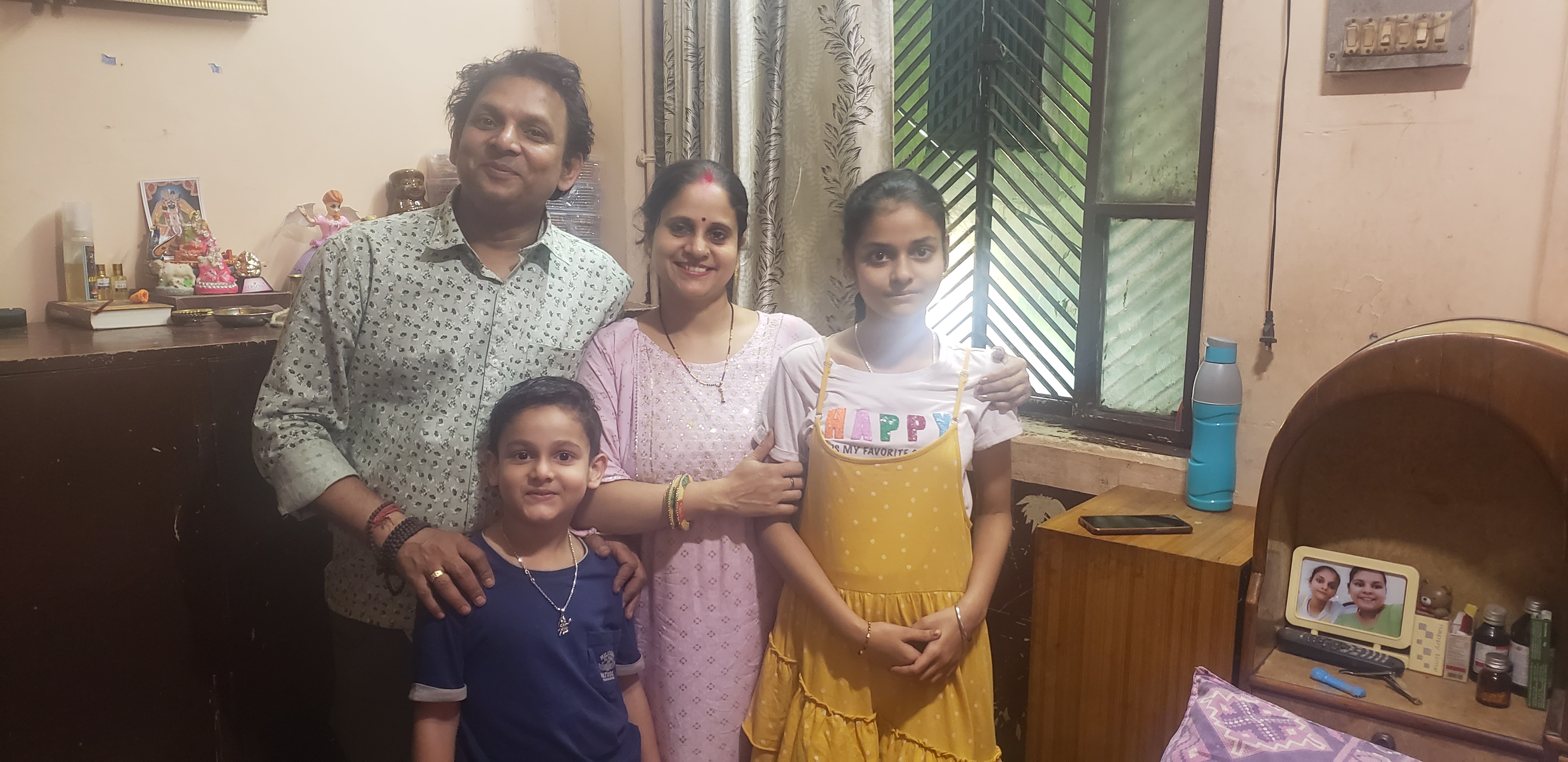
His 12 year old daughter, Sagan, was engaging, showing me her English language test book with almost 100% scores, while her rambunctious young brother, Vinayak, vied for attention.
Durin
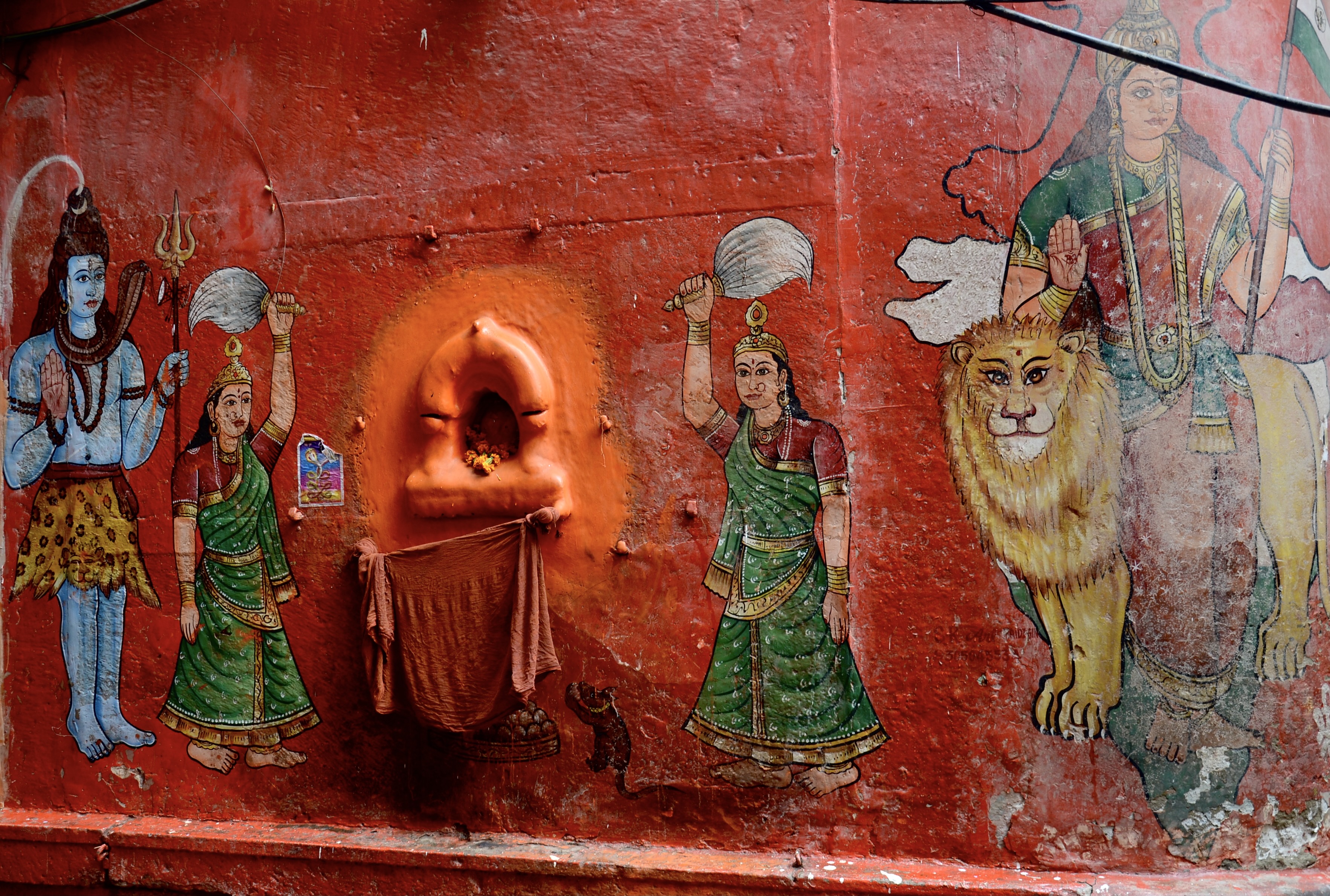
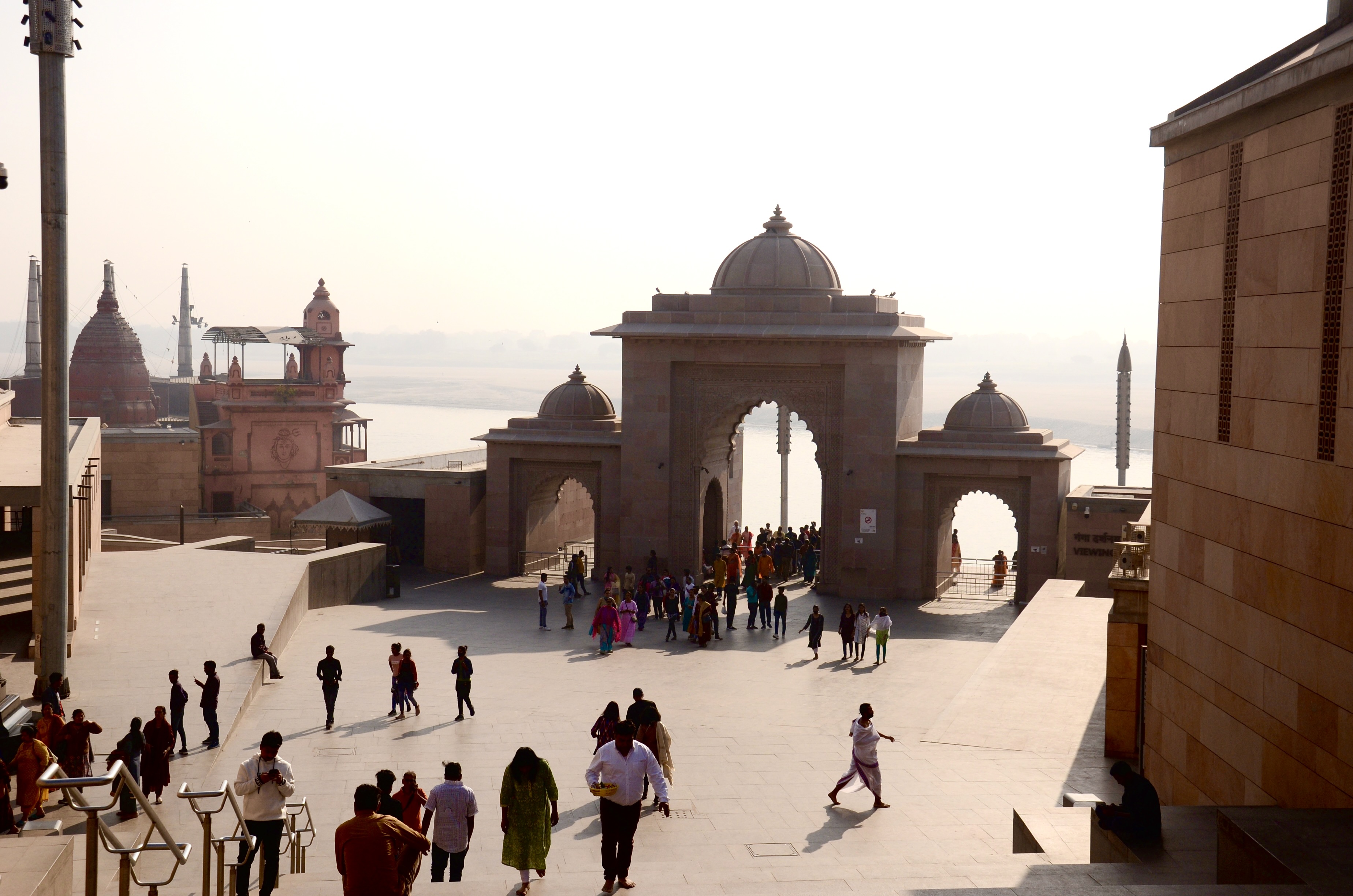
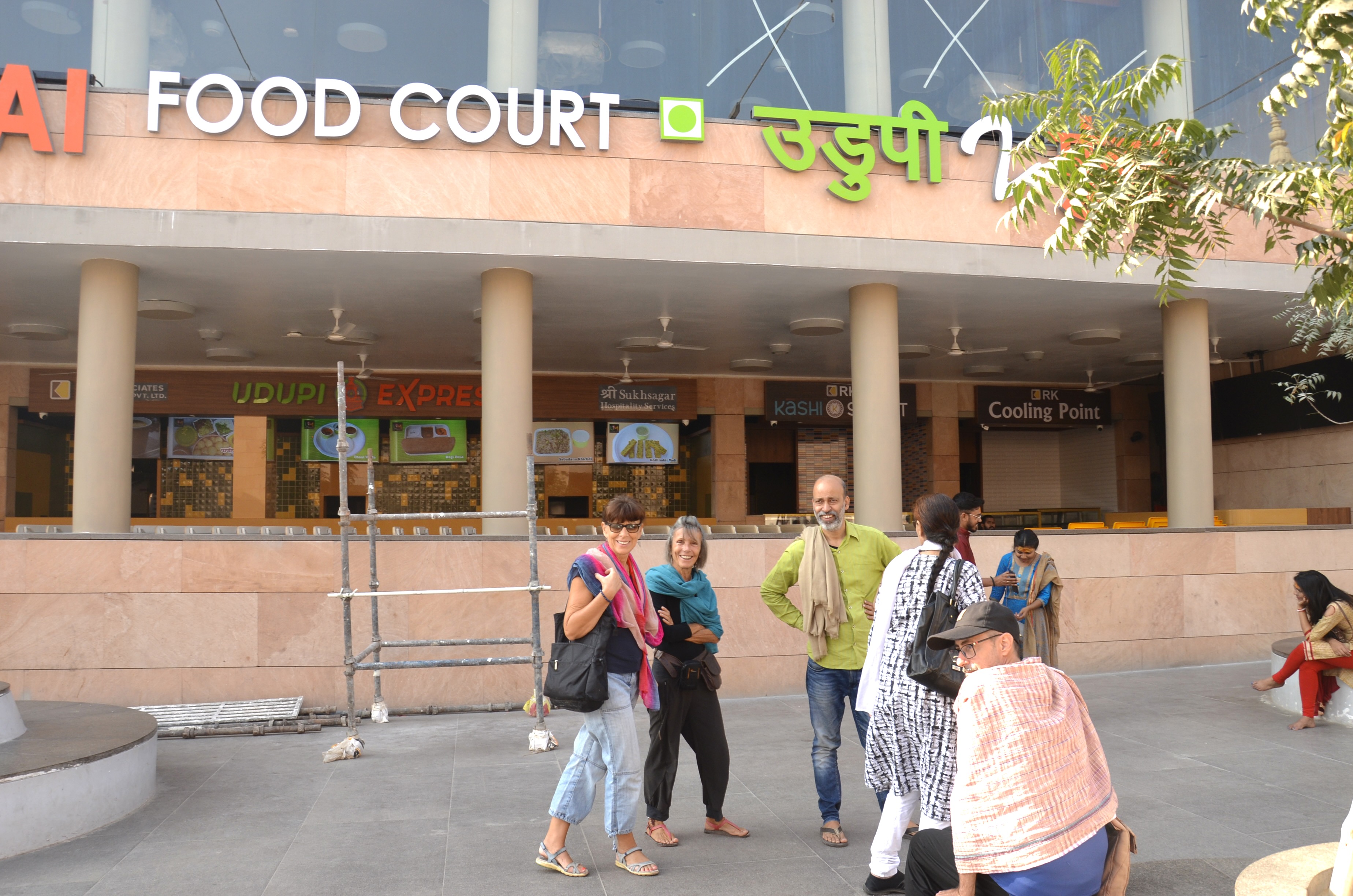
As we have done previously, we accompanied Santosh an accomplished photographer, to watch the sunrise over the river and the pilgrims do their morning puja. We’ve done that many times before and it still remains spectacular. During Covid, many walls were decorated with murals, some better than others. But our sense of awe turned to dismay as the new corridor loomed. A wide stone staircase lead up to the entry way and a fast food court. An admission fee is required to go further into the corridor leading to the Golden Temple.
Three years ago when the project began, we were deeply perplexed that they could tear down part of this ancient city. Now 500 old houses have been destroyed to create this gaping hole of modernity and capitalism.
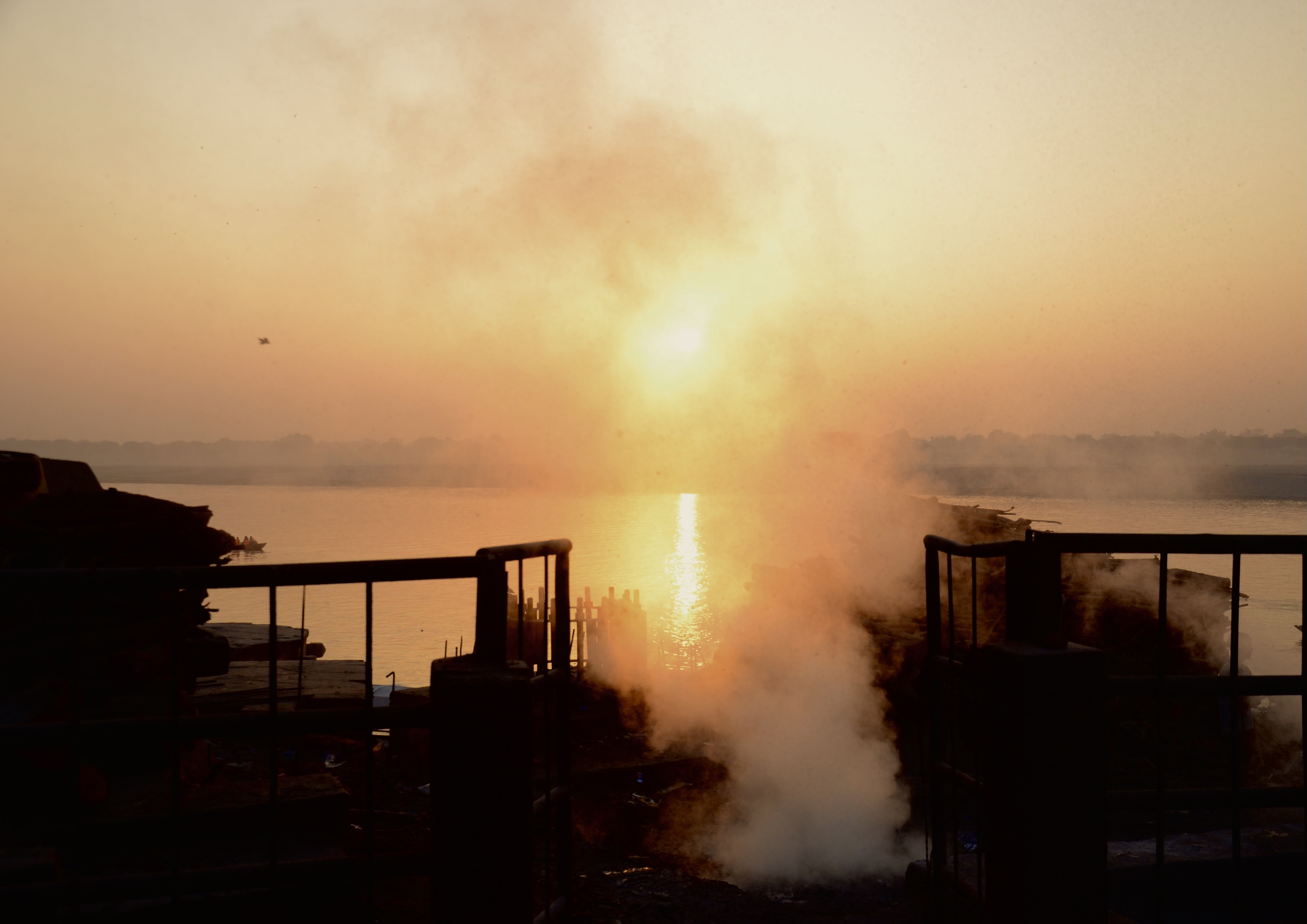
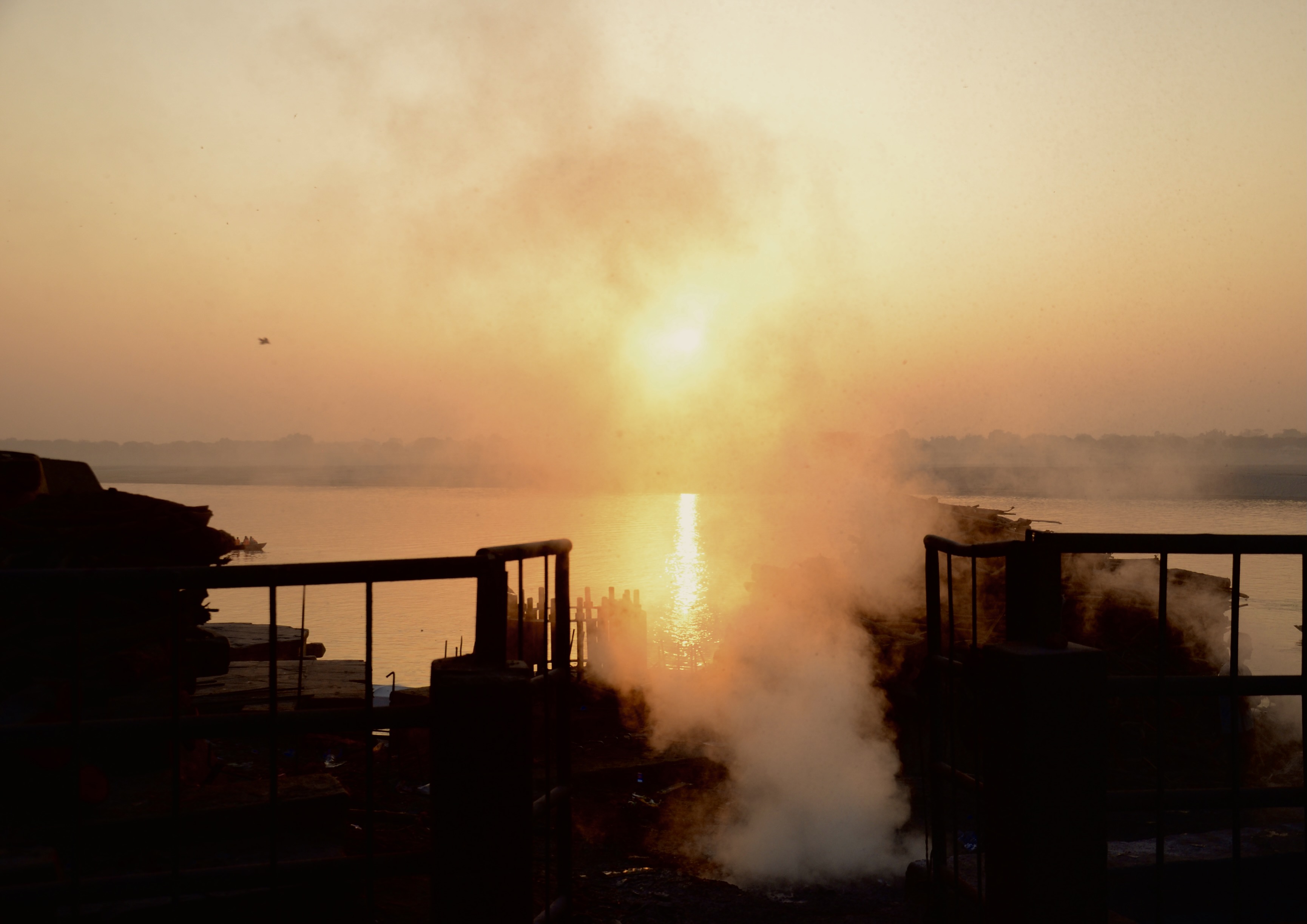
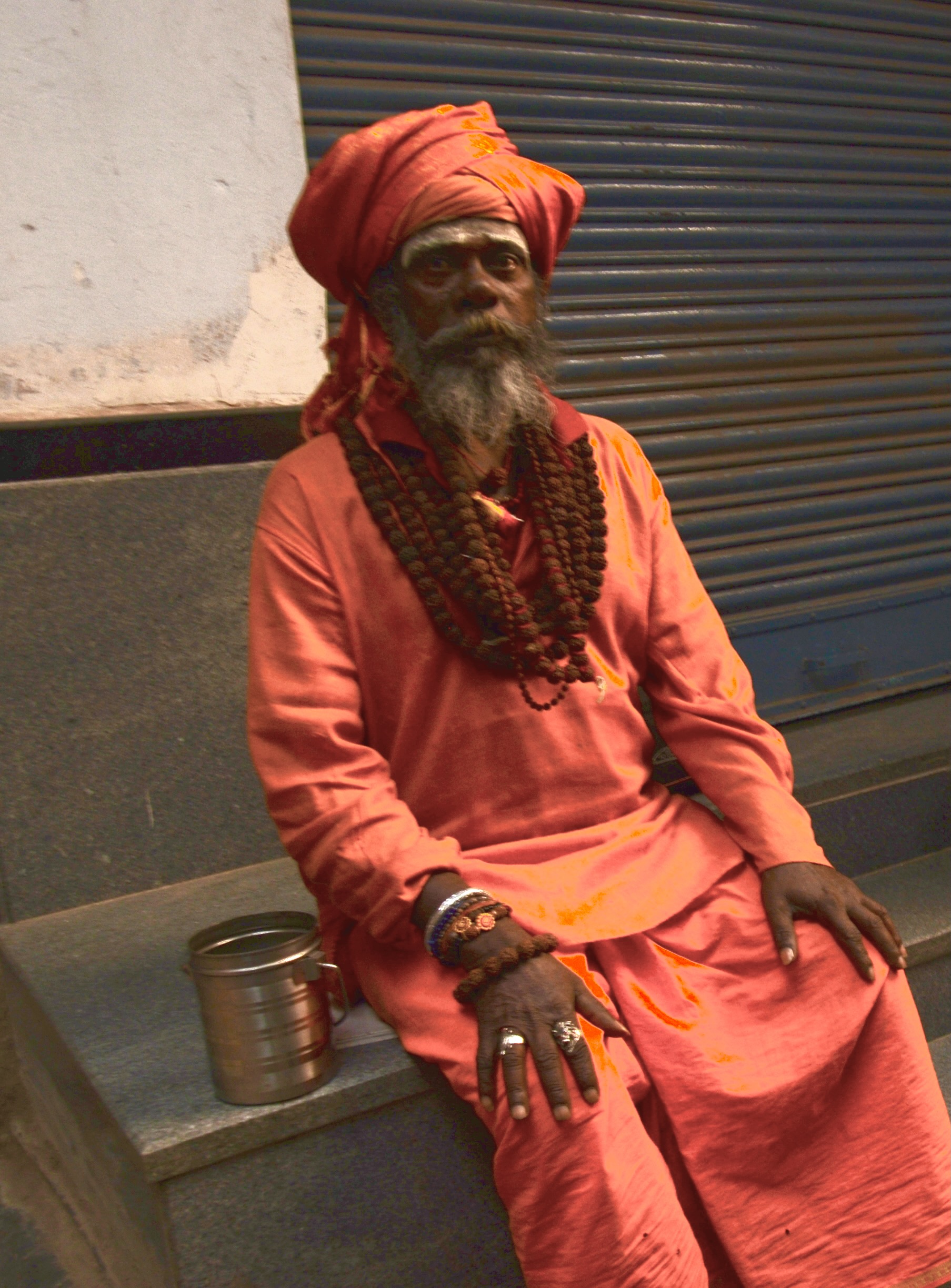
Just past the corridor, Manikarnika, the rambling main Burning Ghat has been contained. I used to find it mysterious and almost threatening with its confusion of burning bodies, sadhus and pseudo policemen forbidding photography at threat of large fines. Now I can walk by unaccosted.
Manikarnika main burning ghatThe smoke rises from the dead and the ancient city
Admittedly, Modi’s a controversial figure but it seems he wants to turn Varanasi into a tourist attraction. Pilgrims have been coming here to worship and to die for thousands of years. They will continue to come but they will have to compete with the well-heeled tourists.
For us, we continue to meet old friends. From the first time we arrived fifteen years ago, we connected with our congenial guesthouse manager, Sanjiv, restaurant owners, shopkeepers, music lovers, chai wallahs, and even beggars. Unimpeded with language difficulties, the friendships strengthened with each visit.
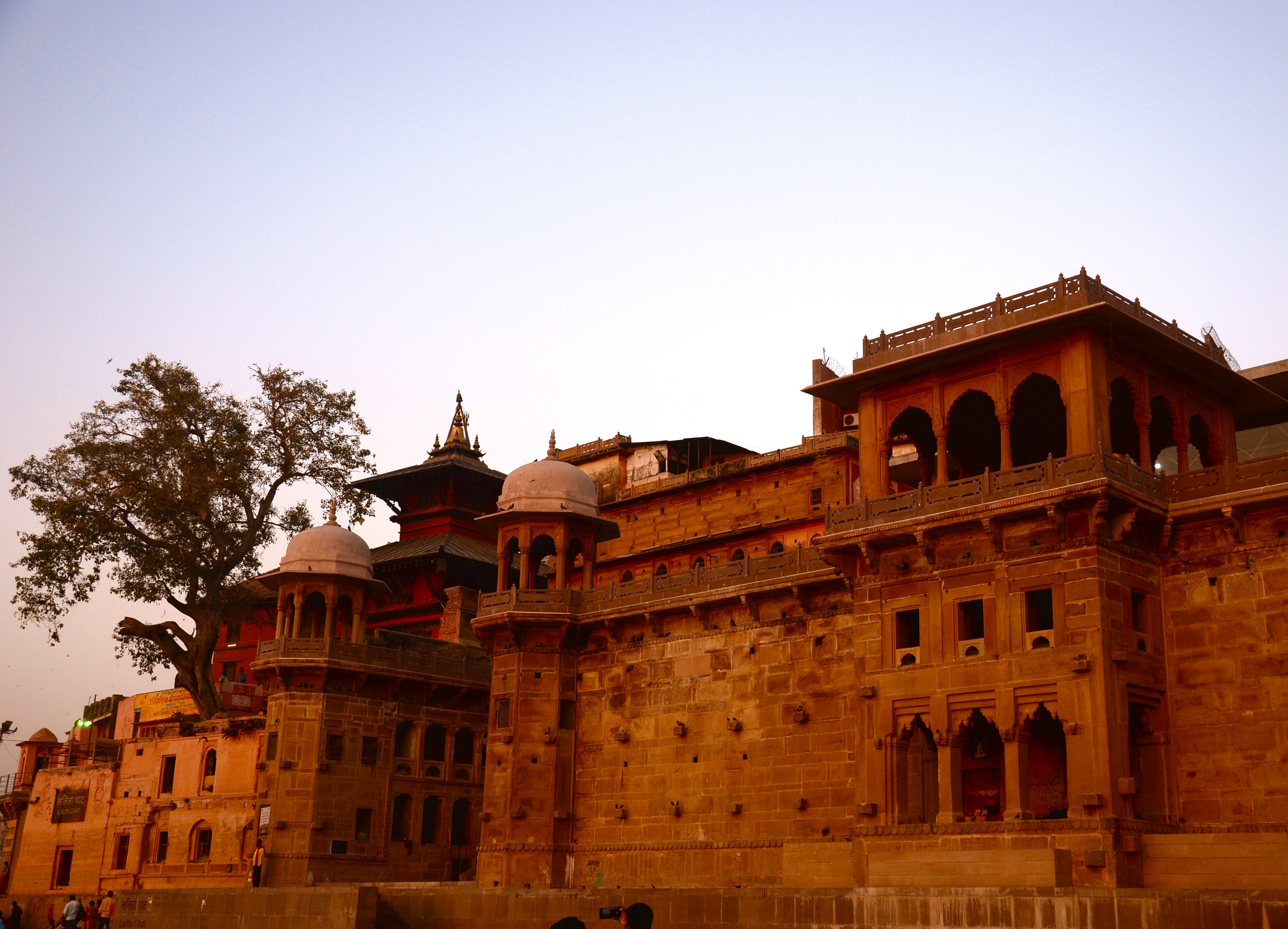
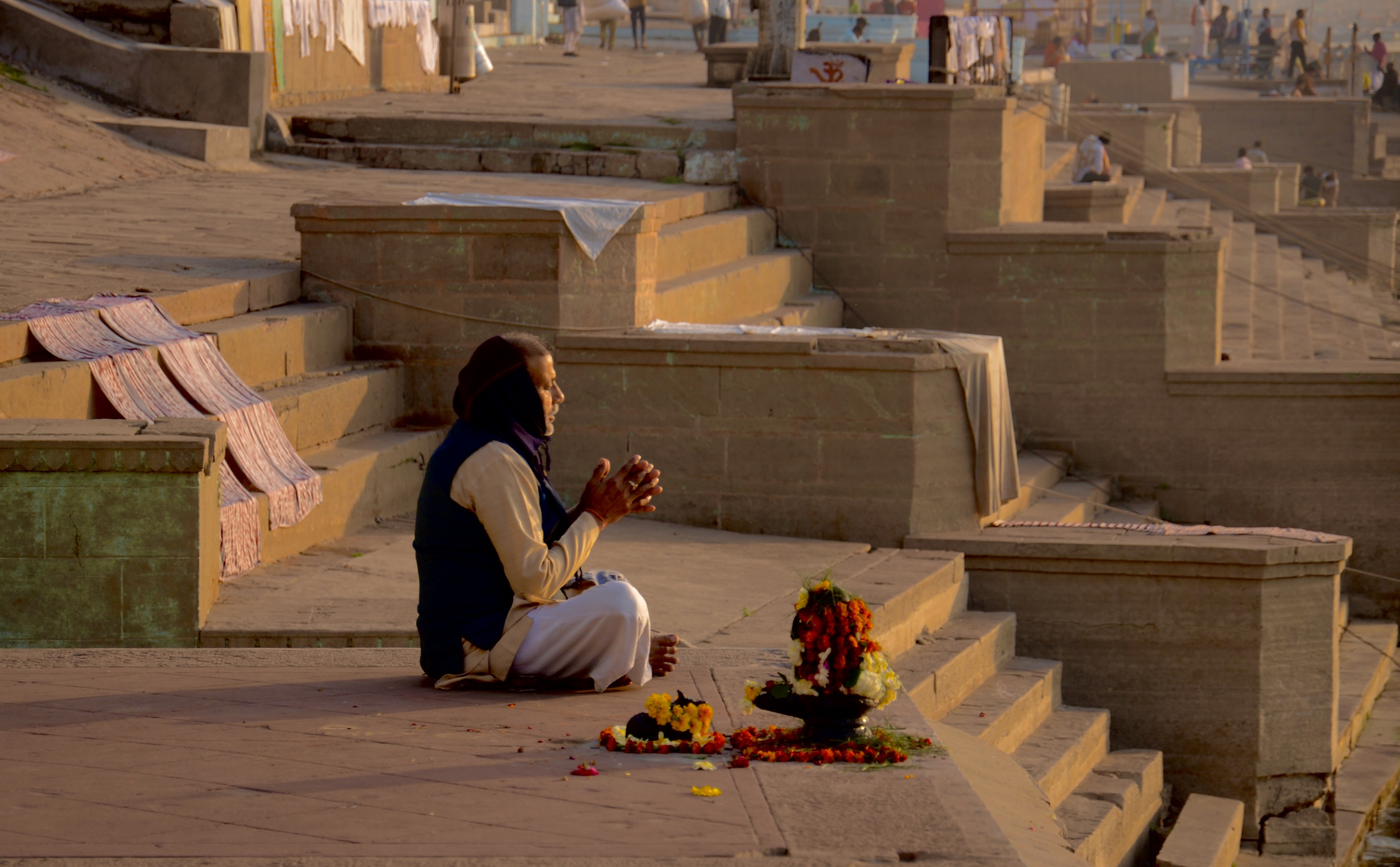
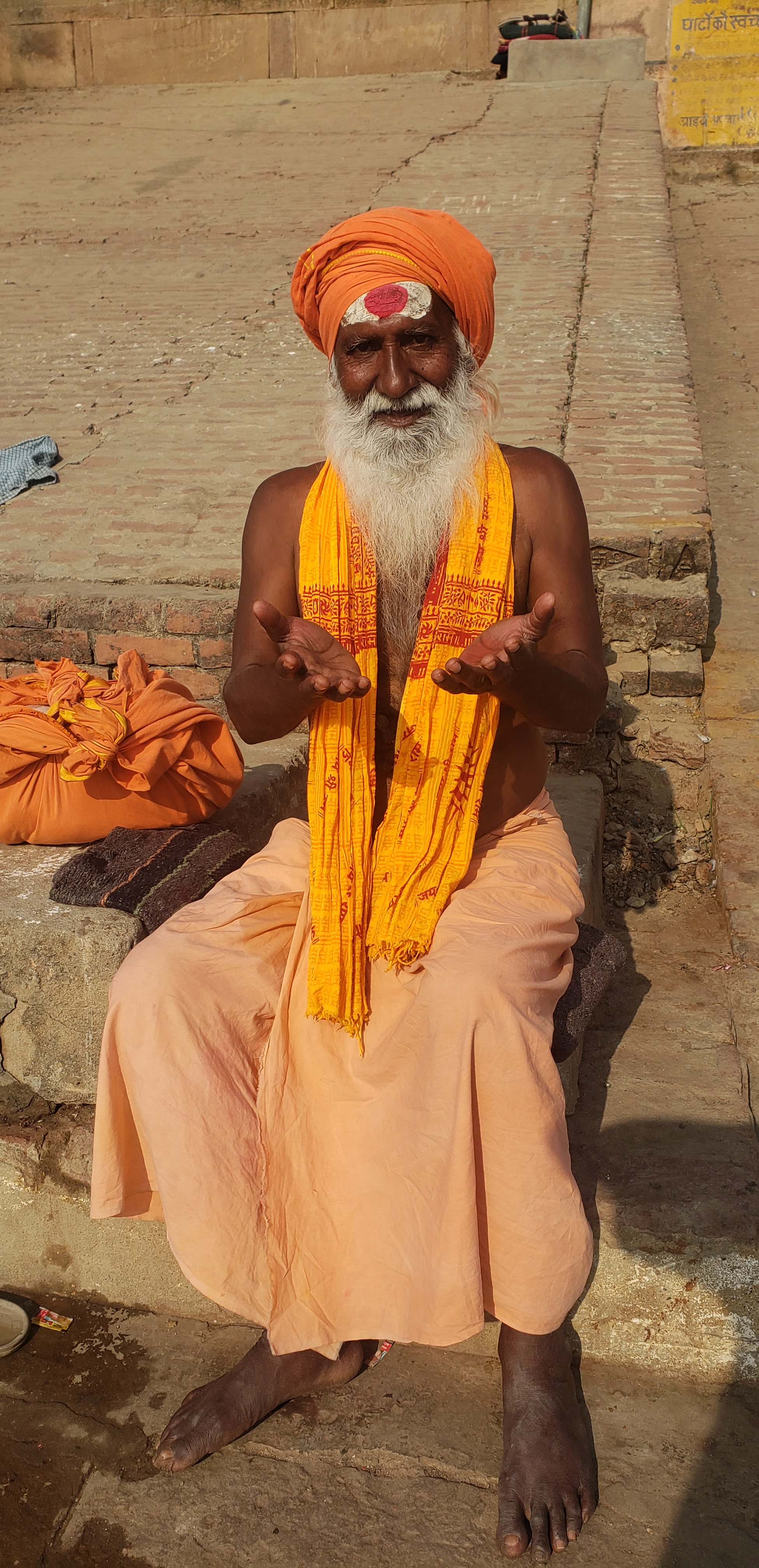
In spite of the encroaching modern world, Varanasi remains remarkably unique: the sun rising over the Ganges, the boats darting back and forth, sadhus performing their spiritual practices.
An Italian woman, troubled by sand fleas, walks through the water every day to avoid being on the sand. She likes to talk and I can easily hear her clearly-annunciated but heavily-accented English until she tells me about a wonderful ayurvedic massage down the beach. “Where? My husband would like a massage.” “It’s called LaTOOsa.” “Say it again?” I ask. Eventually she spells it out: L-O-T-U-S. “Ah, Lotus?” “Si, LaTOOsa!” she beams. We exchange our names. “Orrbearta!” Italian Marina exclaimed. “My sister’s name!” Roberta sounds so much better in Italian, and I’ve found a new friend in the water.
I’m enjoying conversing with British friends using expressions I haven’t heard in a long time. “Chivvy along,” a mother ordered her dawdling children. “WHAT?” said Gerard thinking he was hearing a foreign language. I explained, ‘chivvy’ meant hurry. “In all the years I’ve known you, you’ve never used that expression!” It’s not the first time I’ve surprised him.
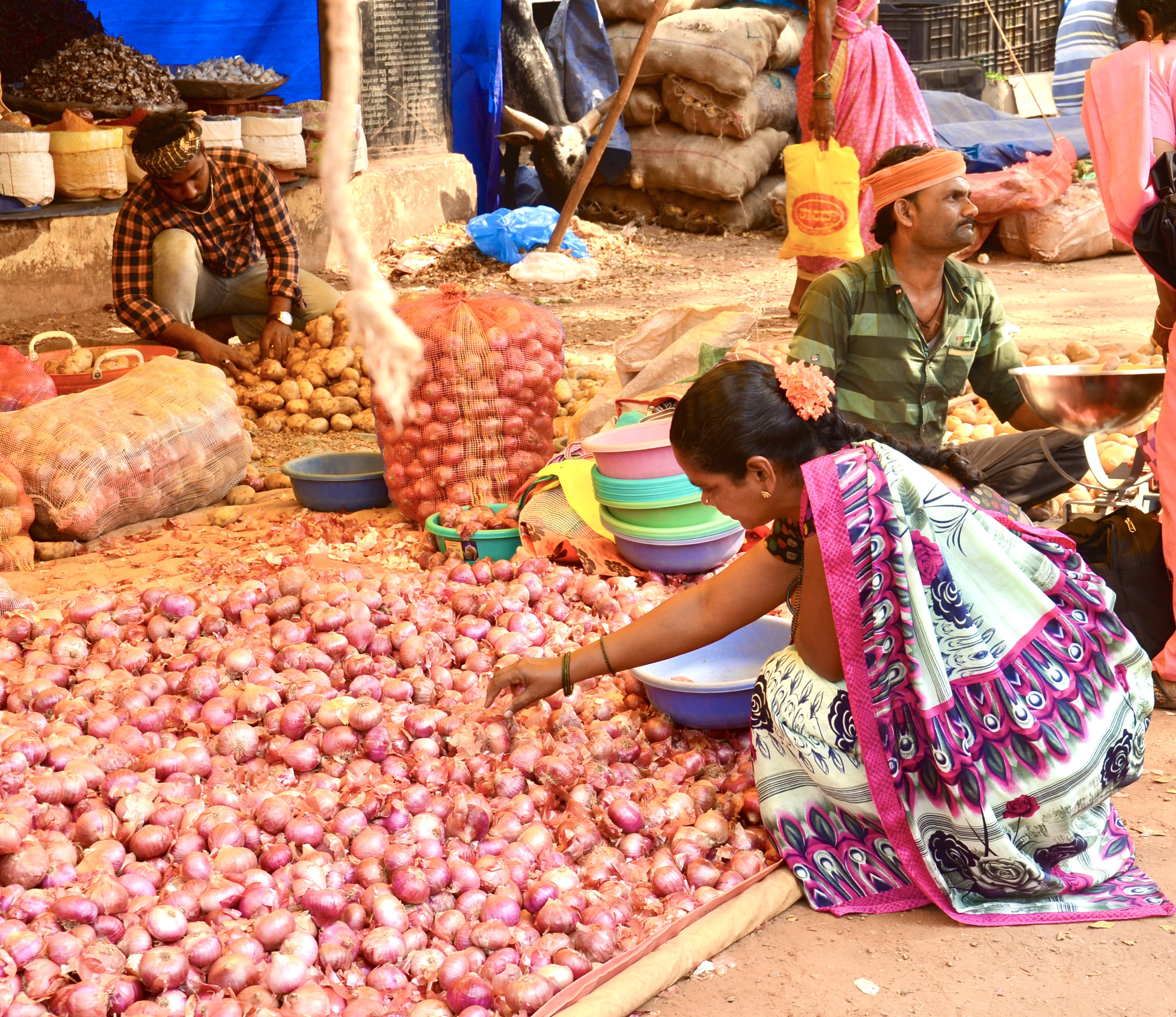
Visiting the weekly market provided a photo op.
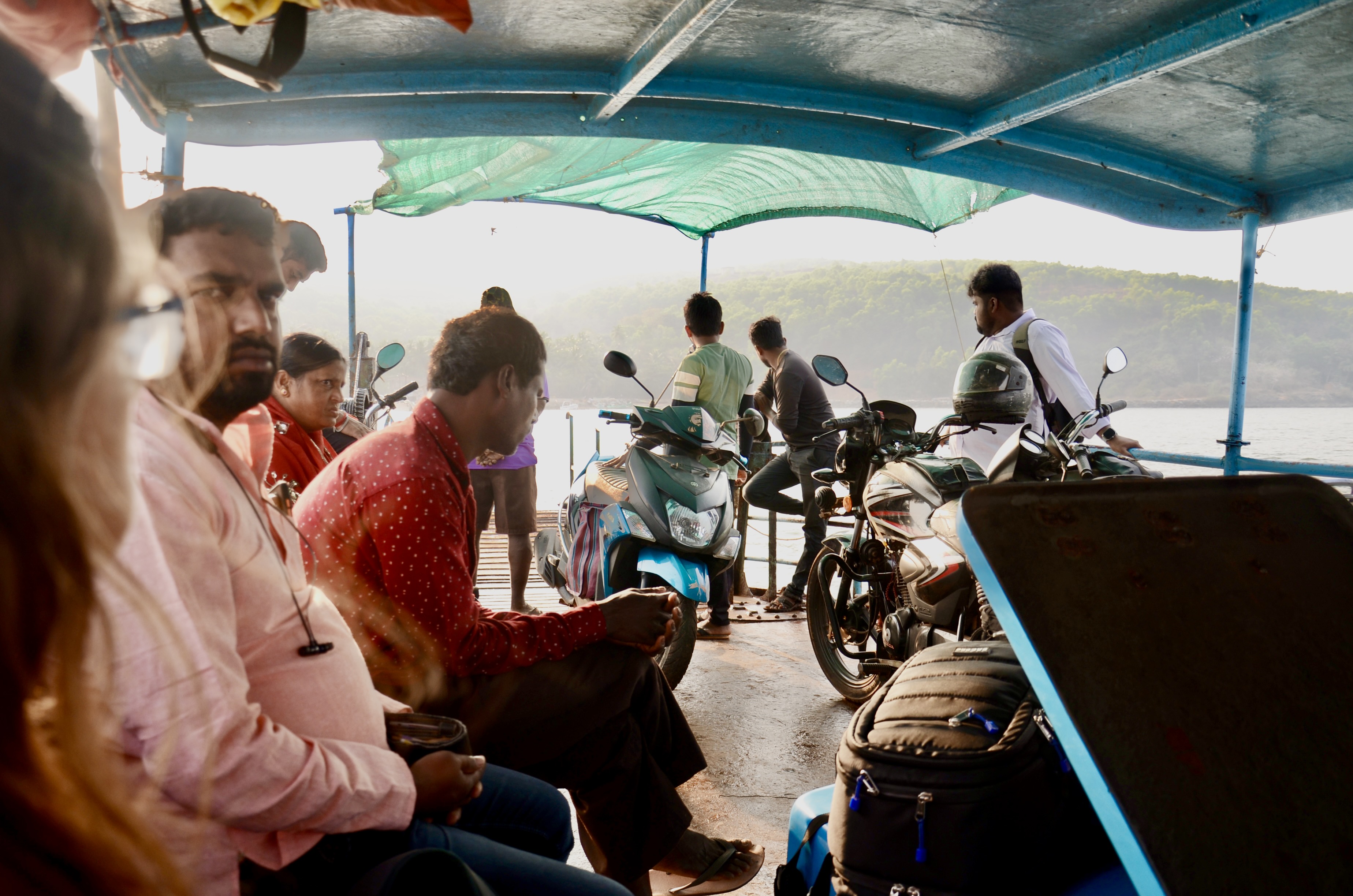
Marion and Juergen encouraged us to join them taking the ferry off the peninsula to a tiny hamlet on the mainland. Before breakfast we caught the 7.30 am bus to the port where the little ferry was waiting. People and motorbikes crowded on for the short but lovely ride.
Marina had told us of a chai shop on the other side and we set off in expectation for a nice breakfast. Four miles later, through road construction and clouds of red dust, stil no chai shop. Exhausted, thirsty and hungry we turned around.
After the long walk back, we found the chai shop right where it was supposed to be and sat overlooking the bay with our chai.
But what saved the day was the unreserved friendliness of everyone. Obviously few western tourists ventured their way and we were still a curiosity: big smiles and waves from road laborers, housewives and school children. By the time we got off the ferry hoping to catch the bus back to Gokarna, it was high noon. The shopkeeper said the next bus will come in two hours. There wasn’t a rickshaw in sight. Fatigued and overheated we started walking. Eventually we caught a rickshaw back to town. Not exactly the outing we’d anticipated.
Certainly the dogs along the way could have advised us if we’d only taken the time to listen.
A few days later, bird watcher, Tina, proposed another walk to the little beach of Belekan. “About a two hour walk,” she claimed. “We’ll leave early to avoid the heat and take a bus back.”
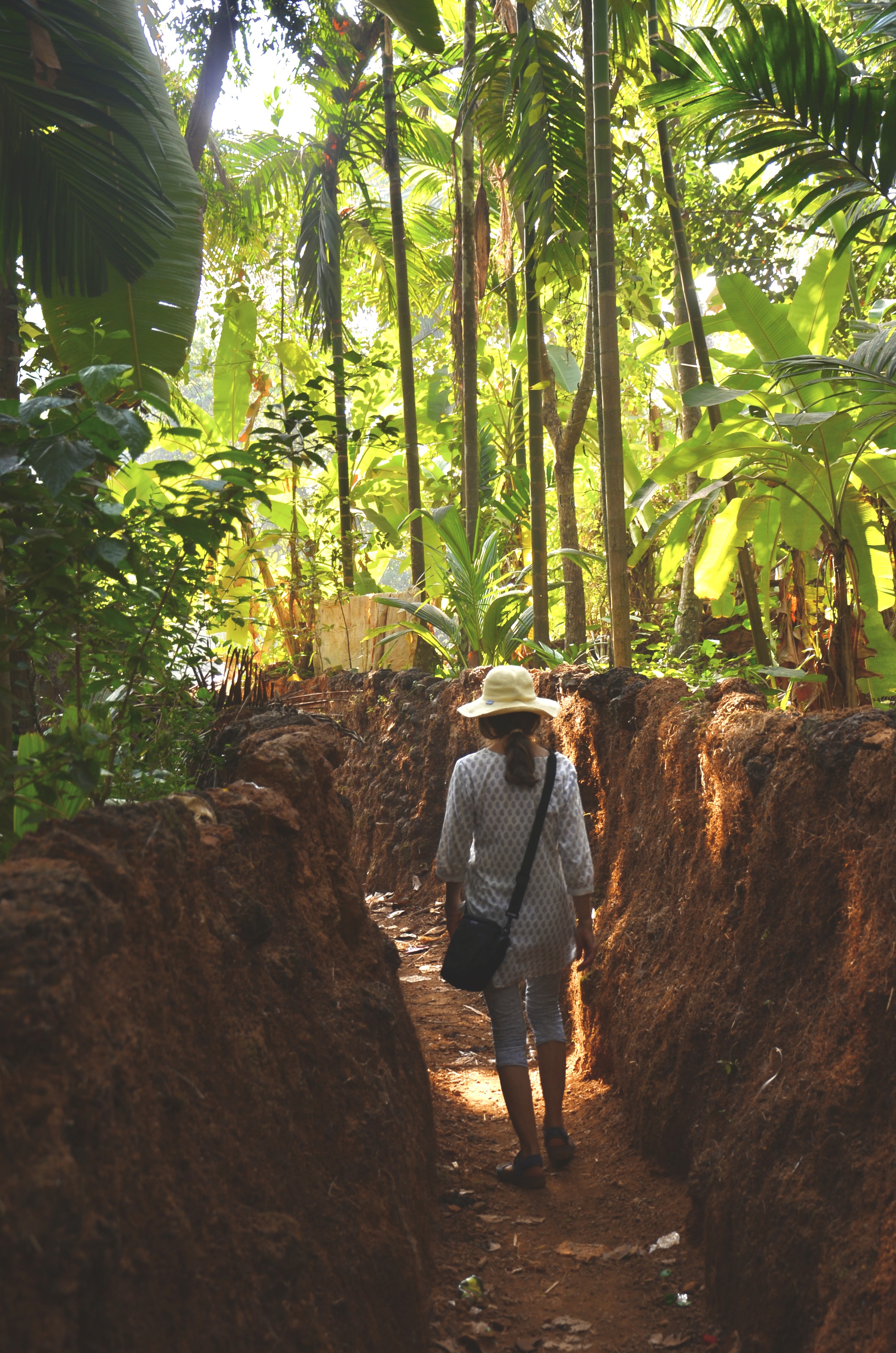
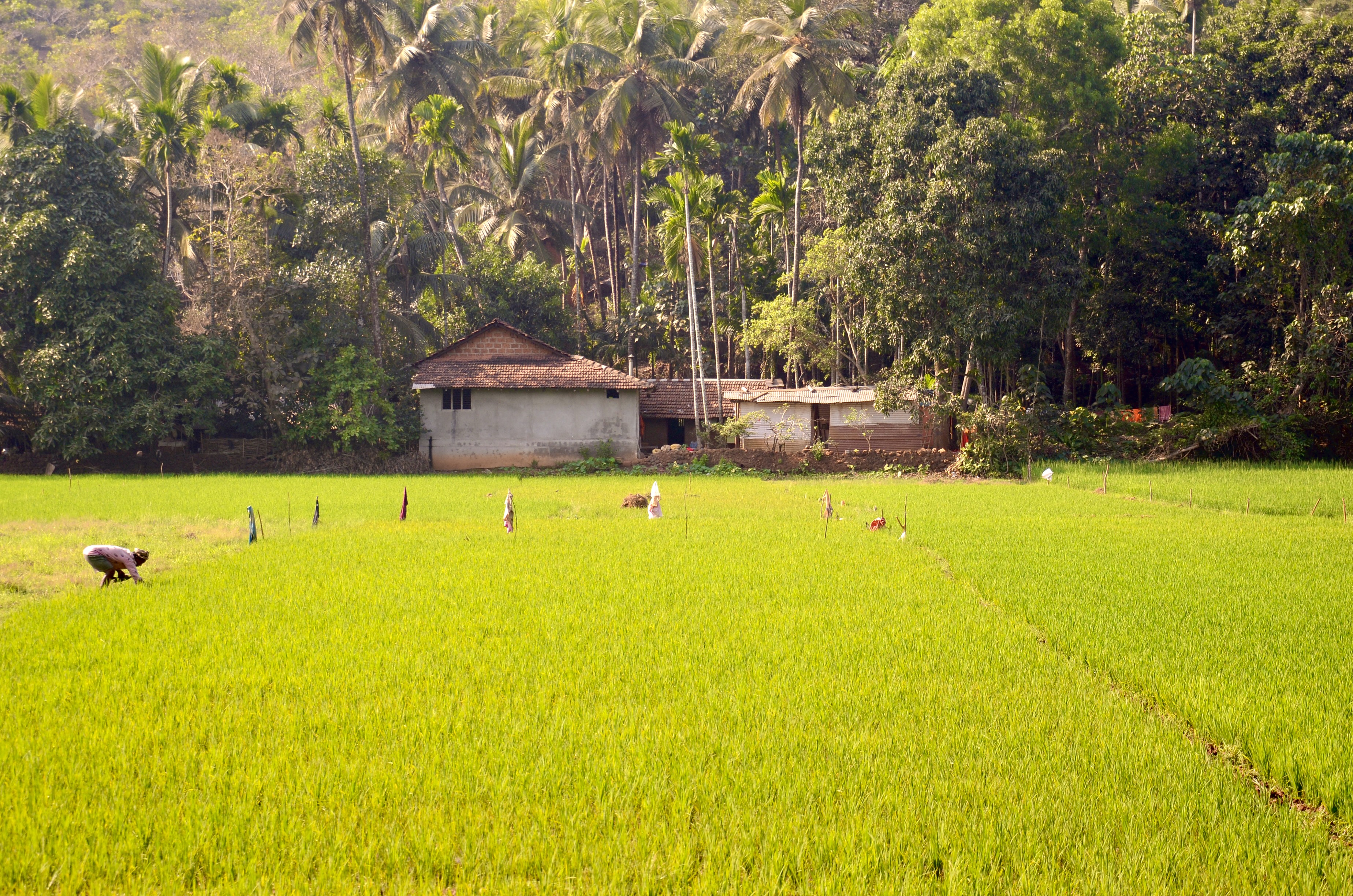
For the first hour we followed a small road through the jungle alive with bird calls. Then Tina followed a footpath that meandered past rice paddies and the odd house.
The green of the rice paddies shimmered. And if we stood still long enough we caught glimpses of white–egrets, ibis and storks. n stalks glimpses of white–egrets, ibis and storks.
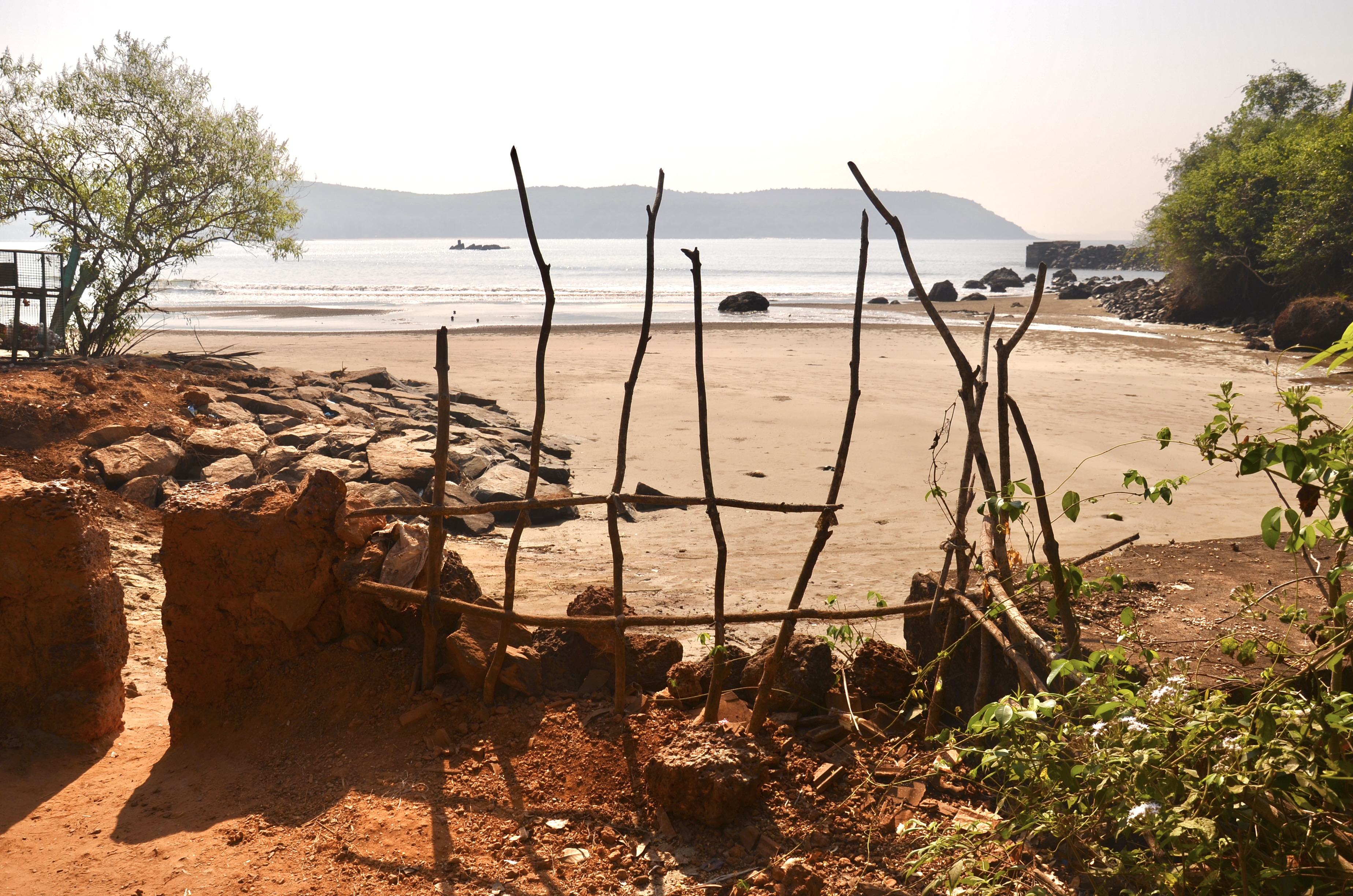
Suddenly the footpath opened up to the beach. At the far end sat a cafe where the bus terminated. After our two hour trek our chai tasted even better.
Then we were informed that the bus would not be coming for another two hours. ‘Man proposes and God disposes’, someone muttered.
The general consensus was to walk back. Gerard was of a different mind, happy to hang out at the cafe and await the bus. Had I known what was being said, I would have enjoyed also staying for a swim. But not following his gut, we trudged off with the others. Now in the noon day sun, our pleasant stroll through the jungle became a test of endurance–heat, sun and no water. Finally reaching our room, Gerard collapsed on the bed. After looking at map, he huffed, “Two-hour walk, huh? That was more like ten miles!” Once again, Incredible India has its hidden surprises.
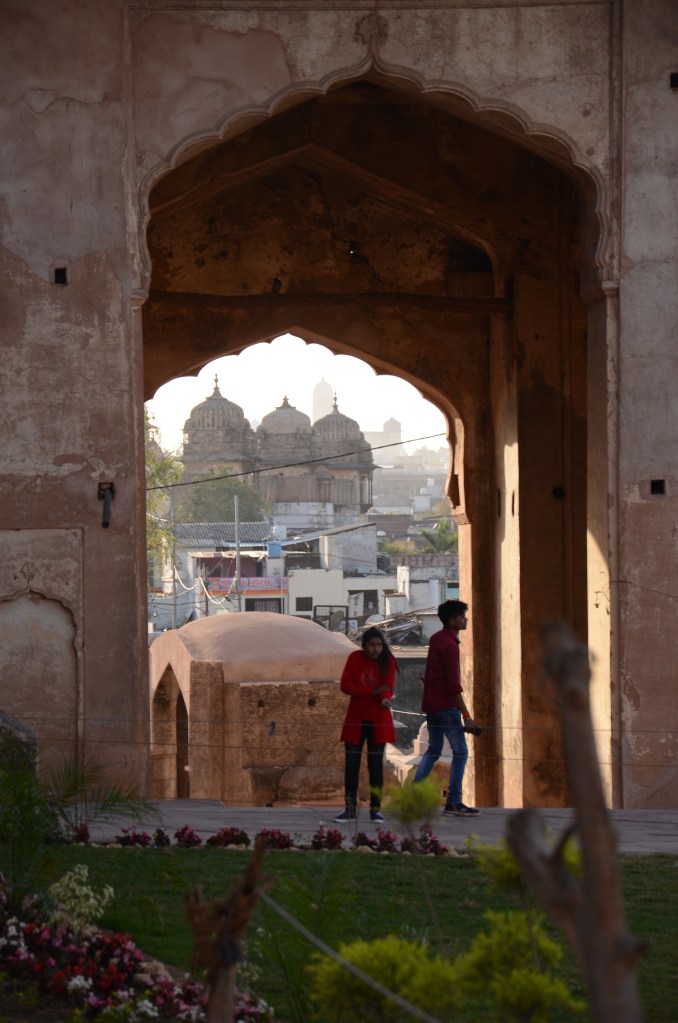
As we flew out of India last March, I had a premonition we might not be able to return again the following January. We had little idea at that time how serious coronavirus was and how deeply and long it would impact our lives. Waiting for the plane to depart, our last night in Orchha occupied my thoughts. The town had gone into an abrupt lockdown, the temple closed its doors and the streets emptied. In a pool of streetlight, a small group of beggars sat outside the temple, while our new friend from the Indian military, volunteering with the temple priests, handed out dal and chapatis. The usual hubbub of pilgrims and street vendors had already disappeared into the quiet night. I took a last photograph and silently bid Orchha goodbye. The mood was decidedly melancholy. The next day, we were back in Delhi and franticly searching for a flight to Boston. had to let go of my fantasy of hiding out in the Himalayas, and we boarded one of the last flights out of India.
We returned home to a new reality of social distancing, mask wearing and grocery store queues. But spring was coming and the garden became our refuge. We nursed it back to life, planted anew and weeded. Gerard rebuilt the stone wall and leveled the paving stones.
We lingered over breakfast, drank chai in remembrance of India, and from time-to-time entertained friends sitting six feet apart on the patio.
While self-quarantining, I paced the empty alleys of the South End. Soon I felt confident to ride my bike in the empty streets of Boston and discovered new bike paths in and around the city: beside the Charles River and around the vast, now empty, university campuses of Northeastern and Boston.
When summer came, I could not longer go to Manchester by the Sea; the town had closed the beach to non-residents. Boston harbor became an option; I swam wary of pollution and keeping my head well out of the water. On a sunny weekday, more often than not I swam by myself, looking back toward the city and marveling at my secluded private lagoon. (On the weekend, the crowds arrived and I stayed home)
The social restrictions have not bothered me as much as others. The pandemic has helped me to rein in my restless nature and find a new contentment in a quieter life at home. I never really liked the using the telephone and now, with my hearing loss, I’ve rediscovered the joy of writing letters. Growing up in England, letter writing was expected and something always enjoyed. I lost touch with it through the convenience and universality of telephones. Social encounters, consisting of only one or two people at a time, are easier, although masks and social distancing exacerbate my hearing loss. With the deepening political chaos I’ve spent more time reading the news, national and international trying to make sense of the insanity. And now that winter’s arrived, I’ve taken up knitting again after a long hiatus.
Gerard, who never has a problem occupying his time, stays busy with projects: house repair, furniture refinishing…and painting pictures when he finds time. He’s recently completed two that I especially like. Now, he’s returning to a rewrite of his memoir during the cold dark winter months. He’s never at any loss for words on the telephone, but he misses socializing, whether a casual street encounter, or a prolonged coffee shop conversation with friends. Neither of us have suffered in isolation – fortunate we don’t have to go out to work, have a lovely house and each other for company.
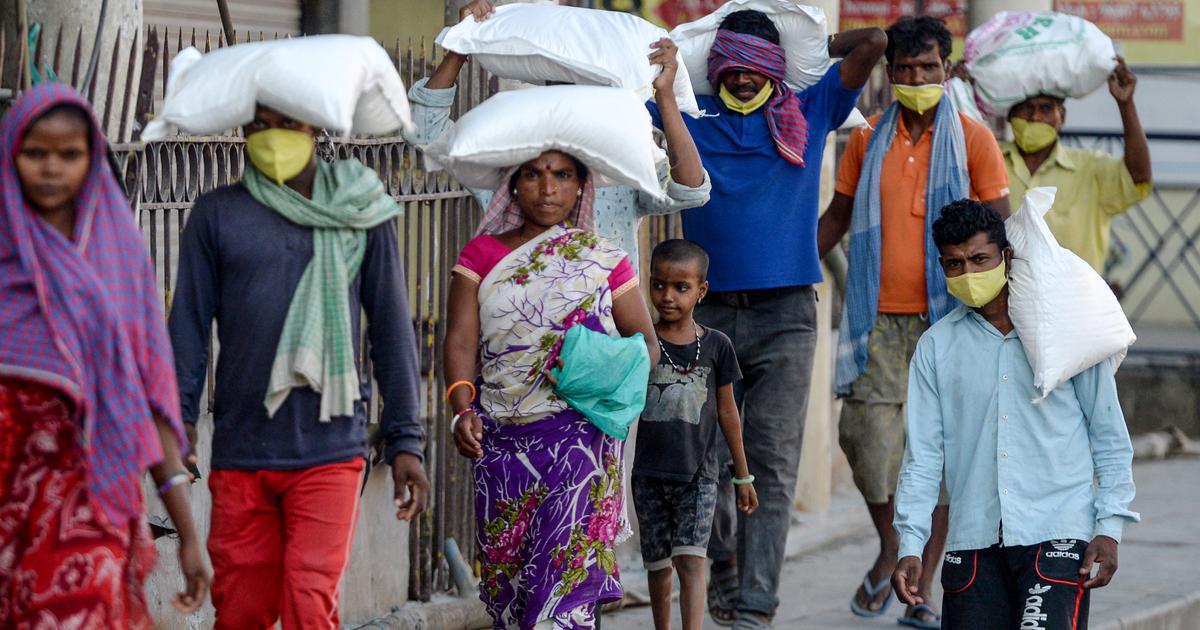
India is never far from our thoughts. Back in March, Modi ordered India’s lockdown with less than four hours’ notice. “Forget what it is like stepping out of the house for 21 days. Stay at home and only stay at home,” he ordered. But he mentioned nothing specific about the daily-wage earners—mostly migrant workers—who make up 80% of India’s workforce. Factory hands, delivery boys, cooks, painters, rickshaw pullers, or vendors standing by the roadside, selling fruits and vegetables, chai and flowers. Migrant women are indispensable as maid servants for the middle and upper class; daily they arrive to wash clothes, sweep floors, cut vegetables and make chapatis. With the pandemic, their income, in an instant, disappeared. We’ve seen horrifying pictures of these migrant workers, fleeing the shutdown cities. With bags perched on their heads and children in their arms, walking down highways in a desperate attempt to return to their villages hundreds of miles away.
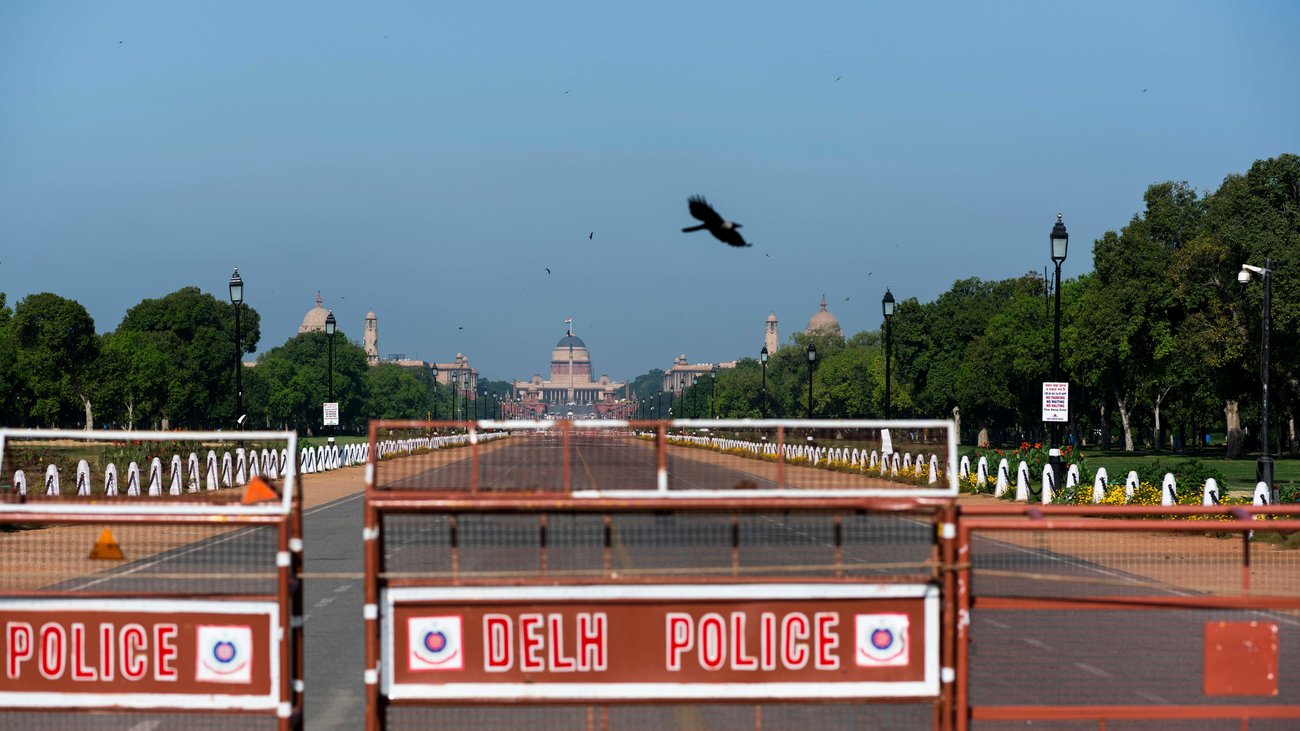
Meanwhile, back in Delhi, with few cars on the road, there is one silver lining: the sky has become clear and blue, something rarely seen in one of the most polluted cities in the world.
A crow flies near Rashtrapati Bhavan, the presidential palace in New Delhi, on April 2. Air quality has markedly improved in India’s capital since the country’s coronavirus lockdown began last month.
In the days following the shutdown, we heard stories of foreigners who didn’t get out in time. A friend sent us a video of some English tourists fleeing Varansi to make an evacuation flight in Dehi. The trip was far from smooth, the van driver fell asleep and went off the road, there was a long wait for another van, resulting in just missing their plane. I was envious of American friends, one a Krishna devotee, the other a travel guide, who were both able to remain in Himachal Pradesh. In the mountains, there’s been little evidence of covid. Two other old friends, have both become permanent residents in Auroville. Covid infections have stayed low and their lives seem to be continuing as normal within the confines of the community.
We’ve also kept in contact with our Indian friends. Their stories are quite different. Our hotel in Varanasi, Shiva Kashi, has been closed since March and Sanjiv, the manager, is trying to hang on until they can open again, probably not before next summer at the earliest. Shree Cafe is likewise closed. Santosh, his days freed up, is taking photographs of the shutdown city. Sadly, the demolition work from the Golden temple to the banks of the river still continues with a hideous pontoon mooring to offload tourists arriving by boat. His wife, Seema, has fed the stray dogs and cows on the street almost nightly and sponsors community youth activities – coaching football teams on the ghats, holding competitions.
Rajesh appears to be back at his bangle store near the Golden Temple (though we may be wrong) while still writing beautiful poems. In the photographs, few are wearing masks. In Orchha, our Kashmiri friends were forced to close their jewelry store, but couldn’t get a flight home to Srinagar. We’re still waiting for the final outcome. So many of the Indians we know rely on the now nonexistent tourist business. The Indian government is not issuing any tourist visas and this is unlikely to change as long as covid continues to surge.
Back in the US, the political mess has provided a constant distraction…or irritation. It’s felt like an emotional roller coaster. For a moment, I believed trump was going to leave the stage and he’d no longer dominate my mind with so much negativity. But that’s not trump; good news or bad news, he still continues to take center stage. After the storming of the Capitol, I feel America has deteriorated into a state of complete lawlessness — a banana republic. Wintering in India, we’ve missed recent inaugurations. In hill station, Ooty, we tried to watch Obama with a group of westerners but the TV had terrible reception. Four years ago, we happily ignored Trump’s sign-in as we sat on the beach in Agonda.
As Biden will be inaugurated in a virtual and low key ceremony, trump will orchestrate his ‘triumphant’ departure from a military air base in Maryland…but no one will be watching. It’s easy for me to compare his departure to that of Richard Nixon in 1974. But I like to think Nixon redeemed himself by having some remorse. He later admitted: “I let you down. I let the country down.” I can’t imagine trump will ever feel any similar responsibility.
At present, I’m on overload: too much trump, too much pandemic, too much distrust. Keeping our heads down, we hope for the best. Missing all of you that we will not see in India this winter, best wishes for health and happiness in 2021.
Our original plan was to stay in Orchha only a week and then move on the southern Rajasthan. But the state government of Rajasthan has gone crazy about coronavirus so we’re staying put until we go to the mountains. Not a hardship, it’s an easy place to be at this time of the year, the weather is perfect cool nights and warm days and pollution is relatively low. German friends, Marion and Jorgen, have arrived from Gokarna and we’re enjoying showing them around for the first time.
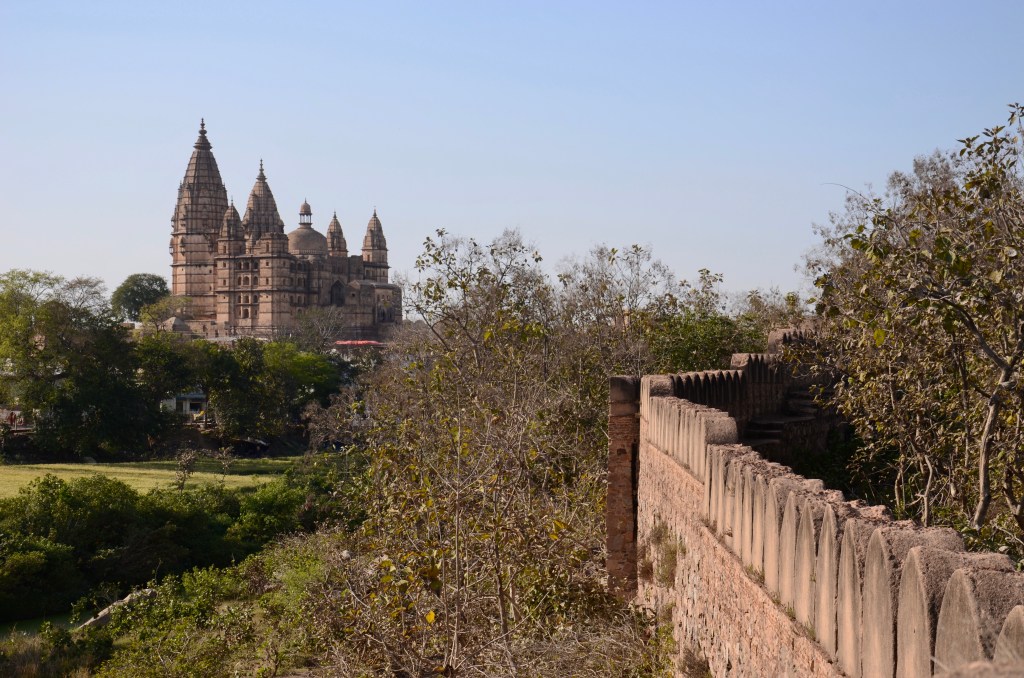
The historic town of Orchha and surrounding countryside has barely changed since we first visited in 2010. Each year we are surprised at the lack in growth of tourists. Tour groups still arrive here not even for the day and are hustled through the main palace, shunted back on the bus, and gone before the dust settles. This year, there are less but still a few.
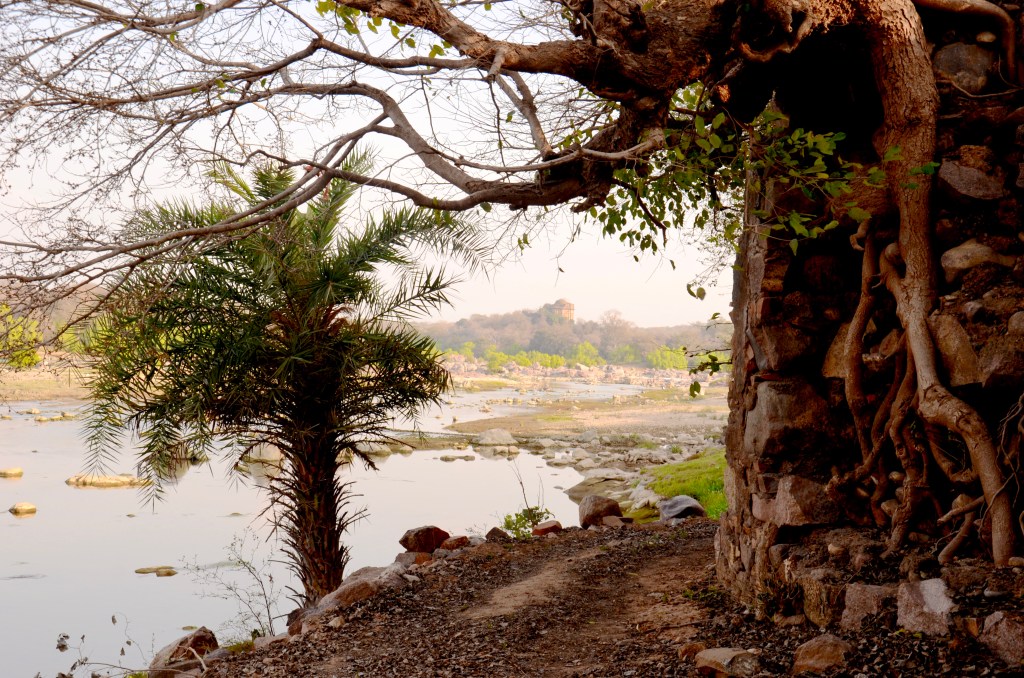
Sitting on the banks of river Betwa, Orchha was once the capital of the Bundela Rajput kingdom, one of the largest and most powerful in Central India.
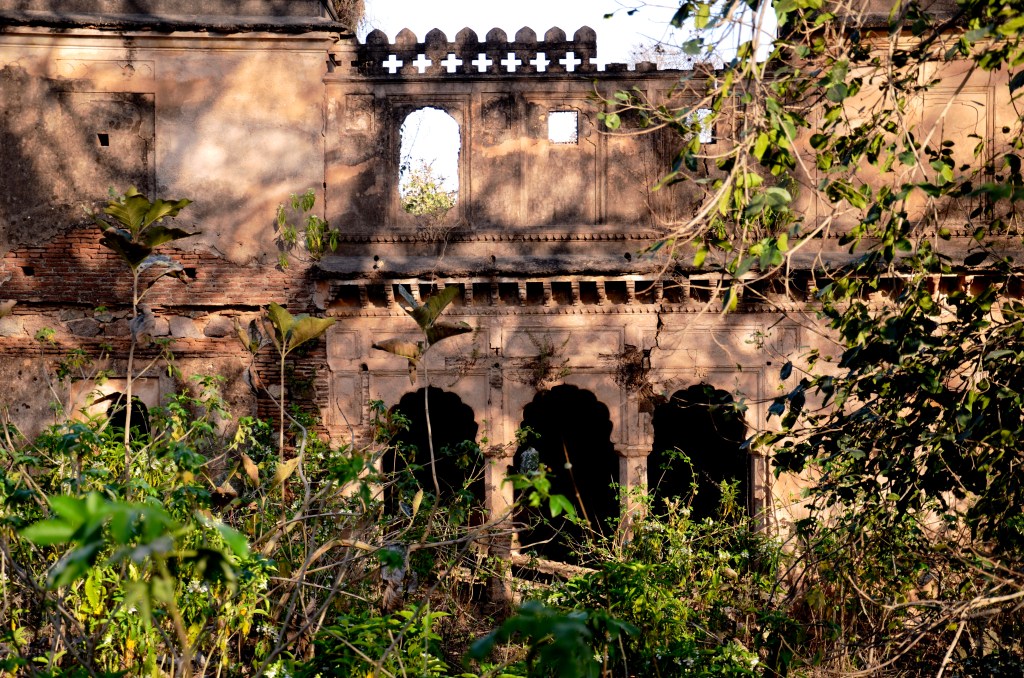
Outside the main complex, the landscape is scattered with crumbling remains of residences, gardens, and chhatris (elaborate tombs for the dynasty). Many are in amazingly good condition, in part because Orchha seldom witnessed ferocious battles. The town reached its peak in the early 1880s and then fell into decline after Indian independence when it lost its city-state status.
However, change is in the air. Namaste Orchha, a three day conference/festival aimed at stimulating tourism, was winding up the day we arrived. More significantly, there’s a clean up campaign – similar to Varanasi. The open sewers running each side of the street are being closed up. The main road through town widened and resurfaced meaning the traffic just goes faster. The fronts of buildings beside the road that extended too far have been demolished and the exposed remaining interior of the vacated building is painted cream white! They’re continually upgrading in and around the palace, the major sites are illuminated at night and the fountain in front of the temple is spouting water for the first time.
Until now we’ve not mentioned Coronavirus to avoid feeding the media-driven paranoia. There are so many viruses in India that a reminder to wash your hands and not touch your face is good common sense. Western tourists are at an all time low, and, each day, India Times provides a news update on the spread of the virus. In a place as large and disorganized as India, you question the degree to which any estimate can be accurate. When we step out on the street, life is as normal in Orchha and we forget about the virus – or we almost do. Fortunately, we are in a small town with only a small tourist influx on a normal basis. But now that is changing. Everyone is talking about it and some are booking flights home early. India has become caught up in the global wave of hysteria.
Friends, Premgit and Sandhya, wrote with a horror story of arriving in a town in the Punjab where the Sikh festival of Urs was being celebrated. First, the hotel told them their reservation was canceled; they finally managed to get a room and settled in. The next morning, six fierce Sikh policemen barged into their room and told them they had to get out. There was no discussion – they had to go the train station and wait for twelve hours for a train to Delhi, where they booked a new flight back to the UK a couple of weeks earlier than planned. The tourist areas of Rajasthan are also in high alert. Tourists are being stopped at train stations and told to go to a local hospital and get a medical certificate before they’re allowed to stay. India Times published a photo of a hospital in Jaipur showed a long line of tourists waiting to to be certified. And just today, we read that India is in lockdown as regards flights in and out of the country. We have now canceled our next destination, Bundi, in Rajasthan, and are staying longer here in Orchha. We do not anticipate a problem in being in HP in the mountains where we plan to spend the month of April. First we must return to Delhi first to pick up our warm clothes from the family and catch the bus to Rewalsar.
We’re making a concerted effort not to get caught up in this over reaction. We can and firmly believe that whatever happens is supposed to happen. Both of us feel perfectly healthy. In this bizarre time, we wish everybody all the very best.
Our carefree month at the beach ended with a momentary downturn: the night before we left Gokarna Gerard came down with what must have been food poisoning. Alone, I said goodbye to our friends at breakfast the next morning and we set off for the short train ride to Madgaon. Gerard slept the remainder of the day away while I found a pure veg restaurant with remarkably good masala chai. We’d decided to fly to make the long trip to Aurangabad less arduous. However, this is India. The trains rarely run on schedule; why would we think domestic flights would be any different? Two short flights on twin engine props, but a long tedious day of delayed connecting flights and more time sitting in airports than on planes.
Aurangabad was named after the infamous Mogul Emperor, Aurangzeb, one of whose cruelest act was to imprison his father, Shah Jahan, in full sight of the Taj Mahal he (Jahan) had built in honor of his wife. In captivity, Jahan was forced daily to look out on his creation. Another busy Indian city, the only reason for coming here was because of its proximity to the caves of Ellora and Ajanta. Nine years ago, we were so impressed, we decided to make another visit this year.
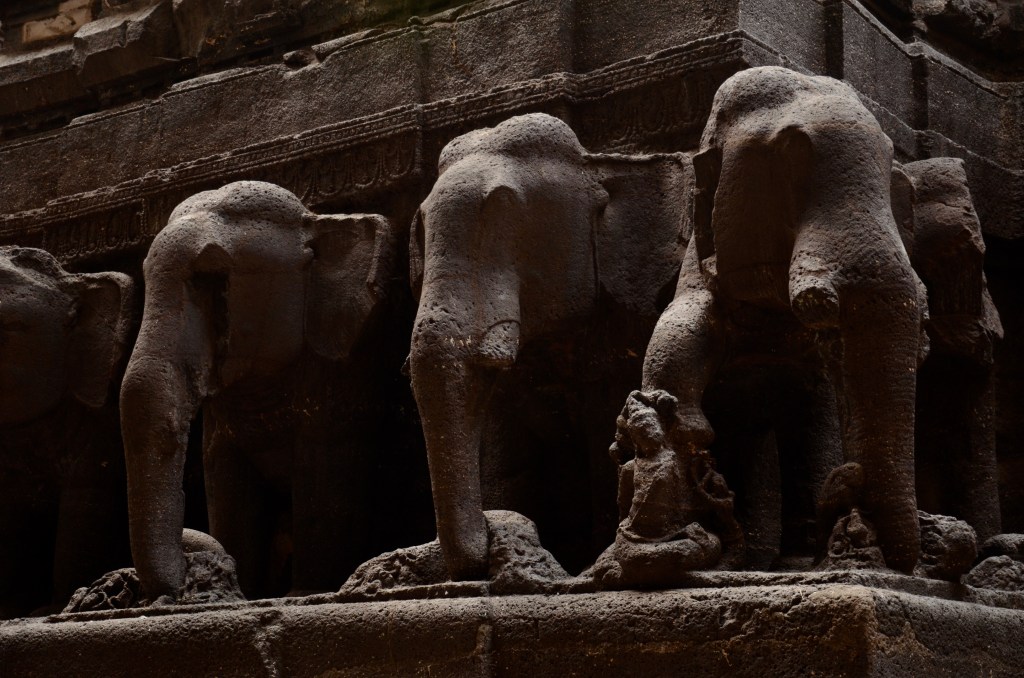
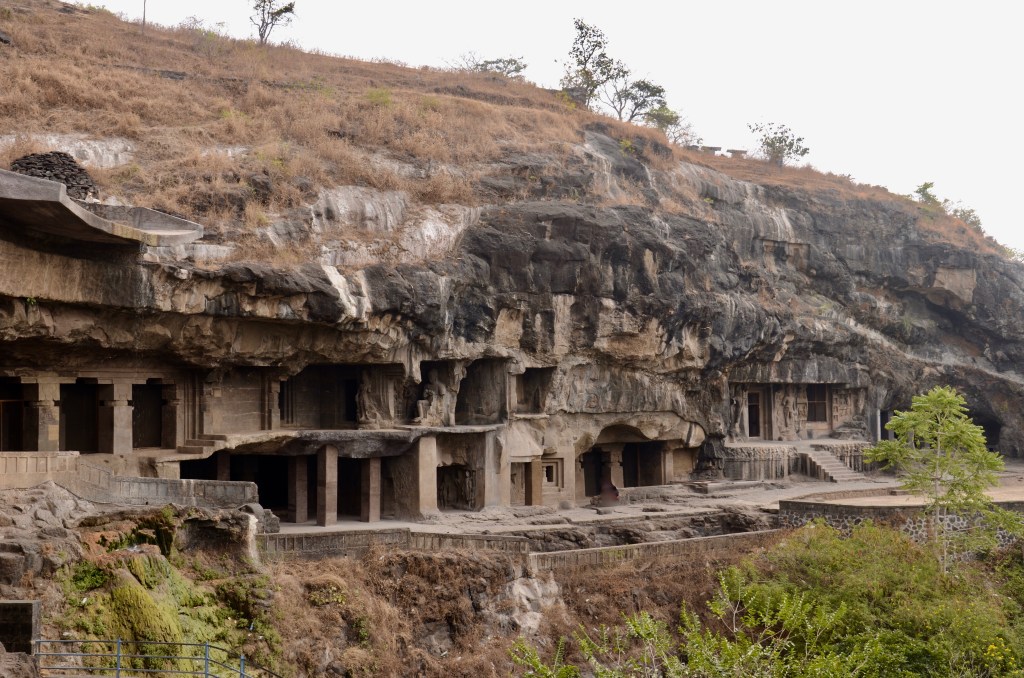
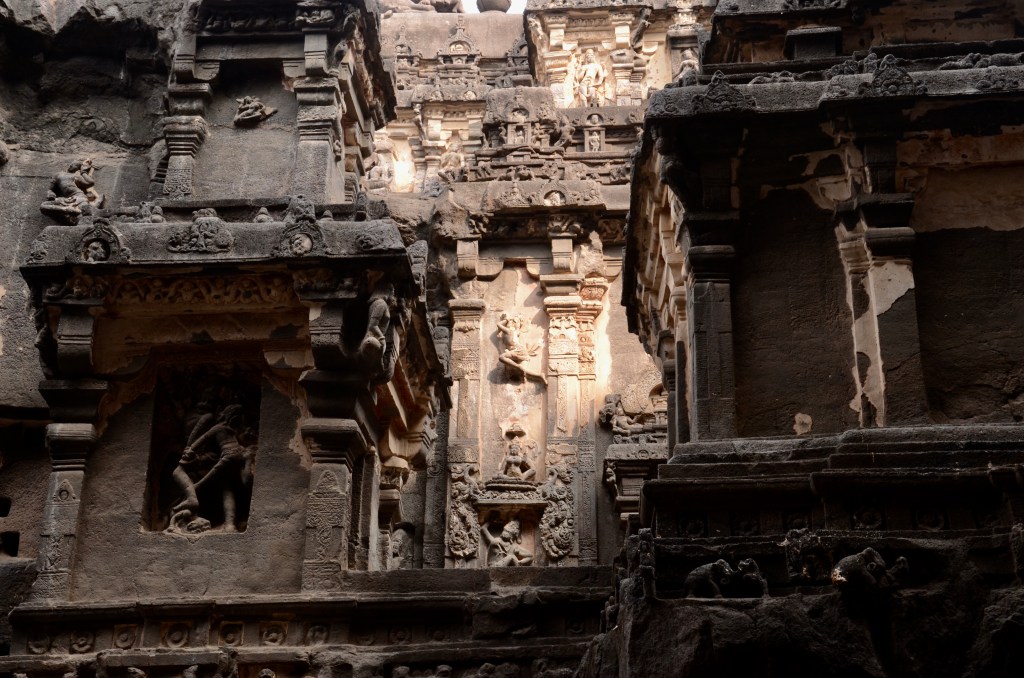
Our first day, Gerard had recuperated enough to visit nearby Ellora. We shared a taxi with a jovial Frenchman, our age, who spoke virtually no English. The taxi dropped us at the caves early in the morning and waited until the evening to bring us back. Once again, we were awestruck at the long line of caves carved into the cliff.
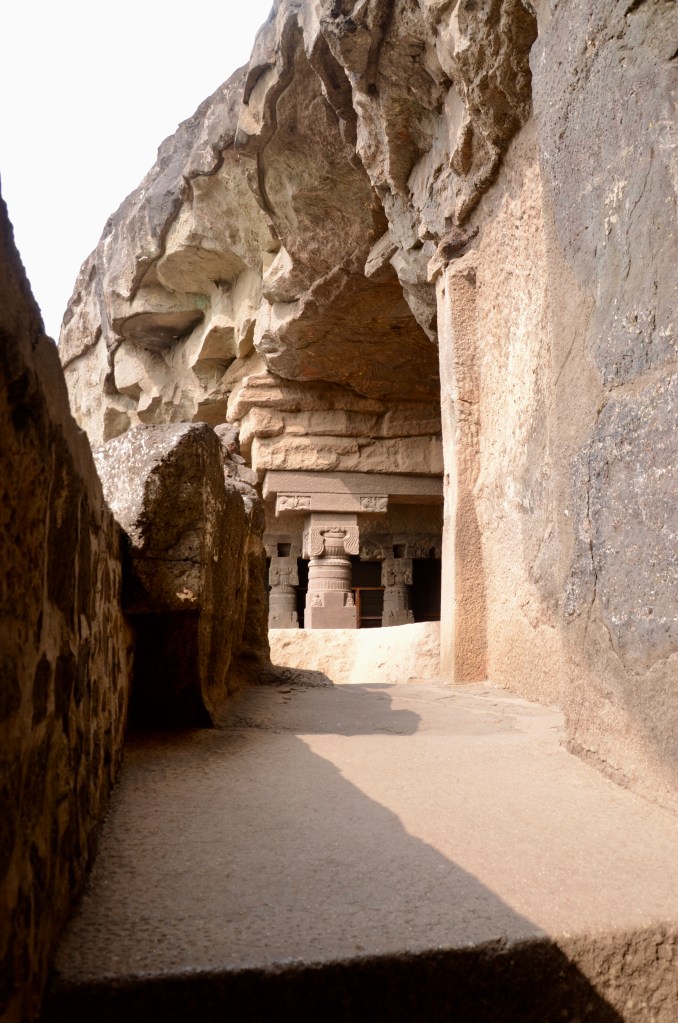
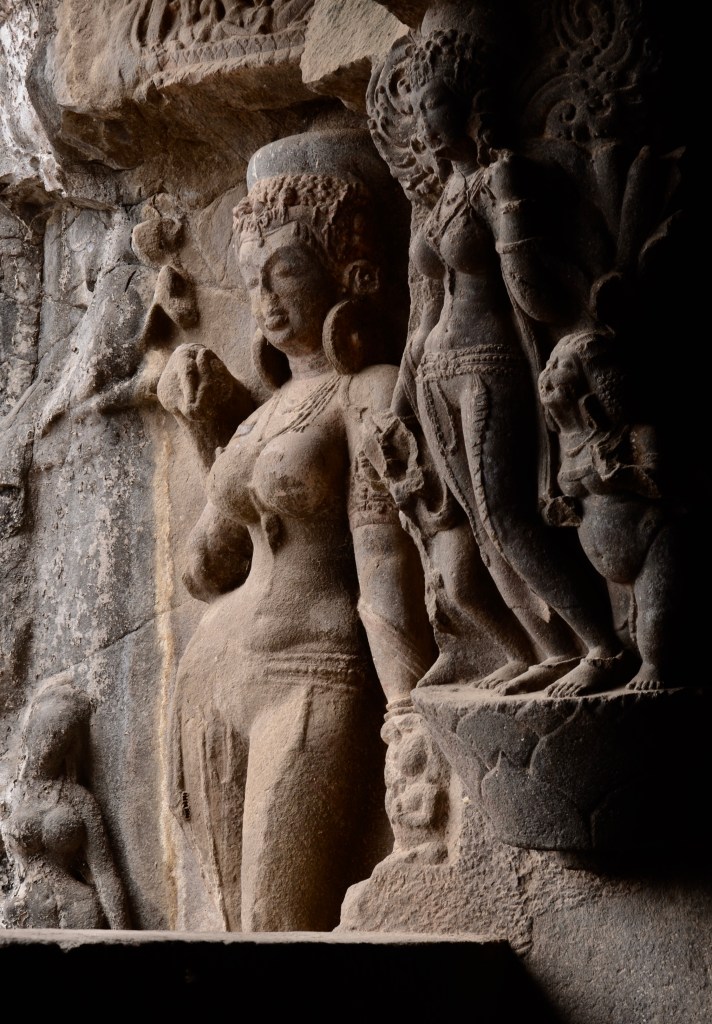
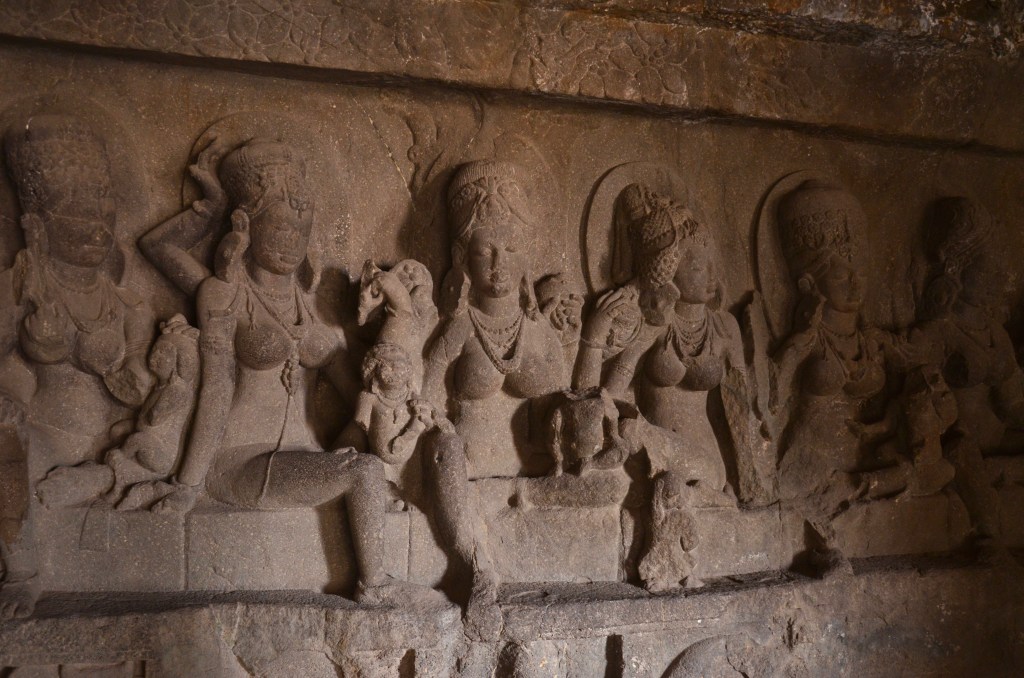
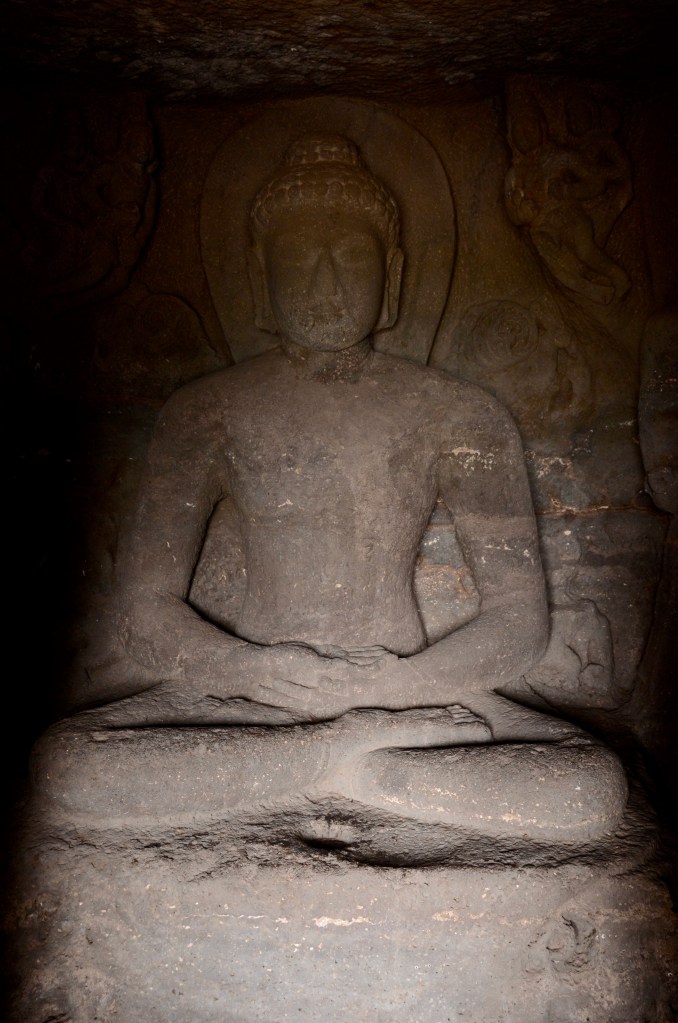
Over 600 years, between the 5th and 11th Cs AD, both Hindus and Buddhists carved a total of 34 caves out of the rock face. Sitting close to one another, they illustrate the religious harmony that existed in ancient India. One wishes that was still true today.
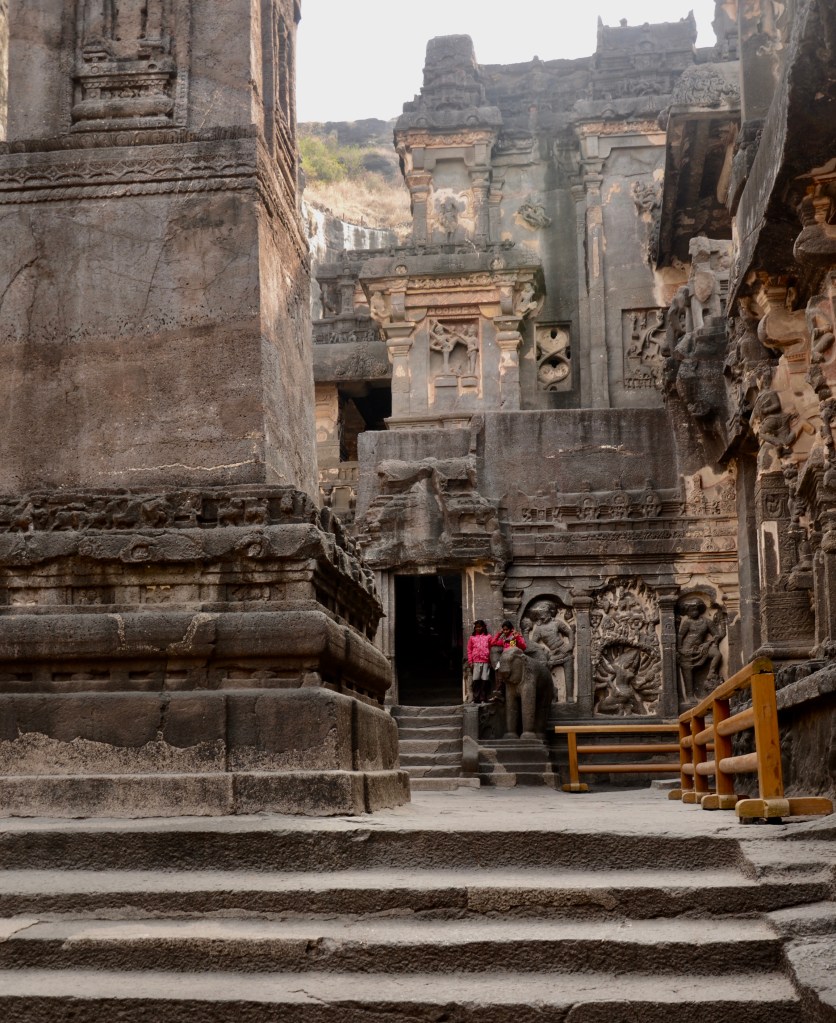
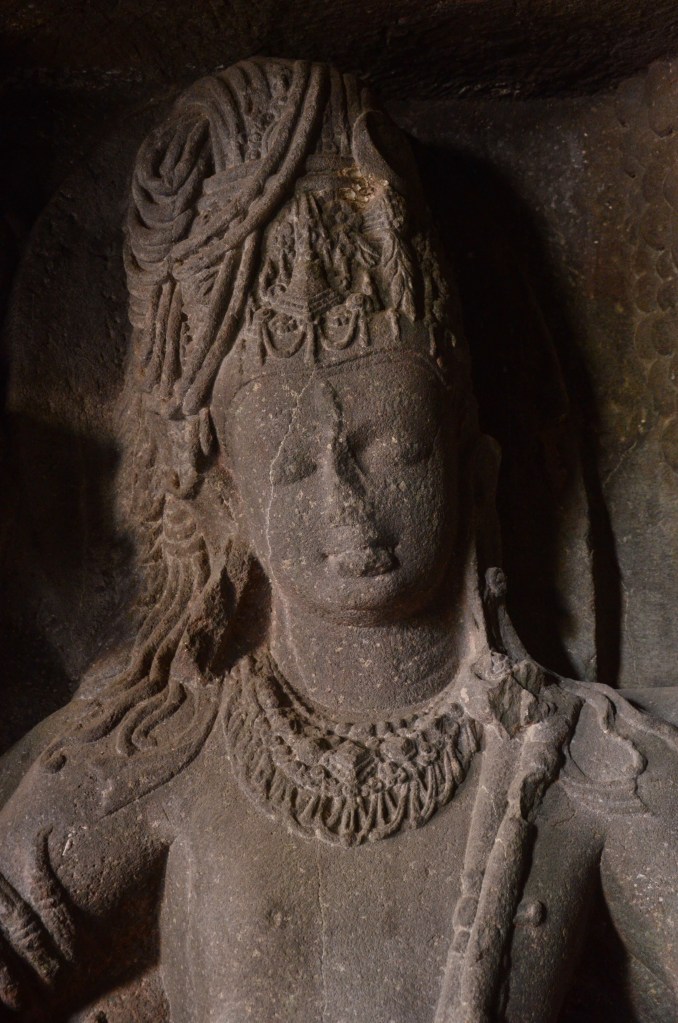
Most impressive is a massive complex: Kailasha is a Hindu temple dedicated to Shiva. It’s said to have taken ten generations to complete and includes a large pillared hall, antechambers, and gigantic sculptures of Hindu deities. Wall panels depict Hindu mythologies: in particular, the two major epics, Ramayana and Mahabharata. Though the stone sculptures and decorations have worn away over the centuries, they are still impressive.
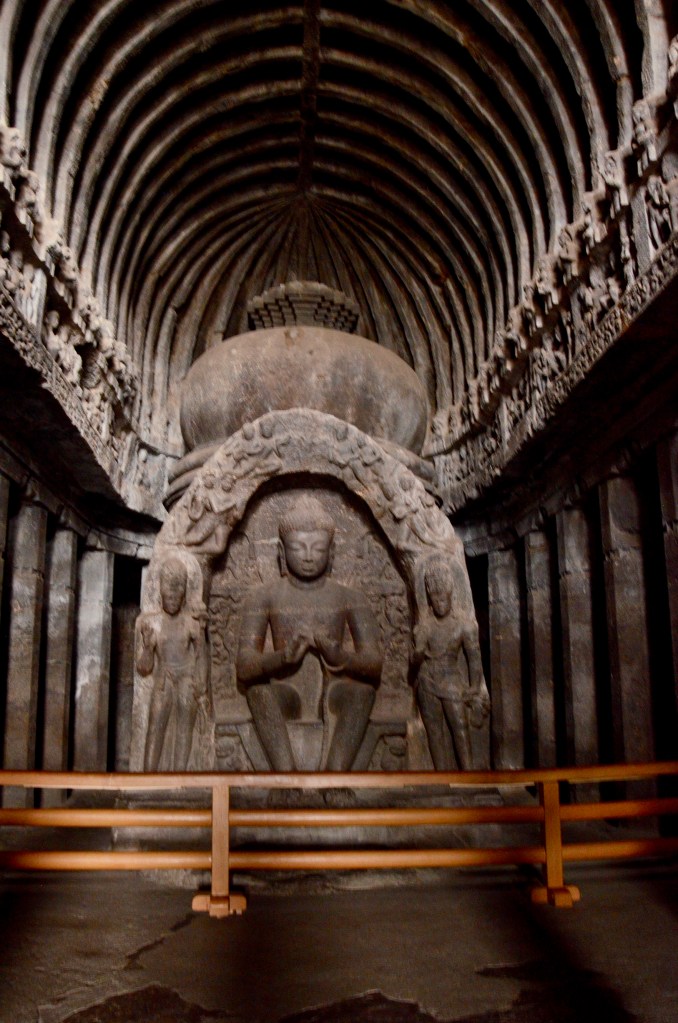
Most of the Buddhist caves are multi-story monasteries with massive carved Buddhas. The largest is the three-story ‘Vishvakarma or ‘Carpenter’s Cave’ so-called because the rock has been given a finish that looks like wooden beams.
You enter a facade decorated with meditating monks, then up a flight of steps to a cathedral-like prayer hall. Its vaulted roof is carved with wooden like ribs. At the far end, a colossal fifteen-foot Buddha sitting in preaching pose took my breath away. The Buddha’s presence was tangible.
Either side are Bodhisattvas and Buddhist goddesses seated on lotus thrones. Seeing all this antiquity in its original location can’t compare to visiting a museum assembled with similar artifacts. Here, you are immersed in what was a great period in history. As we looked at these ancient works of art, the term ‘carved in stone’ came to mind, but even stone is subject to decay.
The following day, we were looking forward to returning to Ajanta where the design and decoration of the Buddhist caves are even more amazing than that of Ellora. Normally, a three-hour bus ride away from the city, we were warned that the road is torn up under reconstruction and the ride could be now close to five hours. Gerard, still not fully recovered, the thought of the bumpy ride on a crowded local bus would be too much. So reluctantly, we canceled our plans, reassuring ourselves that, God willing, we can return next year to visit Ajanta. when the new road should be completed.
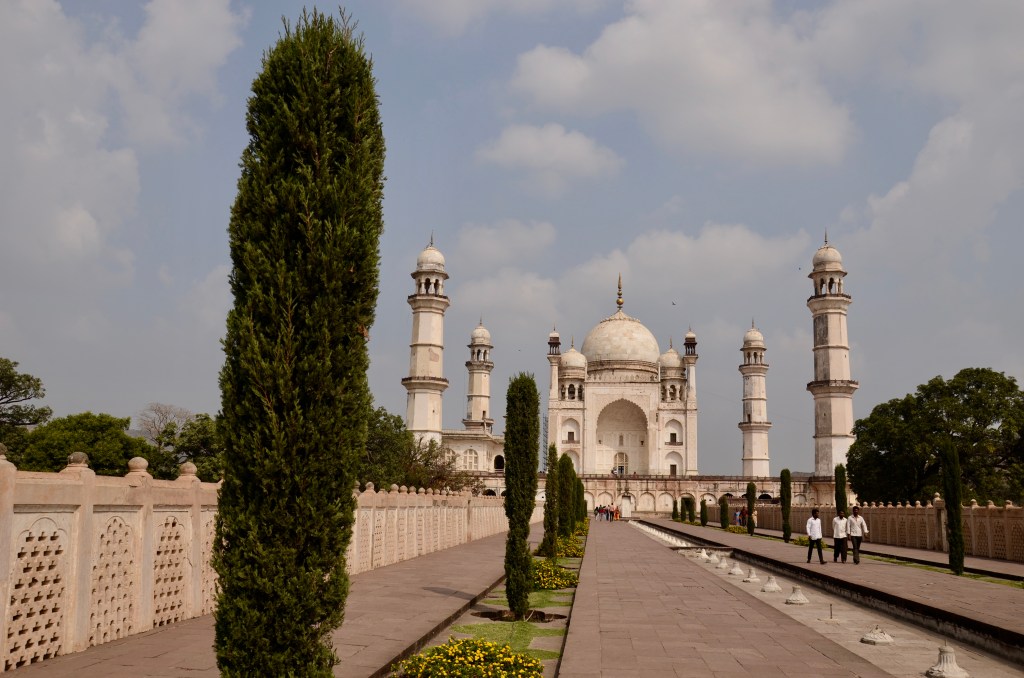
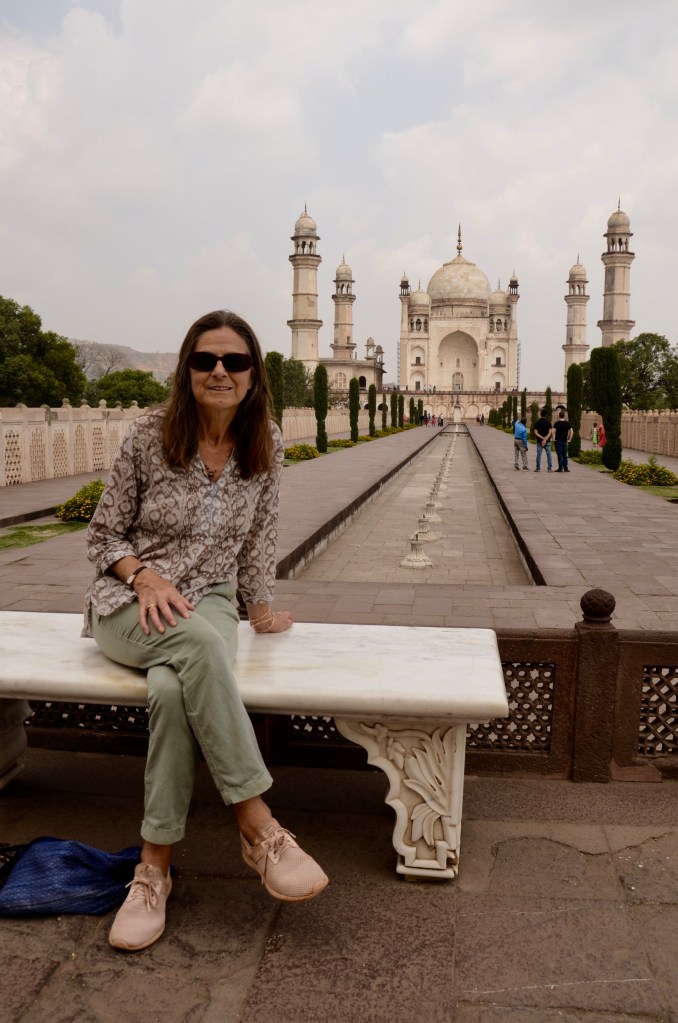
What to do instead? Aurangabad offers little of historic interest, except a mini Taj Mahal built in 1660.
Commissioned by Aurangzeb in memory of his own wife, the Bibi Ka Maqbara, is smaller and much less imposing than the Taj Mahal, but still bears some resemblance with its once formal gardens and waterways. No surprise, the same architect was commissioned to design both.
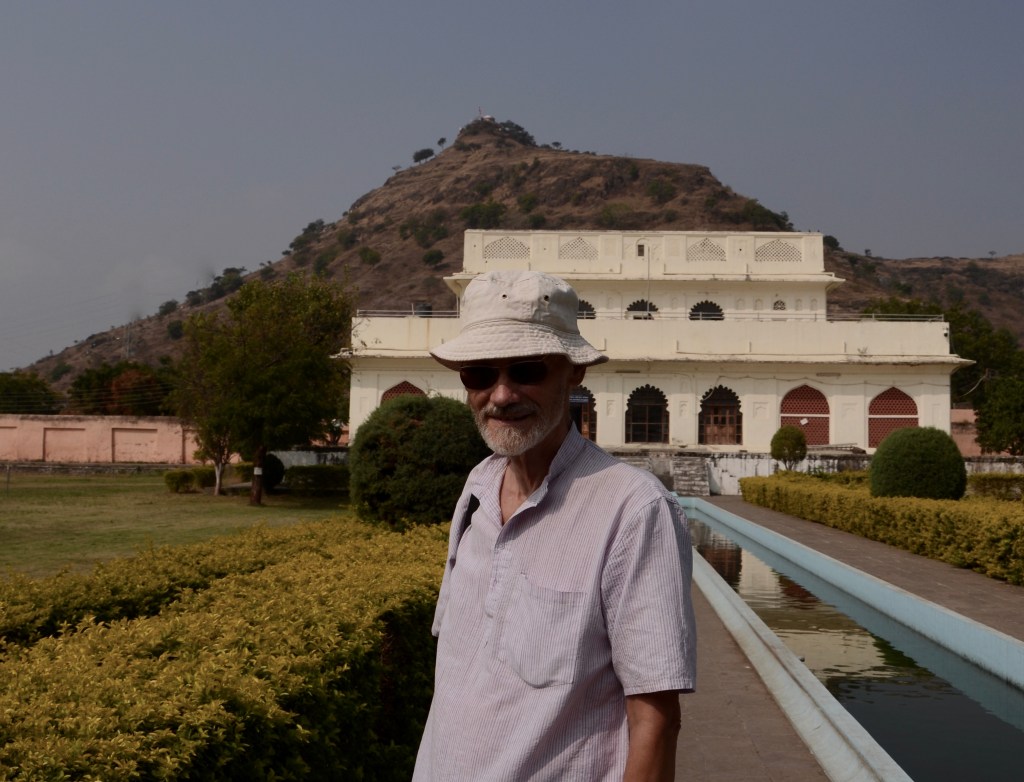
Our next stop had less impact except for its surroundings. The Soneri Mahal sits on the outskirts of the city. The ‘palace’ was decorated in gold giving its present name; Soneri meaning cloth of gold. Today, it is a cream-painted nondescript looking building with a mediocre museum of pottery, sculptures and kitchen utensils. But sitting in open countryside, against a backdrop of hills it was a pleasant place for a short visit. Away from the hubbub, we immediately felt refreshed by the tranquility.
The following day, we took our last domestic flight to Varanasi on time and with no problem. From now on, we’re back to traveling via trains and buses.
Our friend Odella, arrived four days ago, fresh from NYC. She didn’t take long to adjust. Tall and poised, she towers over the short South Indians. Finding her own way around and uninhibited in asking people what they were eating, where she could find a good cup of coffee, is there a good yoga class etc. she quickly showed her independence. She’s been to India a couple of times before but not traveled extensively. Our connection with her is through Lewis, her husband and old friend ours. A jazz musician and professor at Rutgers University, we only see them when Lewis gets a music gig in Boston.
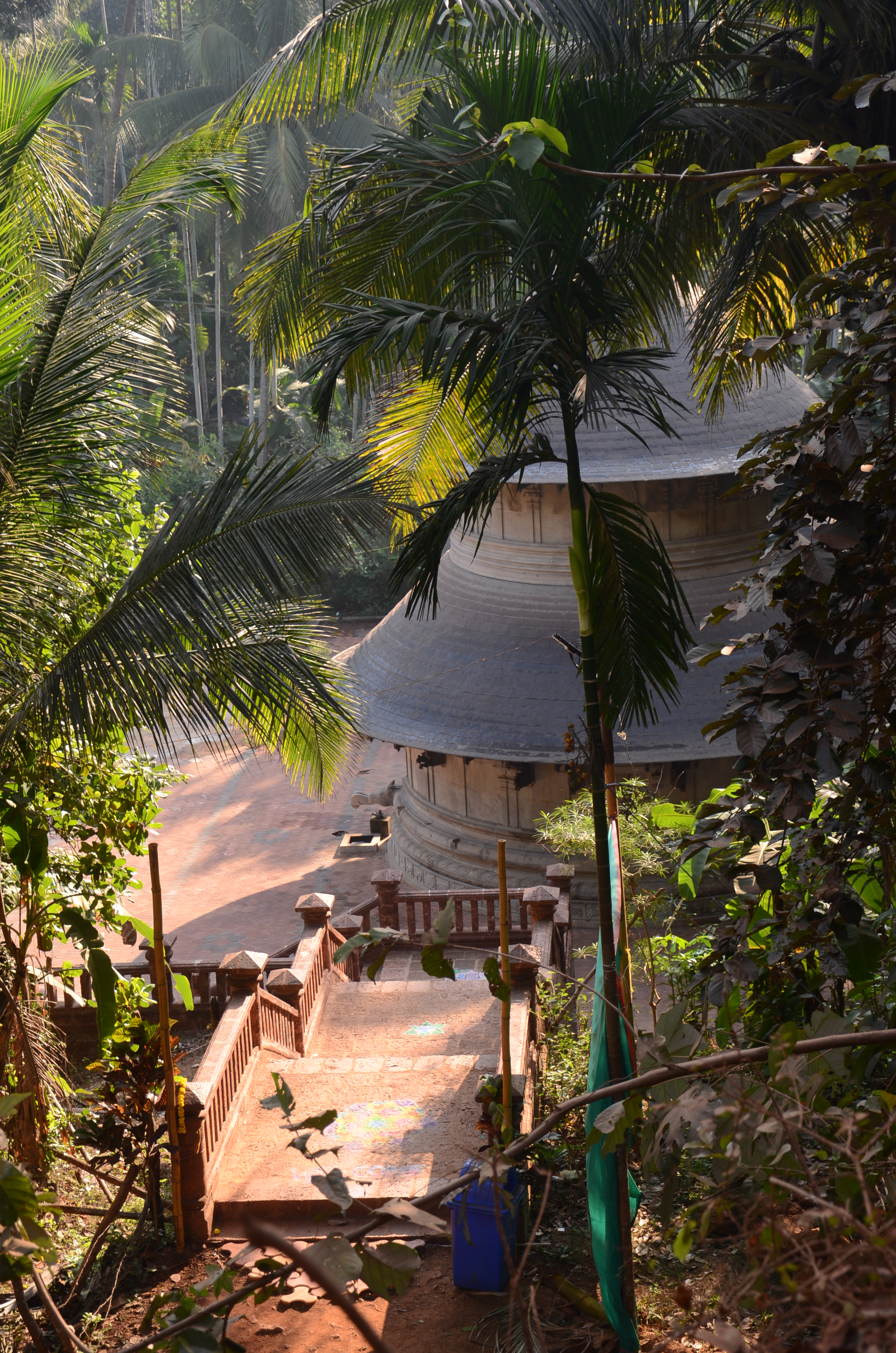
Our German friends, Marion and Jorgen, love to walk and persuaded us to visit the neighboring beach, Kudle. A pleasant walk through the jungle. The beach is picturesque and reminded Gerard of Greece in the late ’60s.
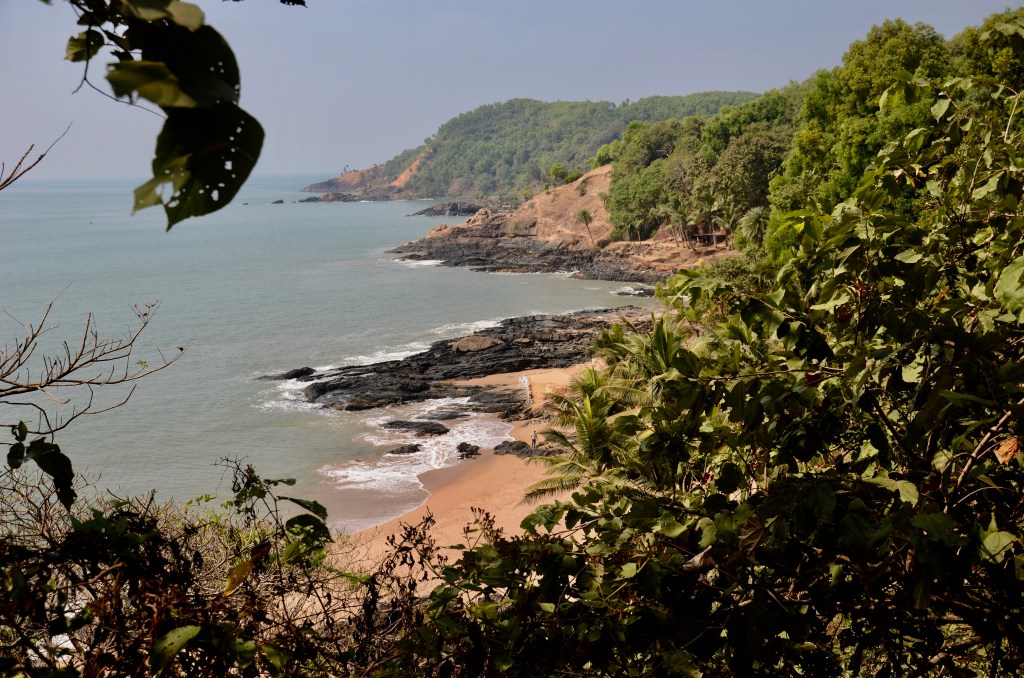
A few days later, we were enticed to take a more adventurous hike to Half Moon Beach and beyond. It was more strenuous but a beautiful walk through the jungle. Half Moon Beach is only accessible by foot, keeping it an unspoiled and secluded cove. Hot and sweaty we dove immediately in the water, followed by chai at a single chai shop.
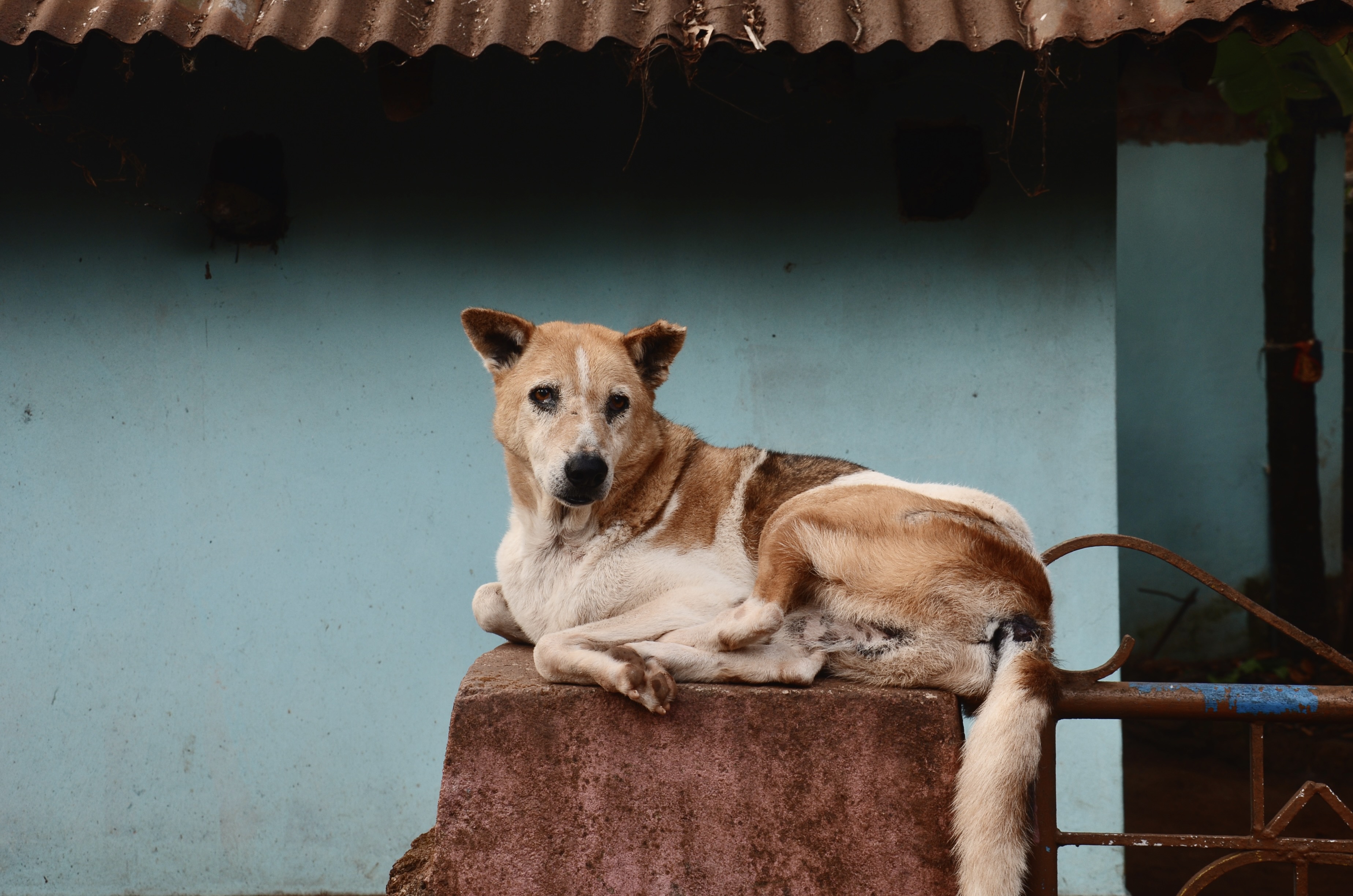
Moving on to the second destination, Paradise Beach, was nothing short of treacherous. Climbing over the jagged rocks along the water’s edge made Gerard nervous. I focused on where I placed each foot, I made it without incident. Good for the attention! Paradise Beach did not live up to its name – a scruffy beach with coarse sand, a hangout of modern-day, young hippies. Exhausted from our rock climbing we collapsed on the sand and were soon joined by stray dogs.
The long walk was not finished; we still had to get to the neighboring town through more jungle and rice paddies to catch the next bus to Gorkana. On the ride back, Marion asked, if we had known what the route had in store, would we have agreed to come. Gerard admitted he wouldn’t have minded missing the climb over the rocks to Paradise Beach, but loved Half Moon Beach.
After such a long and treacherous hike we should have known better, but we agreed to hike with them again, down to the end of the beach and take a bus back.
For the first time since we arrived in Gokarna, the sun was hidden behind clouds. The few beach huts and restaurants dwindled until all we could see at the edge of the beach was palm trees and tropical undergrowth. Passing fishermen preparing their boats, we suddenly came across a beautiful young Indian bride being photographed. No sign of the groom!
The beach was a good 6 km long and then we had to weave our way through lanes and beside fields to the bus stop – another couple of km.
A week ago, our Swiss friend, ‘six meter ‘ Peter and his Polish wife, arrived from Goa to visit us for three days. Peter is a professional violinist and has spent the winters in a rented house in Agonda for many years, practicing most of the day and performing at night gigs up and down the coast of Goa. He decided not to bring his violin to Gokarna but is clearly lost without it. At breakfast, his restless fingers repetitively drum the table. We’ll see him again in August when he attends a summer course at Berkeley.
A couple from Australia that we met in Darjeeling seven years ago are back in India, traveling for a year. Last night, they caught up with us here in Gokarna before we move on. We hope to see them again in the mountains.
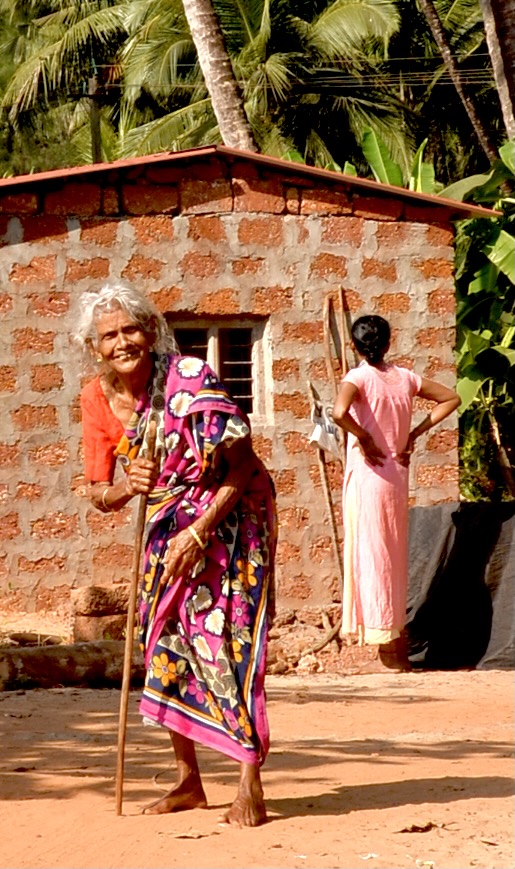
One of the many things we find attractive about Gokarna is, there’s a significant older population here. Generally, they are people who’ve been traveling for decades, so we have a lot in common. We can spend too much time reminiscing what the world was like back in the ’60s, but it’s still more interesting than talking about Trump and Modi. The oldest we’ve met is an 86 year old woman from Scotland who is staying on the ground floor of our guesthouse. She’s beautiful and walks to the beach each day with a stick. Young and old, there’s always interesting people to meet: a young Frenchman using only analog camera equipment; a young girl who illustrates her own postcards and on hearing that I was from Totnes in Devon, leapt up and hugged me (her family live there); and Bernard from Geneva who likes Miles Davis!
As mentioned before, Gokarna is a temple town. This weekend is one of many Hindu festivals. Which one? Who could keep track? The town is swarming with men wearing white cotton lungis and carrying offerings to the temple. One night leading up to the festival there was chanting, first by women, then by men, all night long. The din vibrates in my head. making hearing even harder. But if it wasn’t for the temples, the town would be overrun by beachgoers.
This year we had to renew our ten year visas and, like most things Indian, dealing with the Embassy’s service bureau ‘Cocks and Kings’, was not straight forward. Discussing the frustrating process of completing the online application with a friend who will join us this year, she said, “If you can’t navigate Cocks and Kings’ lack of a straight line from A to B, then it’s better that you don’t go at all.”
Just before we left, a friend from Boston attended her daughter’s wedding in India. On her return, she asked us how we could tolerate all the dirt, crowds and noise. Gerard gave an answer but didn’t give it a lot of thought. On our flight over, he tried to go into it more deeply, asking my thoughts. We agreed: the country is overcrowded, the air can be terribly polluted and trash is a constant problem, but still we’re drawn here.
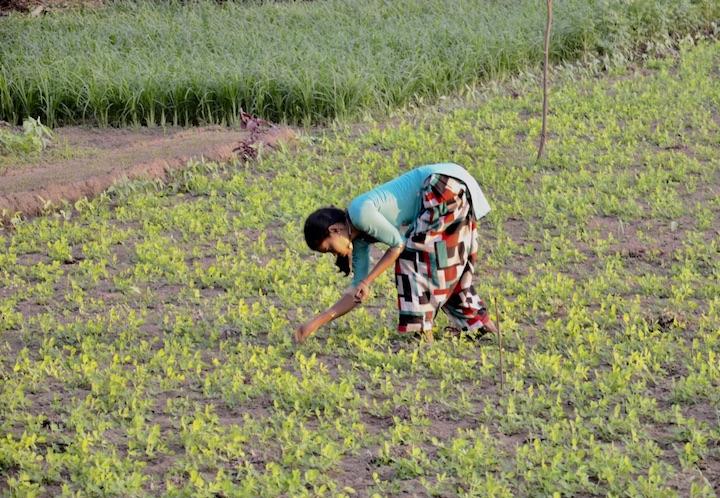
A couple of days later in India, we passed a woman sitting on her bed looking out of the doorway from her very basic adobe, tiled-roof house. She gave us a warm smile as we passed. Not knowing what was behind the smile, we felt her readiness to greet strangers so warmly was due to a lack of fear. The less one has that can be stolen, the less there is to fear? Her smiling face brought into focus some of the less obvious reasons why we are still coming back to India.
Gerard commented, even though the subcontinent is racing headlong toward modernity, the old ways can still be seen and inspire, if one looks for them.”
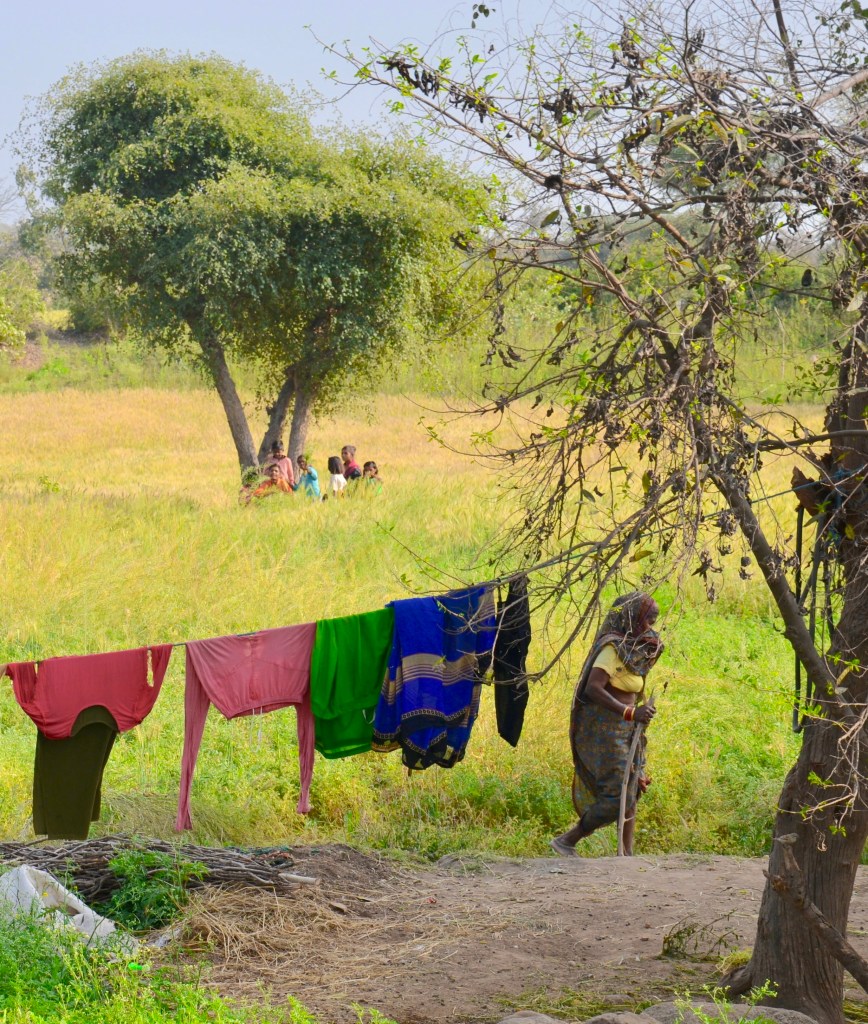
Do we want to change places with the woman? Not really. Yet, her smile helps to explain what has been lost in our modern society and makes us want to reach back and catch hold of what might be worth saving of those old ways. Certainly, the big cities of India have become not so different from their western counterparts. But out in the country, along our way, we can still see the old ways intact. And this is one of the reasons why we return: to witness our lost history still alive to be seen, here and there, in India.
I asked Gerard for an example of these ‘old ways’? He replied, “Certainly one is, human contact. There’s a constant interplay with people even if it’s as simple as buying a cup of chai, soap to wash clothes, or negotiating with the rickshaw driver. Whole Foods decision to install self check-out, further emphasizes the depersonalization of our Western society. With most of India carrying smartphones, means it is happening here as well. Still, there is plenty of social activity on the street, in the market and in the chai shop.”
On the plane over, I saw a short video advertising ‘Exotic India’. And of course it is — the Rajput palaces, the camel fair in Pushkar, the Taj Mahal–but for me it’s more about Endearing than Exotic.




















 A Small Case Across India