The Old Woman and the Sea

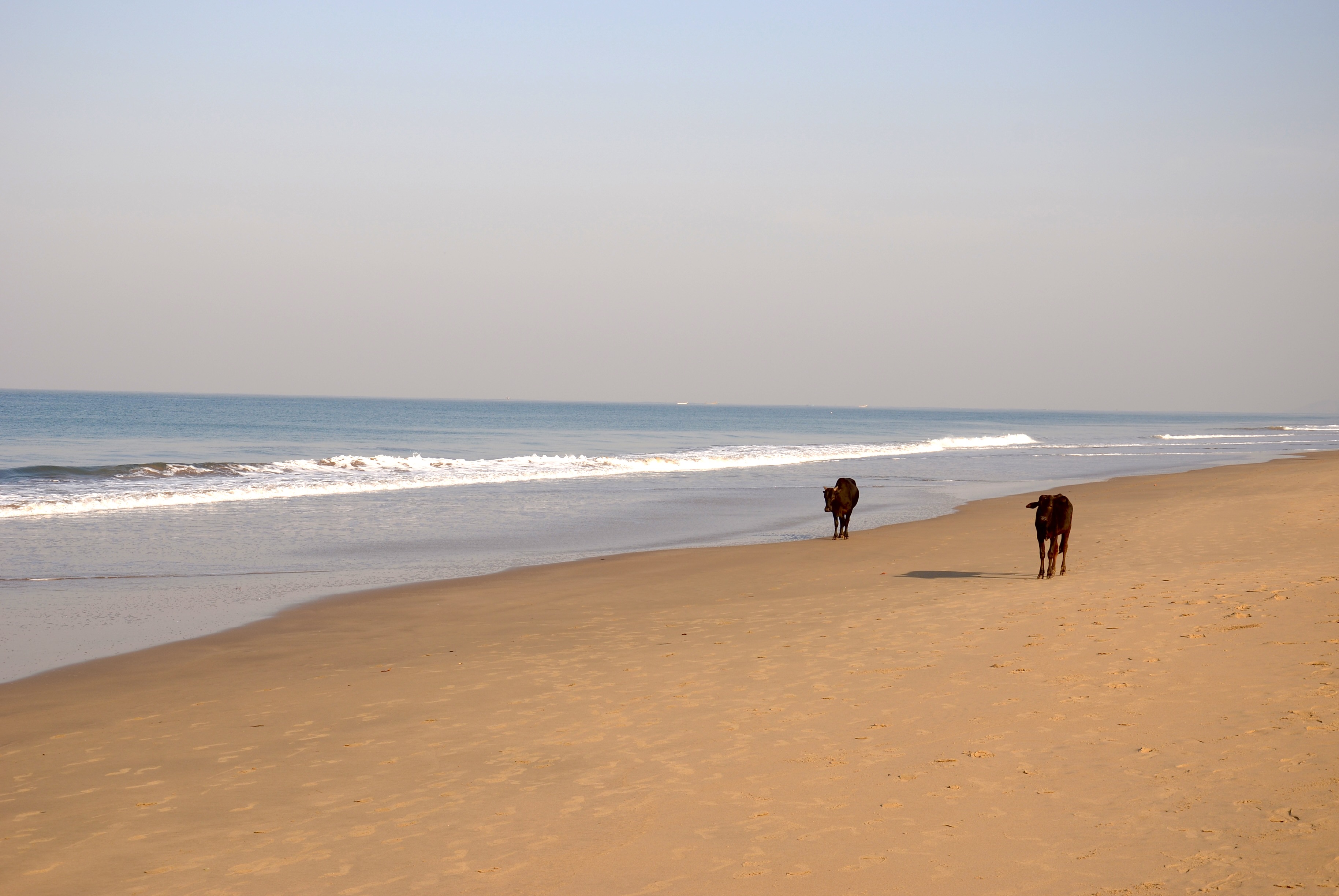
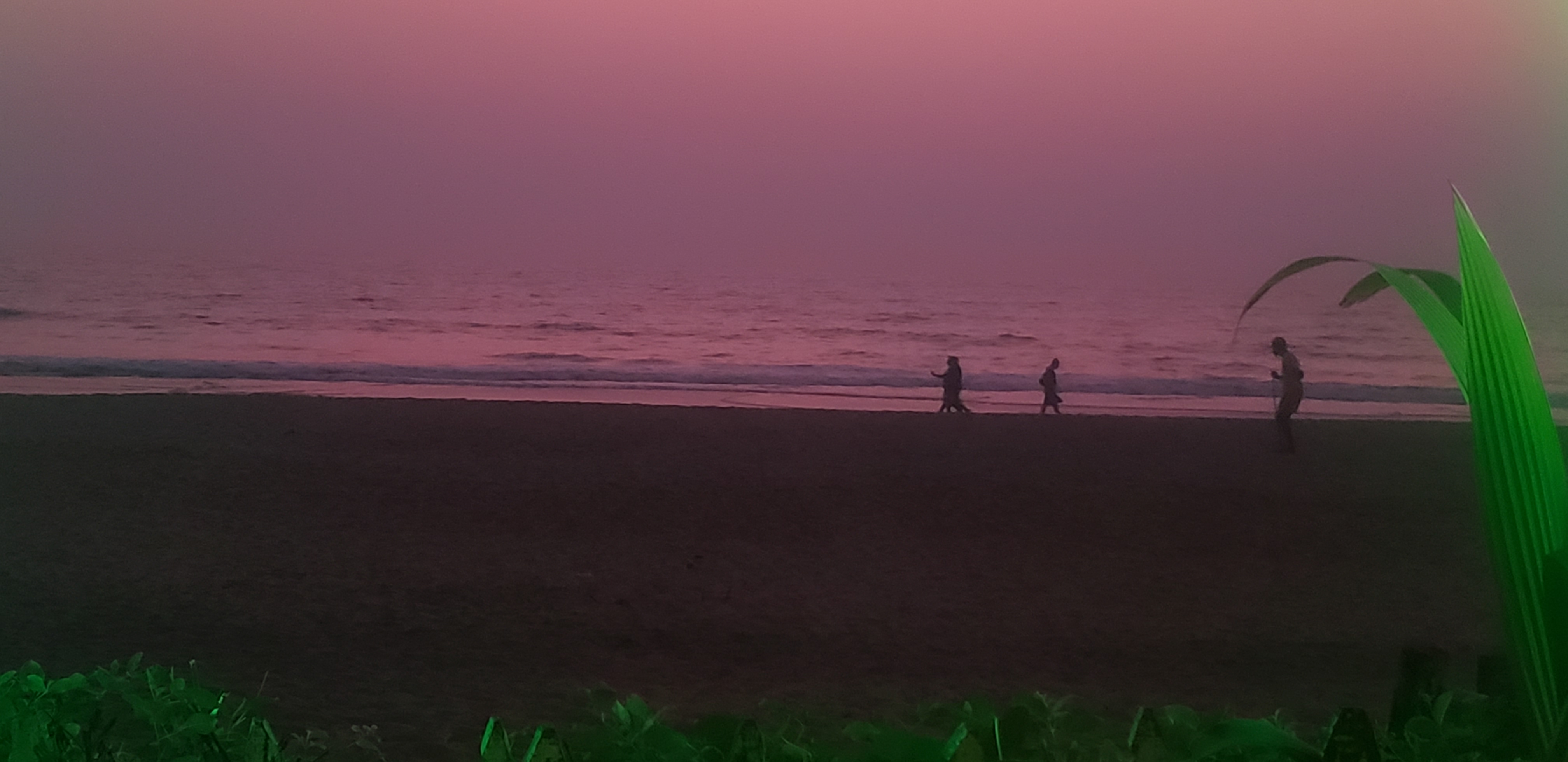
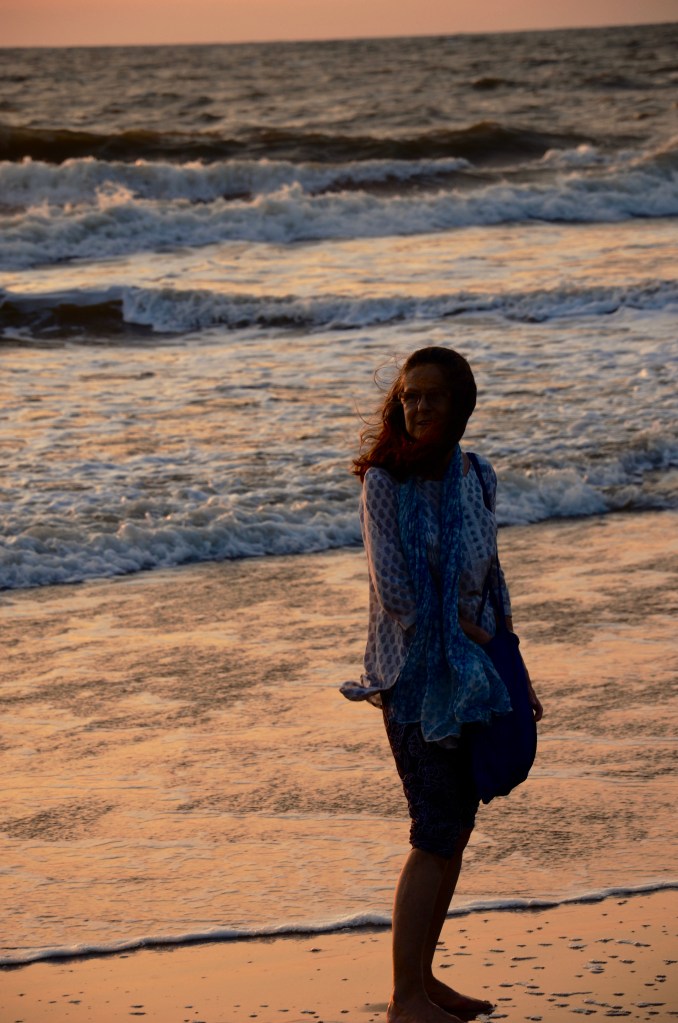
Here at the beach my life revolves around the sea. We swim every morning, in the afternoon I walk along the water’s edge (one swim a day is enough for my dry aging skin), and in the evening we go back to the beach before sunset for dinner at one of the restaurants there. I’m drawn to the sea like a magnet. Today there were high waves that made it too difficult for swimming, but I still had to play in the surf.  I share my love affair with other westerners who return year after year and now more Indian tourists are joining in.

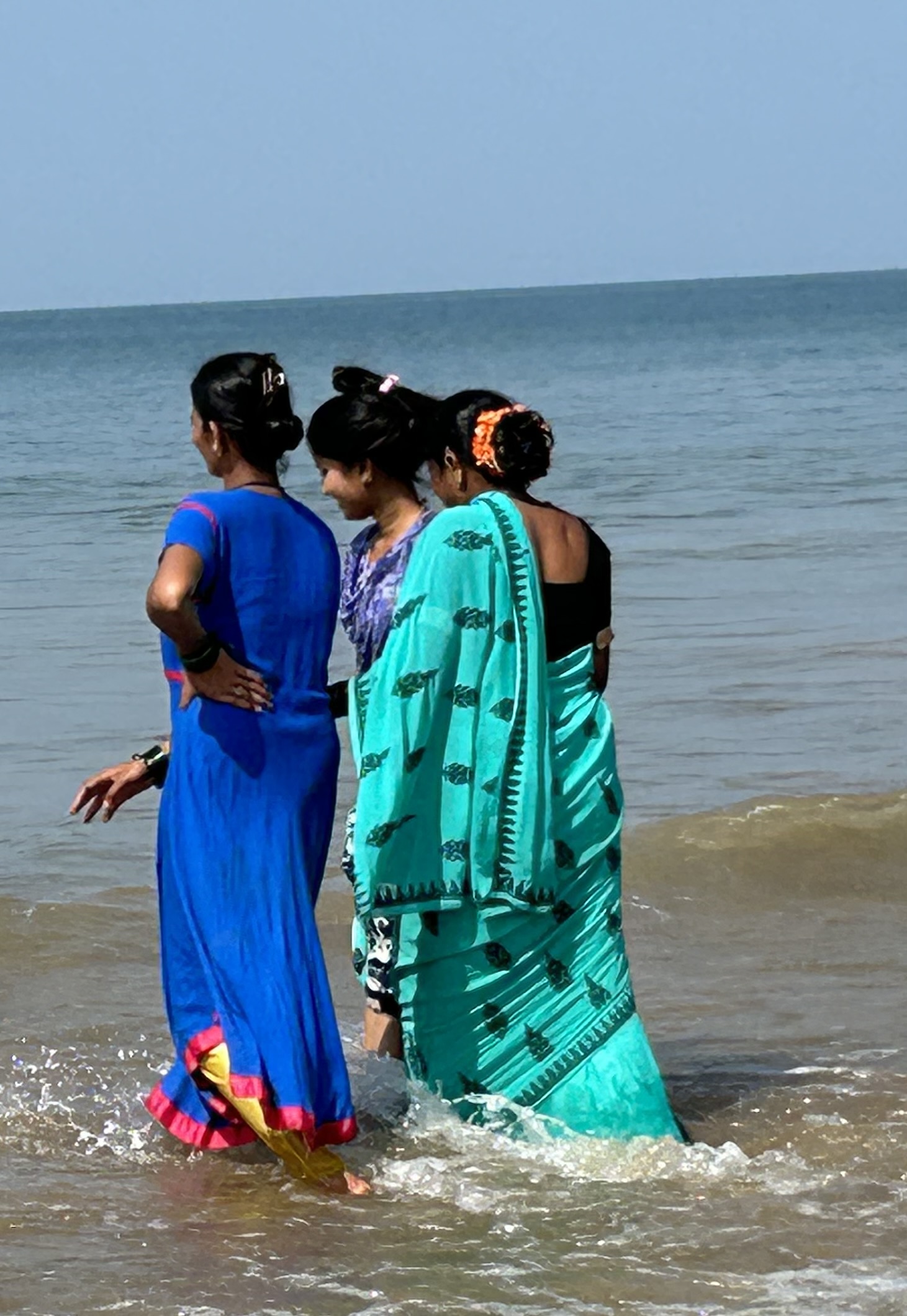
Even though they don’t generally swim, they love to splash around in the water fully clothed.  
A few days ago, a large water turtle was washed up at the edge of the sea. I knew it was dead because its head was fully extended from its shell.  But the turtle could only have died a short while ago because its scaly head and fins were still pristine. Later that evening I was relieved to see it gone.  I didn’t like to imagine this noble creature being picked at by birds or dogs.  

Last week, I was reminded about how dangerous the sea can be.  A Russian woman out swimming by herself ran into a boat. No one knows if it was a fishing boat, pleasure boat, large or small.  Her face was badly cut but there was also fear of brain damage and she was taken to a Goan hospital.  The strange thing was even though she’d been coming here for three years, no one knew her. The Russian living in a hut next door accompanied her to the hospital but didn’t even know her name.  

Marion and Juergen have arrived from Germany. They’ve  been in the country for two weeks, and have a nightmarish story of sickness. They had just arrived in Mysore when Juergen had what seemed to be a heart attack. They went to the hospital and he was kept for several days while all kinds of tests were done.  Fortunately there was no evidence of a heart attack, but no conclusive explanation.  And of course quite a large bill.  All too familiar to Gerard’s mysterious heart episode last summer.  
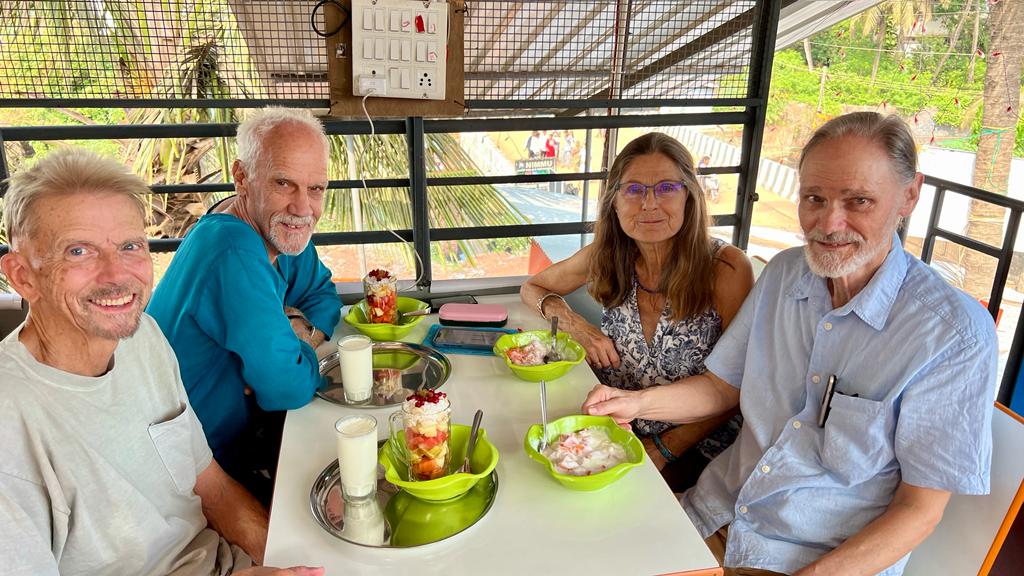
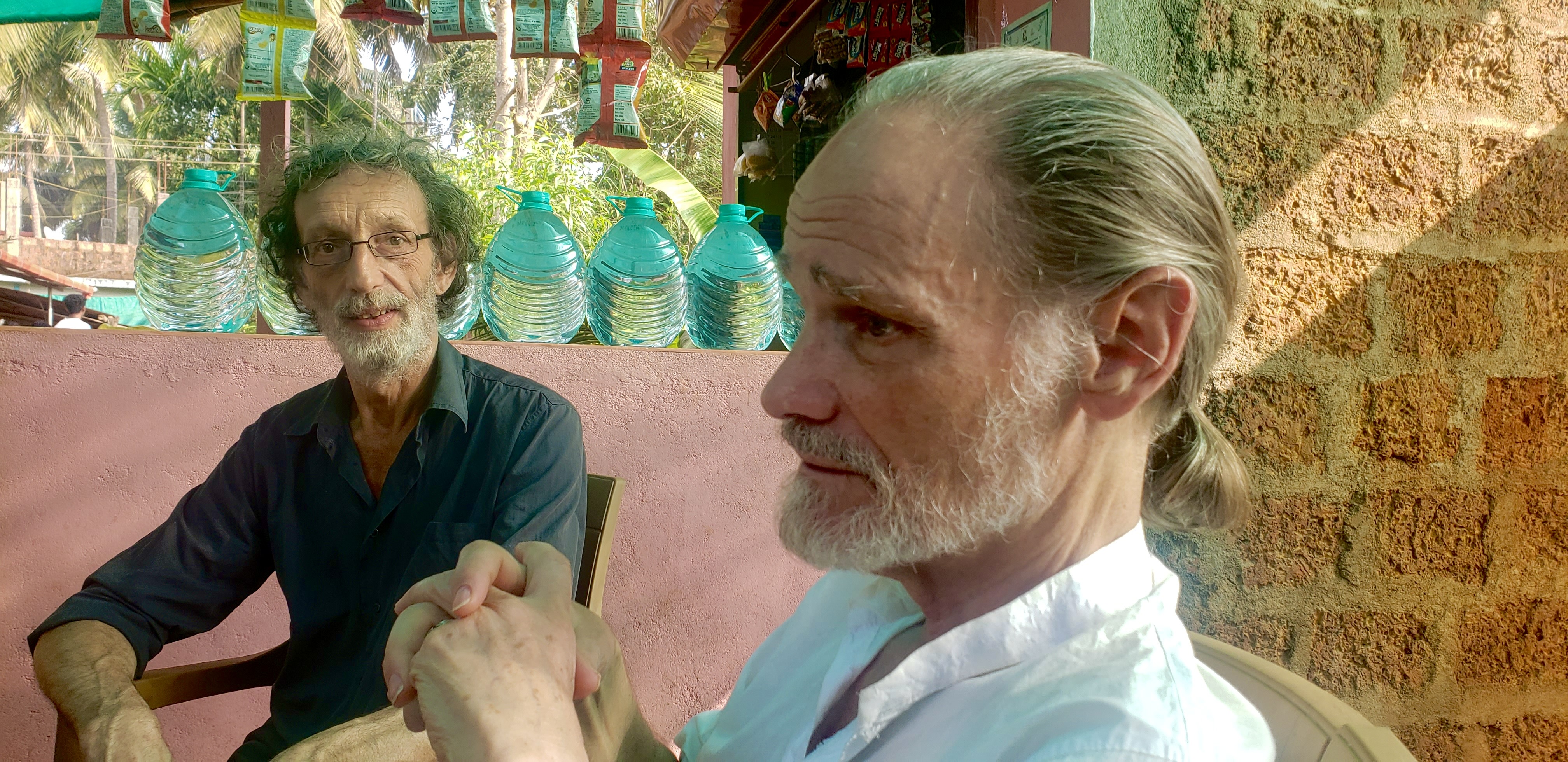
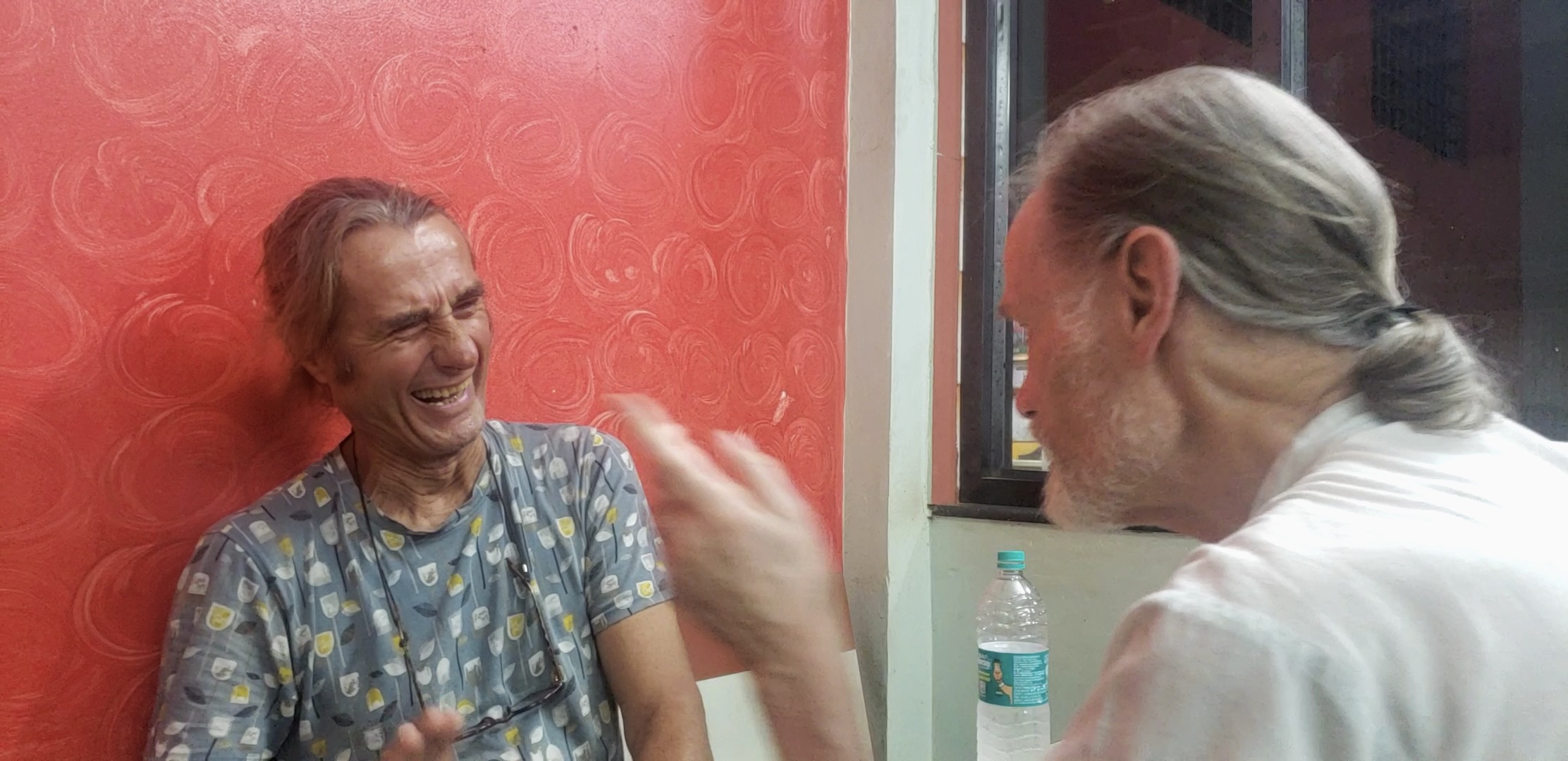
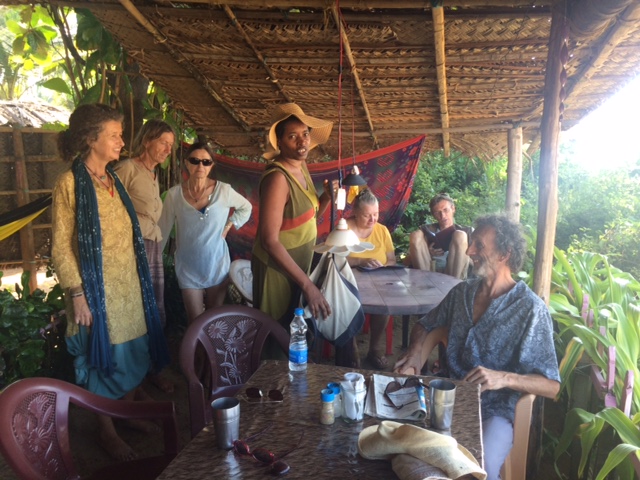
Frank, Peter, me and Gerard

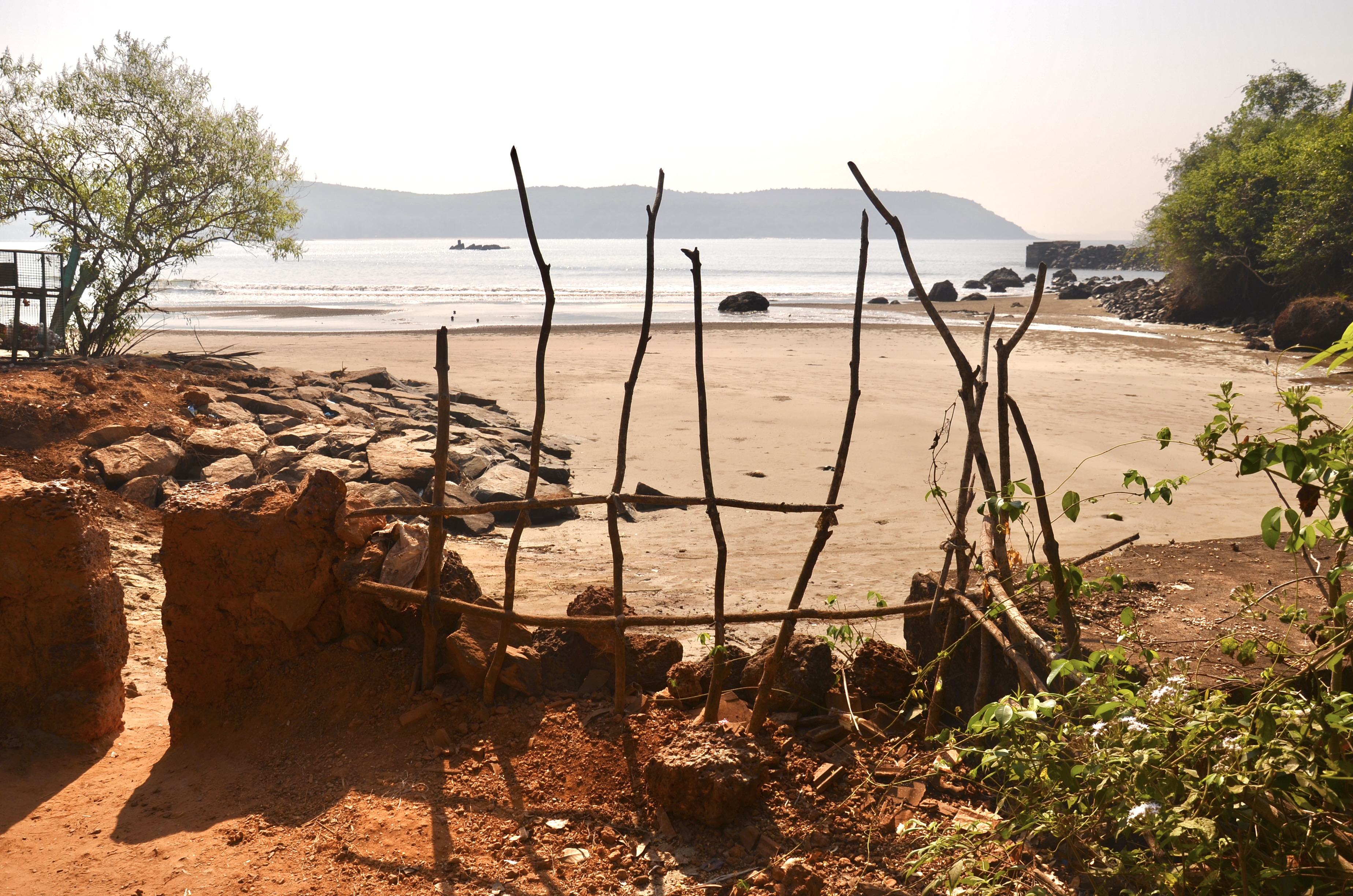
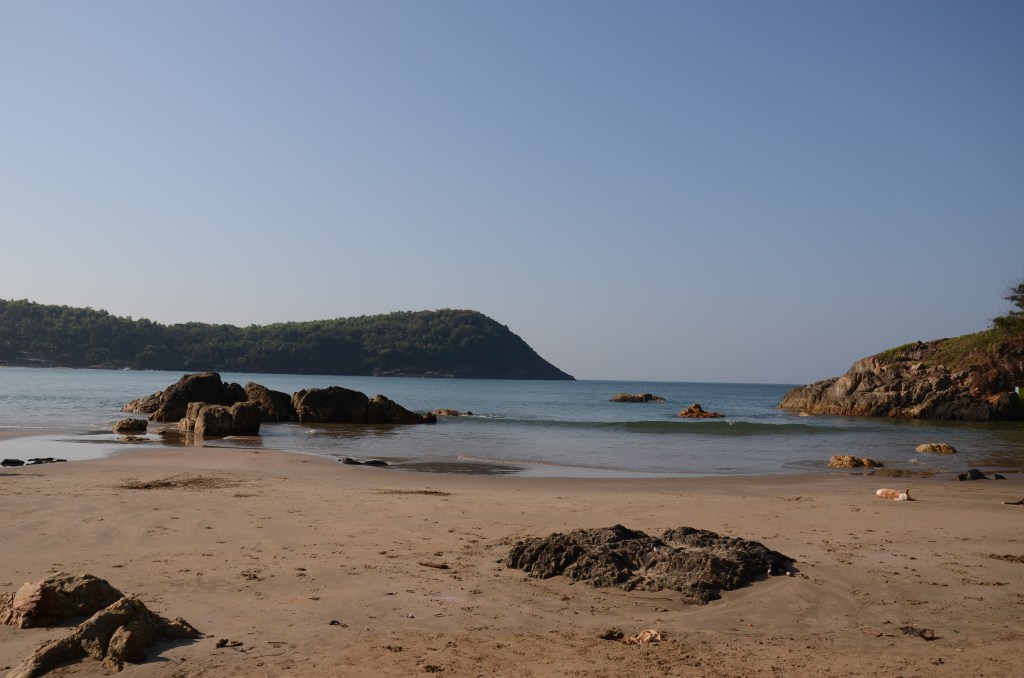
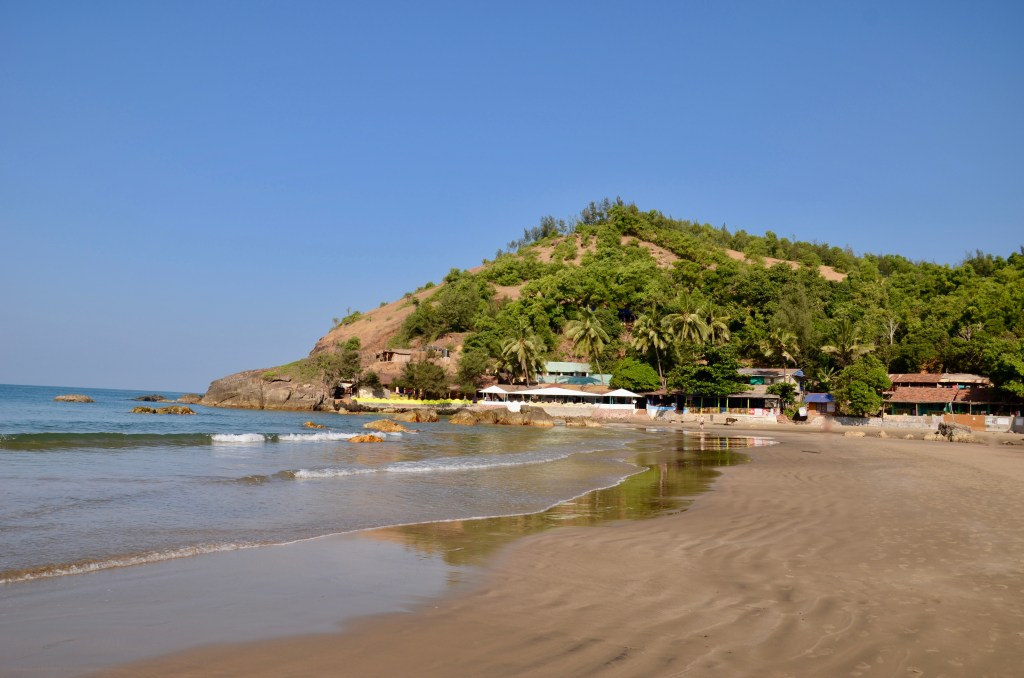
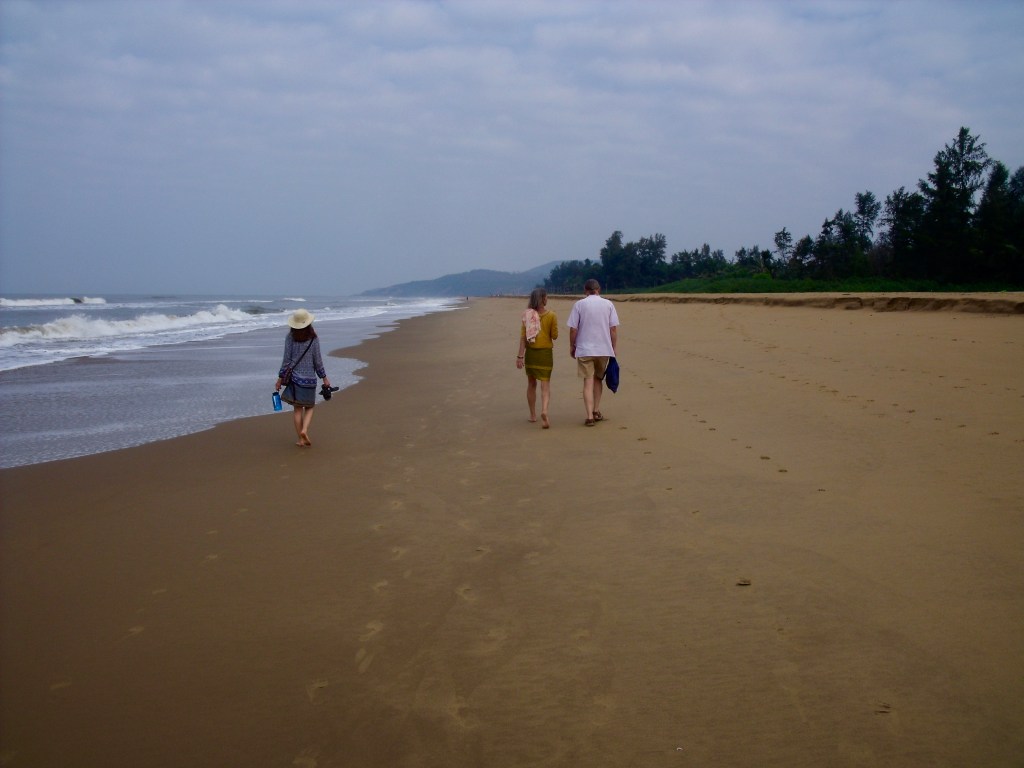
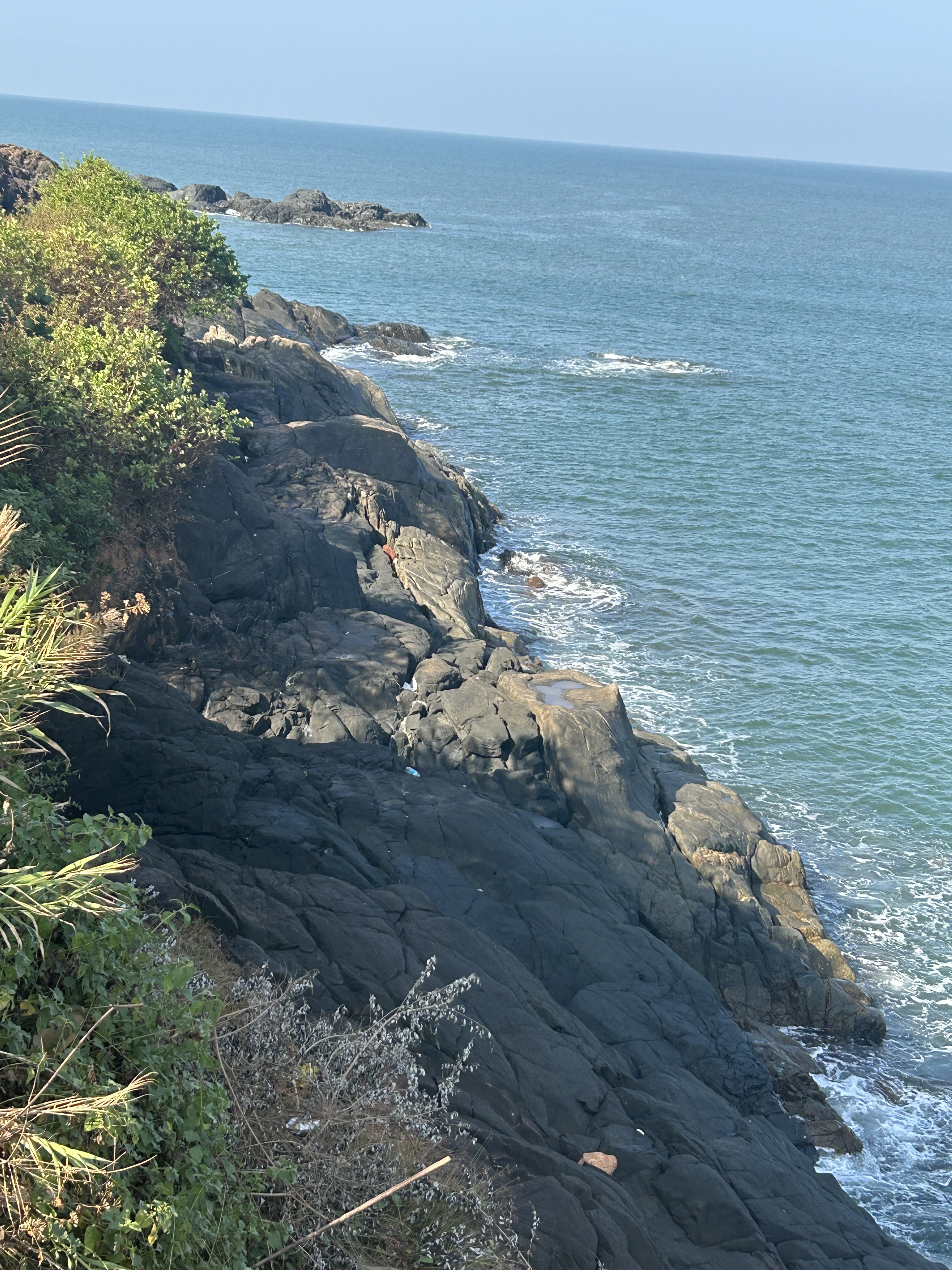
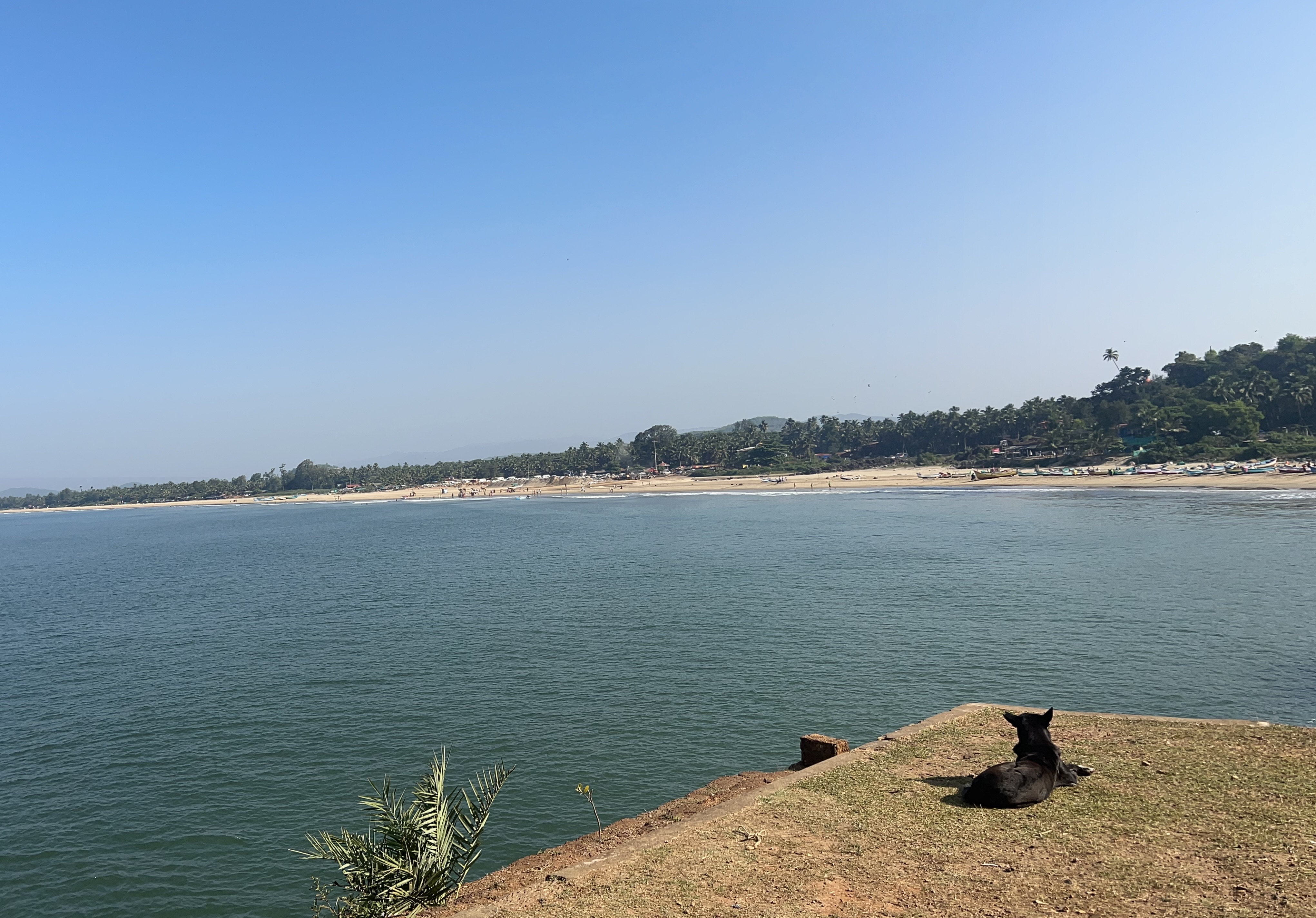
Peter, our friend who lives in Auroville, has arrived to stay for a week. He came with a long time friend who had never been to India before but in a few months was covering a lot of the country, from Kashmir in the north, to Kerrala in the south. They’re staying at the far end of the beach from us. A beautiful spot, but too rocky for swimming.  Looking back down the coast to where we are staying, I was impressed at the long and relatively empty beach. 
The opportunity to talk with women one-on-one offsets the hearing difficulties of loud India.  Assuntina, a friend of Marina’s, is here for ten days and we walk the beach together in the afternoon. I tell her I’m too dependent on Gerard since my hearing loss.  A social worker, she suggests I begin taking measures now in case he dies before me.  I give serious thought to her advice.  But when I see her again she tells me she had worried she’d gone too far in talking about Gerard dying and upset me.  I welcomed her encouragement for me to contemplate Gerard’s death, or my own for that matter. At the cafe, I approach Iris an elderly lady from Germany, who I’d notice wears hearing aids. When I question her on how she deals with traveling here alone, she assures me, “Of course you could manage too!  I saw you talking with a woman,” and she motions over to Assuntina.  “Yes,” I say, “ but I was doing all the talking; it was a one-way conversation.”  Even at the beach, it’s a noisy world but I’m glad I’m here. 

Photo by Marina

Shivratri in Gokarna

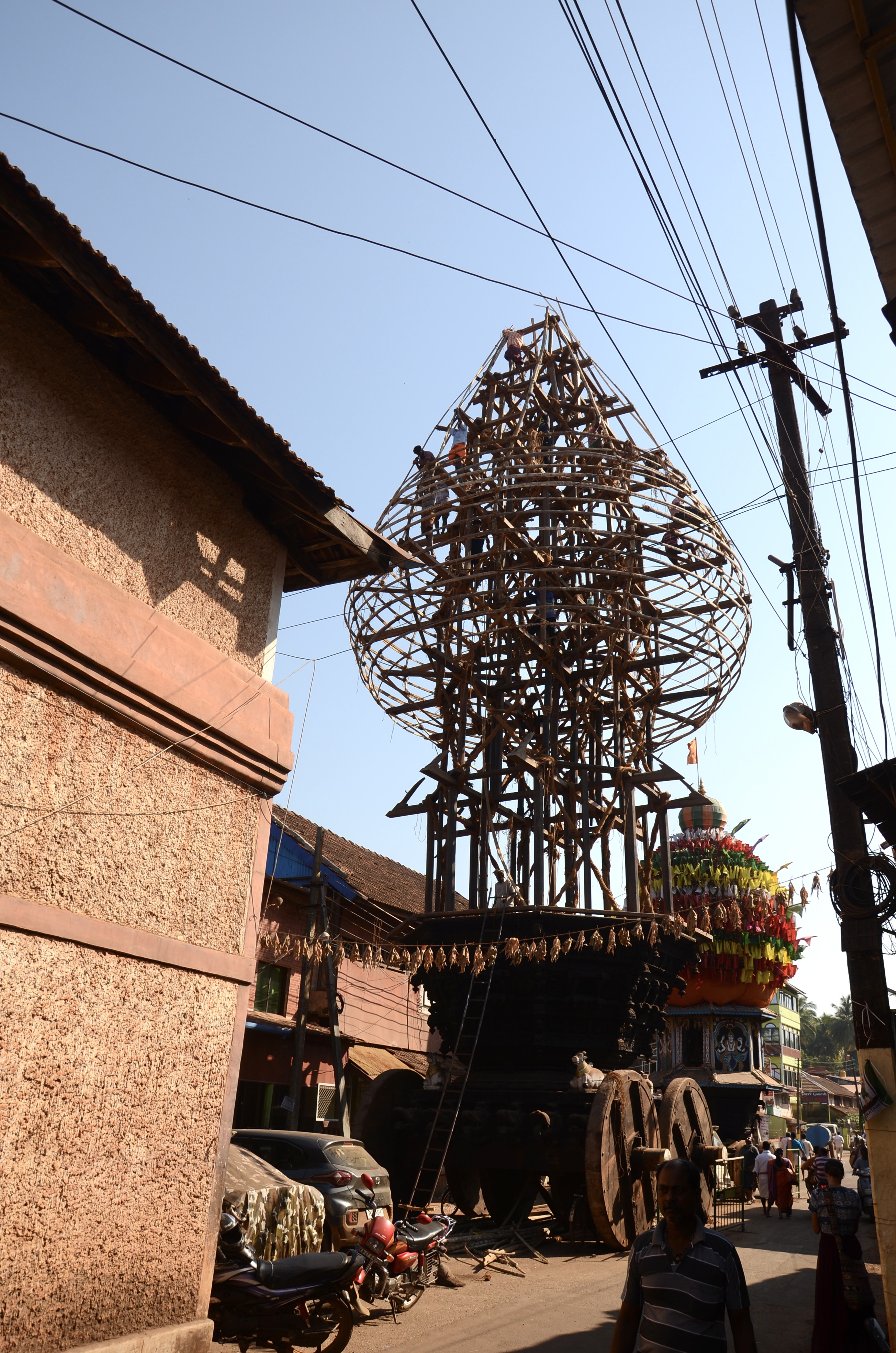
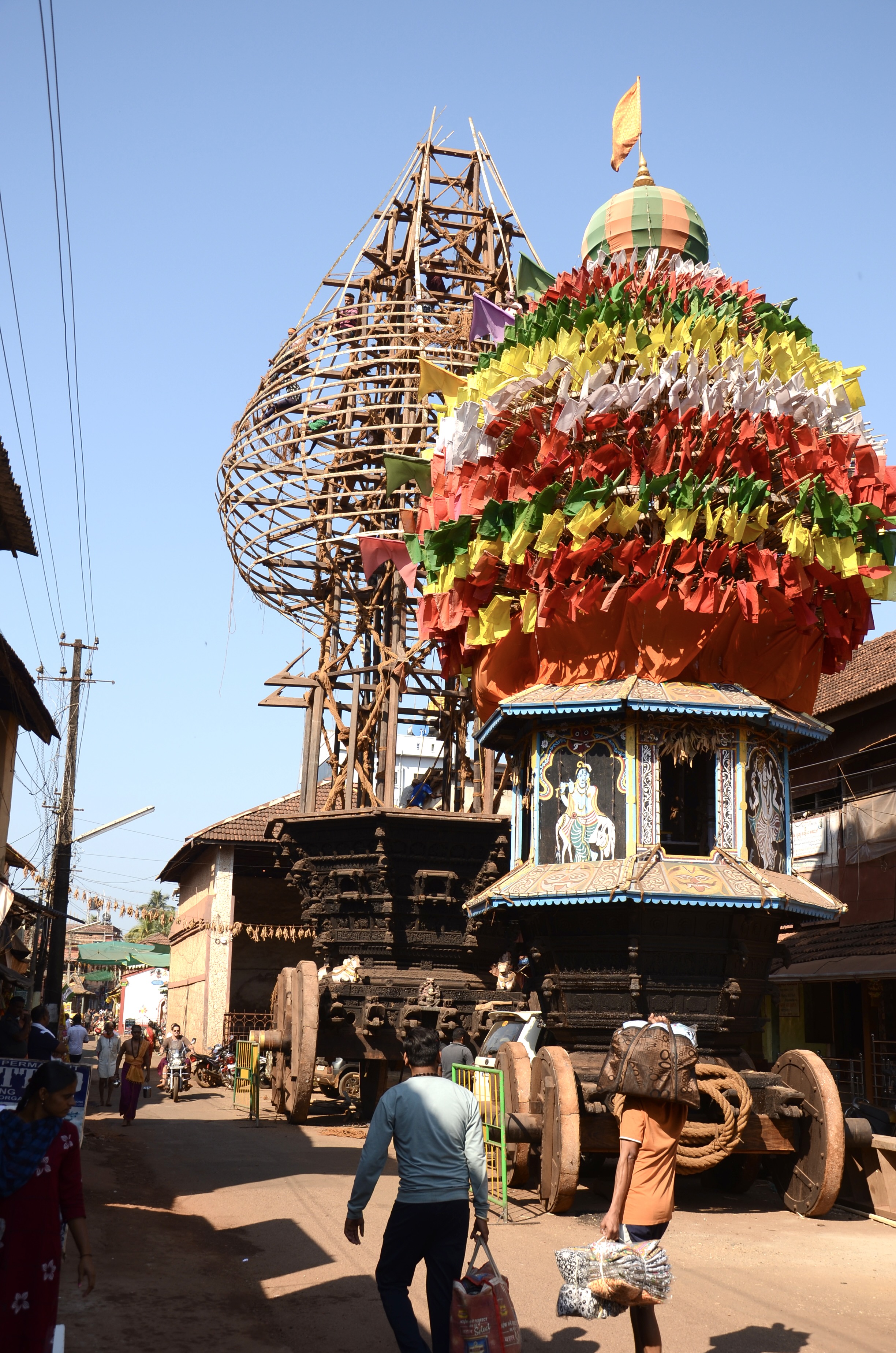
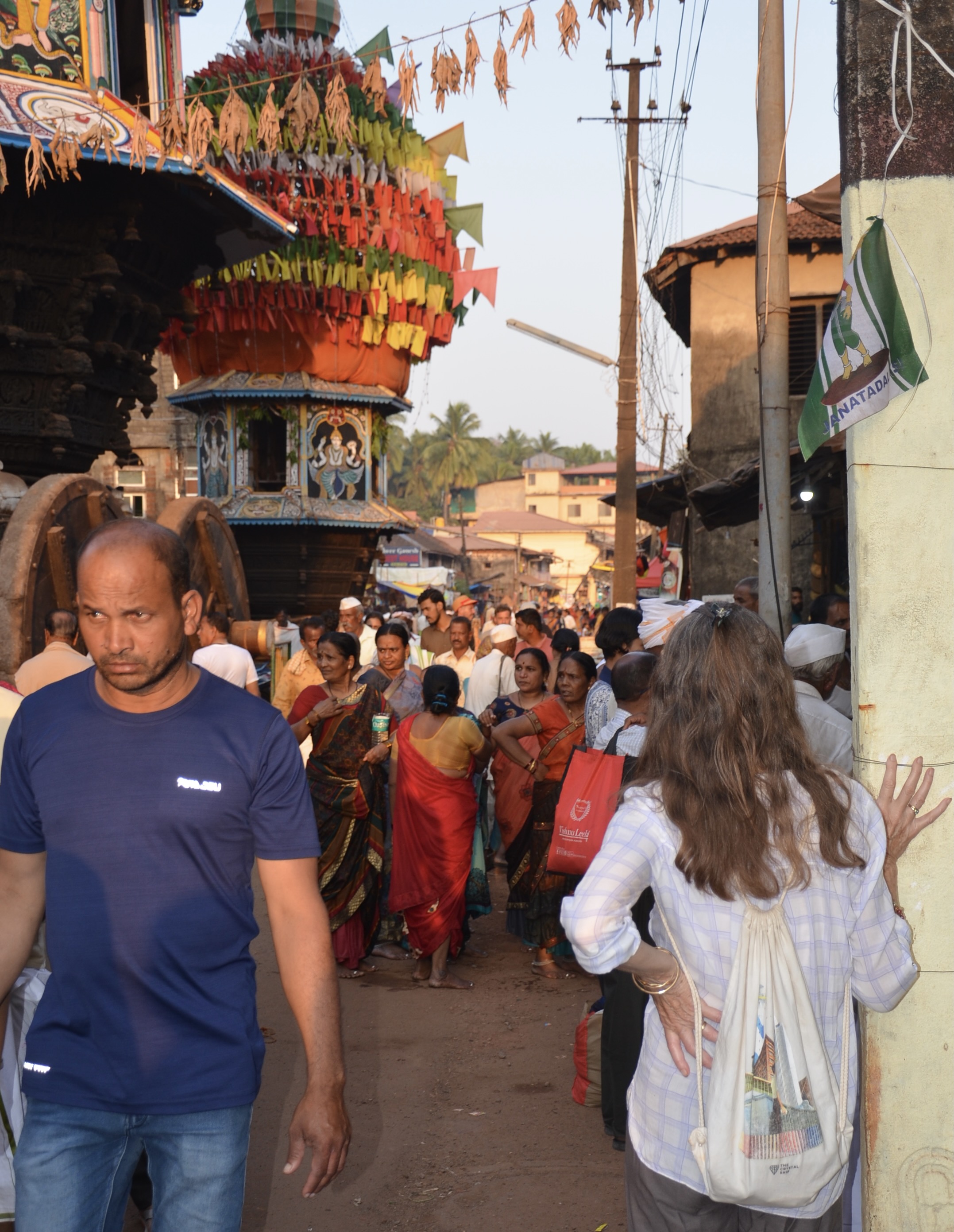
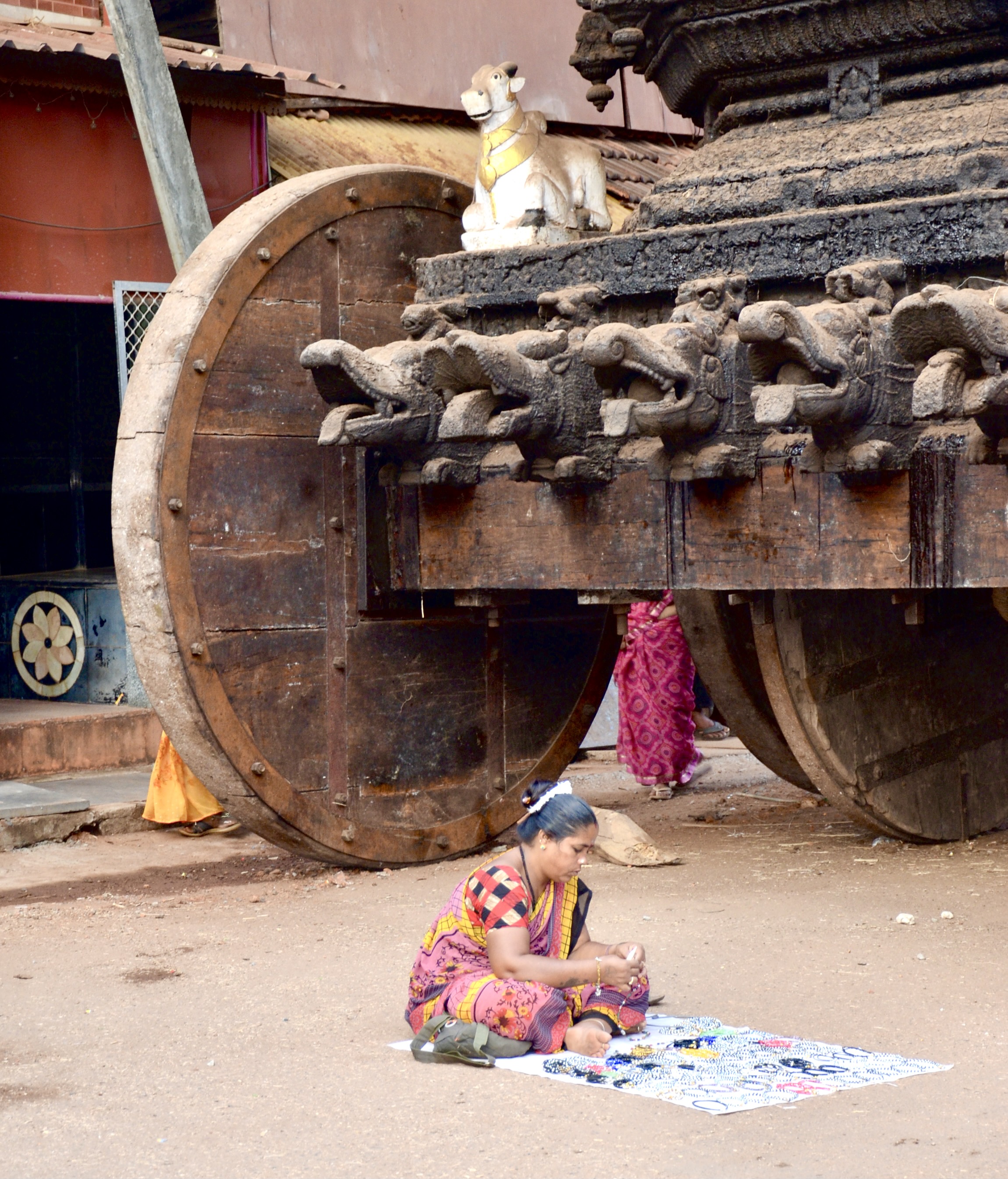
Our last few days in Gokarna coincided with the beginning of the Hindu festival, Shivratri, in honor of Lord Shiva’s birthday. Anticipating much congestion and noise, we were not excited, but we were in for a surprise. Wandering the town we noticed the huge wooden chariot had been pulled out of its parking spot beside the temple. Men clambered on top to build a ballon-shaped super structure, which was then decorated with brightly colored strips of cloth.

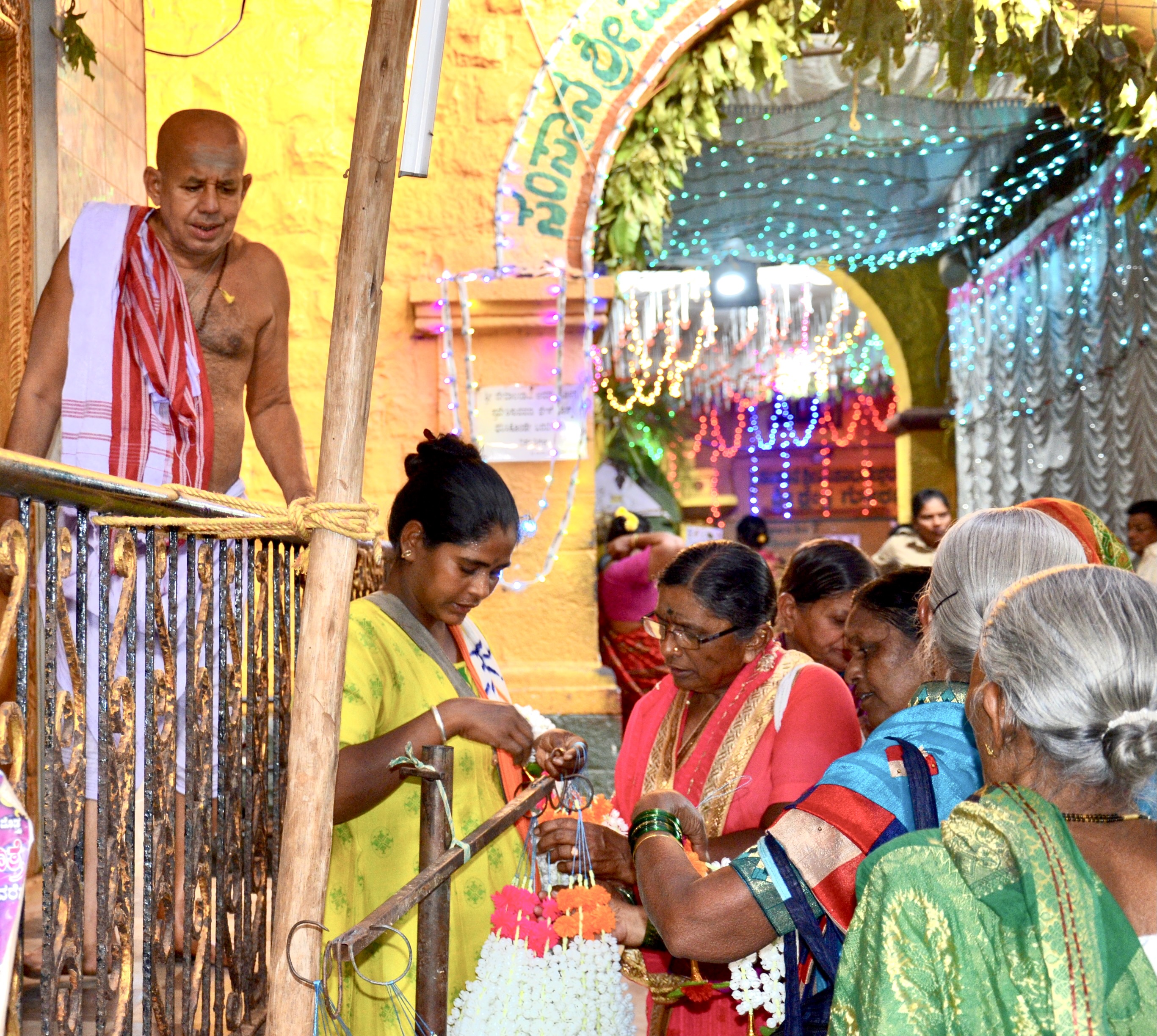
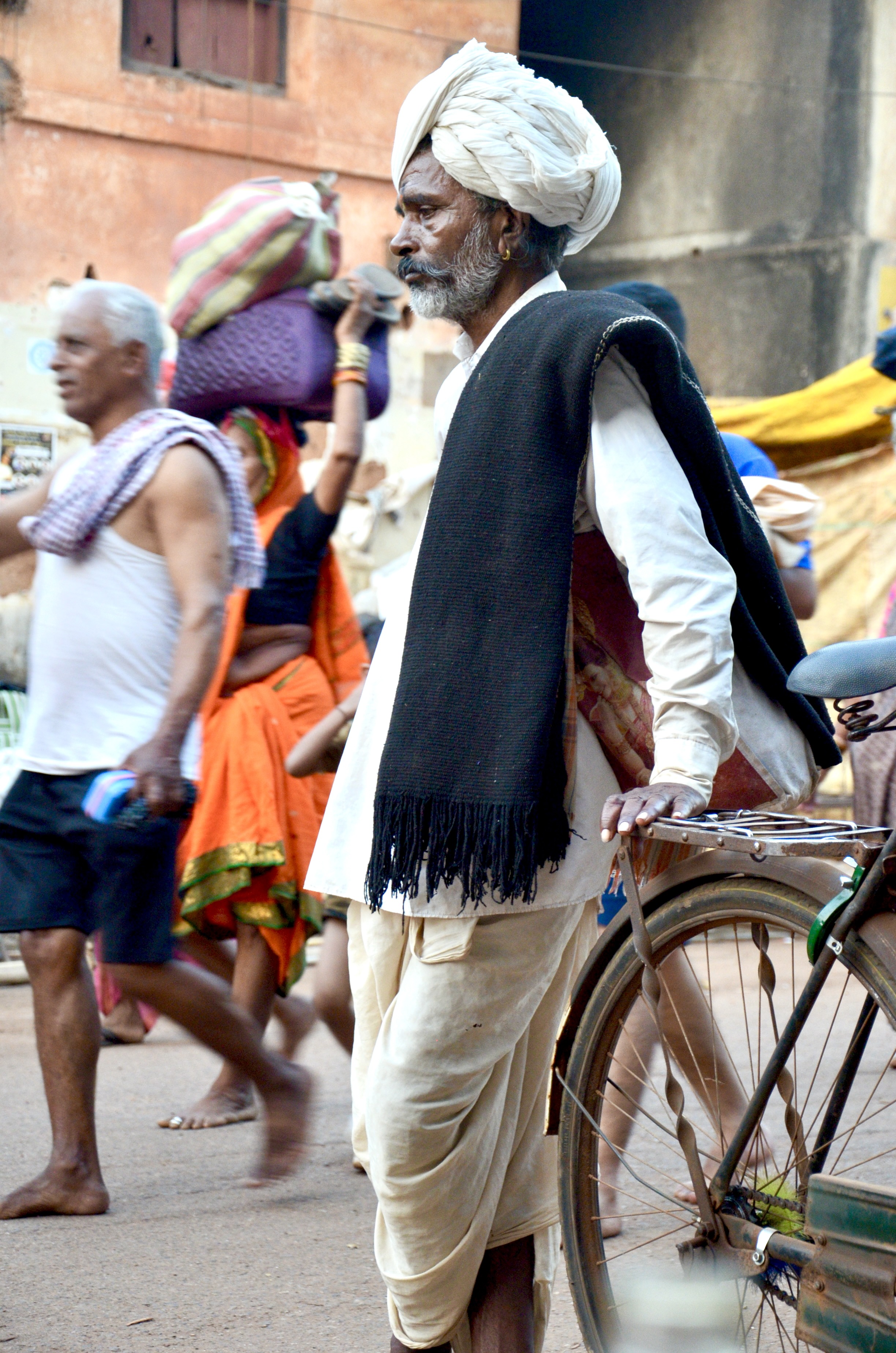
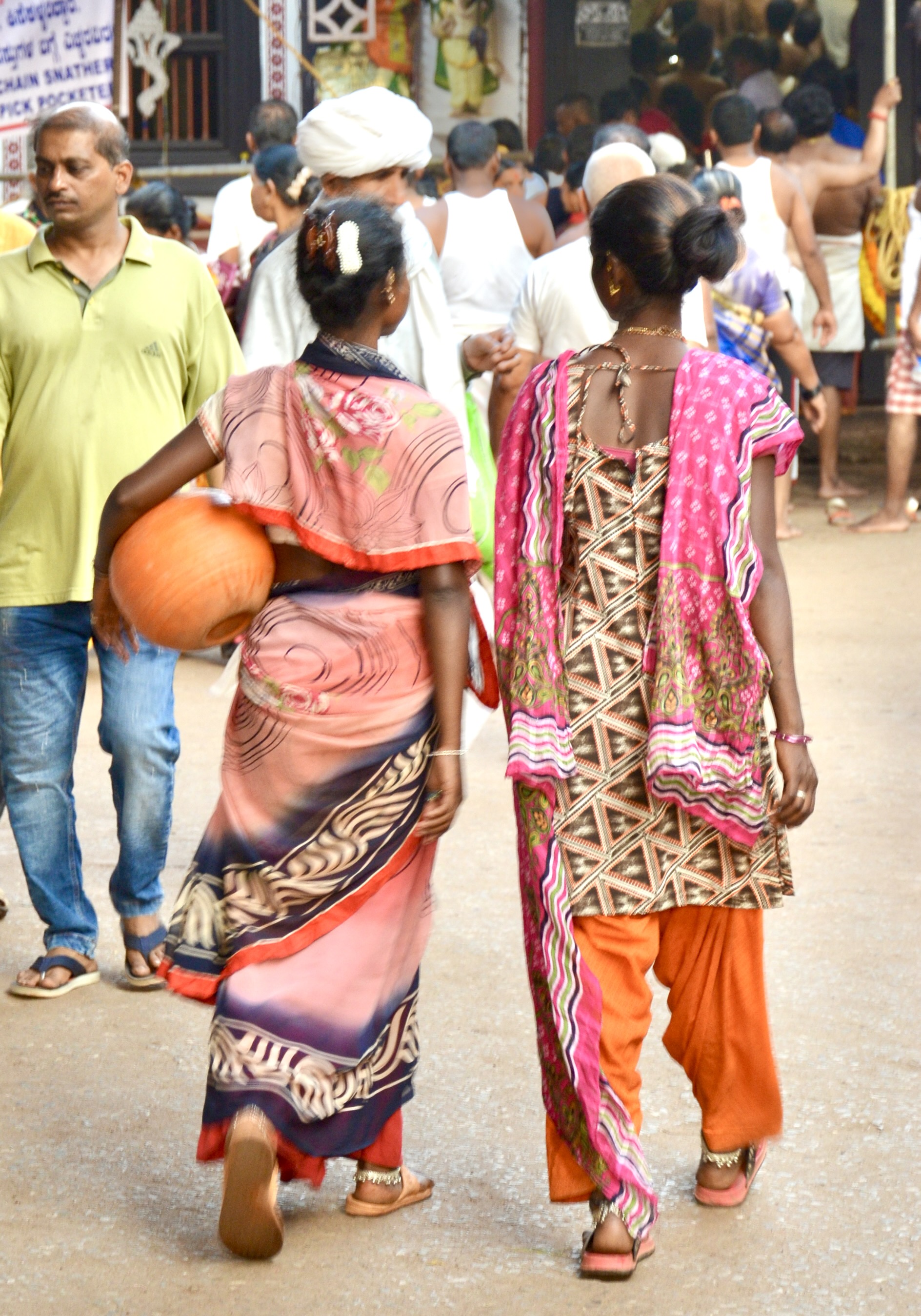
Gokarna was transformed into a busy cacophony of color, people and noise. Stages set up for dance performances, music blasting from loudspeakers. Thousands of devotees queued to perform puja and purchase offerings of flowers and coconuts.

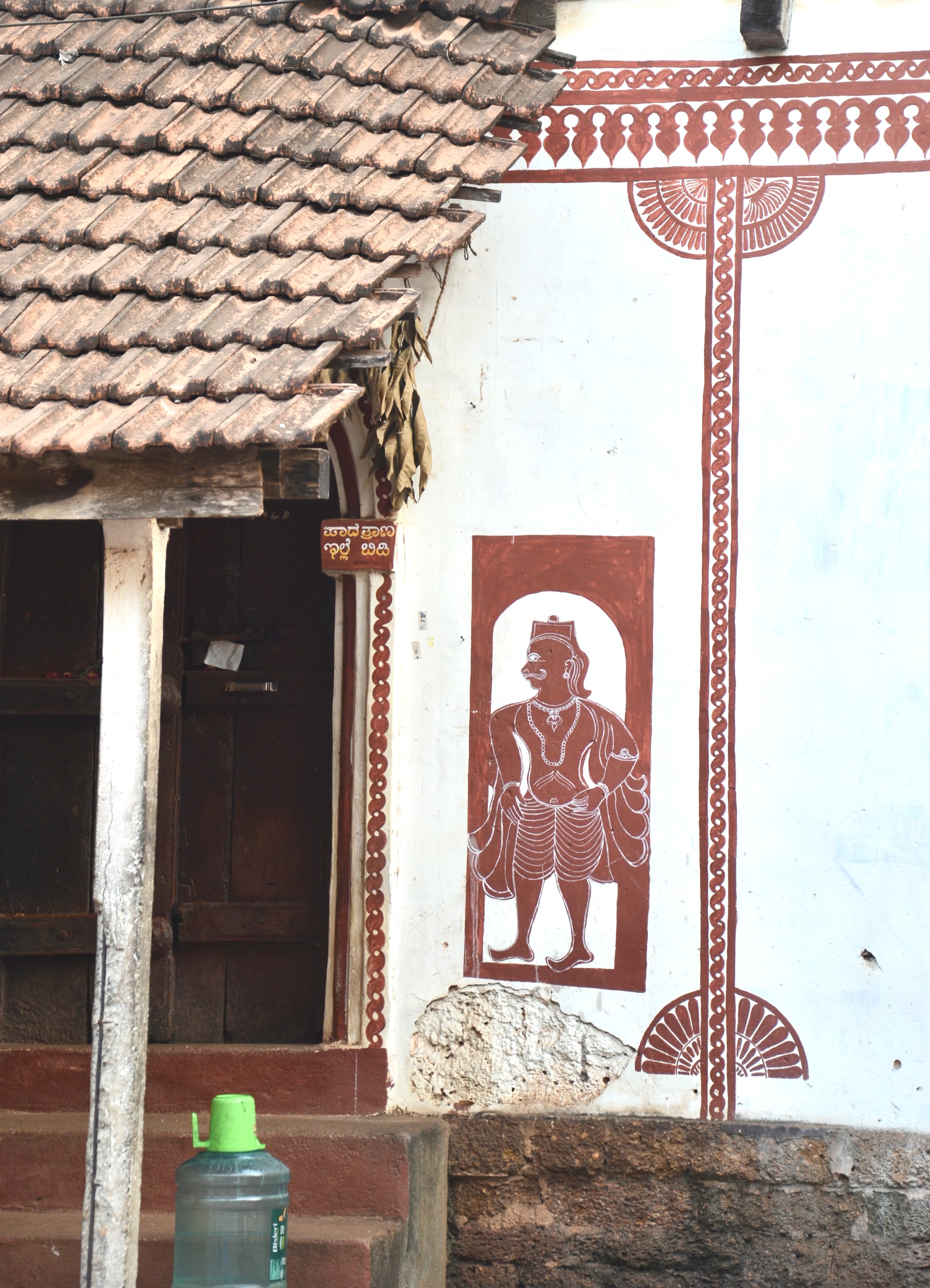
The path from the temple to the beach was covered with a decorated cloth canopy giving some shade to the devotees patiently waiting. Each day the crowd built and the queue grew longer. To enter the temple, they all stood barefoot, their sandals discarded in a large pile. Will they ever find them again? I wonder.

We left town before the finale, when an estimated 20,000 filled the short narrow street to watch the chariot pulled on ropes while onlookers threw bananas at the brahmin priests sitting inside. The reason why has been lost in translation. But the idea of thousands of people throwing bananas and the smell of the overripe fruit did not entice me to want to stay.

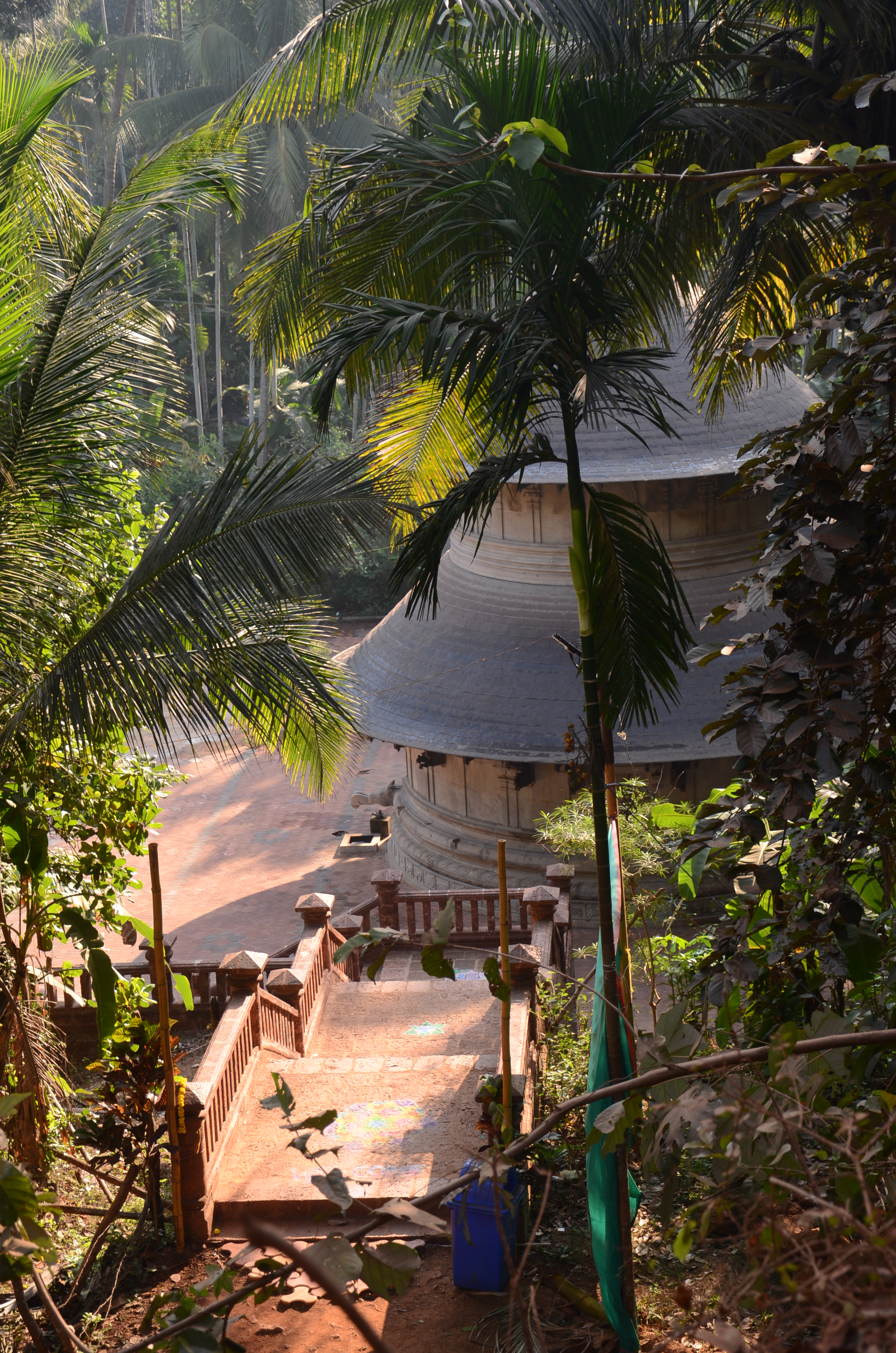
The temple significance lies in a legend associated with Ravana, a mythical demon king. The temple supposedly contains one of the powerful Shivalingam, the center point of worship. Ravana wanted the lingam and through his devotion impressed Shiva to give it to him, but on the condition that wherever Ravana placed the lingam it would be stuck there. In Gokarna, Ravana met Ganesh and asked him to hold the lingam while he prayed. But Ganesh put it down and vanished. Finishing his prayers, Ravana tried to pull it out without success. Tearing the outer covering of the lingam, he threw the pieces in different directions, which became the sites of the different temples in Gokarna.

In the usual Hindu combination of the sacred and secular, the small town became a carnival. Packed in beside the regular shops, a multitude of stalls were set up selling an assortment of plastic kitsch, aluminum kitchen ware, women’s “inner wear”, sugary sweets…and so on. We’ve seen this type of carnival often in Indian towns at the time of the many Hindu festivals.

The near side of the beach, beside the town, was flooded with Indians. They stood crowded together at the edge of the water, some venturing to play in the waves. Instead of sand castles, they built lingams and adorned them with flowers.

But down at our end, nothing much changed. The dogs and cows still owned the beach, the restaurants remained relatively empty. We continued swimming until the morning of our departure, then packed up. I said goodbye to the beach that had been my friend for the past month, and we took a rickshaw to the train station. Once again, to find our train was too hours late. Finally, it arrived and we found our seats among an extended family returning home to Mumbai. Gerard quickly entered into conversation with them. Dinner time came and they spread out a feast with paper plates and wooden spoons. Even the chapatis were wrapped in newspaper tied with string. I was intrigued by no sign of plastic. Even the vendor walking up down the corridor sold us clay pots of yoghurt with wooden spoons. It seems in this part of India, the notion of no plastic is taking root. Still talking, Gerard remarked that we won’t find such camaraderie on tomorrow’s airplane!

Incredible India continues to surprise

An Italian woman, troubled by sand fleas, walks through the water every day to avoid being on the sand. She likes to talk and I can easily hear her clearly-annunciated but heavily-accented English until she tells me about a wonderful ayurvedic massage down the beach. “Where? My husband would like a massage.” “It’s called LaTOOsa.” “Say it again?” I ask. Eventually she spells it out: L-O-T-U-S. “Ah, Lotus?” “Si, LaTOOsa!” she beams. We exchange our names. “Orrbearta!” Italian Marina exclaimed. “My sister’s name!” Roberta sounds so much better in Italian, and I’ve found a new friend in the water.

I’m enjoying conversing with British friends using expressions I haven’t heard in a long time. “Chivvy along,” a mother ordered her dawdling children. “WHAT?” said Gerard thinking he was hearing a foreign language. I explained, ‘chivvy’ meant hurry. “In all the years I’ve known you, you’ve never used that expression!” It’s not the first time I’ve surprised him.

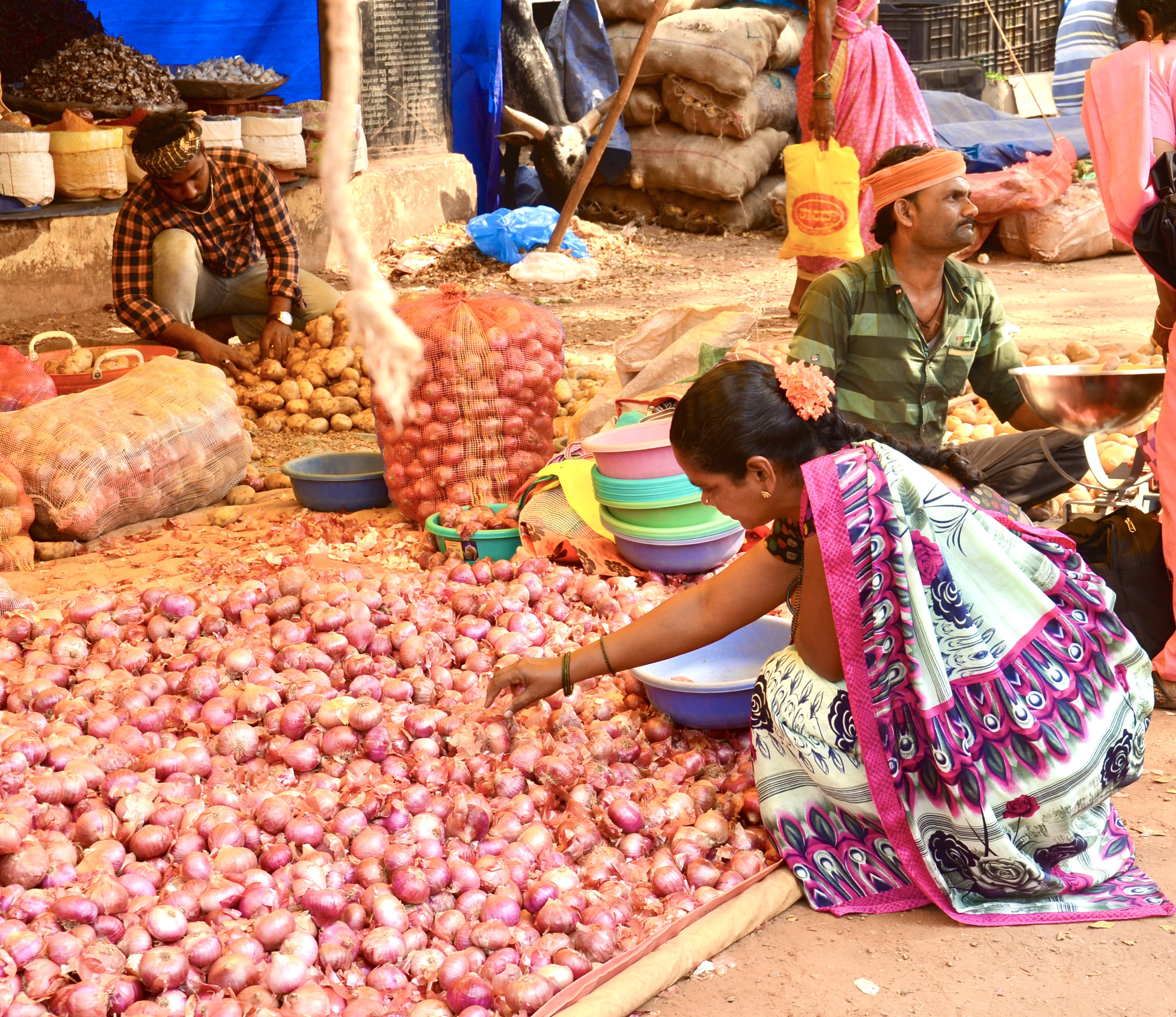
Visiting the weekly market provided a photo op.

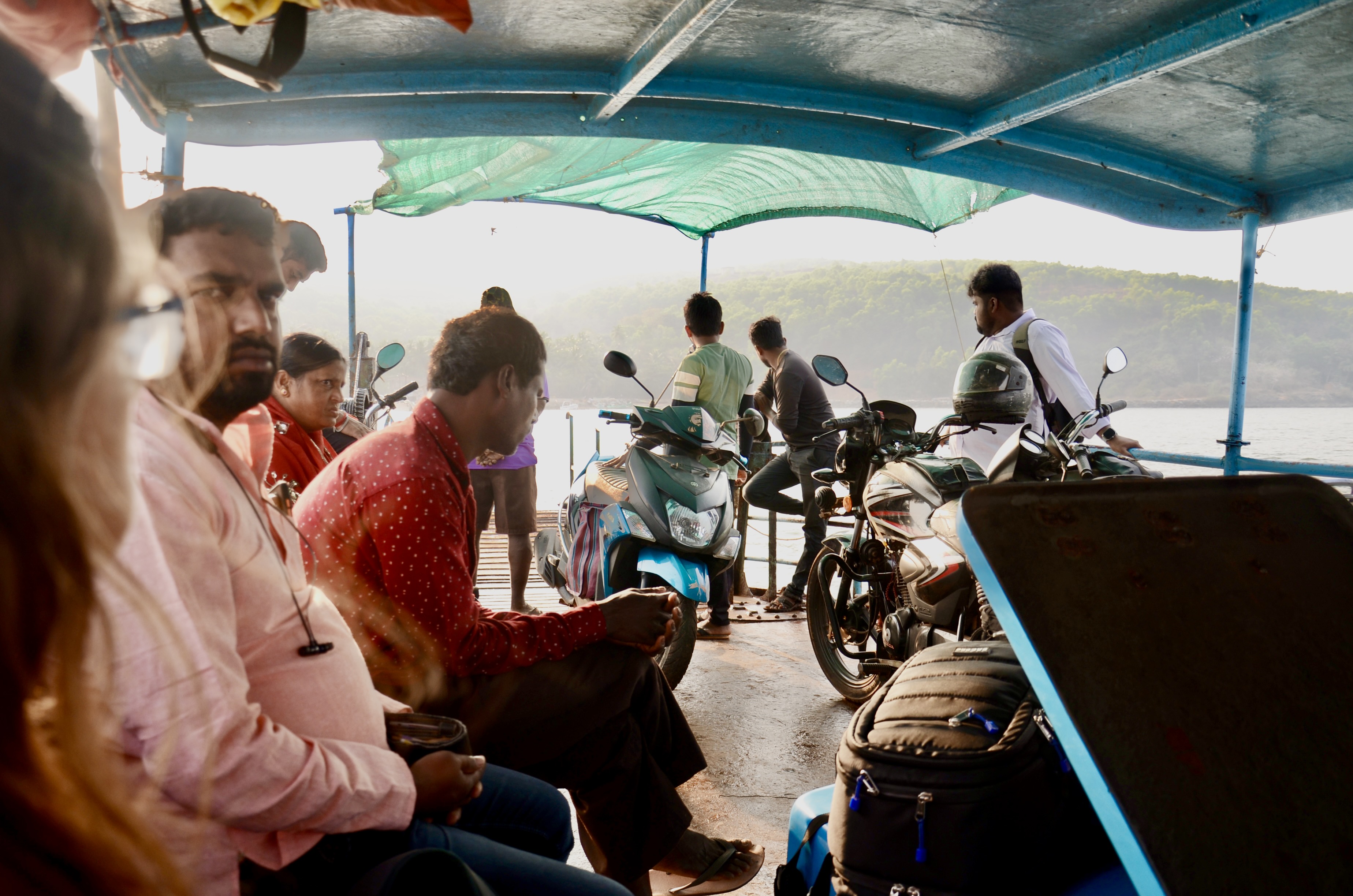
Marion and Juergen encouraged us to join them taking the ferry off the peninsula to a tiny hamlet on the mainland. Before breakfast we caught the 7.30 am bus to the port where the little ferry was waiting. People and motorbikes crowded on for the short but lovely ride.

Marina had told us of a chai shop on the other side and we set off in expectation for a nice breakfast. Four miles later, through road construction and clouds of red dust, stil no chai shop. Exhausted, thirsty and hungry we turned around.

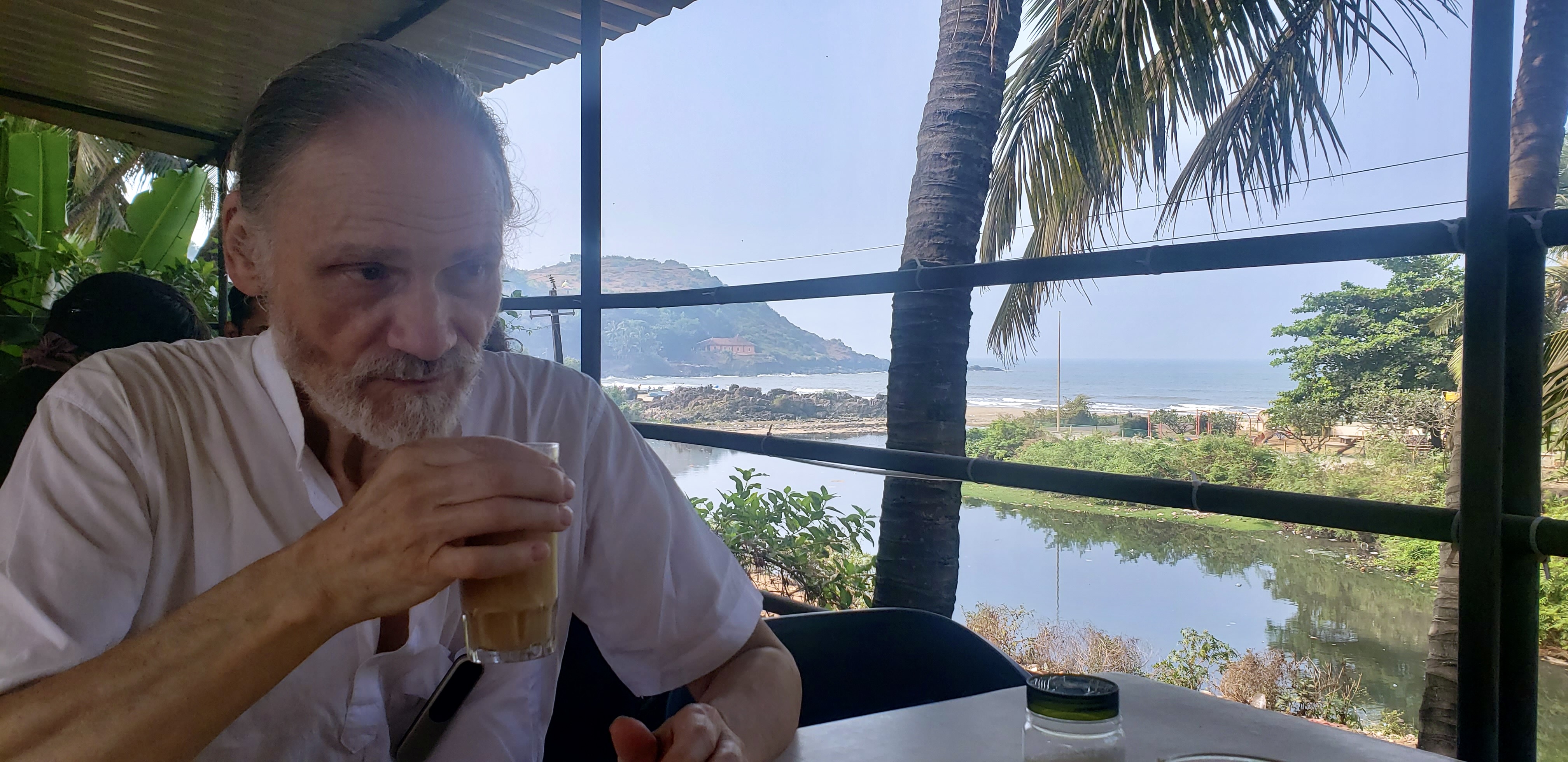
After the long walk back, we found the chai shop right where it was supposed to be and sat overlooking the bay with our chai.

But what saved the day was the unreserved friendliness of everyone. Obviously few western tourists ventured their way and we were still a curiosity: big smiles and waves from road laborers, housewives and school children. By the time we got off the ferry hoping to catch the bus back to Gokarna, it was high noon. The shopkeeper said the next bus will come in two hours. There wasn’t a rickshaw in sight. Fatigued and overheated we started walking. Eventually we caught a rickshaw back to town. Not exactly the outing we’d anticipated.

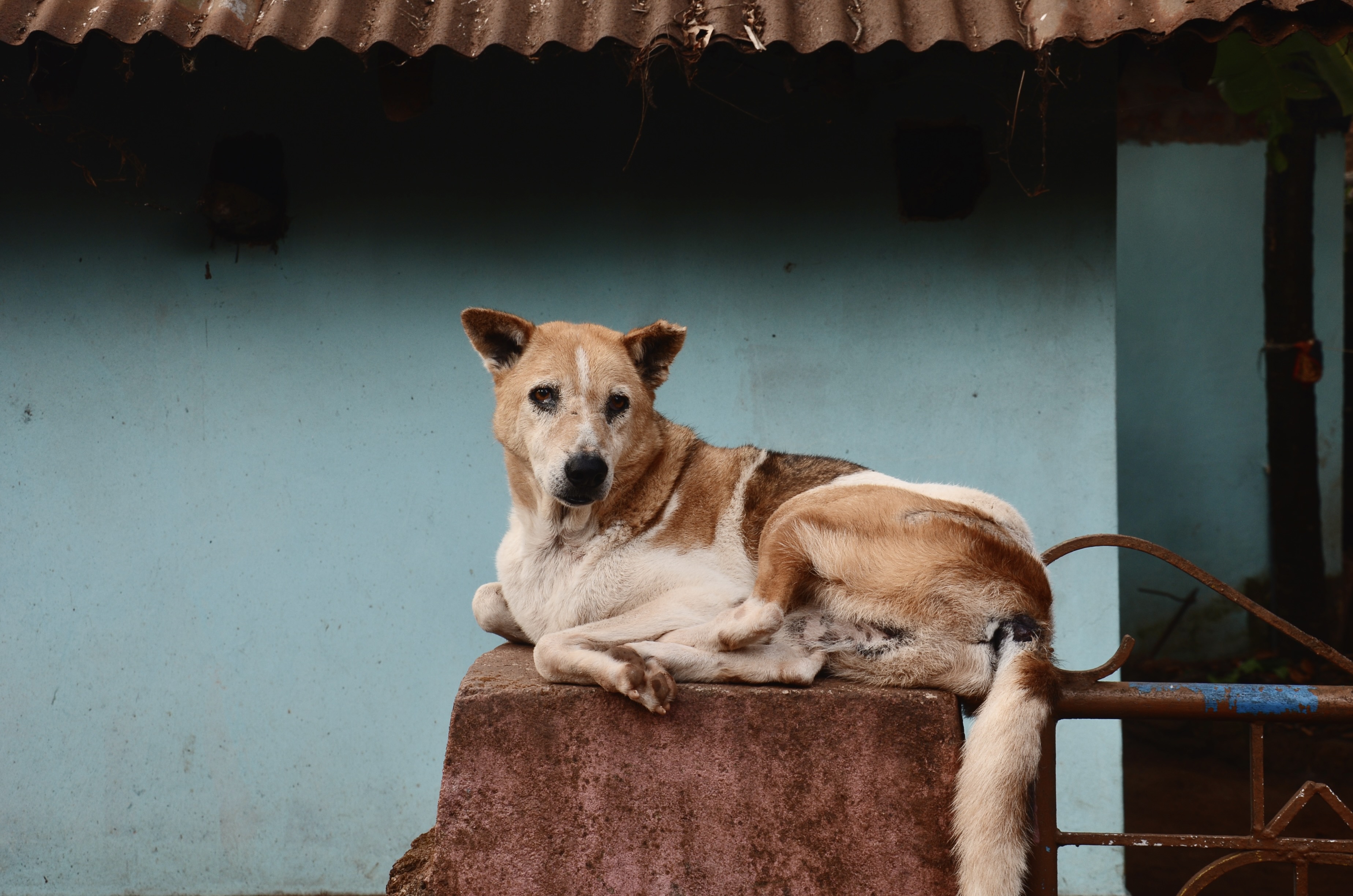
Certainly the dogs along the way could have advised us if we’d only taken the time to listen. 

A few days later, bird watcher, Tina, proposed another walk to the little beach of Belekan. “About a two hour walk,” she claimed. “We’ll leave early to avoid the heat and take a bus back.”

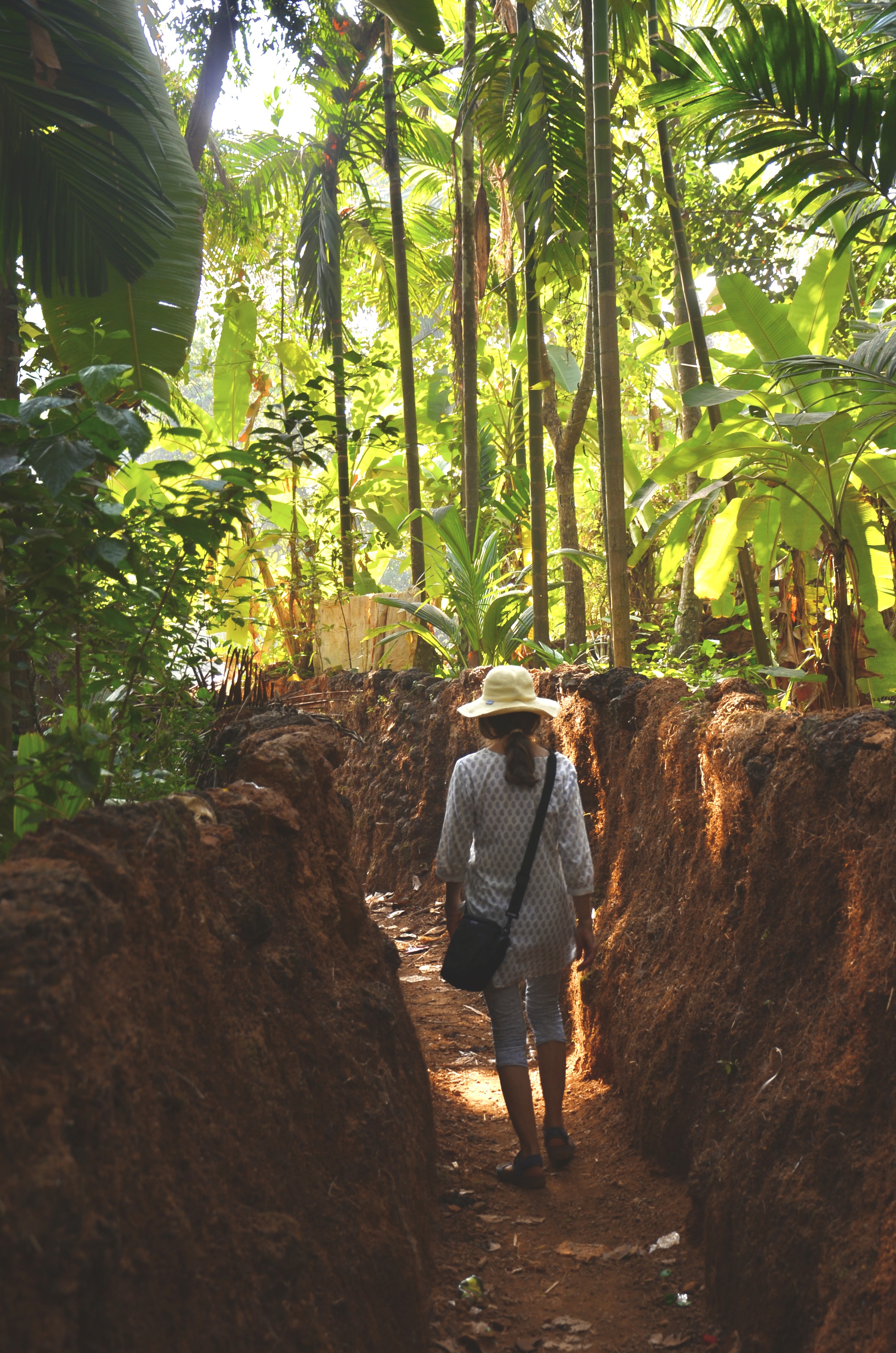
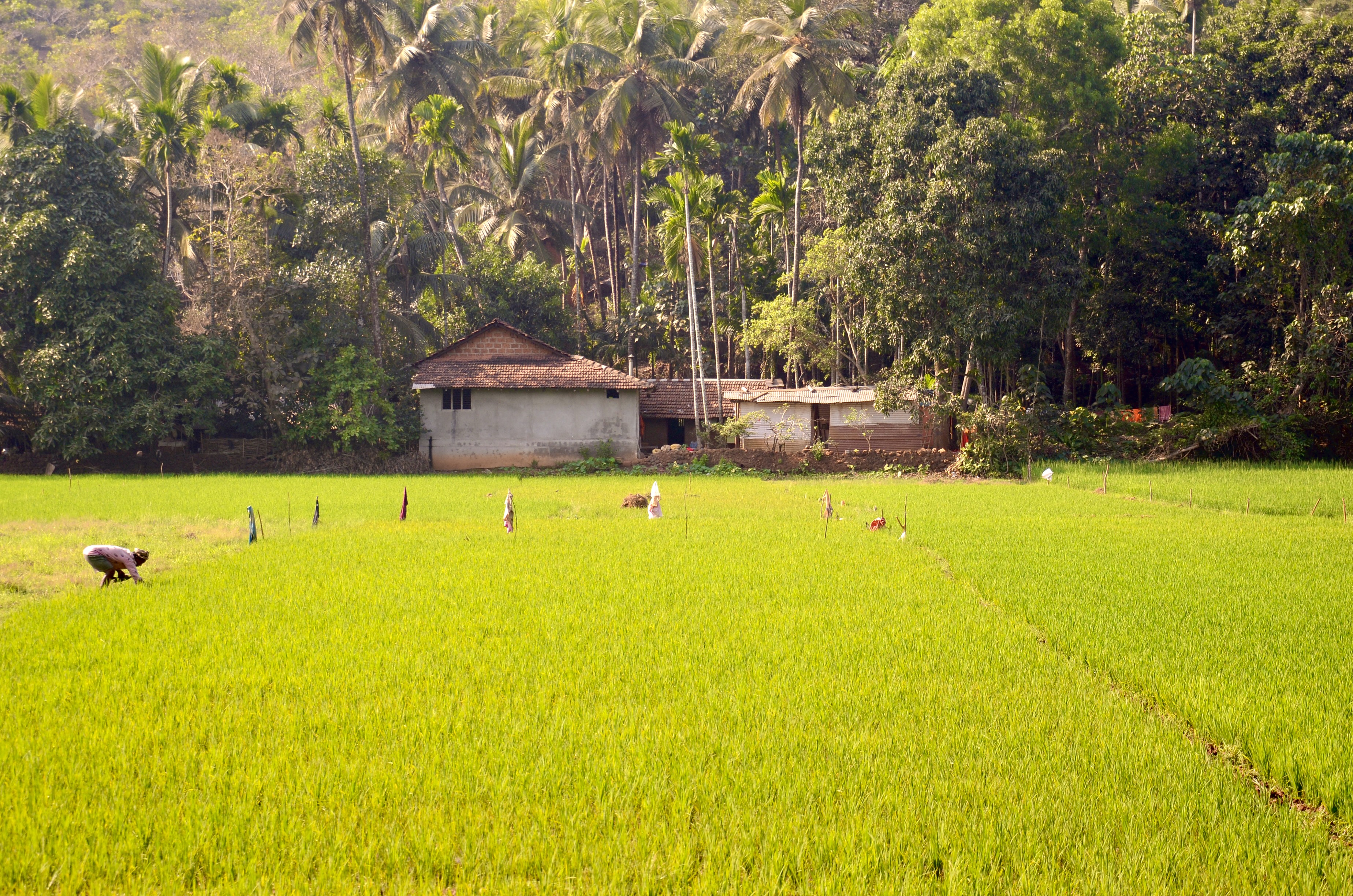
For the first hour we followed a small road through the jungle alive with bird calls. Then Tina followed a footpath that meandered past rice paddies and the odd house. 

The green of the rice paddies shimmered. And if we stood still long enough we caught glimpses of white–egrets, ibis and storks. n stalks glimpses of white–egrets, ibis and storks.

Suddenly the footpath opened up to the beach. At the far end sat a cafe where the bus terminated. After our two hour trek our chai tasted even better. 

Then we were informed that the bus would not be coming for another two hours. ‘Man proposes and God disposes’, someone muttered.

The general consensus was to walk back. Gerard was of a different mind, happy to hang out at the cafe and await the bus. Had I known what was being said, I would have enjoyed also staying for a swim. But not following his gut, we trudged off with the others. Now in the noon day sun, our pleasant stroll through the jungle became a test of endurance–heat, sun and no water. Finally reaching our room, Gerard collapsed on the bed. After looking at map, he huffed, “Two-hour walk, huh? That was more like ten miles!” Once again, Incredible India has its hidden surprises.

I could have told you that

Gokarna: Friends at the Beach

Two warnings are pinned to the guesthouse wall. One is ridiculous: “Swimming on the beach is not safe.” Hello? Have you ever tried swimming on the beach? The other is more ominous: “The owner will not be responsible for any drowning in the sea.” Undeterred by occasional rough seas, I swim twice a day, and then walk the long stretch of sand, appreciating the moment.

I enjoy the simplicity of our lifestyle; it unclutters my mind, which likes to seize on the busy minutiae of daily living back home. I may not always like the Indian meal served, but it still beats the time and mental energy devoted to cooking and food shopping. Every day, I look forward to my idli and dosa breakfast. A young Indian has just started up his little dhaba and serves us with enthusiasm.

Gerard enjoys leaving Wellington Street far behind. Oddly, he does not seem to miss painting just as I don’t miss biking, knowing they will be waiting when we return. When he’s not swimming with me or socializing, he’s busy completing his memoir which he began writing exactly four years ago in India. His favorite tunes encourage him when the writing is difficult. Mosquitos and sand flies have found his skin irresistible and he’s had to contend with a slew of itchy, inflamed bites. But two weeks into our stay the bites are reducing. Dare I say the insects are loosing interest, moving on to the next tasty newcomer?

With many of the establishments here preferring to cater to Indians now, the old time travelers congregate in just a few cafes up and down the beach. Some of us question if we’ll come to India again whether put off by traffic, pollution, plastic waste—everyone agrees that the subcontinent is drowning in a sea of plastic–or Modi. 1.4 bilion create a heck of lot of waste! Gerard and I try to do our bit by bringing a portable water filter to avoid contributing to the mountain of plastic bottles. The otherwise beautiful walk through the vegetable gardens to the beach is marred by litter. To avoid looking at it for a month, Gerard got a gunny sack and picked it up. But where to dispose of the full sack?

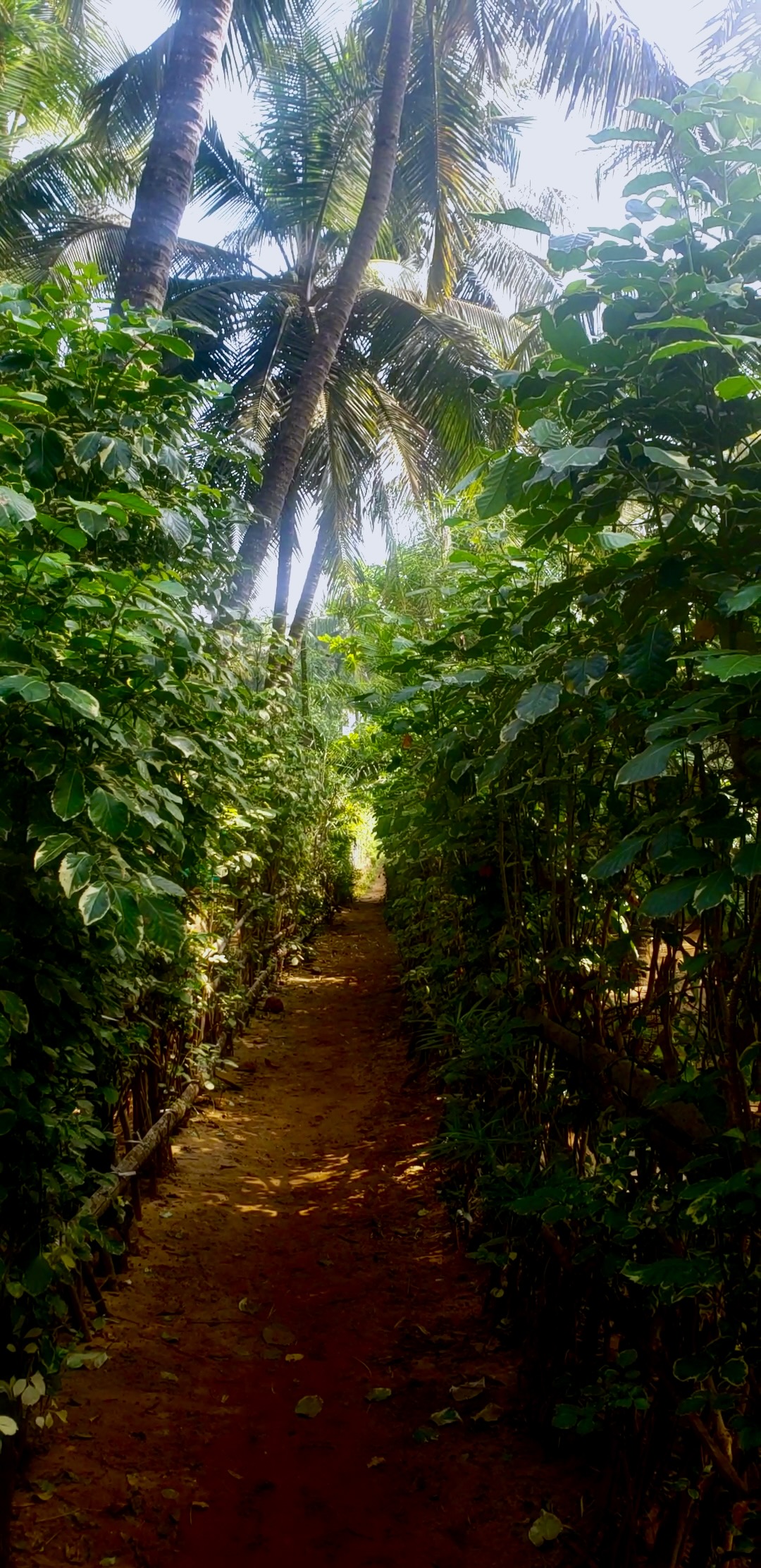
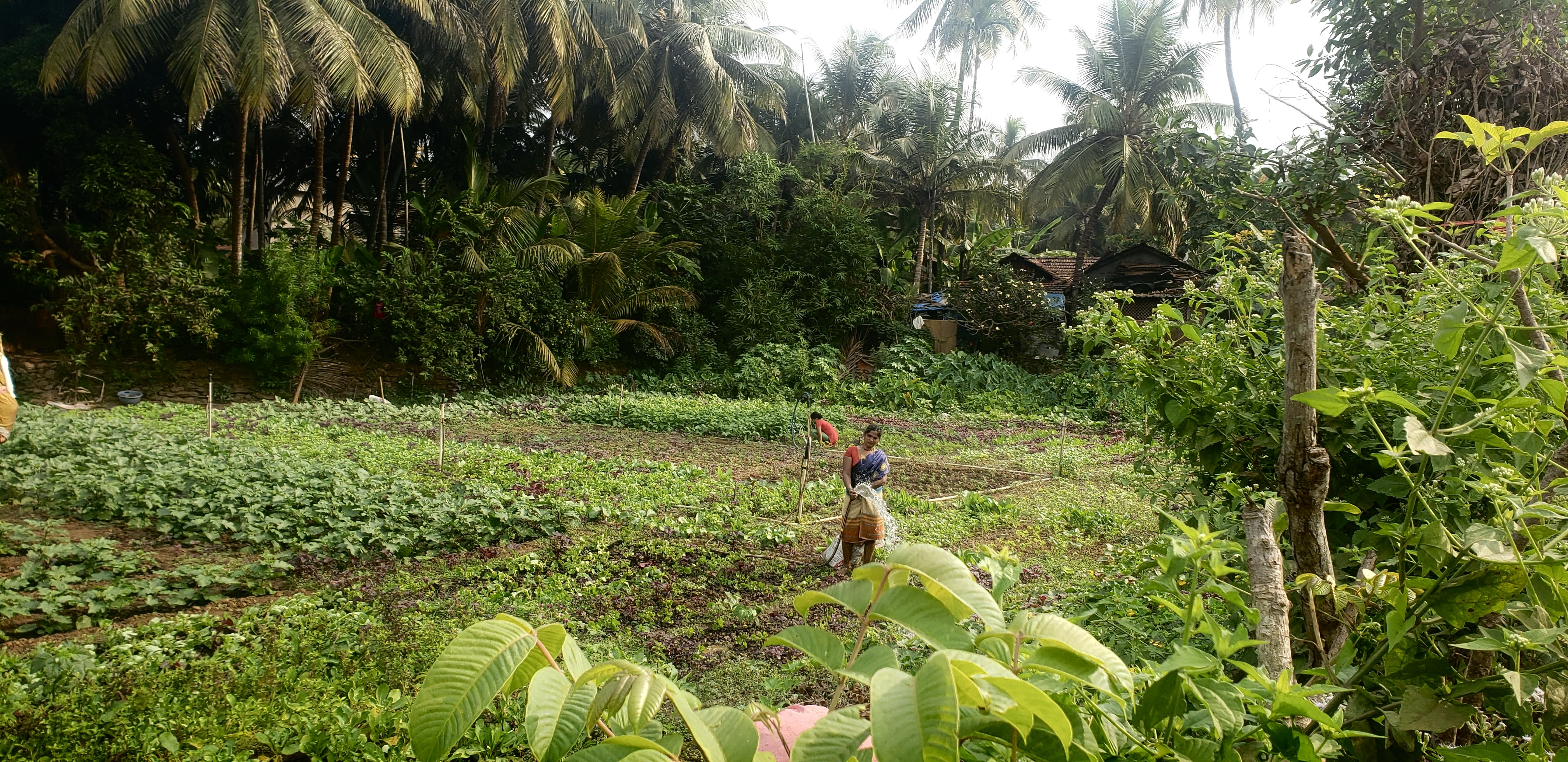
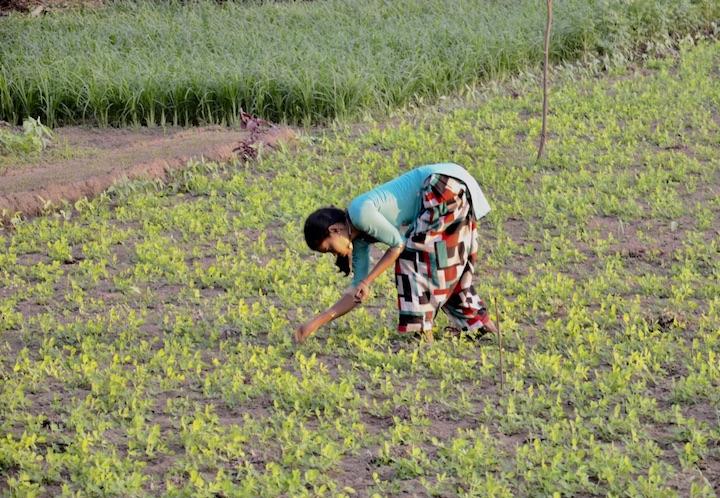
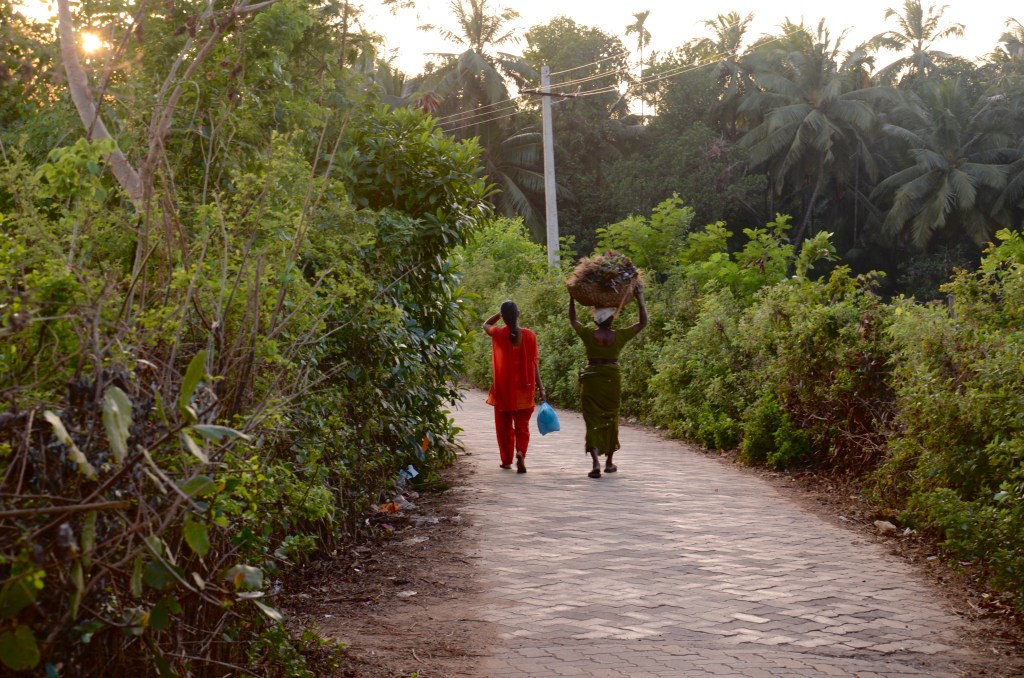
Walking through the vegetable fields we notice that each little garden has its own shallow well. So close to the sea, surprisingly these wells are not polluted by salt water. With the rich soil, the baking sun and plenty of water, the vegetables seem to grow as we watch them. Too bad not enough of them find their way into the restaurants.

Our friend Marina is a social magnate; after twenty years in Gokarna she knows the old timers and easily makes new friends. At one point, there’s nine all from her area of north London. We’re sad to see Emma leave after her brief three-week holiday. She doesn’t understand those who complain about the new influx of Indian tourists crowding on to the beach (mostly on the weekends). She looks at the long stretch of sand and says, “To me, it’s bliss!” She spent her childhood summers in south Devon and we both agree that there’s no comparison to the sardine-packed people on the beaches of Torquay and Paignton.

Although I get frustrated in trying to follow the group conversations, it doesn’t overwhelm me anymore (given the occasional meltdown). This is our third visit to India since I lost my hearing, and I’m relieved to find it has gotten somewhat easier. I know my mechanisms to avoid hearing fatigue – and when I take a mental break and space out for a while, I return to the conversation to find surprisingly the same topic is still being discussed. I don’t seem to have missed much!

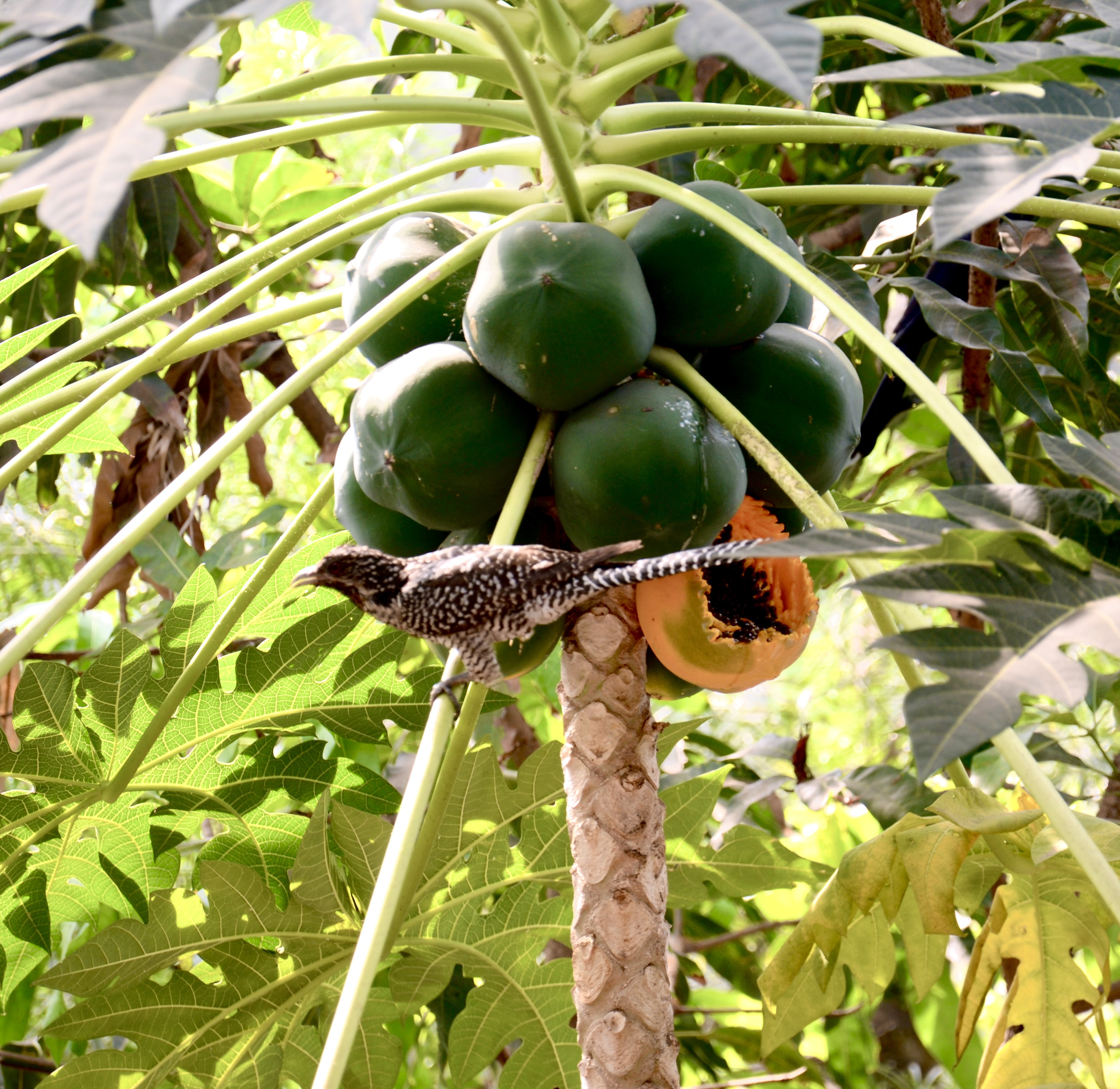
We wish we could identify the exotic tropical bird songs that I’m so grateful to hear. North London Tina’s a bird person and can recognize when Gerard provides a great imitation of a call. One is the Koel bird that we watch from our balcony in a papaya tree picking away at the fruit. Tina must be almost 80 and has traveled solo in India many times, which I find inspiring. Again, I wonder if I would have the resources to do it alone.

Our German friends, Marion and Yergen, insist that we accompany them to Kudlee Beach, a pretty sheltered cove we first visited three years ago. The descent to the beach is crowded with Indian tourists, the more so because it’s Republican Day weekend. Kudlee now caters only to Indians; several old buildings are demolished and undergrowth cleared at the near end of the beach to make way for a large luxury hotel. Rented dinghies, water ski launches and other plastic flotilla pepper the water. It’s beginning to look like Paignton! How many beautiful beachfronts are there left in the world that haven’t been ruined by over-development?

French Frederic, who we first met in the Himalayas ten years ago, took an overnight bus from Bangalore to spend three days with us. A resident of Auroville, he was on his way back to France to renew his visa. We have a special bond with him and are able to pick up where we left off four years ago in Varanasi. Swiss Peter, who visited us in Boston last summer, came down from Agonda for a few days as well. Both Gerard and I are flattered they made such an effort to visit us.

Back After Three Years

“Yes, I remember you,” the restaurant manager in Gokarna said with a half-smile. Coming from a man who, despite Gerard’s efforts, would not engage in conversation for the whole month we were here before, this was a warm welcome.

We hadn’t given much thought to another winter here. In fact after returning from a challenging time in California, trying to hear in noisy restaurants or even groups of friends, I’d told Gerard definitively that I could not handle India again. Just a few days later, Melissa, our longtime house sitter, emailed us to say she was available this winter. That did it! We’re going! I said ,visualizing the beach in Gokarna, the ghats of Varanasi, the snow-capped mountains in HP and the friends we’d have the chance to reunite with along the way. I was determined to handle my hearing loss in India as I do in the U.S. Clearly, the benefits would outweigh the difficulties.
But I do need help to get by in chaotic India. At the airport, a frustrated customs official asked, me, Do you speak Hindi or English? Later, a young Indian tried to strike up a conversation, then realizing my predicament, assured, “You’re not missing anything,” and high-fived me. Easy for him to say, but without Gerard I don’t think I could do this on my own.

We arrived in Delhi at 2 am, Even though the airport is now no different than any other airport in the world it’s still a shock for us to walk through duty-free that is predominantly alcohol. As we predicted our hotel did not let us in despite our reservation and claim of 24-hour check in. We eventually found another where the manager woke up long enough to give us an inflated price. After inspecting the room, Gerard bargained with the sleepy manager for a reasonable rate. In the morning, I looked out the window on a large colorful umbrella with a sign saying ‘Baba Masala Tea.’ A white-haired gentleman pounded out fresh ginger and cinnamon sticks in a mortar and pestle to make the best chai in the neighborhood. Just when we need it, a chai wallah appears.

We were interested to see how India had changed in the past three years. It’s too early to know, but in the airport we couldn’t help noticing posters of Modi’s nationalistic agenda, with his ridiculous slogan: ‘1.4 billion people, one dream.’ The continuing strife between Hindus and Moslems begs the question: what is the one dream? We were surprised to see so few long term travelers like ourselves in the Pahargunj area of Delhi. Consequently, many of the shops catering to tourists have disappeared, returning Pahargunj to Indian consumers.

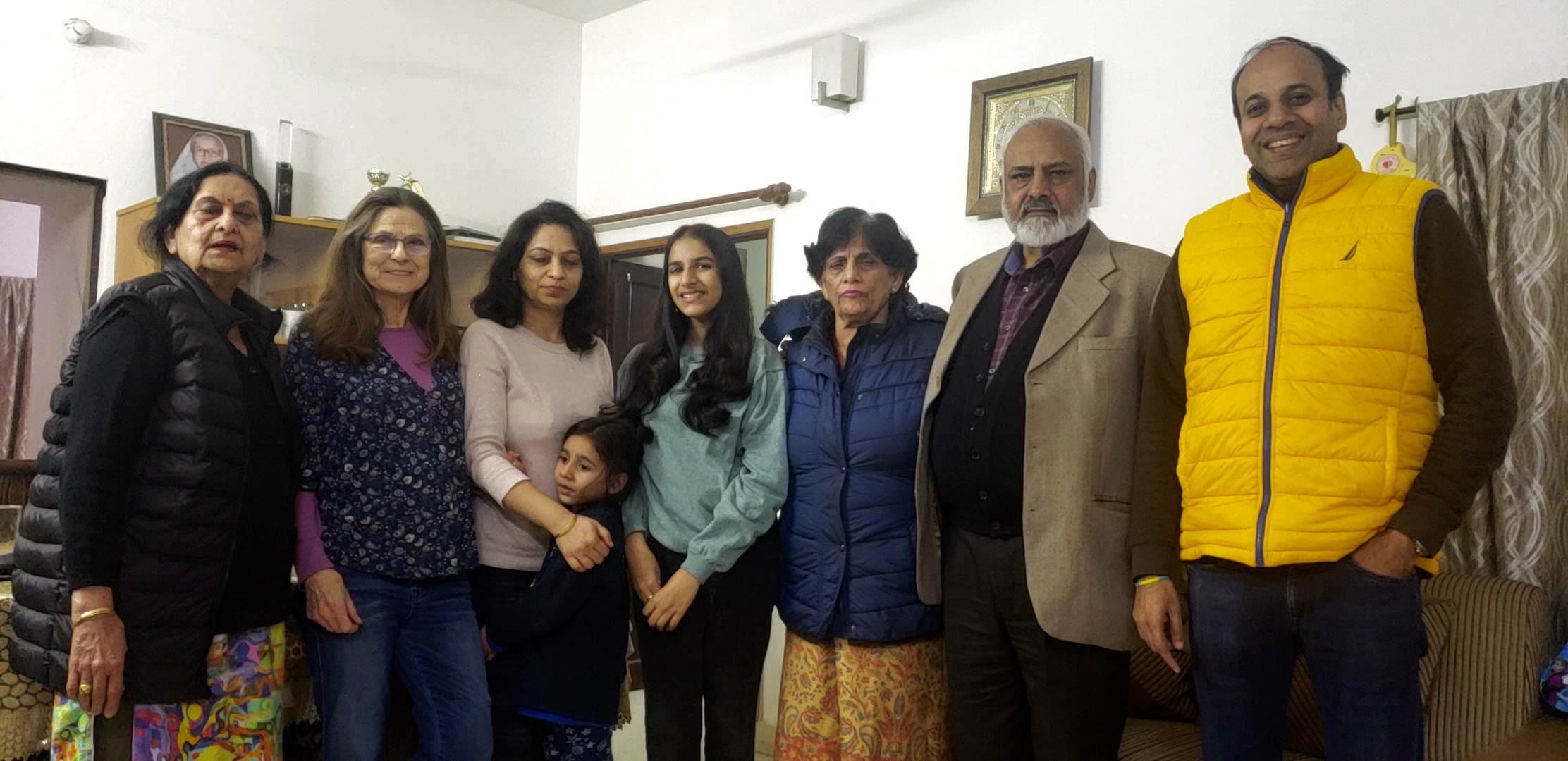
On our way to see the family in Gurgoan we were impressed by the metro, still running like clockwork and unusually clean for Delhi, unlike the buses and trains which are constantly breaking down. It was wonderful to be in their company again and we were surprised at how the children had grown. Five-year old Tanya’s cheeky personality has emerged, her English better than her Hindi, her mother says. And Simrita has grown into a gracious fourteen year old. She took me shopping in the nearby market. Sympathetic to my hearing loss, and lack of Hindi, she guided me through the process, reminiscent of how I did the same for my blind father many years ago.

The family knew it was Gerard’s birthday and Simrita wanted to bake Gerard a surprise cake. After dinner she disappeared into the kitchen and proudly emerged some time later with a freshly baked chocolate cake. Shruti stuck her knife in and said it needed more cooking, so Simrita returned to the kitchen. Soon after we heard a loud crash followed by sobbing, Simrita had turned the cake on to a glass plate and dropped it on the tiled floor. At Shruti’s insistence, she eventually appeared and placed the cake with embedded glass shards in front of Gerard, and we sang ‘happy birthday,’ before the cake was trashed.

The two-hour pre departure requirement for our domestic flight to Goa, was no overkill. The long line of passengers at check in (that would challenge anyone with claustrophobia) the interminable walk to the departure gate, and finally a bus ride to board the plane on the tarmac at least a couple of miles from the gate. Nevertheless, the plane took off on time! Gerard, with his love of trains and disdain of airports, couldn’t help mentioning how much easier it would have been to board a train and enjoy a more pleasant, if longer, journey. The following day, when our two-hour train ride to Gokarna was delayed by two hours, I had the satisfaction of pointing out the incongruity of waiting the same amount of time as the journey!

We struggled to book our room online and the internet pictures failed to meet up to reality. But after we’d moved the bed to face the window and Gerard got to work with his rag and disinfectant, the room became our home at the beach.

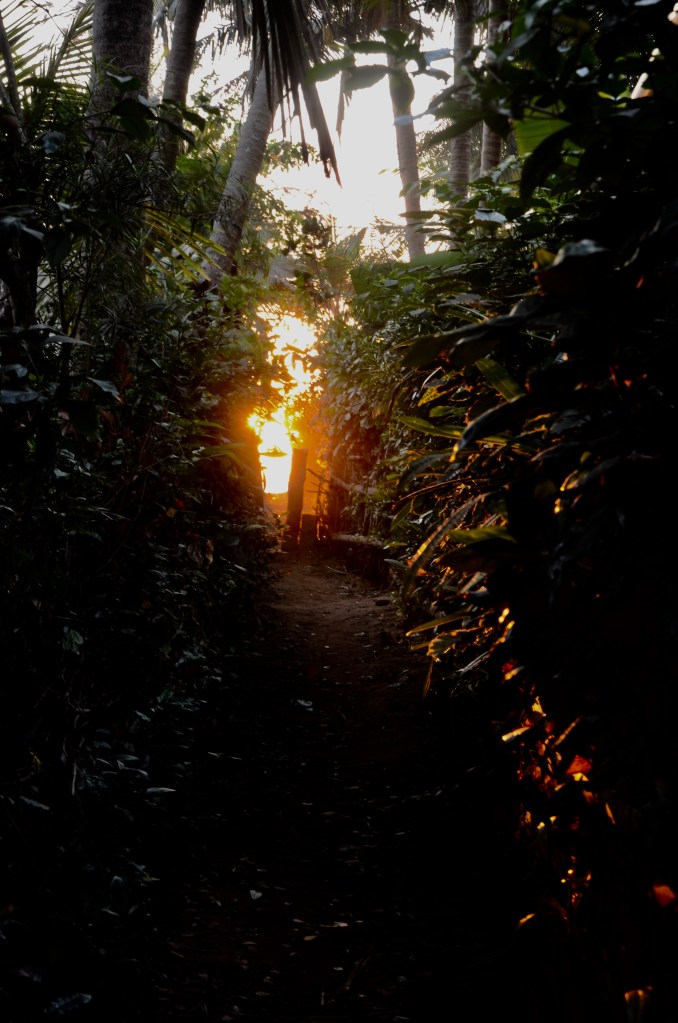
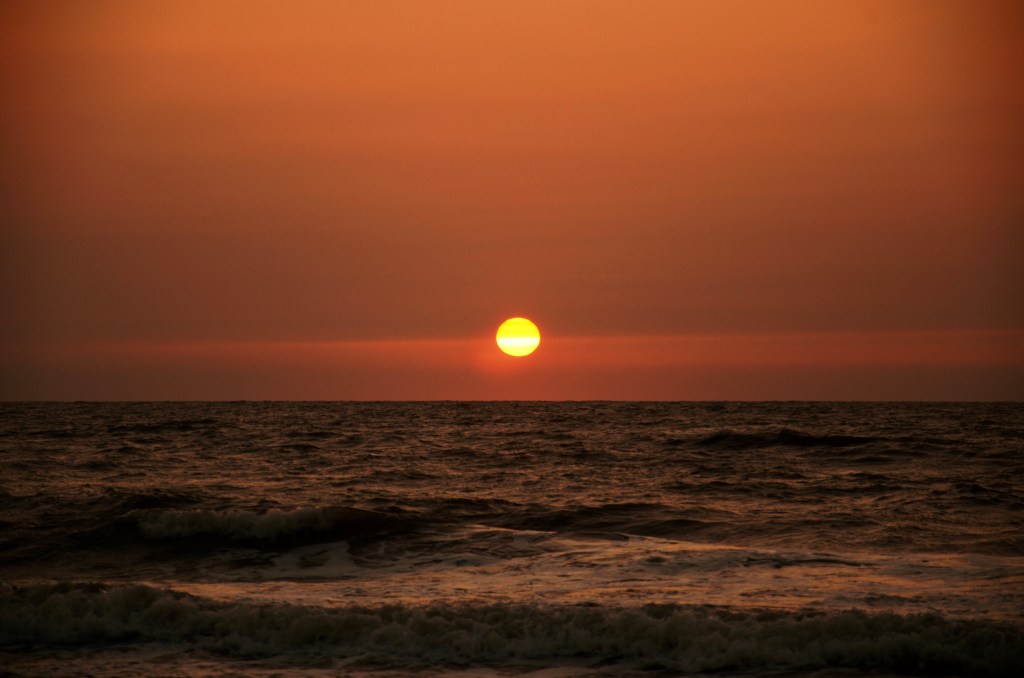
As it turned out, pre-booking paid off. Friends have told us it’s hard to find a place to stay because guesthouses are now only renting to affluent young Indians who come on the weekends. The owners can double the price and not bother to rent the rooms during the week, telling tourists like ourselves they have nothing available. Our guesthouse is only a three-minute walk from the beach, through vegetable gardens. Palm trees shelter our balcony from the heat of the day while allowing the amber glow of the late afternoon light to filter through.

Thinking of friends who couldn’t return for health or economic reasons, or chose not to (avoiding Russians), we’re grateful to be here. On our arrival, Frederic one of our oldest Indian connections, was already waiting at our guesthouse.
Lots of Friends and Longer walks

Our friend Odella, arrived four days ago, fresh from NYC. She didn’t take long to adjust. Tall and poised, she towers over the short South Indians. Finding her own way around and uninhibited in asking people what they were eating, where she could find a good cup of coffee, is there a good yoga class etc. she quickly showed her independence. She’s been to India a couple of times before but not traveled extensively. Our connection with her is through Lewis, her husband and old friend ours. A jazz musician and professor at Rutgers University, we only see them when Lewis gets a music gig in Boston.

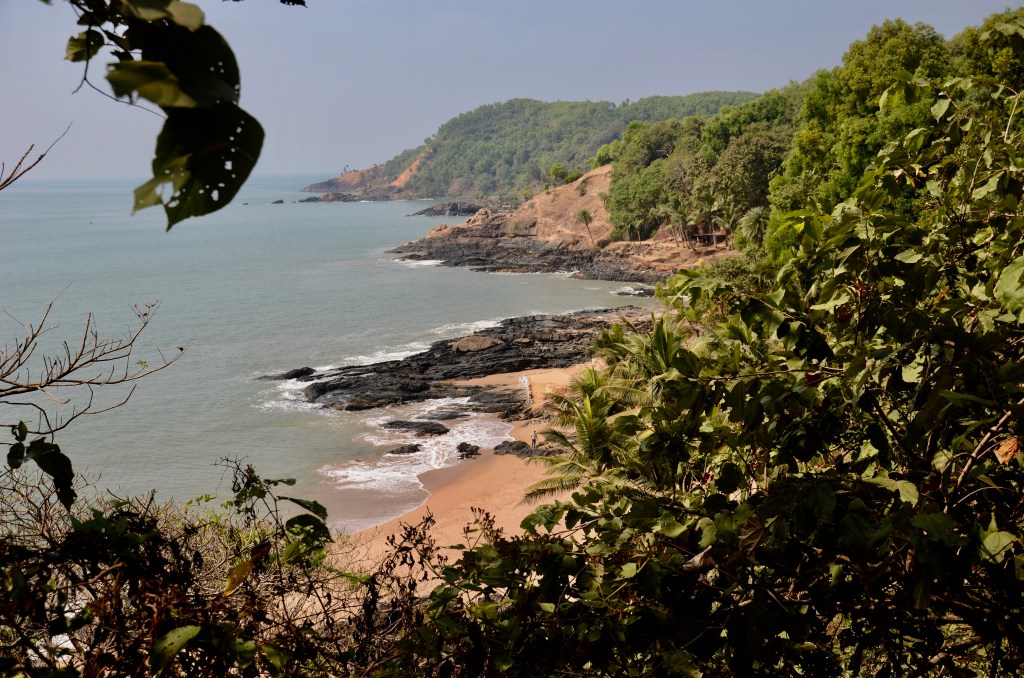
Our German friends, Marion and Jorgen, love to walk and persuaded us to visit the neighboring beach, Kudle. A pleasant walk through the jungle. The beach is picturesque and reminded Gerard of Greece in the late ’60s.

A few days later, we were enticed to take a more adventurous hike to Half Moon Beach and beyond. It was more strenuous but a beautiful walk through the jungle. Half Moon Beach is only accessible by foot, keeping it an unspoiled and secluded cove. Hot and sweaty we dove immediately in the water, followed by chai at a single chai shop.

Moving on to the second destination, Paradise Beach, was nothing short of treacherous. Climbing over the jagged rocks along the water’s edge made Gerard nervous. I focused on where I placed each foot, I made it without incident. Good for the attention! Paradise Beach did not live up to its name – a scruffy beach with coarse sand, a hangout of modern-day, young hippies. Exhausted from our rock climbing we collapsed on the sand and were soon joined by stray dogs.

The long walk was not finished; we still had to get to the neighboring town through more jungle and rice paddies to catch the next bus to Gorkana. On the ride back, Marion asked, if we had known what the route had in store, would we have agreed to come. Gerard admitted he wouldn’t have minded missing the climb over the rocks to Paradise Beach, but loved Half Moon Beach.

After such a long and treacherous hike we should have known better, but we agreed to hike with them again, down to the end of the beach and take a bus back.

For the first time since we arrived in Gokarna, the sun was hidden behind clouds. The few beach huts and restaurants dwindled until all we could see at the edge of the beach was palm trees and tropical undergrowth. Passing fishermen preparing their boats, we suddenly came across a beautiful young Indian bride being photographed. No sign of the groom!

The beach was a good 6 km long and then we had to weave our way through lanes and beside fields to the bus stop – another couple of km.

A week ago, our Swiss friend, ‘six meter ‘ Peter and his Polish wife, arrived from Goa to visit us for three days. Peter is a professional violinist and has spent the winters in a rented house in Agonda for many years, practicing most of the day and performing at night gigs up and down the coast of Goa. He decided not to bring his violin to Gokarna but is clearly lost without it. At breakfast, his restless fingers repetitively drum the table. We’ll see him again in August when he attends a summer course at Berkeley.

A couple from Australia that we met in Darjeeling seven years ago are back in India, traveling for a year. Last night, they caught up with us here in Gokarna before we move on. We hope to see them again in the mountains.

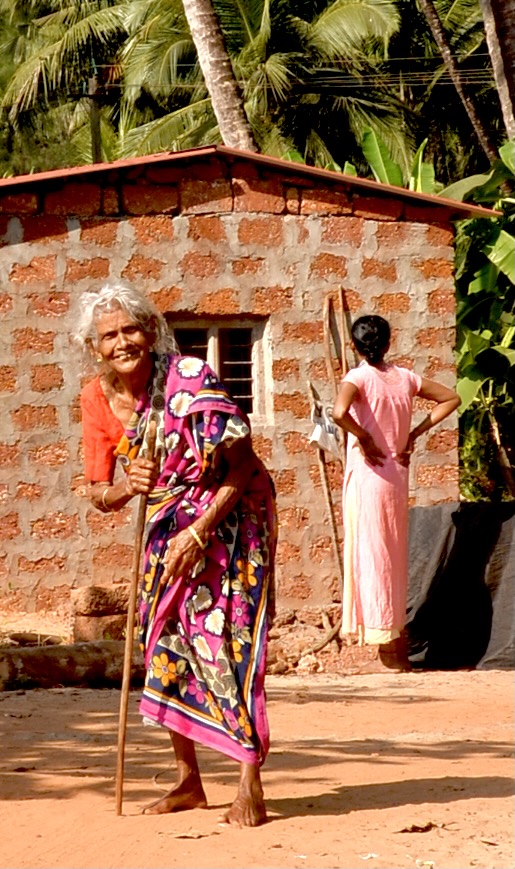
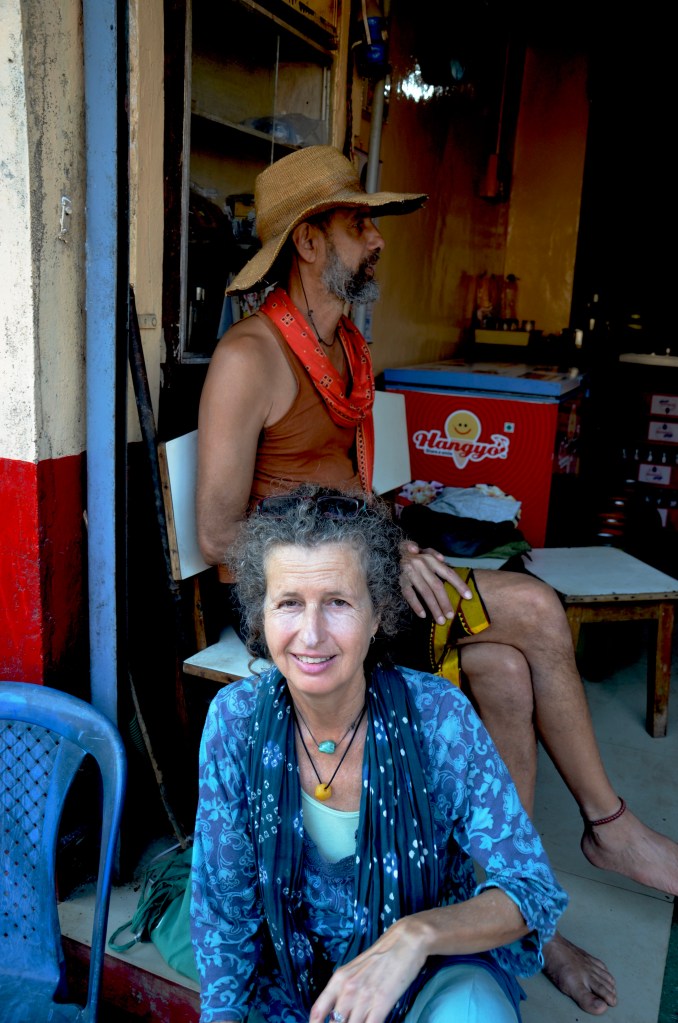
One of the many things we find attractive about Gokarna is, there’s a significant older population here. Generally, they are people who’ve been traveling for decades, so we have a lot in common. We can spend too much time reminiscing what the world was like back in the ’60s, but it’s still more interesting than talking about Trump and Modi. The oldest we’ve met is an 86 year old woman from Scotland who is staying on the ground floor of our guesthouse. She’s beautiful and walks to the beach each day with a stick. Young and old, there’s always interesting people to meet: a young Frenchman using only analog camera equipment; a young girl who illustrates her own postcards and on hearing that I was from Totnes in Devon, leapt up and hugged me (her family live there); and Bernard from Geneva who likes Miles Davis!
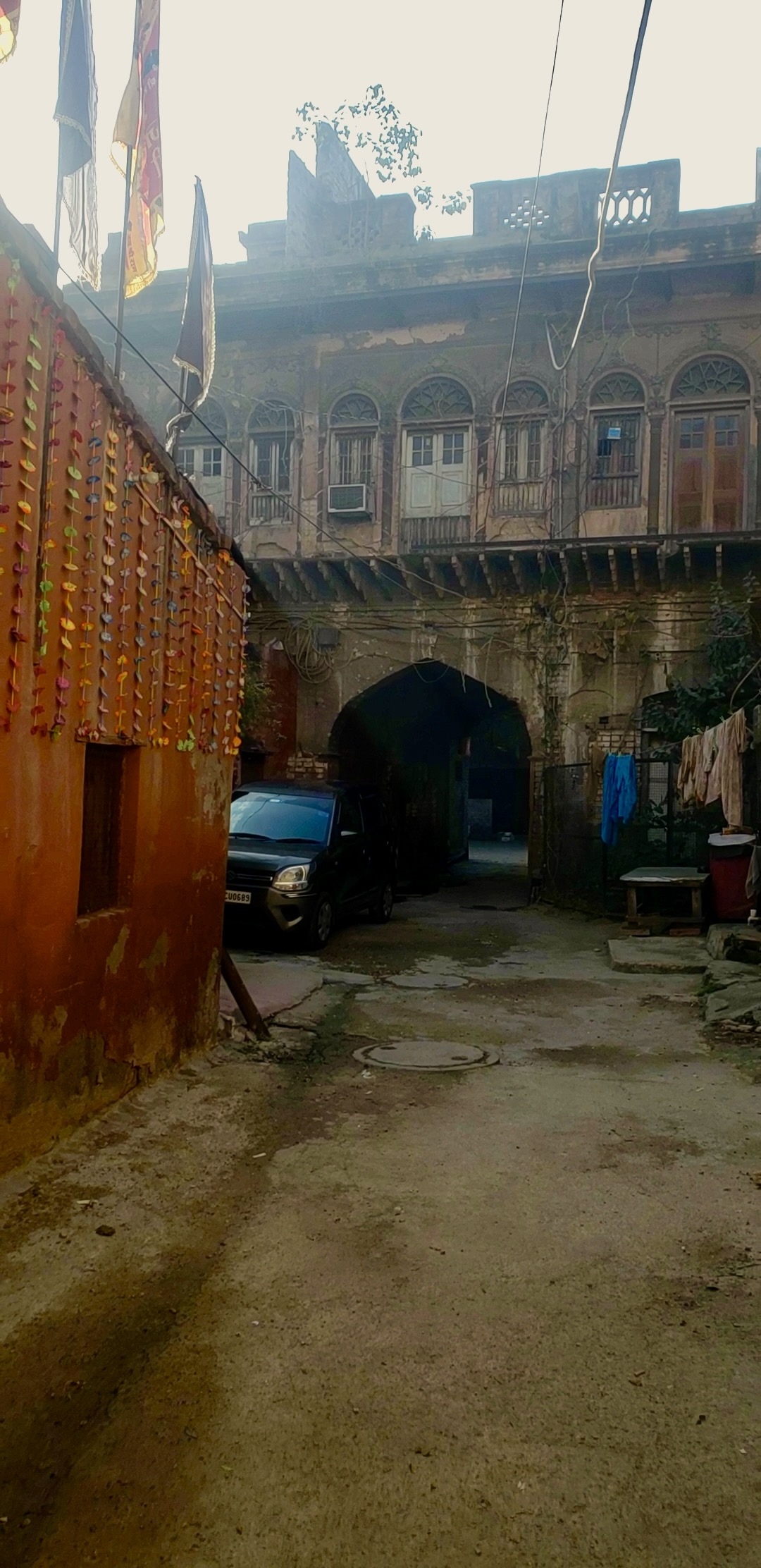
As mentioned before, Gokarna is a temple town. This weekend is one of many Hindu festivals. Which one? Who could keep track? The town is swarming with men wearing white cotton lungis and carrying offerings to the temple. One night leading up to the festival there was chanting, first by women, then by men, all night long. The din vibrates in my head. making hearing even harder. But if it wasn’t for the temples, the town would be overrun by beachgoers.

On the beach in Karnataka

For nine years, Agonda in Goa was my beach destination. I loved it and even when the experience began to sour, I denied the undesirable changes and clung to what remained positive (the beach and the friends we’d made there). I don’t always know when to let go.

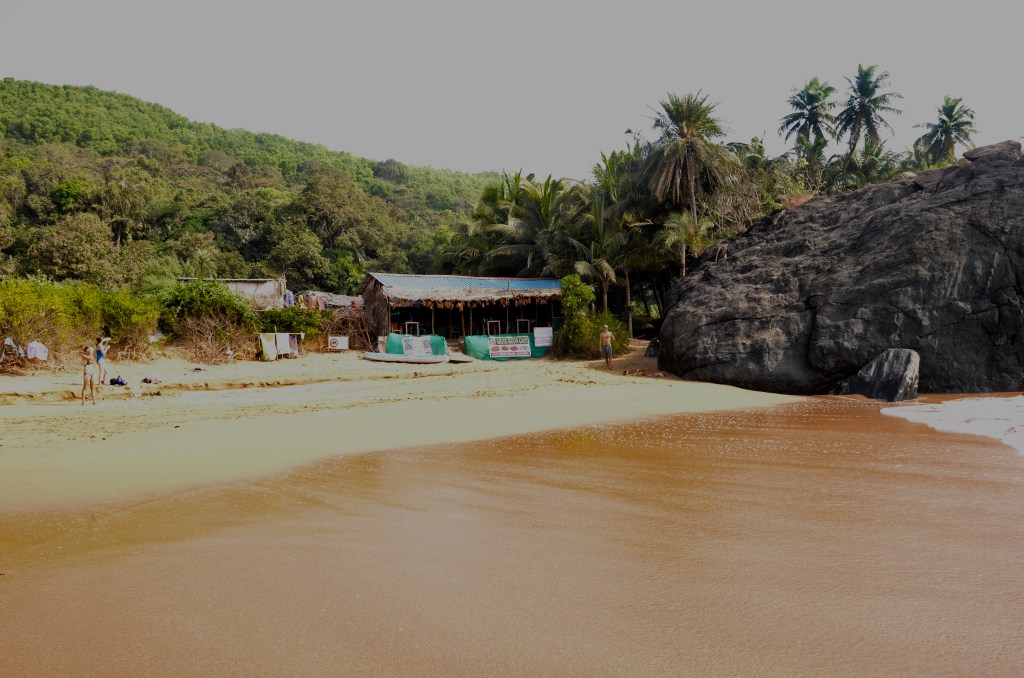
But now, we’ve found another beach with a long stretch of fine sand and clear water. The big plus for us is that Gokarna is not a tourist destination in the Goa style. There are the regulars that have been coming here for years, older hippie types, and of course, there’s the young Russians. They’re not looking for disco bars and karaoke. The other group of tourists are young Indians who flock here on weekends and don’t venture far up the beach. Huts and small restaurants border the sea front but don’t overwhelm it.

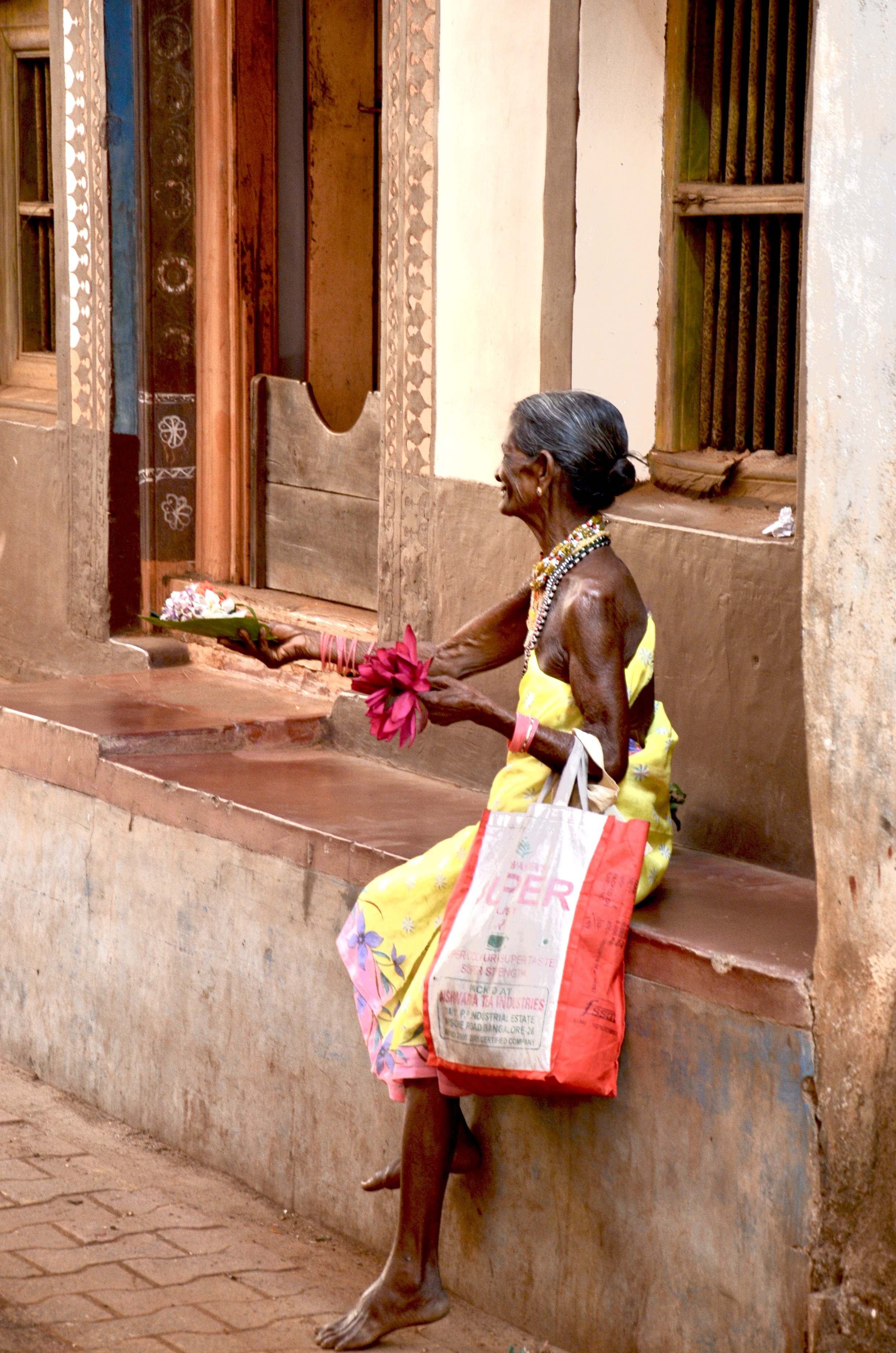
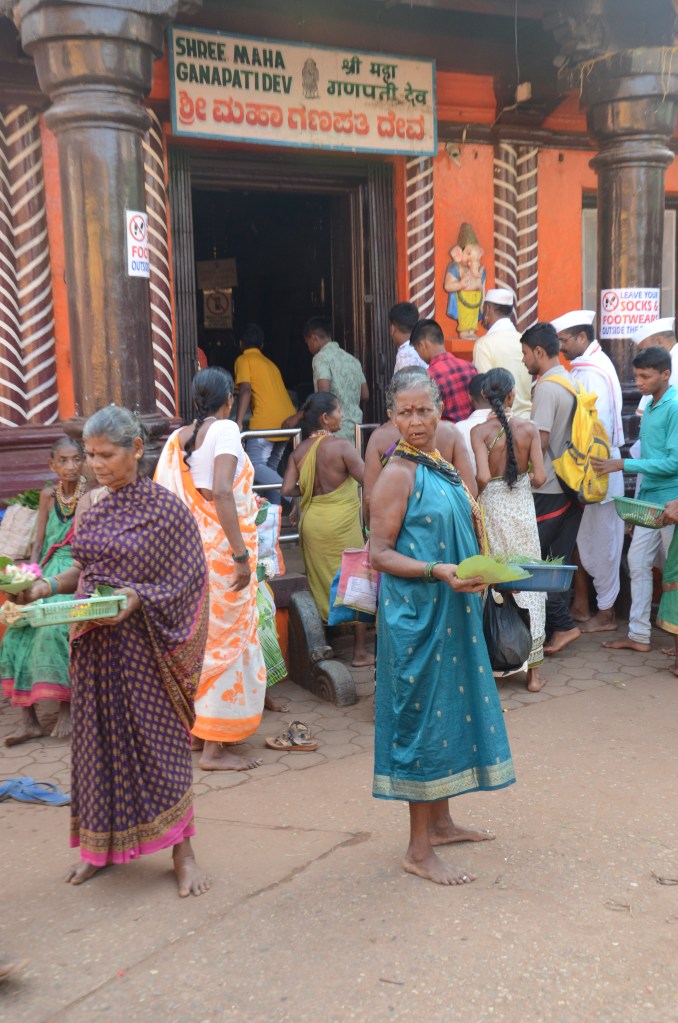
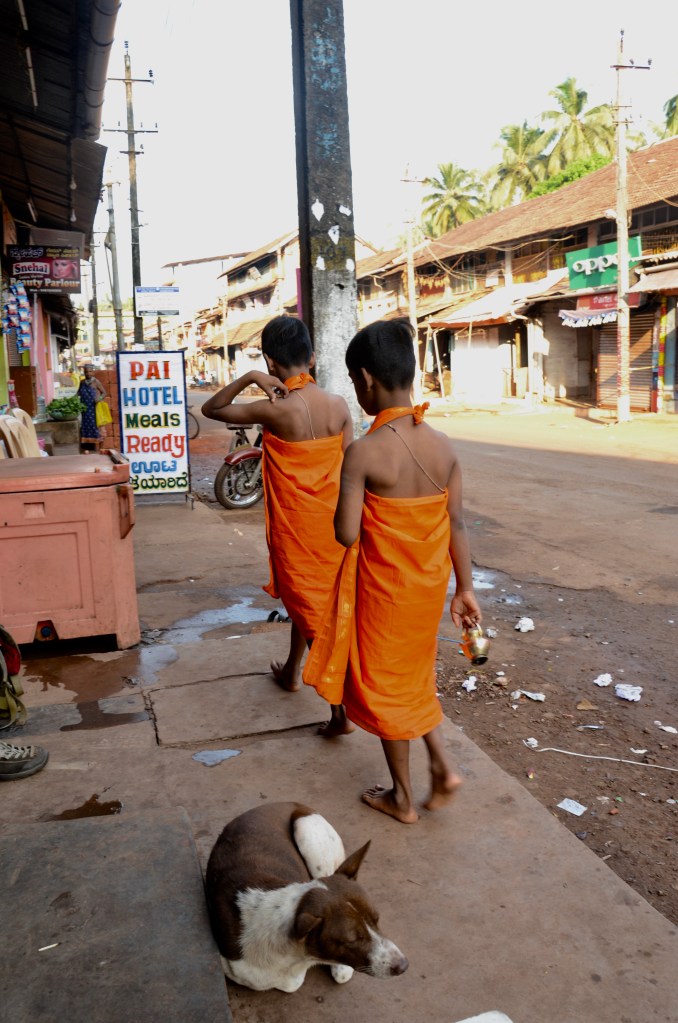
Quintessentially South Indian, Gokarna is a temple town, where pilgrims visit regularly. At the temple entrance, local women sell flowers for offerings.

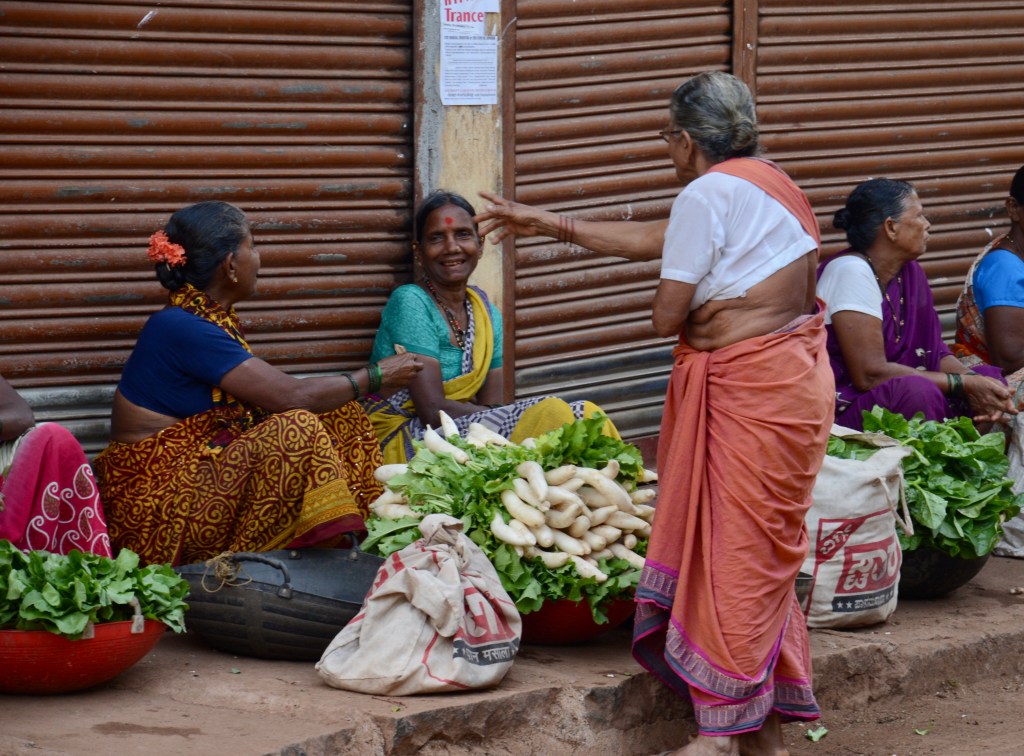
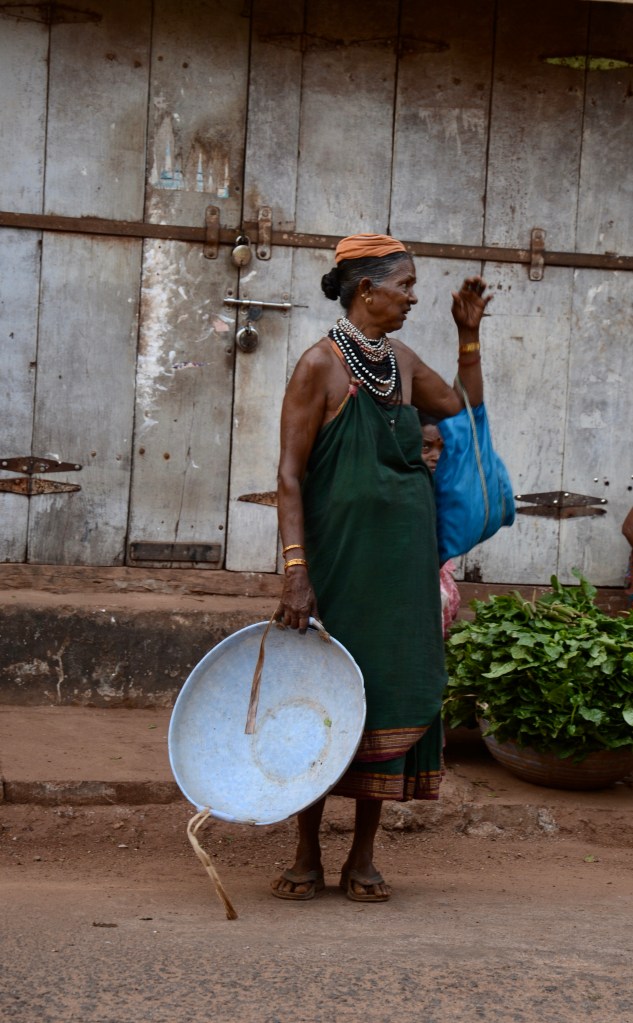
Our guest house is at the upper end of the main street, where women sell vegetables in the early morning.

It can take twenty minutes to walk through the back lanes and fields but we don’t mind. It’s a good room, comfortable and colorfully painted, and stays cool. It also has a balcony among tall palm trees, just wide enough for my yoga practice (although the lure of the beach often outweighs yoga.)

By chance, I picked up a book left in the guesthouse, called Finding Yourself in the Kitchen, written by an American Buddhist nun. She encourages you to use the kitchen to practice mindfulness and reality acceptance. Right now, I’m enjoying being out of the kitchen, but I file it away to practice when I return. She writes with a levity and lack of self righteousness that encourages me to read what she has to say.

Friends, Marina and Rajiv

We’ve already met up with two couples we first befriended a few years ago in the foothills of the Himalayas. Most mornings we join them for breakfast. Another friend, Oliver, a Belgian living in Devon, England is our senior and has been coming to India for many years. Also an artist, specializing in finely detailed pen and ink drawings. He has not bothered to join the digital revolution not having a cell phone or a computer. When we are back in Boston, he sends us beautiful handwritten letters. It’s amazing that he gets around India without being online.

One morning we met an interesting fellow who was born in Auroville, the community built on the philosophy of Sri Aurobindo in Pondicherry. He left when he was seven, and after forty years, he’s now decided to move back. Over numerous cups of chai, he gave us his insight of the history of Auroville and the community today. We are particularly interested in his story because two good friends of ours now live there. He admitted that Auroville is turning into a retirement community. I was frustrated to miss out on most of what he said, but Gerard filled me in afterward. Still struggling with my hearing loss in crowded restaurants where ceiling fans, clattering dishes and echoing conversation are norms, but I’m still glad to be here.
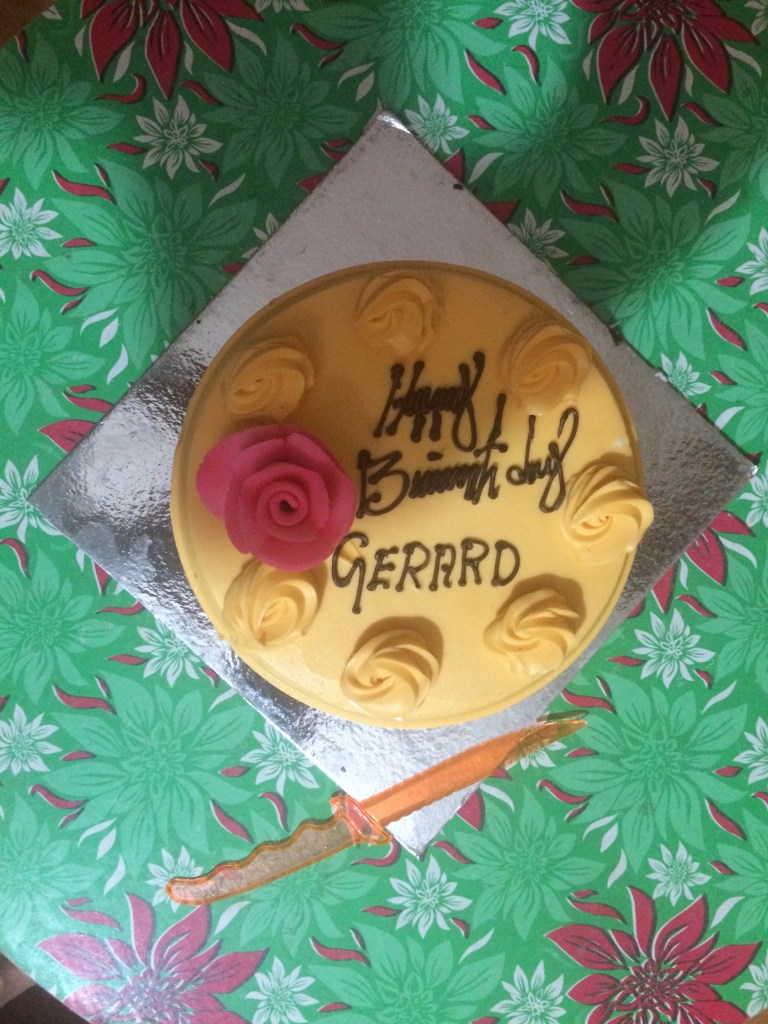
Gerard had a surprise yesterday. The landlady met him on the stair with a severe look. What have I done now? Then her face broke into a broad smile and she said, Happy Birthday! Later over morning chai I couldn’t help telling our friends it was his birthday, and more well wishes.
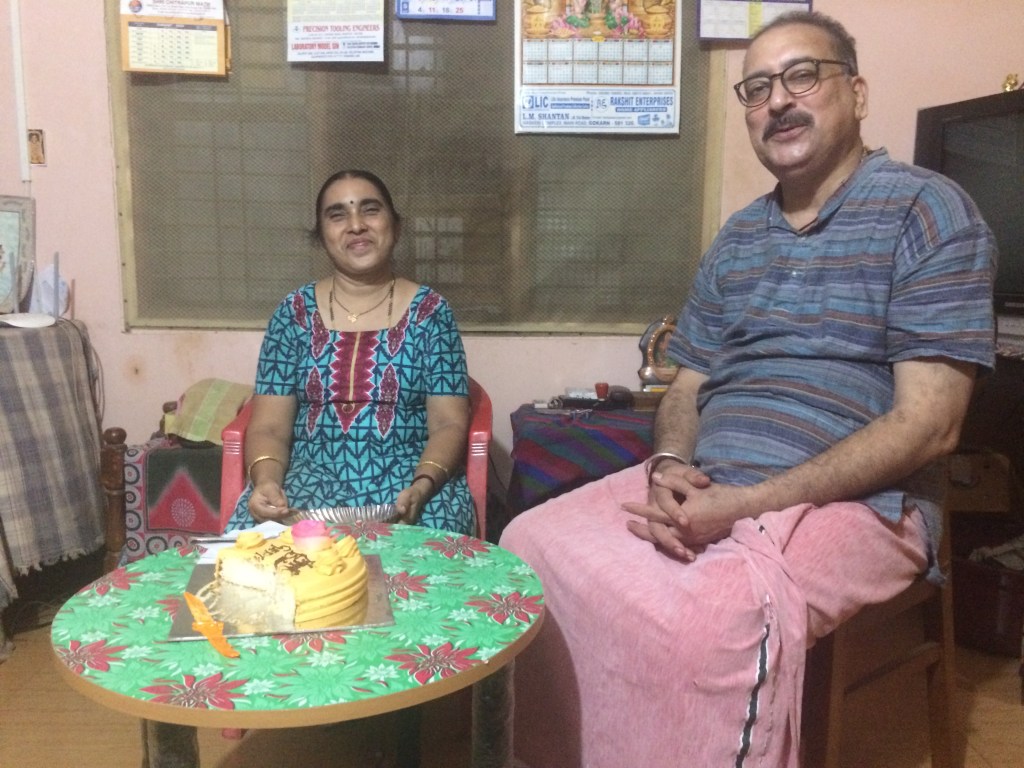
In the evening, as we were about to leave for dinner, the landlady presented Gerard with eggless birthday cake.

Our landlady, Anand, and her husband

We sat with her husband and ate a slice. Later, after masala dosas for dinner, our friends treated Gerard to large scoops of rainbow colored ice cream. Not a bad way to celebrate 73. As Gerard has said, in spite of Modi/Trump/Iran/etc, life can be good.

Why India….yet again?

This year we had to renew our ten year visas and, like most things Indian, dealing with the Embassy’s service bureau ‘Cocks and Kings’, was not straight forward. Discussing the frustrating process of completing the online application with a friend who will join us this year, she said, “If you can’t navigate Cocks and Kings’ lack of a straight line from A to B, then it’s better that you don’t go at all.”

Just before we left, a friend from Boston attended her daughter’s wedding in India. On her return, she asked us how we could tolerate all the dirt, crowds and noise. Gerard gave an answer but didn’t give it a lot of thought. On our flight over, he tried to go into it more deeply, asking my thoughts. We agreed: the country is overcrowded, the air can be terribly polluted and trash is a constant problem, but still we’re drawn here.

A couple of days later in India, we passed a woman sitting on her bed looking out of the doorway from her very basic adobe, tiled-roof house. She gave us a warm smile as we passed. Not knowing what was behind the smile, we felt her readiness to greet strangers so warmly was due to a lack of fear. The less one has that can be stolen, the less there is to fear? Her smiling face brought into focus some of the less obvious reasons why we are still coming back to India.

Gerard commented, even though the subcontinent is racing headlong toward modernity, the old ways can still be seen and inspire, if one looks for them.”

Do we want to change places with the woman? Not really. Yet, her smile helps to explain what has been lost in our modern society and makes us want to reach back and catch hold of what might be worth saving of those old ways. Certainly, the big cities of India have become not so different from their western counterparts. But out in the country, along our way, we can still see the old ways intact. And this is one of the reasons why we return: to witness our lost history still alive to be seen, here and there, in India.

I asked Gerard for an example of these ‘old ways’? He replied, “Certainly one is, human contact. There’s a constant interplay with people even if it’s as simple as buying a cup of chai, soap to wash clothes, or negotiating with the rickshaw driver. Whole Foods decision to install self check-out, further emphasizes the depersonalization of our Western society. With most of India carrying smartphones, means it is happening here as well. Still, there is plenty of social activity on the street, in the market and in the chai shop.”

On the plane over, I saw a short video advertising ‘Exotic India’. And of course it is — the Rajput palaces, the camel fair in Pushkar, the Taj Mahal–but for me it’s more about Endearing than Exotic.