“Yes, I remember you,” the restaurant manager in Gokarna said with a half-smile. Coming from a man who, despite Gerard’s efforts, would not engage in conversation for the whole month we were here before, this was a warm welcome.
We hadn’t given much thought to another winter here. In fact after returning from a challenging time in California, trying to hear in noisy restaurants or even groups of friends, I’d told Gerard definitively that I could not handle India again. Just a few days later, Melissa, our longtime house sitter, emailed us to say she was available this winter. That did it! We’re going! I said ,visualizing the beach in Gokarna, the ghats of Varanasi, the snow-capped mountains in HP and the friends we’d have the chance to reunite with along the way. I was determined to handle my hearing loss in India as I do in the U.S. Clearly, the benefits would outweigh the difficulties.
But I do need help to get by in chaotic India. At the airport, a frustrated customs official asked, me, Do you speak Hindi or English? Later, a young Indian tried to strike up a conversation, then realizing my predicament, assured, “You’re not missing anything,” and high-fived me. Easy for him to say, but without Gerard I don’t think I could do this on my own.
We arrived in Delhi at 2 am, Even though the airport is now no different than any other airport in the world it’s still a shock for us to walk through duty-free that is predominantly alcohol. As we predicted our hotel did not let us in despite our reservation and claim of 24-hour check in. We eventually found another where the manager woke up long enough to give us an inflated price. After inspecting the room, Gerard bargained with the sleepy manager for a reasonable rate. In the morning, I looked out the window on a large colorful umbrella with a sign saying ‘Baba Masala Tea.’ A white-haired gentleman pounded out fresh ginger and cinnamon sticks in a mortar and pestle to make the best chai in the neighborhood. Just when we need it, a chai wallah appears.

We were interested to see how India had changed in the past three years. It’s too early to know, but in the airport we couldn’t help noticing posters of Modi’s nationalistic agenda, with his ridiculous slogan: ‘1.4 billion people, one dream.’ The continuing strife between Hindus and Moslems begs the question: what is the one dream? We were surprised to see so few long term travelers like ourselves in the Pahargunj area of Delhi. Consequently, many of the shops catering to tourists have disappeared, returning Pahargunj to Indian consumers.
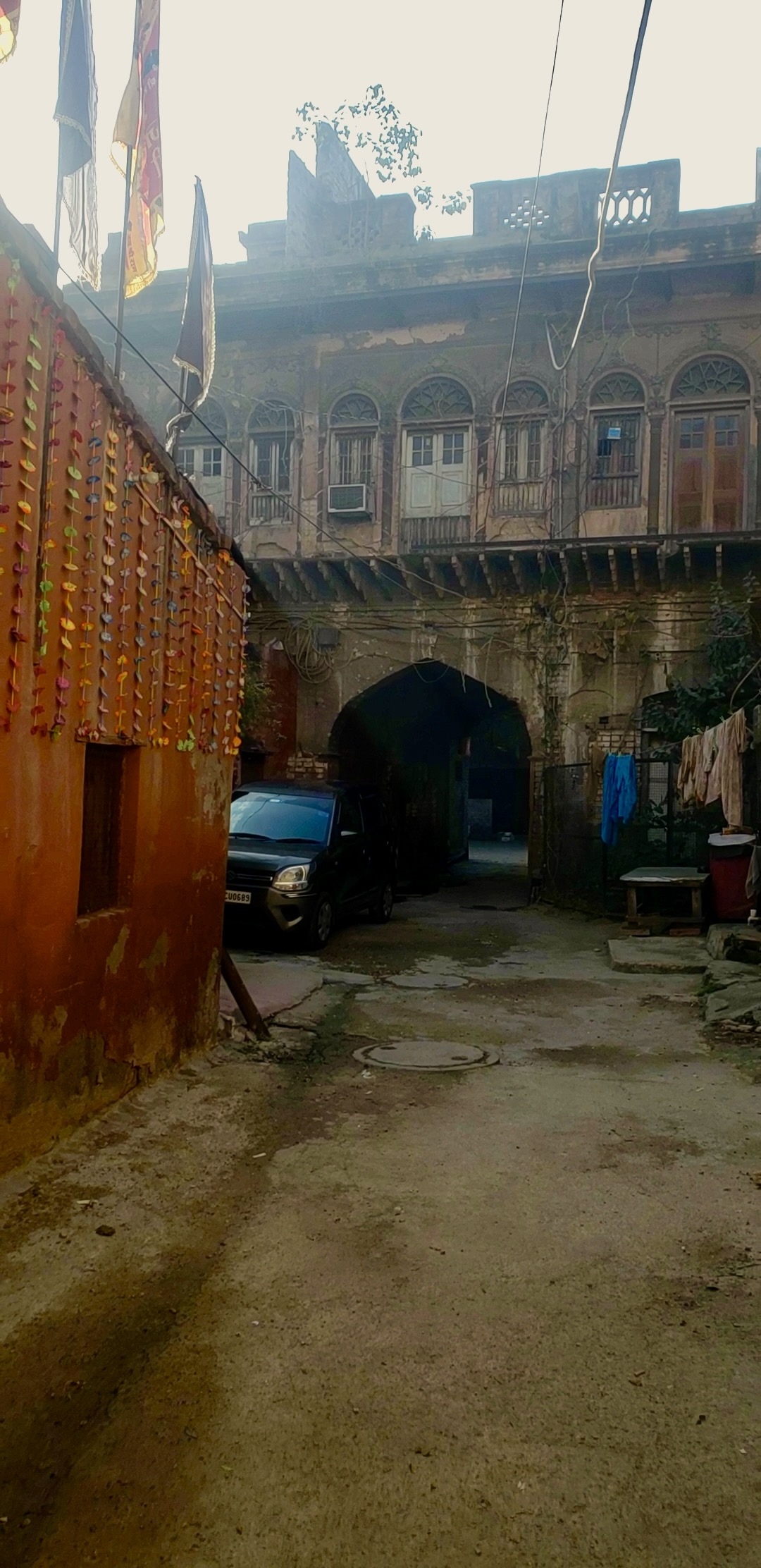
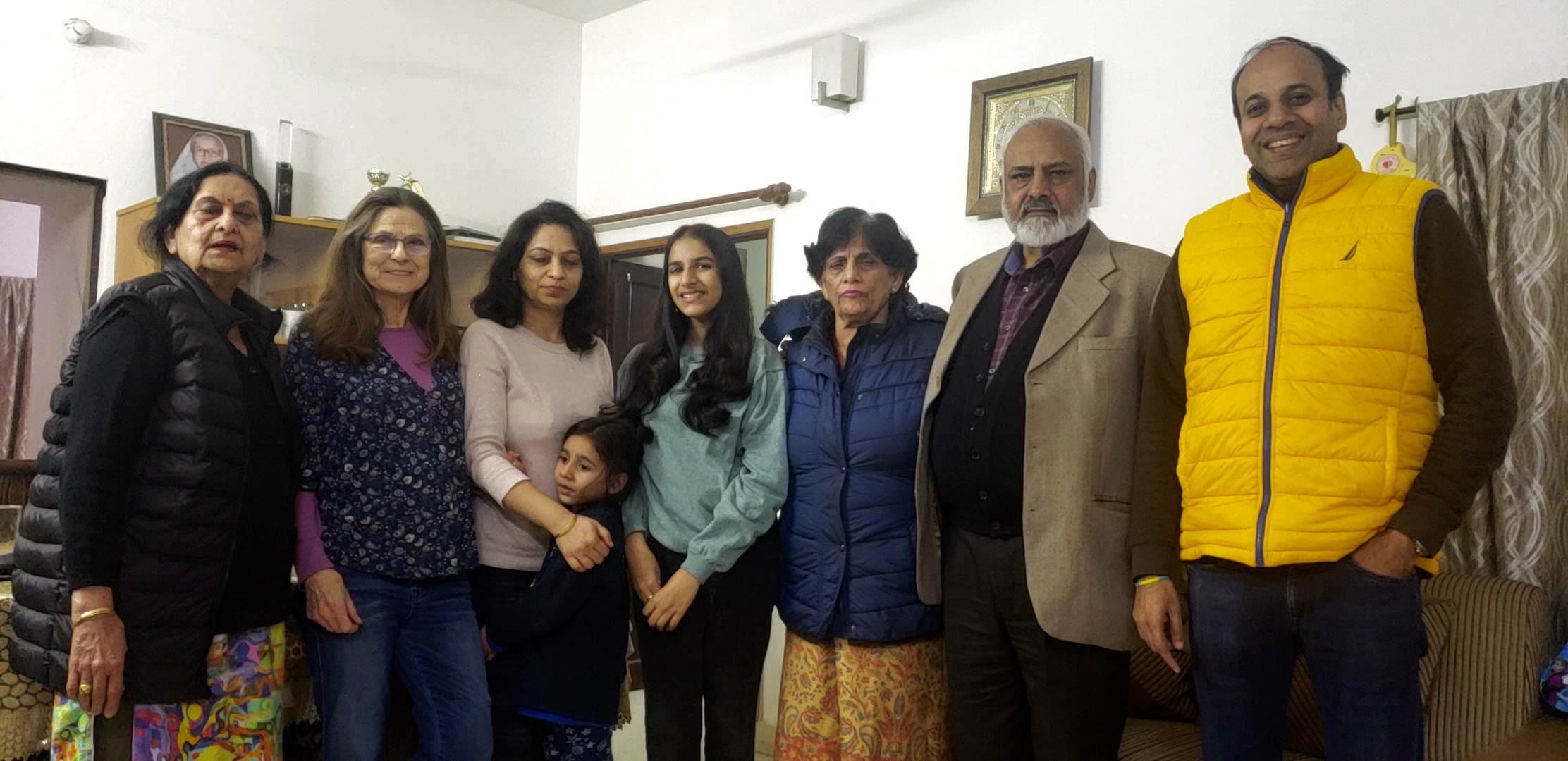
On our way to see the family in Gurgoan we were impressed by the metro, still running like clockwork and unusually clean for Delhi, unlike the buses and trains which are constantly breaking down. It was wonderful to be in their company again and we were surprised at how the children had grown. Five-year old Tanya’s cheeky personality has emerged, her English better than her Hindi, her mother says. And Simrita has grown into a gracious fourteen year old. She took me shopping in the nearby market. Sympathetic to my hearing loss, and lack of Hindi, she guided me through the process, reminiscent of how I did the same for my blind father many years ago.
The family knew it was Gerard’s birthday and Simrita wanted to bake Gerard a surprise cake. After dinner she disappeared into the kitchen and proudly emerged some time later with a freshly baked chocolate cake. Shruti stuck her knife in and said it needed more cooking, so Simrita returned to the kitchen. Soon after we heard a loud crash followed by sobbing, Simrita had turned the cake on to a glass plate and dropped it on the tiled floor. At Shruti’s insistence, she eventually appeared and placed the cake with embedded glass shards in front of Gerard, and we sang ‘happy birthday,’ before the cake was trashed.
The two-hour pre departure requirement for our domestic flight to Goa, was no overkill. The long line of passengers at check in (that would challenge anyone with claustrophobia) the interminable walk to the departure gate, and finally a bus ride to board the plane on the tarmac at least a couple of miles from the gate. Nevertheless, the plane took off on time! Gerard, with his love of trains and disdain of airports, couldn’t help mentioning how much easier it would have been to board a train and enjoy a more pleasant, if longer, journey. The following day, when our two-hour train ride to Gokarna was delayed by two hours, I had the satisfaction of pointing out the incongruity of waiting the same amount of time as the journey!
We struggled to book our room online and the internet pictures failed to meet up to reality. But after we’d moved the bed to face the window and Gerard got to work with his rag and disinfectant, the room became our home at the beach.
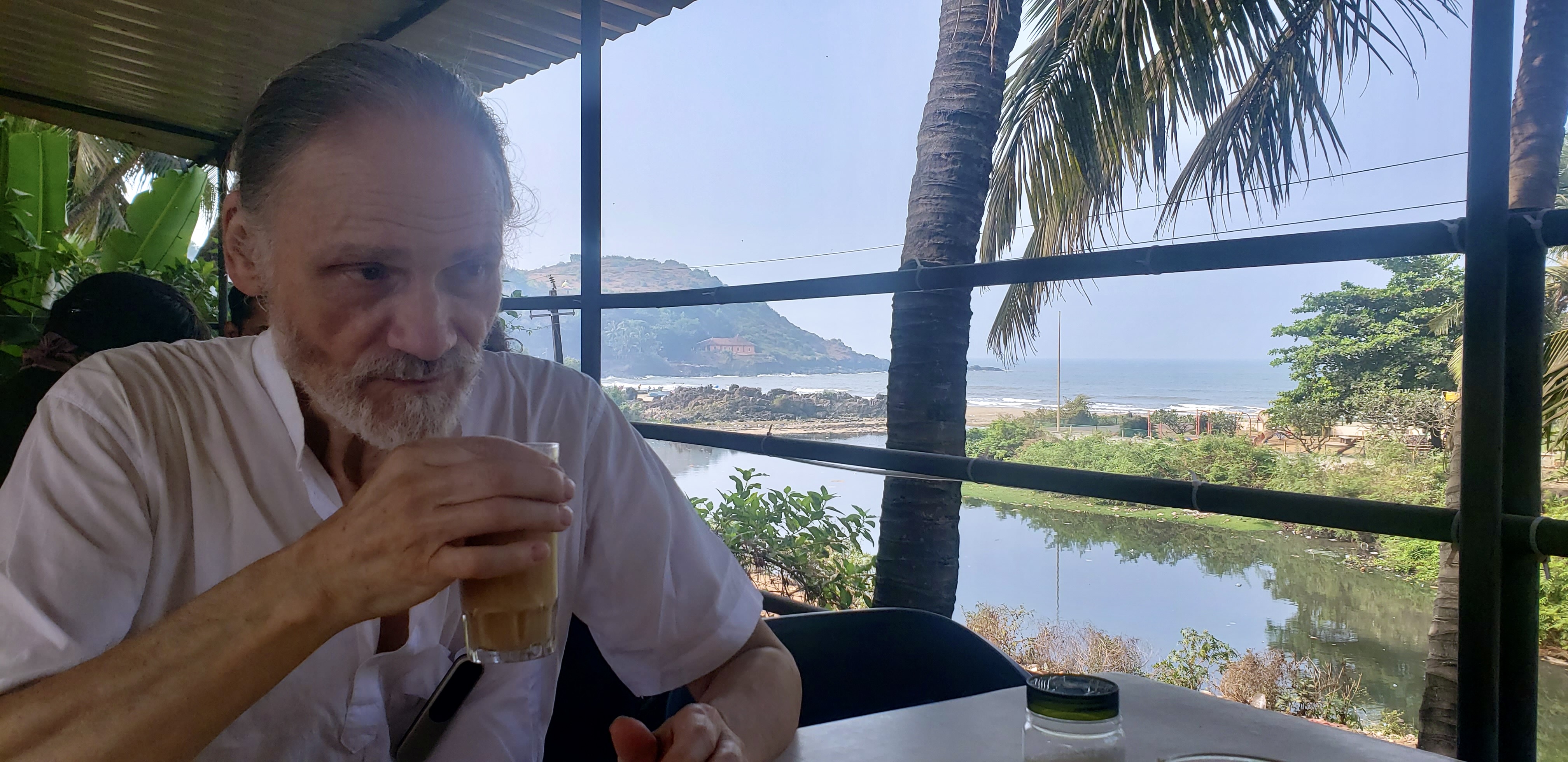
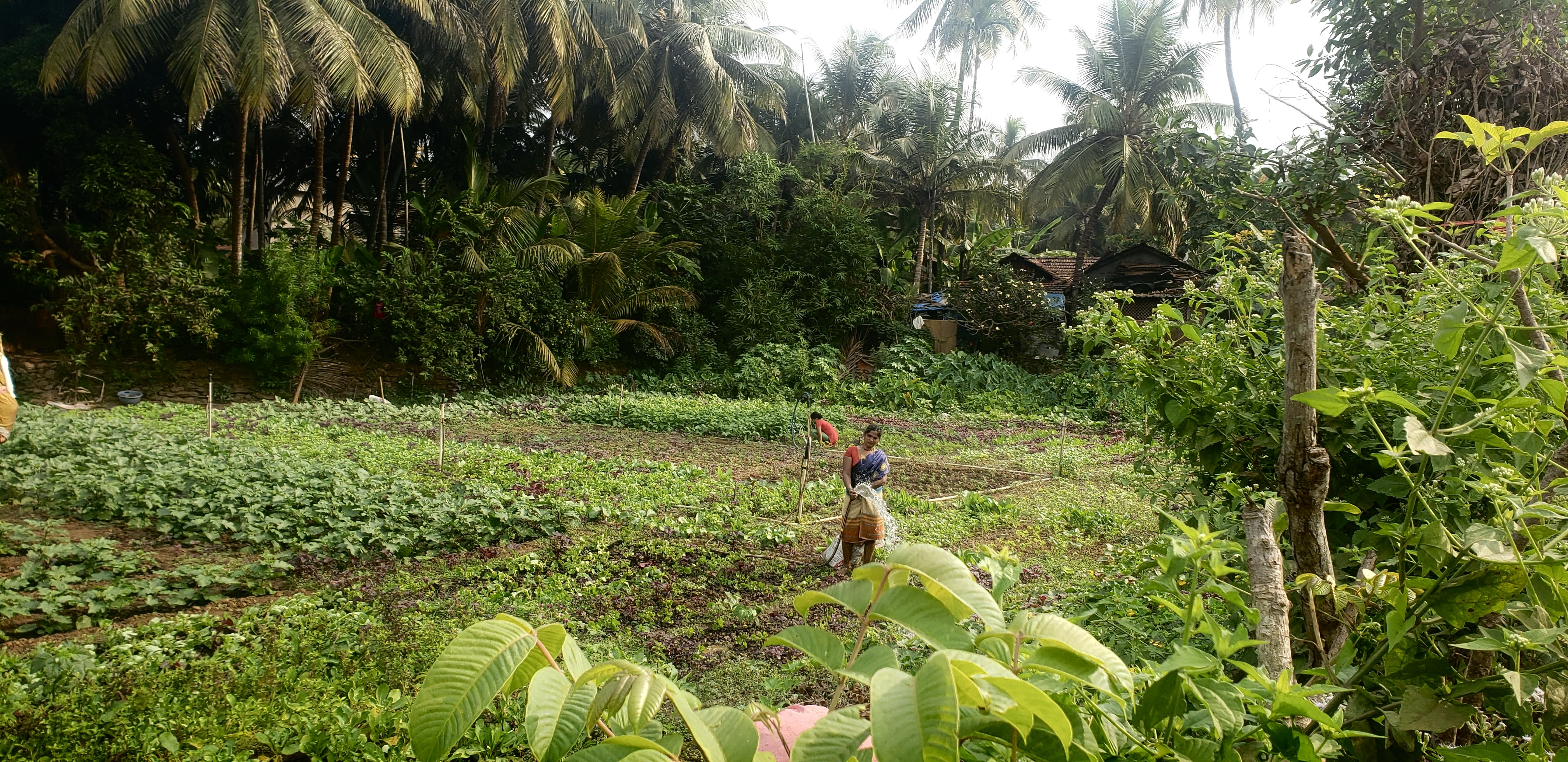
As it turned out, pre-booking paid off. Friends have told us it’s hard to find a place to stay because guesthouses are now only renting to affluent young Indians who come on the weekends. The owners can double the price and not bother to rent the rooms during the week, telling tourists like ourselves they have nothing available. Our guesthouse is only a three-minute walk from the beach, through vegetable gardens. Palm trees shelter our balcony from the heat of the day while allowing the amber glow of the late afternoon light to filter through.
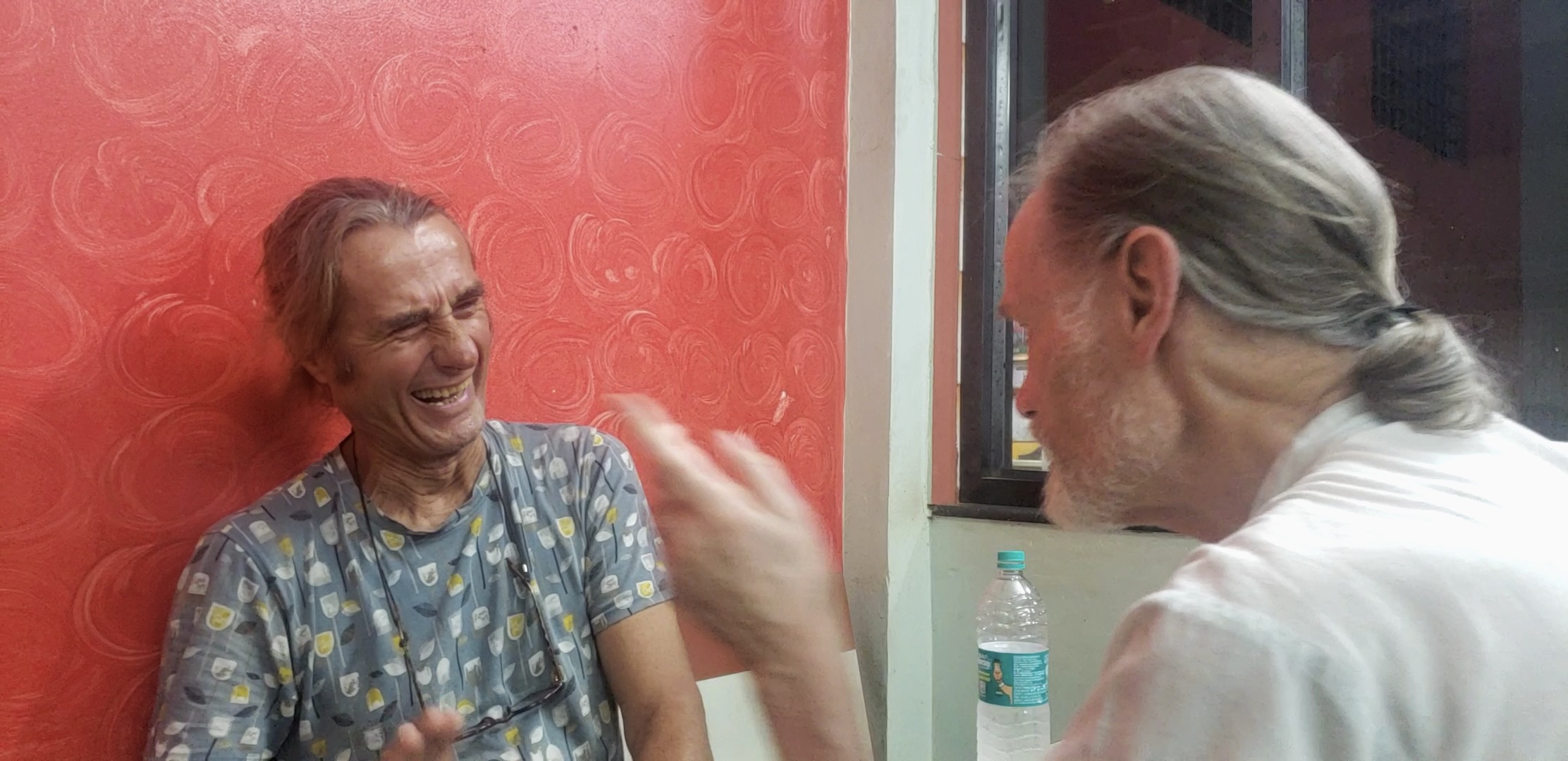
Thinking of friends who couldn’t return for health or economic reasons, or chose not to (avoiding Russians), we’re grateful to be here. On our arrival, Frederic one of our oldest Indian connections, was already waiting at our guesthouse.


 For eons Indians have dumped their trash wherever they felt like it and it posed little problem – but in the past 50 years with the arrival of plastic it’s now become a serious issue. Trash thrown into the bushes only a couple of meters behind the guesthouse has grown into mounds of plastic and an off-shore breeze picks it up and blows it on to the street and, further, toward the beach. This year we notice construction debris – broken pieces of concrete and tile thrown carelessly along the roadside. It is true that local and state governments have no conception of how to deal with the increasing amount of trash the tourist industry is creating here.

 A Small Case Across India