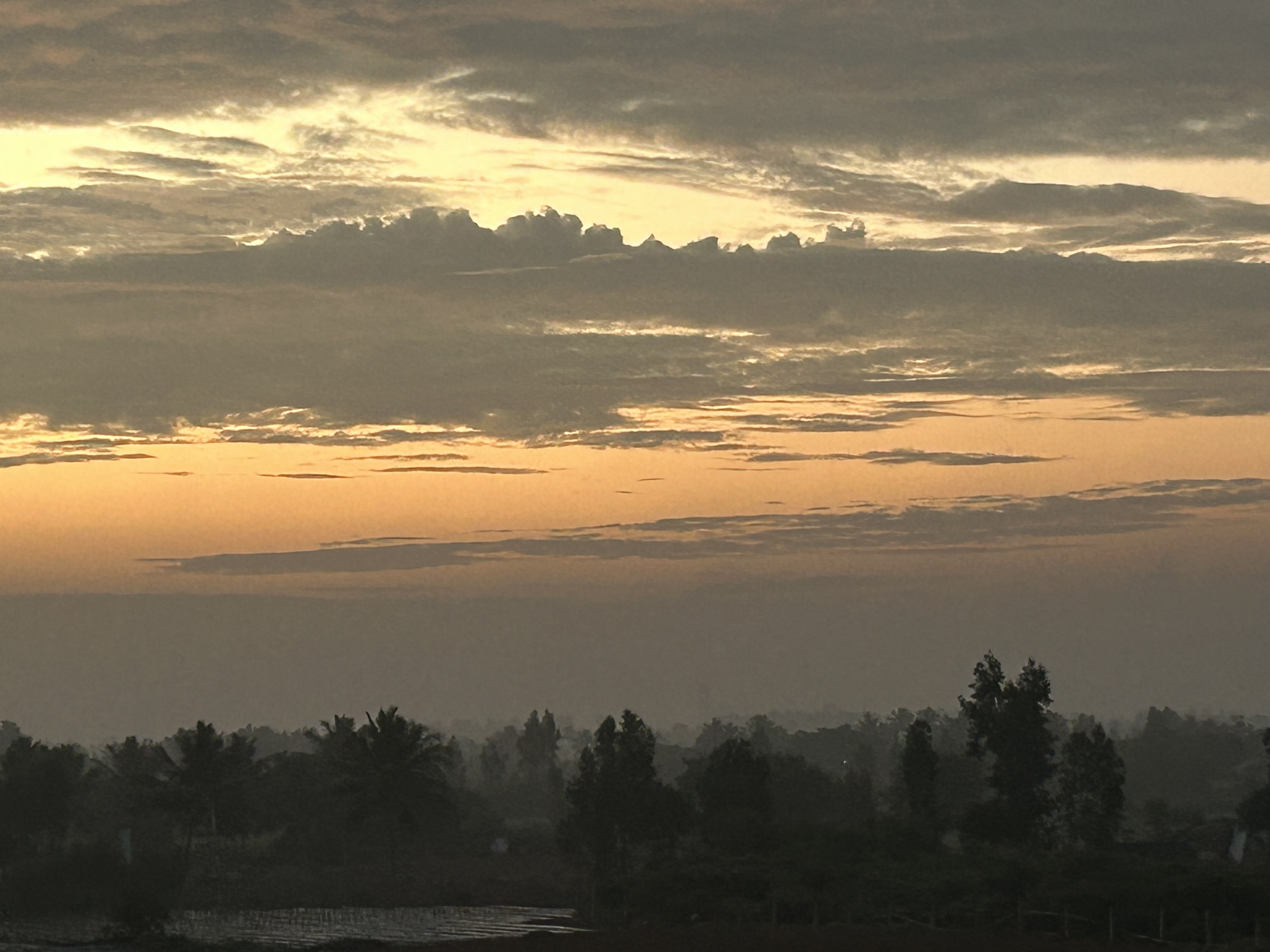
Dogs? I don’t hear any Barking Dogs!

After a rewarding ten-day meditation retreat at a small ashram in the country outside Bangalore, a taxi took us the two hour drive to Bangalore railway station where we caught an overnight train direct to Gokarna. We arrived at 7 am quite refreshed from an unusually good night’s sleep.
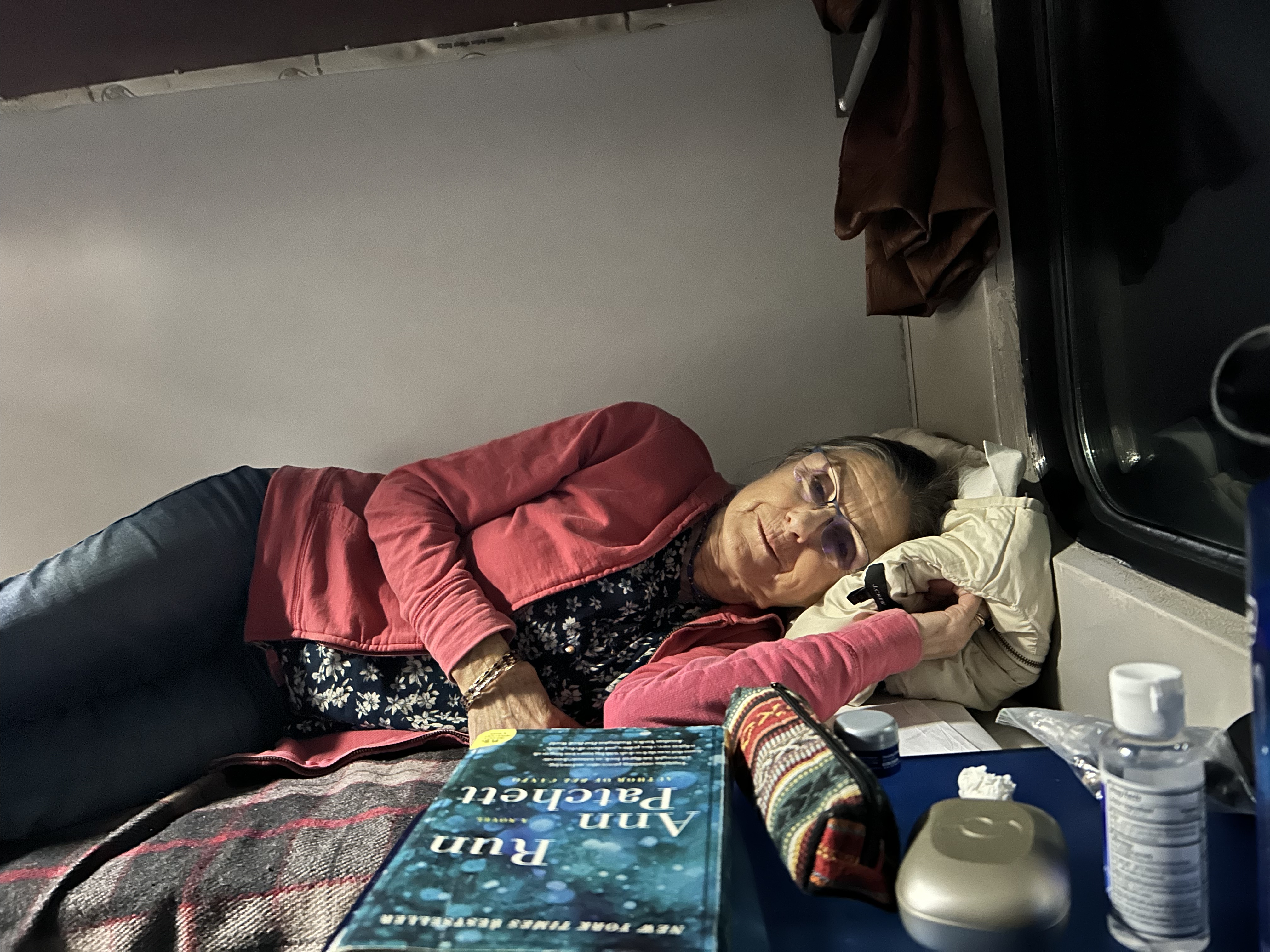
Gerard was looking forward to the train ride, his preferred mode of transportation ,and it didn’t let him down. The train left on time, and even I was impressed by the cleanliness and comfort of the Panchaganga Express. As usual our 2AC compartment was chilly but quiet: no snoring sleepers or wailing children. Marina, our English friend and already in Gokarna, had messaged us saying she thought her partner’s sister, Anita, was on our train and included a photo. Sure enough, we woke to Anita peering around the compartment curtain, and though we hadn’t met before she was easy to recognize from her photo. Anita’s an interesting woman, part Indian/part English, living in CA and married to an Algerian. She speaks seven languages fluently and has been a United Airline hostess for many years. The taxi ride to our guesthouse flew by as we got to know each other. And I was very happy to see Marina, our London friend, again.
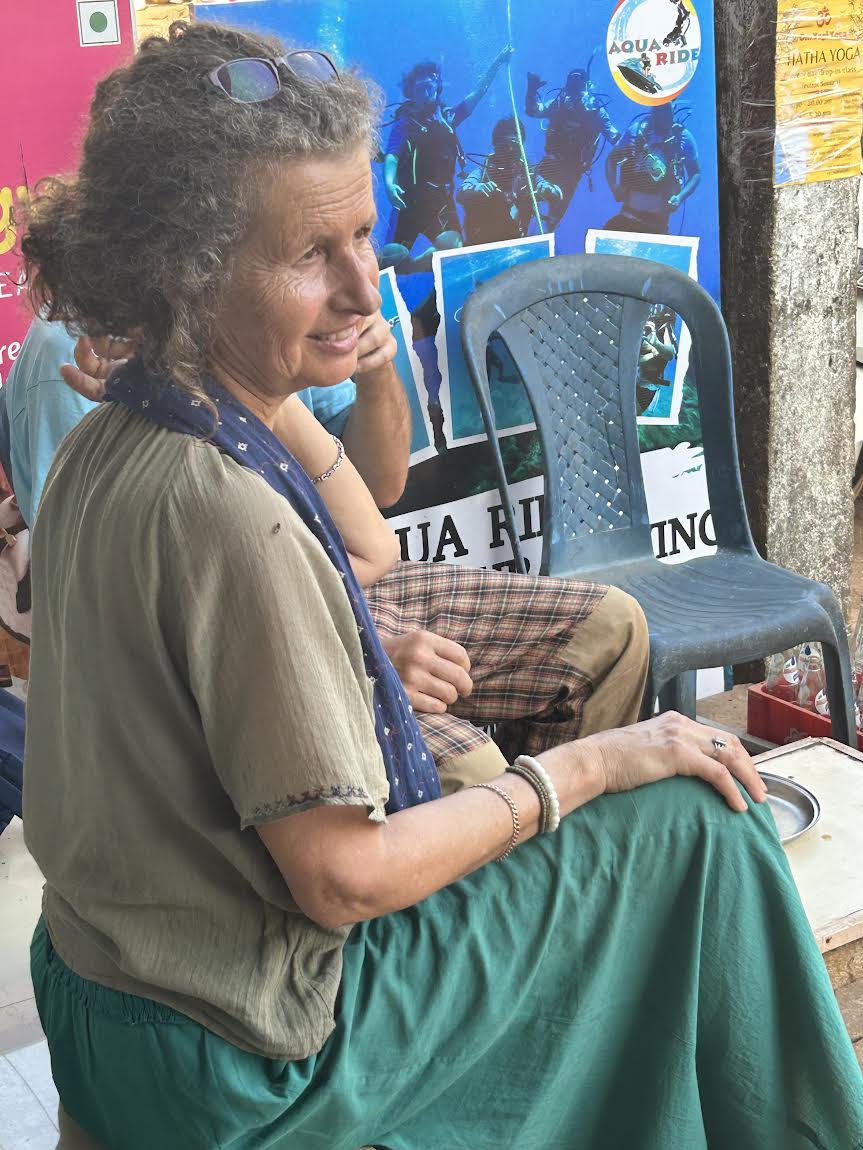
We reserved the same room as last year. The guest house has only a few patrons and two are longterm regulars. An interesting addition is an Indian family with two small children who has set up housekeeping in a room at the top of the stairs. The father is a masseuse who we pass on the way to the beach. “Oil massage today, Madam?”

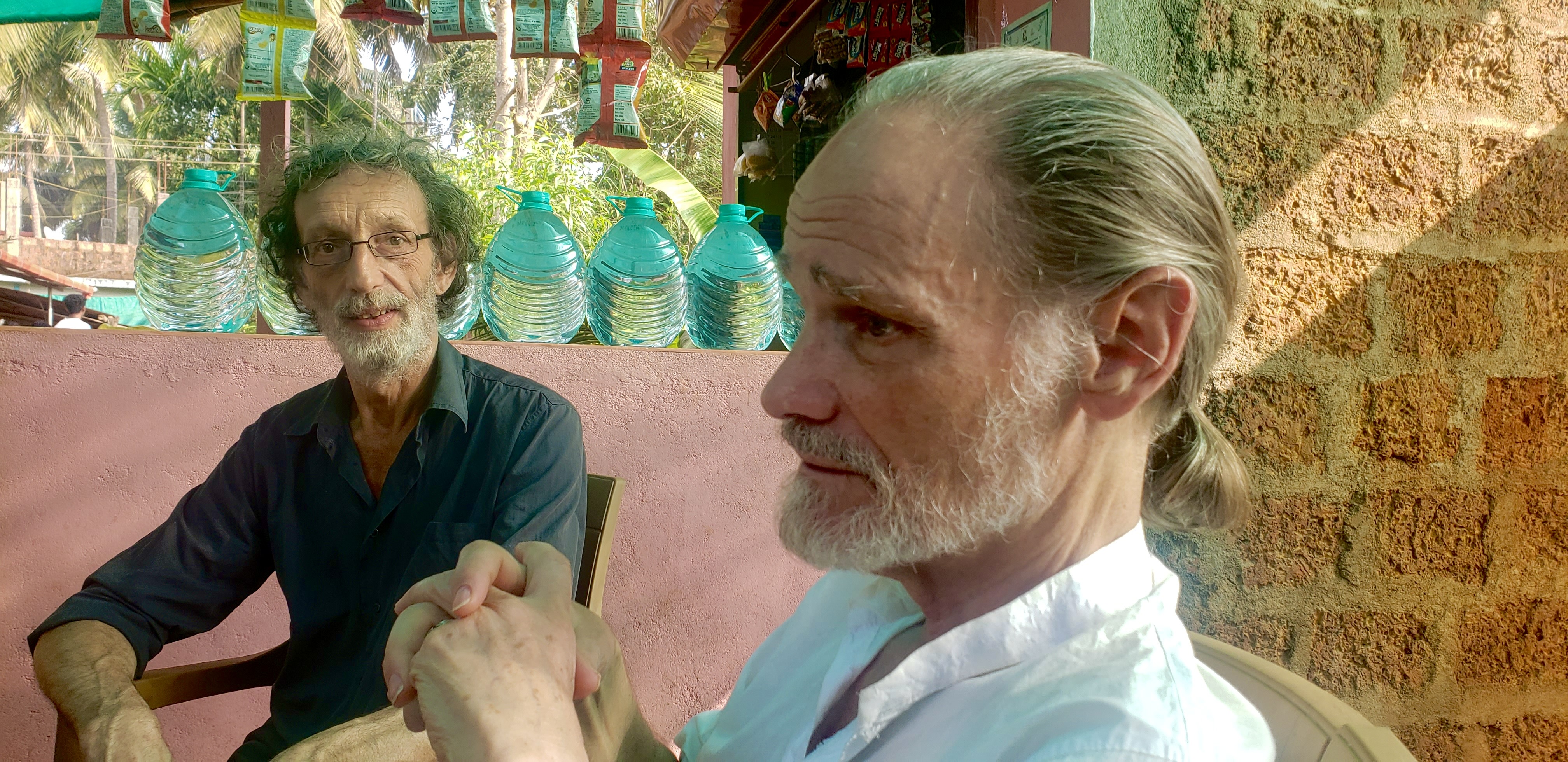
Dropping of our cases, we went straight to our breakfast stall down the road. The young owner greeted us warmly and immediately served up chai and idli. His sister makes the best samba we’ve ever had (a spicy vegetable stew with chickpeas) and coconut chutney eaten with steamed rice patties. An idli plate is a substantial South Indian breakfast. Since opening last year, the boy’s business has grown and he’s able to make enough to shut up shop at 10 am and pends the rest of the day preparing food for the following day. Unfortunately, his small premise holds only a couple of tables, barely enough to support the influx of customers. This gives us the opportunity to meet a variety of people. Today a portly Swedish gentleman shared our table. He used to be a vegetarian chef, now retired. He says Sweden is perhaps 20% vegetarian. Living almost in the center of Stockholm, he has his housing paid for by the government because he has no bank account. Of the $900 he gets in social security each month he manages to save $300. In Sweden, it doesn’t pay to save for retirement!

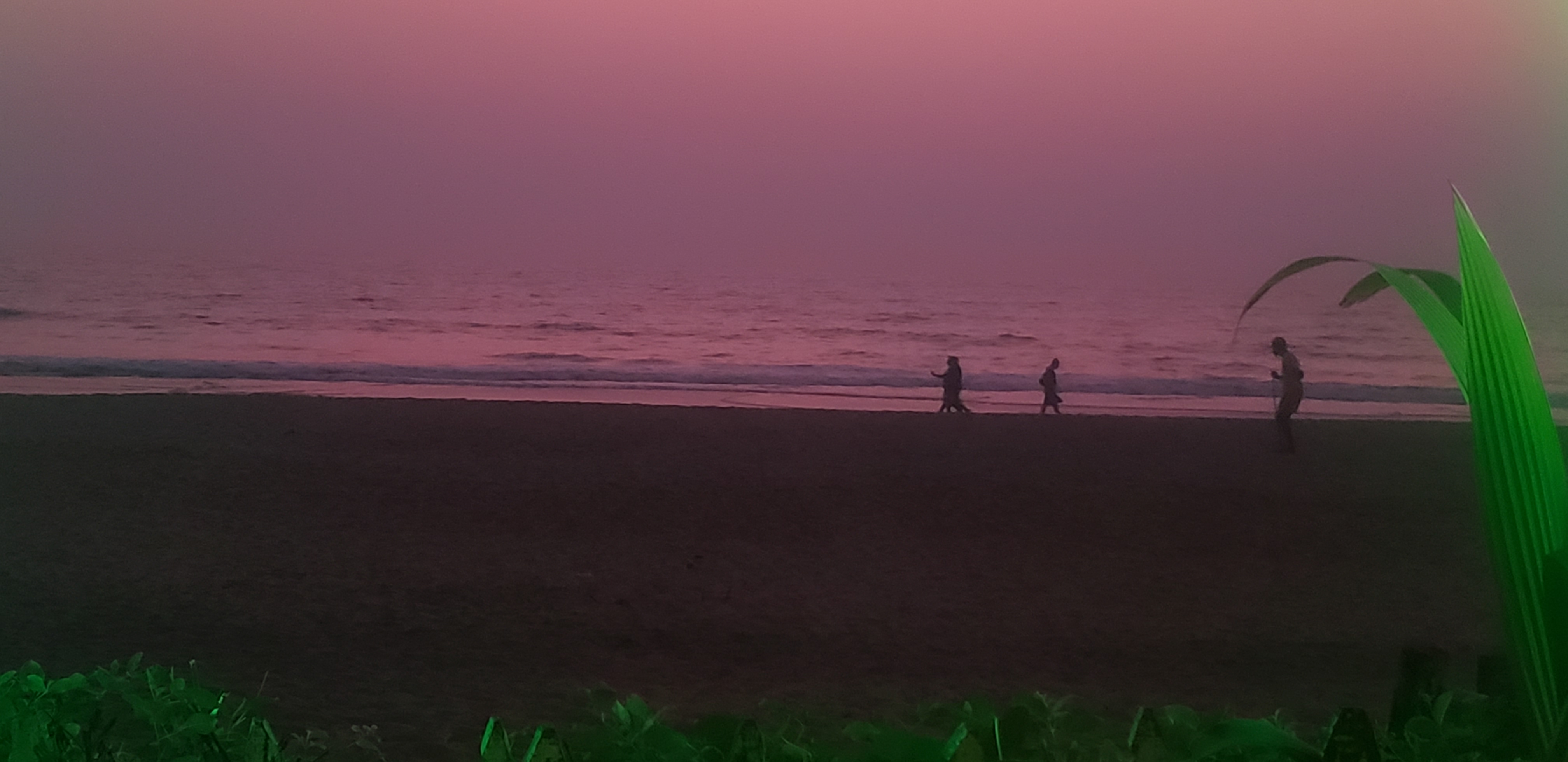
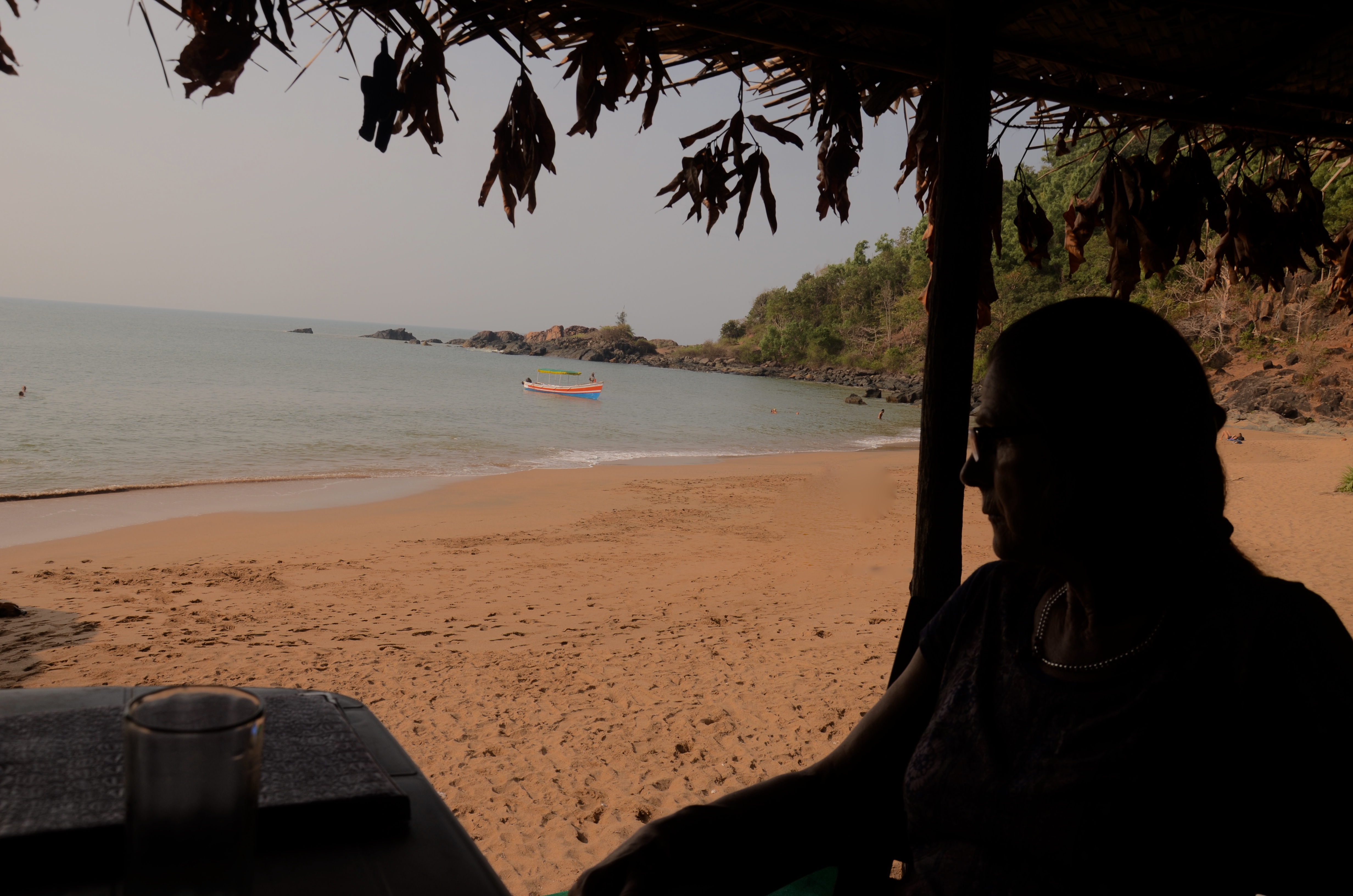
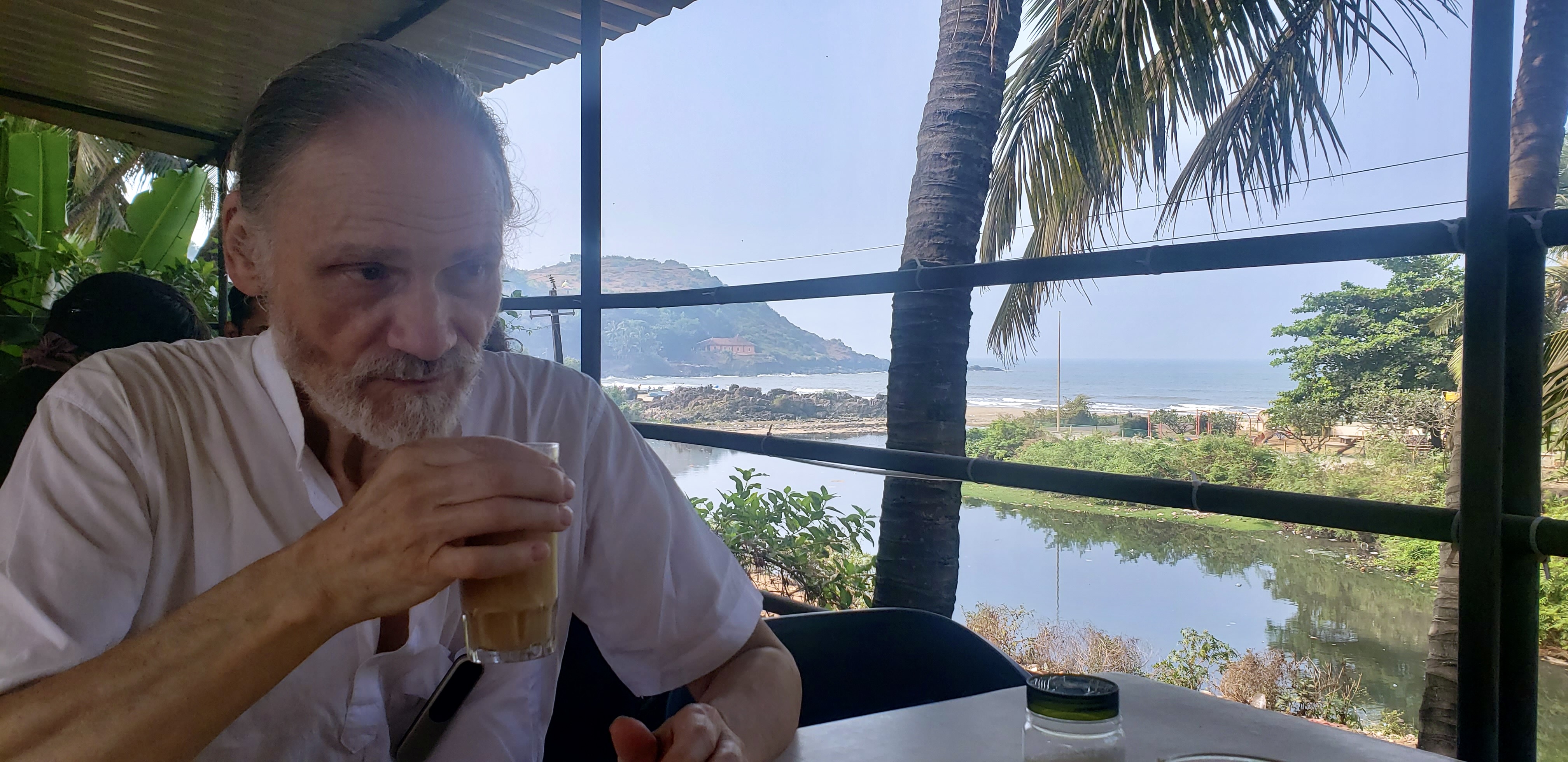
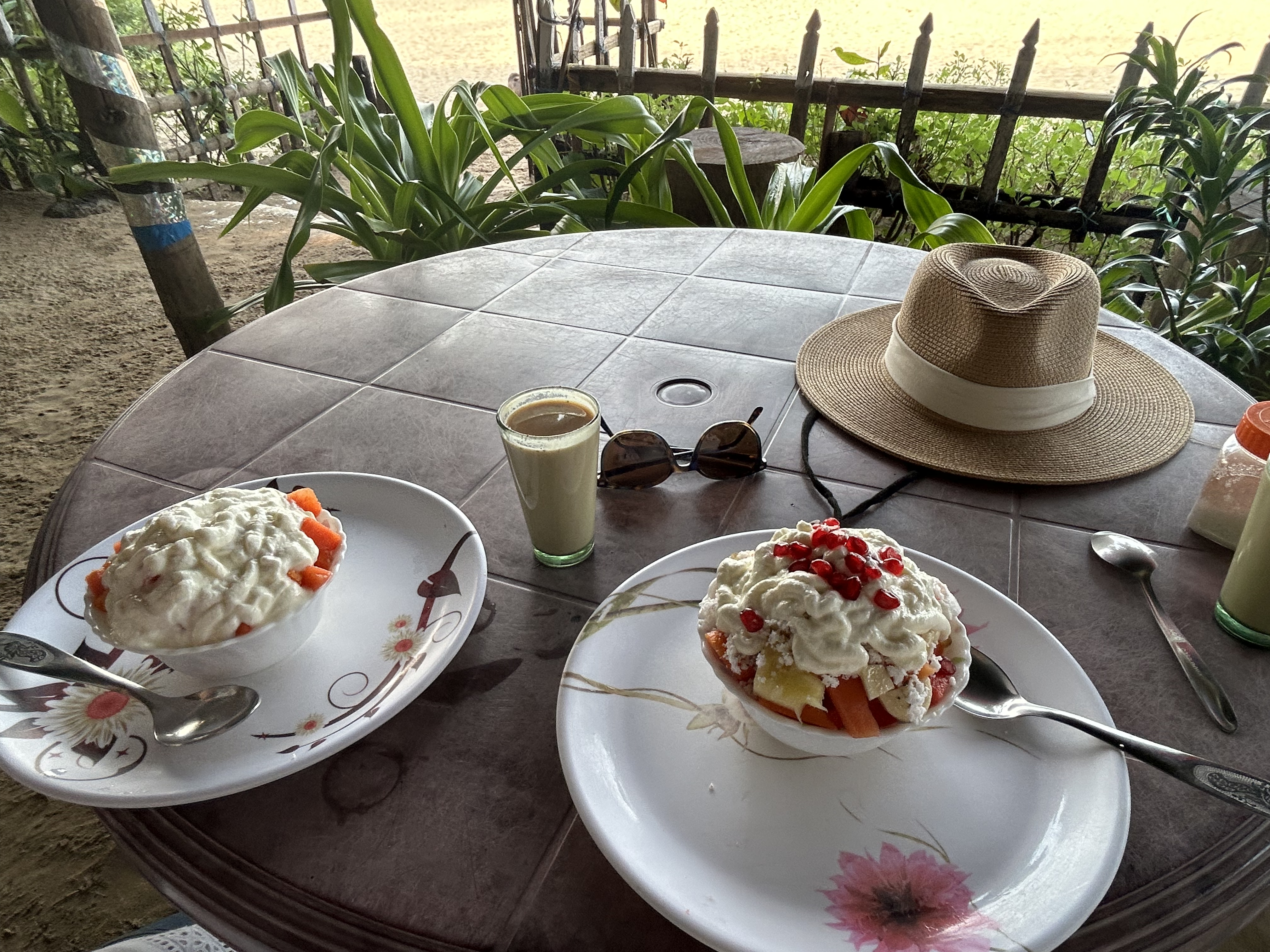
We hustled back to the room, put on our swimsuits and went straight to the beach. At a quick glance, the beach had hardly changed since last year. The sea was typically warm and clear. I swam until my hands wrinkled. At our favorite beachside cafe, Shankar and his wife gave us another friendly greeting. Curd and papaya followed by a glass of strong masala chai.
Back in our dusty room, Gerard spent a couple of hours scrubbing the place down, hung the washing line, pinned the mosquito net across the window, and then we unpacked. Now the room feels like home.

Except for the wild life! We’re surrounded by birds, animals and insects. I love hearing birds chirping in the early morning (thankful my reverse slope hearing loss doesn’t extend to high frequency sounds), until their song is overpowered by the cawing of a raucous craven and the shriek of the chipmunk. How can such a small animal make such a piercing noise? And of course there’s the dogs. This time, below our room a Labrador puppy is an addition to the guesthouse dogs. Easy to train, says Gerard. But nobody does anything about this puppy’s shrill and constant barking – particularly as we’re about to go off to sleep. And then the neighboring dogs, part domestic, part wild arrive and add their howl. Dogs in India as everywhere are highly territorial. In the middle of the night there can be an outburst of ten or more dogs barking at once. A benefit of hearing loss is I don’t usually hear the dogs.
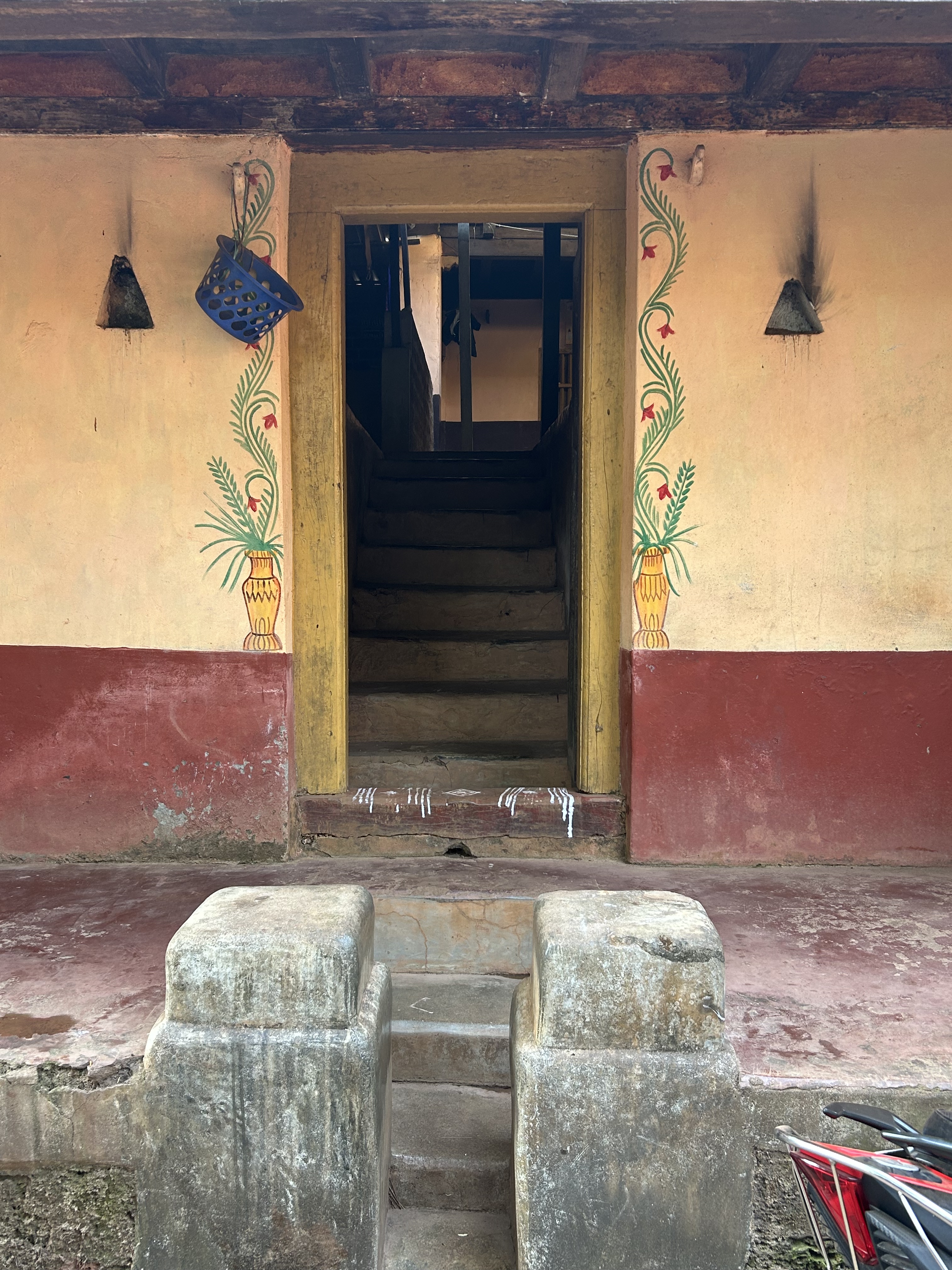
The day after we arrived we made the 30 minute excursion into town for fruit, rice cakes and peanut butter. With the exception of increased traffic, the town has changed remarkably little since last year. No new restaurants, the same tourist cheap clothing shops, and stalls selling offerings for the pilgrims to take to the temple. While there may be fewer westerners, there does seem to be many more Indian visitors in town, but it’s a long weekend celebrating one of many Indian holidays.

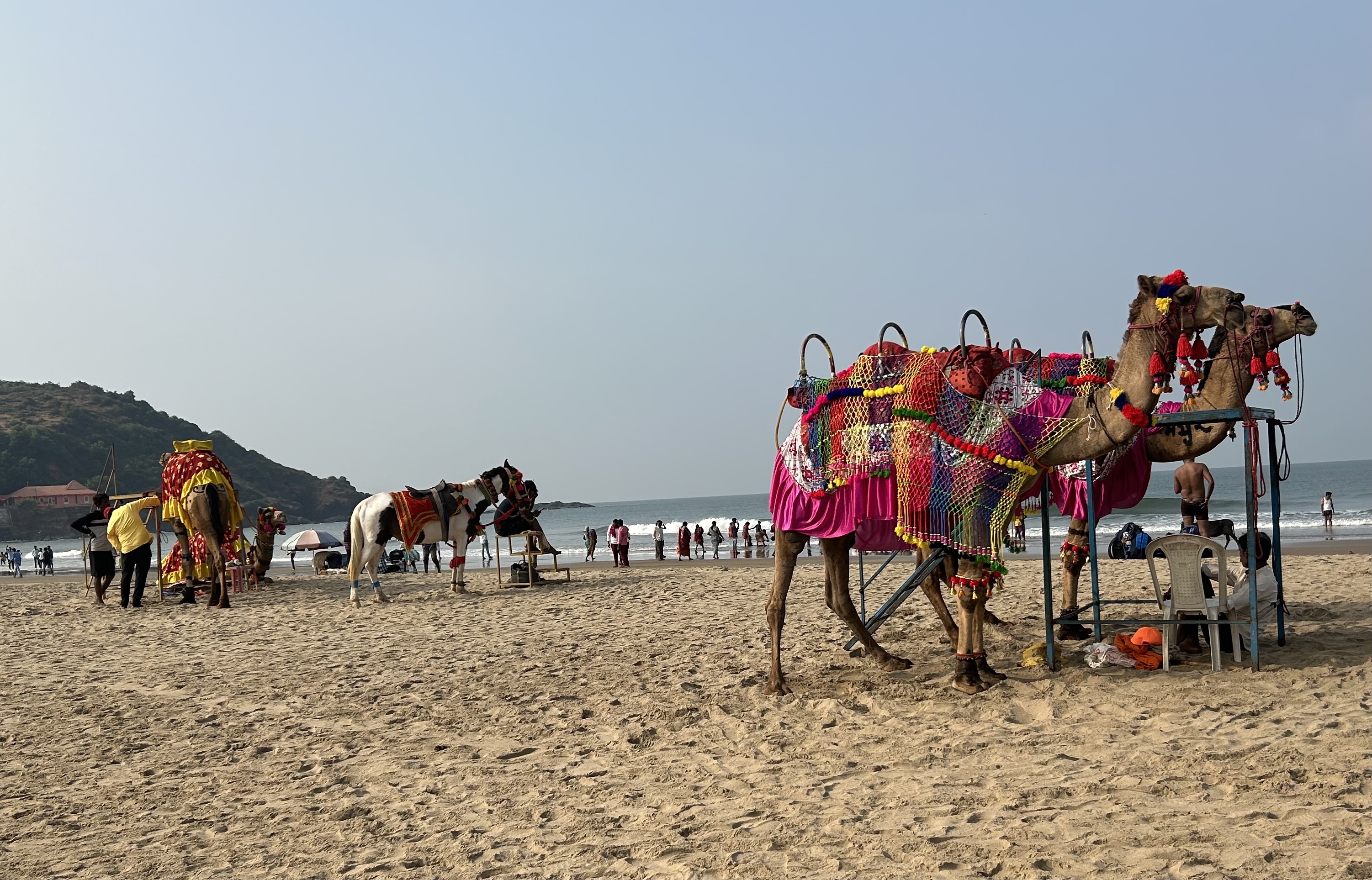
No one can explain exactly what it is and usually resort to: “It’s an Indian holiday.” At the end of the beach near the town, there’s ample amusement for the Indian pilgrims/tourists, including camel rides and ice cream vendors on bicycles.
We have a choice of restaurants on the beach for dinner. After several days we returned to a favorite from last year and there was the couple we knew sitting at their usual table with a prime sunset view. Daniel is American but left in 1969 and landed in Israel just as the War of Attrition broke out. He freaked out and fled to Norway where he married and still lives. In the richest country in Europe they enjoy a good lifestyle, but have been coming to Gokarna for many years for four months at a time. Leaving the US the same time as Gerard and staying for similar reasons, he has some interesting stories.

Eclipsing our joy of being at the beach was the news that our good friend, Arthur, had suddenly died while we were at the retreat. One of Gerard’s oldest friends, they met on Beacon Hill in Boston back in 1966 and he has written much about their relationship in his memoir, Beyond Black and White. Although Arthur moved to Florida, he and Gerard remained in contact, the more so during the last decade when they would talk by phone at least twice a week. Arthur was the first of Gerard’s friends I met in 1973 and I immediately loved him. Gerard’s been in constant contact with mutual friends and helped write the obituary and a speech to be read at Arthur’s funeral. None of which has helped him deal with reality. That will come in time.

I also lost a good friend shortly before we left. Unlike Arthur, Chris had struggled with cancer for over six years and we knew it was highly unlikely she’d survive before we returned. Fortunately, I had the opportunity to say goodbye to her. I was expecting to play the role of cheering her up, as she lay paralyzed from the waist down in a hospital bed. But instead she was surprisingly animated. Our visit was full of light and joy. After we left, I looked up at the winter sky which was clearing after a night of rain, and watched a large bird slowly circling. I felt a tremendous peace. Chris died a few days later.
A Blind Woman Sings

The decision of how to spend the winter was avoided until I finally asked Gerard if he was happy to just stay home.

“I can think of worst places to be but no, I think we should go to India one more time.”

Then the reality set in that our life might not fit into that small case any more with all the pills and supplements that old age now requires. Even my chiropractor questioned our decision. “My parents who are your age wouldn’t consider traveling at all, what to speak of India! You’re sure it’s a good idea?”

He didn’t put me off. I knew there’s one more trip in us.

There was going to be a 10 day meditation retreat near Bangalore starting in January that I was more keen to attend than Gerard, but with gentle persuasion, he came around to the idea. Just after Christmas we would fly to Delhi, rest for a day then visit our Indian family for another day before flying to Bangalore.

Typical for international flights to Delhi we arrived at 2.30 am. After 50+ years of traveling, we have yet to lose a bag. And good luck was with us once again. We waited for first light (there was none due to smog), to book a taxi to our hotel in Pahargunj, hoping the hotel staff would be awake by then. Not only were they awake, but they greeted us with friendly smiles. ”Nice to see you again, Mr and Mrs Wiggins.”

The masala chai wallah was in his usual spot. He touched his heart, and said, “One sugar, one no sugar.” Just then, the sound of a chanting voice echoed down the street. A blind woman, her hand resting on the head of a young boy as her guide emerged around the corner. If she had been born into a different place and time, she would have dominated a world stage with her angelic voice. But here on the grimy streets of Delhi, she would have to settle for meager handouts. What a strange world this can be!

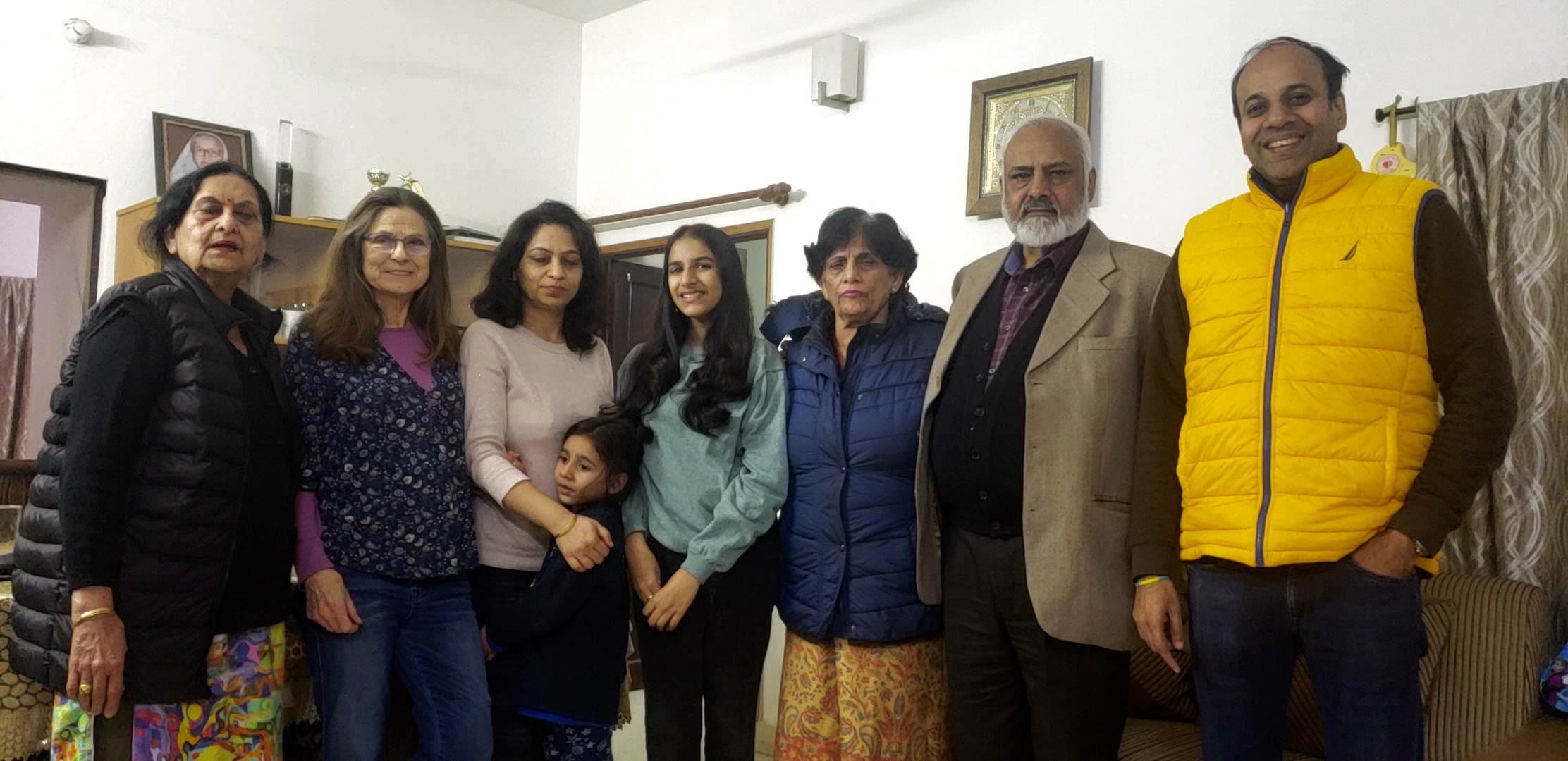
The Mahajans had moved during the summer and were anxious for us to see their new house. As we sat around the dining table drinking strong chai, the eight months since we last saw them seemed like yesterday. Kamal reminded us that by chance we first met nearly twenty years ago at our house in Boston.

Kamal and Shruti with me in Boston in 2004

She had come to visit her daughter, Shruti, who had started a new job. Just as Kamal arrived, Shruti was asked to vacate her apartment. Through a friend, we had met her only once. But when she told us her predicament, Gerard insisted she and her mother should stay with us. Kamal was reluctant to impose on strangers but there was no alternative. The first night she barely spoke. The following morning, Shruti and I went off to work, Gerard was free for a few days. When I got home that evening, he and Kamal were sitting at the dining room table carrying on gas if they had known each other for years! She said to me, “Since you’re working and I am not, now I will do the cooking. I hope you like Indian food.” That was like asking if the sun rose in the east!

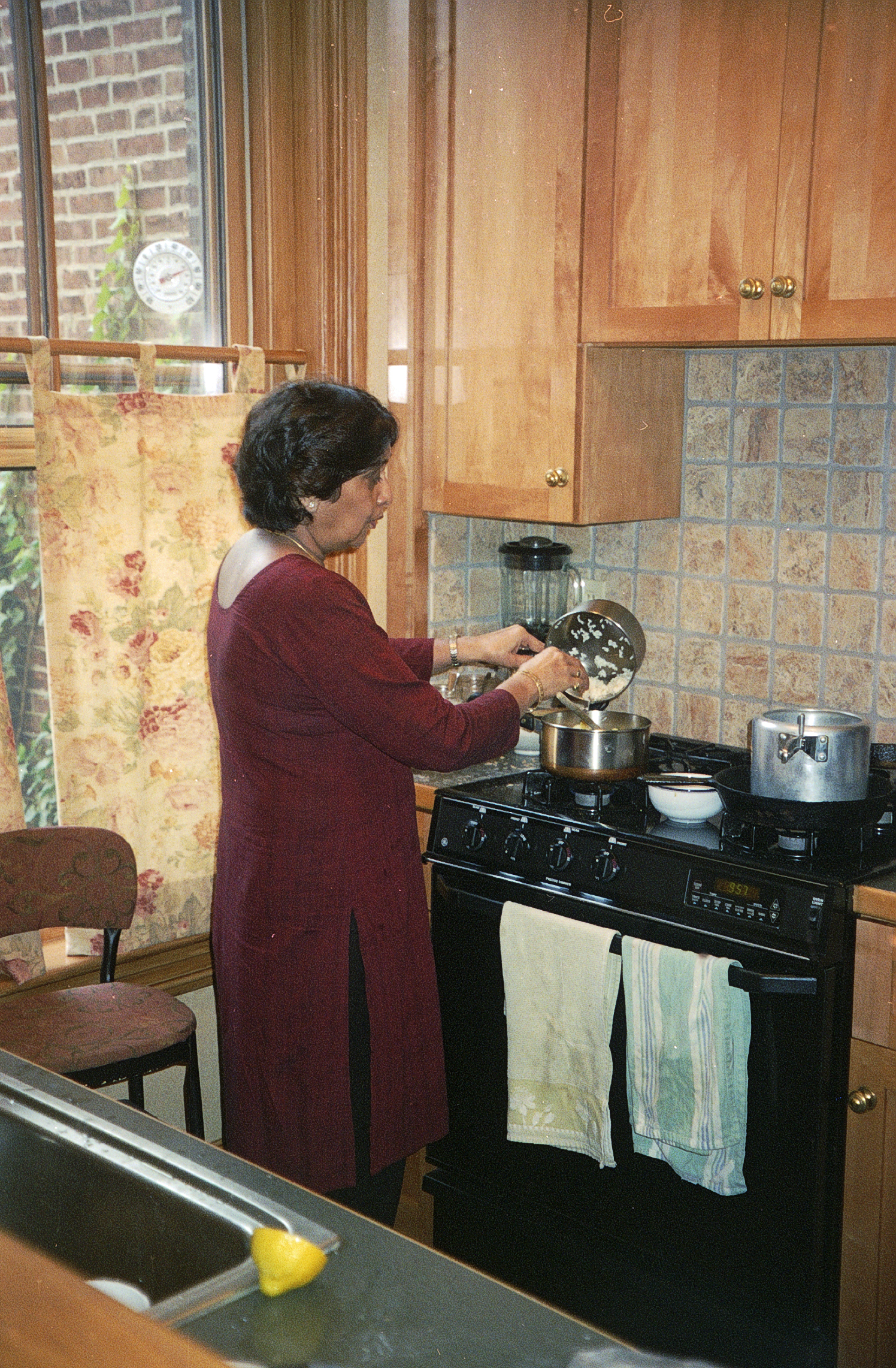
Kamal in our kitchen

For the next five weeks, we learned what Indian home cooking is all about, very different from the usual restaurant fare. Ever since then, the Mahajans have welcomed us in like family.

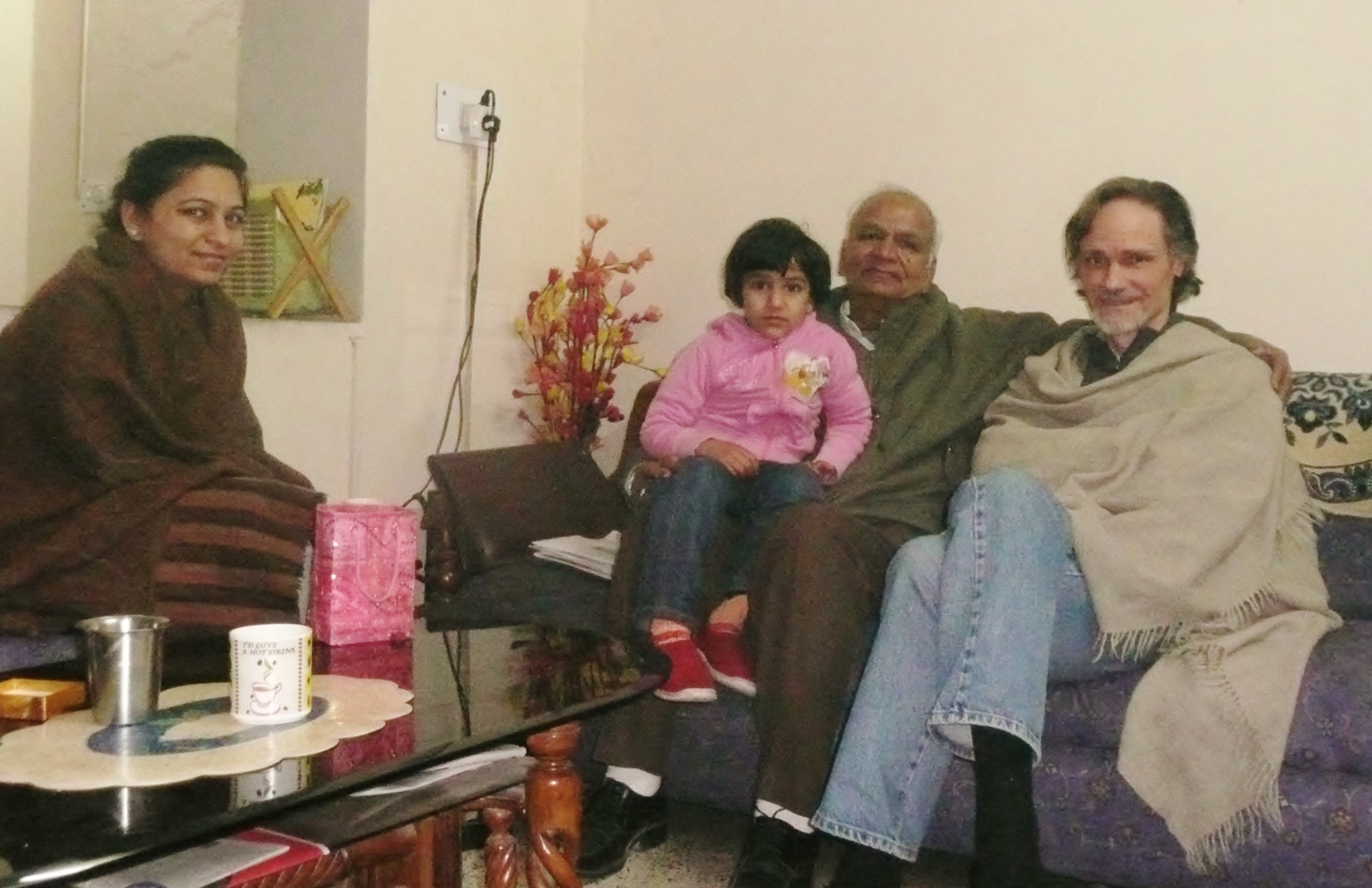
Shruti with daugher, Simrita and father, Bhushan in 2009.

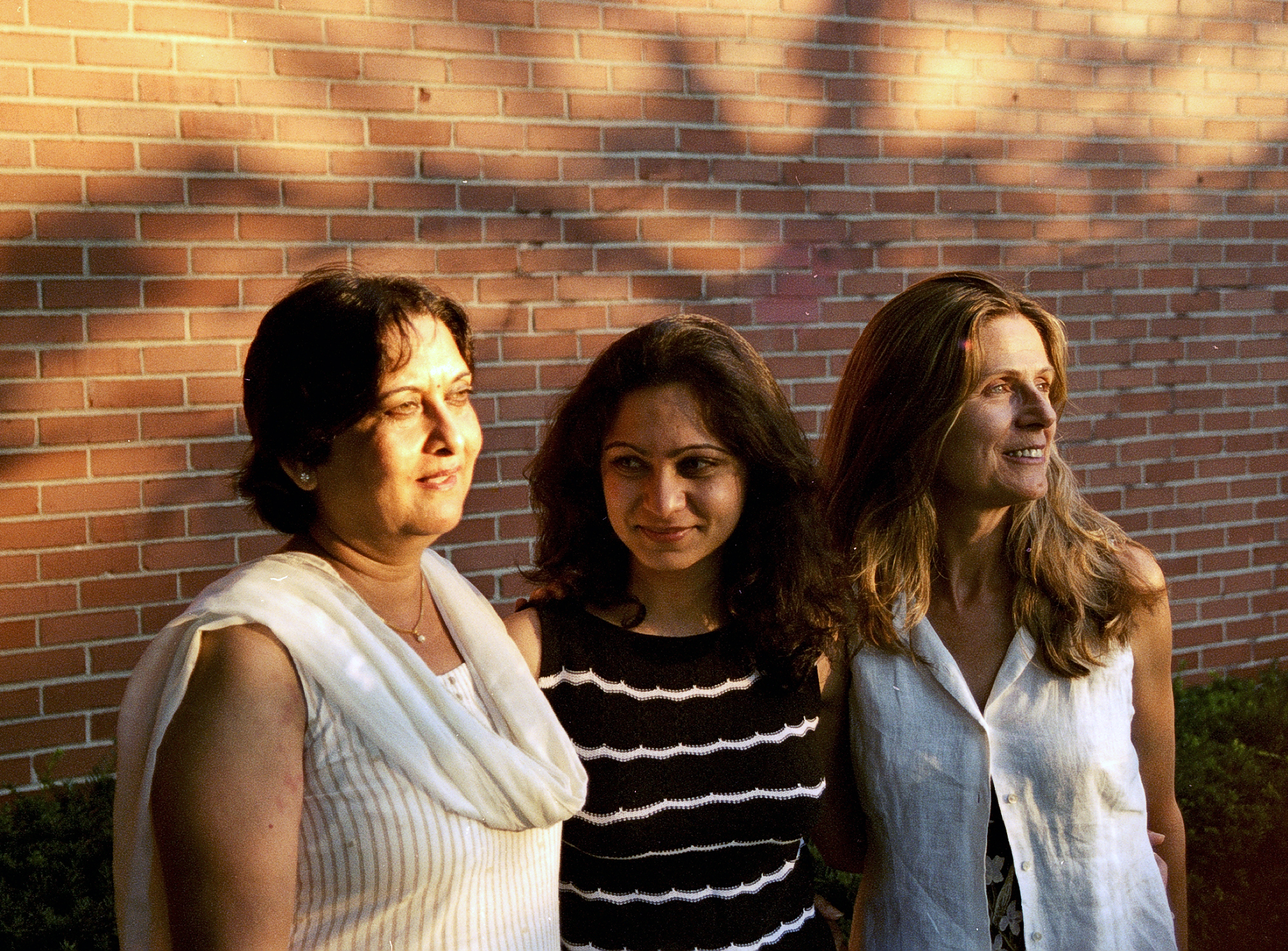
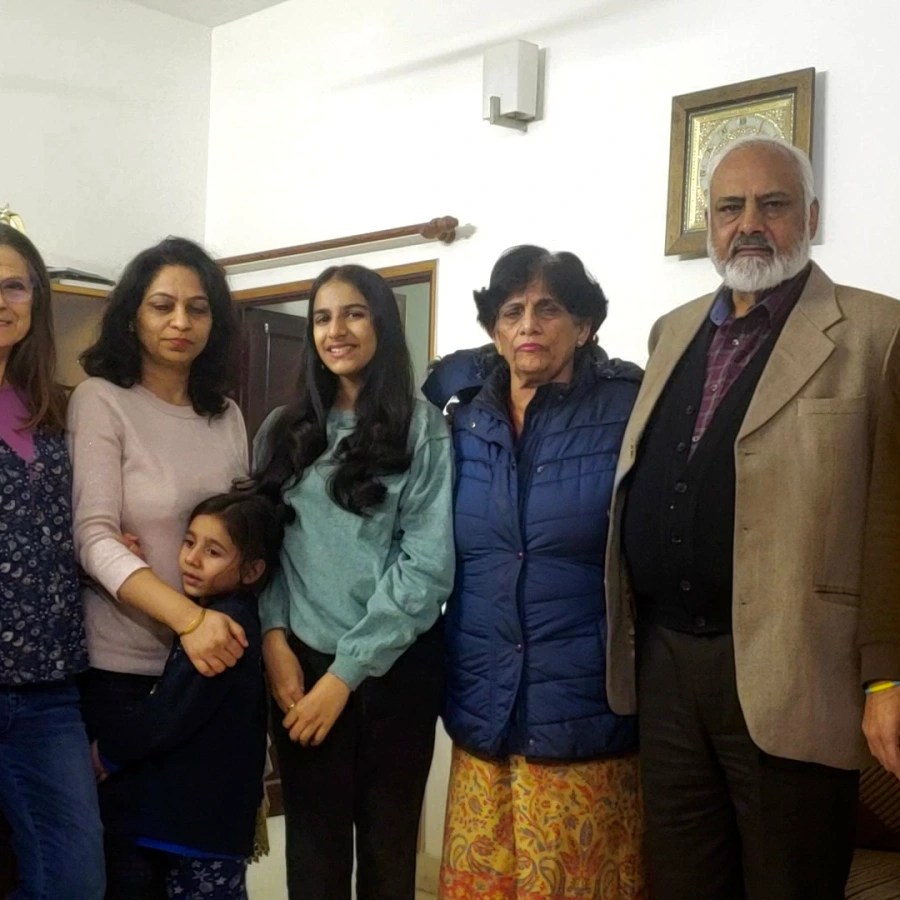
Shruti, Tanya and Simrita and Swarn auntie and Ravi uncle in 2022.

Gokarna: Friends at the Beach

Two warnings are pinned to the guesthouse wall. One is ridiculous: “Swimming on the beach is not safe.” Hello? Have you ever tried swimming on the beach? The other is more ominous: “The owner will not be responsible for any drowning in the sea.” Undeterred by occasional rough seas, I swim twice a day, and then walk the long stretch of sand, appreciating the moment.

I enjoy the simplicity of our lifestyle; it unclutters my mind, which likes to seize on the busy minutiae of daily living back home. I may not always like the Indian meal served, but it still beats the time and mental energy devoted to cooking and food shopping. Every day, I look forward to my idli and dosa breakfast. A young Indian has just started up his little dhaba and serves us with enthusiasm.

Gerard enjoys leaving Wellington Street far behind. Oddly, he does not seem to miss painting just as I don’t miss biking, knowing they will be waiting when we return. When he’s not swimming with me or socializing, he’s busy completing his memoir which he began writing exactly four years ago in India. His favorite tunes encourage him when the writing is difficult. Mosquitos and sand flies have found his skin irresistible and he’s had to contend with a slew of itchy, inflamed bites. But two weeks into our stay the bites are reducing. Dare I say the insects are loosing interest, moving on to the next tasty newcomer?

With many of the establishments here preferring to cater to Indians now, the old time travelers congregate in just a few cafes up and down the beach. Some of us question if we’ll come to India again whether put off by traffic, pollution, plastic waste—everyone agrees that the subcontinent is drowning in a sea of plastic–or Modi. 1.4 bilion create a heck of lot of waste! Gerard and I try to do our bit by bringing a portable water filter to avoid contributing to the mountain of plastic bottles. The otherwise beautiful walk through the vegetable gardens to the beach is marred by litter. To avoid looking at it for a month, Gerard got a gunny sack and picked it up. But where to dispose of the full sack?

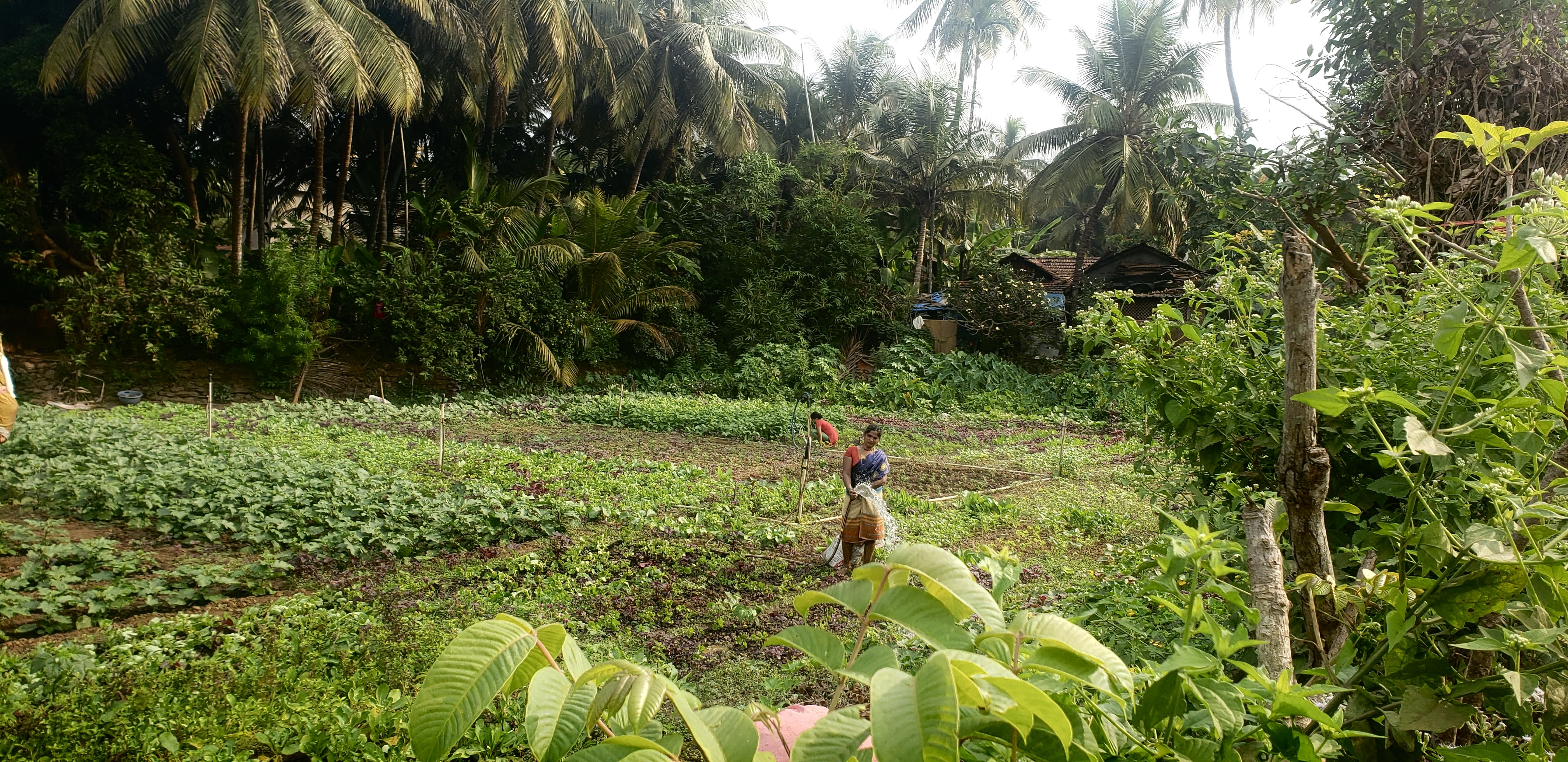
Walking through the vegetable fields we notice that each little garden has its own shallow well. So close to the sea, surprisingly these wells are not polluted by salt water. With the rich soil, the baking sun and plenty of water, the vegetables seem to grow as we watch them. Too bad not enough of them find their way into the restaurants.
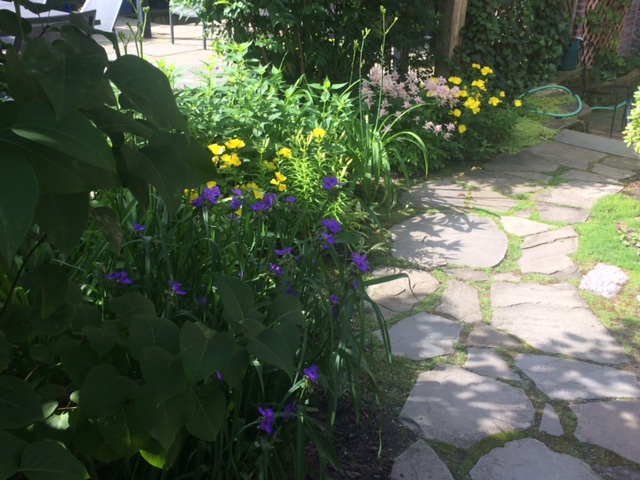
Our friend Marina is a social magnate; after twenty years in Gokarna she knows the old timers and easily makes new friends. At one point, there’s nine all from her area of north London. We’re sad to see Emma leave after her brief three-week holiday. She doesn’t understand those who complain about the new influx of Indian tourists crowding on to the beach (mostly on the weekends). She looks at the long stretch of sand and says, “To me, it’s bliss!” She spent her childhood summers in south Devon and we both agree that there’s no comparison to the sardine-packed people on the beaches of Torquay and Paignton.

Although I get frustrated in trying to follow the group conversations, it doesn’t overwhelm me anymore (given the occasional meltdown). This is our third visit to India since I lost my hearing, and I’m relieved to find it has gotten somewhat easier. I know my mechanisms to avoid hearing fatigue – and when I take a mental break and space out for a while, I return to the conversation to find surprisingly the same topic is still being discussed. I don’t seem to have missed much!

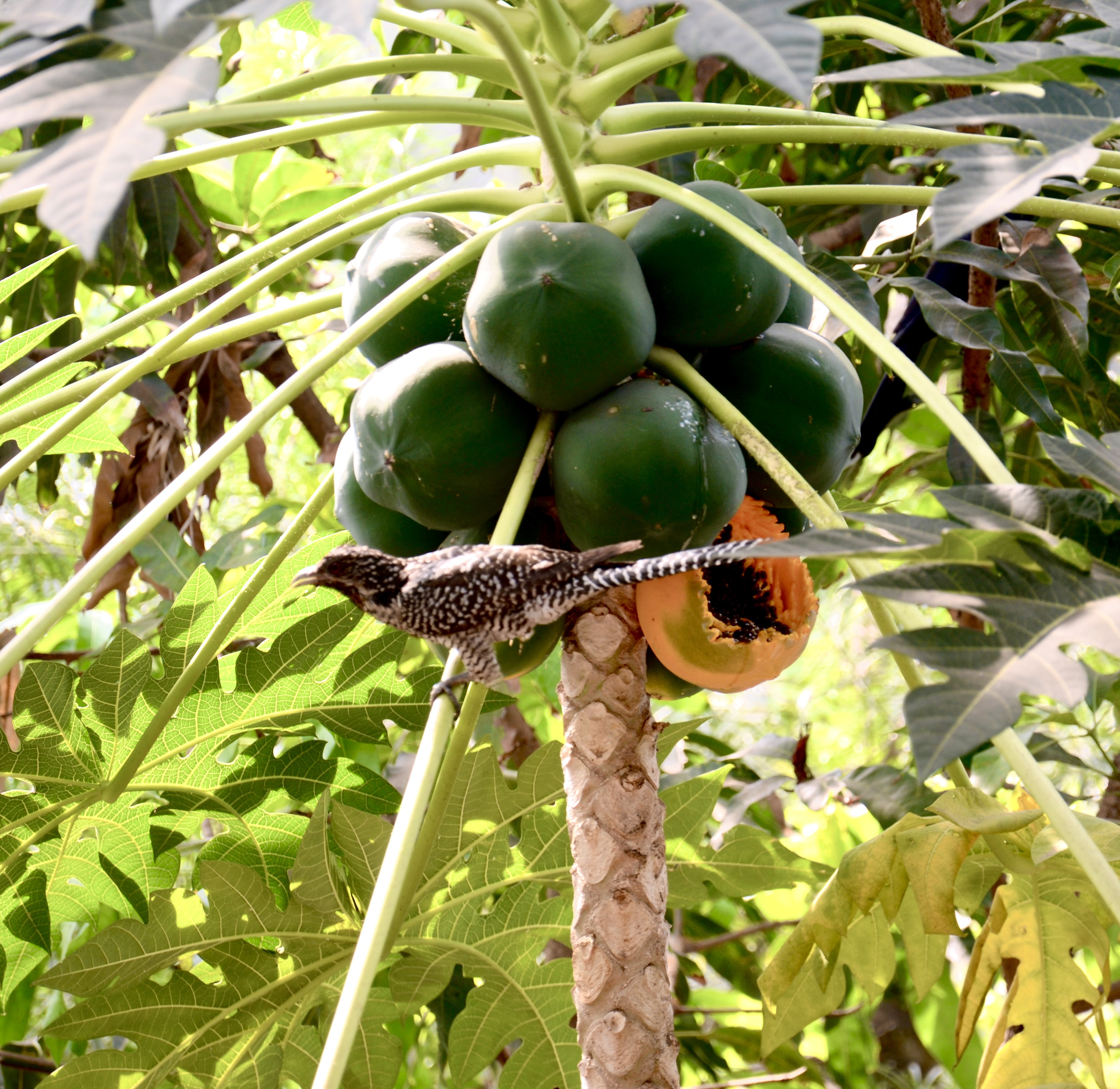
We wish we could identify the exotic tropical bird songs that I’m so grateful to hear. North London Tina’s a bird person and can recognize when Gerard provides a great imitation of a call. One is the Koel bird that we watch from our balcony in a papaya tree picking away at the fruit. Tina must be almost 80 and has traveled solo in India many times, which I find inspiring. Again, I wonder if I would have the resources to do it alone.

Our German friends, Marion and Yergen, insist that we accompany them to Kudlee Beach, a pretty sheltered cove we first visited three years ago. The descent to the beach is crowded with Indian tourists, the more so because it’s Republican Day weekend. Kudlee now caters only to Indians; several old buildings are demolished and undergrowth cleared at the near end of the beach to make way for a large luxury hotel. Rented dinghies, water ski launches and other plastic flotilla pepper the water. It’s beginning to look like Paignton! How many beautiful beachfronts are there left in the world that haven’t been ruined by over-development?
French Frederic, who we first met in the Himalayas ten years ago, took an overnight bus from Bangalore to spend three days with us. A resident of Auroville, he was on his way back to France to renew his visa. We have a special bond with him and are able to pick up where we left off four years ago in Varanasi. Swiss Peter, who visited us in Boston last summer, came down from Agonda for a few days as well. Both Gerard and I are flattered they made such an effort to visit us.

Back After Three Years

“Yes, I remember you,” the restaurant manager in Gokarna said with a half-smile. Coming from a man who, despite Gerard’s efforts, would not engage in conversation for the whole month we were here before, this was a warm welcome.

We hadn’t given much thought to another winter here. In fact after returning from a challenging time in California, trying to hear in noisy restaurants or even groups of friends, I’d told Gerard definitively that I could not handle India again. Just a few days later, Melissa, our longtime house sitter, emailed us to say she was available this winter. That did it! We’re going! I said ,visualizing the beach in Gokarna, the ghats of Varanasi, the snow-capped mountains in HP and the friends we’d have the chance to reunite with along the way. I was determined to handle my hearing loss in India as I do in the U.S. Clearly, the benefits would outweigh the difficulties.

But I do need help to get by in chaotic India. At the airport, a frustrated customs official asked, me, Do you speak Hindi or English? Later, a young Indian tried to strike up a conversation, then realizing my predicament, assured, “You’re not missing anything,” and high-fived me. Easy for him to say, but without Gerard I don’t think I could do this on my own.

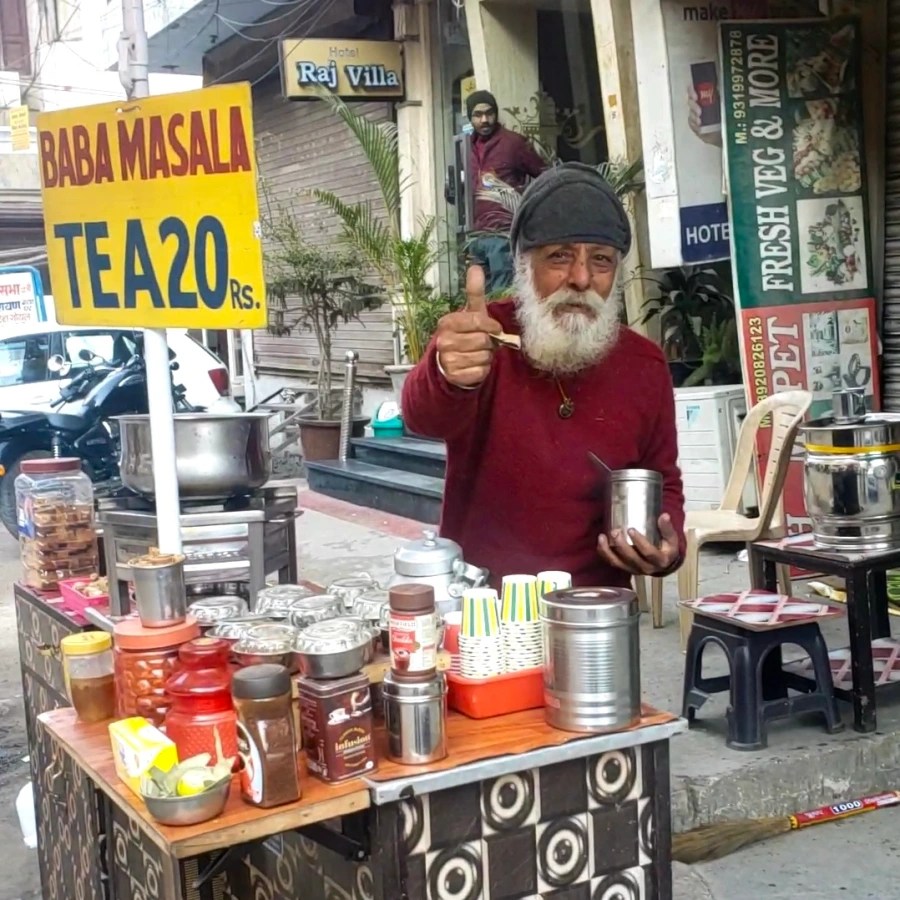
We arrived in Delhi at 2 am, Even though the airport is now no different than any other airport in the world it’s still a shock for us to walk through duty-free that is predominantly alcohol. As we predicted our hotel did not let us in despite our reservation and claim of 24-hour check in. We eventually found another where the manager woke up long enough to give us an inflated price. After inspecting the room, Gerard bargained with the sleepy manager for a reasonable rate. In the morning, I looked out the window on a large colorful umbrella with a sign saying ‘Baba Masala Tea.’ A white-haired gentleman pounded out fresh ginger and cinnamon sticks in a mortar and pestle to make the best chai in the neighborhood. Just when we need it, a chai wallah appears.

We were interested to see how India had changed in the past three years. It’s too early to know, but in the airport we couldn’t help noticing posters of Modi’s nationalistic agenda, with his ridiculous slogan: ‘1.4 billion people, one dream.’ The continuing strife between Hindus and Moslems begs the question: what is the one dream? We were surprised to see so few long term travelers like ourselves in the Pahargunj area of Delhi. Consequently, many of the shops catering to tourists have disappeared, returning Pahargunj to Indian consumers.

On our way to see the family in Gurgoan we were impressed by the metro, still running like clockwork and unusually clean for Delhi, unlike the buses and trains which are constantly breaking down. It was wonderful to be in their company again and we were surprised at how the children had grown. Five-year old Tanya’s cheeky personality has emerged, her English better than her Hindi, her mother says. And Simrita has grown into a gracious fourteen year old. She took me shopping in the nearby market. Sympathetic to my hearing loss, and lack of Hindi, she guided me through the process, reminiscent of how I did the same for my blind father many years ago.

The family knew it was Gerard’s birthday and Simrita wanted to bake Gerard a surprise cake. After dinner she disappeared into the kitchen and proudly emerged some time later with a freshly baked chocolate cake. Shruti stuck her knife in and said it needed more cooking, so Simrita returned to the kitchen. Soon after we heard a loud crash followed by sobbing, Simrita had turned the cake on to a glass plate and dropped it on the tiled floor. At Shruti’s insistence, she eventually appeared and placed the cake with embedded glass shards in front of Gerard, and we sang ‘happy birthday,’ before the cake was trashed.

The two-hour pre departure requirement for our domestic flight to Goa, was no overkill. The long line of passengers at check in (that would challenge anyone with claustrophobia) the interminable walk to the departure gate, and finally a bus ride to board the plane on the tarmac at least a couple of miles from the gate. Nevertheless, the plane took off on time! Gerard, with his love of trains and disdain of airports, couldn’t help mentioning how much easier it would have been to board a train and enjoy a more pleasant, if longer, journey. The following day, when our two-hour train ride to Gokarna was delayed by two hours, I had the satisfaction of pointing out the incongruity of waiting the same amount of time as the journey!

We struggled to book our room online and the internet pictures failed to meet up to reality. But after we’d moved the bed to face the window and Gerard got to work with his rag and disinfectant, the room became our home at the beach.

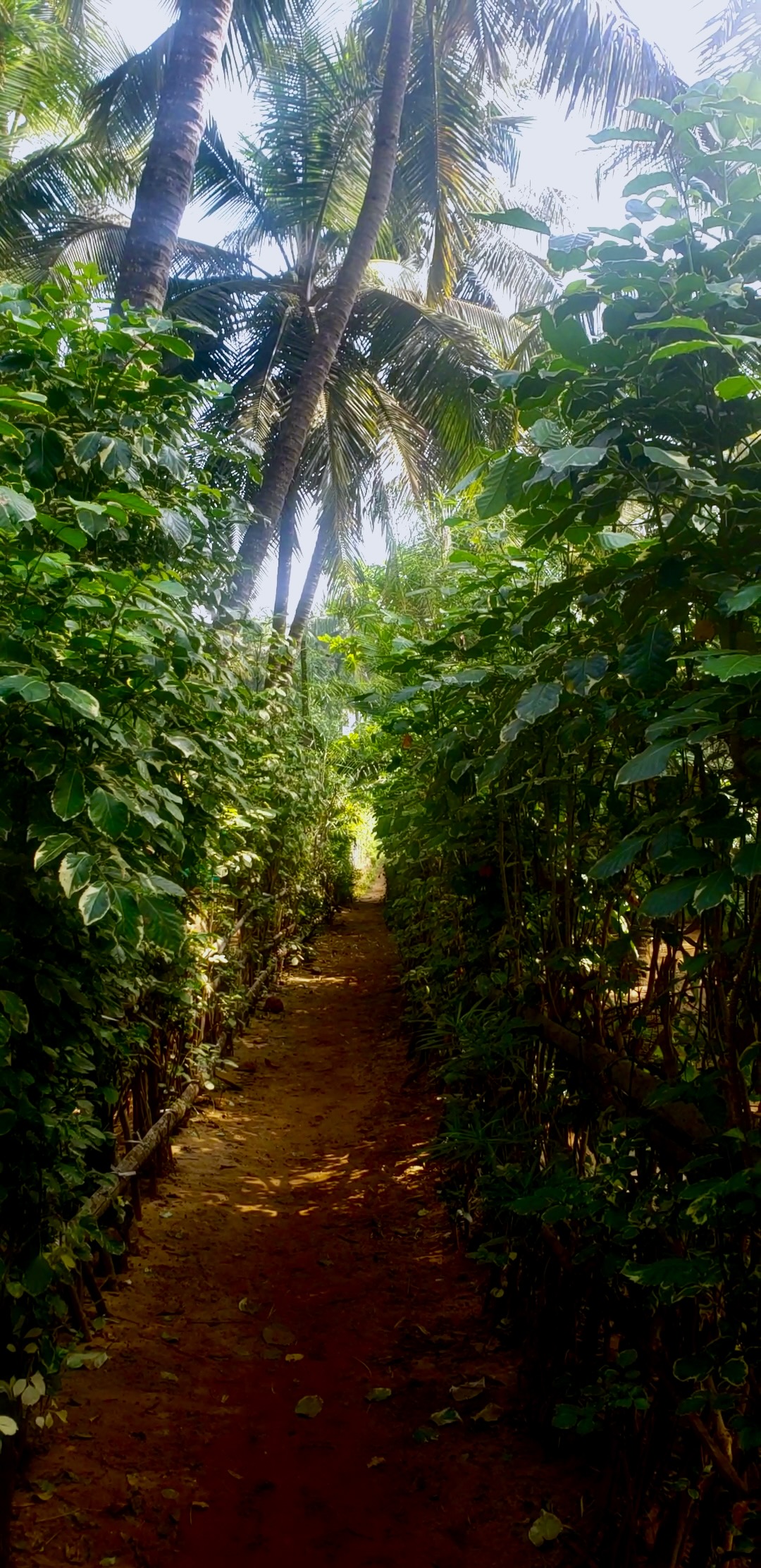
As it turned out, pre-booking paid off. Friends have told us it’s hard to find a place to stay because guesthouses are now only renting to affluent young Indians who come on the weekends. The owners can double the price and not bother to rent the rooms during the week, telling tourists like ourselves they have nothing available. Our guesthouse is only a three-minute walk from the beach, through vegetable gardens. Palm trees shelter our balcony from the heat of the day while allowing the amber glow of the late afternoon light to filter through.

Thinking of friends who couldn’t return for health or economic reasons, or chose not to (avoiding Russians), we’re grateful to be here. On our arrival, Frederic one of our oldest Indian connections, was already waiting at our guesthouse.

Christmas under the Bedsheets

Happy New Year to all our blog followers. We will miss our friends in India for another year, and sympathise with the local merchants who must be suffering due to the lack of tourism. A good friend who managed to get back to Gokarna in South India says the pilgrims and Indian tourists don’t make up for the loss of another season without westerners. Four-week visas with one week quarantine are not appealing to travelers of our ilk.

Two western friends still in India, live in the Auroville community, which has grown exponentially since its beginnings in 1968. Covid has had little impact to life there. But once again Auroville has erupted with internal conflict.

This time, over a road project to connect the four different zones within the compound. The consequences of this ‘progress’ include the destruction of the forest, its planting begun over 50 years ago. The opposing point of view is ‘leave well enough alone’. Our friends say that if the divisiveness continues, they’re prepared to move on.

Losing a loved one around Christmas adds insult to injury. Two good friends just lost their mothers, stirring up memories of my own mother’s passing at Christmastime when I was eight years old. After her death, we never had Christmas at home again. From then on, my father, brother and I spent the holiday with relatives. I celebrated beneath the bedclothes, singing carols and creating the Christmas I’d lost. One clear Christmas Eve, spotting the evening star for the first time, I was convinced I was seeing the same star that guided the shepherds and kings to the baby Jesus. (Growing up in England, the sky was rarely clear enough to see that star!) Since my mother’s passing, His birthday for me has also been associated with death. And I can imagine my two friends who’ve recently lost their mothers will have similar feelings.

With all the calamity in the world right now, it’s easy for me to miss the beauty that’s right in front of us.

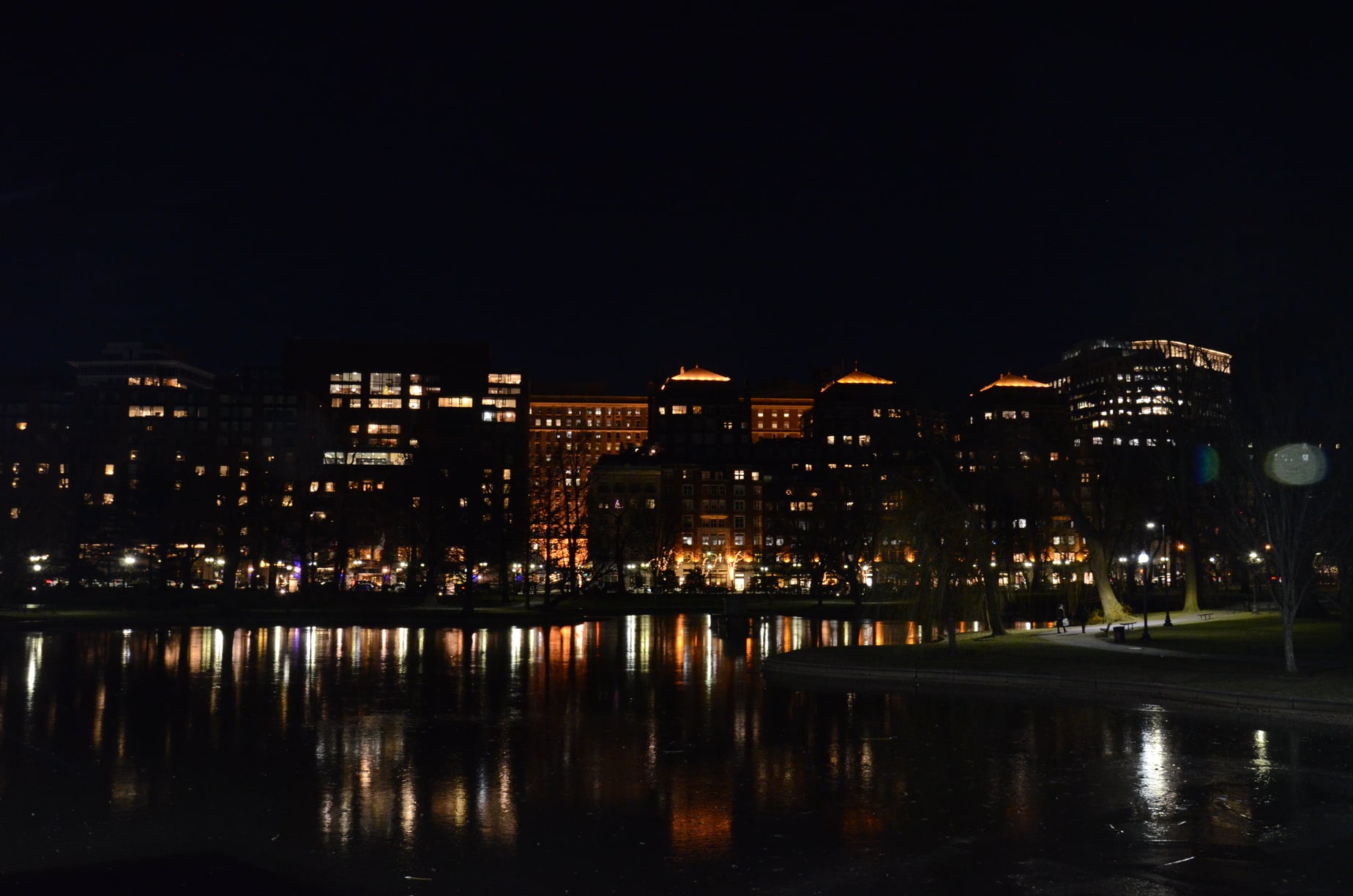
At dusk, the other night, Gerard and I walked through the Boston Common and Garden to see the Christmas lights. How magical the city can be! For a moment the world lost its sorrow in the reflection of the twinkling lights.

A Cochlear on the Horizon

The beginning of July marked the first anniversary of my sudden hearing loss. A psychiatrist, who’s also deaf, cautioned it could take two years to fully adjust. She may well be right, and on a good day I feel I’m halfway there. Supportive friends encourage me to turn my misfortune into a positive, the challenges into opportunities. Good advice, but just how do you go about that?

My hearing loss has changed the way I try to communicate. Now that it takes more effort and I don’t have the luxury of idle chit chat, my conversations are more directed. They’re also more selective. I can no longer participate in my women’s group meeting in a cafe once a week, but instead I may meet individually from time to time. In actual fact, one-on-one conversations are usually more in depth than in the group setting.

With less hearing, my life might be simplified, but it’s not. People tell me I’m not missing anything. It’s easy for them to say. When I go into a store and can’t hear the shop attendant, that’s not easier. Going out for a meal with friends and being unable to participate in the conversation in the restaurant is discouraging. The few people I still have an ongoing relationship with are more valued because they have adapted to my new circumstance.

Periods of quiet are welcome and I enjoy my own company in a new way. I miss going to jazz and Indian music concerts with Gerard…though I must admit, sometimes, I wasn’t so engaged in the music and it was more of an endurance test to stay to the end! I’d like to say I’m less concerned with FOMO (fear of missing out), reminding myself it’s an illusion. There may be little to miss that is truly worthwhile.

I still have a way to go – constantly vigilant against the insistent roaring in my head goading me to rush; impatient when I can’t hear because there’s ambient noise and the other person doesn’t speak clearly, directly to my face. I get frustrated when I can’t hear what Gerard’s saying to me and he gets equally frustrated. But he still loves me. Always clumsy and accident prone, I’m now even worse. I still speed around on my bike. How can I be so careless when it’s so much more critical for me to be careful? As the neurologist told me, “There’s nothing wrong with your brain, you just need to pay attention!”

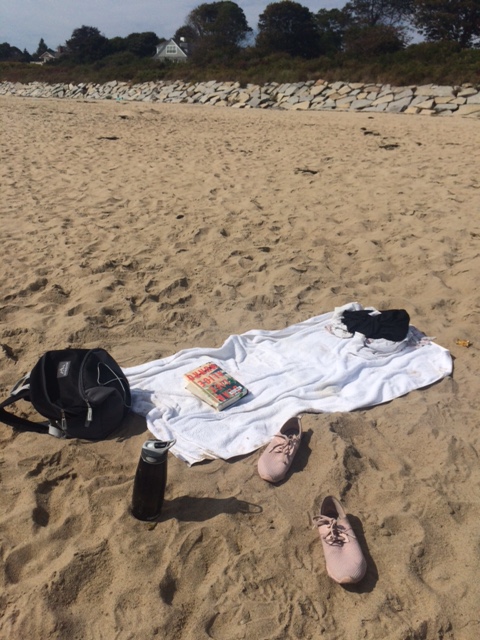
Reading is still my sanctuary and even more so now because it doesn’t require the effort of listening. Similarly, at the beach, I can still hear the waves and experience the same sense of focus the ocean’s always brought me. More important, a loss that I can do nothing to change has given me a new gratitude for my husband’s love, the beautiful house he’s created, the relatively easy life we have, and our health and wealth. Things I tended to take for granted.

Of course, I can still easily get derailed. Anticipating a scheduled appointment with a new specialist for a second opinion, I expected to get greater clarification, a new approach to my condition…perhaps even hope? Instead, I got the opposite. A new hearing test revealed I’d lost yet more hearing in one ear. Shocking news because girlfriends tell me my hearing seems better – but Gerard was not surprised. The loss continues in the lower frequencies. More blood clots in the small veins of my inner ear? The hearing specialist recommended a cochlear implant but I wasn’t prepared to make a decision. The next day we left for NYC to visit a good friend with terminal cancer. This helped put things back in perspective.

It took a couple of weeks for me to finally decide to go ahead with the implant. It’s quite different from a hearing aid. Electrodes are implanted right into the cochlea and directly stimulate the auditory nerve to provide ‘a sense of sound’. The receiver, looks like a hearing aid, sitting behind my ear. A totally implanted device is in the works, but not in time for me, sadly.

Success rates for cochlears have supposedly increased from 50% to 80% today. I have talked with/heard of several that have been successful. They say success depends a lot on expectation – you can’t hope for too much. The biggest risk for me is that my tinnitus will increase. In some cases, it’s reported to diminish, in other cases it becomes worse. You also lose whatever natural hearing you have in that ear, but since I only have 12% hearing on my left side, we’ve decided it’s worth all these risks. It may take up to three months to get used to the artificial hearing – voices can sound like quacking ducks at first! But it holds the promise of better word clarity and hearing music again. First step is an evaluation and then surgery will be scheduled. So, for now I must be patient.

Meanwhile, an interesting side development: alerted by a concerned friend, I found a press release online of a study sponsored by Yale, linking a common gut bacteria, roseburia intestinale, with my autoimmune disease, Antiphospholipid Syndrome. Research demonstrated that the normally healthy bacteria has gone berserk and triggered the antibodies that form an irritation in small vessels/veins, causing blood clots and, in my case, responsible for my hearing loss. Until now, no one knew what caused the antibodies. This study is the first real research into the disease and makes me feel no longer neglected by the medical world. Excited, I printed out the article and took it to my regular doctor. He just shrugged and said, “Early days…stay tuned.” Of course, he’s right; this kind of research can take years before it becomes accepted and used to create a cure. The only treatment for APS today is blood thinners which address the symptom and the not the disease itself.

We’re beginning to plan for India next January, but whether I’ll have a cochlear before or after the trip is still uncertain. Either way, I’m less apprehensive than a year ago, and looking forward to another adventure. With all its extremes, India still pulls but is always challenging. With a cochlear implant I may be able to hear again the unique sounds of India – its music, mosque calls, Buddhist chants…perhaps even barking dogs (which I didn’t miss last year!)

Pushkar Revisted

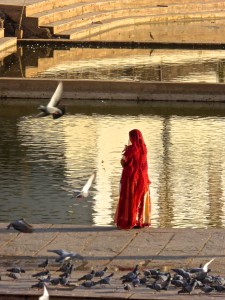
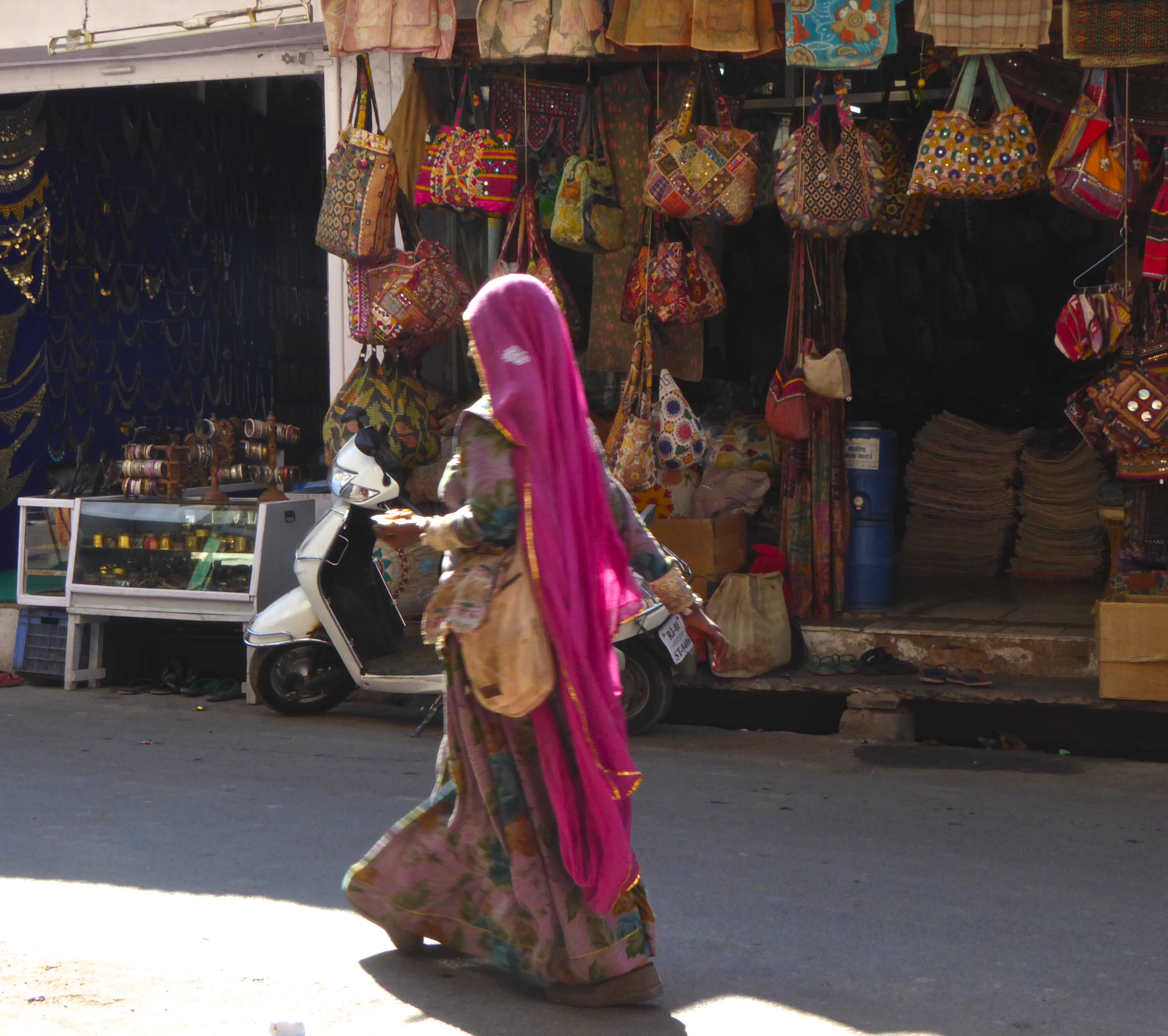
Taking a rickshaw to the bus station in Ajmer we both agreed, now we’ve arrived in India. Women in traditional Rajasthani red and gold saris and scarfs draped over their faces, their husbands with multi colored turbans. The press of people, rickshaws, elaborately painted lorries, cows and dogs; a choke of fumes, a whiff of spice, flies converging on enamel bowls of sweetened curd and trays of milk cake, garish billboards advertising movie stars, politicians and gurus.

The bus we boarded for Pushkar was the most dilapidated tin can we’ve ever had the pleasure to ride in India. The sides no longer rigid, swaying back and forth with every bump in the road. Gerard looked at the back to see the cross members broken and gyrating as if they were doing the twist. All attempts to weld hand bars back to the ceiling had failed. The floor heaved as if an earthquake was about to erupt. As we worked our way over a small mountain pass, on each hairpin turn, the bus snapped and groaned as if it was about to fall into pieces.   We arrived in town grateful that the bus did not expire with us in it.

P1000182My father liked to say, “you should never go back.” He had a cynical streak/view of life and believed that you’ll always be disappointed a second time. Just like people, places will let you down. Gerard and I have proved him wrong over and over again. We go back to Varanasi and Goa year after year and are not let down. Rather, it improves as we become more familiar. But certain expectations inevitably form. I’d loved Pushkar the first time we visited last year. It’s a pretty town, sitting beside a lake surrounded by gentle hills and has a spiritual ambience
P1000222

But what I reminisced most about during the past 12 months was our guesthouse, Rising Star. Our spacious room, the family chanting around their household temple downstairs in the evening and the delicious home cooked meals served on the roof. So with a booking made we returned dragging our cases from the bus stop. The two brothers met us with long faces…”Sorry Sir, we don’t have your room for two days.” A girl was supposed to leave but got very sick and couldn’t move. They offered us the only vacant room – dark and damp on the first floor. We didn’t relish moving after two days or into a room where someone had been deathly sick. I felt let down and fearful there wouldn’t be another room in town, and for a while that seemed the case; the rooms we looked at were too noisy, dirty or overpriced. Finally we found the “White House”. And it was just that, painted all in white and very clean; friendly owners, good food, nice room. So once again, we’ve proved my father wrong…you can go back. But sometimes an adjustment is required.

P1000193

The first night here, right next to the hotel was a house performing funeral rites. The period of public mourning lasts for 11 days and fortunately for us this was the last. Friends and family assembled and loudspeakers, set up on the roof, blasted live chanters till after midnight. Surprisingly, we managed to sleep through much if it because we were so exhausted from traveling. The following evening a small nearby temple broadcast in a similar fashion more chanting till 11 pm. And of course in the early morning there’s always some temple near and far beckoning over loudspeakers the faithful to come and do their devotion.

Gerard asked our friendly waiter/cook at out roof top restaurant, “Why do all events, weddings, funerals, temples etc, blast from loudspeakers at ear shattering volume. Are they sharing with the community at large?”

“Not really. Indians are a loud bunch.” He replied. We reflected — the horn on the lorry playing musical tunes with horns, the ticket collector on the bus with his piercing whistle. Is it any wonder Gerard suffers from tinnitus?

The waiter continued, “ Everything in India is LOUD. Loud music, loud clothes — so much color, loud food — so much spice.” There must be more to it than that. Maybe it’s a matter of competing with 1.3 billion.

We’ve said it before; traveling in India is not only about India. Today, we ate breakfast with a woman from Croatia who was nine years old when the Yugoslav war broke out. Since visiting Bosnia for work, I’ve had an interest in that part of the world and had made questions about the war. As we talked, the only thing that was clear from her point of view was that the region in general is in worse shape now than before the war. She thinks it needs a single ruler to keep the lid on ancient grudges. But where to find such a ‘benevolent’ leader that actually has the citizens interests at heart? We couldn’t remember meeting a Croatian here before. Both of us were fascinated to hear what she had to say.

P1000166

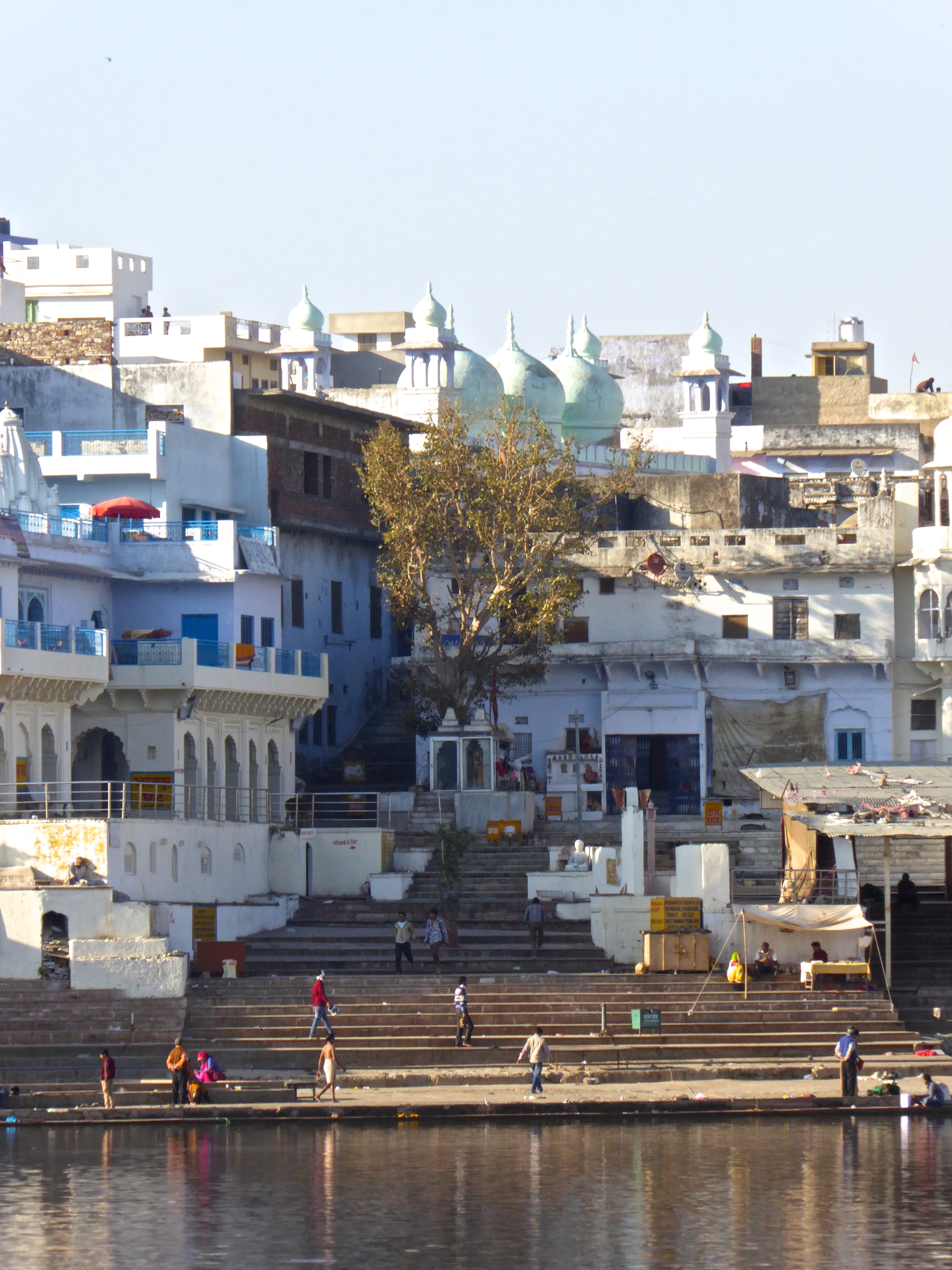
Pushkar is a pleasantly relaxing place to begin our winter sojurn in India. Spending our last afternoon sitting on another rooftop restaurant above the lake, sheltered from the afternoon sun and fanned by a gentle breeze, watching flocks of birds silently circling the water. The sounds from pilgrim bathers below are hushed. The beet, carrot and pomegranate seed salad tastes even better with the view.

P1000174