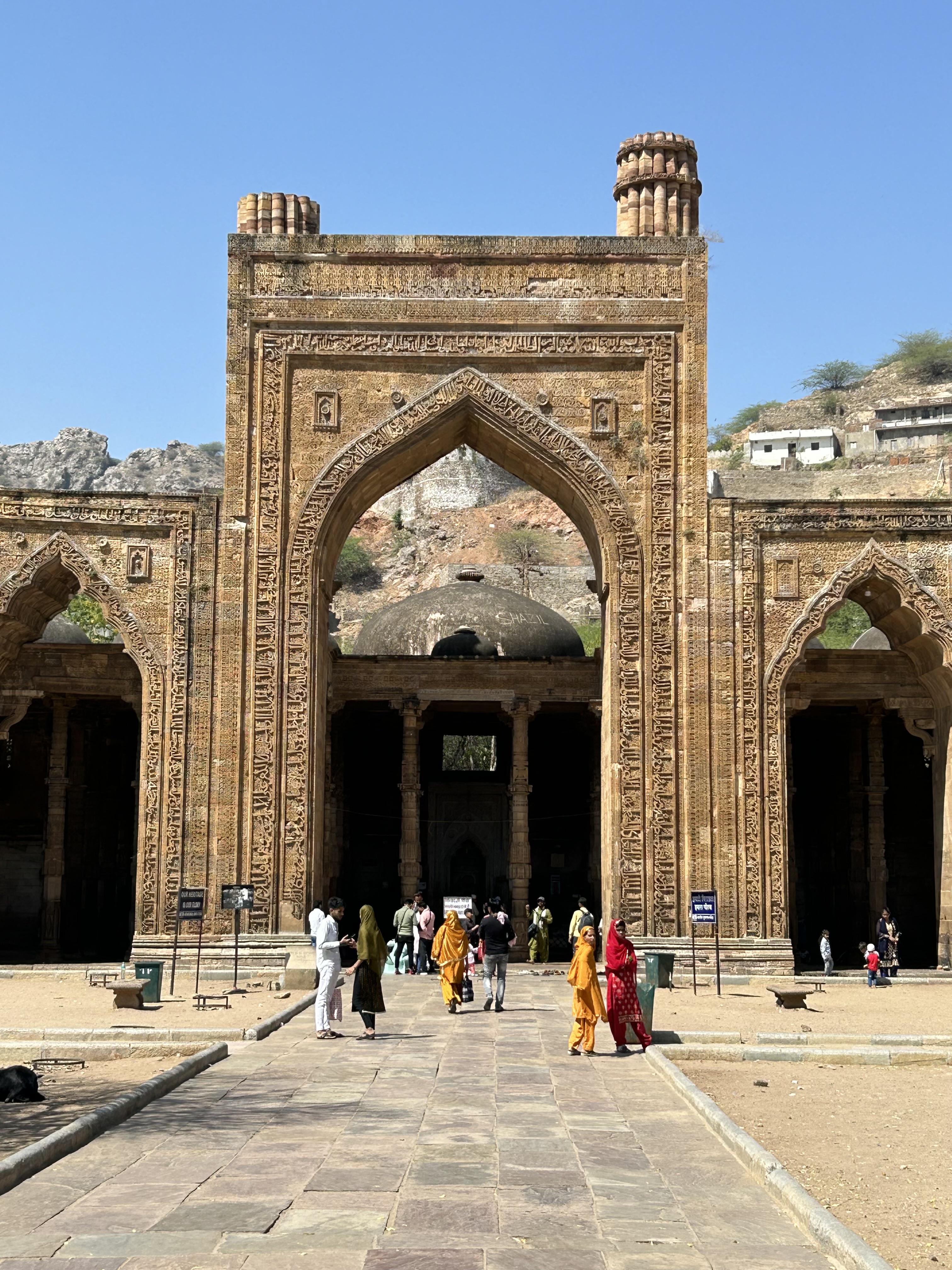
As our time in Pushkar was drawing to a close, we took up Marina on her promise to show us Ajmer. Only a half an hour away, the main attraction is a Moslem Dargah (a shrine built over the grave of a revered religious figure, often a Sufi saint or dervish). Rajiv’s daughter, Pryanka and her friend, Nadine joined us. Before the Dargah, we visited the ruins of Adhai Din Ka Jhonpra, the oldest mosque in India, built in 1190.

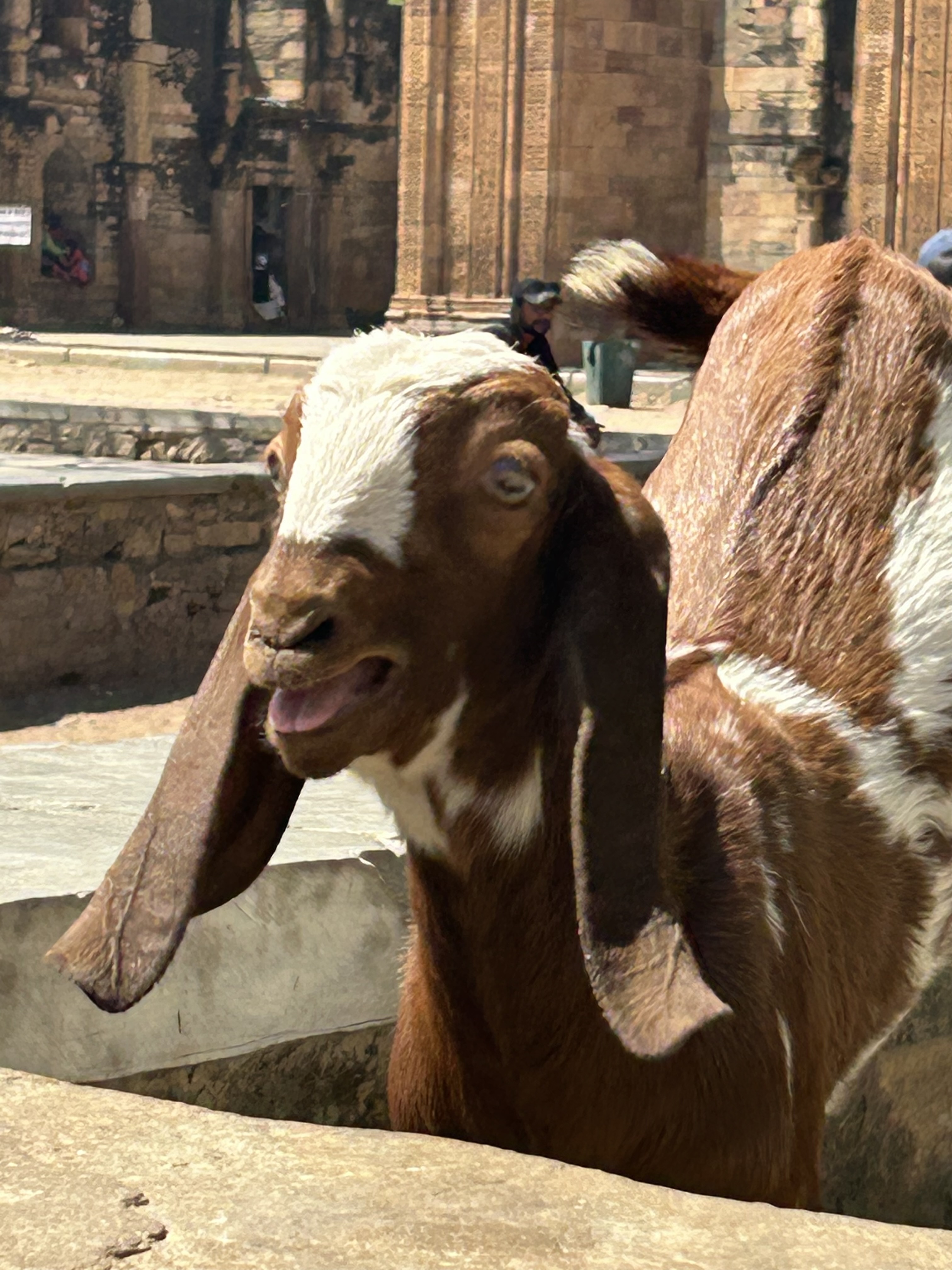
A peaceful spot in the center of the hustle and bustle of the Moslem quarter with goats grazing and families relaxing in the shade.
It was Ramadan (when the Moslems observe fasting during the daytime) meaning there were less horn blowing vehicles in the narrow streets and lanes than usual.
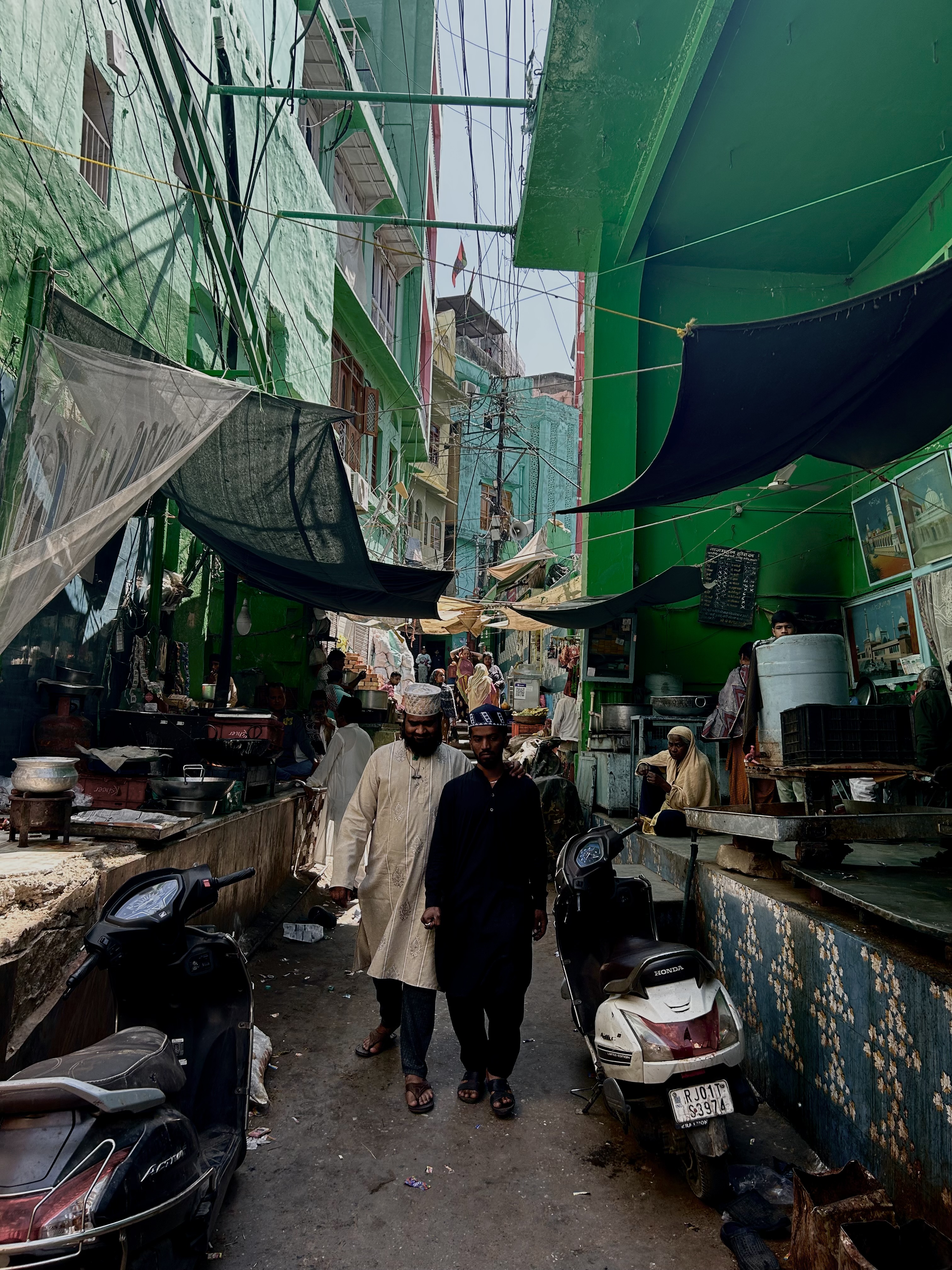
We had lunch hidden behind a curtain so not to offend the faithful. Beside the restaurant, a man stirring a huge cauldron of dahl enough to feed 700 when the Ramadan fast is broken that evening. A woman beside him was making stacks of chapatis.
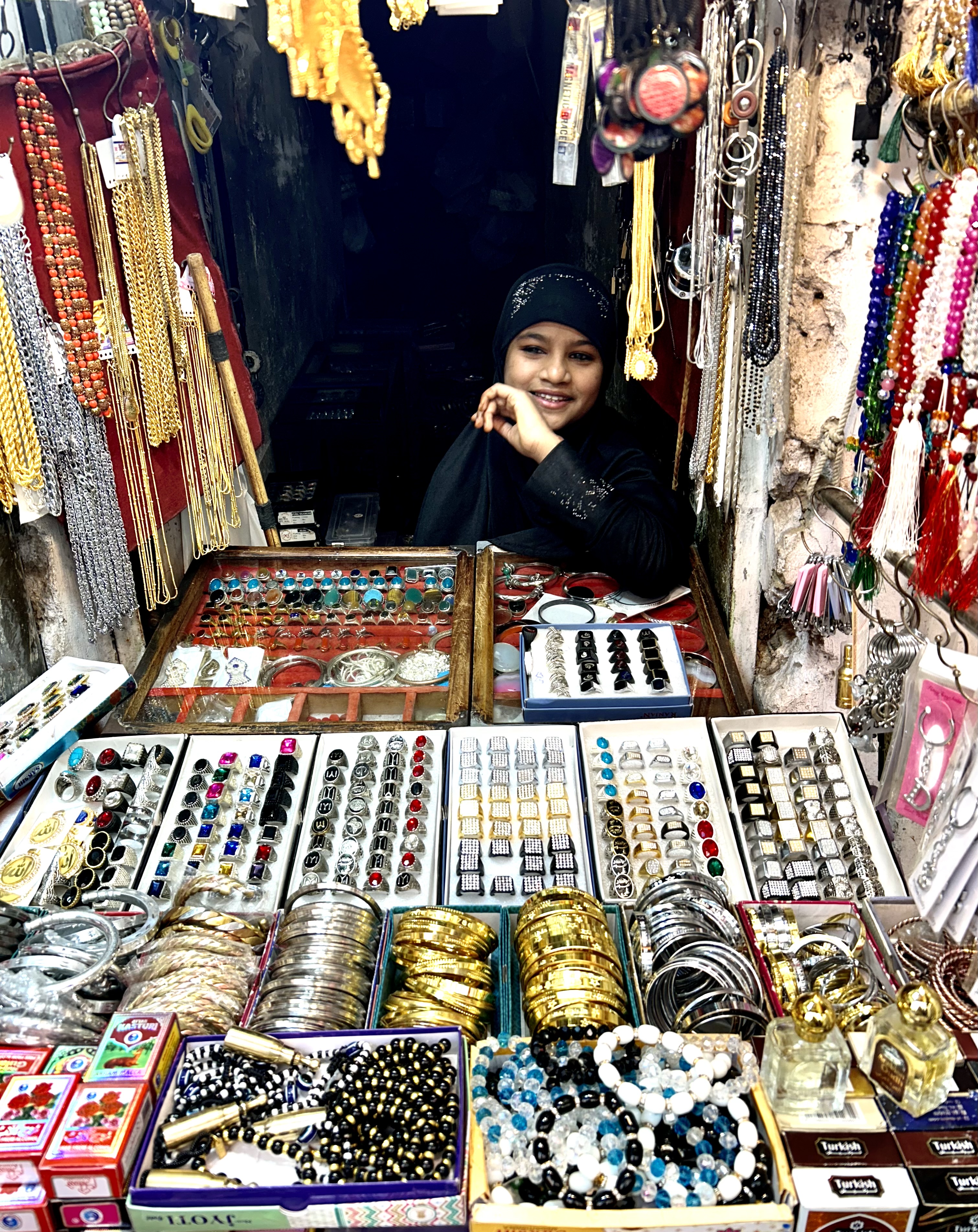
The Hazrat Khwaja Garib Nawaz Dargah is where Sufi saint, Khwaja Moinuddin Chishti was buried in 1236 and is visited by Hindus, Christians and Buddists. For Moslems, this is the third most holy place for pilgrimage.
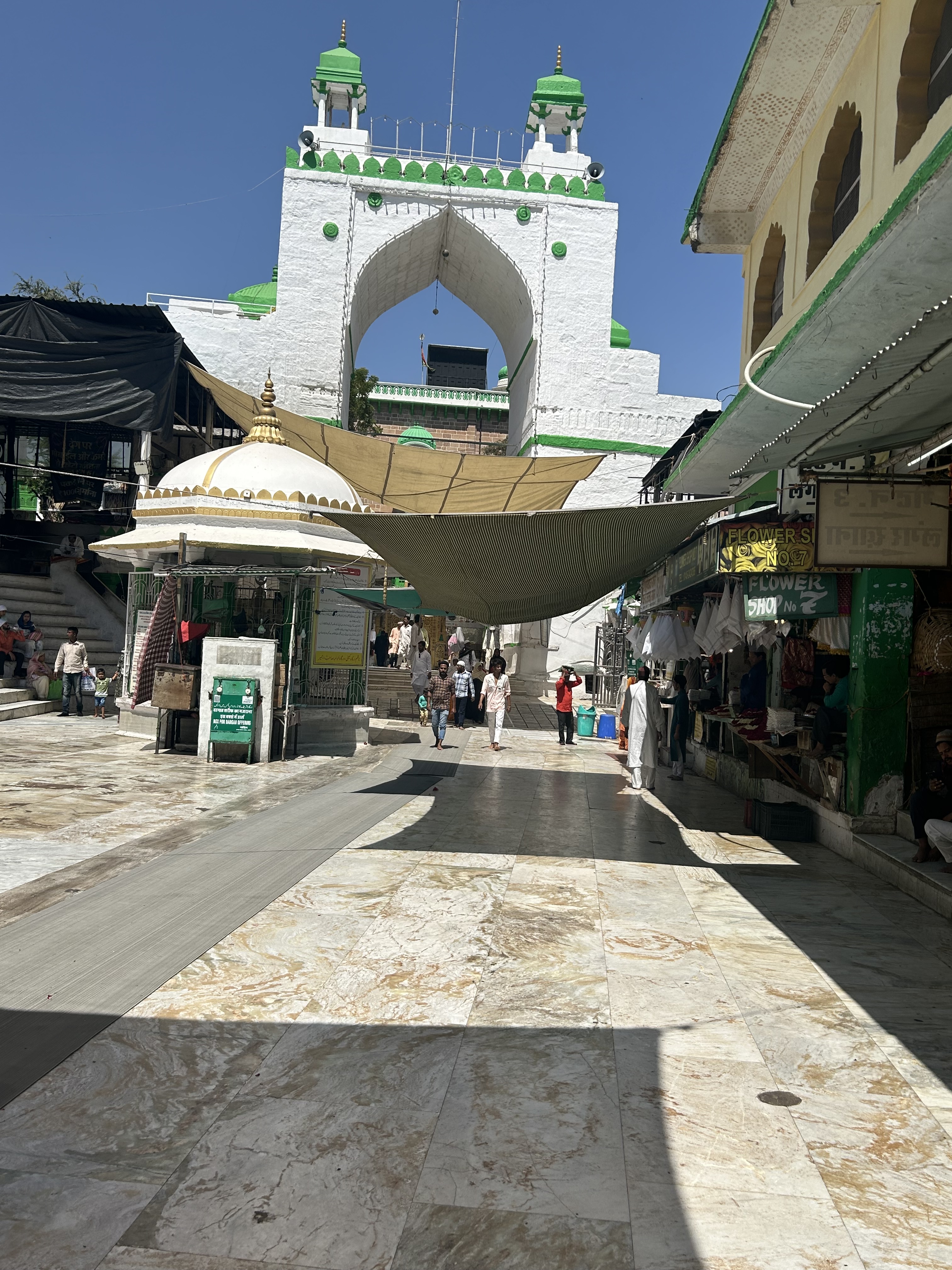
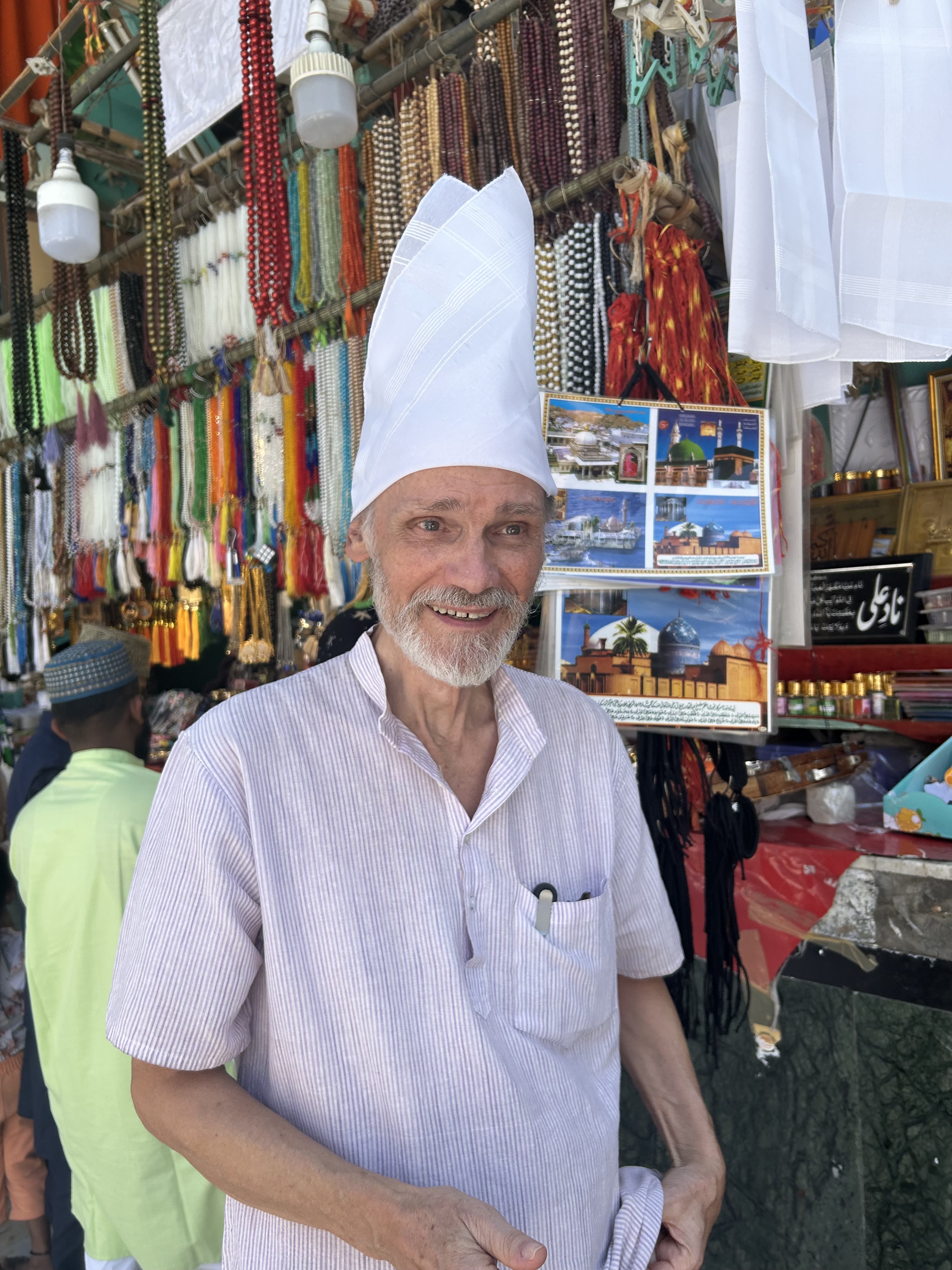
We spent time sitting in the mosque courtyard, taking in the charged atmosphere before entering the tomb to receive any benefit the Saint wanted to give. But first, Gerard needed a head covering and was given a heavily-starched white handkerchief. It perched on his head like a chef’s hat that amused us but he didn’t seem to mind.
The tomb was crowded but we were able to find a spot to contemplate, undisturbed. Beside the tomb or in the courtyard, for once, everyone dropped their religious identity and became a moving mass of humanity.
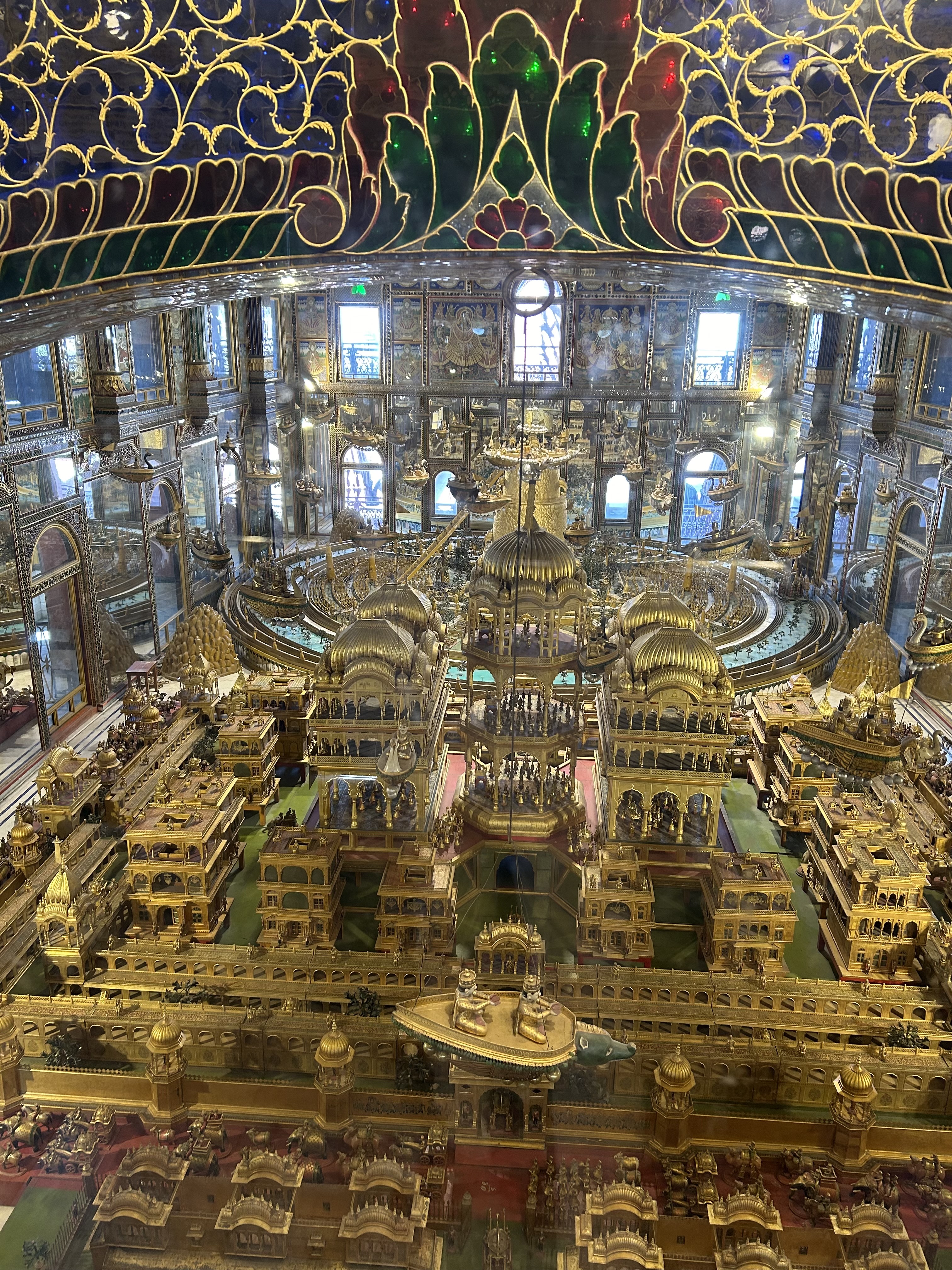
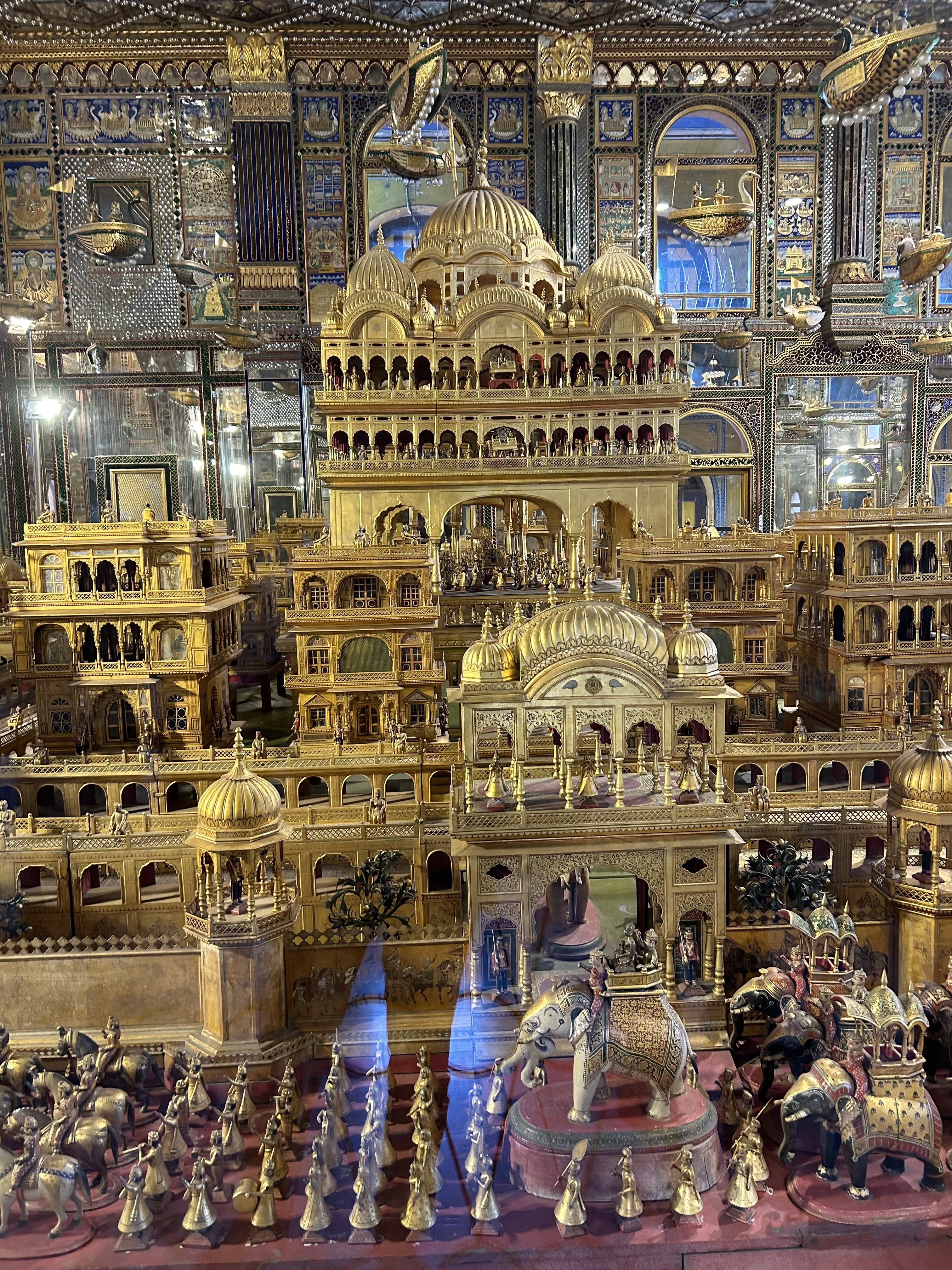
The second place Marina and Rajiv wanted us to visit was a Jain temple that was built and is still owned by the wealthy Soni family of jewelers. Constructed in 1865 with a the two-story museum added 25 years later. In the museum, artisans from Jaipur fashioned a gold-plated three dimensional replica of a the Jain vision of the world. The golden city was like a huge elaborate dollhouse with its intricate carving, miniature figures, and flying spaceships. Five auspicious events in a Jain’s life are represented: conception, birth, renunciation, enlightenment and salvation.
Our day in Ajmer ended sitting by the lake eating ice cream. The city in way ways feels like India from 25 years ago, especially in the Moslem quarter with little emphasis on tourism. We would have missed out on what Ajmer had to offer us without Marina and Rajiv.
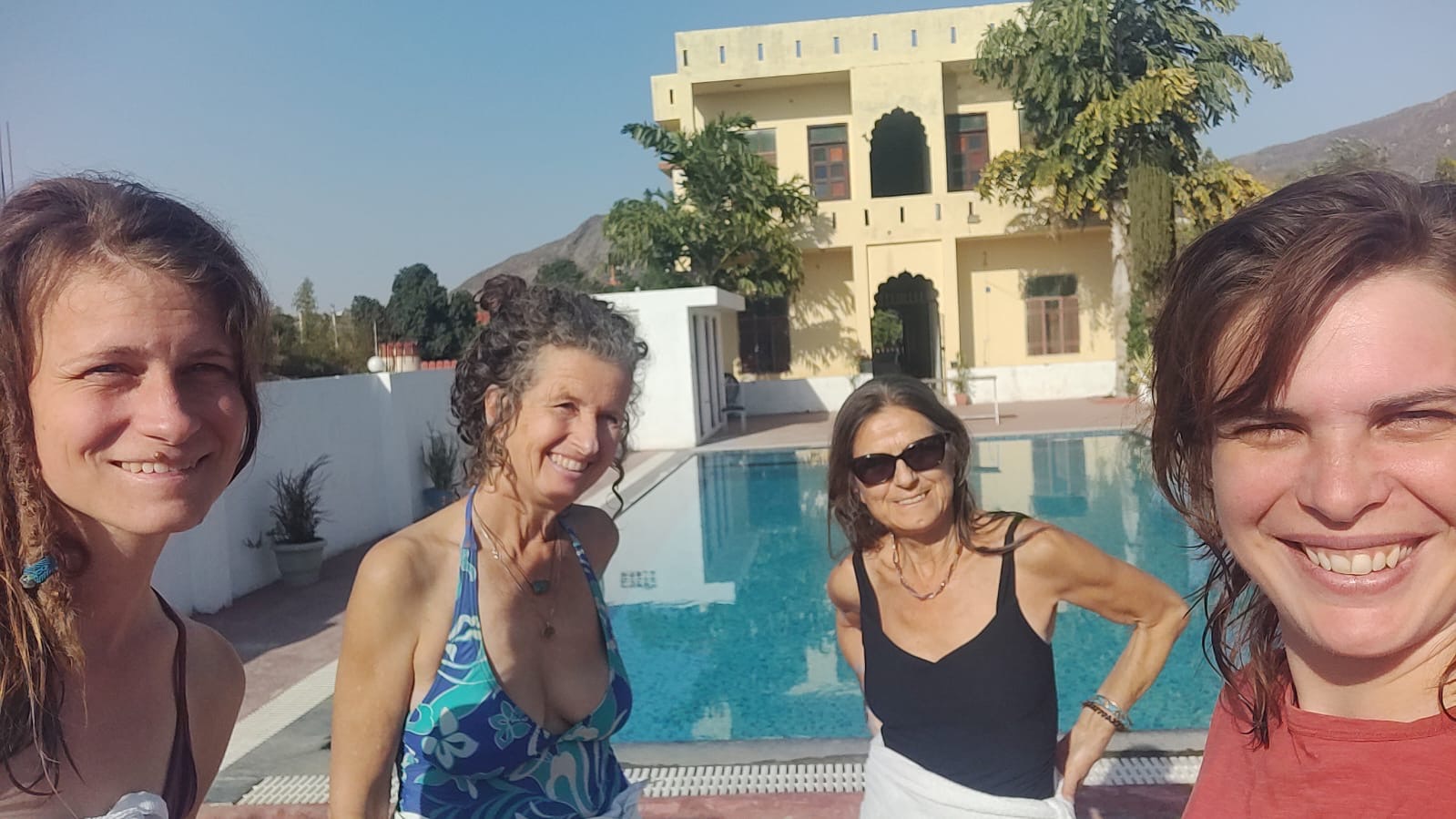
With the weather growing hotter by the day, Marina and I decided to visit a hotel with a swimming pool on the edge of town. Pryanka and her friend Nadine joined us. How refreshing to immerse ourselves into the cool clear water. Afterward, we sat beside the pool eating masala potato chips and paneer pakora, playing gin rummy! A perfect ending to our stay in Pushkar.
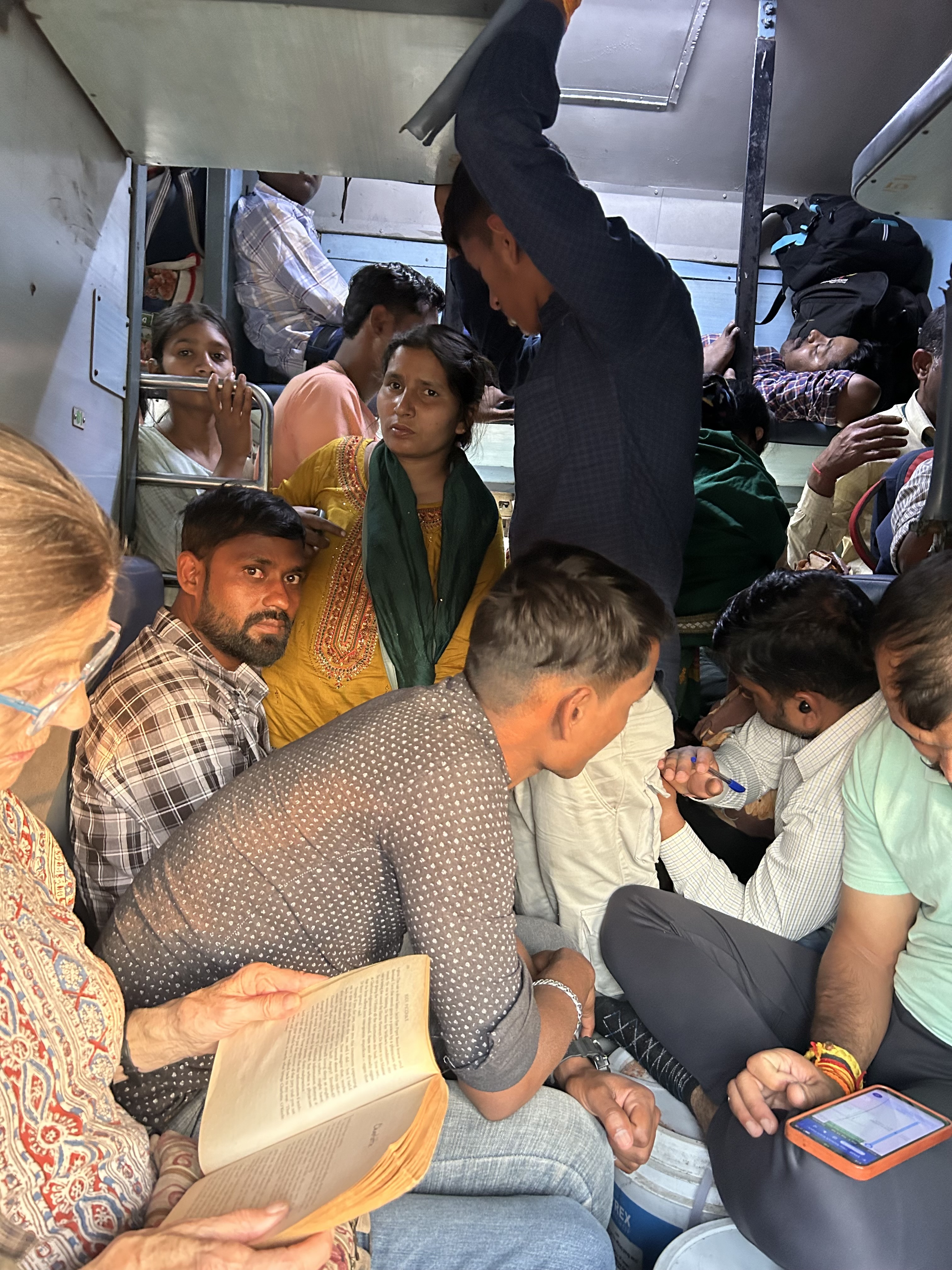
The next day we boarded our eight hour train to Delhi. Booking our tickets only two weeks in advance, sleeper class (just one class up from madhouse general seating) was all that was available. We had not anticipated the rush to get home for the upcoming Holi festival, and the train was packed (as in sardines). Our ‘compartment’ usually accommodates eight passengers but very quickly there were twenty jostling for a place to stand. And where to put baggage? And the 95 degree heat blowing in the open windows? The only reason we were able to sit was thanks to the boys who got on with us in Ajmer making room for the elderly.
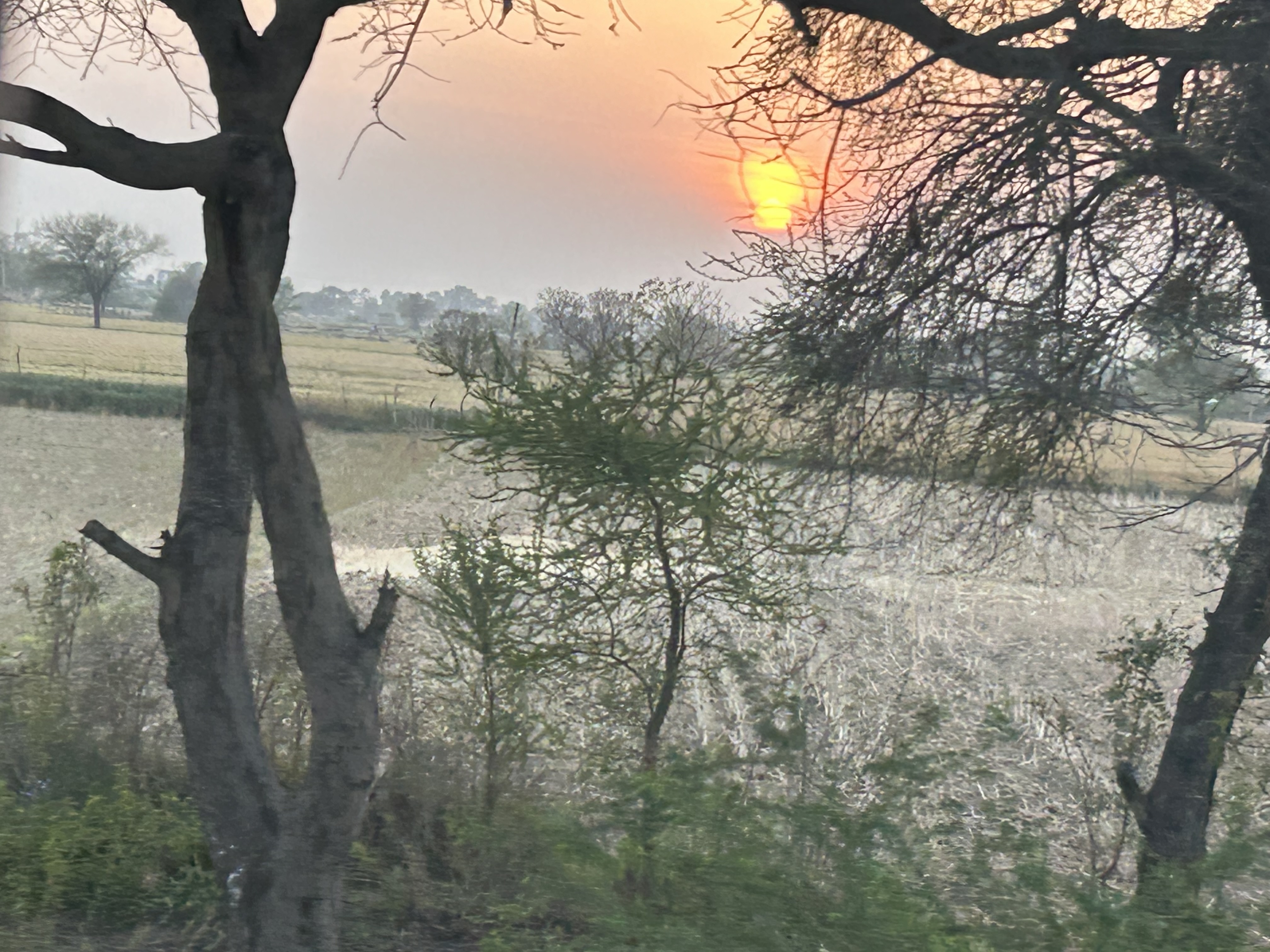
This may have been the first time we were unable to speak to anyone yet everyone was friendly. Gerard loves riding trains but this was too much even for him. This eight-hour journey seemed an eternity. But there was a nice sunset.
As we drew close to Delhi, Gerard worried how we were going to fight our way down the crowded corridor with our backpacks and cases. Again, the friendly young boys took control. One of the windows had no bars as it was an emergency window so even before the train was at a full stop, he jumped out. His mate pasted our cases to him, then he stood guard until we emerged out of the crowd. There was just enough time to thank him before the train started moving again (a two-minute stop). Would we have had enough time on our own? Another random act of kindness so typical of India.
 A Small Case Across India
Another delightful foray into new territory by the intrepid travelers…when are you arriving back in Boston? Have a safe return journey…
LikeLike
thanks James’. 29th. See you soon.
LikeLiked by 1 person
thanks Bobby you Write well a pleasure to read and join your adventures great shot of your husband!!
LikeLike
thanks for reading David. We’re in Delhi now waiting to fly home on two days. See you soon.
LikeLike
How could you not be happy with ears like that!
LikeLike
that goat looks so happy!
LikeLike
loved it , Bobbie…
good pic of Gerard too
LikeLike
Beautiful!
>
LikeLike
Thanks again for your feedback, Judy! We enjoy hearing from you.
LikeLike
what an amazing trip! Can’t wait to see you in Boston!
LikeLike
Mixed feelings about returning to Boston, but looking forward to seeing you! I will be in contact after March 29. .
LikeLike
Bonjourno 🇮🇹🙏🏽 we have loved seeing your blog and your photos but the photo of G with the white scarf on his head was the best 😳😆✅🎥🥰💕✌🏽🌟
LikeLike
thanks for taking time out in Italy to read the blog. Gerard was quite happy wearing his dorky hat! Love your Italy pictures. Can’t wait for the stories too. 💜🙏🏾💜
LikeLike
My
<
div dir=”ltr”>
<
blockquote type=”cite”>
LikeLike
<
div dir=”ltr”>
<
blockquote type=”cite”>
LikeLike