Dogs? I don’t hear any Barking Dogs!

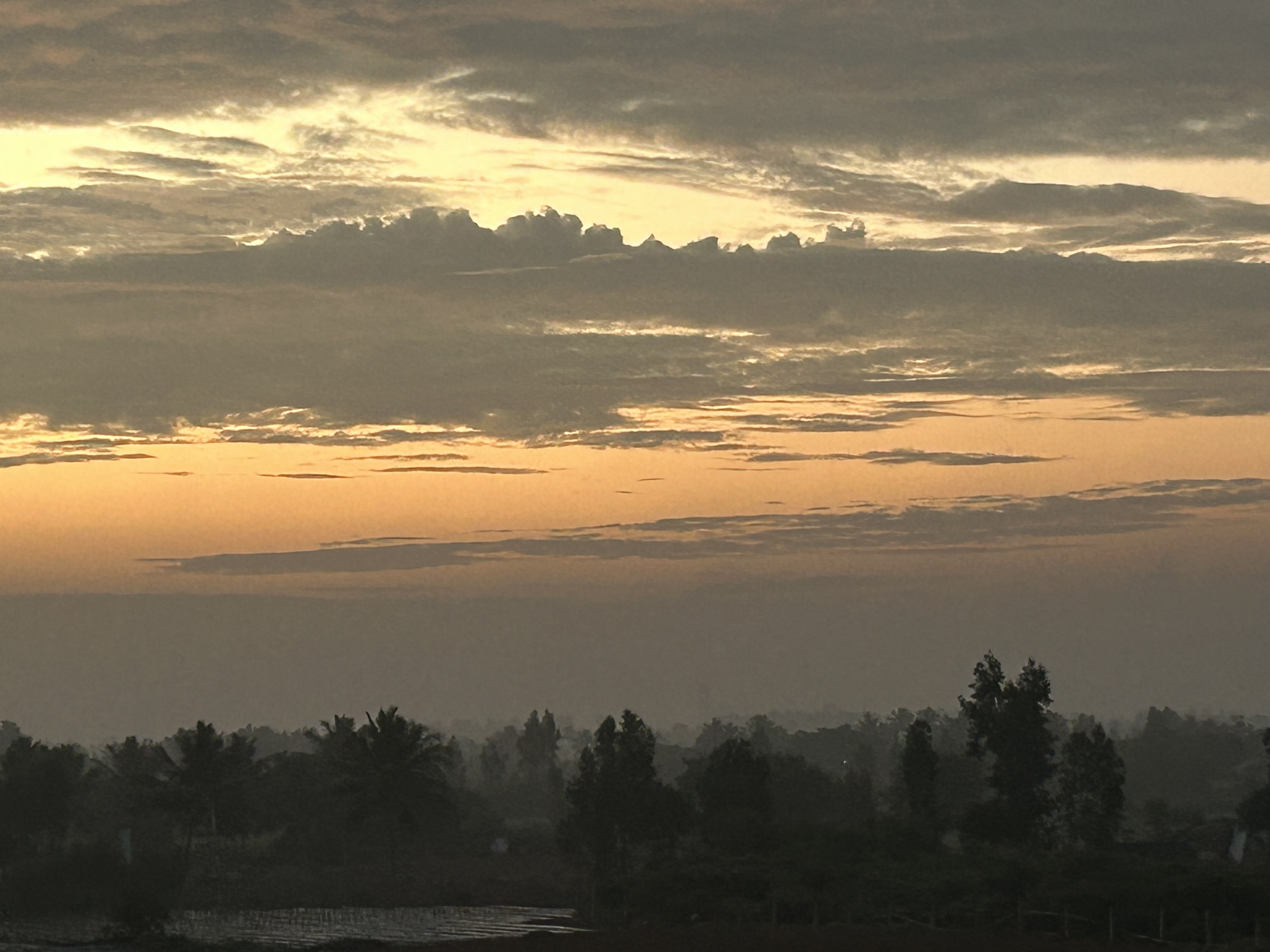
After a rewarding ten-day meditation retreat at a small ashram in the country outside Bangalore, a taxi took us the two hour drive to Bangalore railway station where we caught an overnight train direct to Gokarna. We arrived at 7 am quite refreshed from an unusually good night’s sleep.
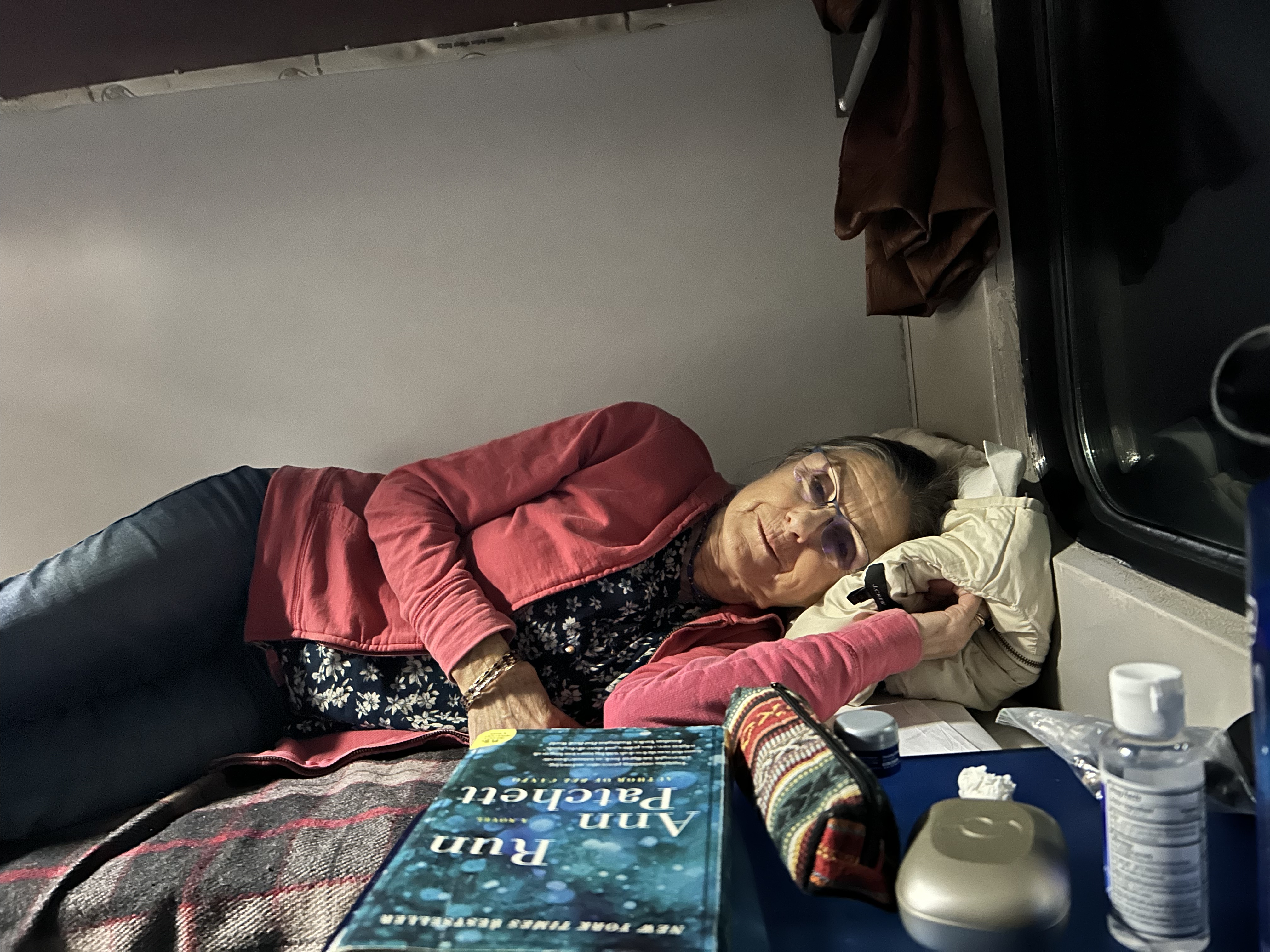
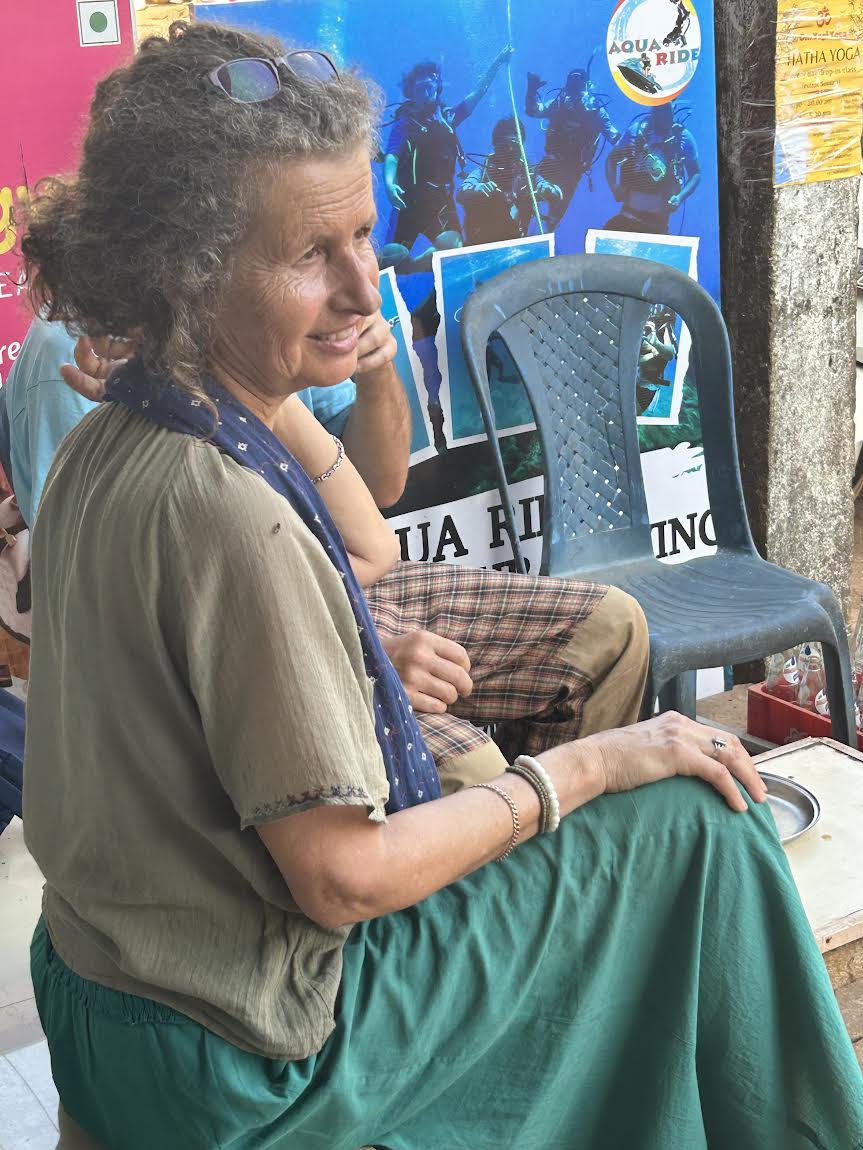
Gerard was looking forward to the train ride, his preferred mode of transportation ,and it didn’t let him down. The train left on time, and even I was impressed by the cleanliness and comfort of the Panchaganga Express. As usual our 2AC compartment was chilly but quiet: no snoring sleepers or wailing children. Marina, our English friend and already in Gokarna, had messaged us saying she thought her partner’s sister, Anita, was on our train and included a photo. Sure enough, we woke to Anita peering around the compartment curtain, and though we hadn’t met before she was easy to recognize from her photo. Anita’s an interesting woman, part Indian/part English, living in CA and married to an Algerian. She speaks seven languages fluently and has been a United Airline hostess for many years. The taxi ride to our guesthouse flew by as we got to know each other. And I was very happy to see Marina, our London friend, again.
We reserved the same room as last year. The guest house has only a few patrons and two are longterm regulars. An interesting addition is an Indian family with two small children who has set up housekeeping in a room at the top of the stairs. The father is a masseuse who we pass on the way to the beach. “Oil massage today, Madam?”

Dropping of our cases, we went straight to our breakfast stall down the road. The young owner greeted us warmly and immediately served up chai and idli. His sister makes the best samba we’ve ever had (a spicy vegetable stew with chickpeas) and coconut chutney eaten with steamed rice patties. An idli plate is a substantial South Indian breakfast. Since opening last year, the boy’s business has grown and he’s able to make enough to shut up shop at 10 am and pends the rest of the day preparing food for the following day. Unfortunately, his small premise holds only a couple of tables, barely enough to support the influx of customers. This gives us the opportunity to meet a variety of people. Today a portly Swedish gentleman shared our table. He used to be a vegetarian chef, now retired. He says Sweden is perhaps 20% vegetarian. Living almost in the center of Stockholm, he has his housing paid for by the government because he has no bank account. Of the $900 he gets in social security each month he manages to save $300. In Sweden, it doesn’t pay to save for retirement!

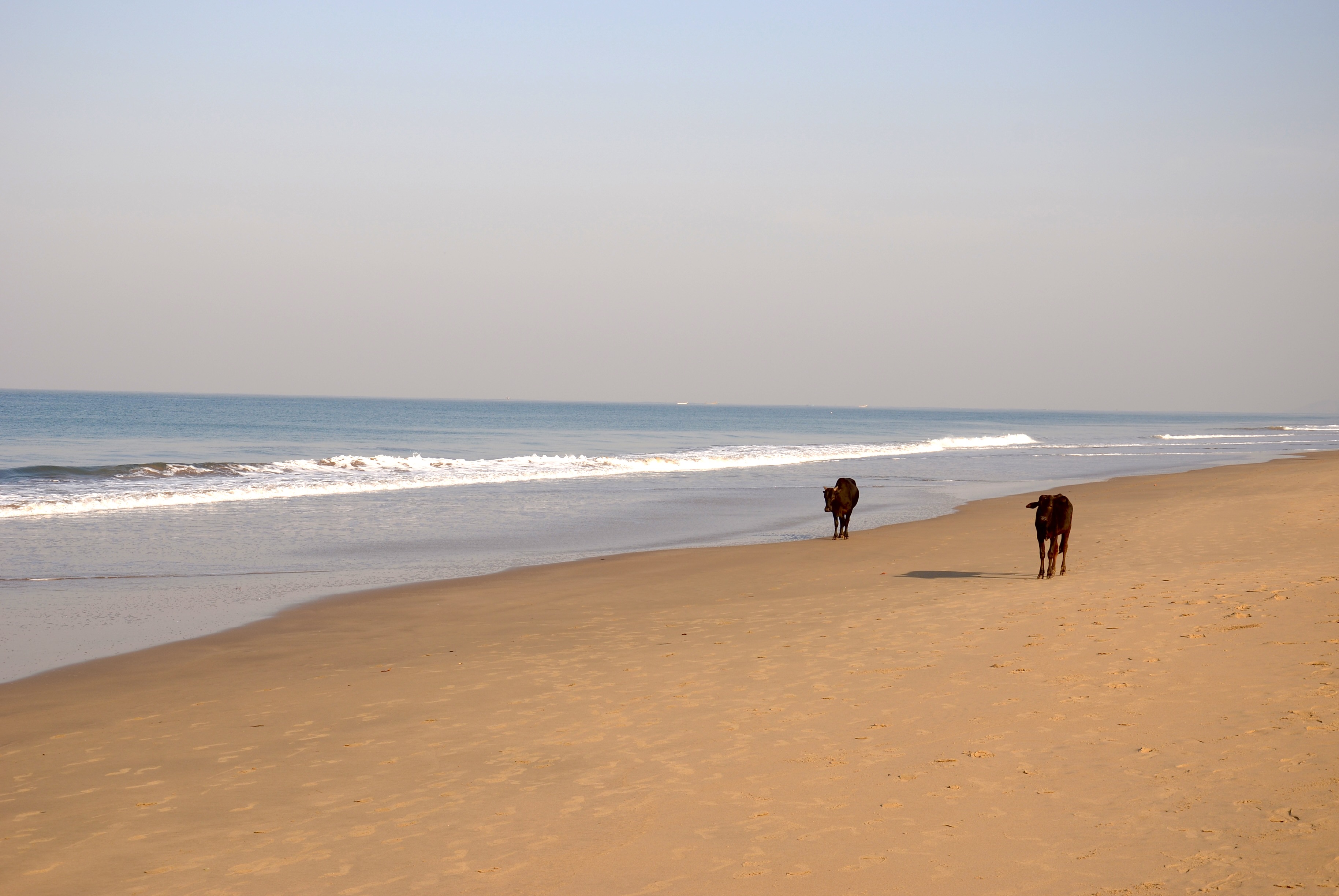
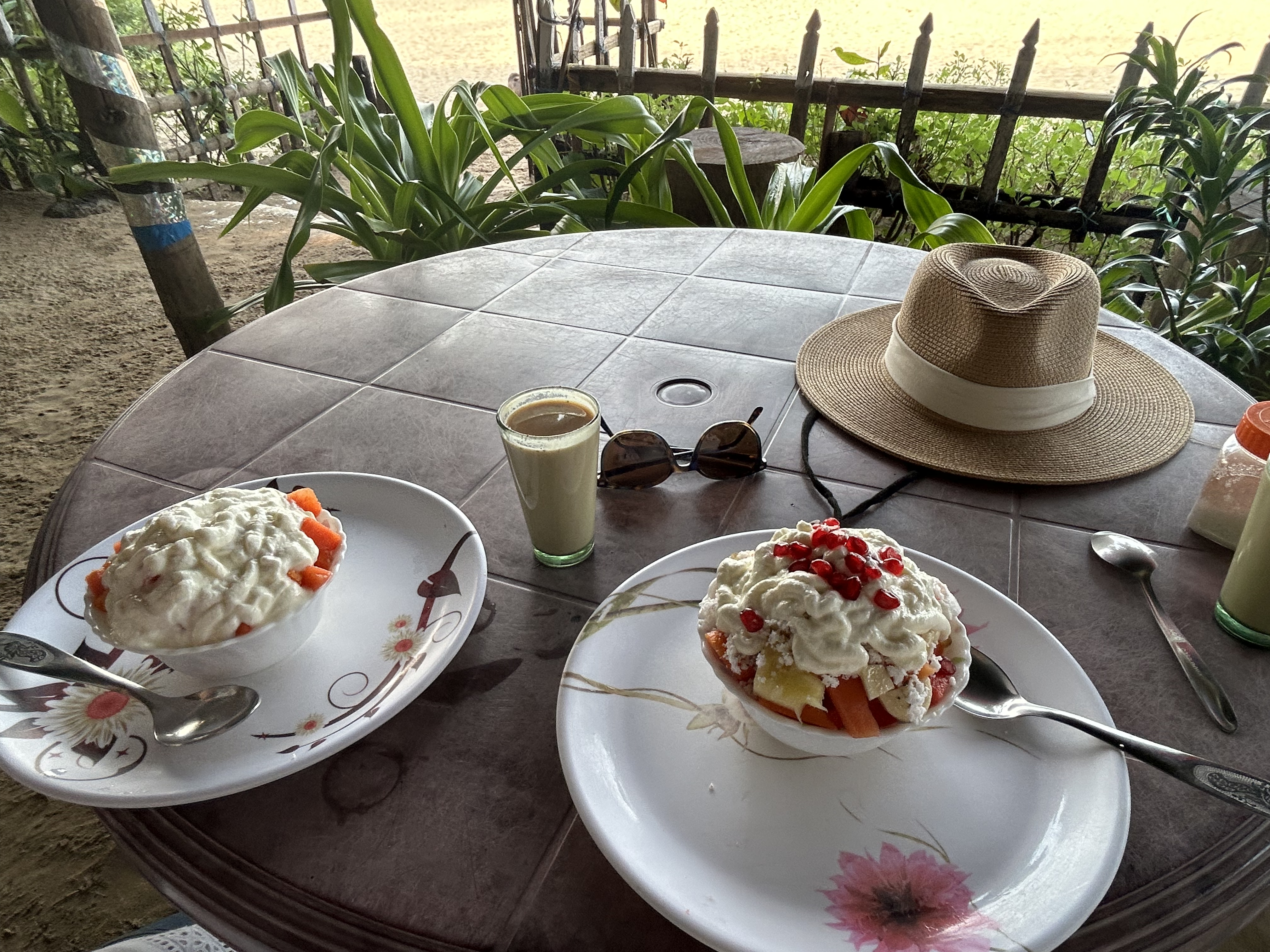
We hustled back to the room, put on our swimsuits and went straight to the beach. At a quick glance, the beach had hardly changed since last year. The sea was typically warm and clear. I swam until my hands wrinkled. At our favorite beachside cafe, Shankar and his wife gave us another friendly greeting. Curd and papaya followed by a glass of strong masala chai.
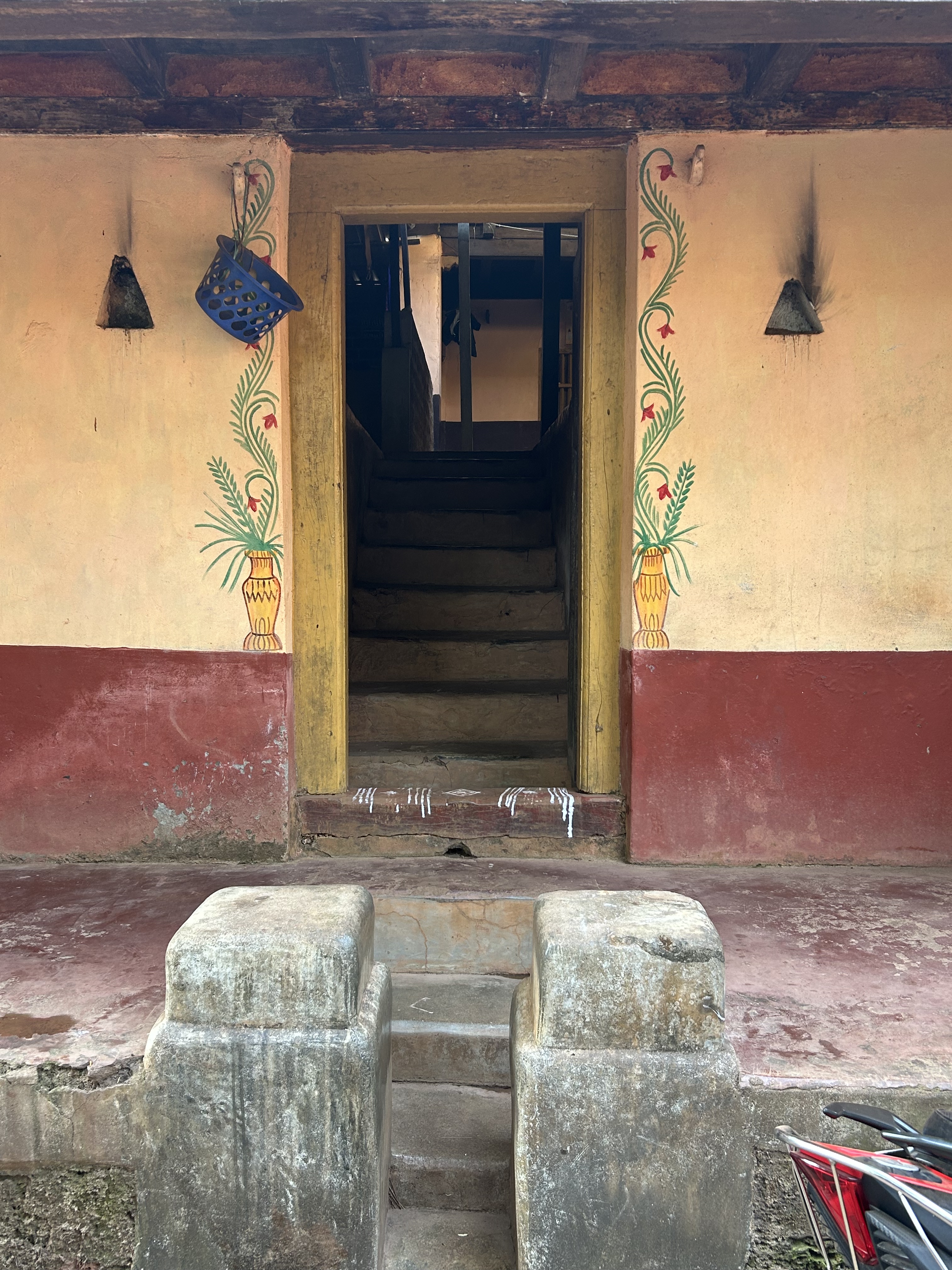
Back in our dusty room, Gerard spent a couple of hours scrubbing the place down, hung the washing line, pinned the mosquito net across the window, and then we unpacked. Now the room feels like home.

Except for the wild life! We’re surrounded by birds, animals and insects. I love hearing birds chirping in the early morning (thankful my reverse slope hearing loss doesn’t extend to high frequency sounds), until their song is overpowered by the cawing of a raucous craven and the shriek of the chipmunk. How can such a small animal make such a piercing noise? And of course there’s the dogs. This time, below our room a Labrador puppy is an addition to the guesthouse dogs. Easy to train, says Gerard. But nobody does anything about this puppy’s shrill and constant barking – particularly as we’re about to go off to sleep. And then the neighboring dogs, part domestic, part wild arrive and add their howl. Dogs in India as everywhere are highly territorial. In the middle of the night there can be an outburst of ten or more dogs barking at once. A benefit of hearing loss is I don’t usually hear the dogs.
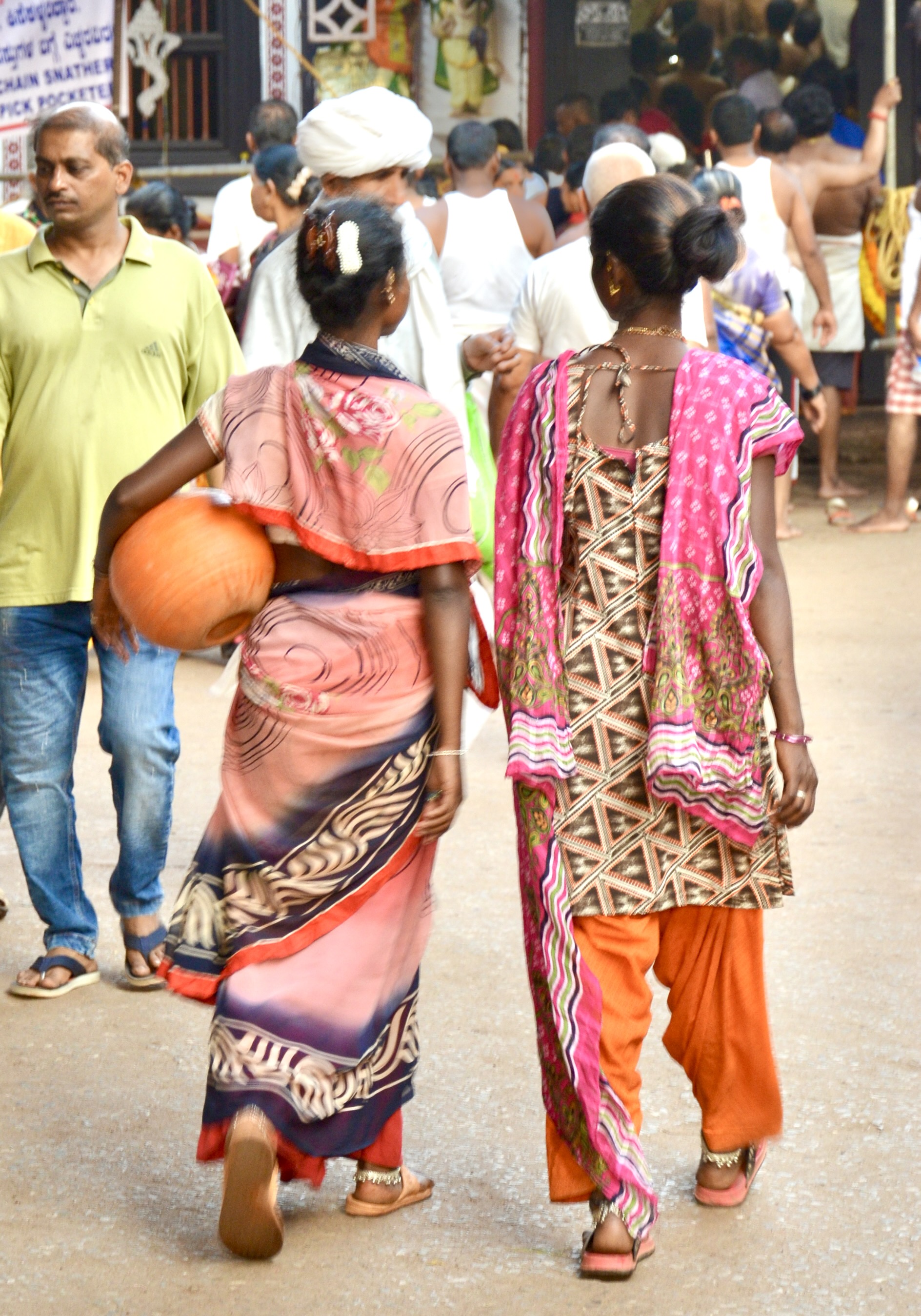
The day after we arrived we made the 30 minute excursion into town for fruit, rice cakes and peanut butter. With the exception of increased traffic, the town has changed remarkably little since last year. No new restaurants, the same tourist cheap clothing shops, and stalls selling offerings for the pilgrims to take to the temple. While there may be fewer westerners, there does seem to be many more Indian visitors in town, but it’s a long weekend celebrating one of many Indian holidays.

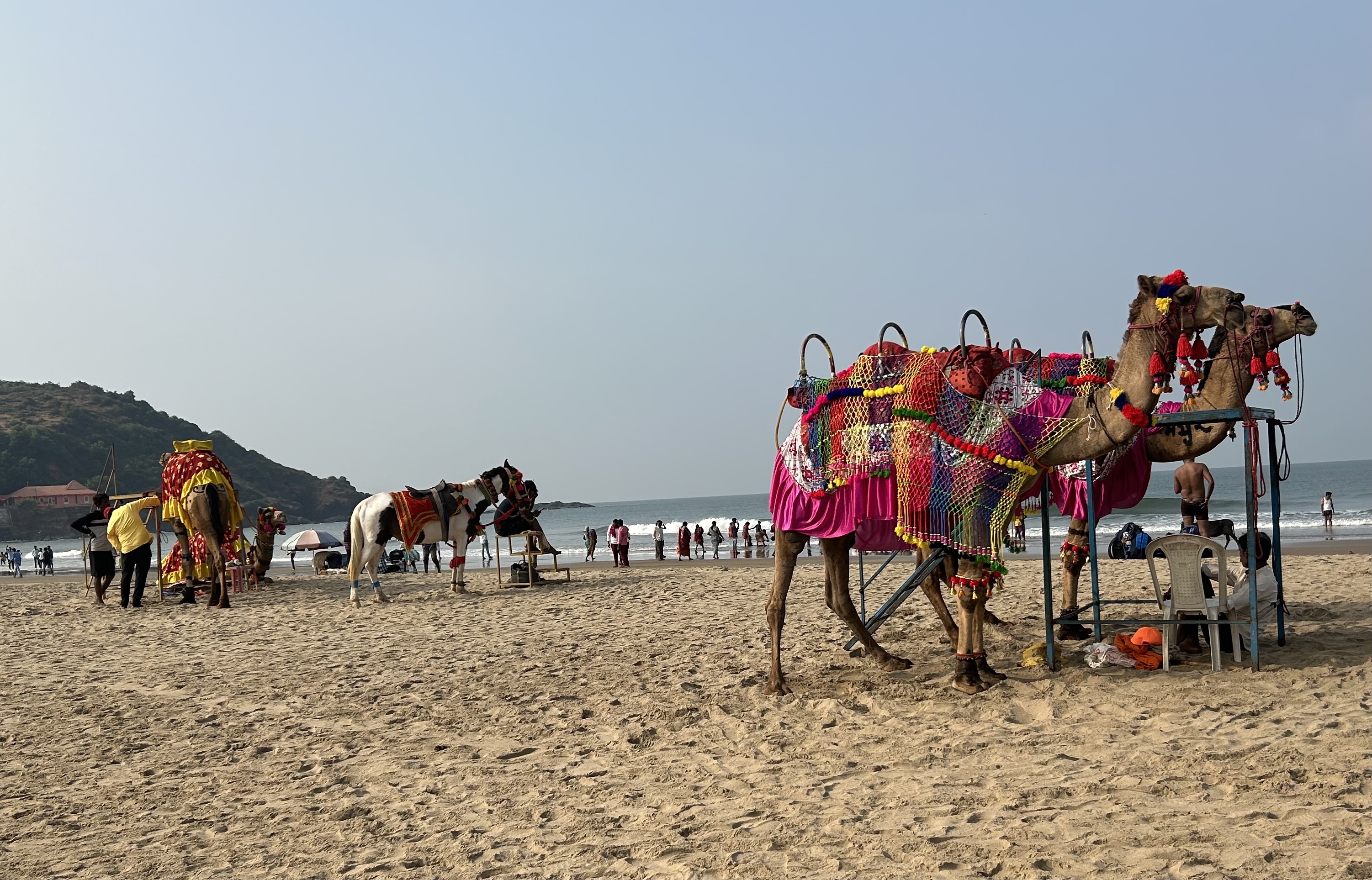
No one can explain exactly what it is and usually resort to: “It’s an Indian holiday.” At the end of the beach near the town, there’s ample amusement for the Indian pilgrims/tourists, including camel rides and ice cream vendors on bicycles.
We have a choice of restaurants on the beach for dinner. After several days we returned to a favorite from last year and there was the couple we knew sitting at their usual table with a prime sunset view. Daniel is American but left in 1969 and landed in Israel just as the War of Attrition broke out. He freaked out and fled to Norway where he married and still lives. In the richest country in Europe they enjoy a good lifestyle, but have been coming to Gokarna for many years for four months at a time. Leaving the US the same time as Gerard and staying for similar reasons, he has some interesting stories.

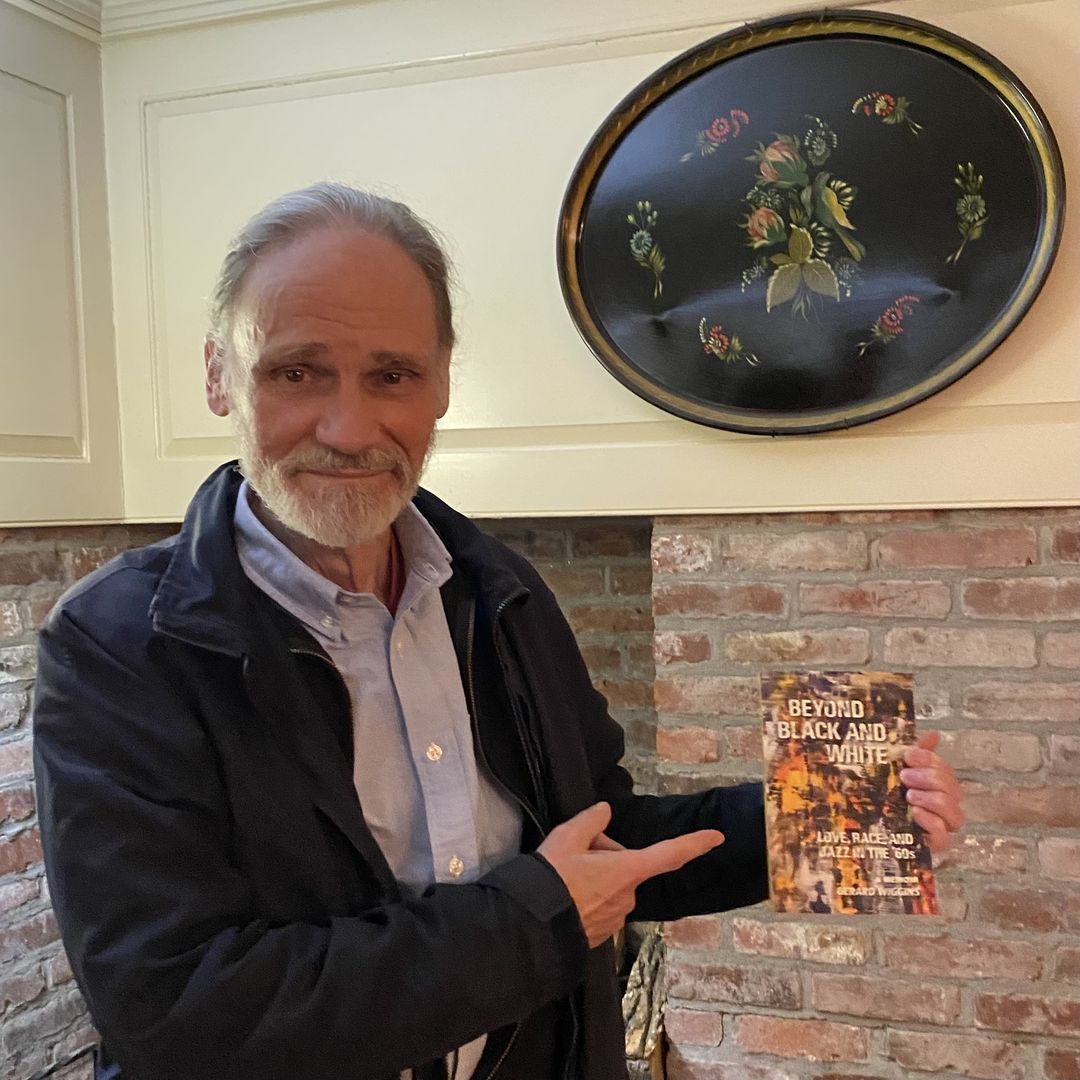
Eclipsing our joy of being at the beach was the news that our good friend, Arthur, had suddenly died while we were at the retreat. One of Gerard’s oldest friends, they met on Beacon Hill in Boston back in 1966 and he has written much about their relationship in his memoir, Beyond Black and White. Although Arthur moved to Florida, he and Gerard remained in contact, the more so during the last decade when they would talk by phone at least twice a week. Arthur was the first of Gerard’s friends I met in 1973 and I immediately loved him. Gerard’s been in constant contact with mutual friends and helped write the obituary and a speech to be read at Arthur’s funeral. None of which has helped him deal with reality. That will come in time.

I also lost a good friend shortly before we left. Unlike Arthur, Chris had struggled with cancer for over six years and we knew it was highly unlikely she’d survive before we returned. Fortunately, I had the opportunity to say goodbye to her. I was expecting to play the role of cheering her up, as she lay paralyzed from the waist down in a hospital bed. But instead she was surprisingly animated. Our visit was full of light and joy. After we left, I looked up at the winter sky which was clearing after a night of rain, and watched a large bird slowly circling. I felt a tremendous peace. Chris died a few days later.
A Blind Woman Sings

The decision of how to spend the winter was avoided until I finally asked Gerard if he was happy to just stay home.

“I can think of worst places to be but no, I think we should go to India one more time.”

Then the reality set in that our life might not fit into that small case any more with all the pills and supplements that old age now requires. Even my chiropractor questioned our decision. “My parents who are your age wouldn’t consider traveling at all, what to speak of India! You’re sure it’s a good idea?”

He didn’t put me off. I knew there’s one more trip in us.

There was going to be a 10 day meditation retreat near Bangalore starting in January that I was more keen to attend than Gerard, but with gentle persuasion, he came around to the idea. Just after Christmas we would fly to Delhi, rest for a day then visit our Indian family for another day before flying to Bangalore.

Typical for international flights to Delhi we arrived at 2.30 am. After 50+ years of traveling, we have yet to lose a bag. And good luck was with us once again. We waited for first light (there was none due to smog), to book a taxi to our hotel in Pahargunj, hoping the hotel staff would be awake by then. Not only were they awake, but they greeted us with friendly smiles. ”Nice to see you again, Mr and Mrs Wiggins.”

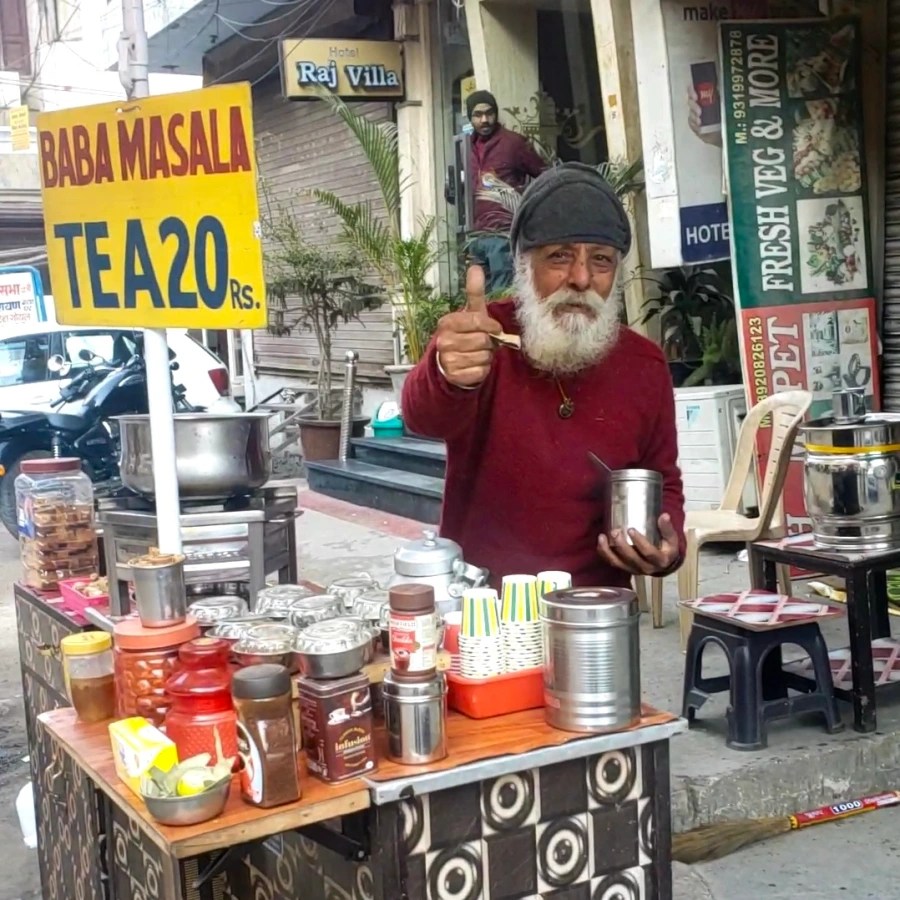
The masala chai wallah was in his usual spot. He touched his heart, and said, “One sugar, one no sugar.” Just then, the sound of a chanting voice echoed down the street. A blind woman, her hand resting on the head of a young boy as her guide emerged around the corner. If she had been born into a different place and time, she would have dominated a world stage with her angelic voice. But here on the grimy streets of Delhi, she would have to settle for meager handouts. What a strange world this can be!

The Mahajans had moved during the summer and were anxious for us to see their new house. As we sat around the dining table drinking strong chai, the eight months since we last saw them seemed like yesterday. Kamal reminded us that by chance we first met nearly twenty years ago at our house in Boston.

Kamal and Shruti with me in Boston in 2004

She had come to visit her daughter, Shruti, who had started a new job. Just as Kamal arrived, Shruti was asked to vacate her apartment. Through a friend, we had met her only once. But when she told us her predicament, Gerard insisted she and her mother should stay with us. Kamal was reluctant to impose on strangers but there was no alternative. The first night she barely spoke. The following morning, Shruti and I went off to work, Gerard was free for a few days. When I got home that evening, he and Kamal were sitting at the dining room table carrying on gas if they had known each other for years! She said to me, “Since you’re working and I am not, now I will do the cooking. I hope you like Indian food.” That was like asking if the sun rose in the east!

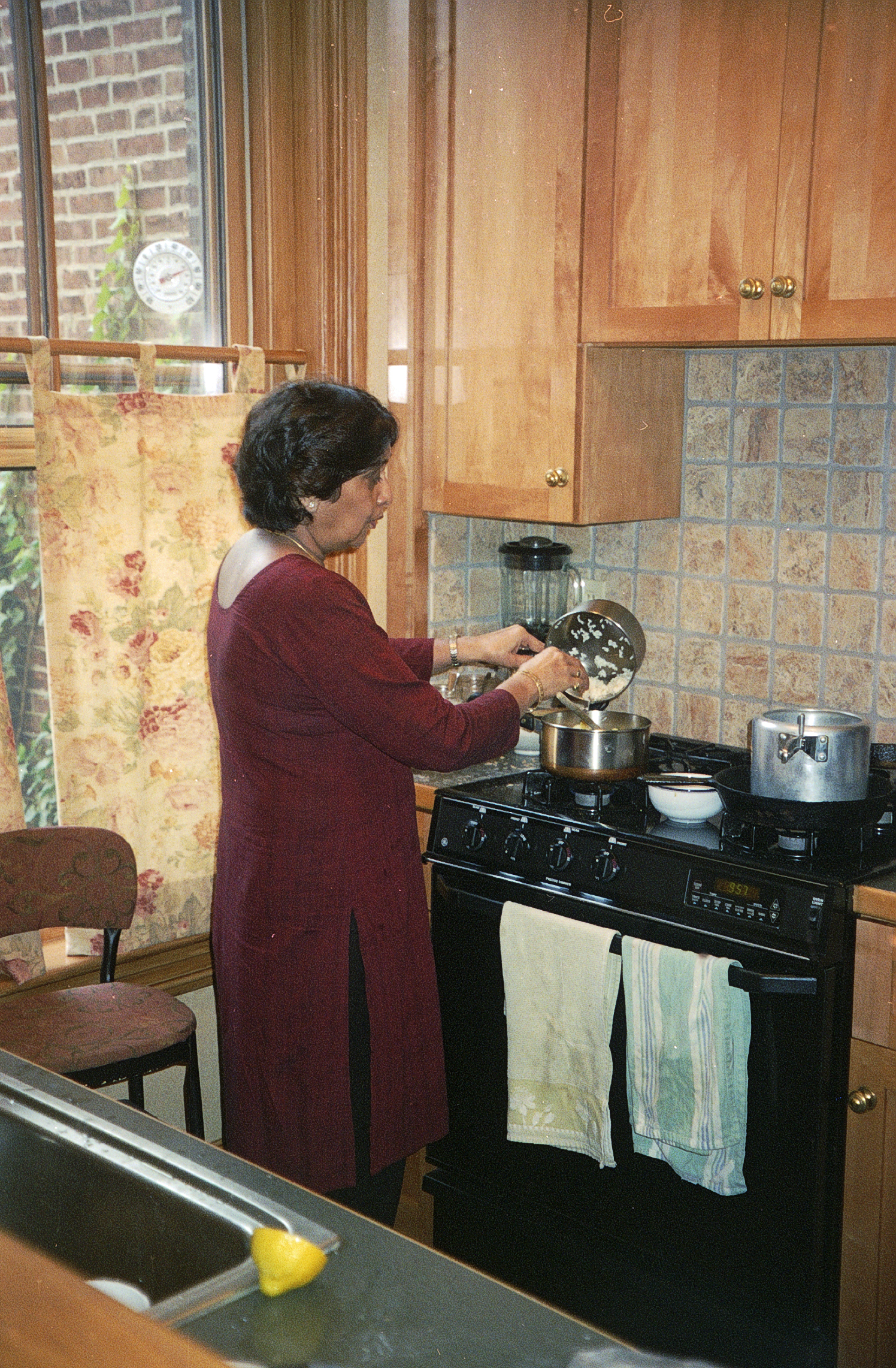
Kamal in our kitchen

For the next five weeks, we learned what Indian home cooking is all about, very different from the usual restaurant fare. Ever since then, the Mahajans have welcomed us in like family.

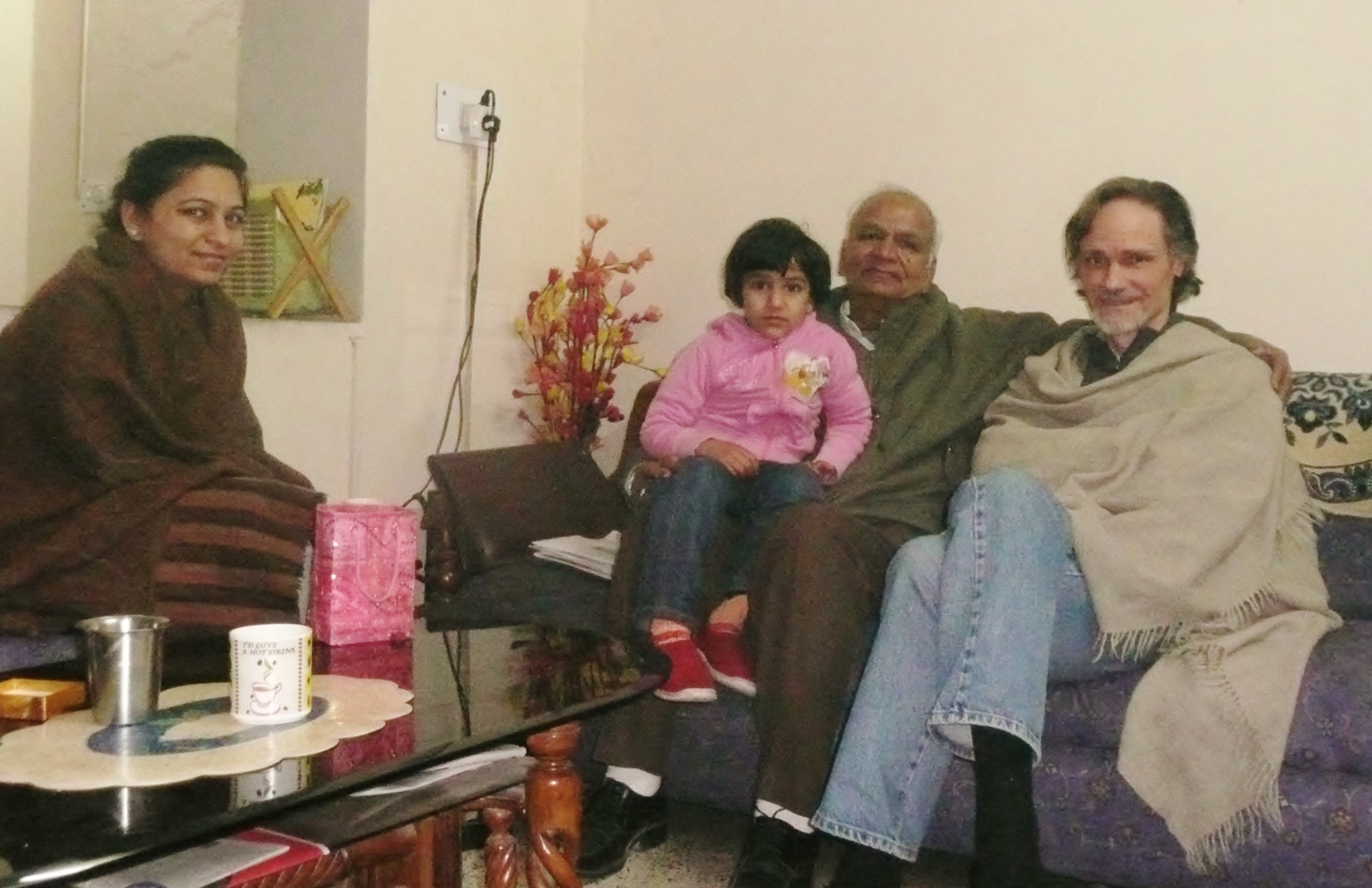
Shruti with daugher, Simrita and father, Bhushan in 2009.

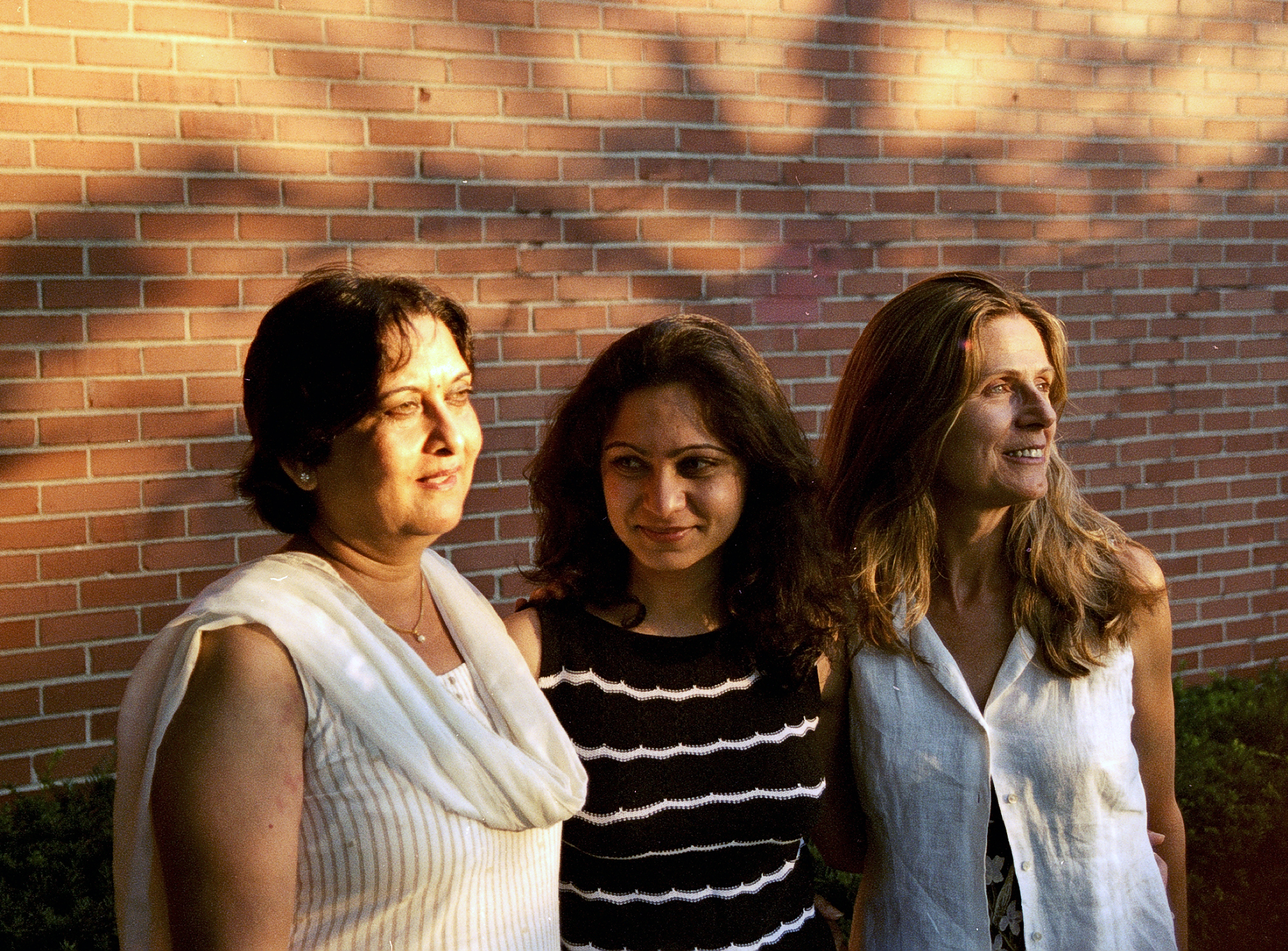
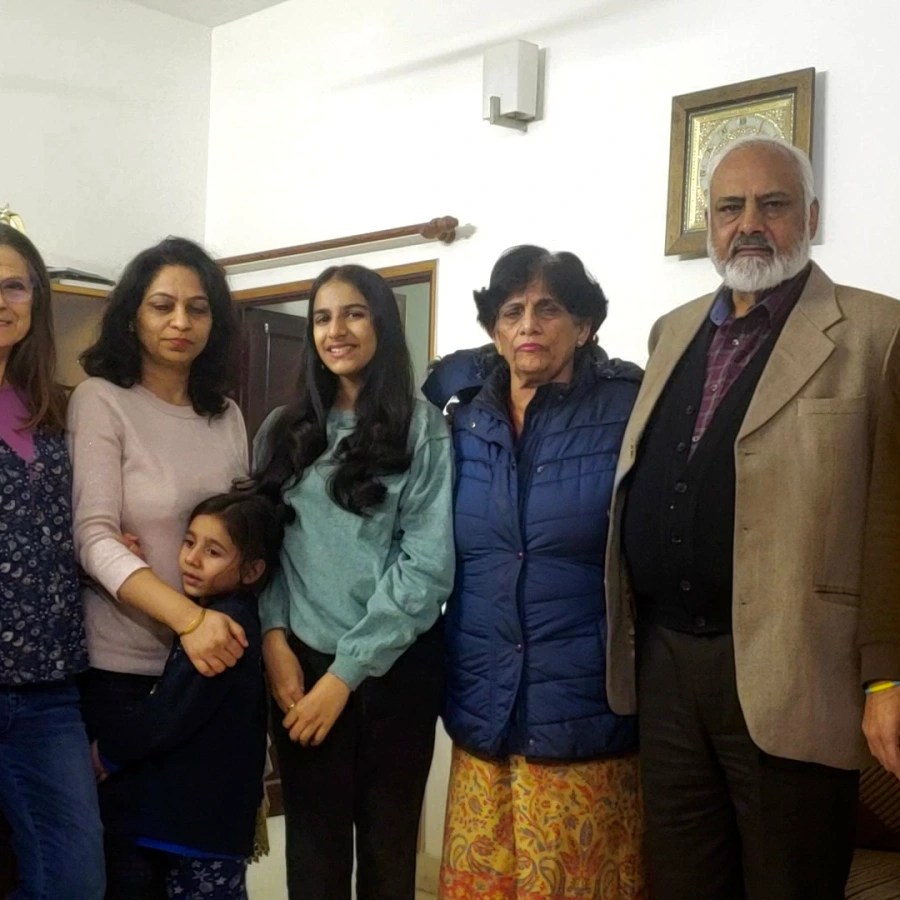
Shruti, Tanya and Simrita and Swarn auntie and Ravi uncle in 2022.

A Tale Worth Telling

As many of you already know, Gerard has completed his memoir spanning the years 1966 to 1968. He started writing his story three years ago, on the anniversary of Martin Luther King Junior’s assassination.

Gerard can be a great story teller, but story telling doesn’t always translate easily into writing, especially for a dyslexic. Settled at the beach in south India for a month he took over my computer and struggled to learn his way around the keyboard via ‘hunt and peck’. Nevertheless he kept writing with the same dedication he applies to his painting—and his typing improved the more he wrote. (Thank goodness for spell check!) The story and characters that I’d heard came to life. For years, he’d helped me improve my India blog posts, now it was my turn. In those early days in India, I would wake in the middle of the night to the light of the computer and he was sitting up in bed typing away. Back in Boston he continued to write and revise. He learned about the old saying, ‘writing is rewriting’. The last and perhaps most difficult step was the book production. More tedious than writing the story, Gerard said. A professional editor was immensely helpful dealing with formatting, font and Amazon. The book is now available. For more information go to https://gerardwiggins.com/.

A review on Amazon :

“The time period in which this story is based contained some of the most influential and decisive moments in USA history. And, the author is right in the middle of it all. His descriptions of the racial divide and its influence on the jazz scene provides insights that few have experienced. All of this serves as a backdrop of the author’s own life changing maturation. I can’t recommend this book highly enough.”

Near the end of the Kullu Valley…and our trip

“I’ll drive you up to Rumsu,” said Manju, the sweet young woman who serves us breakfast every day at the roadside restaurant she runs with her father and sister, and who we’ve known for many years. “If you take us up, we’ll walk back.”

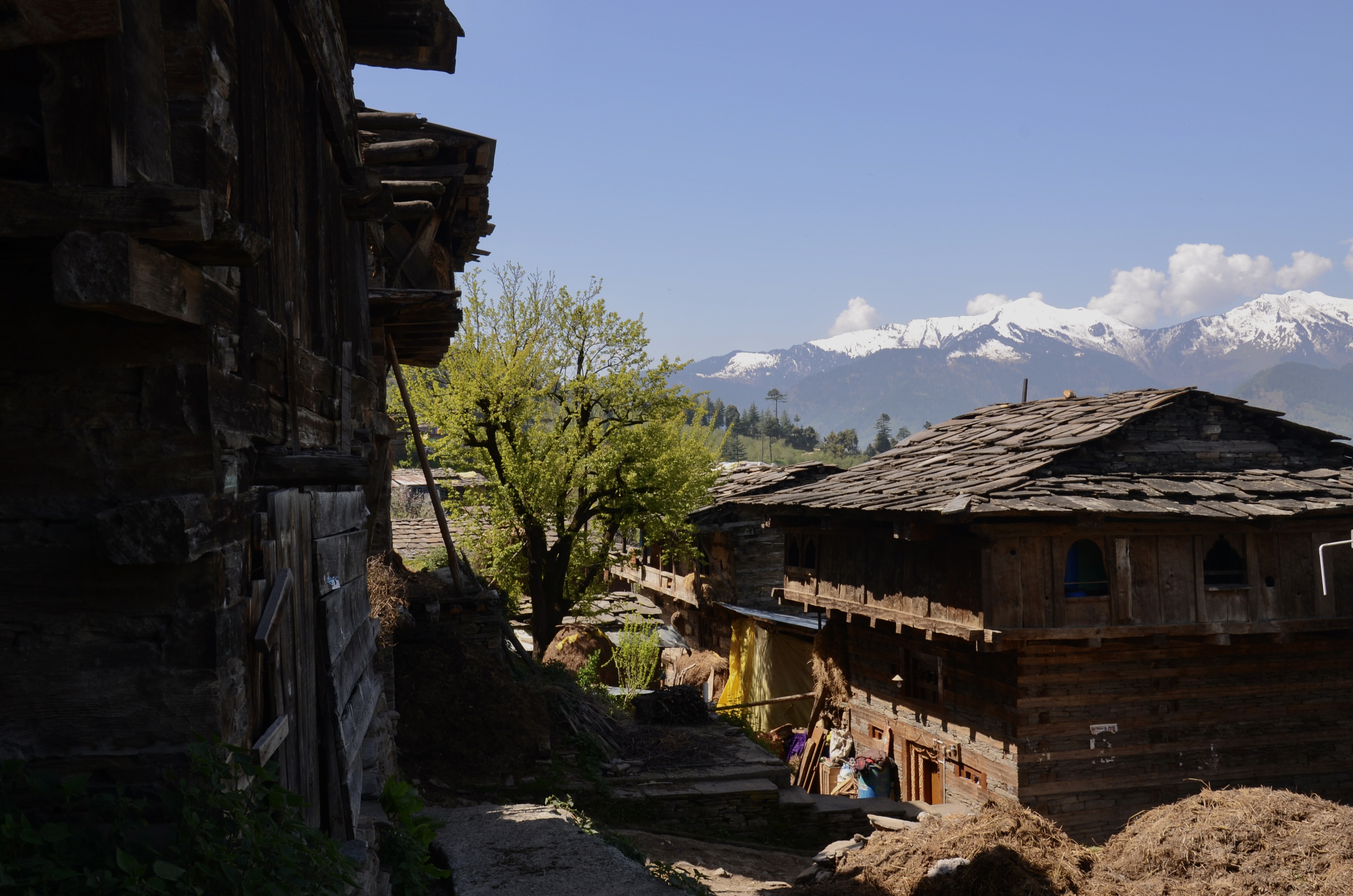
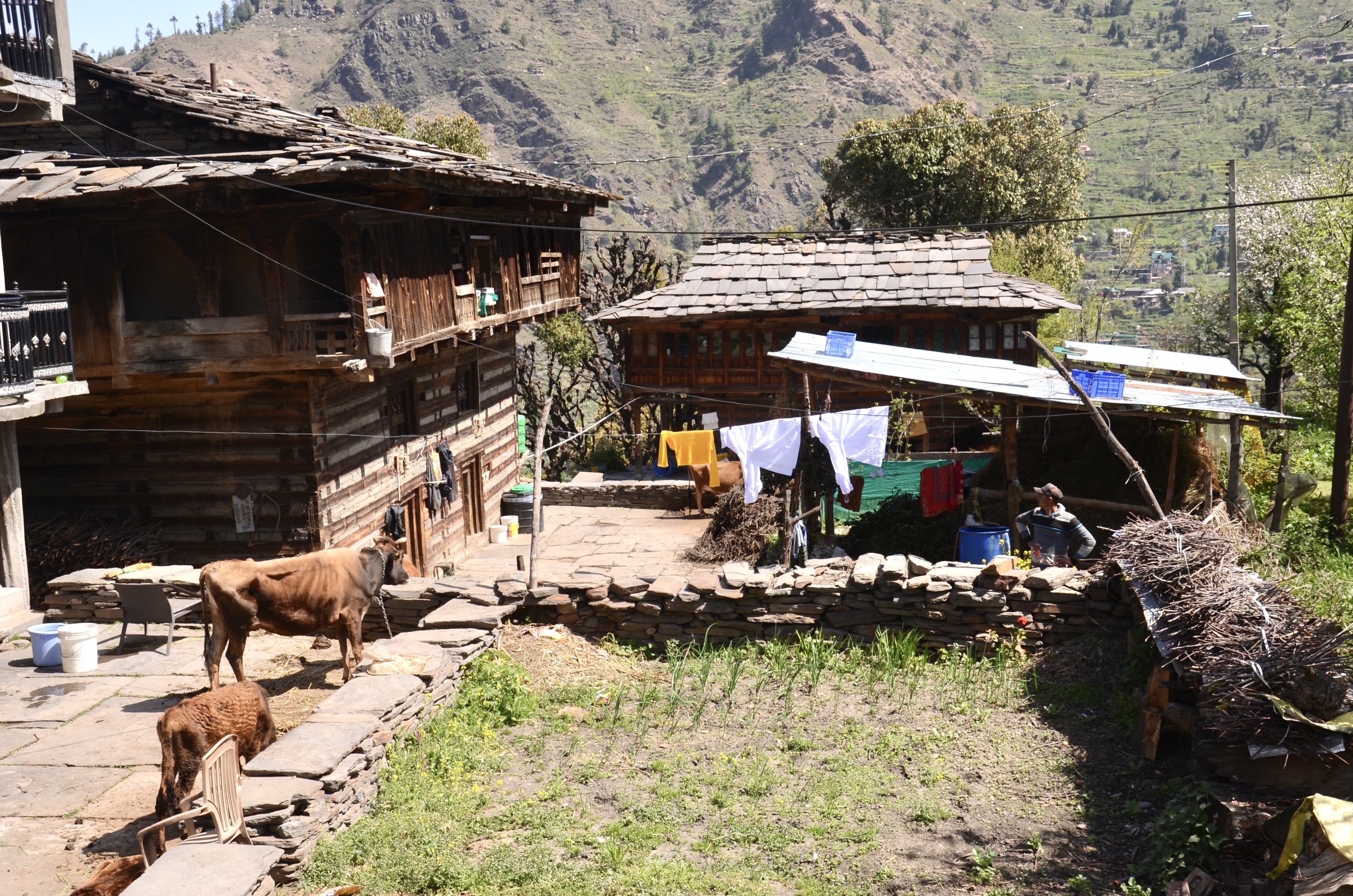
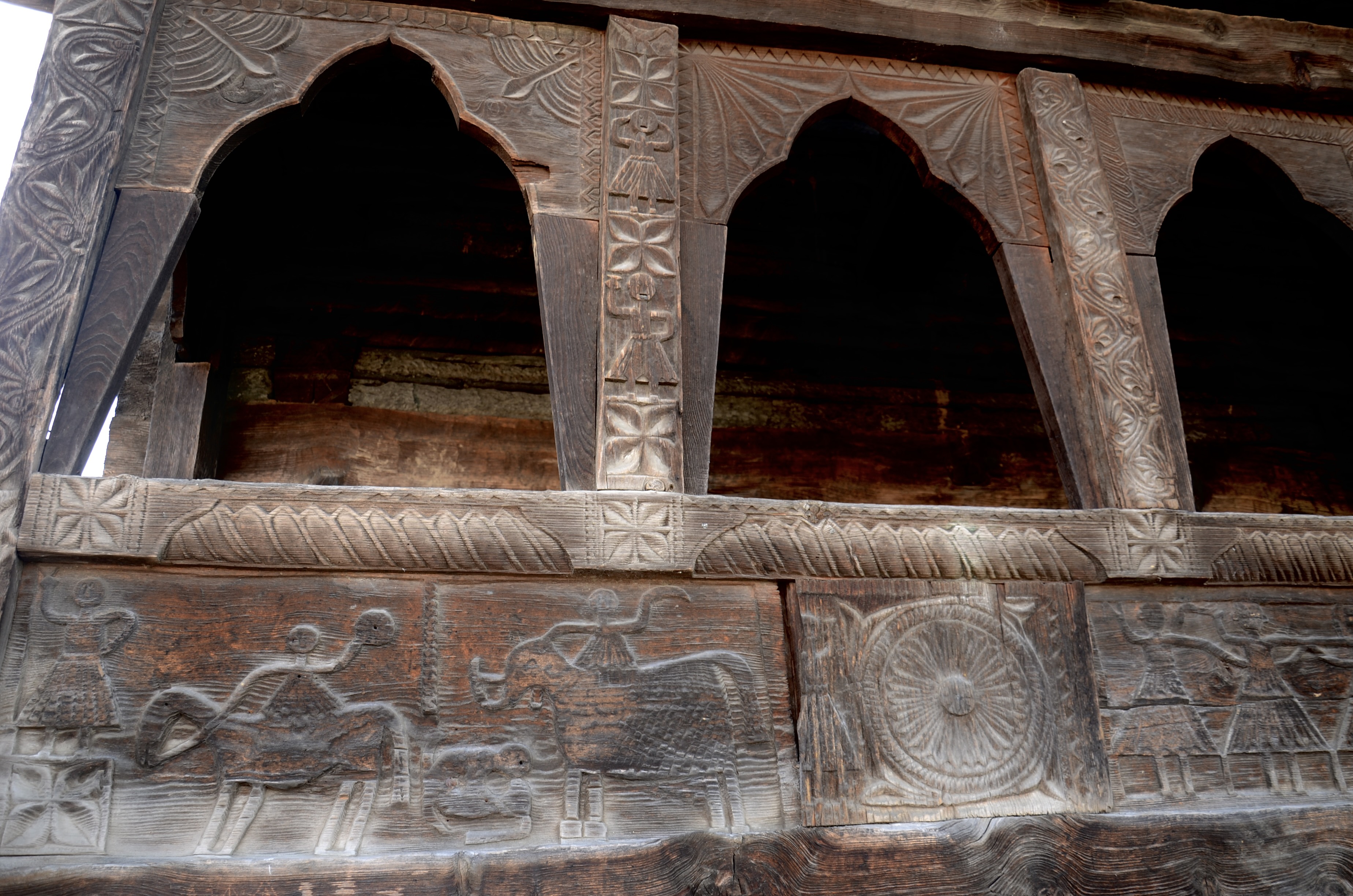
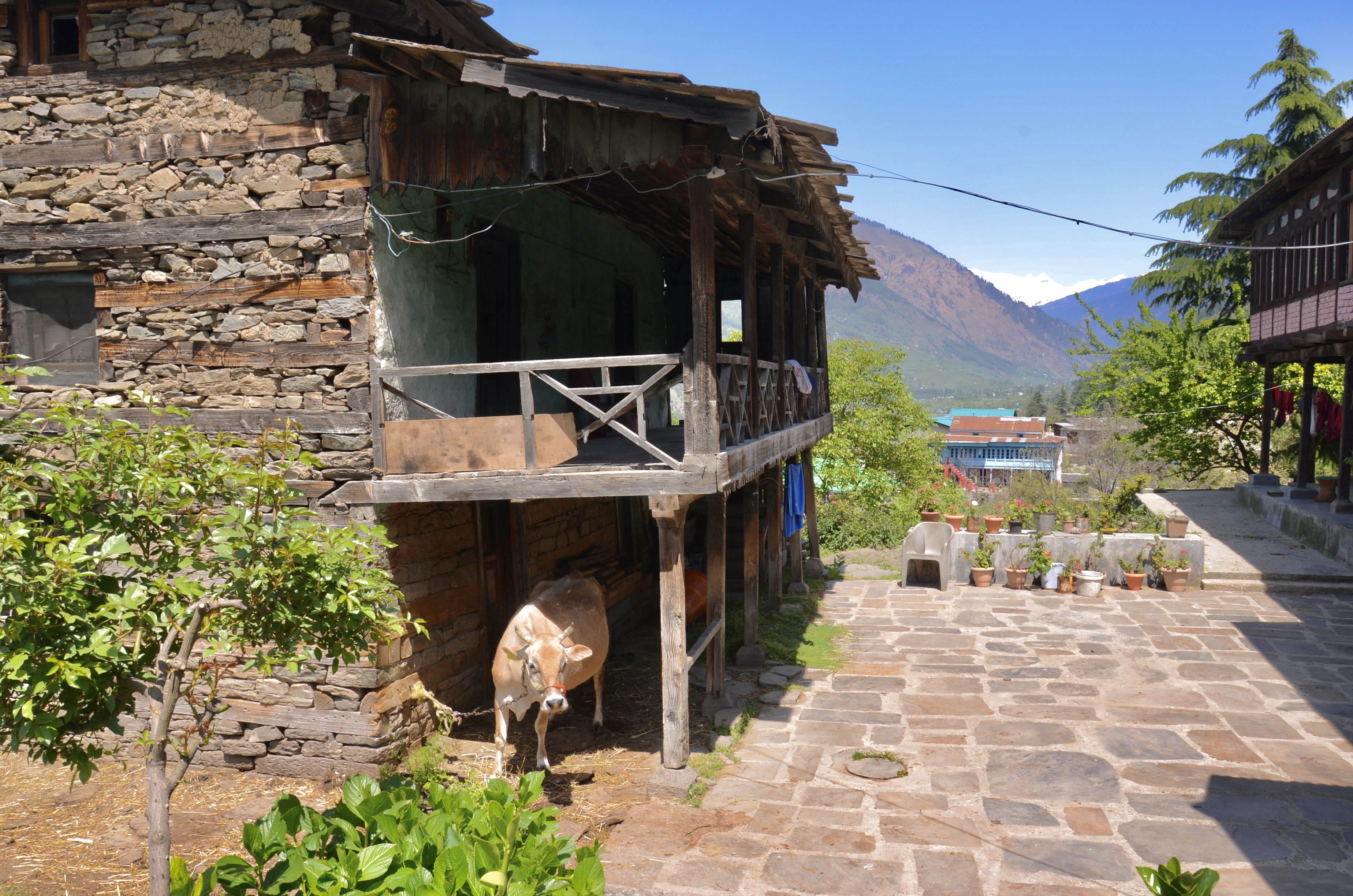
Up the mountain side, Rumsu village soars 7,215 feet into the sky, and is primarily made up of buildings built in the traditional style. Only recently has the jarring effect of modern construction encroached on the pristine village.

After walking around Rumsu, we strolled through the countryside to the next village.

Looking for a landmark temple, we stopped beside a prettily painted house to ask directions. The girl spoke perfect English and directed us. “And how about a chai shop?” I asked, always looking for tea. “Why don’t you come and have tea here?” She didn’t need to repeat herself.

What followed is one of the reasons we love coming to India. As tea was served, her father emerged a gracious man, who’s recently retired and was visiting. We chatted in the garden for over an hour, Mohini is from Bangalore and after ten years at Jetpack (an Internet security co.) she decided to leave the business world, move to mountains and run a guesthouse, with trekking.

On hearing we intended to walk down to Naggar, they insisted dropping us on their way to Manali. Gerard happily accepted! With six of her friends, and her father, we squeezed into the car and bumped down the winding rough road to Naggar. By the time we finally reached the bottom I was glad of Gerard’s decision. How smoothly our visit to Rumsu worked out: we had a ride up and a lift back, saving Gerard from total exhaustion.

The weather forecast predicted several days of rain, making us question if and when we should continue further on to Vashist. Maybe a day trip would help us decide. It’s a wonderful bus ride along the side of the valley As we pulled into Manali, the throng of traffic and people was in sharp contrast to Naggar. The rickshaw drive up to Vashist was slow and tedious, the narrow road clogged with holiday makers.

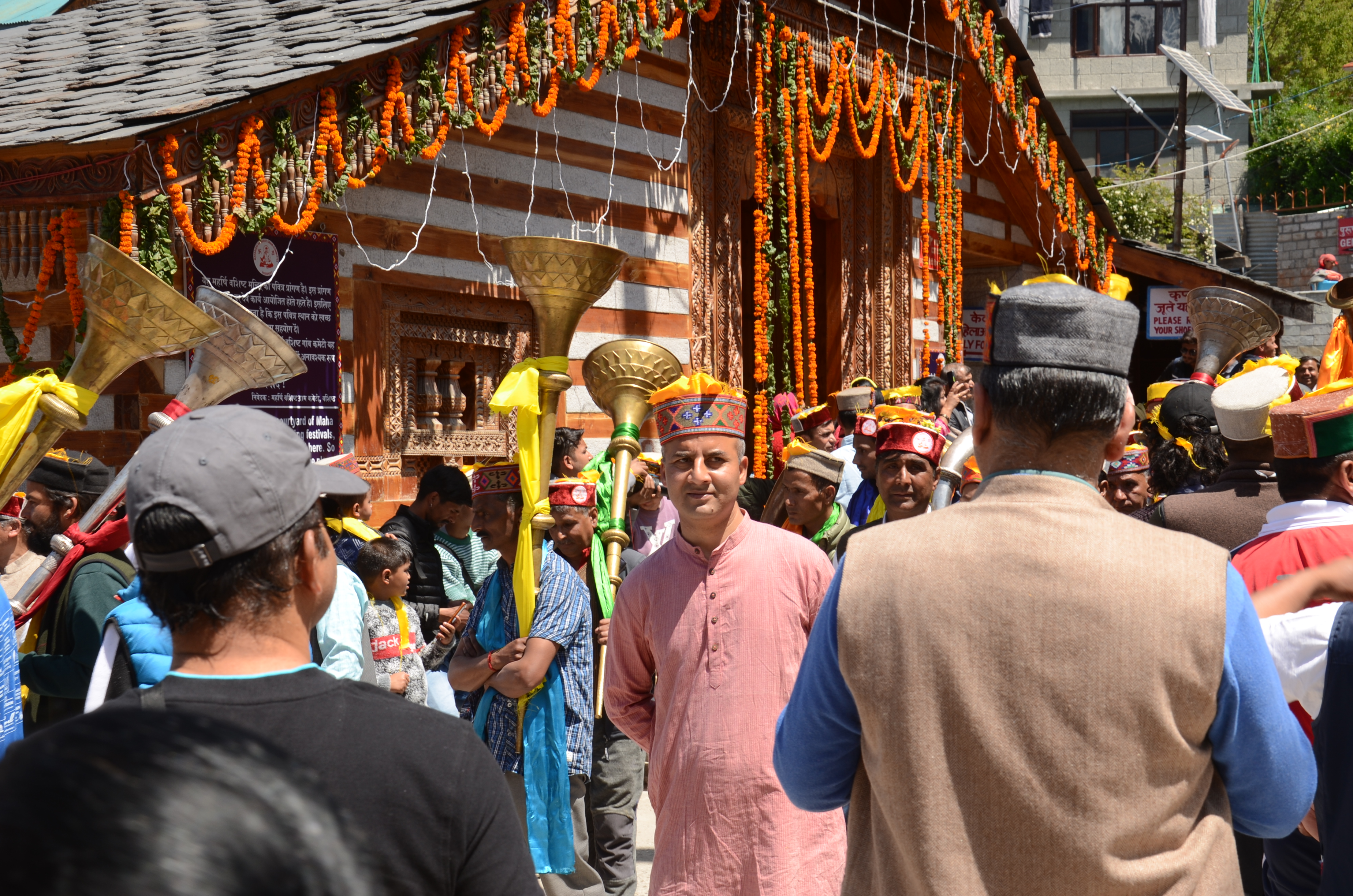
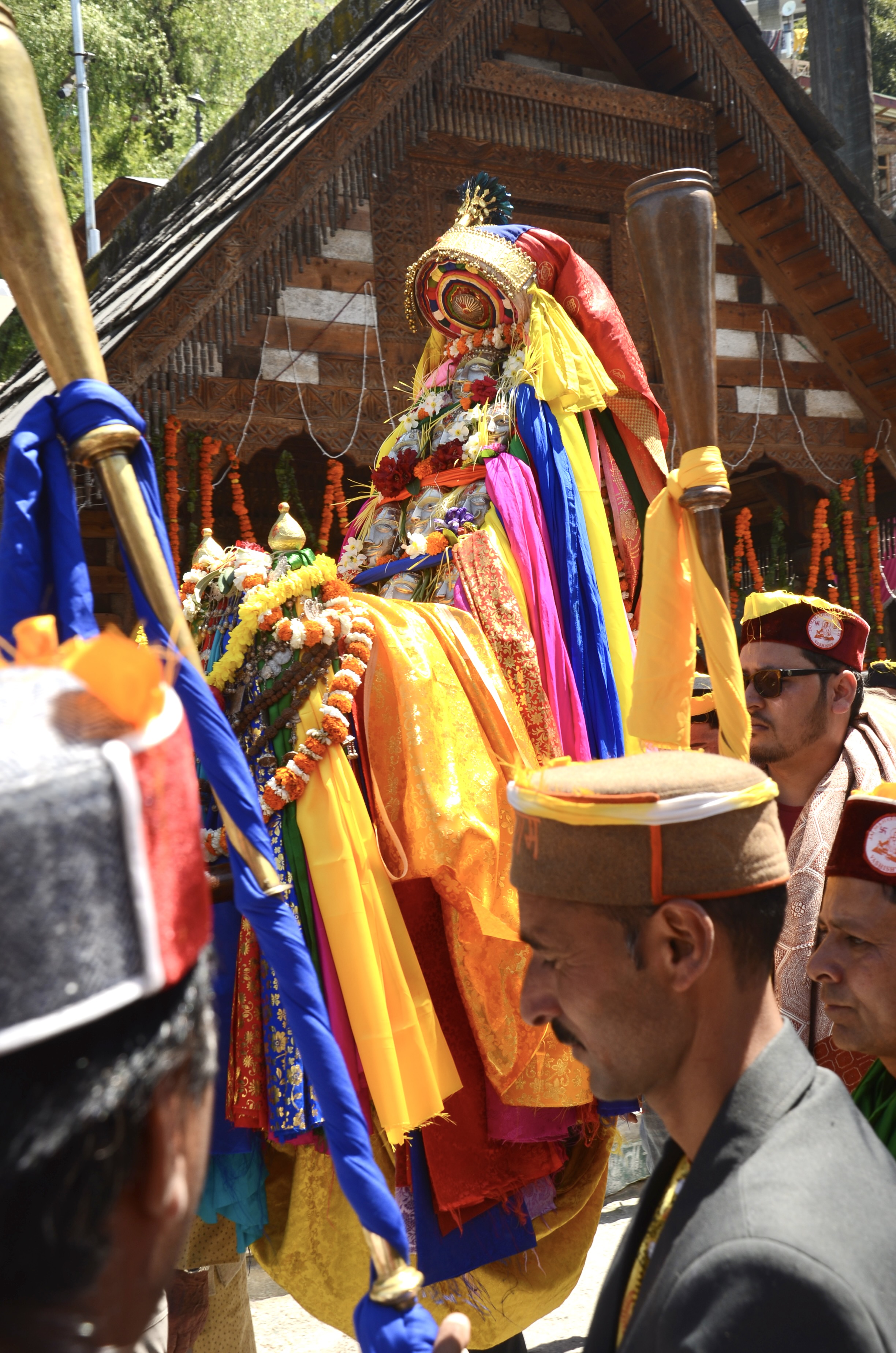
Where the road ends at the temple, we were met by throngs, taking part in parading the local goddess. We’ve seen this ceremony many times and we still get caught up in the excitement.

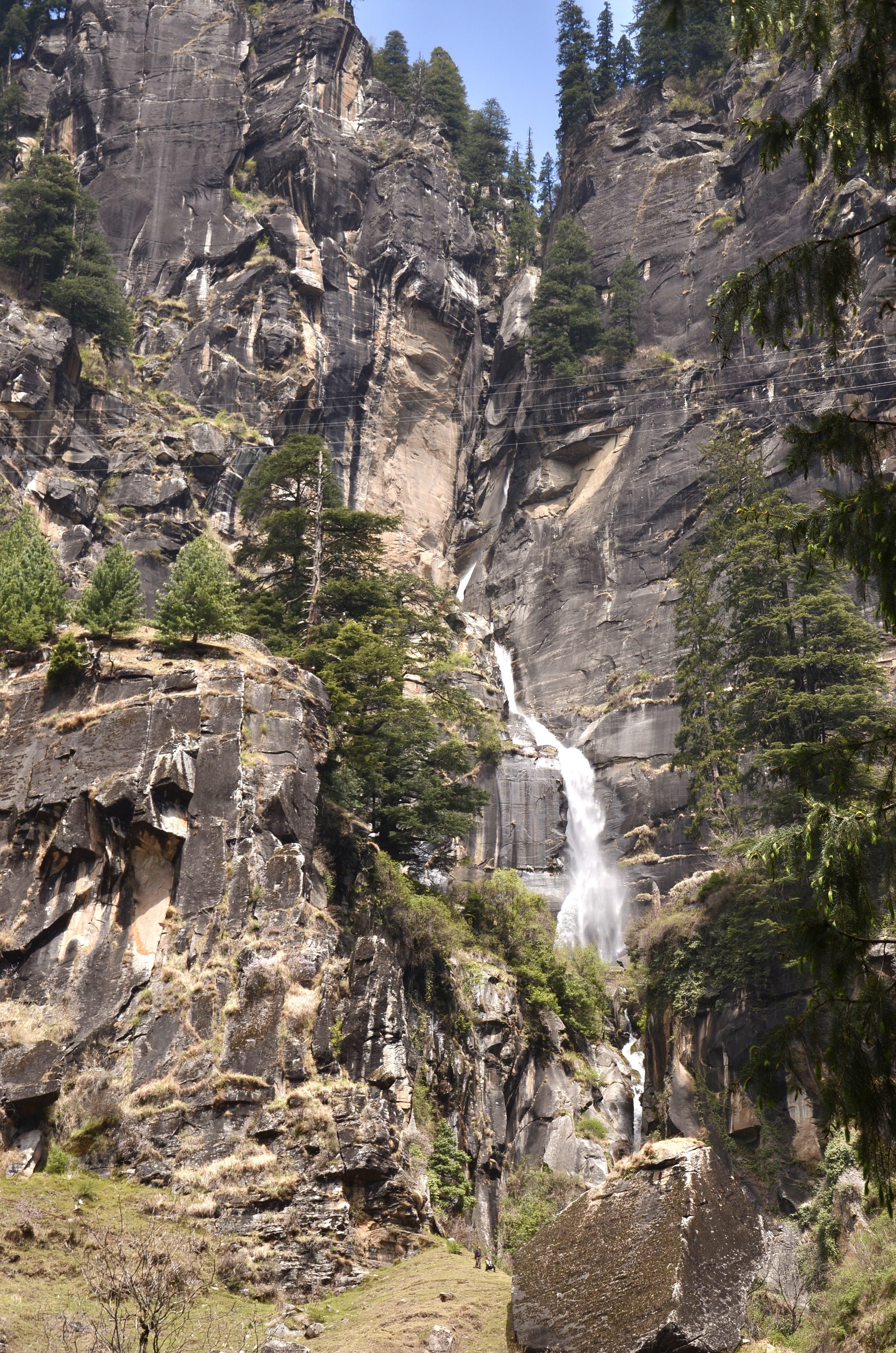
We stayed in Vashist long enough to walk out to the waterfall—a beautiful path, winding below the mountains, through woods, and orchards—was so crowded with Indian tourists, we walked almost in a crocodile. That did it! We decided we were not going to stay in Vashist.

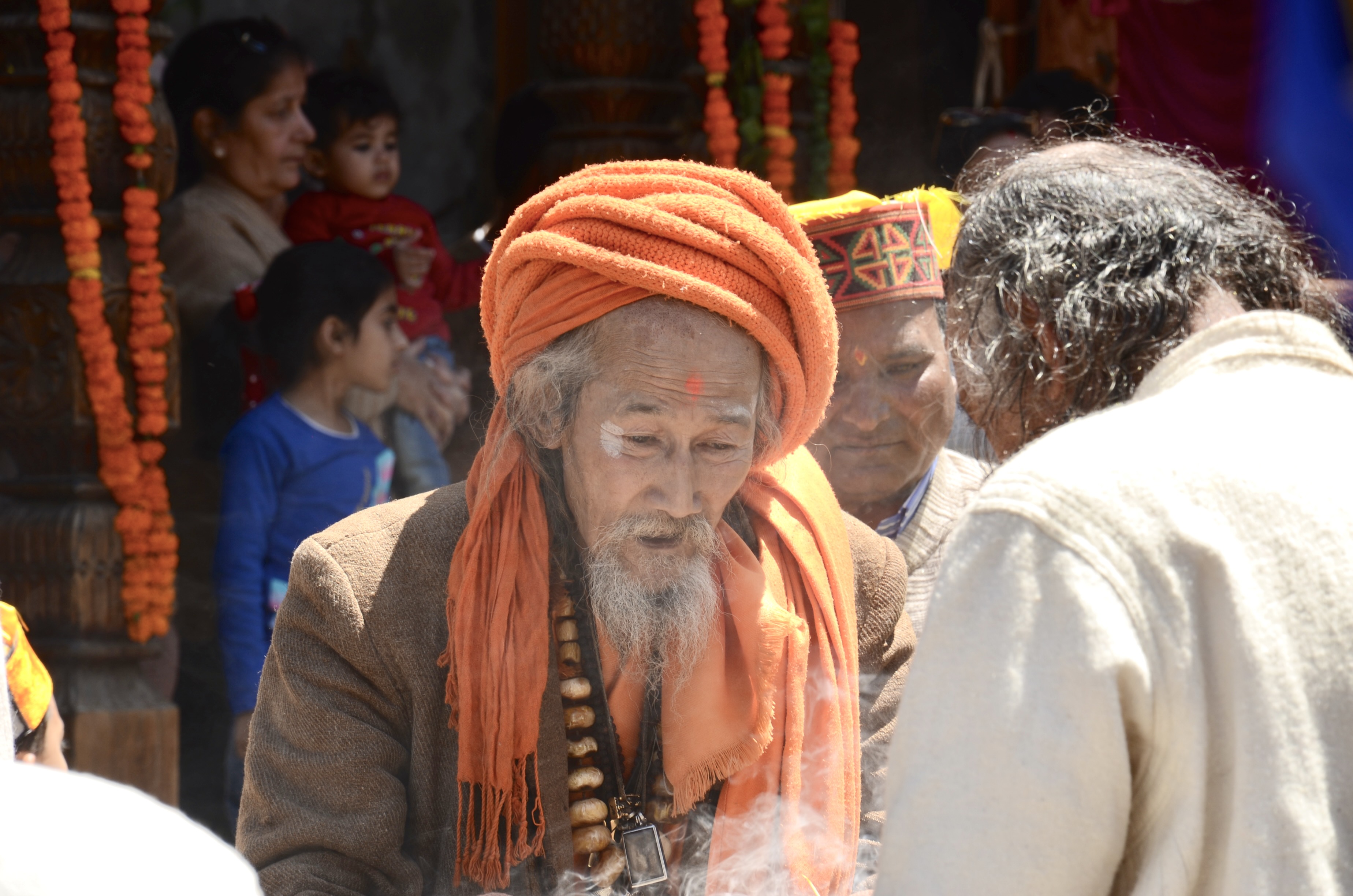
Back in town, we had a good meal at the restaurant that has been run forever by a husband and wife team. Gerard had a long conversation with their adult son, discussing the changes in Vashist and his experience during covid. Lockdown was only about a month and there was very little sickness. He attributed this at least in part to the local shaman walking around town chanting a mantra.

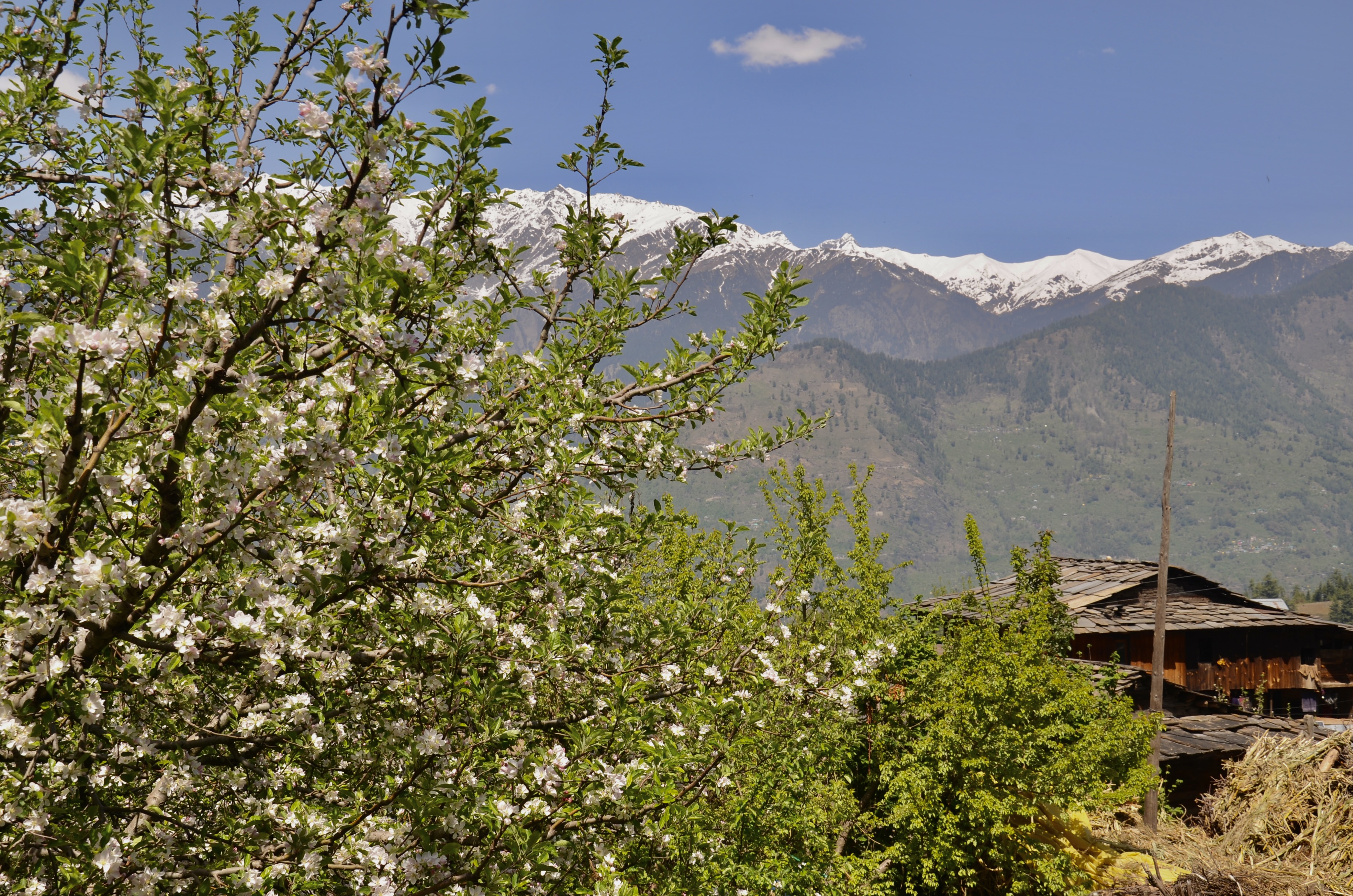
With all the walks in and around Naggar—down into the old village, up the mountain side to hidden temples, through forest and apple orchards in bloom—the decision to remain was easy. We have our comfortable room of many visits, with the Balla family and Manju and her sister Neetu serve us very good meals at their Sharma restaurant.

Waking up each day to a view of the snow capped mountains, I feel I could stay her forever. Or did, until the weather intervened and our stay ended with three days of continual rain!

A Russian woman appeared one day at breakfast in the restaurant, and she was more than willing to talk. Since we arrived in India, Gerard has wanted to have a conversation Russians, to get their perspective. But every attempt he made failed; they wouldn’t even make eye contact. Although Olga has lived outside Russia for many years, we were enthralled to listen to her stories of growing up in communist Russia and how people adjusted to the Soviet Union collapse. She admitted that she was not a typical Russian woman.

Soon we’ll be on the overnight bus back to Delhi, starting our return journey home. I thank my tour guide for another particularly good three and half months. The agenda included no new discoveries, but revisiting places we’ve grown to love. Familiarity meant less hassle and being able to maintain our daily meditation schedule, but yet there was always an element of fresh experience. We met old friends, and also made new ones. Four years older, we were both aware of changes in ourselves—physical limitations and contentment to stay put longer in one destination. But the biggest change is in our environment – India’s explosive population growth and related new building construction, traffic congestion and pollution, even in remoter locations. Time will tell if we’ll return.

Room with a View

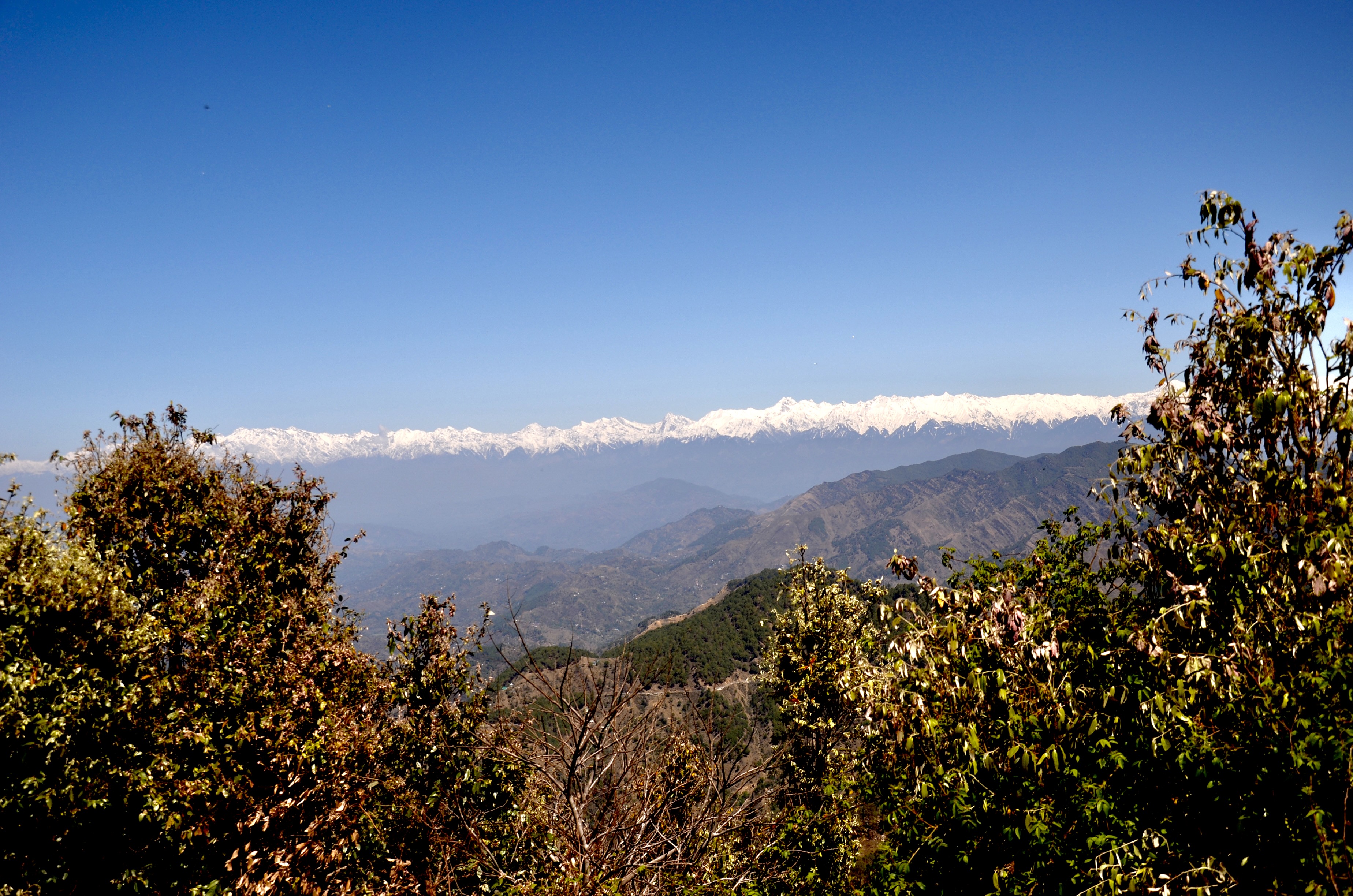
The overnight bus ride from Delhi to Mandi was surprisingly smooth. A new bus left on time. We stopped for dinner at an all veg restaurant and arrived at 6.45 am. As we jostled our way up the hillside in the local bus, the sun rose and the mountains were clear. After Katmandu and then Delhi, the air felt unbelievably fresh and clean.

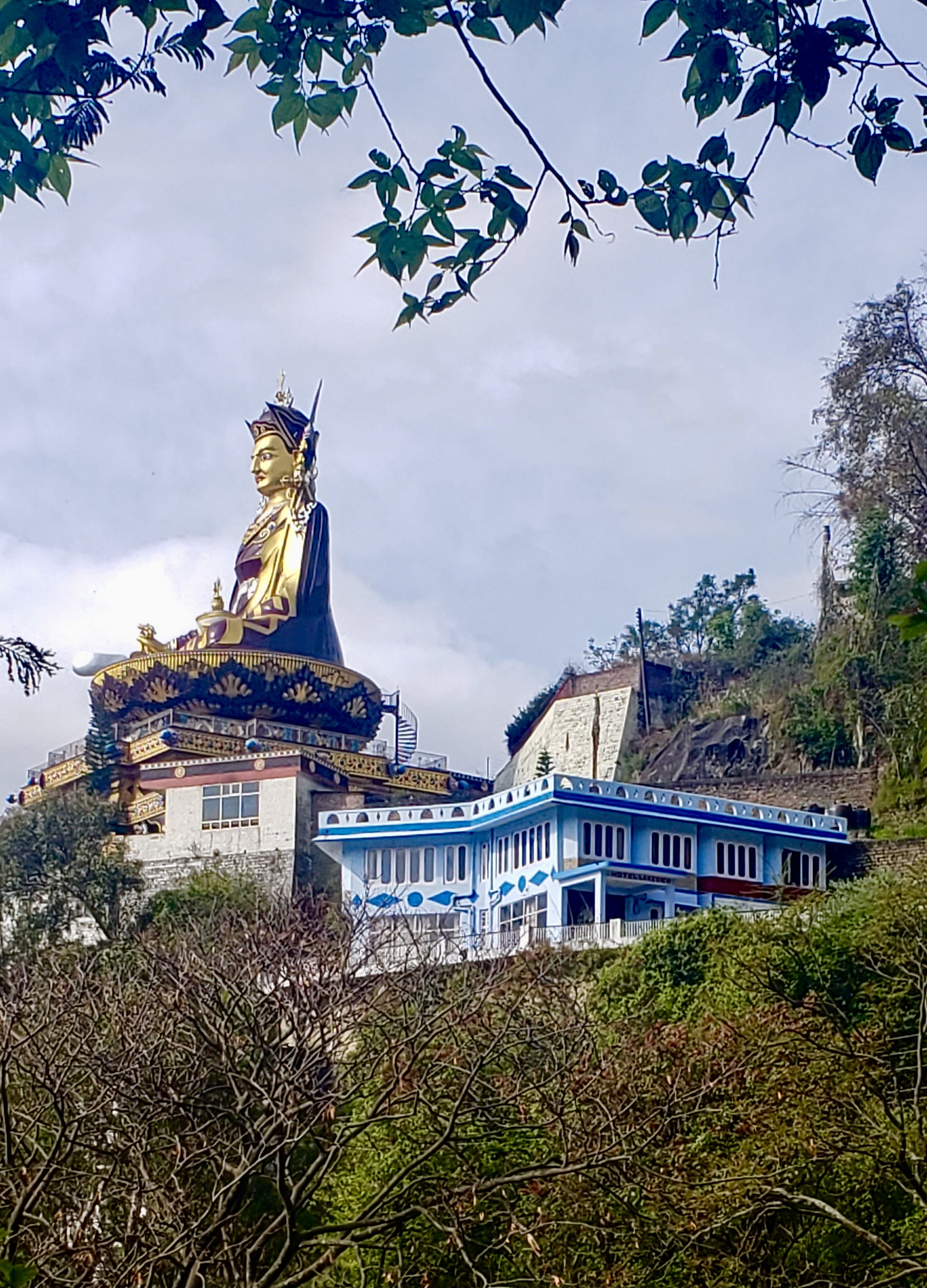
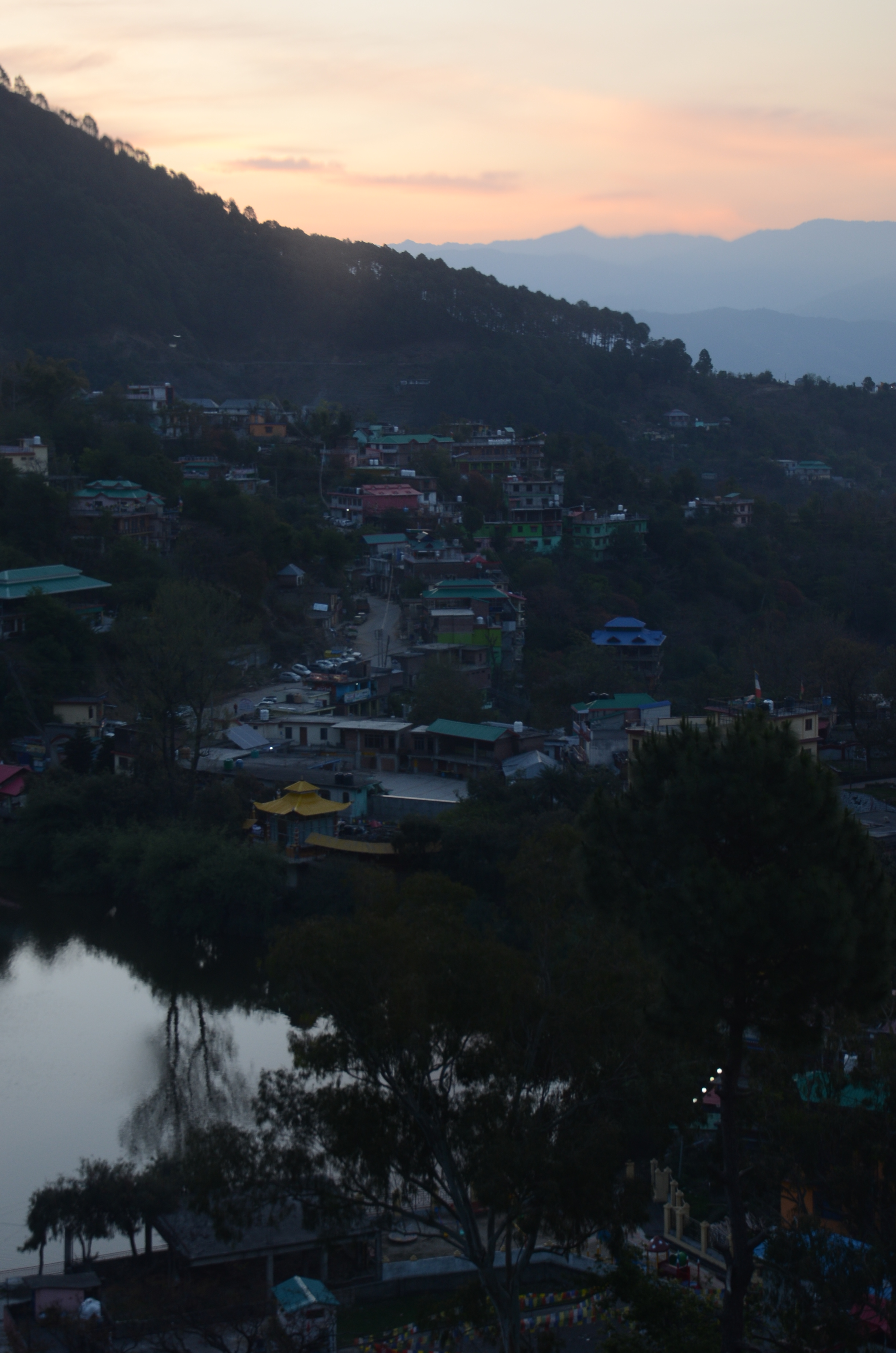
Our legs could no longer take the steep climb up to our previous lodging with its spectacular view of the town. Lakeview Guesthouse on the opposite side of Lotus Lake, and gave us an equally stunning view, with less effort. But as usual at this time of year, by noon the mountains get obscured by the rising mist from the valley obscuring the mountains. The guesthouse happens to sit beside the huge statue of the Buddhist Guru, Padmasambhava, who took Buddhism to Tibet and is recognized as the second Buddha. The statue was consecrated by the Dalai Lama in 2012.

The town has changed little. Some new building but mostly on the perimeter. As before, only a few westerners are here to practice Buddhism. We asked how it had been during covid. The locals gave it little recognition; lockdown was only two or three months, and very few were sick.
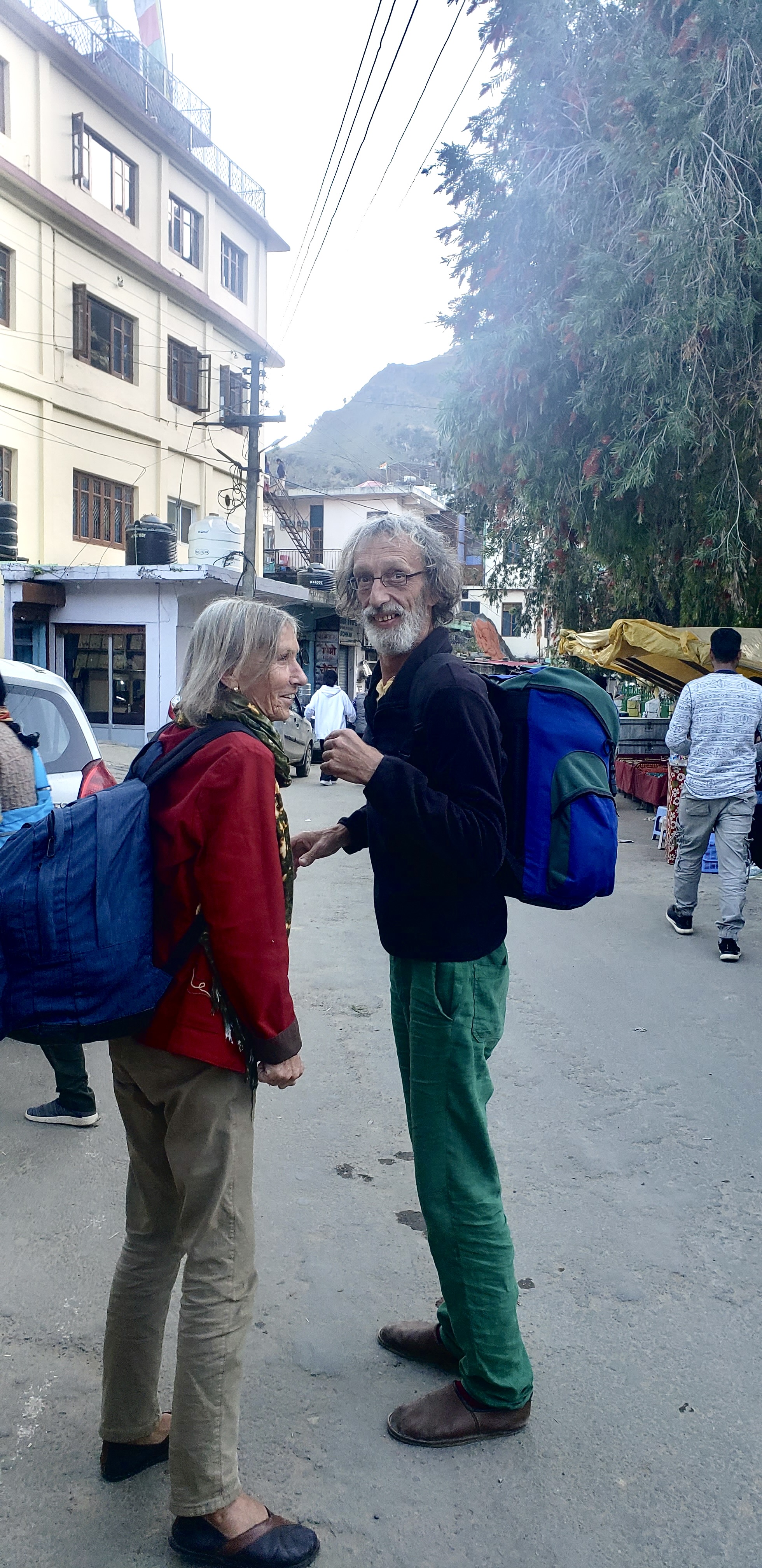
As we sat eating our aloo parathas (fried chapatis stuffed with mashed potatoes and spices) the small restaurant was filled with a cross section of this town: Tibetan Buddhists, Hindus, Sikhs–and ourselves. We can’t think of another place with such a diverse population, exemplifying that people actually can get along. Rewalsar’s spiritual significance for the Hindus is that the Pandavas from the Mahabharata supposedly came here; for the Sikhs, Guru Gobind Singh visited to consult with the king of nearby Mandi for support against the Mughal Emperor Aurangzeb. For the Buddhists there are several legends, one that Padmasambhava was burnt alive by the king of Mandi because his daughter was visiting the Guru for spiritual guidance. The spot where he was burned turned into Lotus Lake.

Our guest house owner invited us for lunch, and we sat in his room and talked over tea afterwards. He’s lived almost his whole life in Rewalsar. At 15 years old he asked his mother why she went to the temple. To worship Shiva, who will give you everything. This started him down the road of questioning who he was and why he was here. Now 66 years old, fit and healthy, dressed in spotless white Punjabi shirt and pants, he sat in yoga pose on his bed. Beside him was a small altar, including a picture of his Buddhist Master, the Hindu book of the Vedas lying beside it. He’s an interesting man, but the conversation became one sided. In fact, it wasn’t a conversation and after three hours we excused ourselves.

Our friends Marion and Juergen, were already here and as before, they took us hiking. We hadn’t walked as far since we accompanied them on a “walk” back in Gokarna. But this time it was a climb up the mountainside. We clambered up to a shrine where a wedding happened to be taking place. A band played, people danced for a short while and then it was all over. They got back in the cars and drove back down the mountain road.
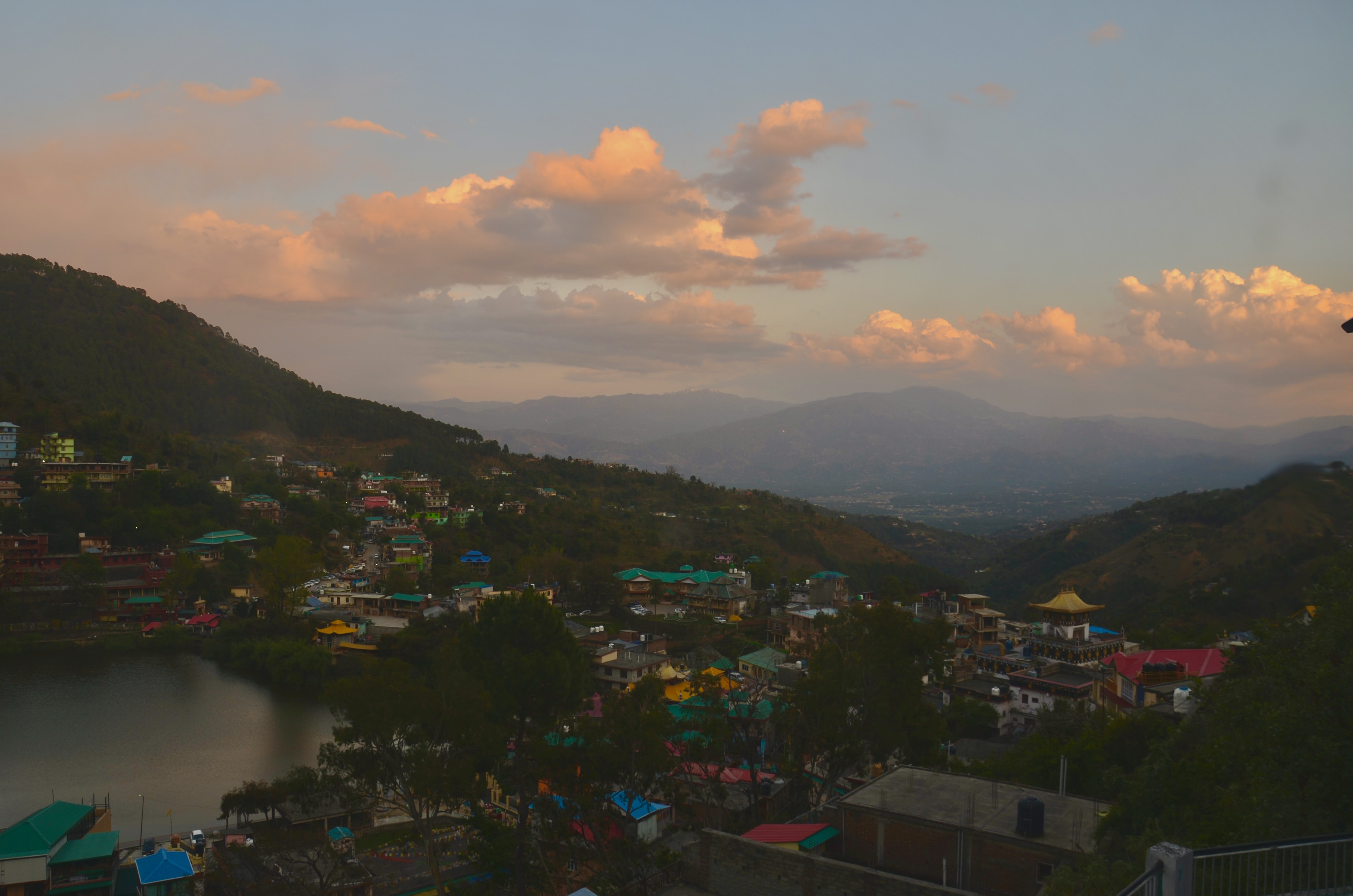
Following them, we found a tea shop and were lucky to catch the local bus back to town. Just managing to wedge ourselves in, standing in the doorway and clinging on to anything available; it’s a clear indication of how many hill people depend on public transportation.

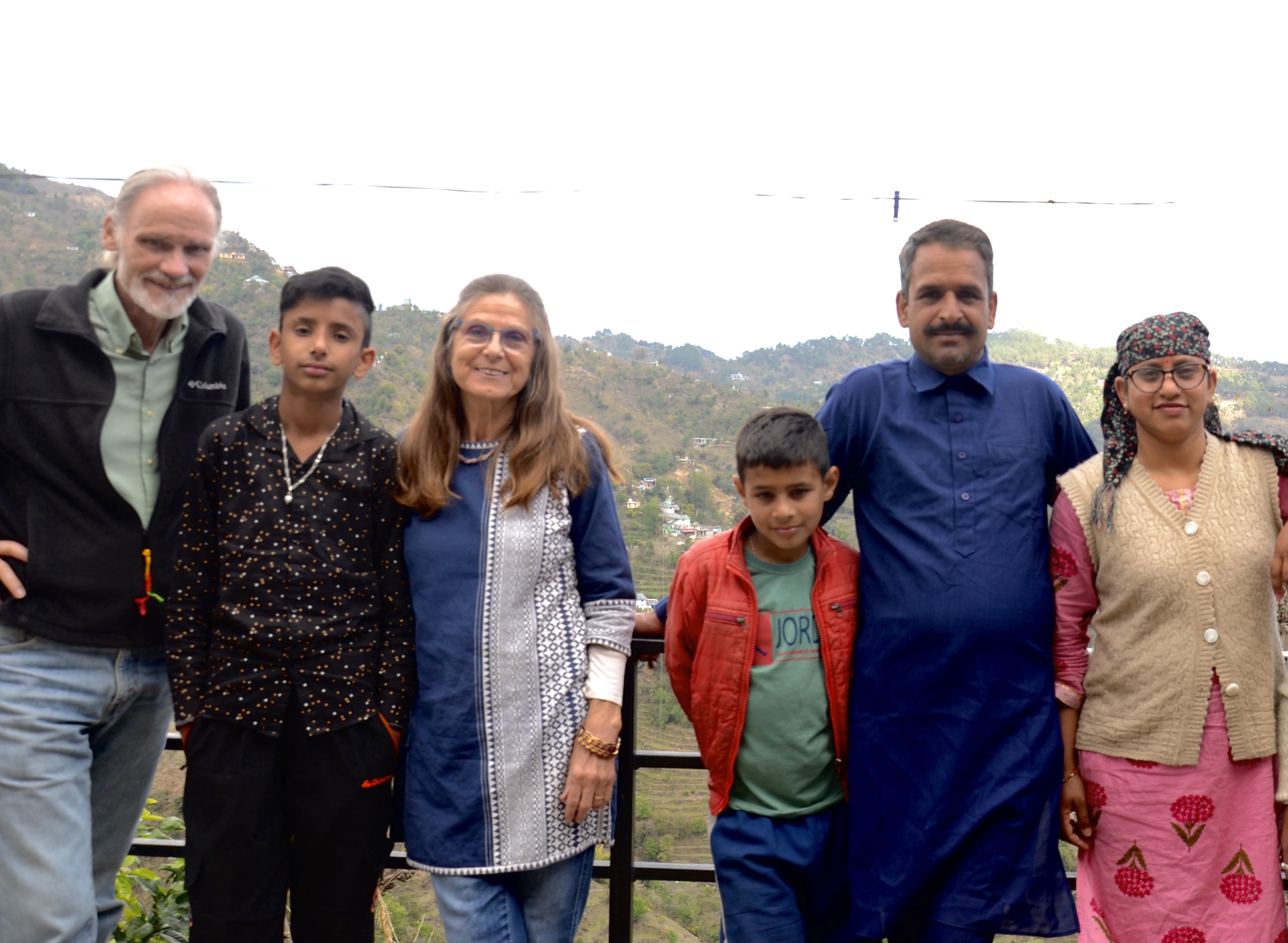
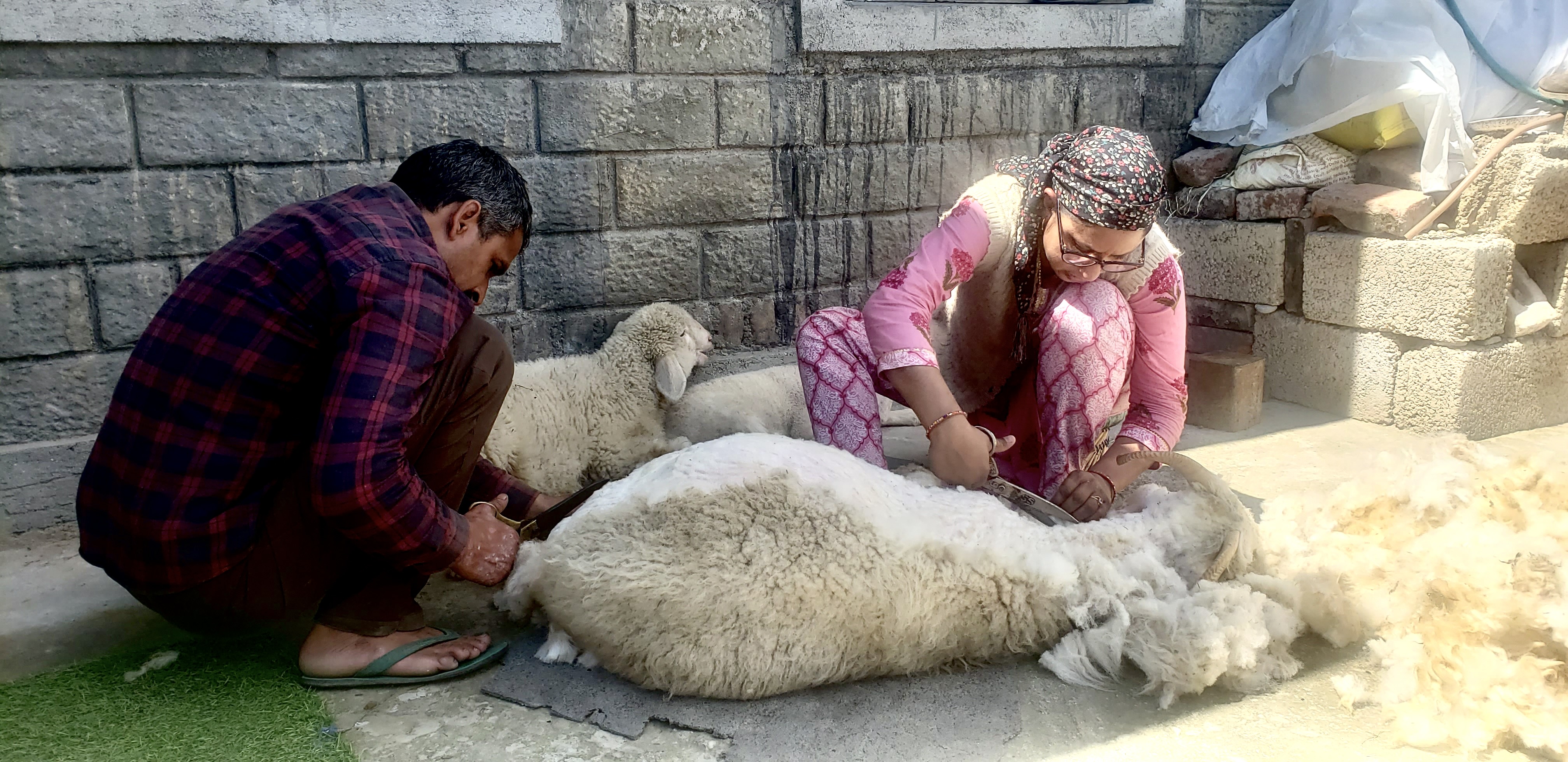
As in Varanasi, we’ve made lasting friends in Rewalsar; Sapna and her family from our first visit. On cold mornings we warmed ourselves in her little restaurant while she fed us parathas, her two young children, Prya and Priksu, watching TV before school. Today, we visited the family in the home her husband built with very little money. The progress made in the last four years impressed us. Outside of town and balanced on the hillside, it’s a steep climb down to the simple four rooms, little kitchen with an open cooking fire, outside toilet, a further climb down, challenging to my aging knees! Three sheep and two cows live below, and a docile German Shepherd fed on a pure veg diet. Indians do not pet their guard dogs and it was hard for us to refrain. Their balcony, afforded a panoramic view of the mountains and surrounding countryside of terraced fields. After lunch Sapna and her husband took at least two hours shearing their largest sheep.

To say the weather is changeable in the mountains is an understatement. This year it is especially unpredictable and days of sunshine have been interspersed with lots of rain. Without the sun to warm our room, the cold seeps in. We were glad to be invited to dinner by the taxi driver who for several years has driven us up to Nagar. We sat beside an electric heater, throwing off plenty of heat, and ate a delicious meal. In usual Indian fashion, instead of joining us, the family merely watched us eat.
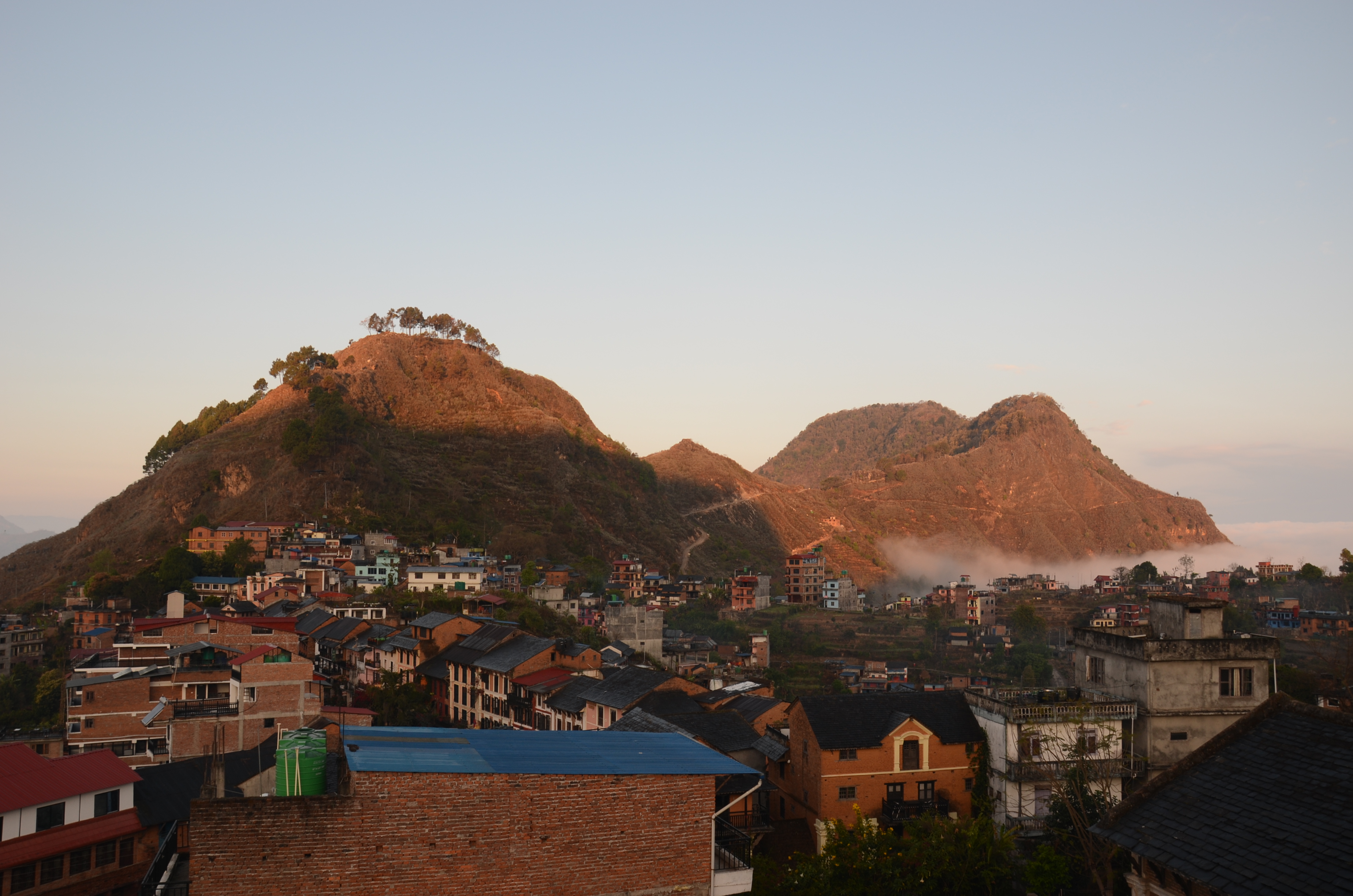
A few days before we left, we took the bus up to Maha Naina Devi Temple an altitude of 1650 feet above the town (6,000 feet above sea level). The views of the Himalayas was unprecedented. Our legs felt the downhill walk back to town.

Two days before we moved on, Marion and Jurgen left for Delhi on their return to Germany. It was a sad farewell.

A Peaceful Mountain Respite

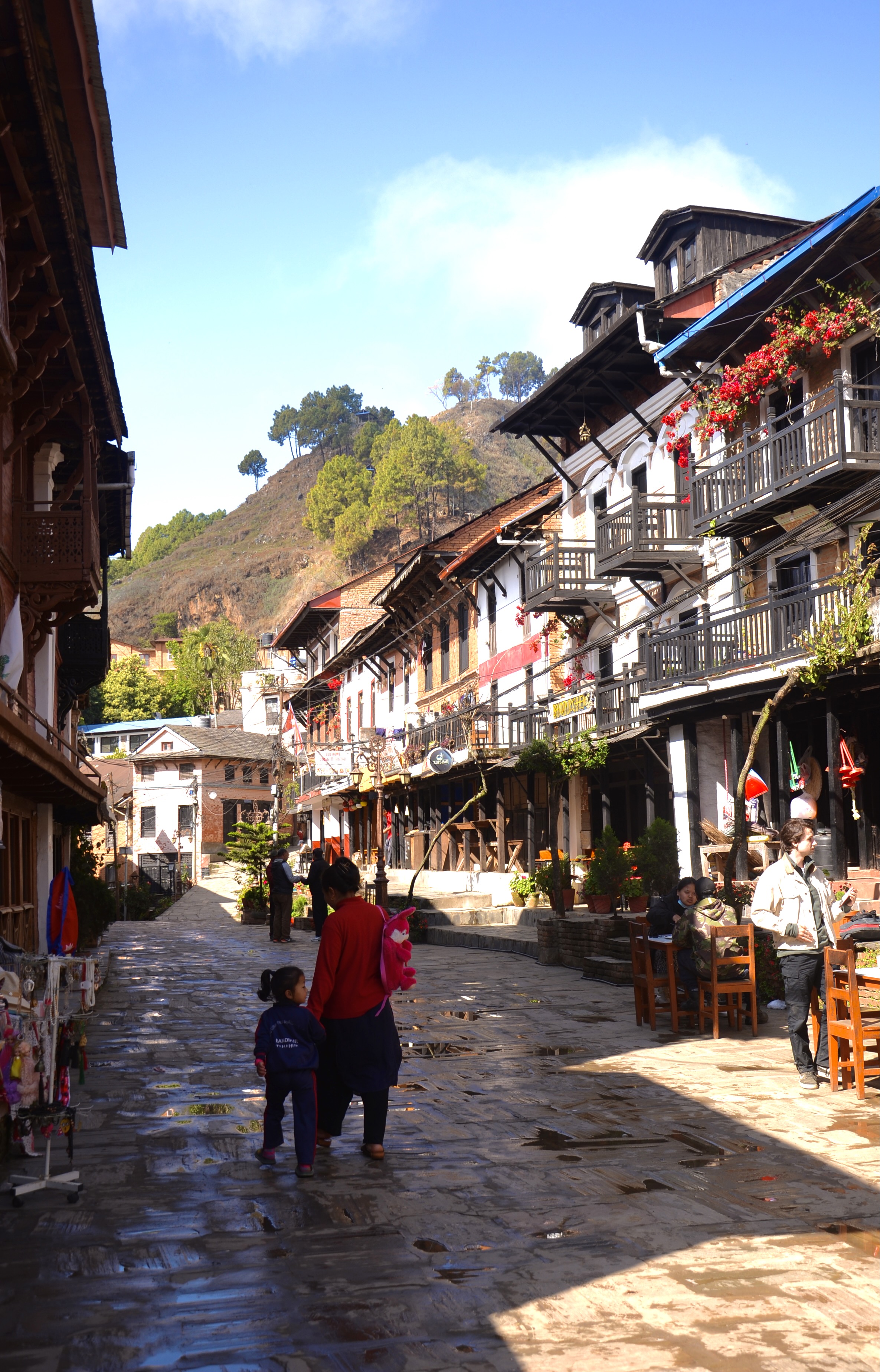
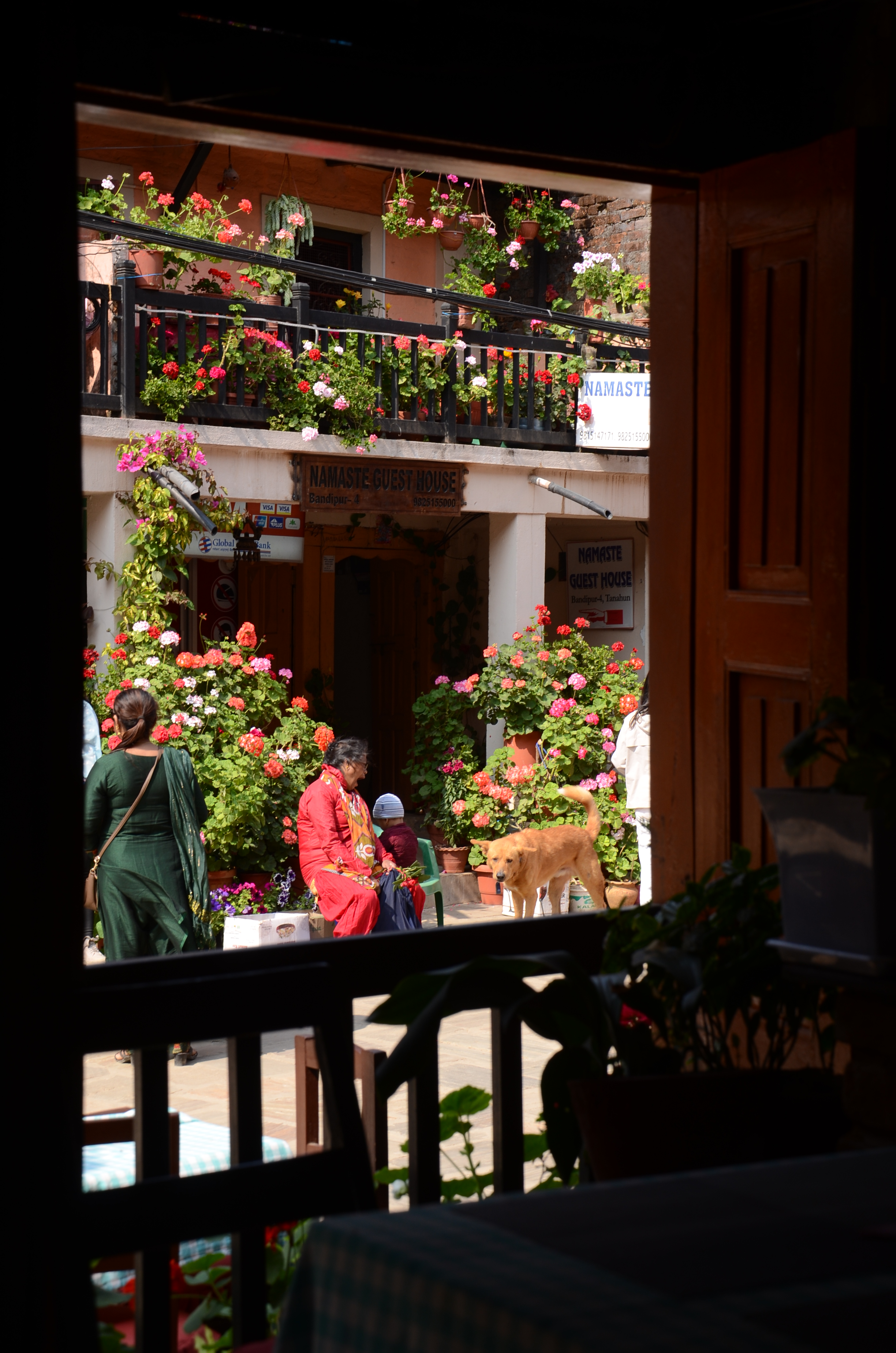
If Bhaktapur is the most exotic place we’ve travelled, then Bandipur is the most idyllic. The only fly in the ointment was the mountains weren’t clear. But the flowers in bloom made up for it.

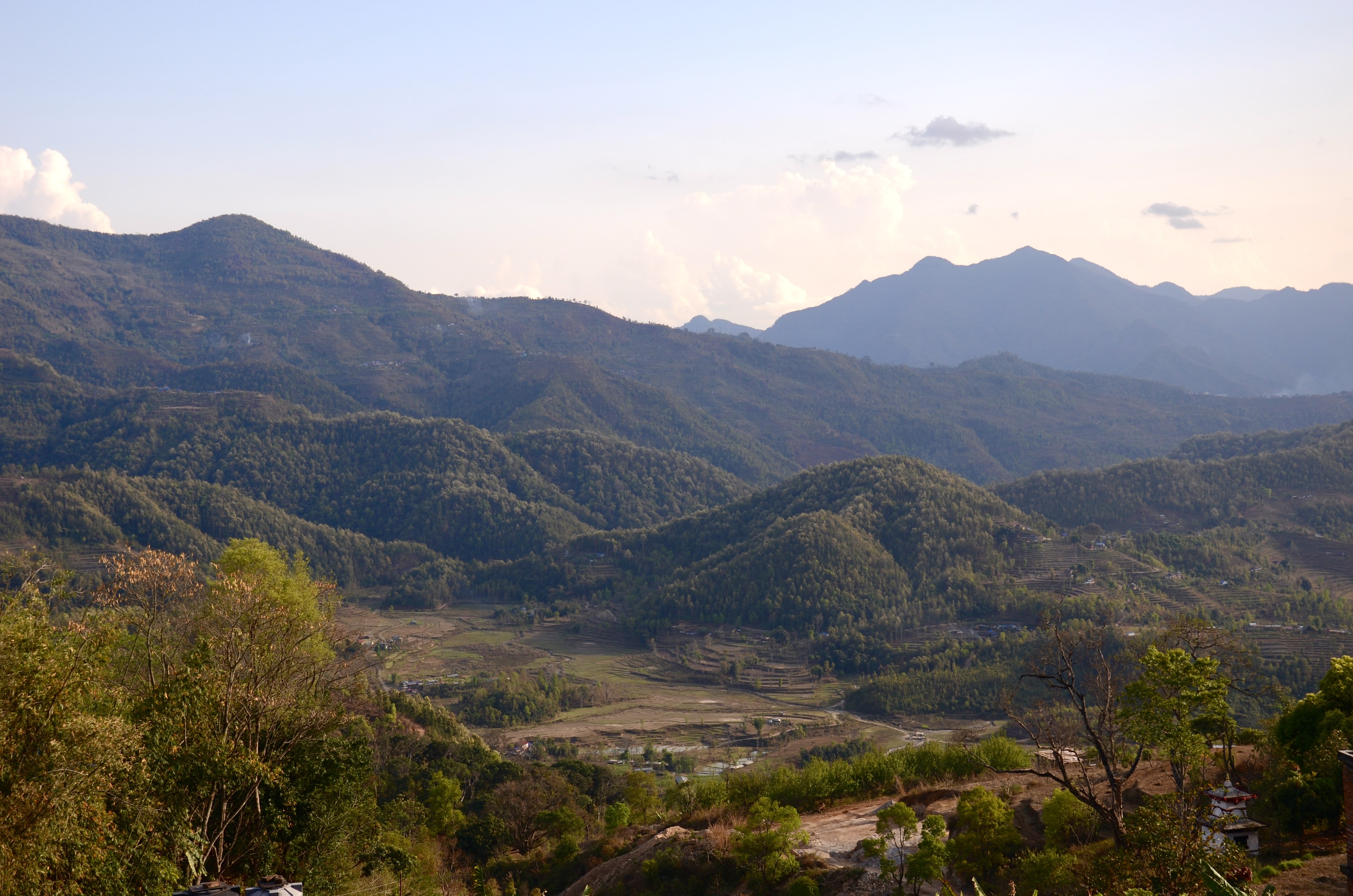
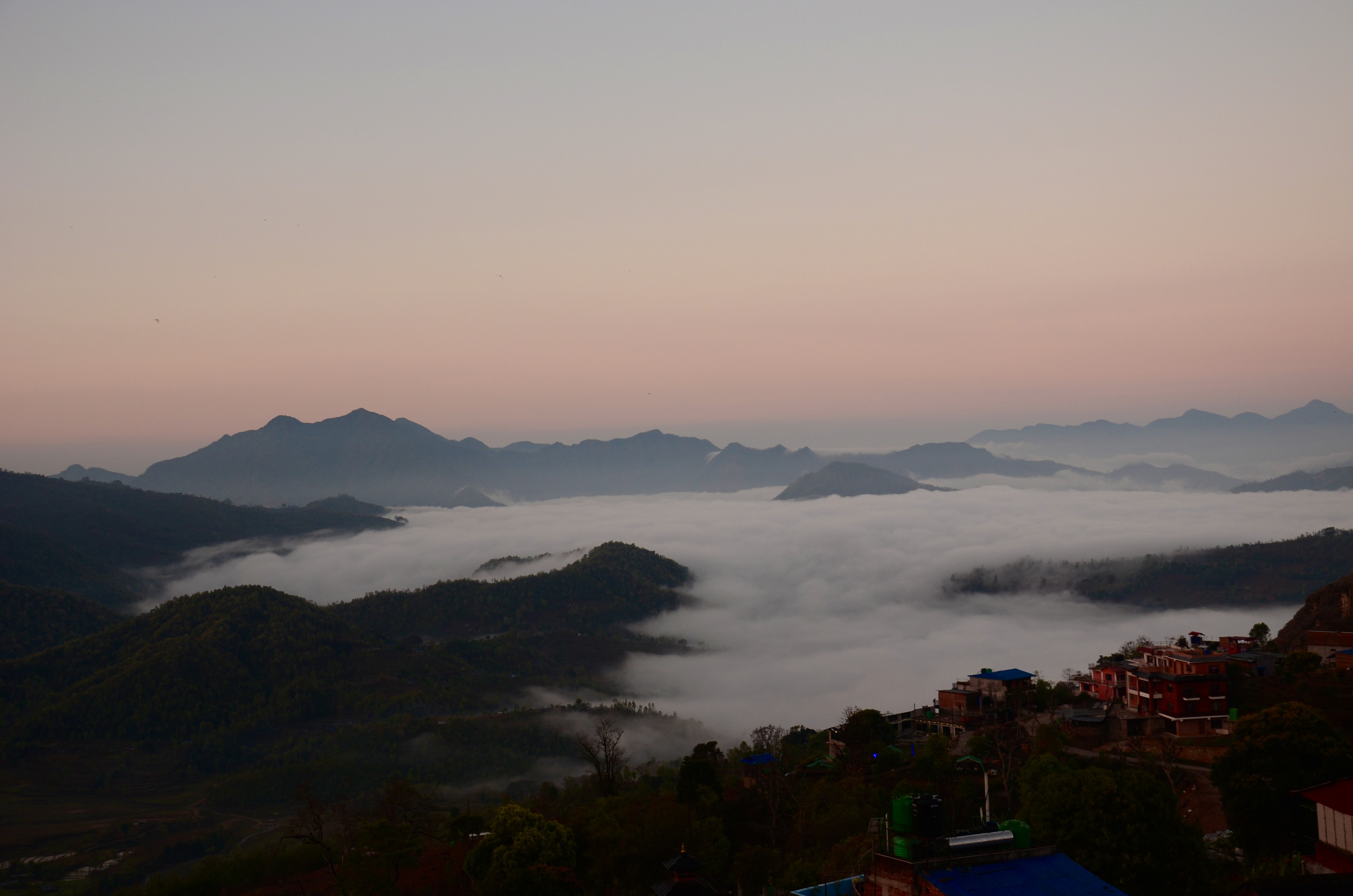
It’s rare that a place is even better on the second visit. Our guesthouse has an excellent view of the valley below on a clear day.

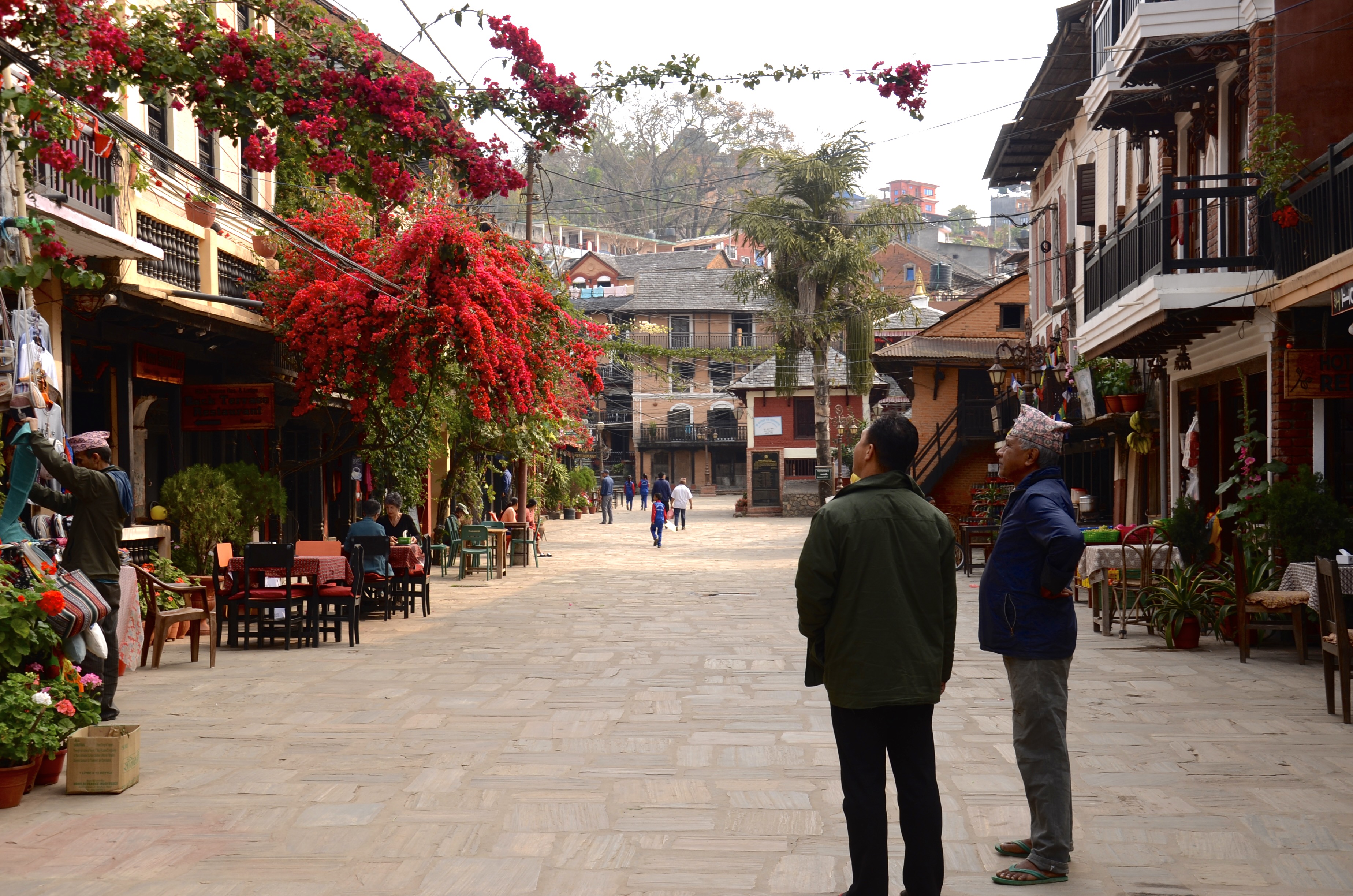
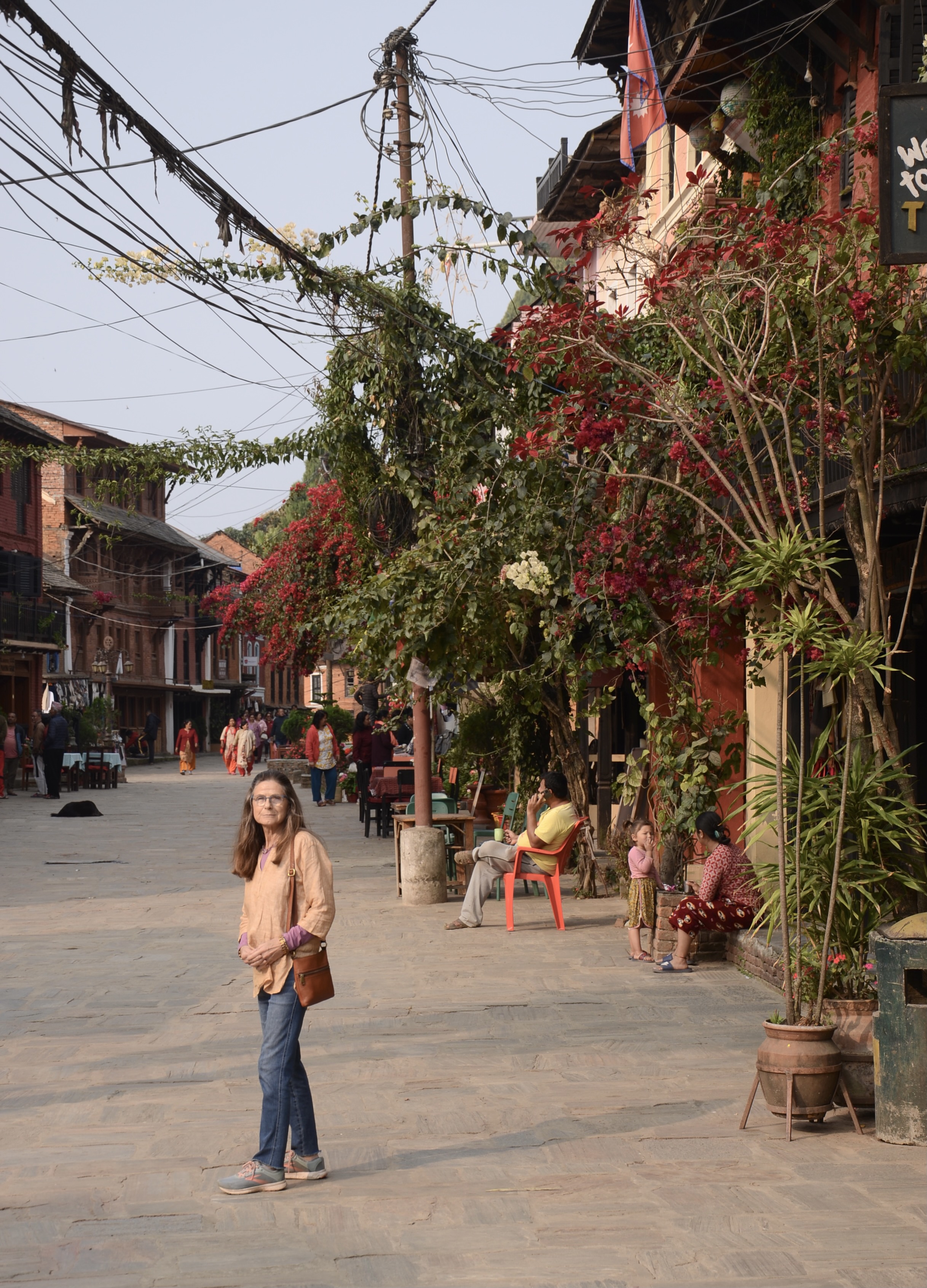
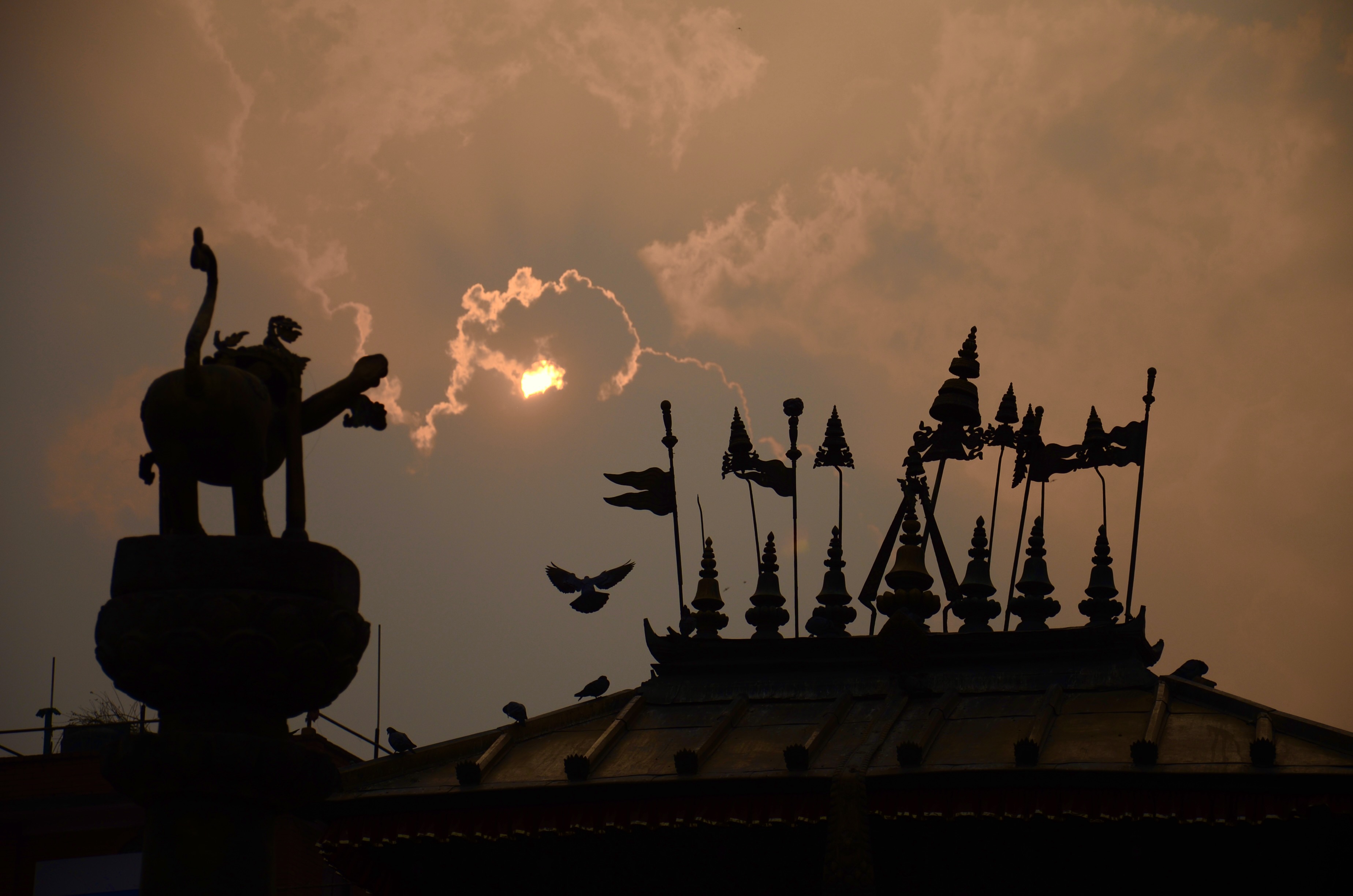
The town center has a Mediterranean feel. The stone-paved plaza is entered down several steps, so there is no traffic, not even a motorbike.

The peace and quiet is more than welcome . Even the dogs rarely bark, only the sounds of birds and school children break the silence . Bliss for me—I can actually follow a conversation again.

The center of town has scarcely changed since our first visit. Though Bandipur is geared toward tourists, they haven’t yet come in droves yet. Day trippers arrive for a few hours on private buses from Pokhara, and a few paragliders hang silently in the sky.

The locals are still welcoming and greet us with naamaste and a warm smile. The service couldn’t be better.
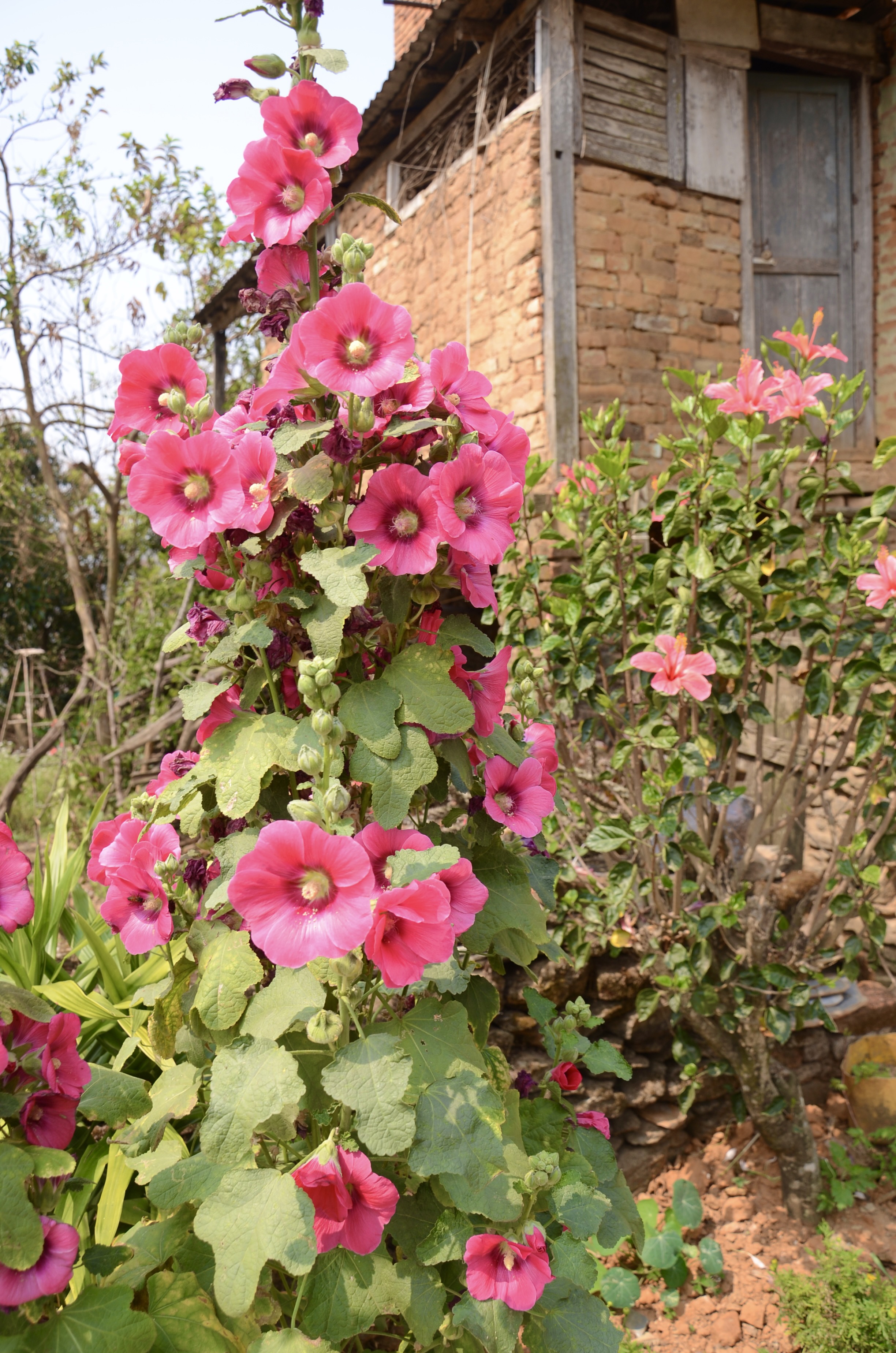
An old building at the end of the square has been beautifully restored in the traditional style and can be enjoyed for a mere $100/night.

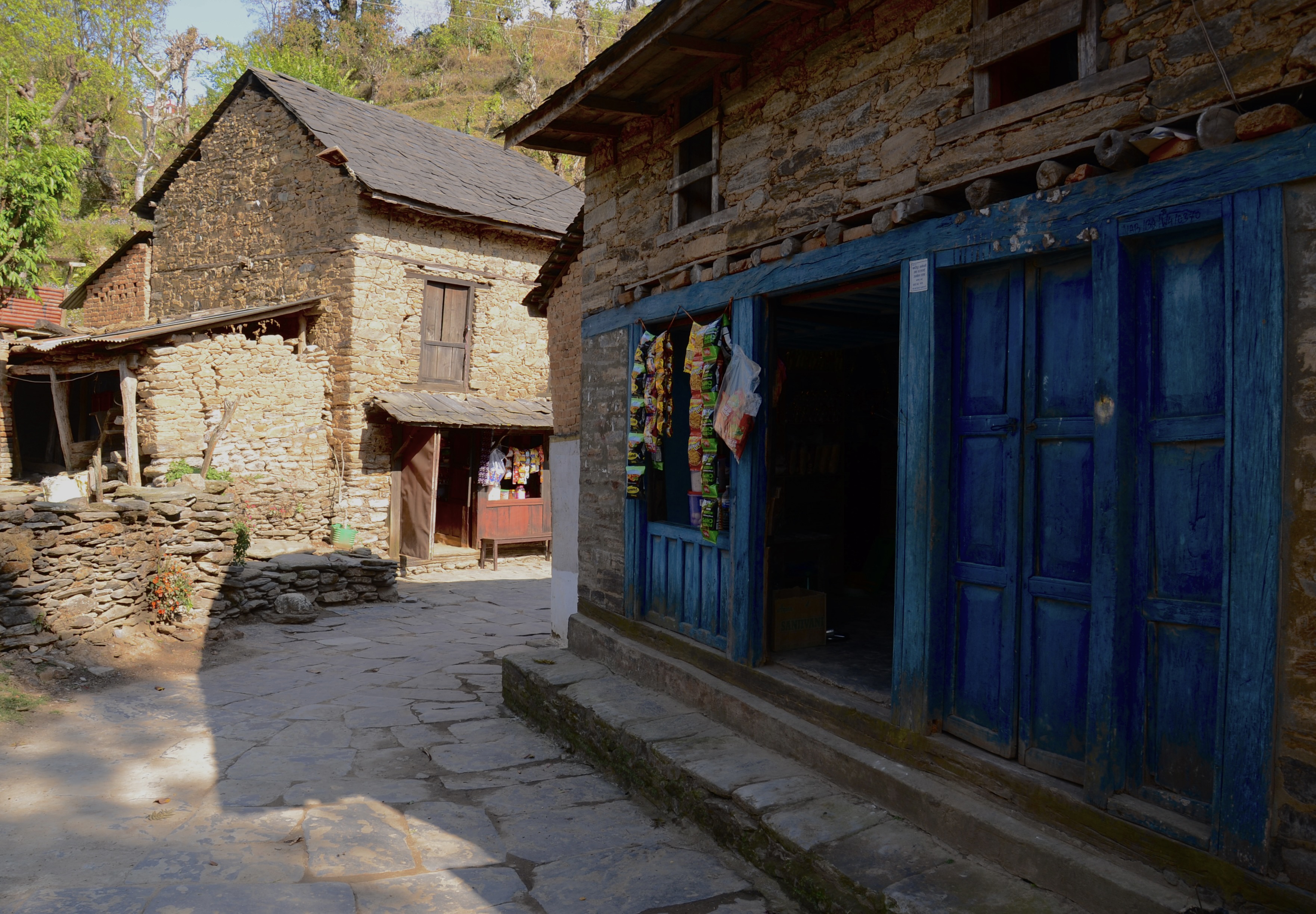
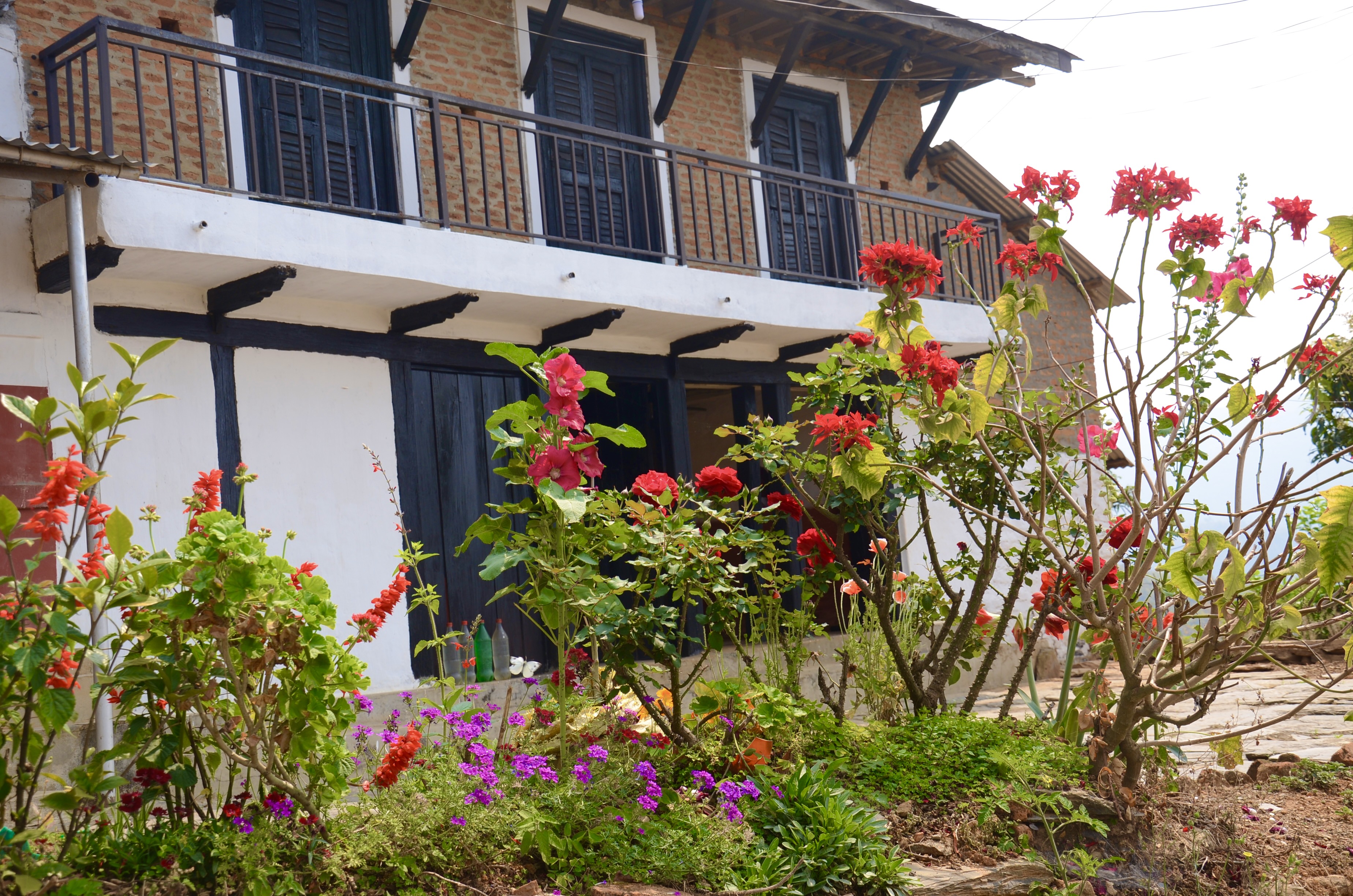
On a walk outside of town, more beautiful houses and flowers

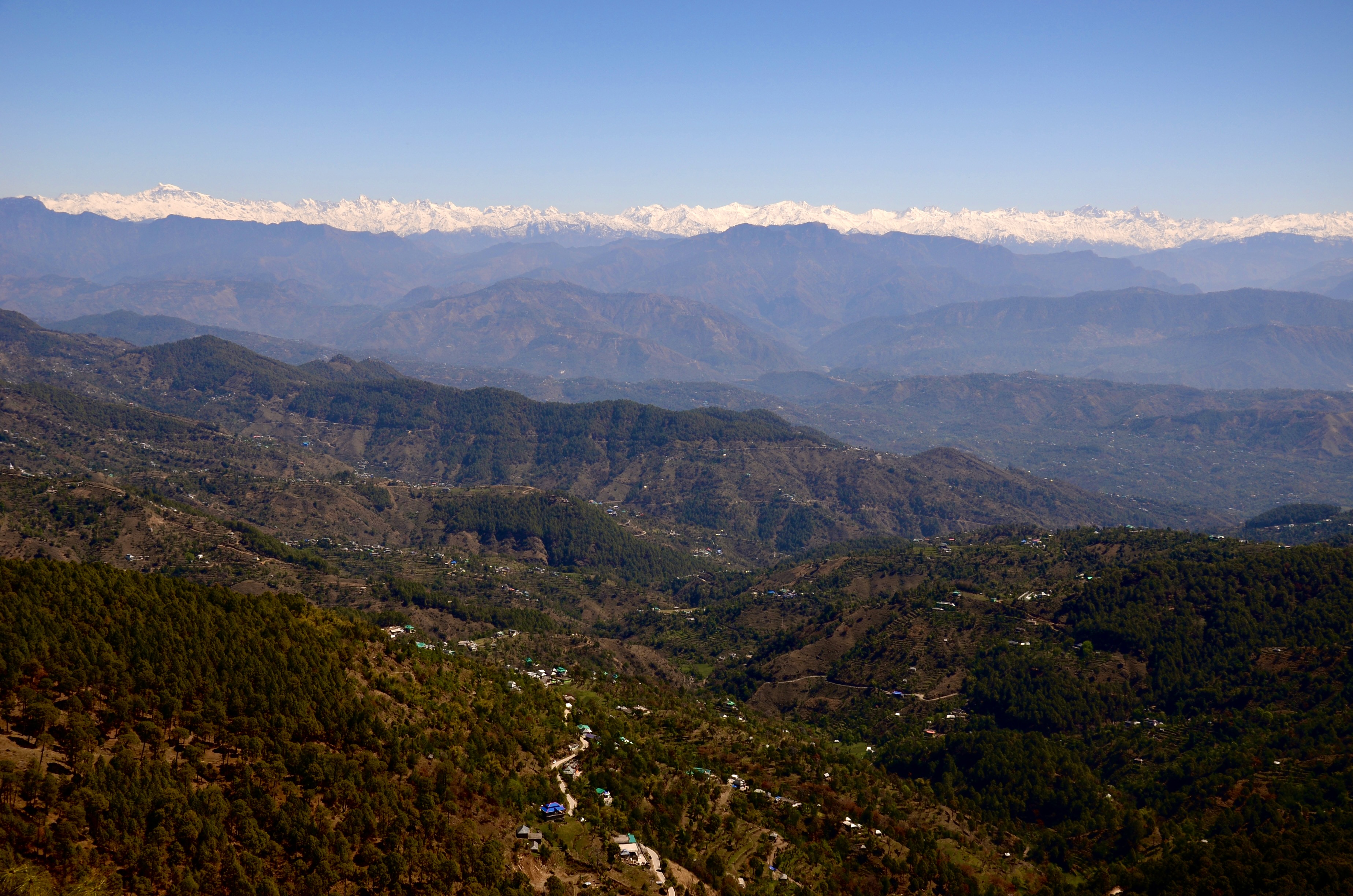
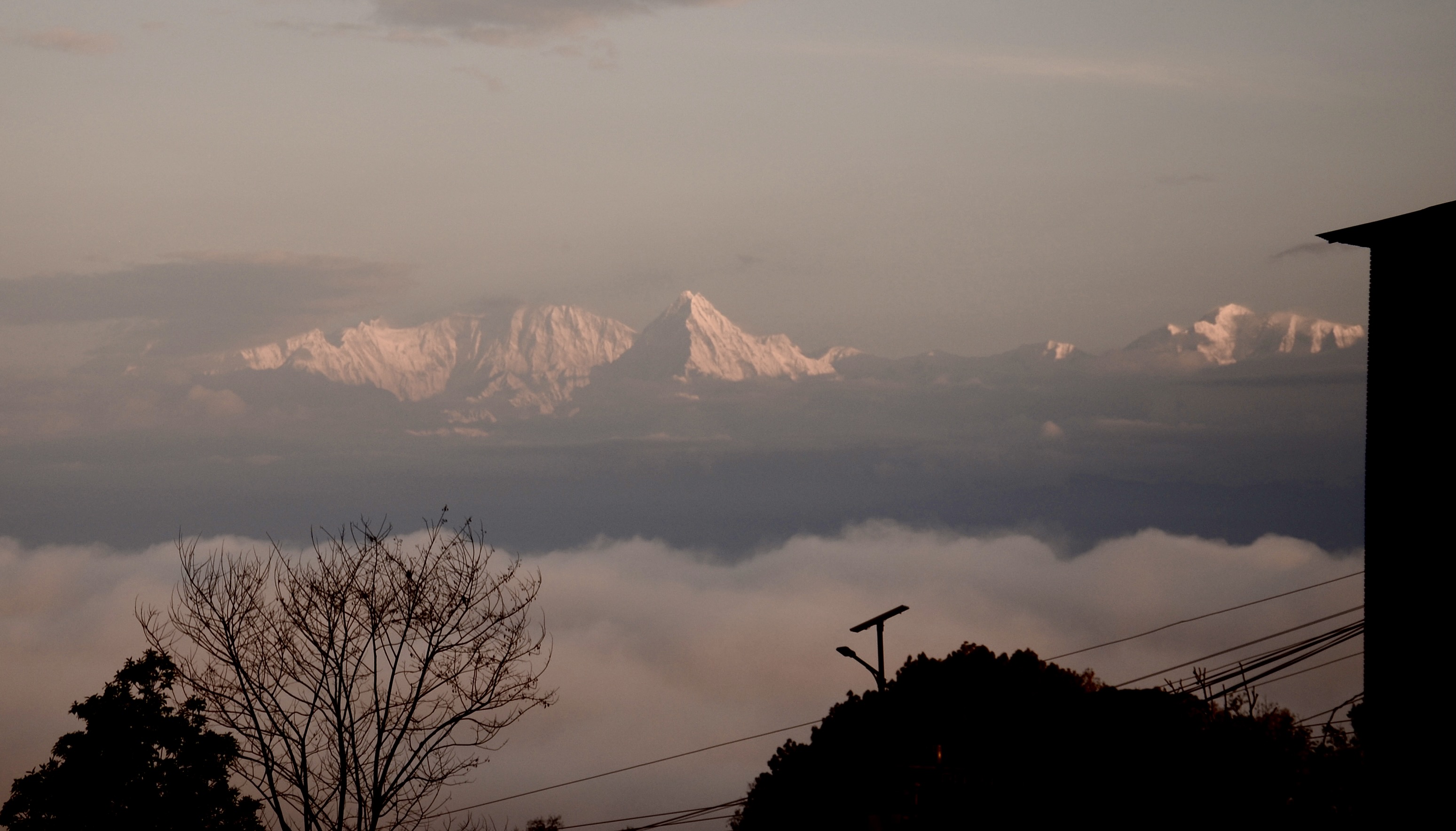
We have been in Nepal for three weeks and hadn’t seen the snow-capped mountains until this morning. After a night’s rain, in the early morning our rooftop gave us a grand view.

It’s not easy to get to Bandipur, but it’s well worth the effort.

Bhaktapur, worth seeing again.

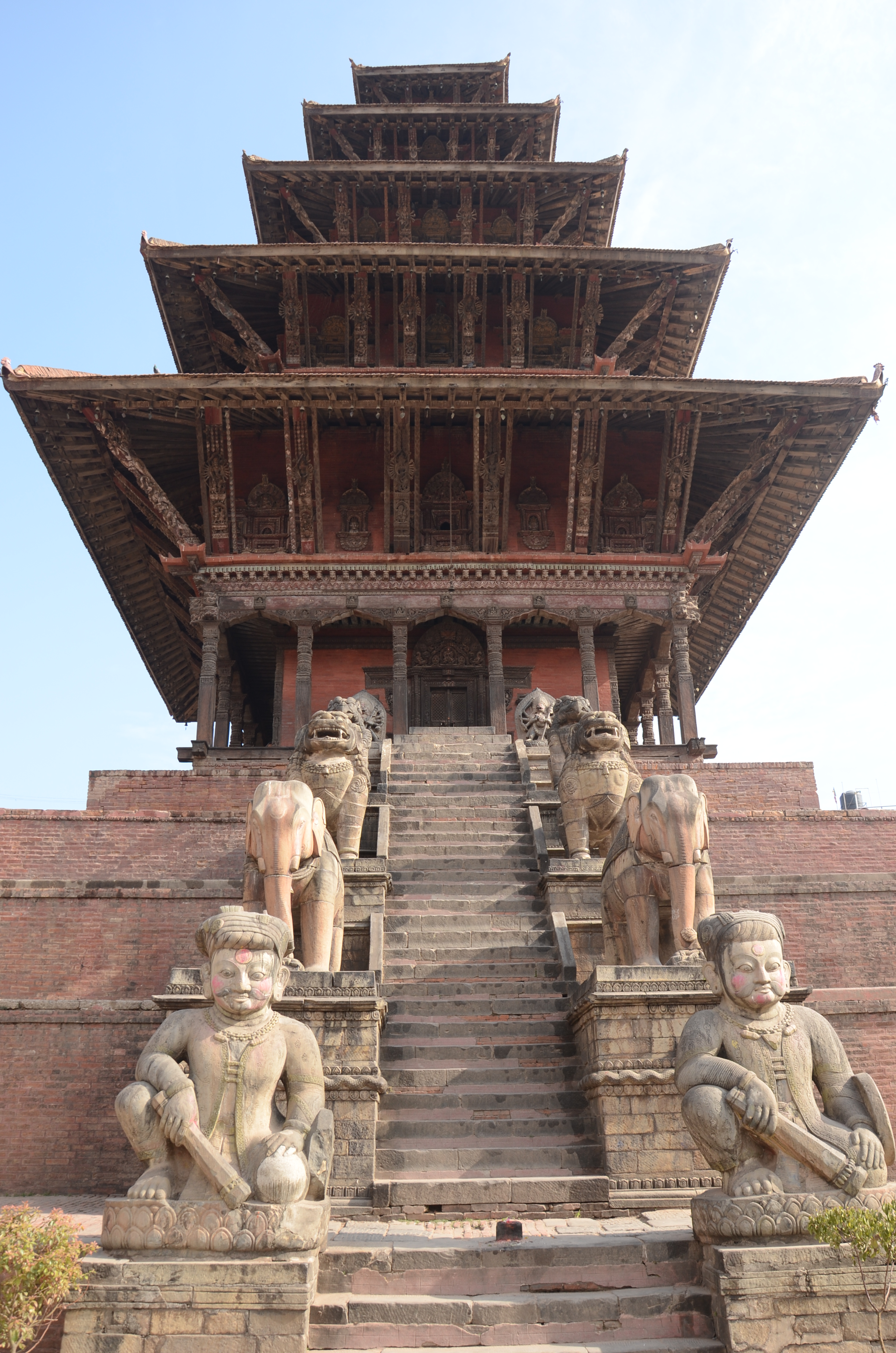
Our taxi brought us as far as cars could go inside Bhaktapur and the guesthouse owner came out to greet us. But he did not recognize our booking. “I don’t work with Expedia.” “But we’ve prepaid for seven nights!” He showed us a room. The pictures online had little resemblance, but our window looked right out on Taumaudh temple, the tallest in Nepal. “When is breakfast served?” I asked him, looking at the tables in the entryway. “Breakfast?” he said, “I don’t serve breakfast.” “But our booking included breakfast.” Mukunda, the owner was friendly but that didn’t make up for the overpriced room. It worked out in the end, we paid half of the asking price online.

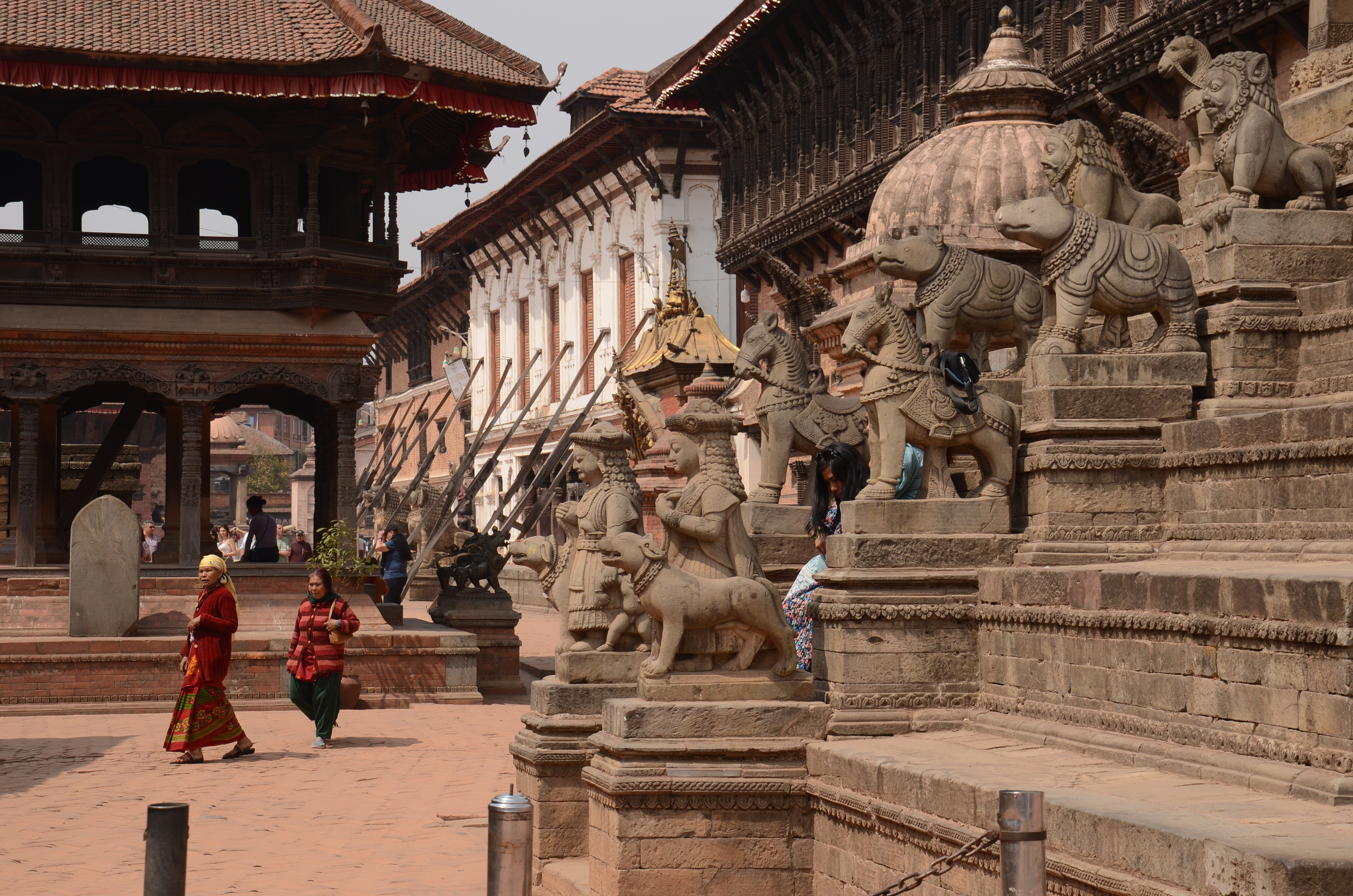
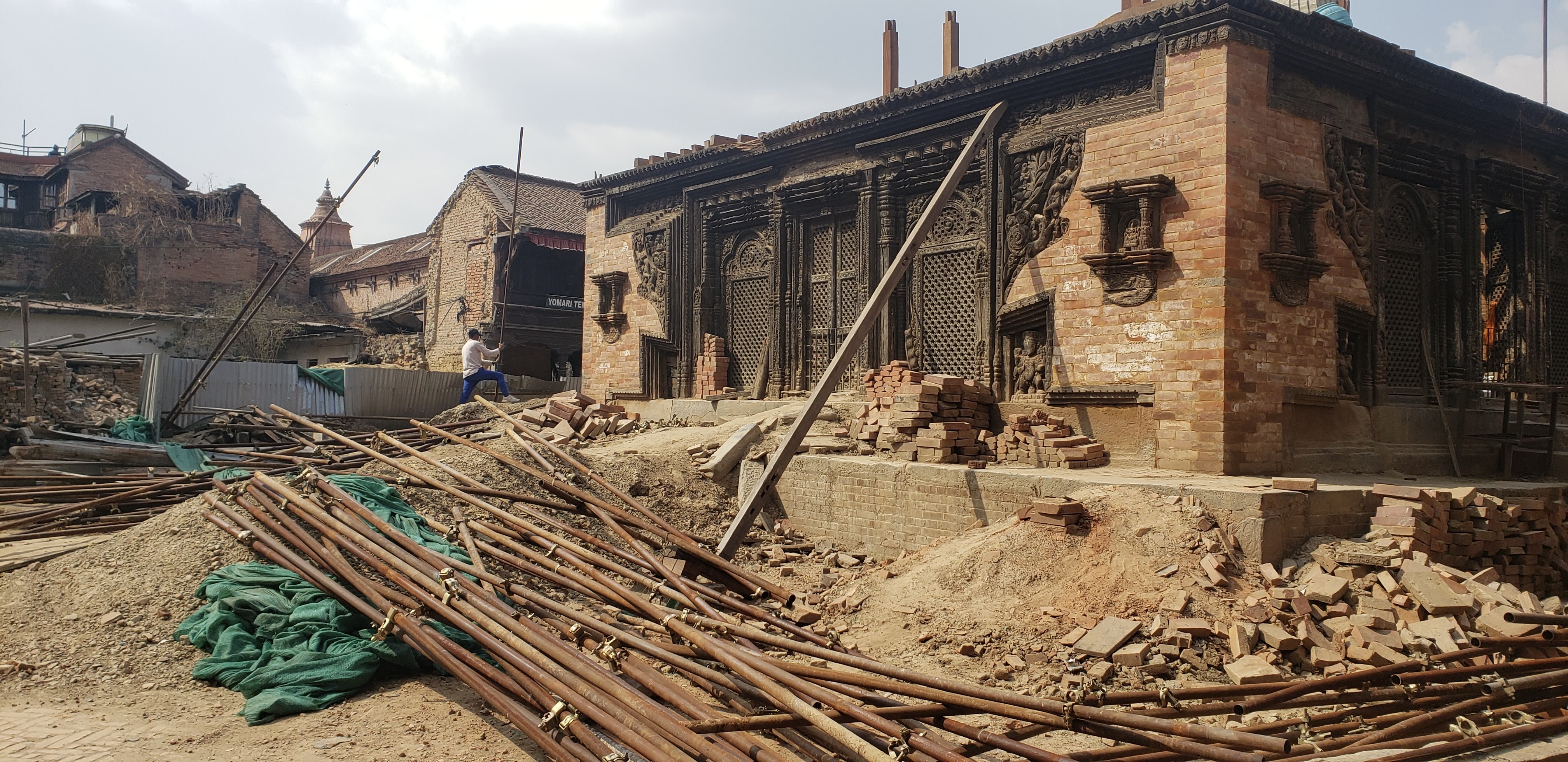
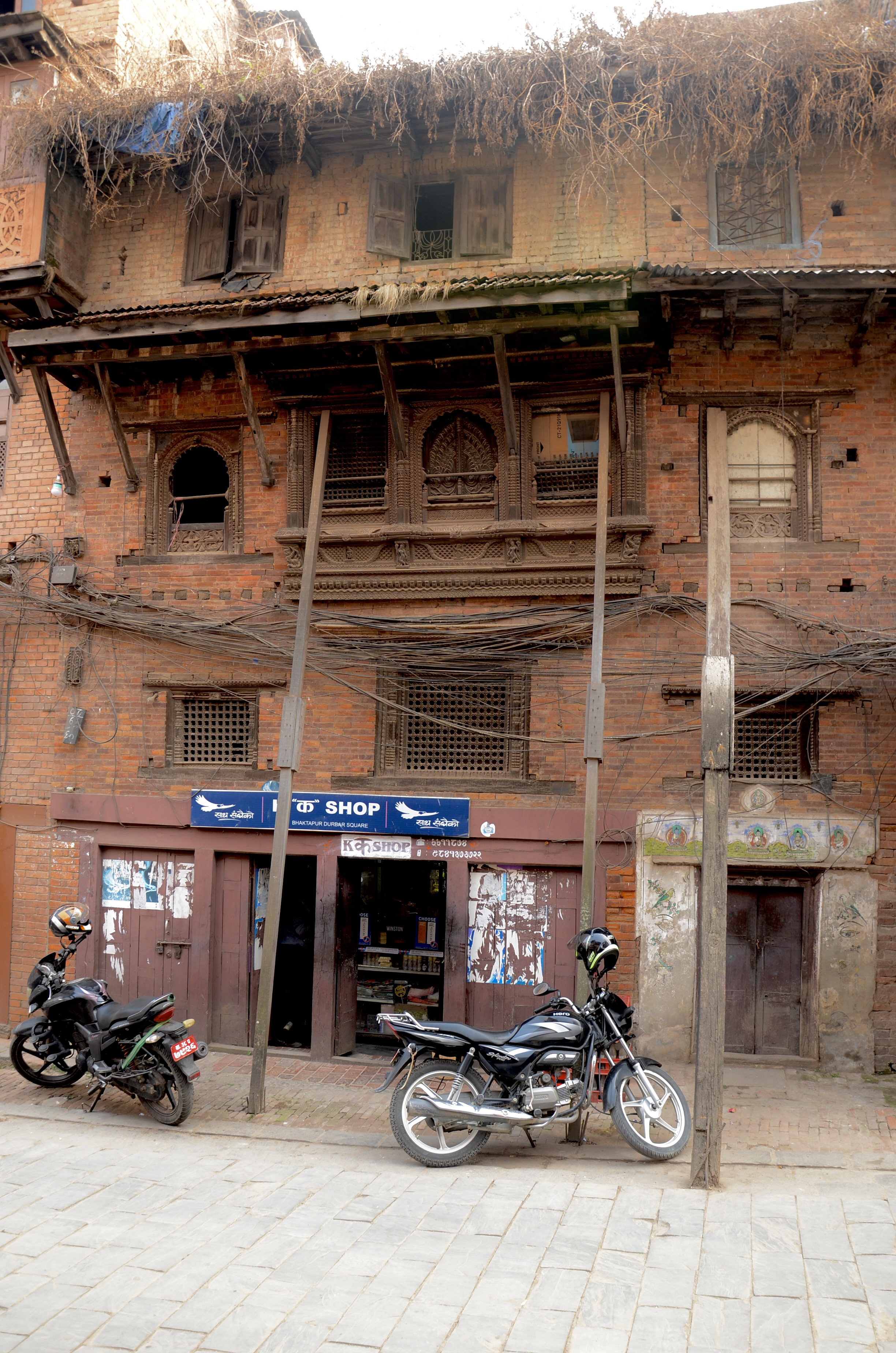
Bhaktapur was on our list of places to return, but after the earthquake (Bhaktapur sat at the 8.9M epicenter) we thought it would be too painful to see all its architectural antiquity destroyed. Time and tide…we had to go before we couldn’t.

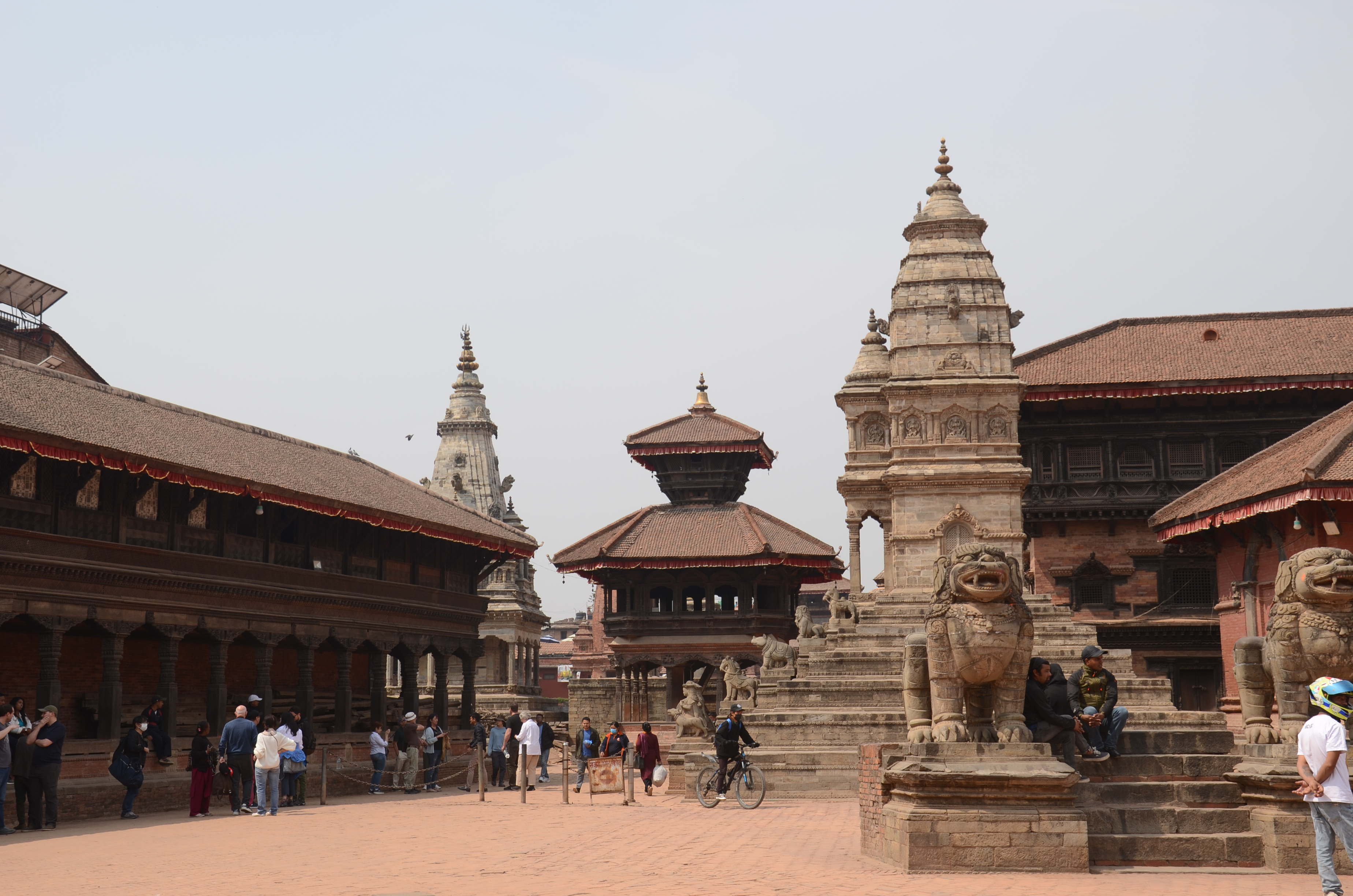
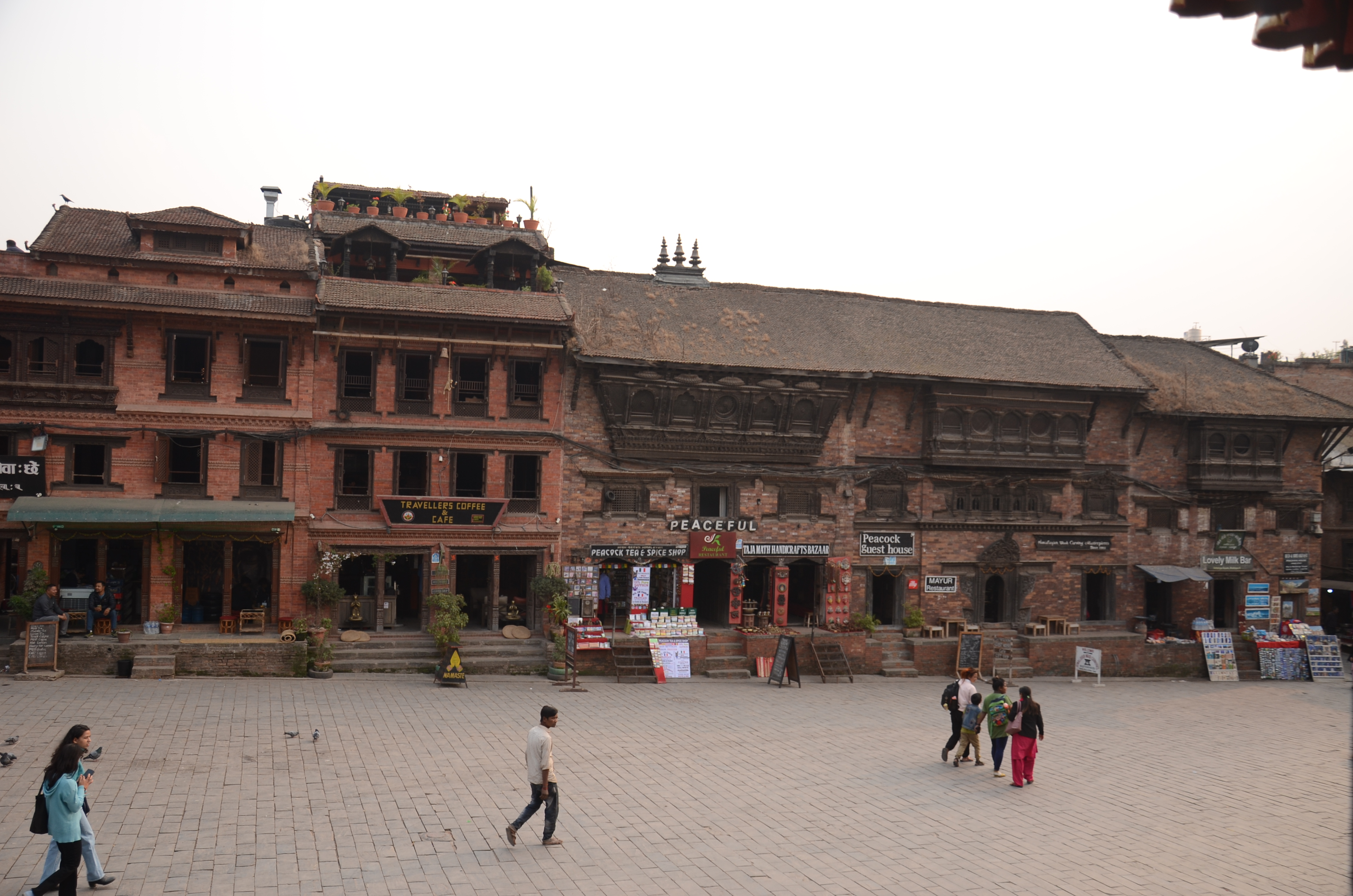
The old town (not the sprawling new one) was built between the 14th and 16thC. Three major squares are connected by narrow streets and alleys paved with flagstones. One of the advantages of the uneven surface is that that motorbikes, the only traffic allowed, are slowed down. In spite of dust from continuing construction, the city is still immaculate compared to India.

Apparently, 70% of the old buildings in the town collapsed while many of the new concrete homes survived. If the homeowner rebuilds with the traditional brick and carved timber front facade, the municipality reimburses up to 20%.

The Taumaudh temple remained intact in spite of its height while surrounding buildings collapsed. It’s enormous three tier base may explain why. Or the protecting statues along the ascending stairs did their job.

Across the square, another repaired temple houses a god that is so ferocious that no one, except the priest, is allowed to enter inside.

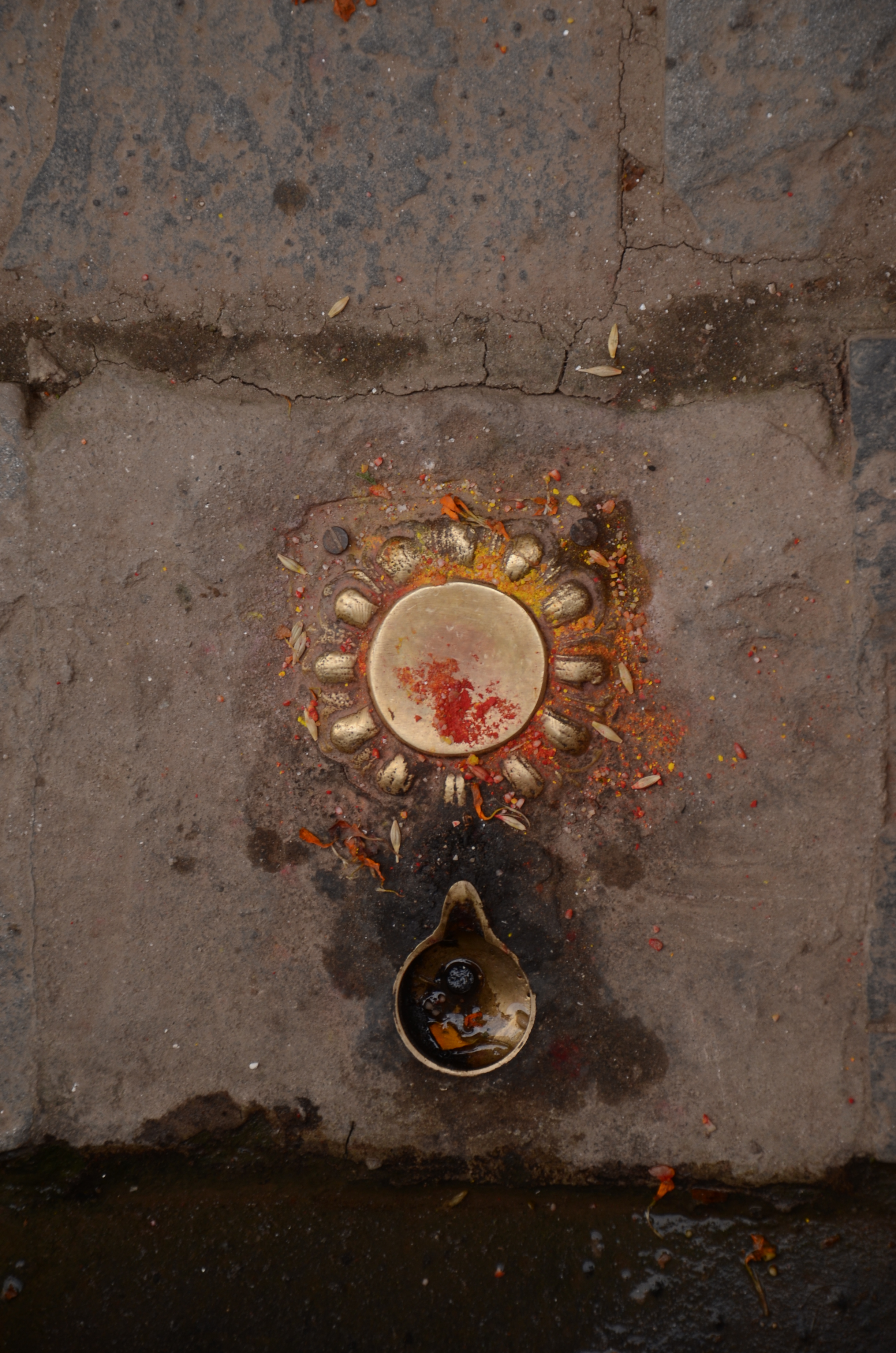
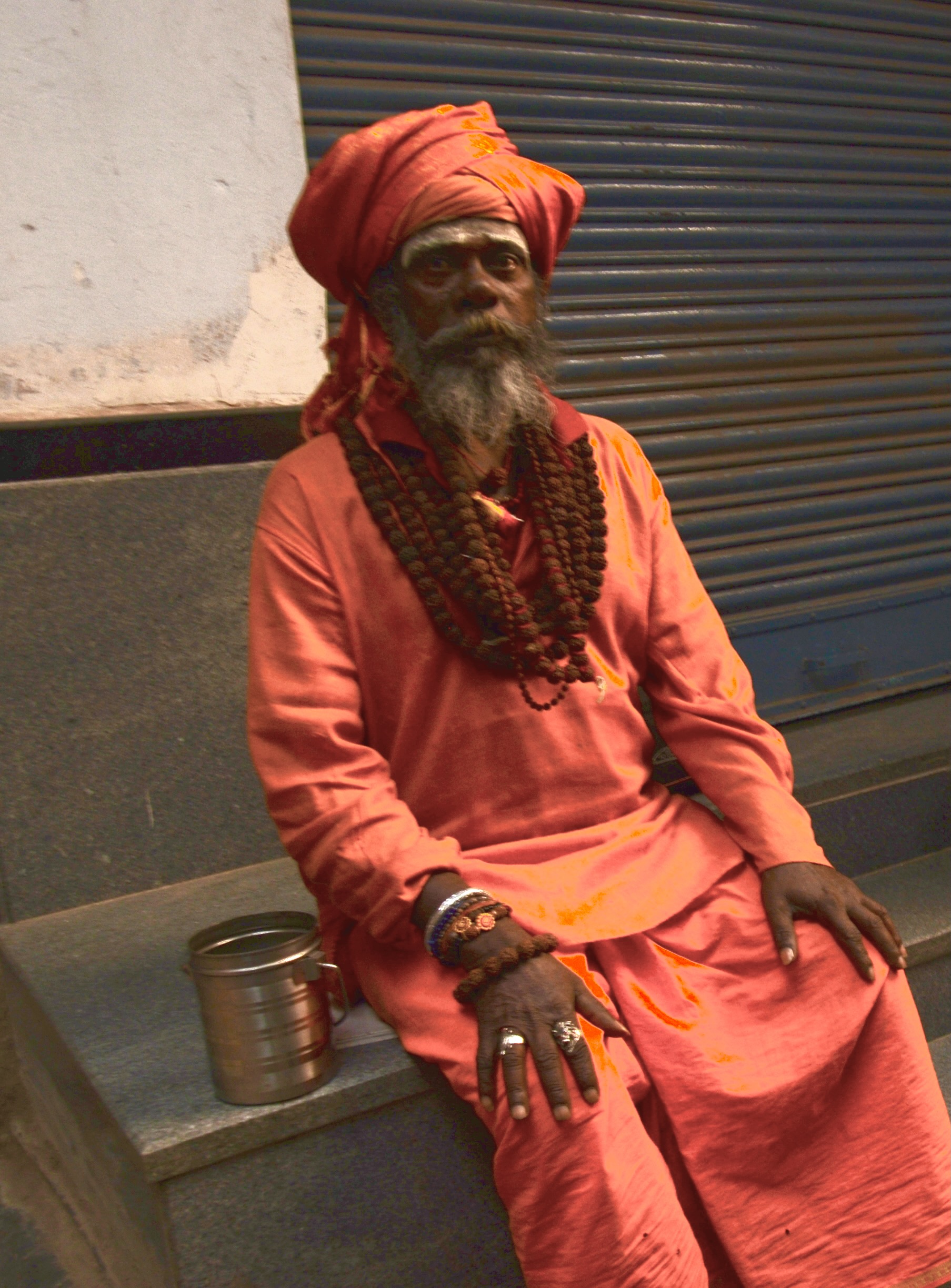
Life here is steeped in rituals. In front of every house a stone or bronze stylized flower is embedded alongside the paving stones to ensure safety and prosperity to the household. The “pikha lakhe” are lovingly blessed with flowers, rice and red powder.
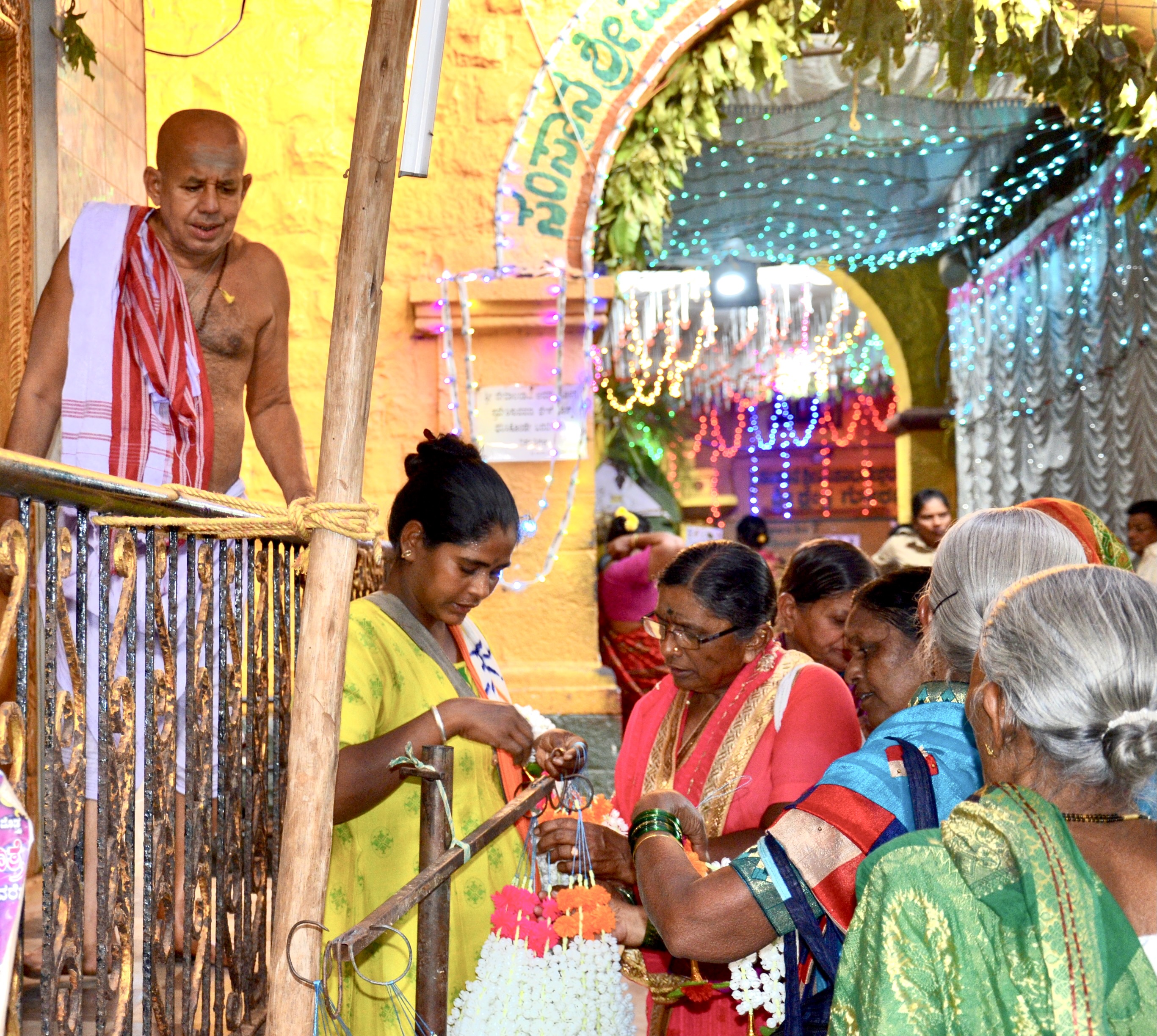
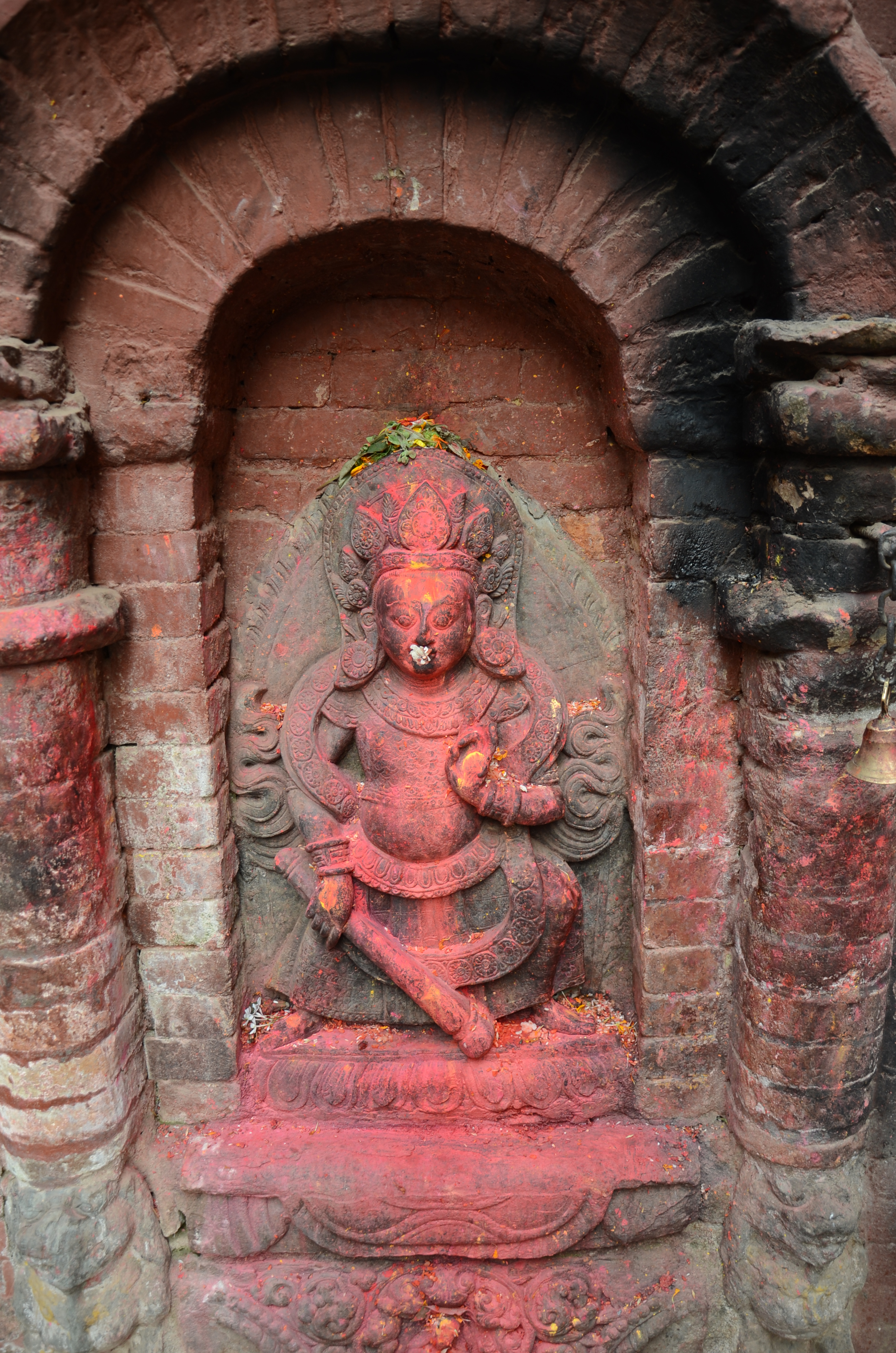
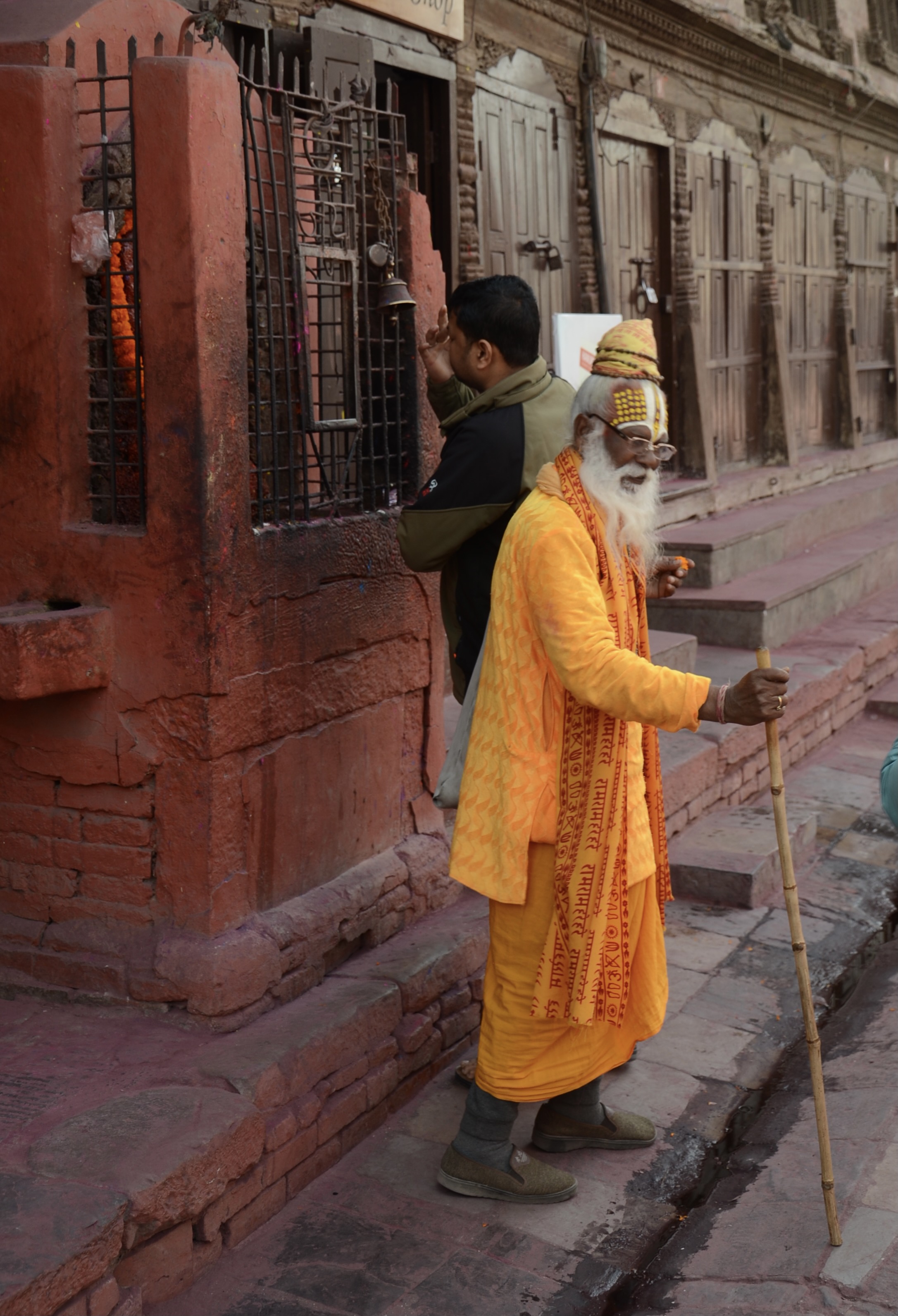
Around 4 am, the morning ritual begins with the ringing of temple bells by people passing by. With my bad hearing, the different size bells, ringing at intervals, sound like an avant guard jazz performance. Women bring trays of offerings to the ancient statutes of deities. After paying homage, they smear the red powder on their third eye.

In Bhaktapur, young and old alike take their rituals very seriously, lighting candles, touching the deity, then their forehead. As they leave, they take a flower and place it on their head. Every evening, older men sit in front of the temple and chant. One explanation for so much ritual could be Nepalis have incorporated both Buddhism and Hinduism.

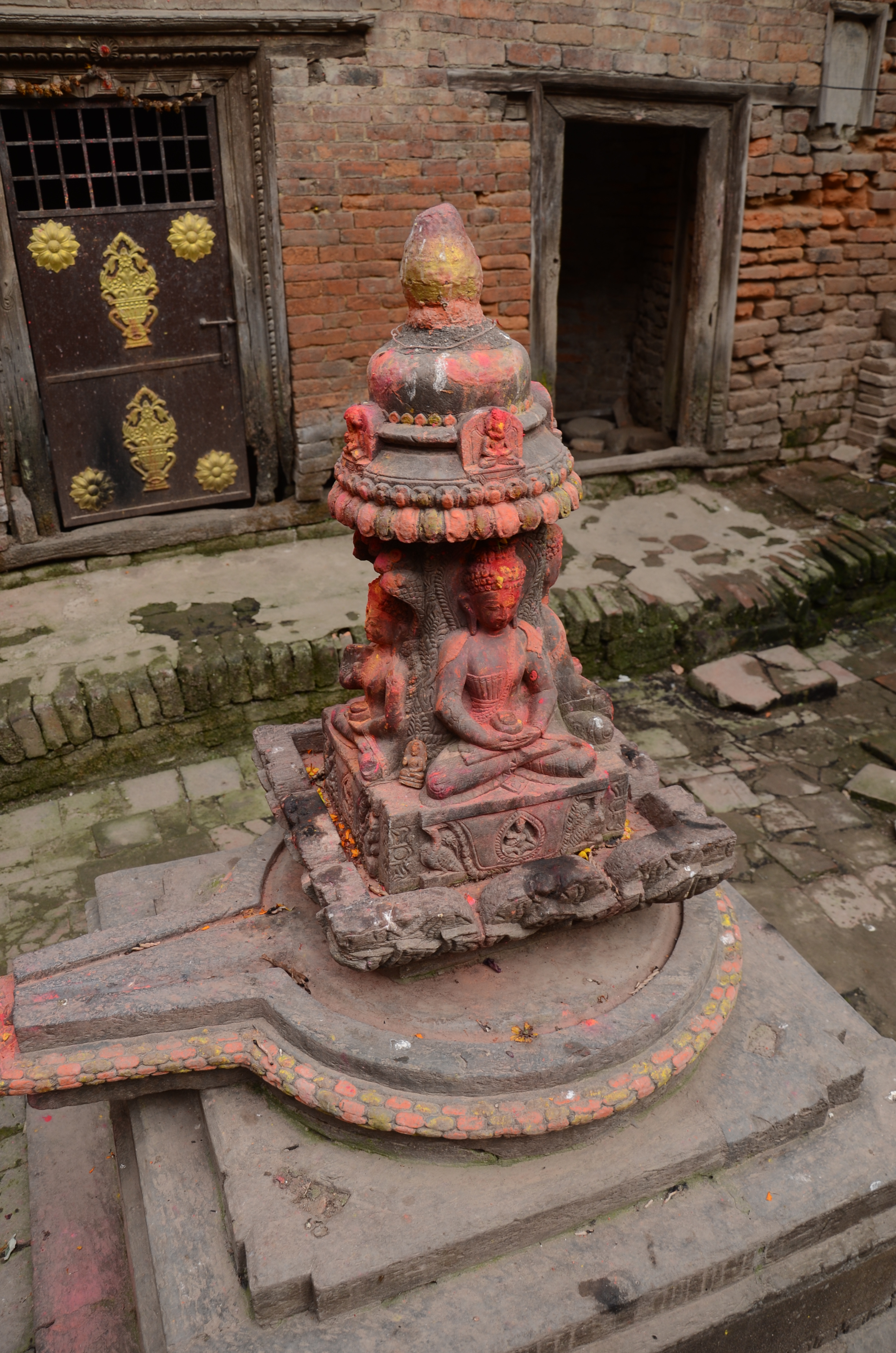
Buddhist figures sitting on a Hindu Shivalingam

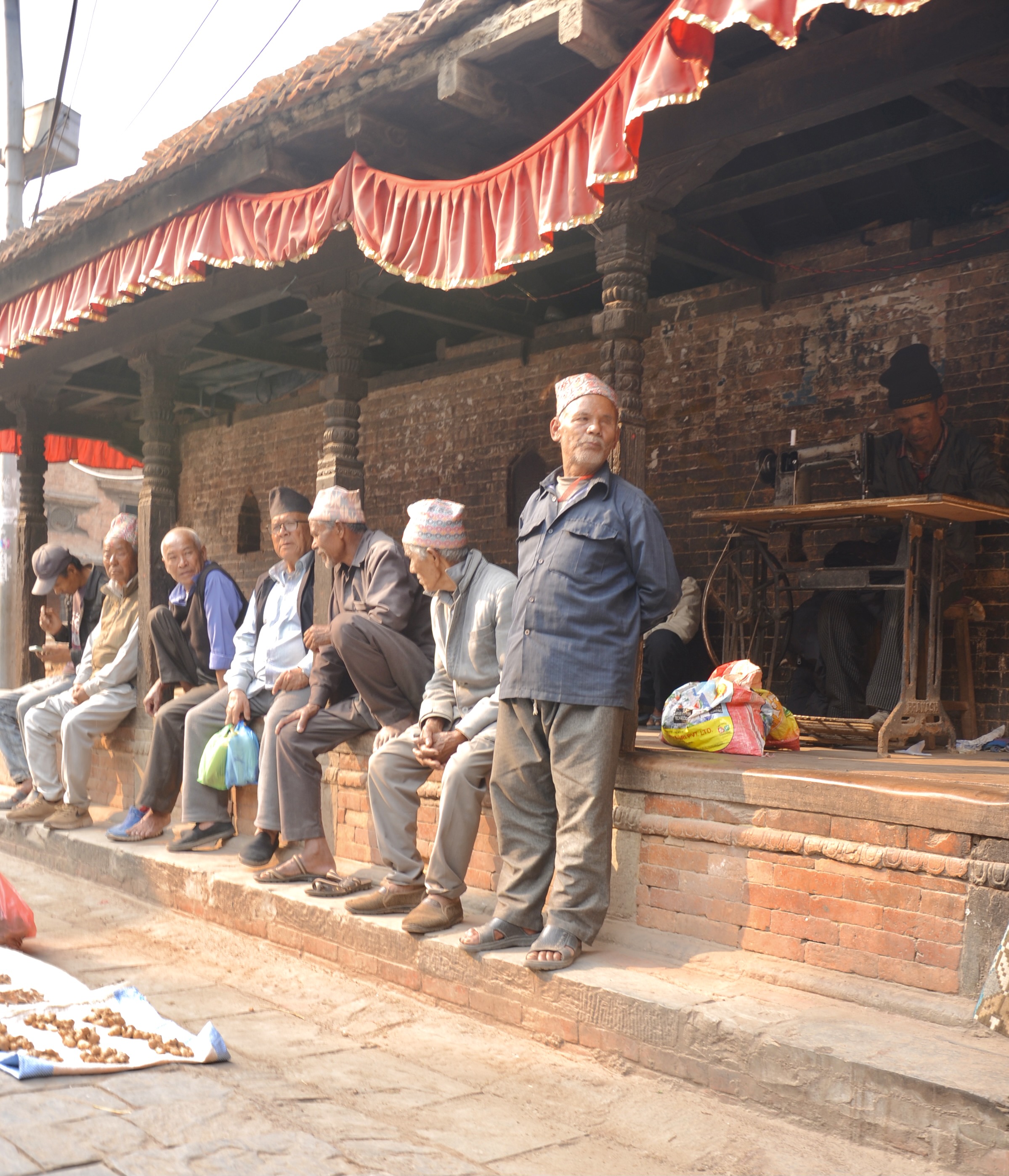
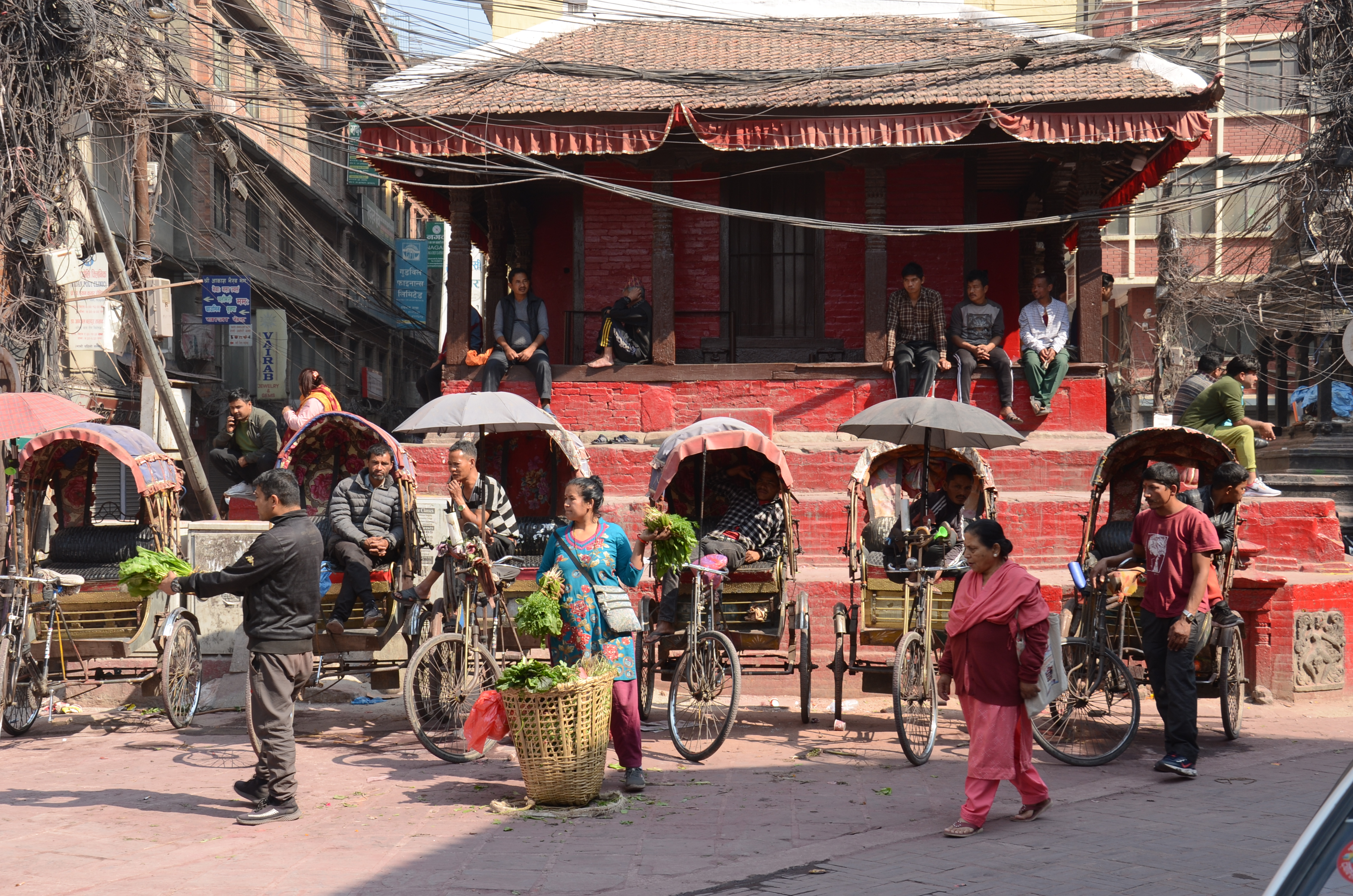
Unique to Bhaktapur are “patis”, covered sitting areas where old men hang out, chatting or playing cards.

With most of the restaurants and hotels run by young men, where are all the middle-aged men? With few work opportunities, many have left to find work or study abroad leaving the women to fend for themselves.

The guesthouse owner, Mukunda, was sympathetic of my hearing loss and told me about his Downs Syndrome 17-year old daughter. He took us to see her school.
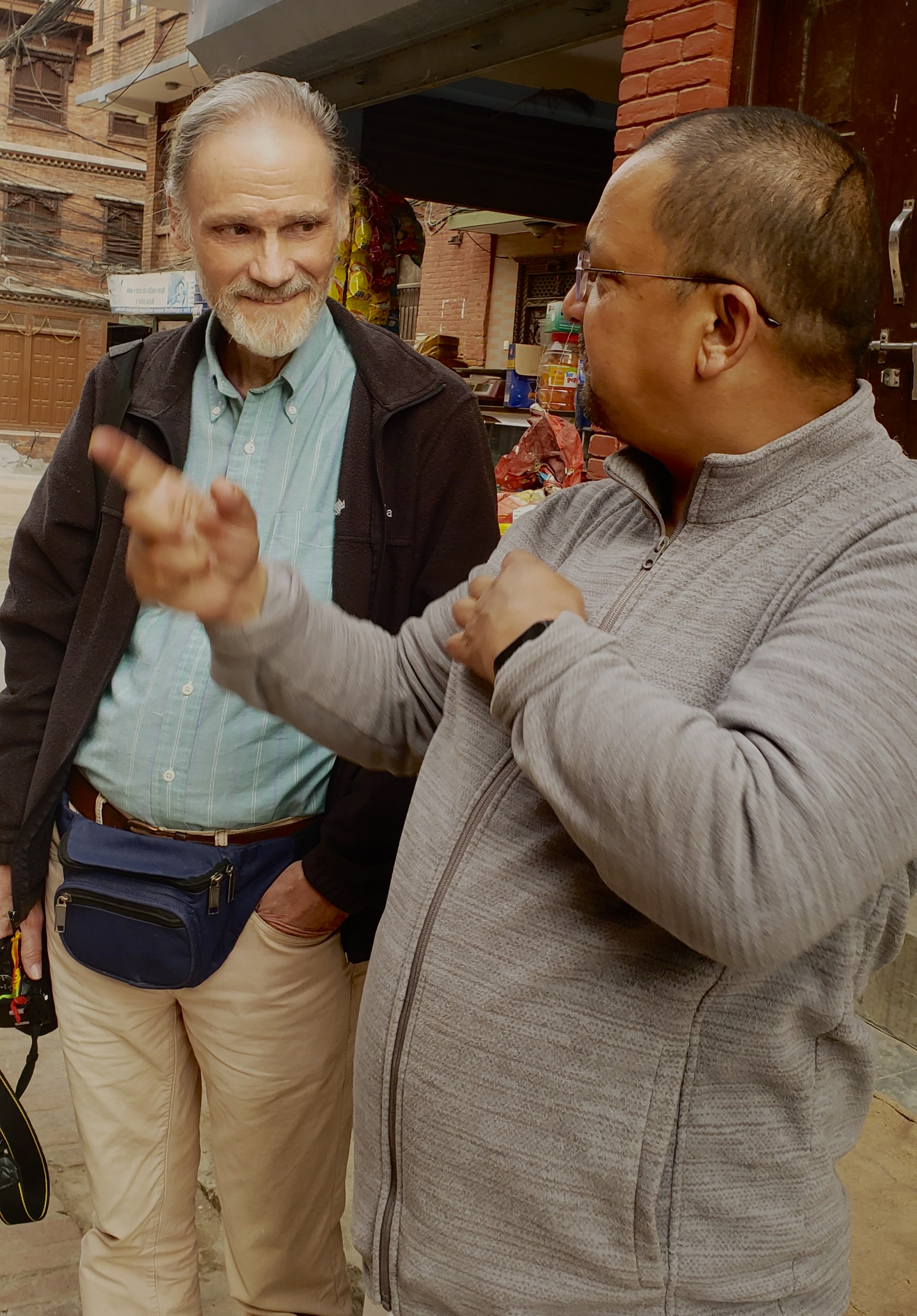
Gerard conversing with Mukunda

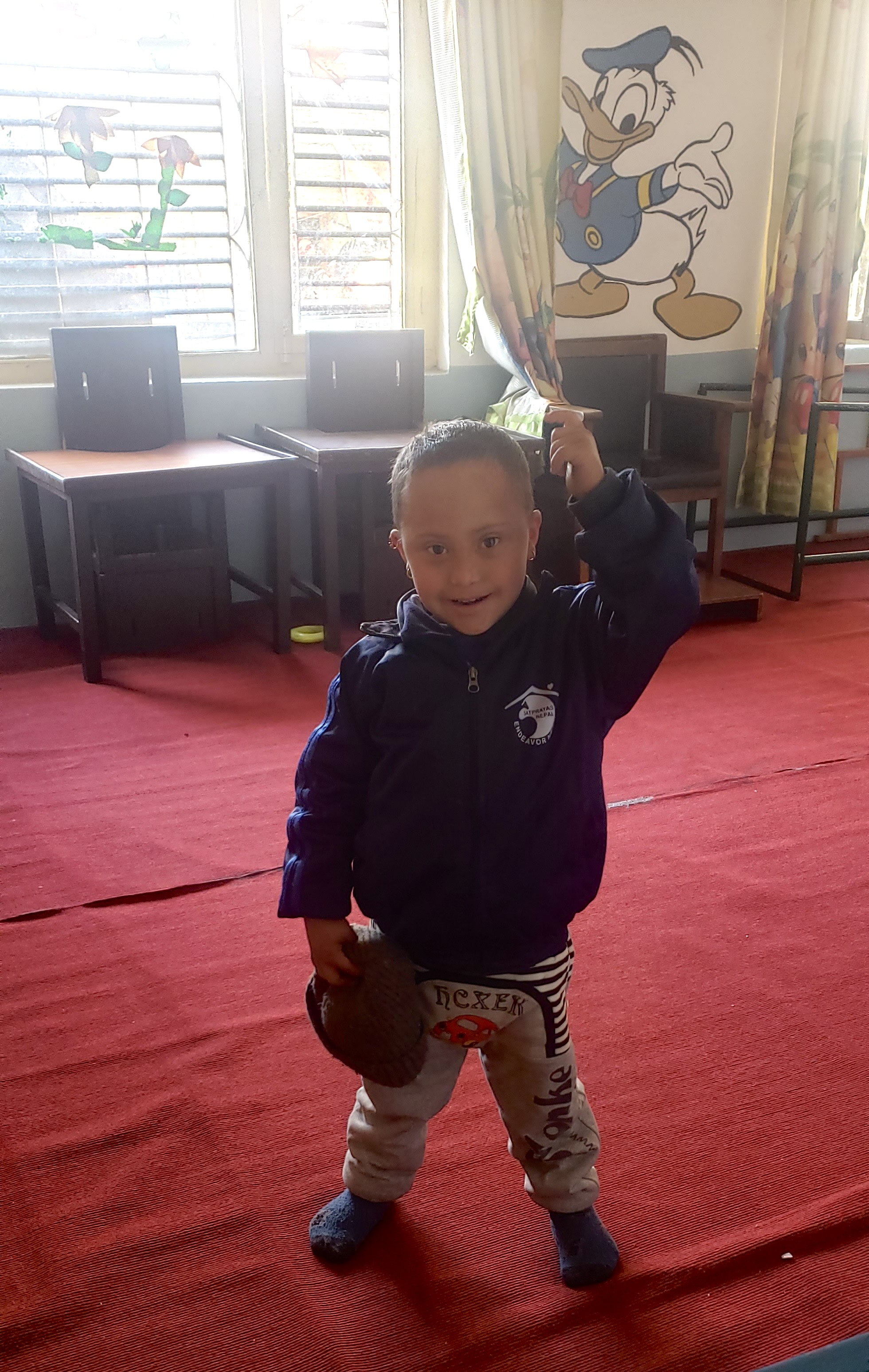
The first person we met there was an English volunteer, the other, a young physical therapist massaging the atrophied legs of Mukunda’s daughter. It was hard for me to take in; she didn’t even recognize her father’s voice. The school has 45 students, one of them a little boy was playing by himself silently in a corner. His face lit up when I went over to play with him. What a Godsend to have this school here for these children.

With all the changes here, we were pleased to find the tea and curd lady still in business. In India, you can always count on getting a good chai made by Nepali cooks. But in Bhaktapur they began making coffee for the tourists. Now everyone is drinking coffee and it’s hard to find tea anywhere.

In spite of air pollution and the painfully slow restoration we were glad to return. In our travels, Bhaktapur still remains unique.

Kathmandu: Eight Years Later

Flying toward Kathmandu, the line of snow-capped mountains on the horizon looked more like a bank of clouds in the blue sky. But then we dipped down for landing into a blanket of smog. Once on the ground, we were glad of our face masks. Traffic was heavy, with mostly motorbikes, but unlike in India, Nepalis don’t sit on their horns. The level of street noise was more bearable for my now noise-sensitive ears. The population has exploded like in India.

Happy at leaving Varanasi before Holi (not our favorite festival), only to find the Nepalis also celebrating. Youth and children roamed the streets throwing color until evening when things calmed down. We should’t have been surprised since Hinduism and Buddhism are practiced side by side in Nepal. Buddhist statues sit alongside Hindu deities at all the monuments.

Nine years ago, just before the 2015 earthquake, we came here not knowing what to expect. How could we have known history would come alive through the architectural wonder of Durbar Square in both Patan and Kathmandu? We were apprehensive about returning, to face the devastation coupled with reports of increased crime and prostitution in Kathmandu. But we didn’t see it and were glad to be back.

Thamel, where the budget hotels are located, is still a rabbit warren of narrow cobblestoned streets. Tourists and trekkers seem way down but maybe because the season hasn’t started yet. Everybody seems to be on the hustle but you can’t blame them; tourism and so much else hasn’t recovered since the earthquake.

Gerard asked a few locals where they were when the earthquake hit. Among those we spoke to, no one knew anyone who died. Today the city is still a mix between empty lots and construction. In spite of foreign aid pouring in, it’s rumored that rebuilding didn’t start for years. One explanation: “If we did the repair work, the money would stop coming.” But there are other reasons including lack of organization and finding skilled artisans..

Still vibrating with the impressions of Varanasi, Durbar Square with its intricate architecture and wood carving required a cultural shift in our attention. Even though this was our second visit, the beauty of this 3rdC Royal Palace complex was a feast for our eyes and in much better condition than we’d expected.

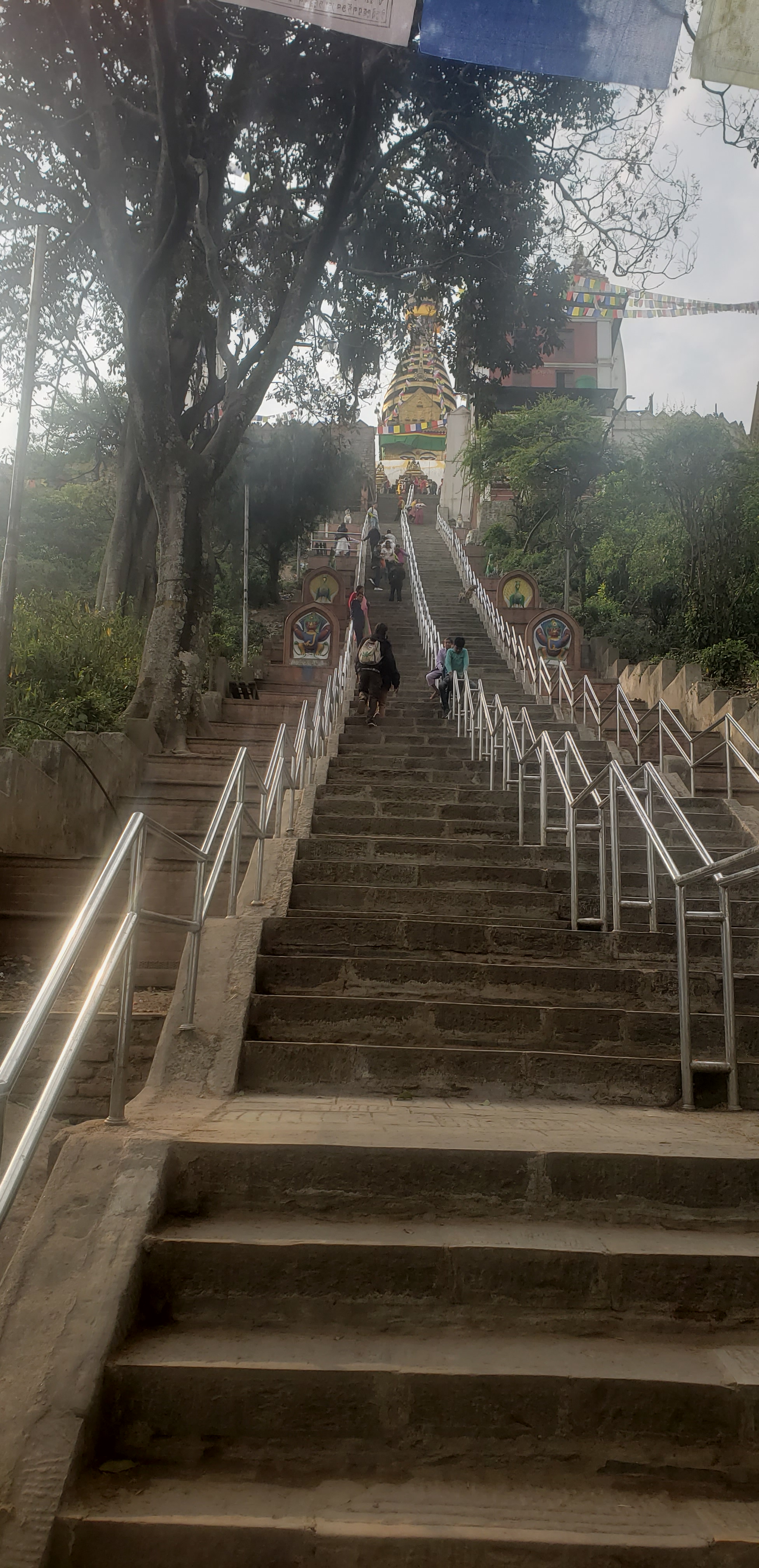
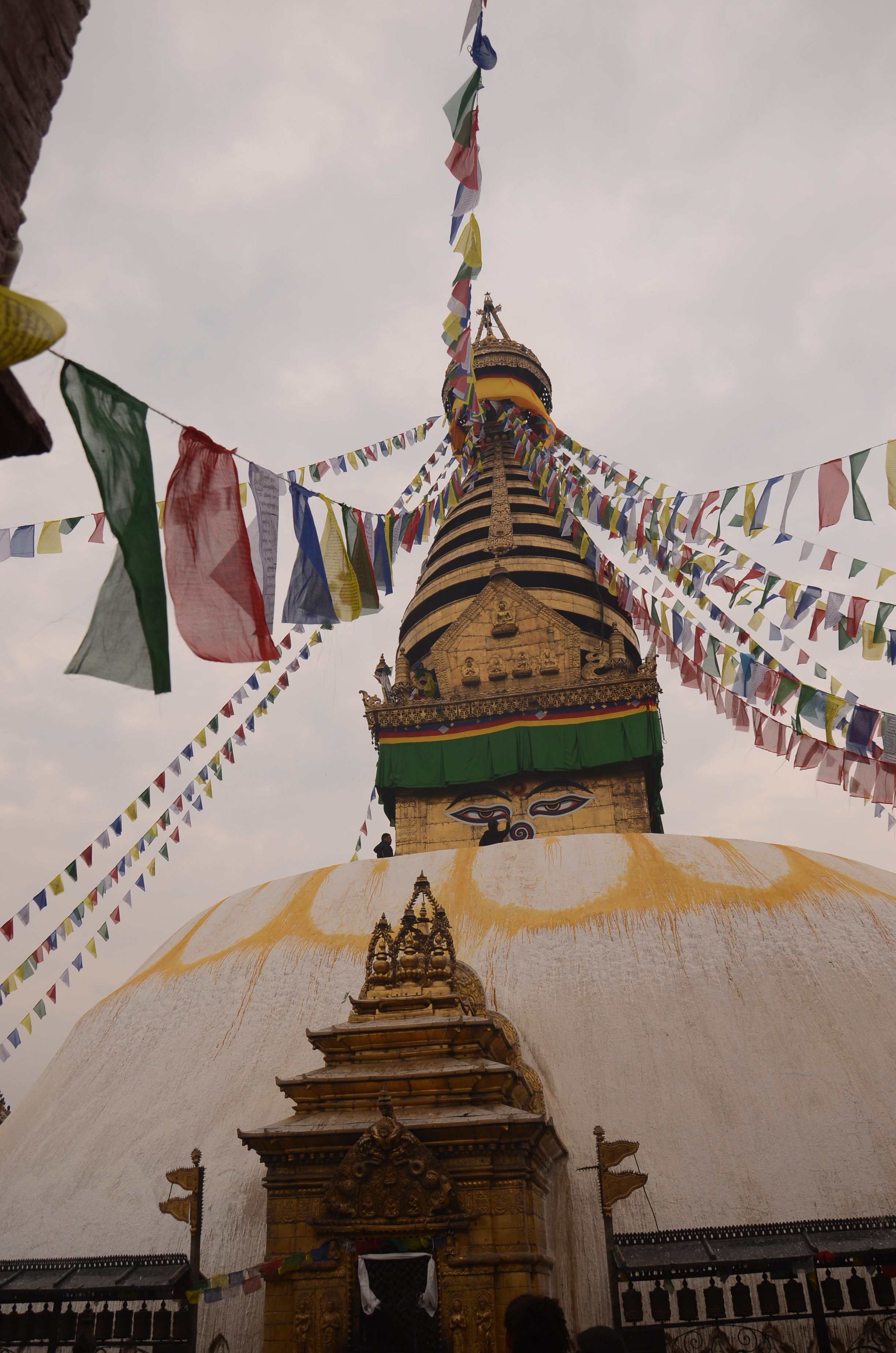
Next day we waited for the drizzle to stop, then climbed up the 365 steps to the Swayambhunath or Monkey Temple.

Nine years ago, the steps were of no consequence. So many changes during those years. Surprisingly, the hundreds of stone deities of both religions surrounding the large Buddhist stupa, escaped unscathed.

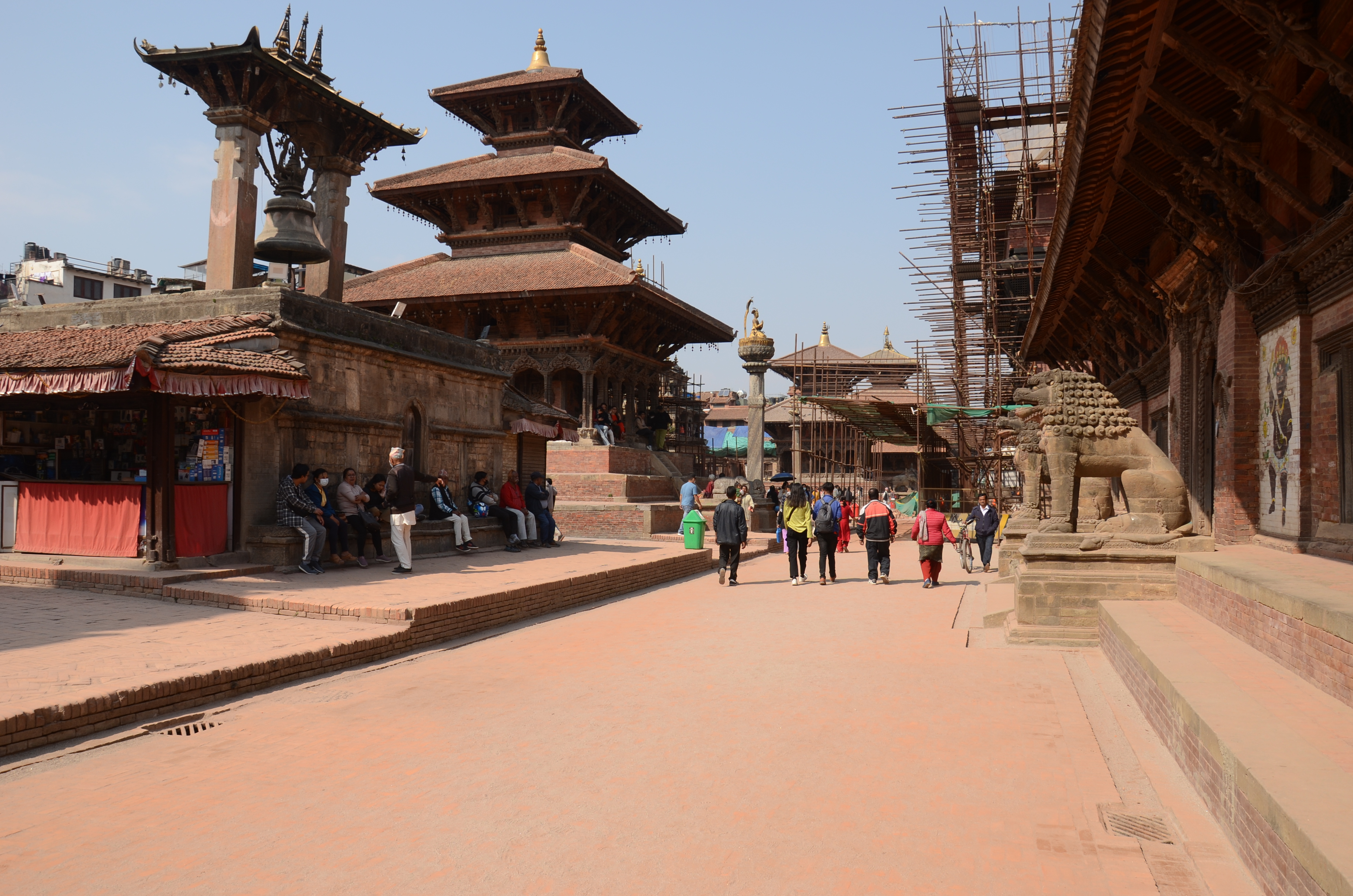
Unfortunately the nearby Patan Durbar wasn’t as restored as Kathmandu because either it suffered more damage or has taken longer to recover. It was hard to see the deterioration of what had impressed us so much before—some of the finest Newari temples and palaces in Nepal.

Posters around the complex boasted the involvement of Germany, Japan, China etc., then why is it taking so long compared to Kathmandu?

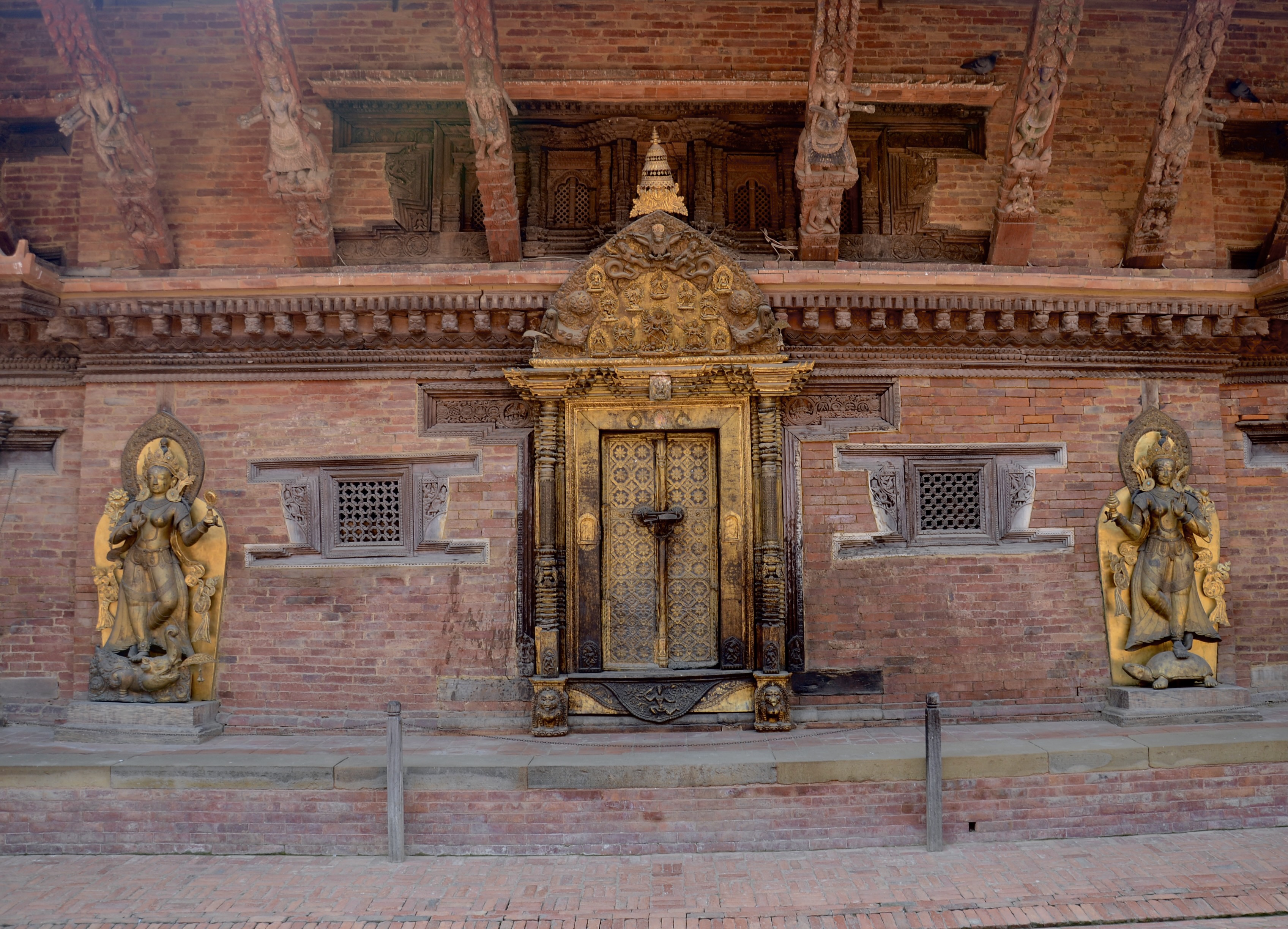
Thankfully, the Patan Museum, with financial help from Austria, has reopened its gilded entryway and still contains a wonderful collection of Newari sculptures and artifacts.

Varanasi Succumbs to Overt Tourism

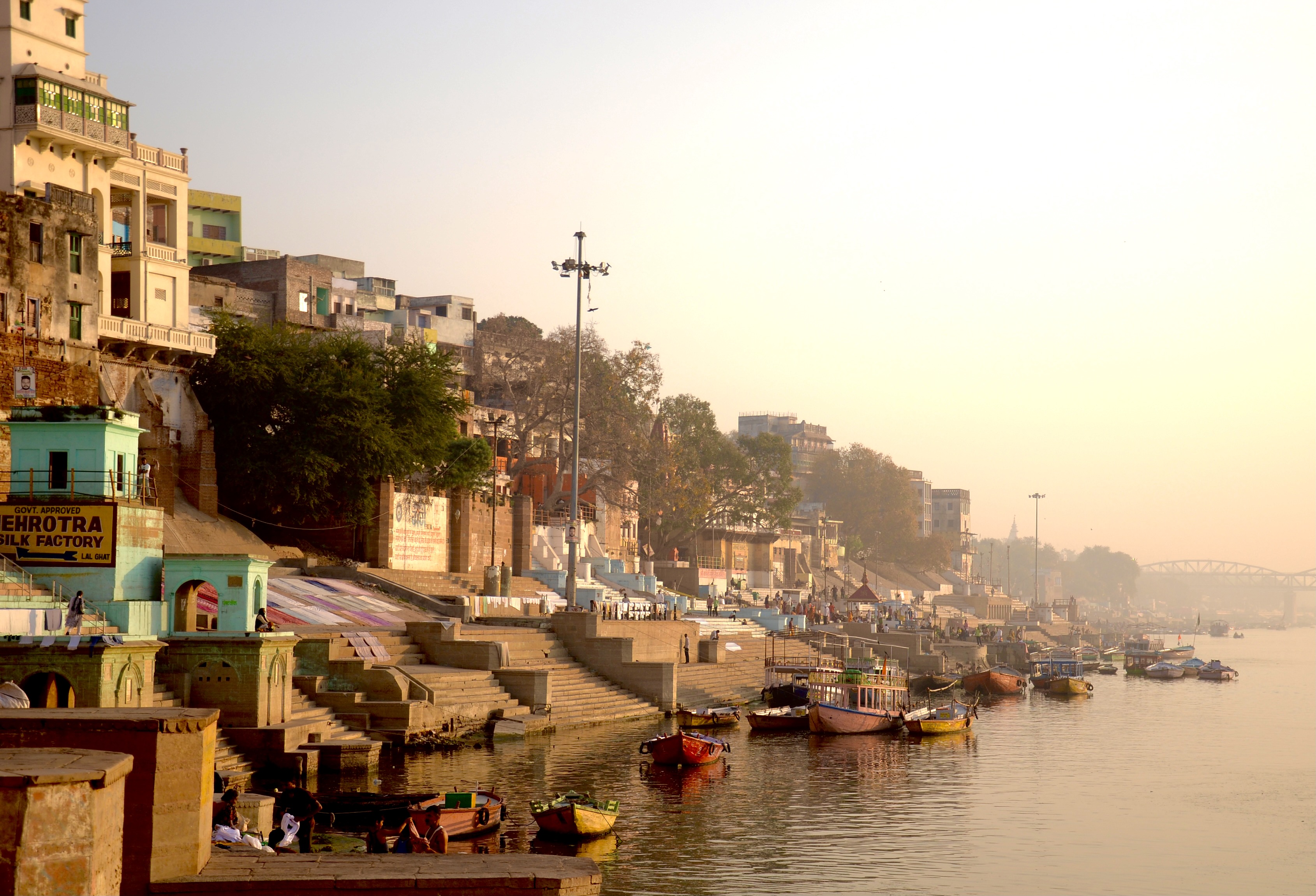
We weren’t prepared for all the changes in Varanasi. Perhaps they seemed more extreme after three years’ absence. Getting from the airport to the ghats through the clogged streets was a major feat, our taxi took twice the time. We crawled along, directing the driver to our familiar way of entering the ghat through the Moslem quarter. The hotel we’d booked online was a mistake–the photographs were totally misleading, it was a dump! But fortunately we found another literally next door. Under renovation, we were able to book an unfinished but nice room for a bargain.

We quickly dropped our bags and hustled out to embrace Mother Ganges. There she was in all her splendor. But wait! What is happening on the sandbar across the river? A young Indian boy seeing our perplexed expression, said, “How do you like our Tent City?” A mass of white tents are lined up like an army barracks, a protective fence surrounding the ‘compound.’ Gerard asked the boy, “Who wants to stay in a tent in the blazing sun?” He replied, “The same people who will pay up to 4K rupees a night.” We all had a good laugh.

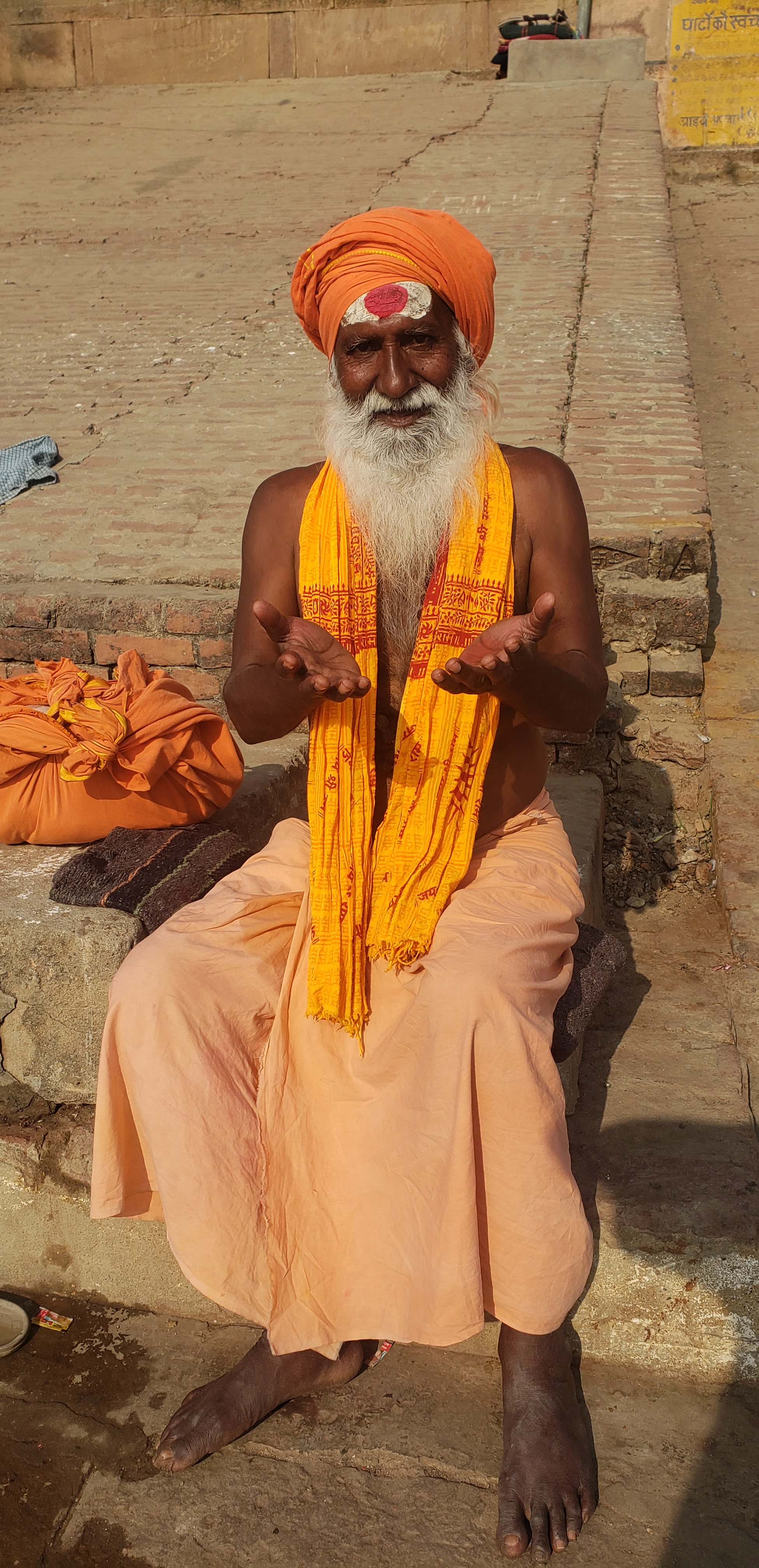
On our first foray out we didn’t even notice no washermen drying laundry on the ghat, no more stately water buffaloes wading in the river. The ghats could certainly stand to be cleaner, but we miss the activity and color. For several years, the government tried to stop clothes washing in the river with little effect. The police are now offering a free ‘bamboo massage’ (beating) to all offenders!

Our friends along the lane were all smiles. Gerard thought they they were pleased to see us but also that it also meant business was resuming. If these two old people can make it back then there’s hope! Just about everyone we talked to had stories about the covid lockdown. With few exceptions (naysayers), most told the same story: initially, there was a sense of camaraderie, the community fed the beggars and dogs. Some restaurants continued to pay their staff; they were the lucky ones.

Then the lockdown dragged on more than a year. With no money coming in, utilities and food still had to be paid for. Ironically, property owners were exempt from the government food subsidies, but still had to pay their property tax. Price of food continued climbing; from pre to post covid the price of cooking oil and flour has doubled.

I was surprised to see a beggar we’ve known for years, to have actually put on weight and look healthier. Maybe he’d benefited from the government handout/? He was also missing his thick glasses—perhaps he’d qualified for free cataract surgery!

Our friend Santosh, a native of Varanasi, said he noticed in the tree outside his window many bird species he’d not seen before. And because the streets were so quiet, he could actually hear the birds sing. The only other sound breaking the silence was the muezzin’s call for prayer at the mosque. Someone else mentioned the surface of the Ganges was like glass with no boats carrying tourists up and down the river.

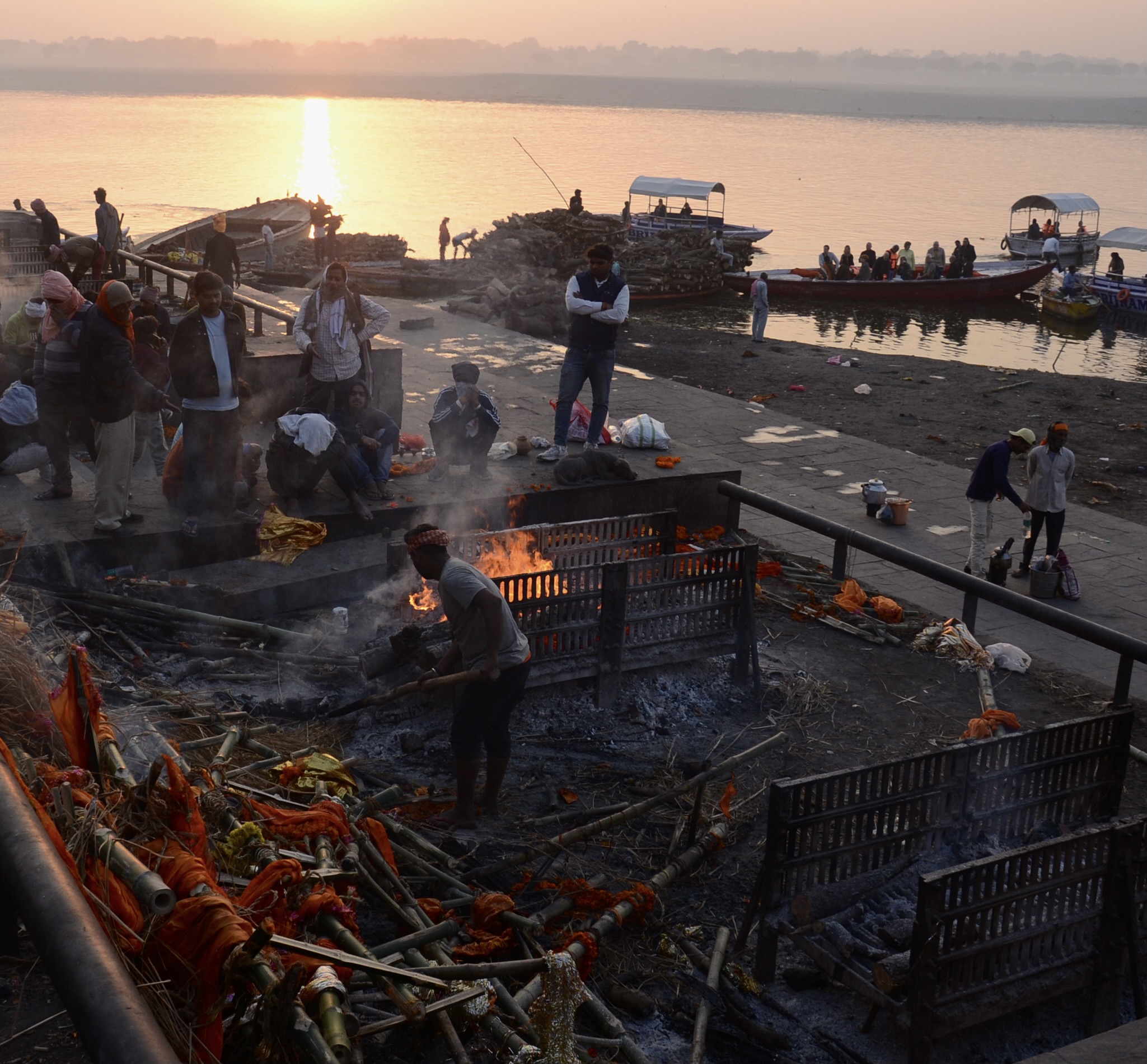
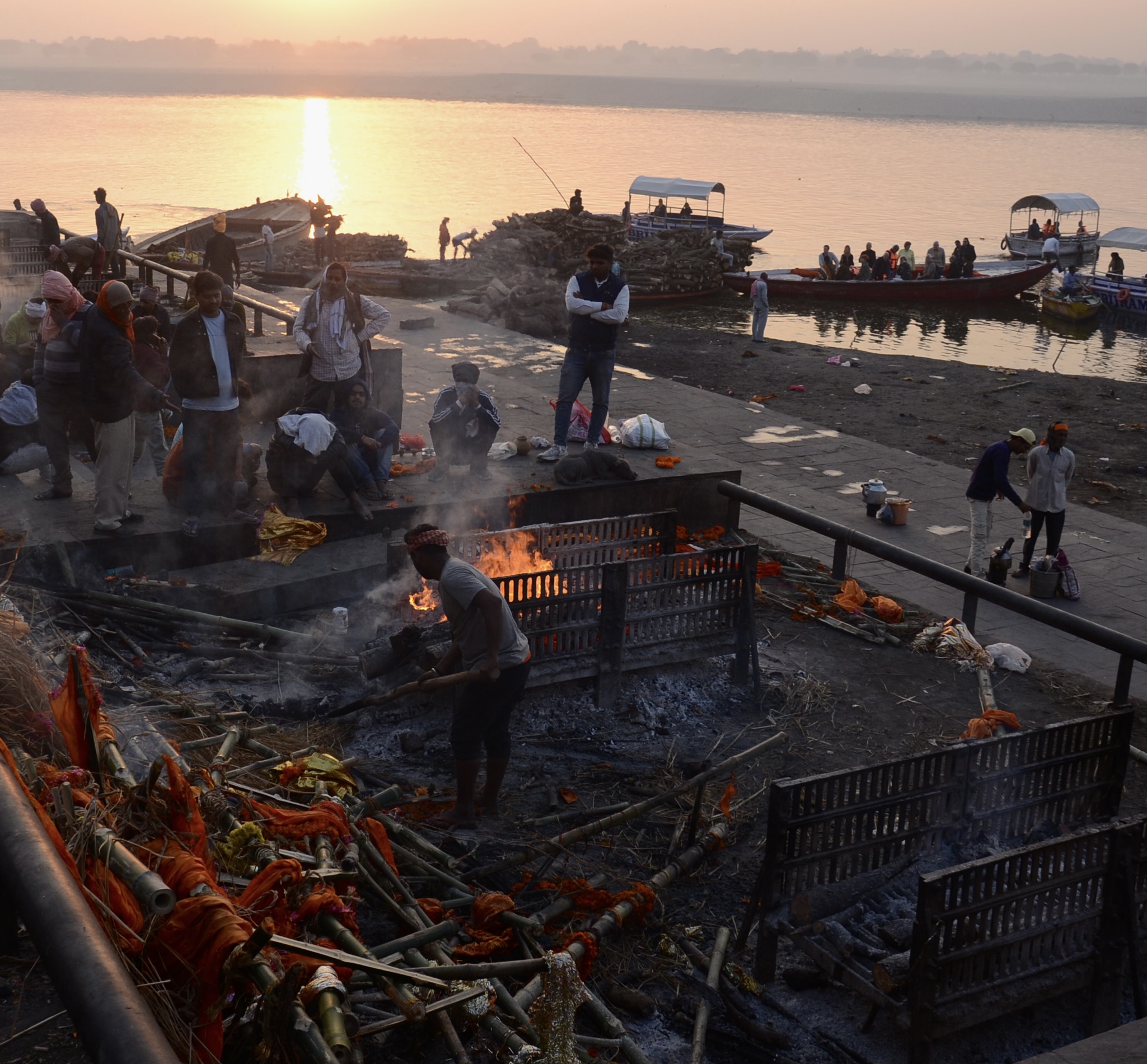
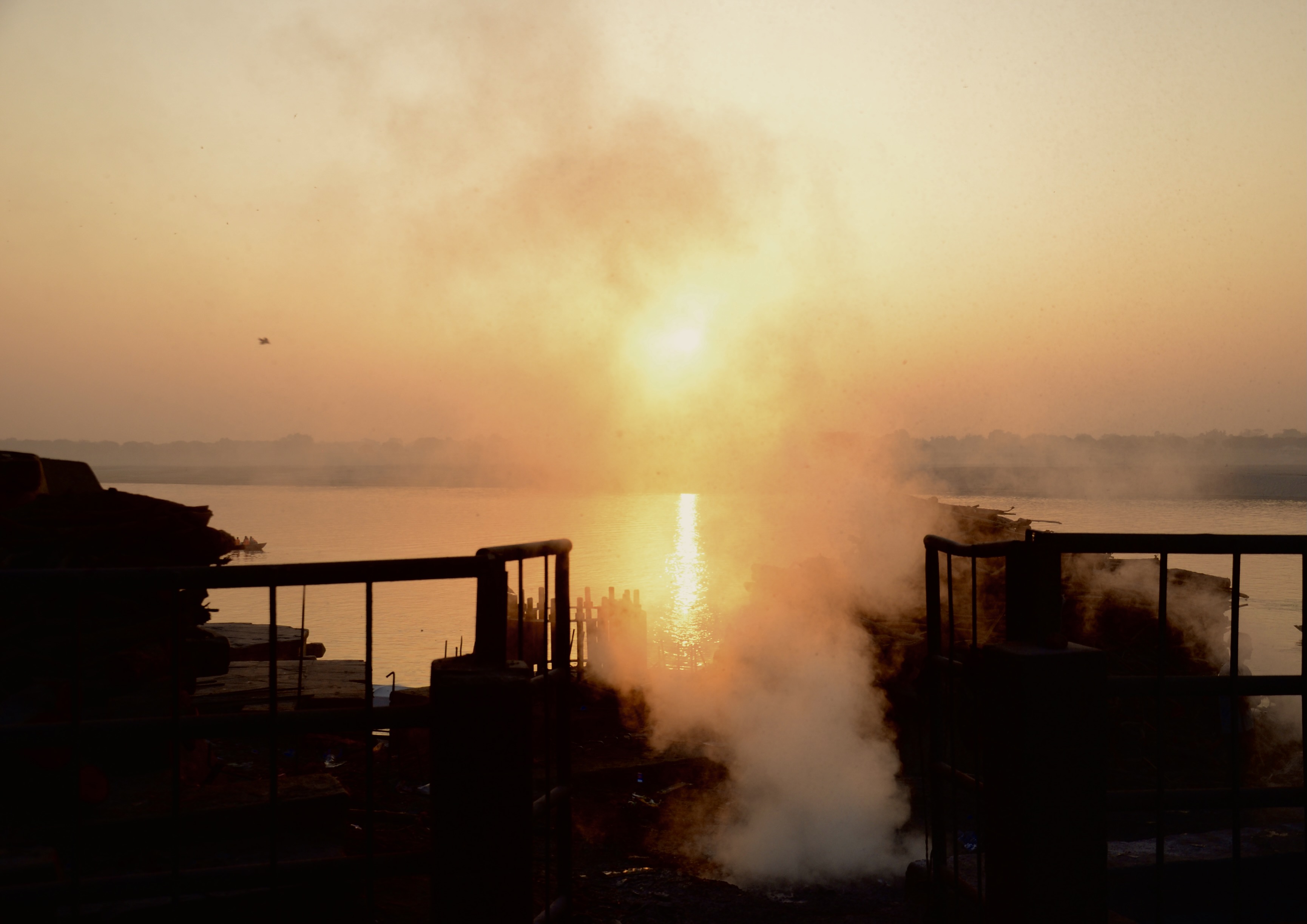
Manikarnika, main burning ghat

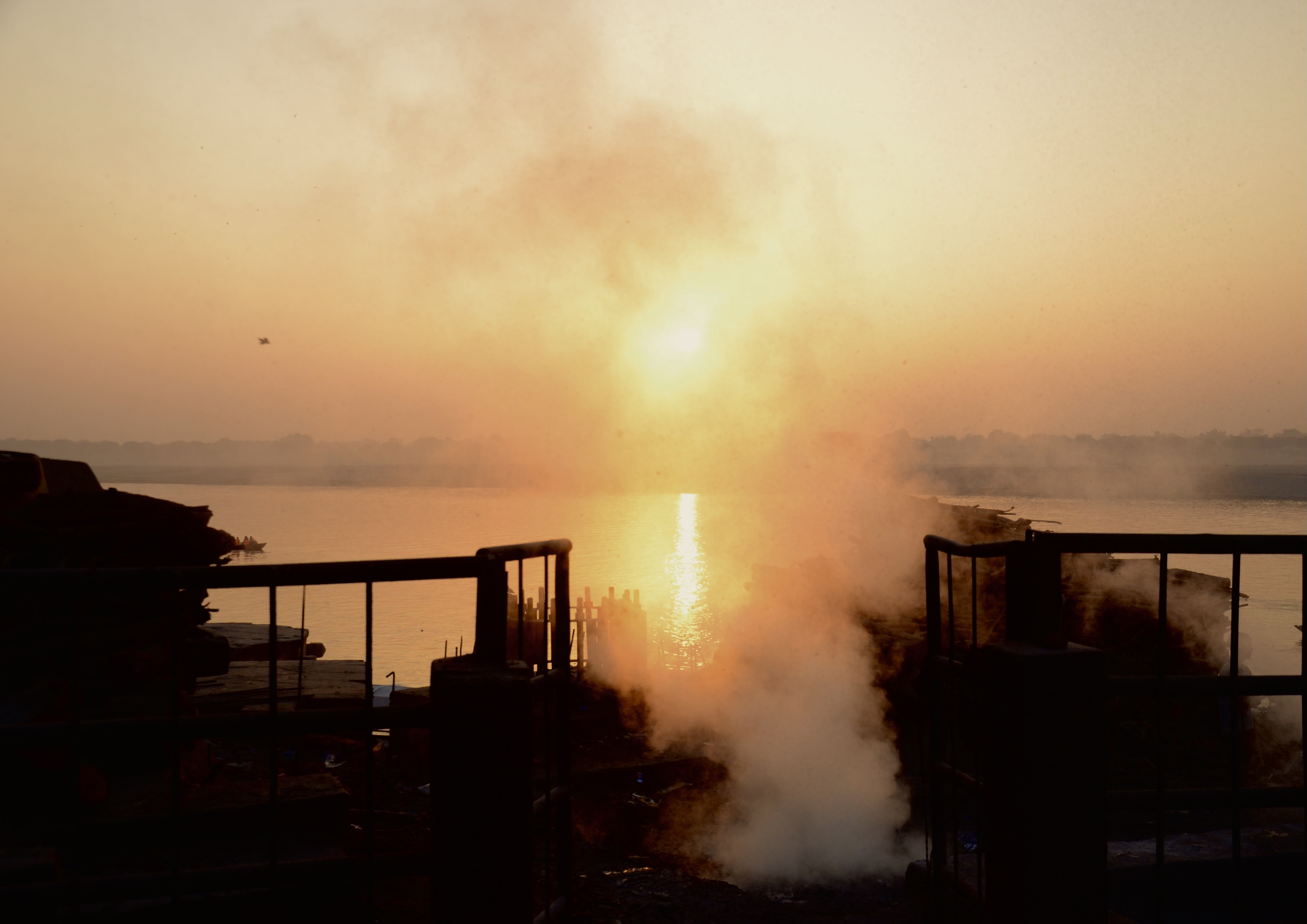
The smoke rising from the dead and the dust of ancient Varansi

Three additional ghats were relegated for burning and to keep up with the demand, instead of one body per pyre, five to ten bodies were burned at once. No vaccines were available at first, the irony when India was making a massive amount but selling it abroad! The only activity was cremation.

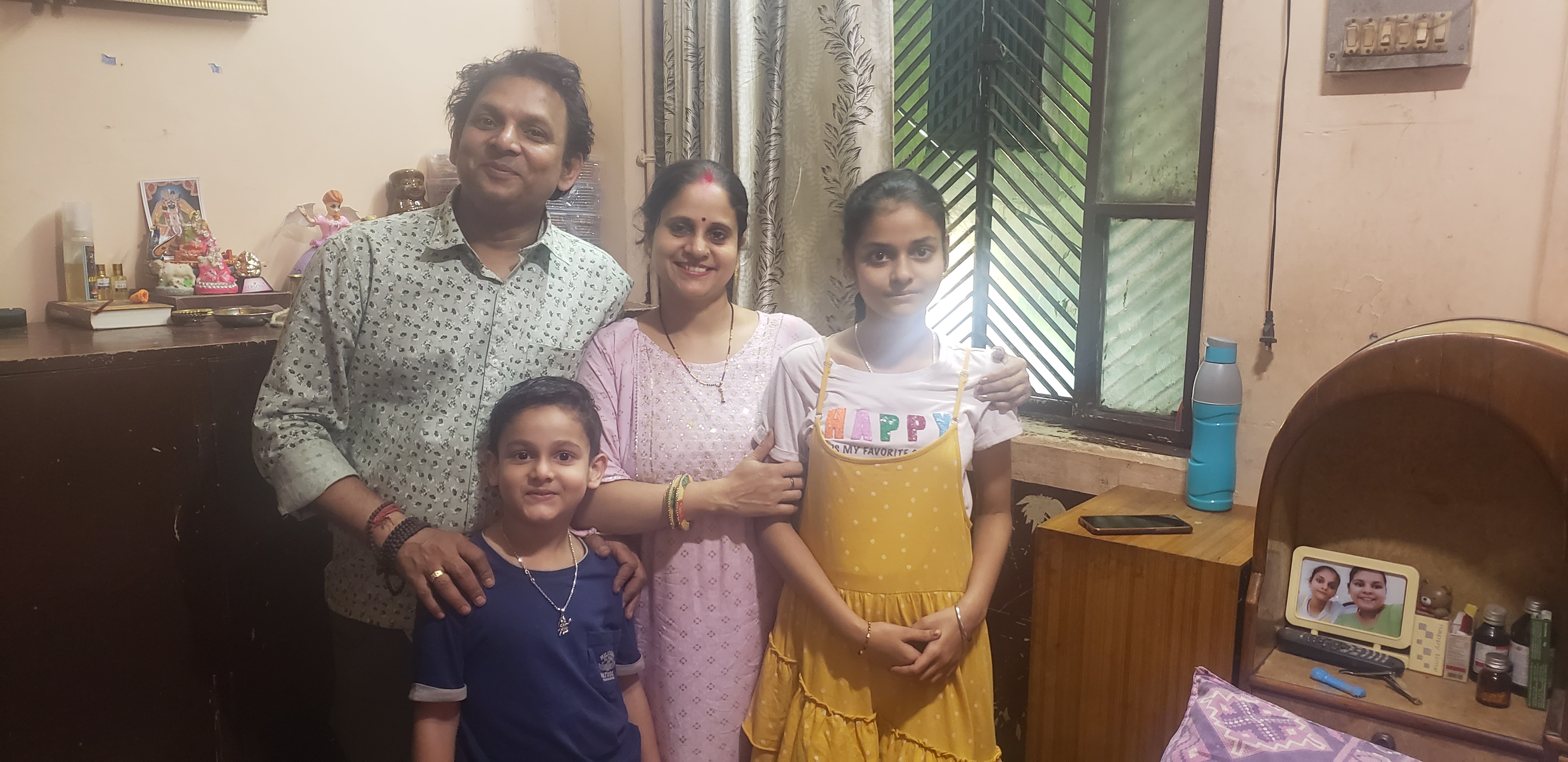
We’ve known Rajesh for about 15 years, even before he was married. He and Gerard connected over the classical Hindustani CDs he sold. Then there was only demand for religious music at his stall on the way to the Golden Temple. Today, he just sells bangles and necklaces. His wife invited us to dinner; it was very sweet to be with his whole family.

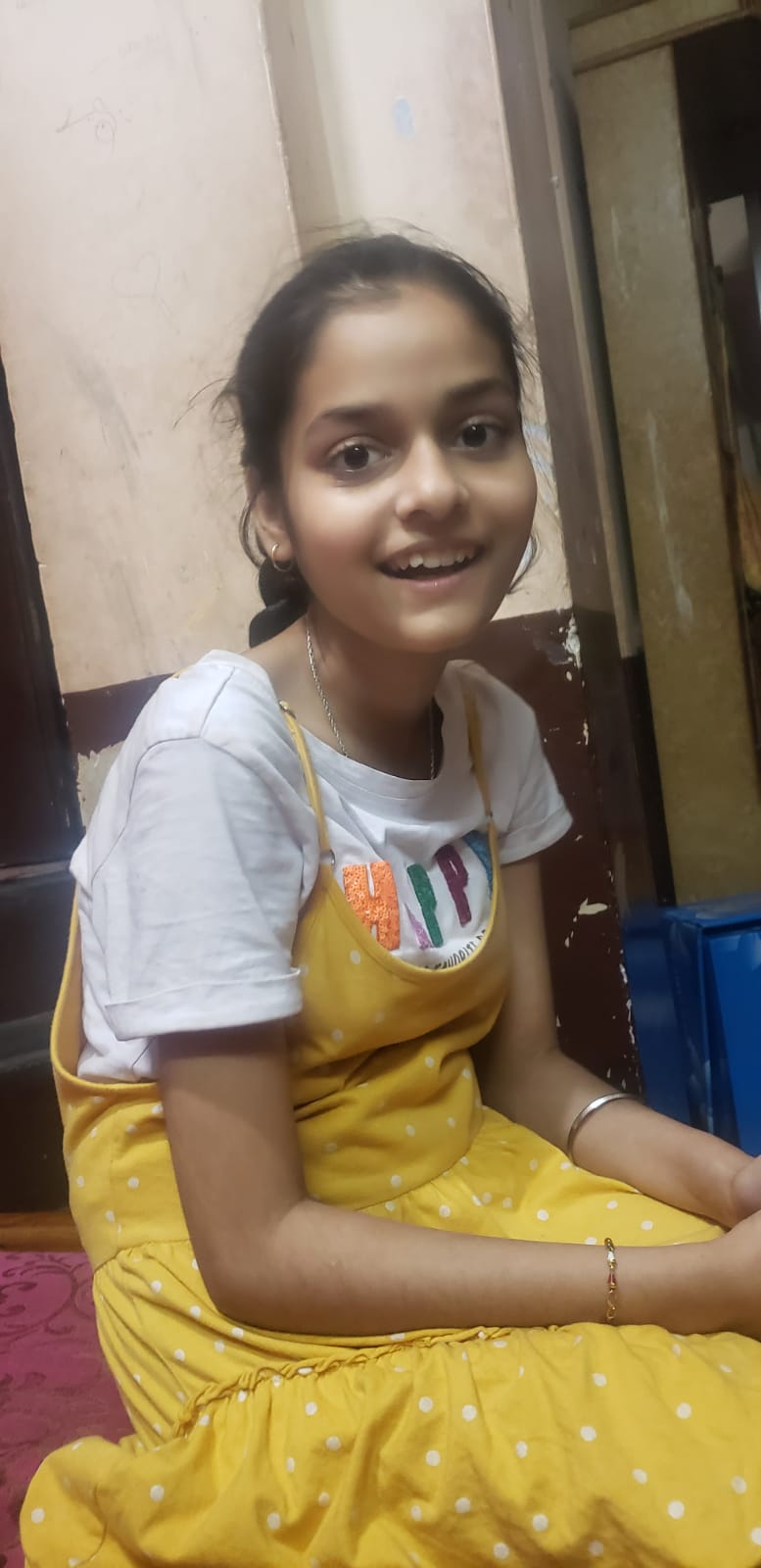
His 12 year old daughter, Sagan, was engaging, showing me her English language test book with almost 100% scores, while her rambunctious young brother, Vinayak, vied for attention.

Durin

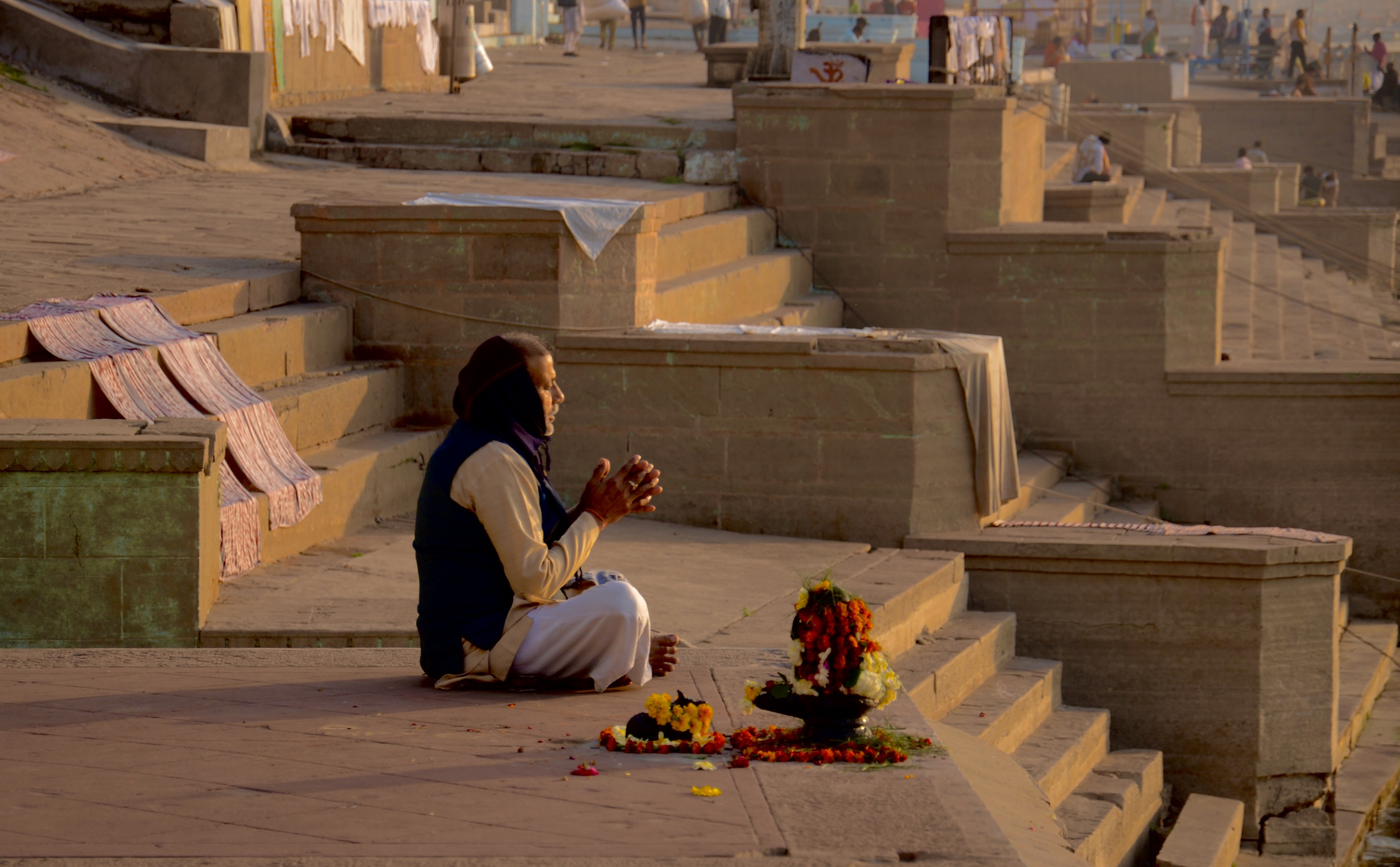
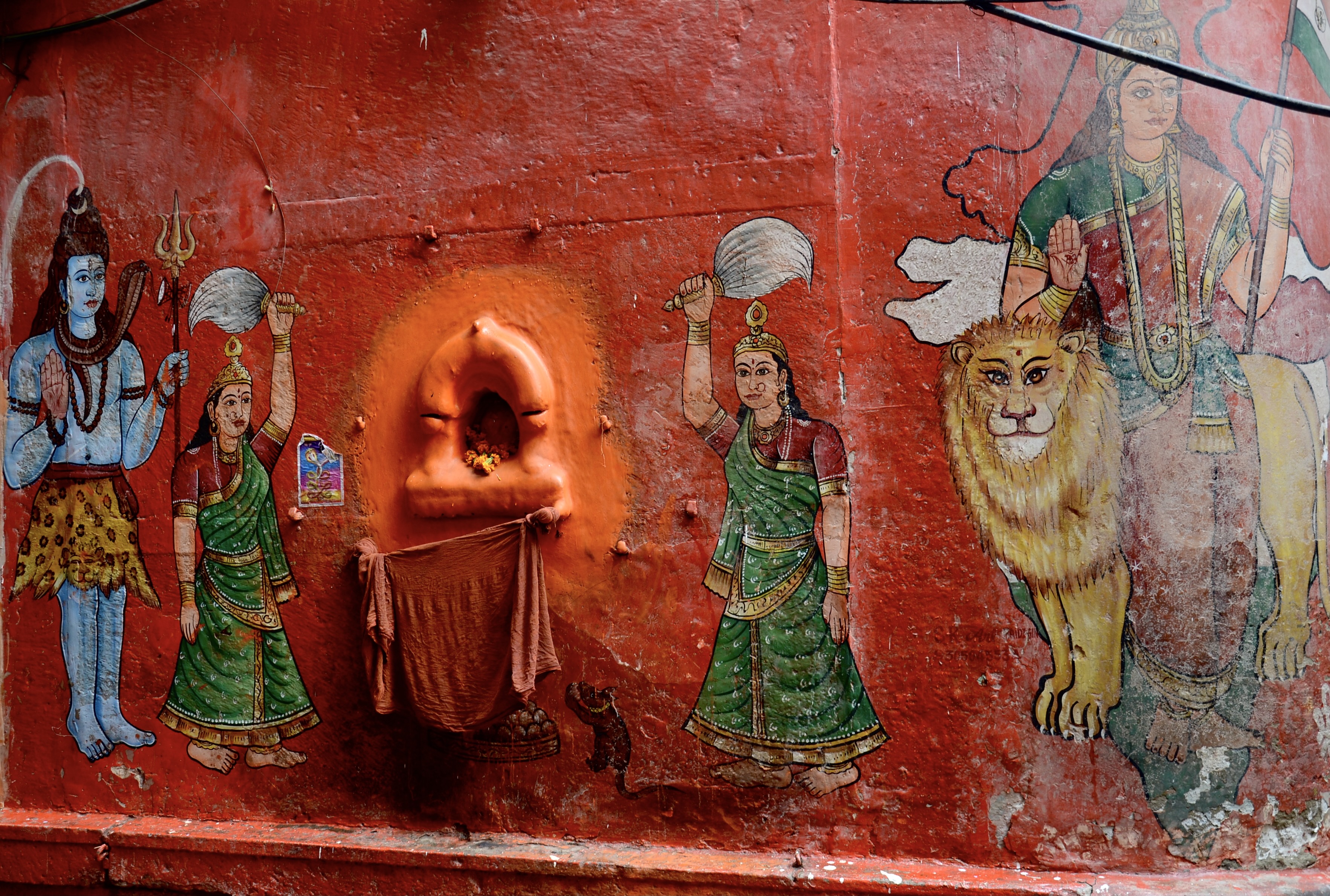
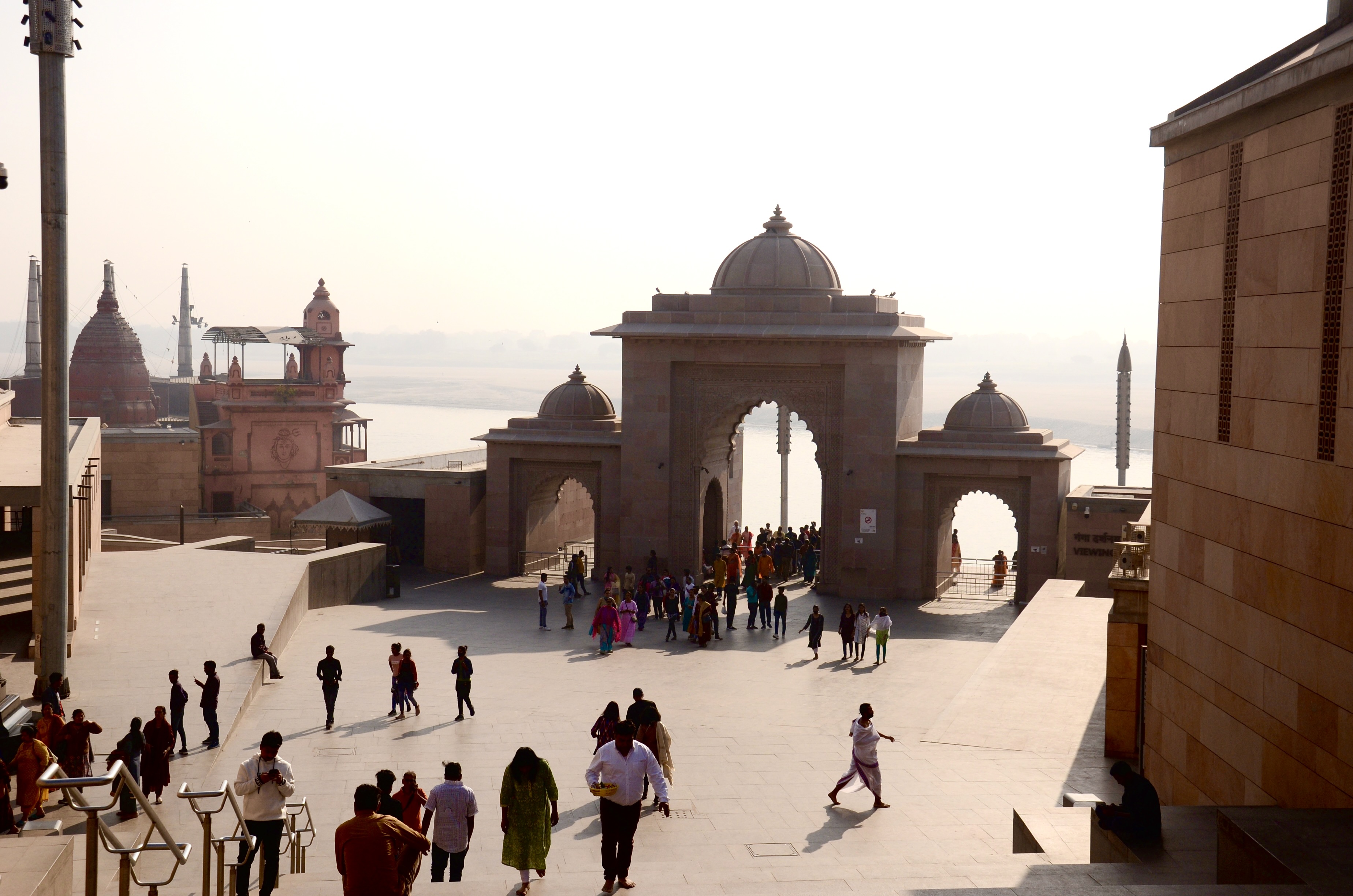
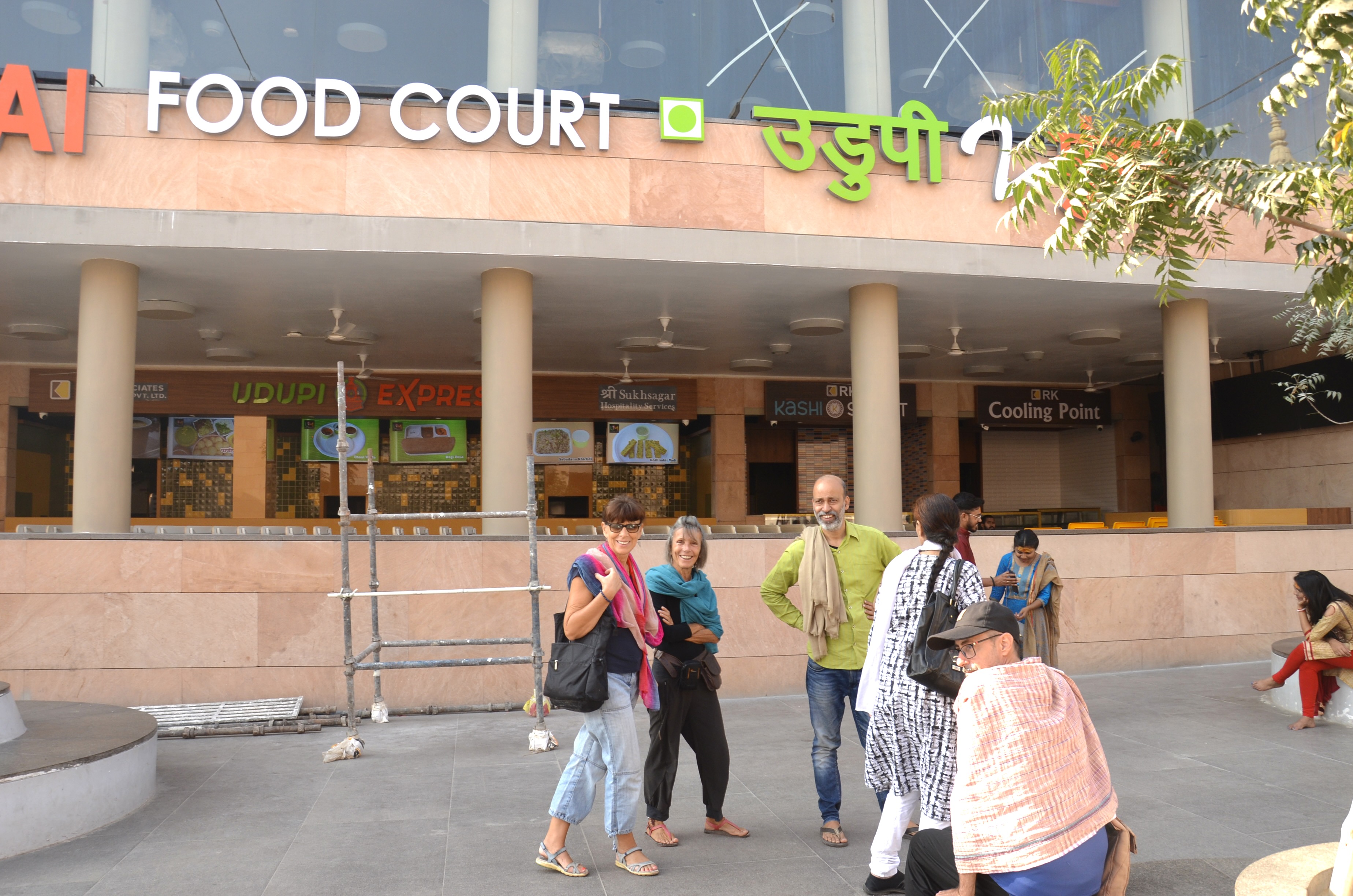
As we have done previously, we accompanied Santosh an accomplished photographer, to watch the sunrise over the river and the pilgrims do their morning puja. We’ve done that many times before and it still remains spectacular. During Covid, many walls were decorated with murals, some better than others. But our sense of awe turned to dismay as the new corridor loomed. A wide stone staircase lead up to the entry way and a fast food court. An admission fee is required to go further into the corridor leading to the Golden Temple.

Three years ago when the project began, we were deeply perplexed that they could tear down part of this ancient city. Now 500 old houses have been destroyed to create this gaping hole of modernity and capitalism.

Just past the corridor, Manikarnika, the rambling main Burning Ghat has been contained. I used to find it mysterious and almost threatening with its confusion of burning bodies, sadhus and pseudo policemen forbidding photography at threat of large fines. Now I can walk by unaccosted.

Manikarnika main burning ghat
The smoke rises from the dead and the ancient city

Admittedly, Modi’s a controversial figure but it seems he wants to turn Varanasi into a tourist attraction. Pilgrims have been coming here to worship and to die for thousands of years. They will continue to come but they will have to compete with the well-heeled tourists.

For us, we continue to meet old friends. From the first time we arrived fifteen years ago, we connected with our congenial guesthouse manager, Sanjiv, restaurant owners, shopkeepers, music lovers, chai wallahs, and even beggars. Unimpeded with language difficulties, the friendships strengthened with each visit.

In spite of the encroaching modern world, Varanasi remains remarkably unique: the sun rising over the Ganges, the boats darting back and forth, sadhus performing their spiritual practices.

Shivratri in Gokarna

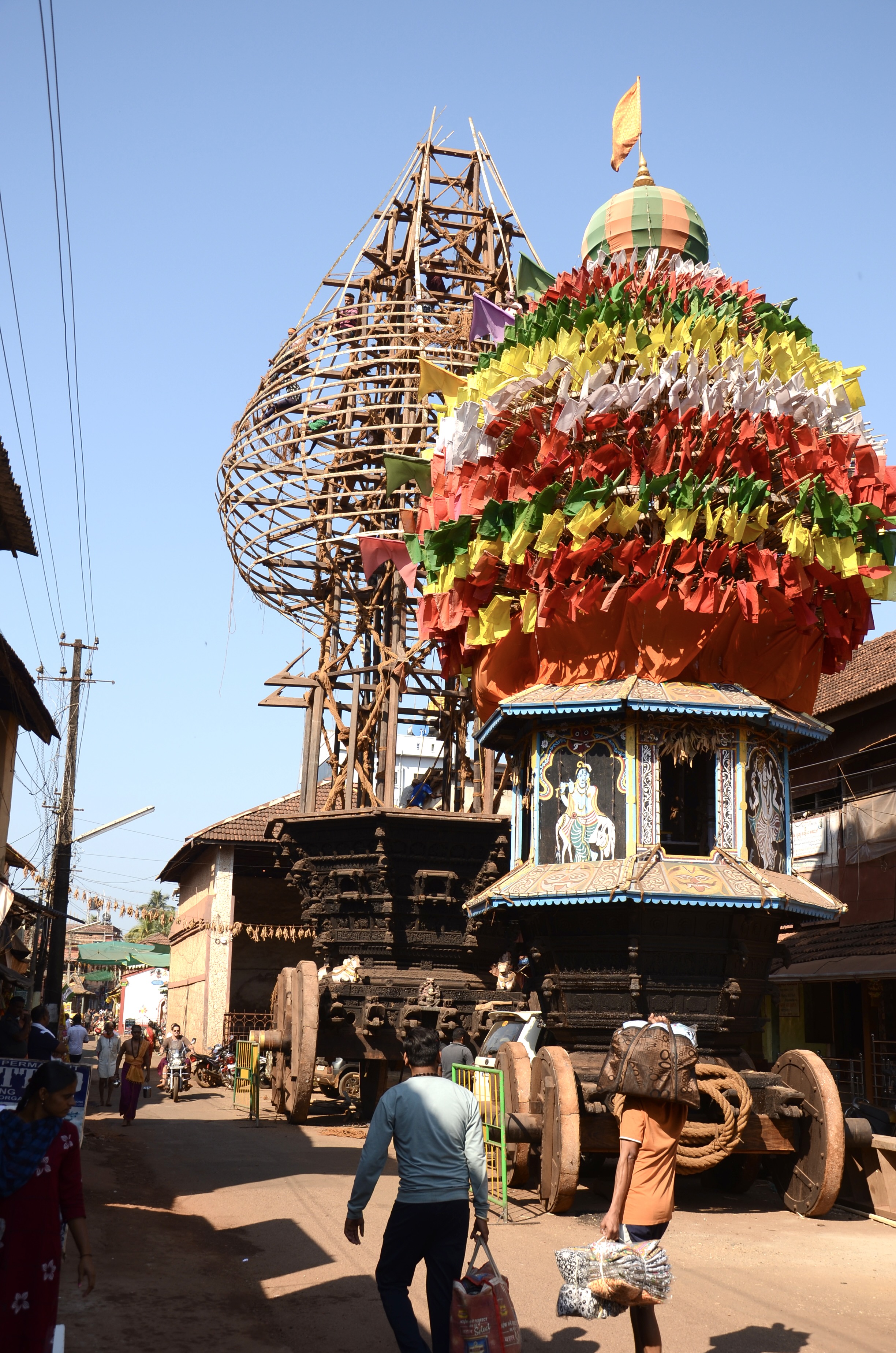
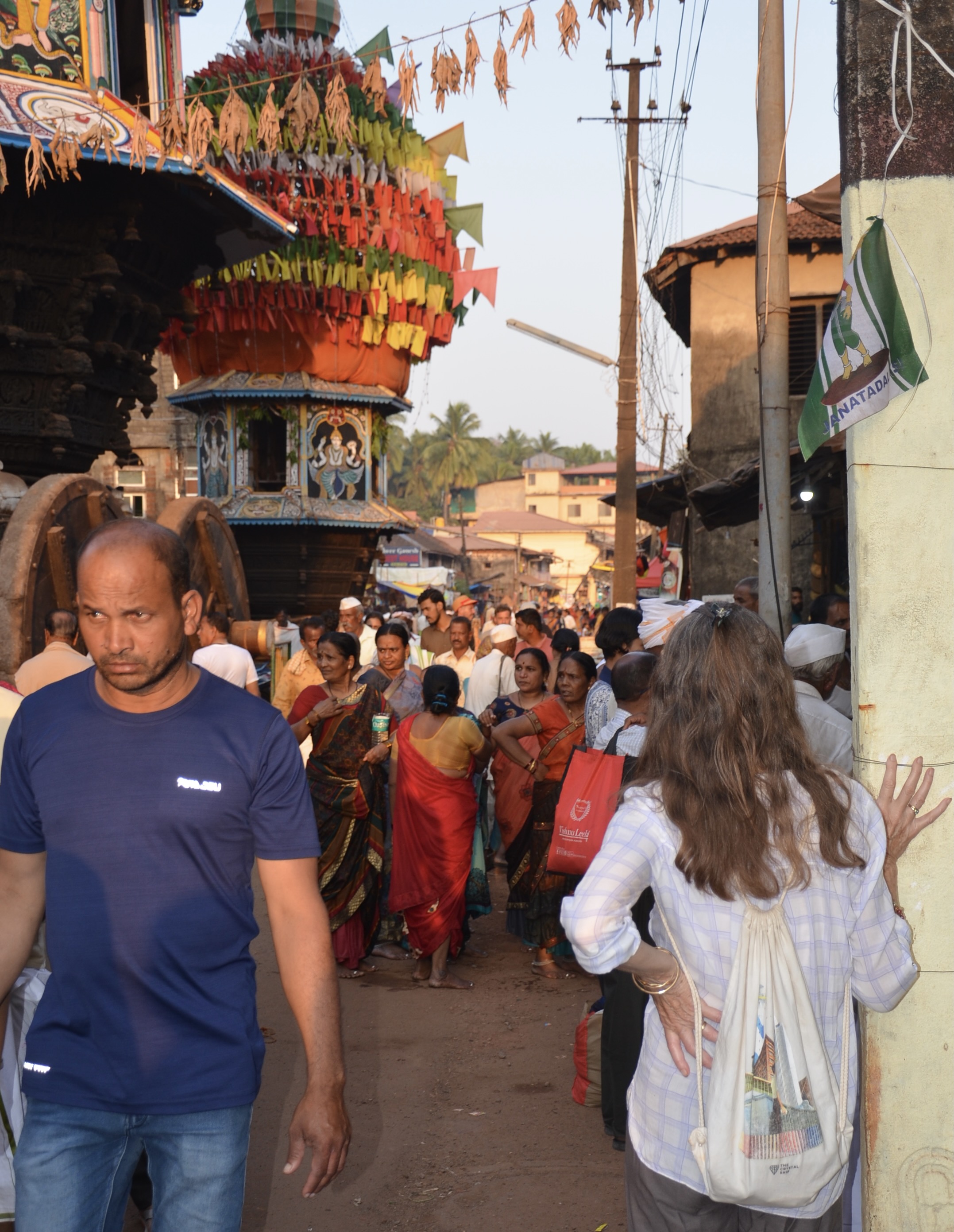
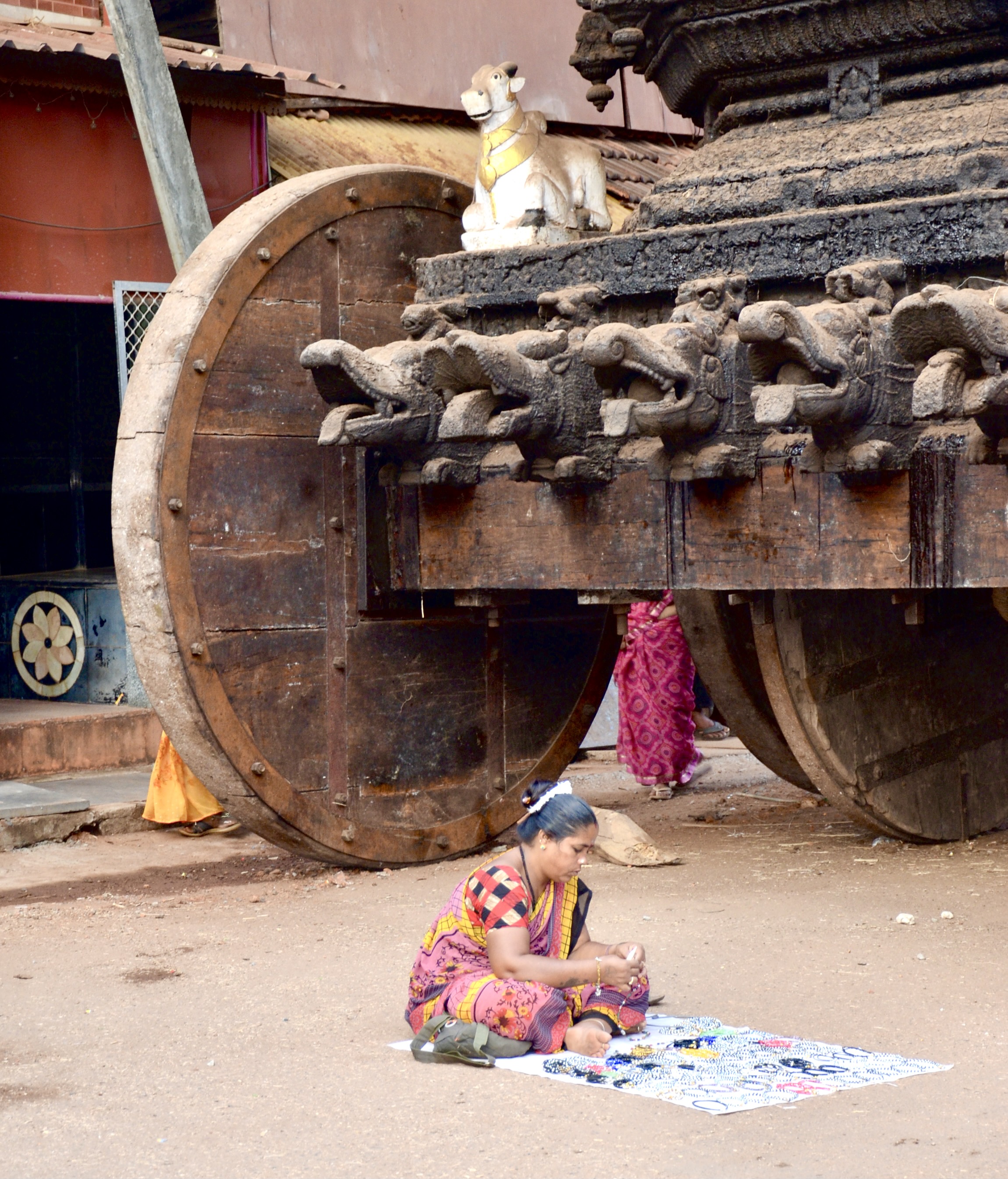
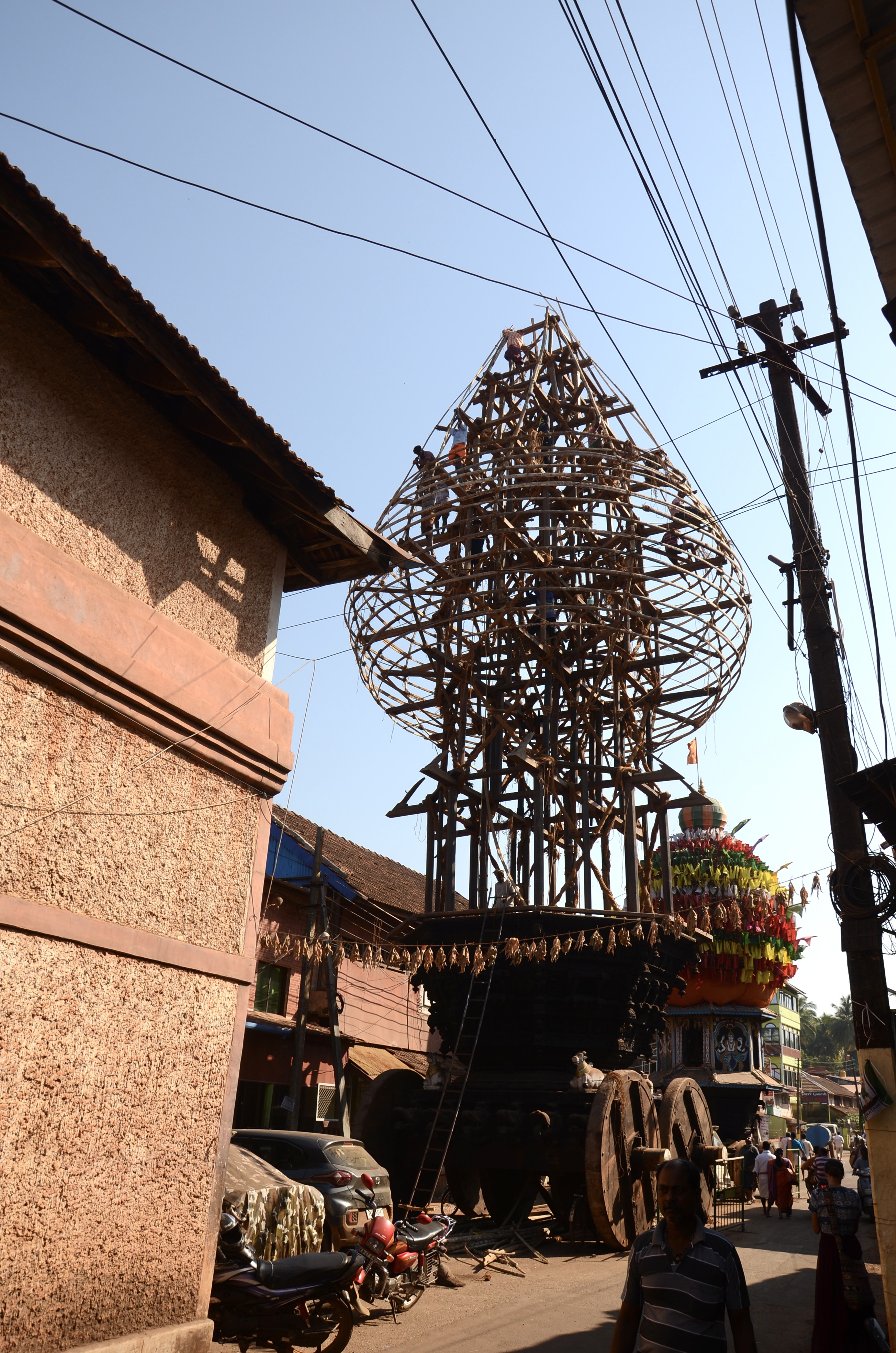
Our last few days in Gokarna coincided with the beginning of the Hindu festival, Shivratri, in honor of Lord Shiva’s birthday. Anticipating much congestion and noise, we were not excited, but we were in for a surprise. Wandering the town we noticed the huge wooden chariot had been pulled out of its parking spot beside the temple. Men clambered on top to build a ballon-shaped super structure, which was then decorated with brightly colored strips of cloth.

Gokarna was transformed into a busy cacophony of color, people and noise. Stages set up for dance performances, music blasting from loudspeakers. Thousands of devotees queued to perform puja and purchase offerings of flowers and coconuts.

The path from the temple to the beach was covered with a decorated cloth canopy giving some shade to the devotees patiently waiting. Each day the crowd built and the queue grew longer. To enter the temple, they all stood barefoot, their sandals discarded in a large pile. Will they ever find them again? I wonder.

We left town before the finale, when an estimated 20,000 filled the short narrow street to watch the chariot pulled on ropes while onlookers threw bananas at the brahmin priests sitting inside. The reason why has been lost in translation. But the idea of thousands of people throwing bananas and the smell of the overripe fruit did not entice me to want to stay.

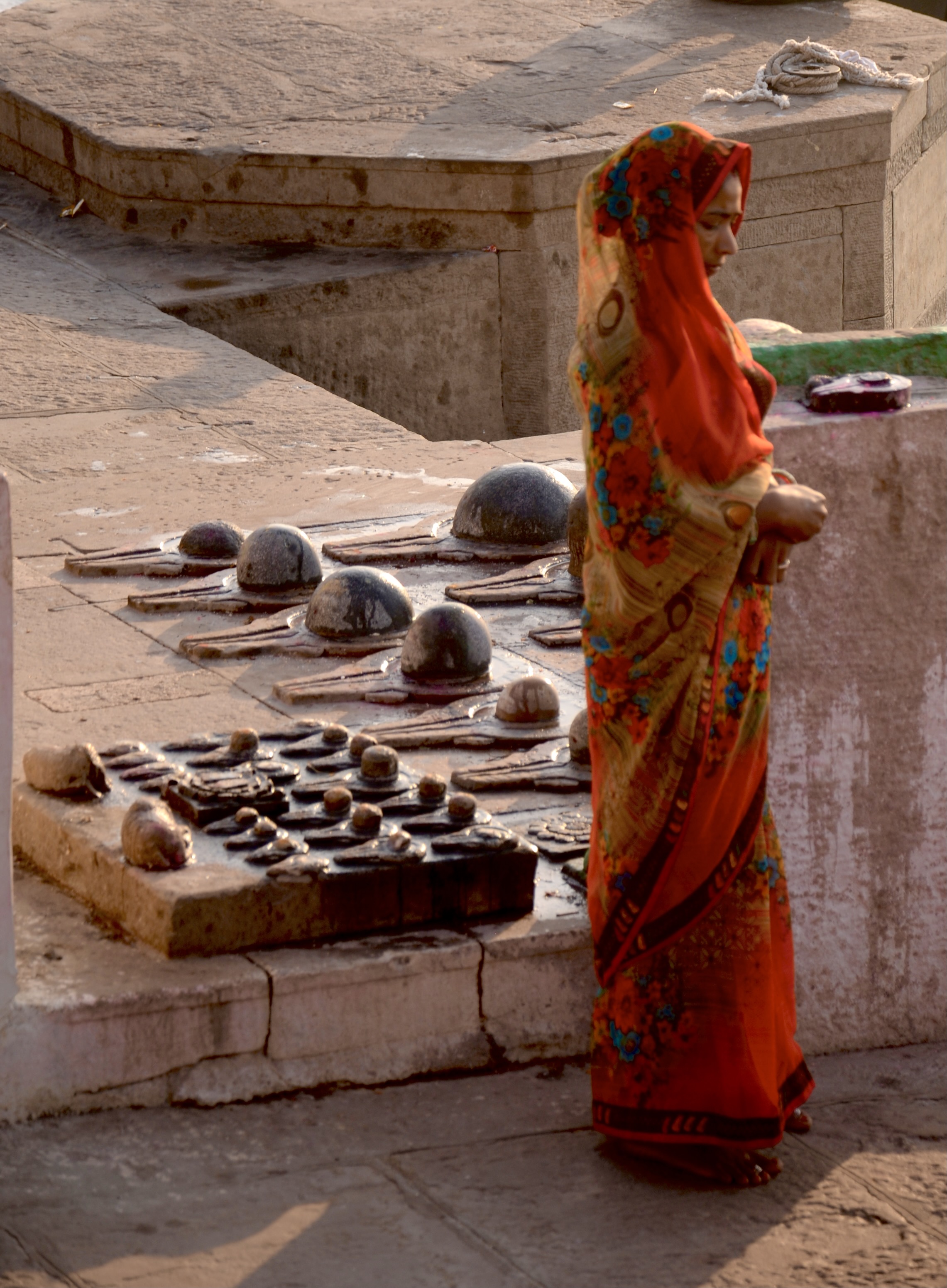
The temple significance lies in a legend associated with Ravana, a mythical demon king. The temple supposedly contains one of the powerful Shivalingam, the center point of worship. Ravana wanted the lingam and through his devotion impressed Shiva to give it to him, but on the condition that wherever Ravana placed the lingam it would be stuck there. In Gokarna, Ravana met Ganesh and asked him to hold the lingam while he prayed. But Ganesh put it down and vanished. Finishing his prayers, Ravana tried to pull it out without success. Tearing the outer covering of the lingam, he threw the pieces in different directions, which became the sites of the different temples in Gokarna.

In the usual Hindu combination of the sacred and secular, the small town became a carnival. Packed in beside the regular shops, a multitude of stalls were set up selling an assortment of plastic kitsch, aluminum kitchen ware, women’s “inner wear”, sugary sweets…and so on. We’ve seen this type of carnival often in Indian towns at the time of the many Hindu festivals.

The near side of the beach, beside the town, was flooded with Indians. They stood crowded together at the edge of the water, some venturing to play in the waves. Instead of sand castles, they built lingams and adorned them with flowers.

But down at our end, nothing much changed. The dogs and cows still owned the beach, the restaurants remained relatively empty. We continued swimming until the morning of our departure, then packed up. I said goodbye to the beach that had been my friend for the past month, and we took a rickshaw to the train station. Once again, to find our train was too hours late. Finally, it arrived and we found our seats among an extended family returning home to Mumbai. Gerard quickly entered into conversation with them. Dinner time came and they spread out a feast with paper plates and wooden spoons. Even the chapatis were wrapped in newspaper tied with string. I was intrigued by no sign of plastic. Even the vendor walking up down the corridor sold us clay pots of yoghurt with wooden spoons. It seems in this part of India, the notion of no plastic is taking root. Still talking, Gerard remarked that we won’t find such camaraderie on tomorrow’s airplane!