India is a cheap escape from winter. But it’s much more than that…the attraction to a country that is so large and so diverse physically, economically and spiritually is powerful. To those of us who are attracted, India can be addictive.
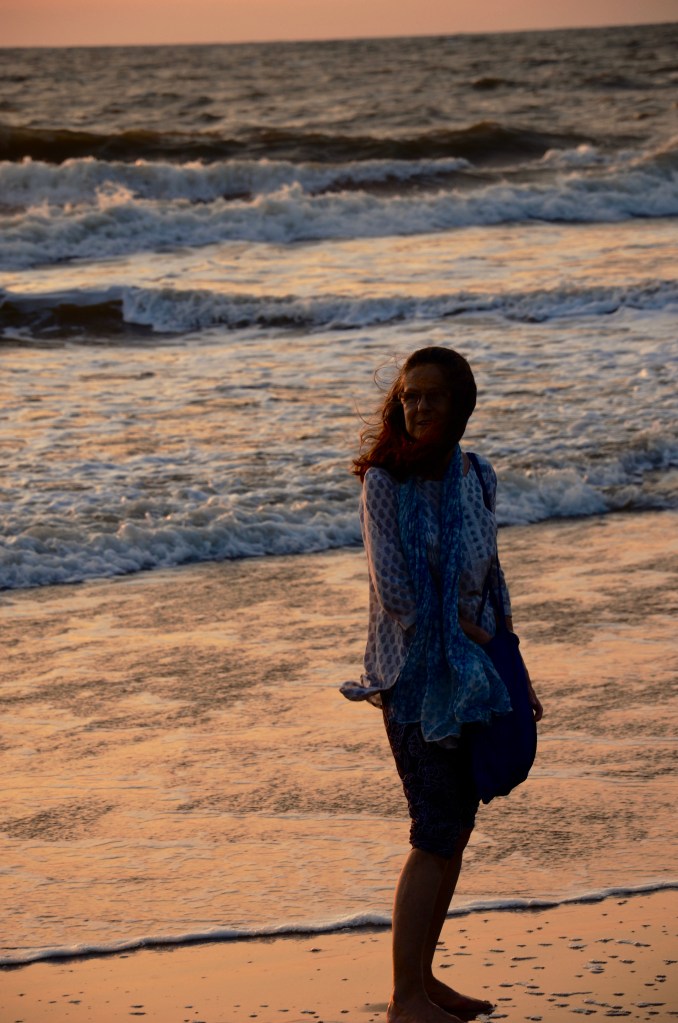
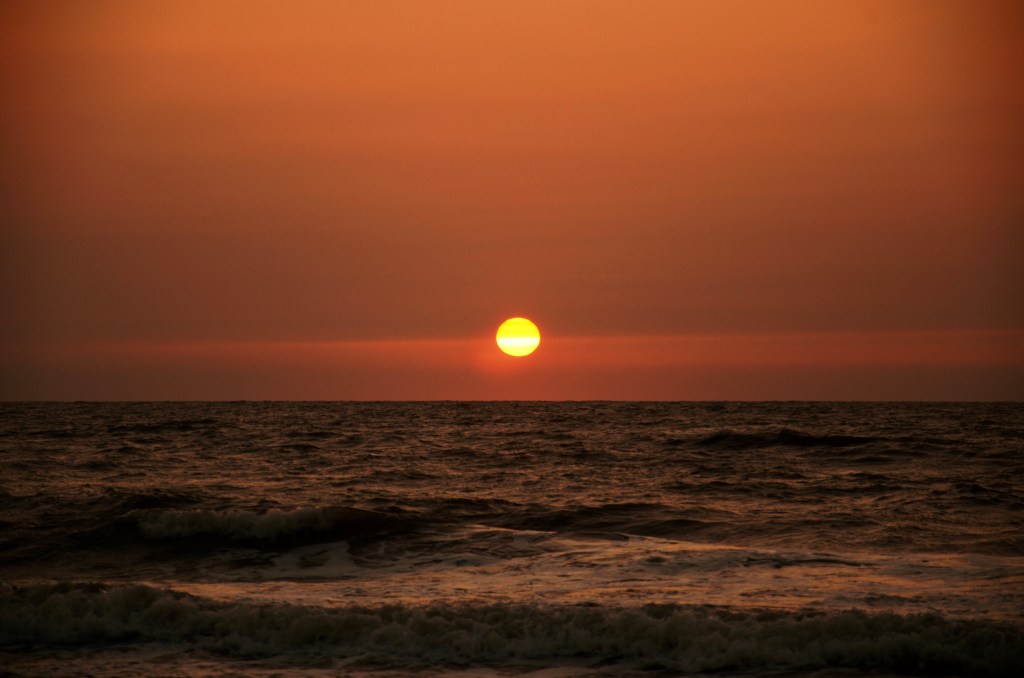
Here at the beach my life revolves around the sea. We swim every morning, in the afternoon I walk along the water’s edge (one swim a day is enough for my dry aging skin), and in the evening we go back to the beach before sunset for dinner at one of the restaurants there. I’m drawn to the sea like a magnet. Today there were high waves that made it too difficult for swimming, but I still had to play in the surf. I share my love affair with other westerners who return year after year and now more Indian tourists are joining in.
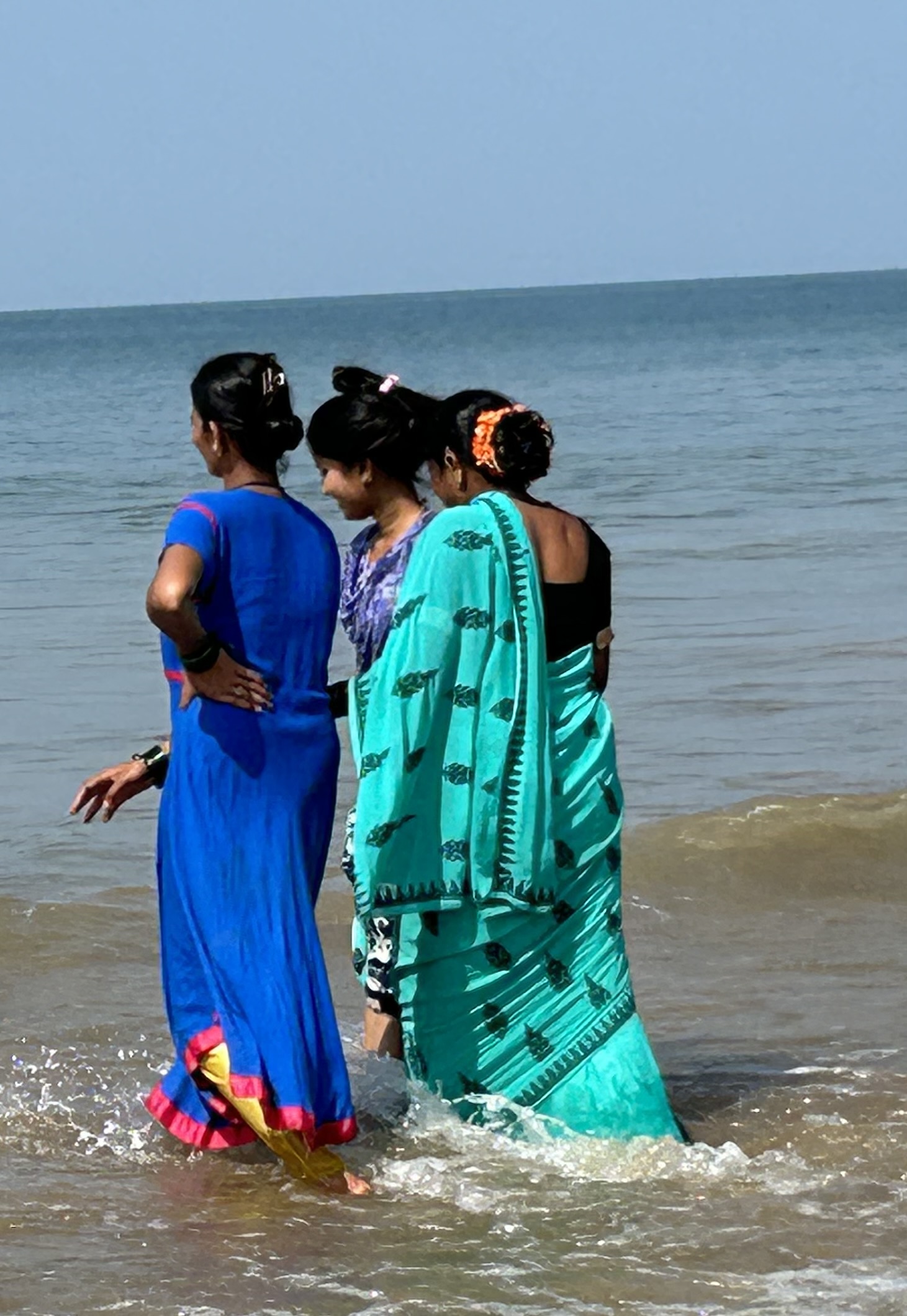
Even though they don’t generally swim, they love to splash around in the water fully clothed.
A few days ago, a large water turtle was washed up at the edge of the sea. I knew it was dead because its head was fully extended from its shell. But the turtle could only have died a short while ago because its scaly head and fins were still pristine. Later that evening I was relieved to see it gone. I didn’t like to imagine this noble creature being picked at by birds or dogs.
Last week, I was reminded about how dangerous the sea can be. A Russian woman out swimming by herself ran into a boat. No one knows if it was a fishing boat, pleasure boat, large or small. Her face was badly cut but there was also fear of brain damage and she was taken to a Goan hospital. The strange thing was even though she’d been coming here for three years, no one knew her. The Russian living in a hut next door accompanied her to the hospital but didn’t even know her name.
Marion and Juergen have arrived from Germany. They’ve been in the country for two weeks, and have a nightmarish story of sickness. They had just arrived in Mysore when Juergen had what seemed to be a heart attack. They went to the hospital and he was kept for several days while all kinds of tests were done. Fortunately there was no evidence of a heart attack, but no conclusive explanation. And of course quite a large bill. All too familiar to Gerard’s mysterious heart episode last summer.
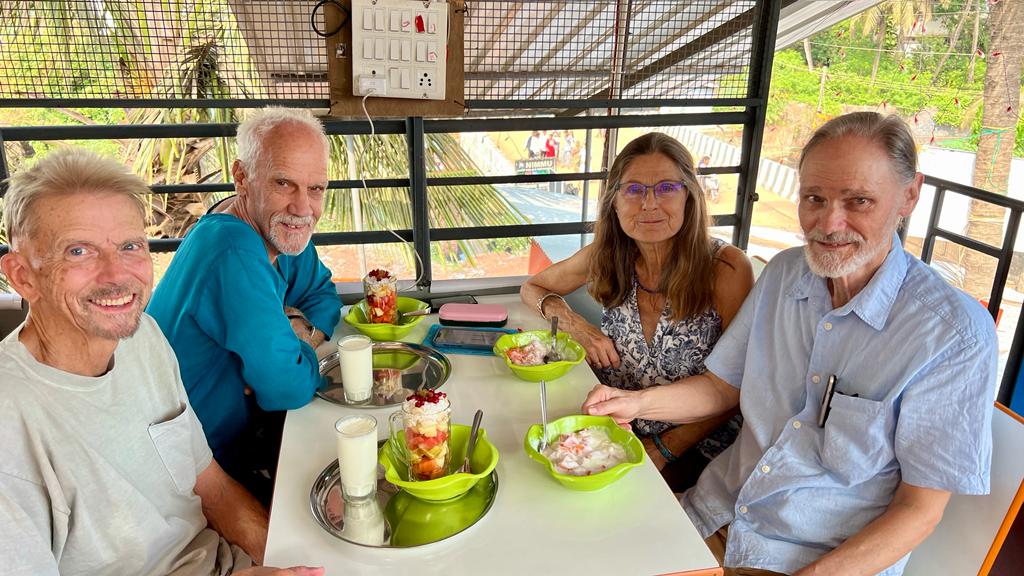
Frank, Peter, me and Gerard
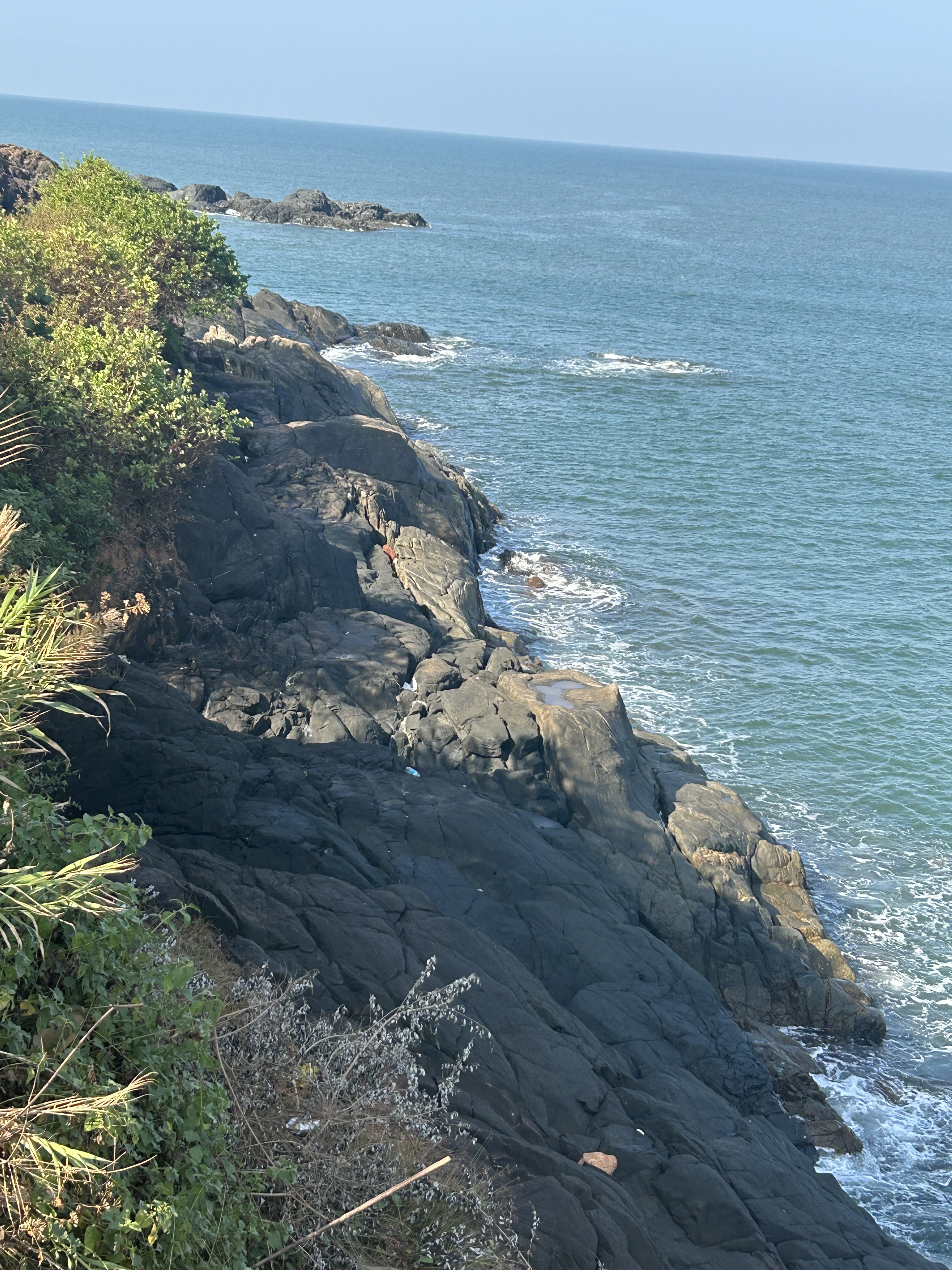
Peter, our friend who lives in Auroville, has arrived to stay for a week. He came with a long time friend who had never been to India before but in a few months was covering a lot of the country, from Kashmir in the north, to Kerrala in the south. They’re staying at the far end of the beach from us. A beautiful spot, but too rocky for swimming. Looking back down the coast to where we are staying, I was impressed at the long and relatively empty beach.
The opportunity to talk with women one-on-one offsets the hearing difficulties of loud India. Assuntina, a friend of Marina’s, is here for ten days and we walk the beach together in the afternoon. I tell her I’m too dependent on Gerard since my hearing loss. A social worker, she suggests I begin taking measures now in case he dies before me. I give serious thought to her advice. But when I see her again she tells me she had worried she’d gone too far in talking about Gerard dying and upset me. I welcomed her encouragement for me to contemplate Gerard’s death, or my own for that matter. At the cafe, I approach Iris an elderly lady from Germany, who I’d notice wears hearing aids. When I question her on how she deals with traveling here alone, she assures me, “Of course you could manage too! I saw you talking with a woman,” and she motions over to Assuntina. “Yes,” I say, “ but I was doing all the talking; it was a one-way conversation.” Even at the beach, it’s a noisy world but I’m glad I’m here.
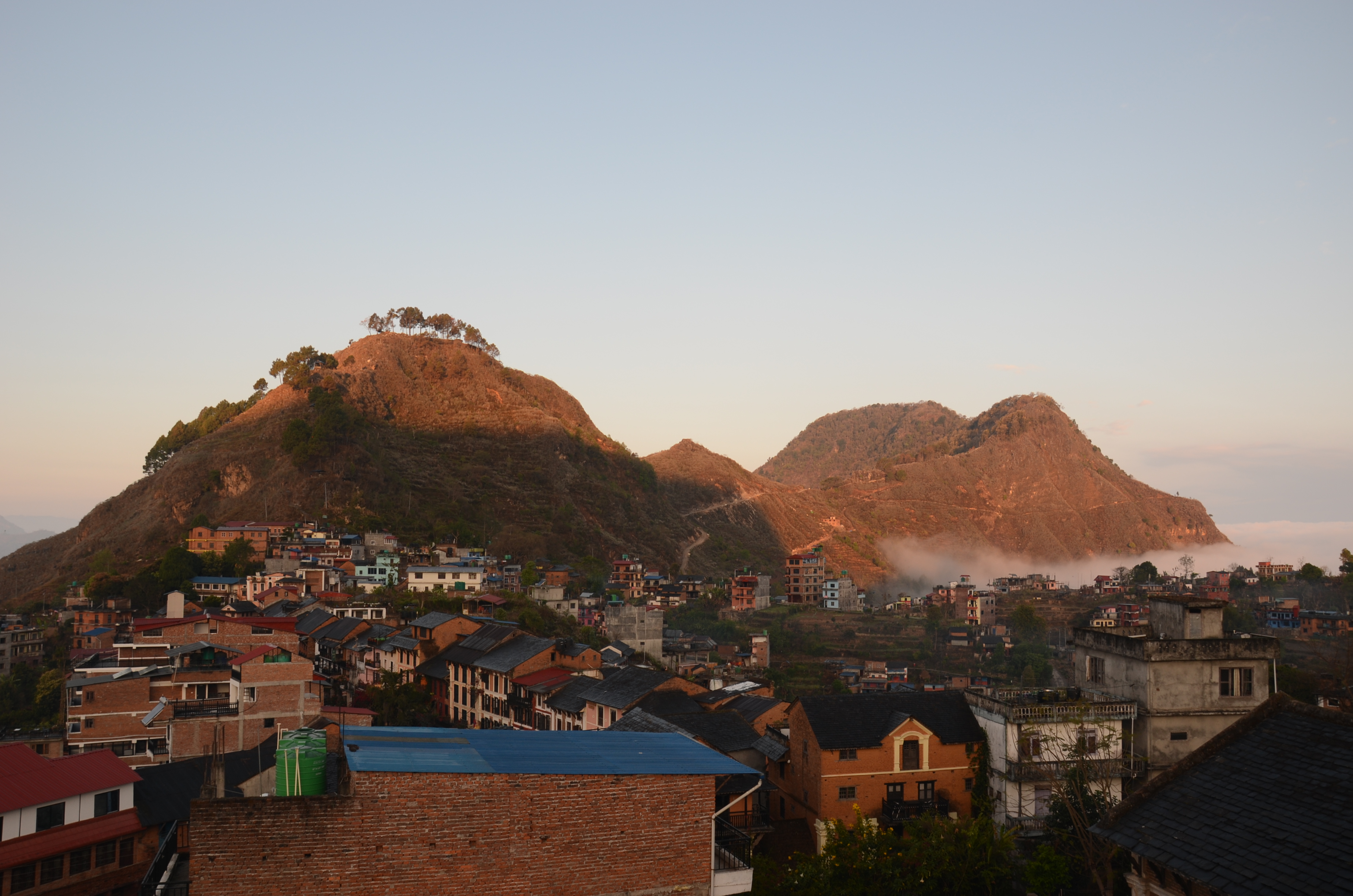
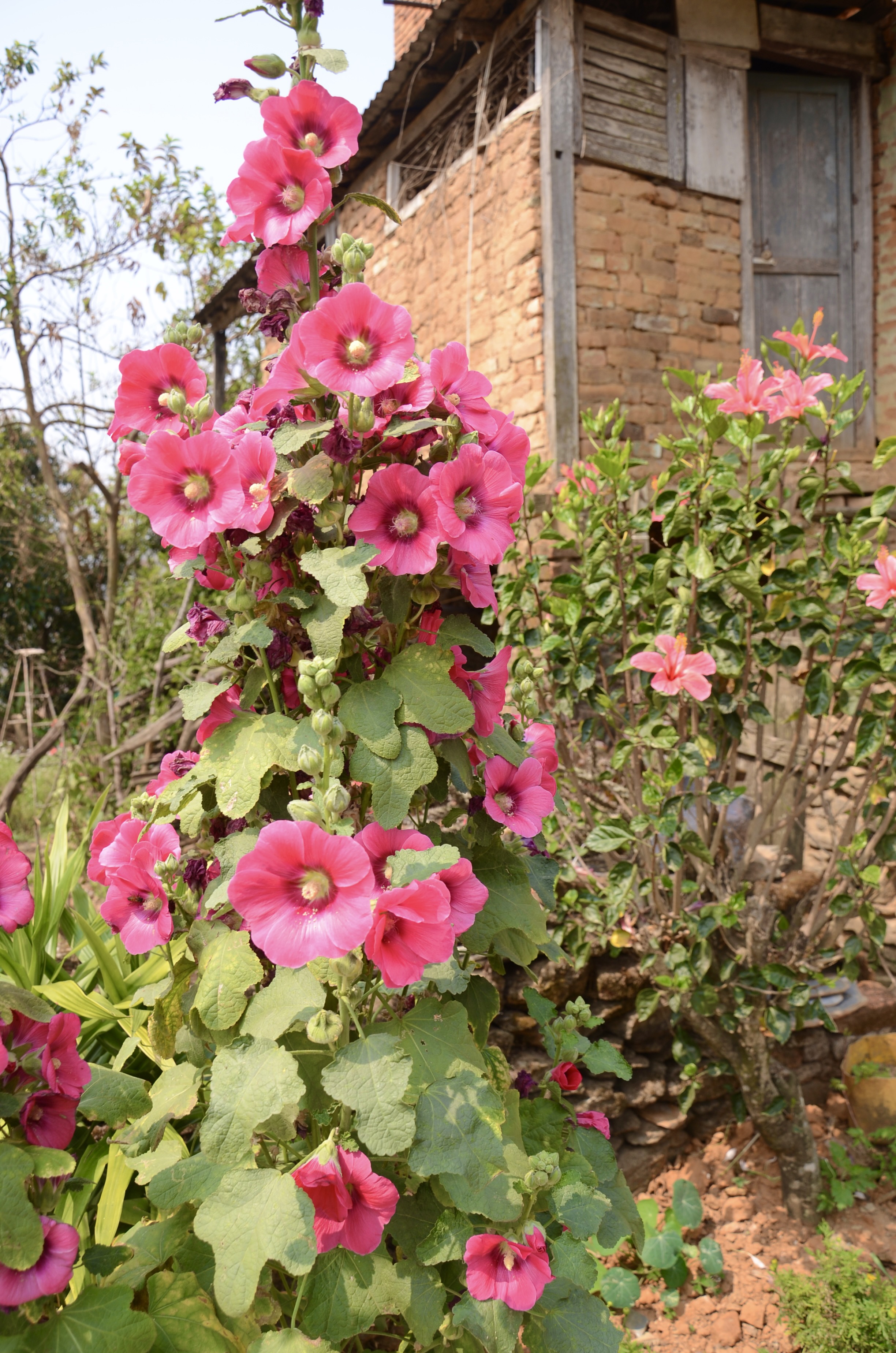
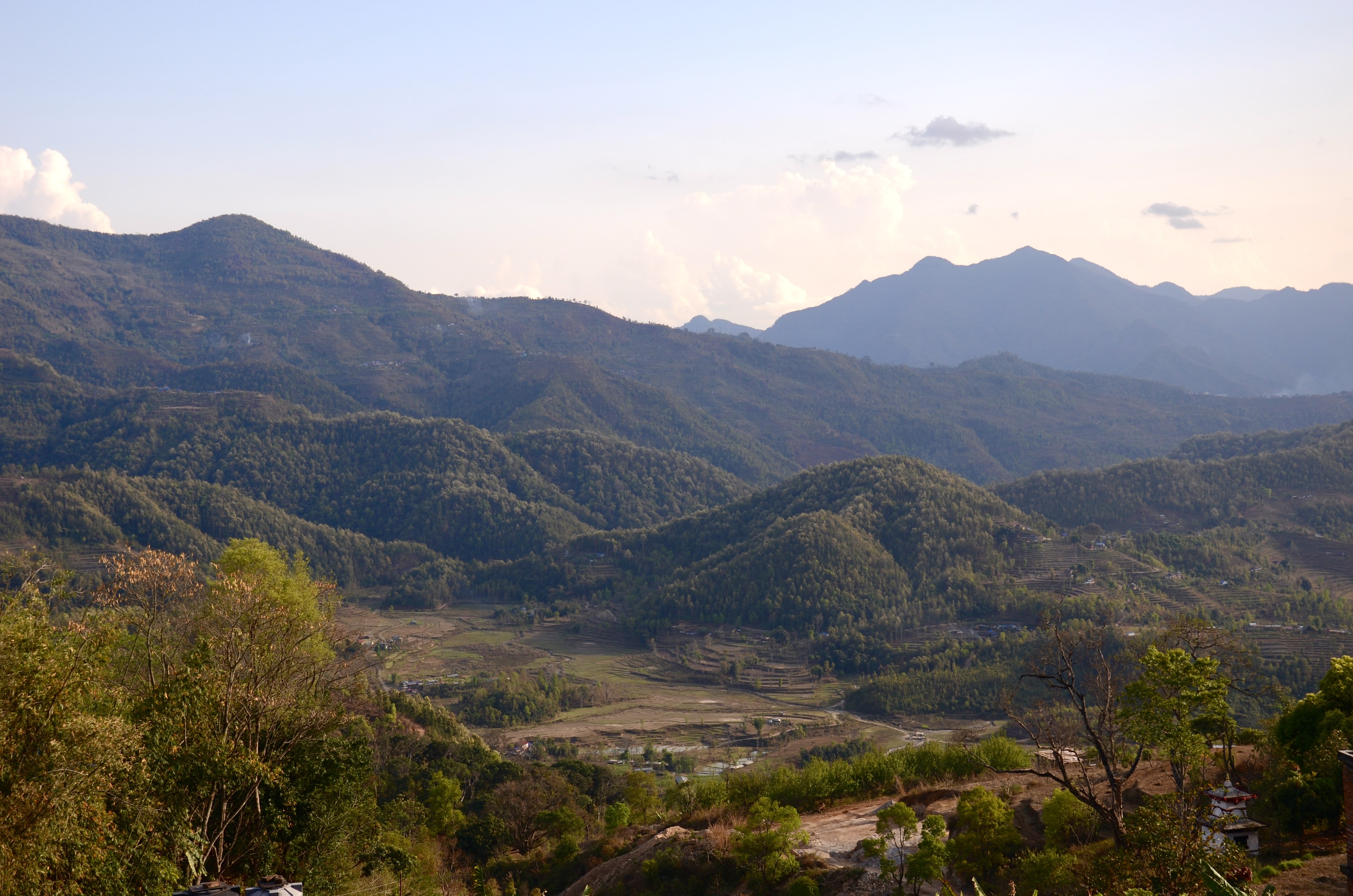
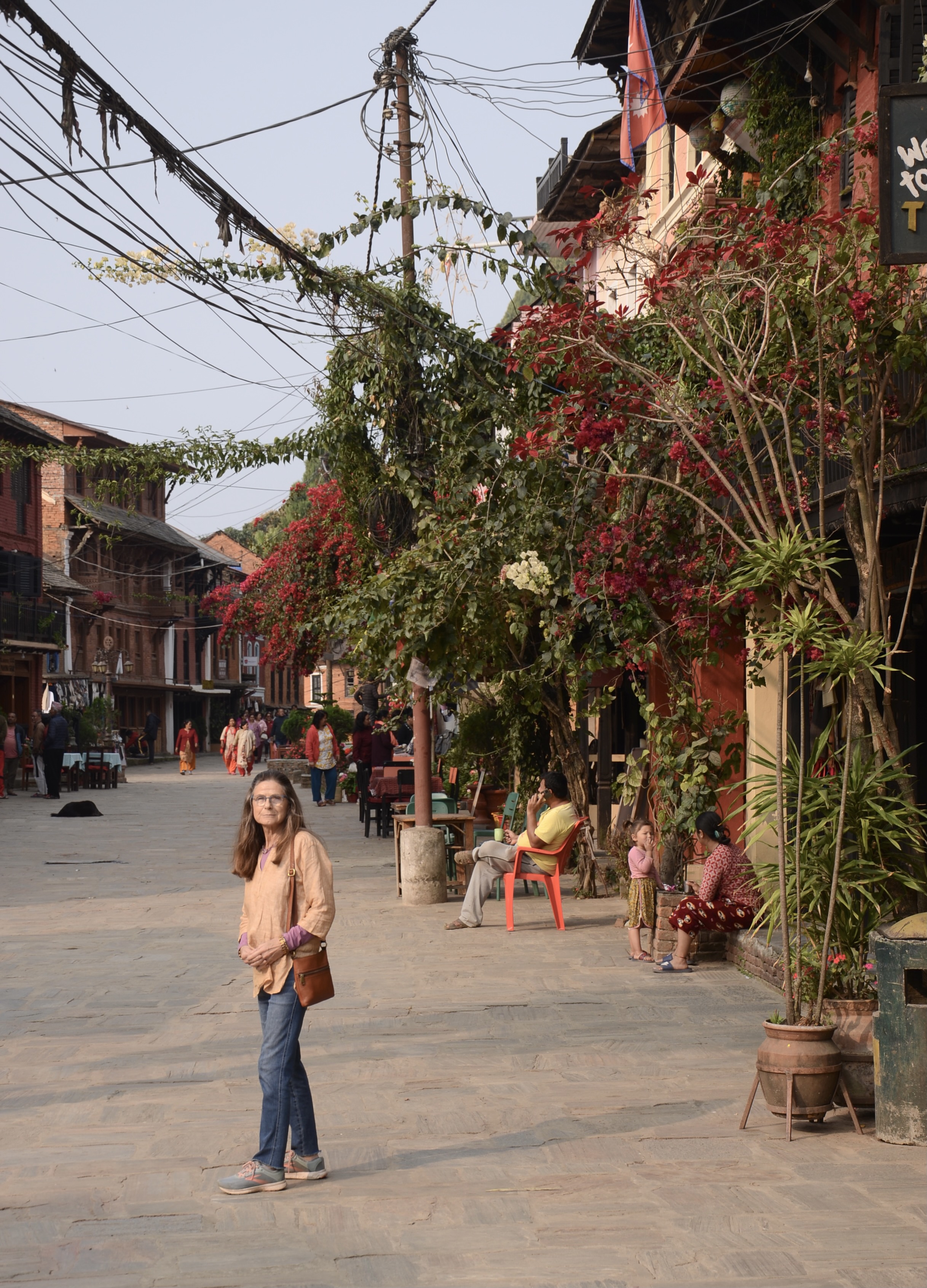
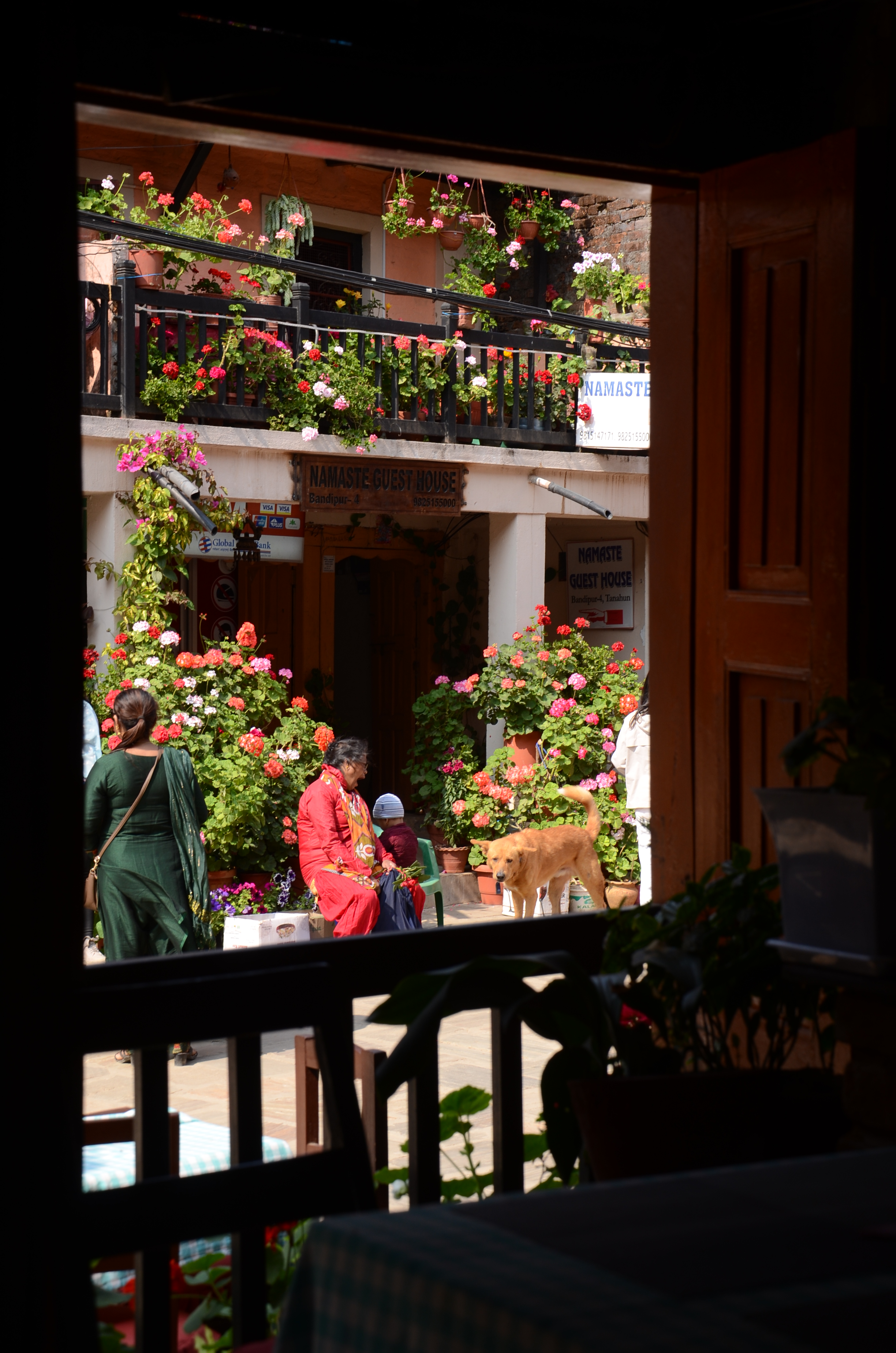
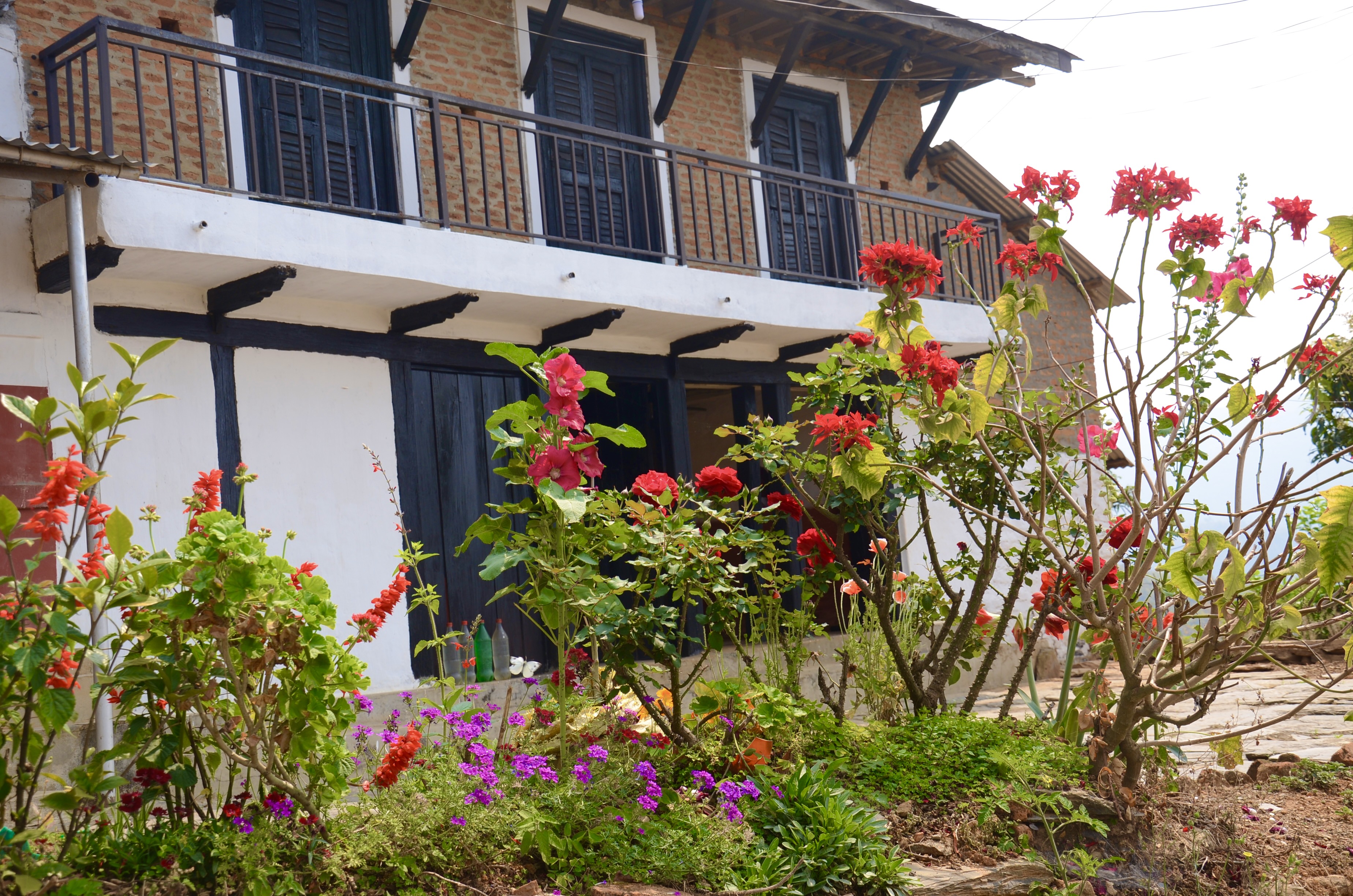
If Bhaktapur is the most exotic place we’ve travelled, then Bandipur is the most idyllic. The only fly in the ointment was the mountains weren’t clear. But the flowers in bloom made up for it.
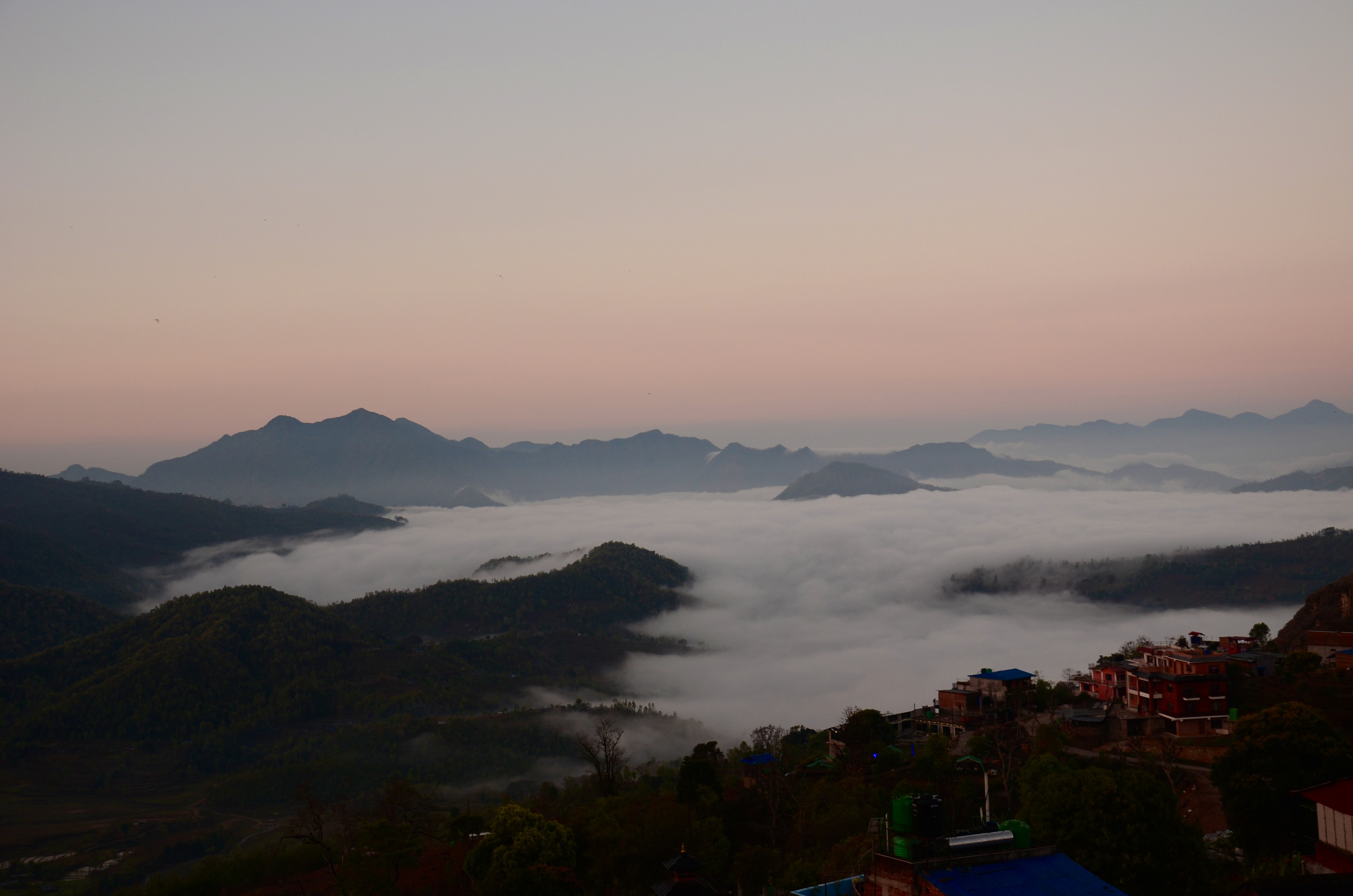
It’s rare that a place is even better on the second visit. Our guesthouse has an excellent view of the valley below on a clear day.
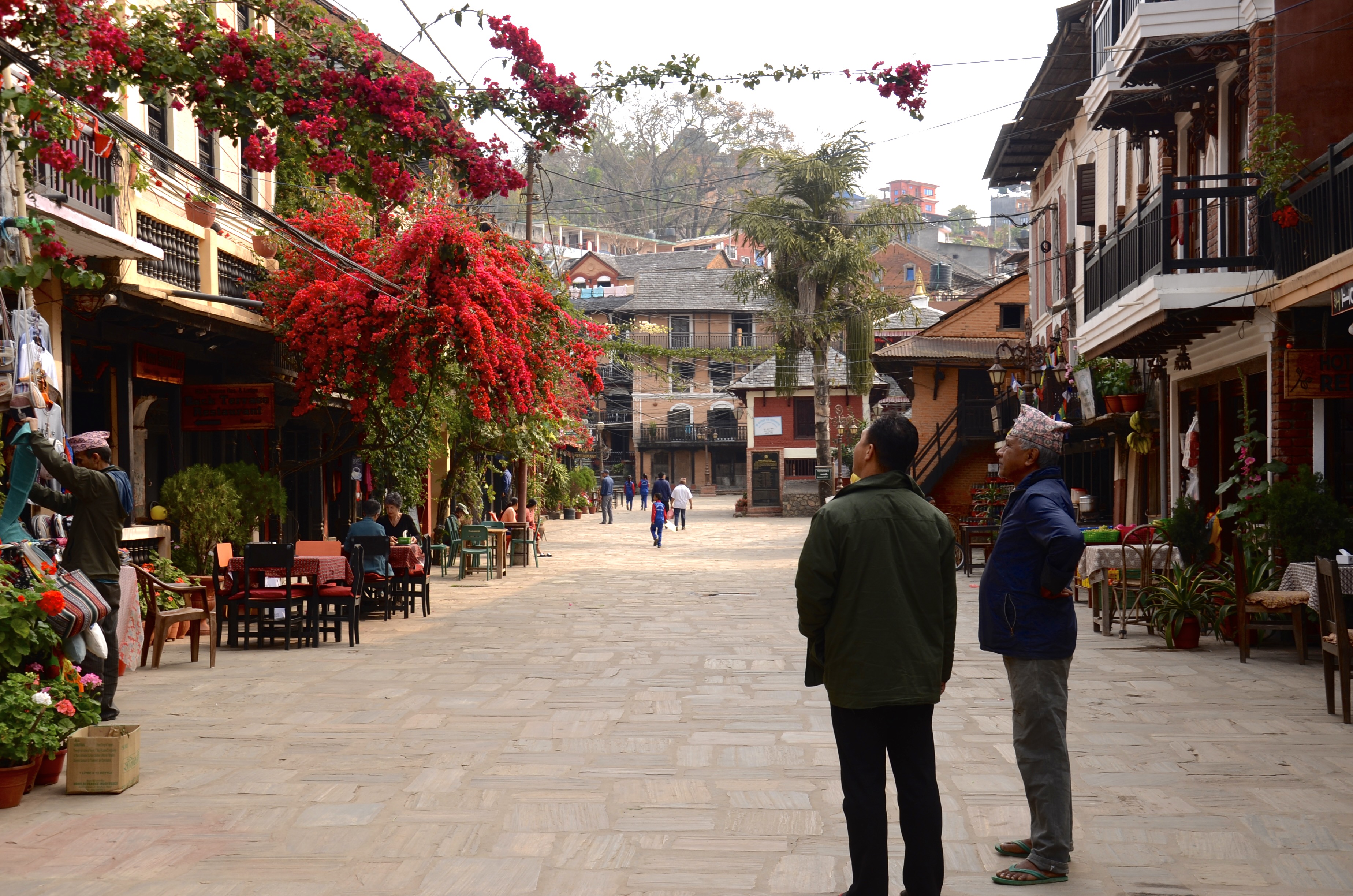
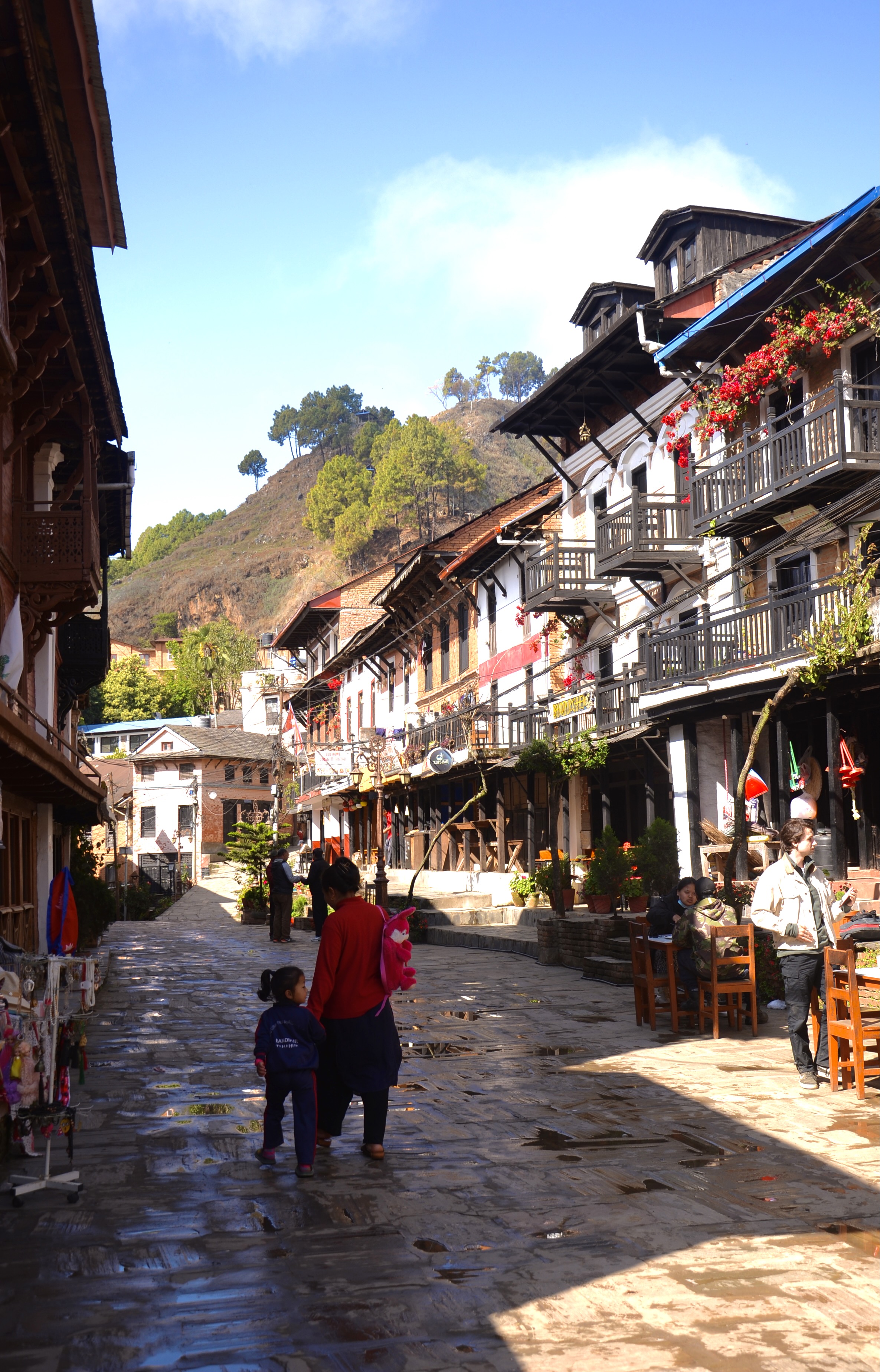
The town center has a Mediterranean feel. The stone-paved plaza is entered down several steps, so there is no traffic, not even a motorbike.
The peace and quiet is more than welcome . Even the dogs rarely bark, only the sounds of birds and school children break the silence . Bliss for me—I can actually follow a conversation again.
The center of town has scarcely changed since our first visit. Though Bandipur is geared toward tourists, they haven’t yet come in droves yet. Day trippers arrive for a few hours on private buses from Pokhara, and a few paragliders hang silently in the sky.
The locals are still welcoming and greet us with naamaste and a warm smile. The service couldn’t be better.
An old building at the end of the square has been beautifully restored in the traditional style and can be enjoyed for a mere $100/night.
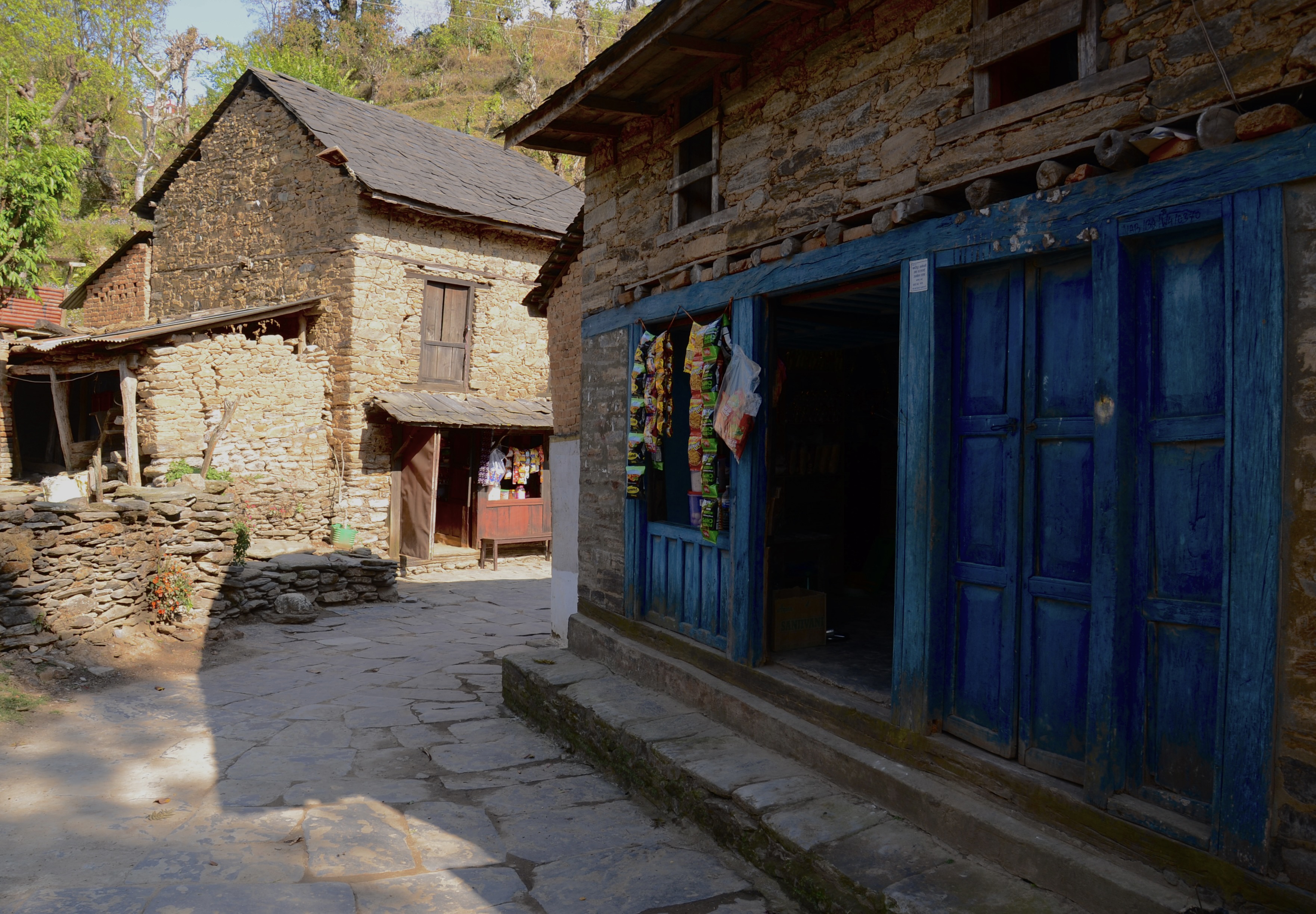
On a walk outside of town, more beautiful houses and flowers
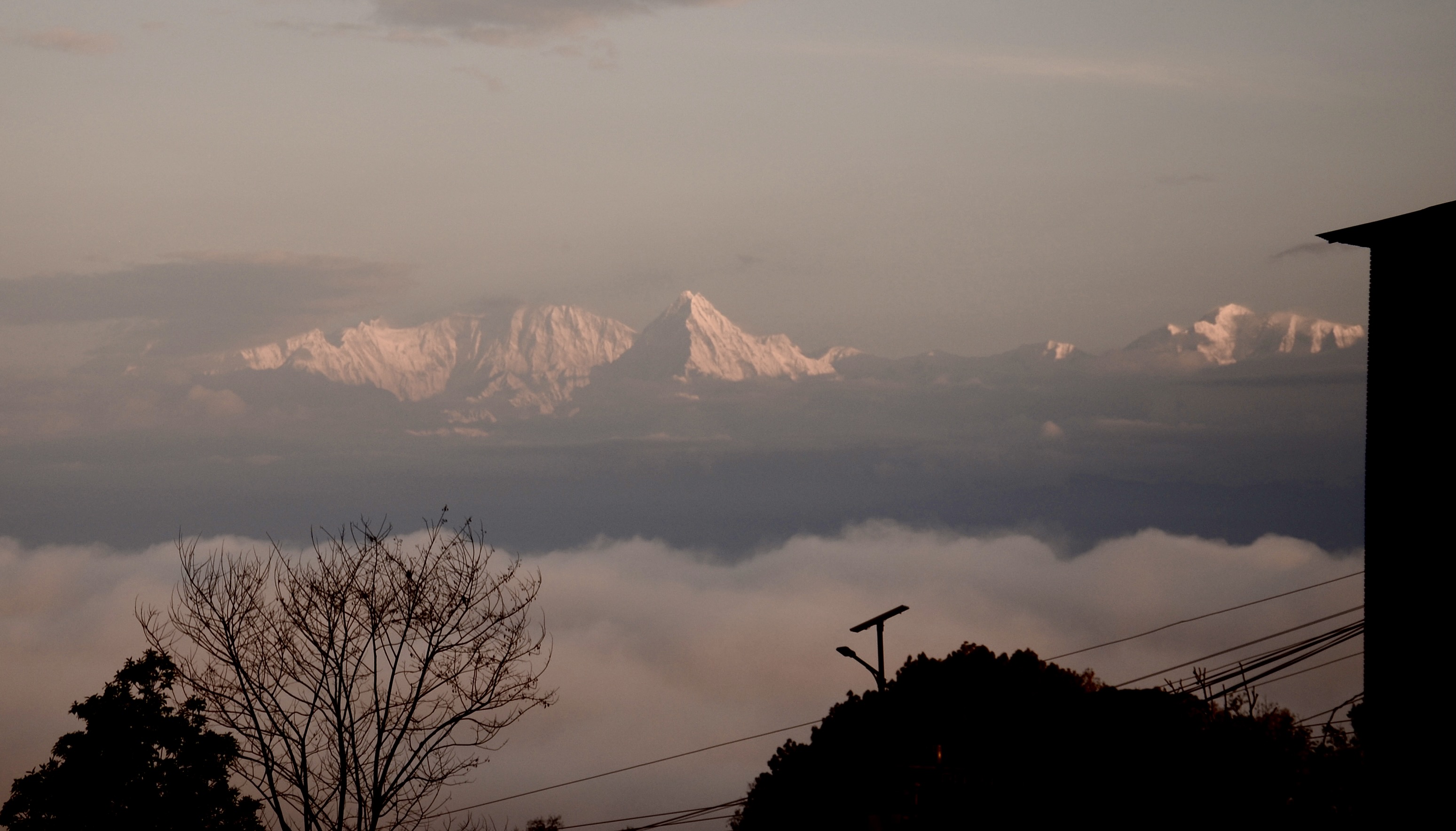
We have been in Nepal for three weeks and hadn’t seen the snow-capped mountains until this morning. After a night’s rain, in the early morning our rooftop gave us a grand view.
It’s not easy to get to Bandipur, but it’s well worth the effort.
An Italian woman, troubled by sand fleas, walks through the water every day to avoid being on the sand. She likes to talk and I can easily hear her clearly-annunciated but heavily-accented English until she tells me about a wonderful ayurvedic massage down the beach. “Where? My husband would like a massage.” “It’s called LaTOOsa.” “Say it again?” I ask. Eventually she spells it out: L-O-T-U-S. “Ah, Lotus?” “Si, LaTOOsa!” she beams. We exchange our names. “Orrbearta!” Italian Marina exclaimed. “My sister’s name!” Roberta sounds so much better in Italian, and I’ve found a new friend in the water.
I’m enjoying conversing with British friends using expressions I haven’t heard in a long time. “Chivvy along,” a mother ordered her dawdling children. “WHAT?” said Gerard thinking he was hearing a foreign language. I explained, ‘chivvy’ meant hurry. “In all the years I’ve known you, you’ve never used that expression!” It’s not the first time I’ve surprised him.
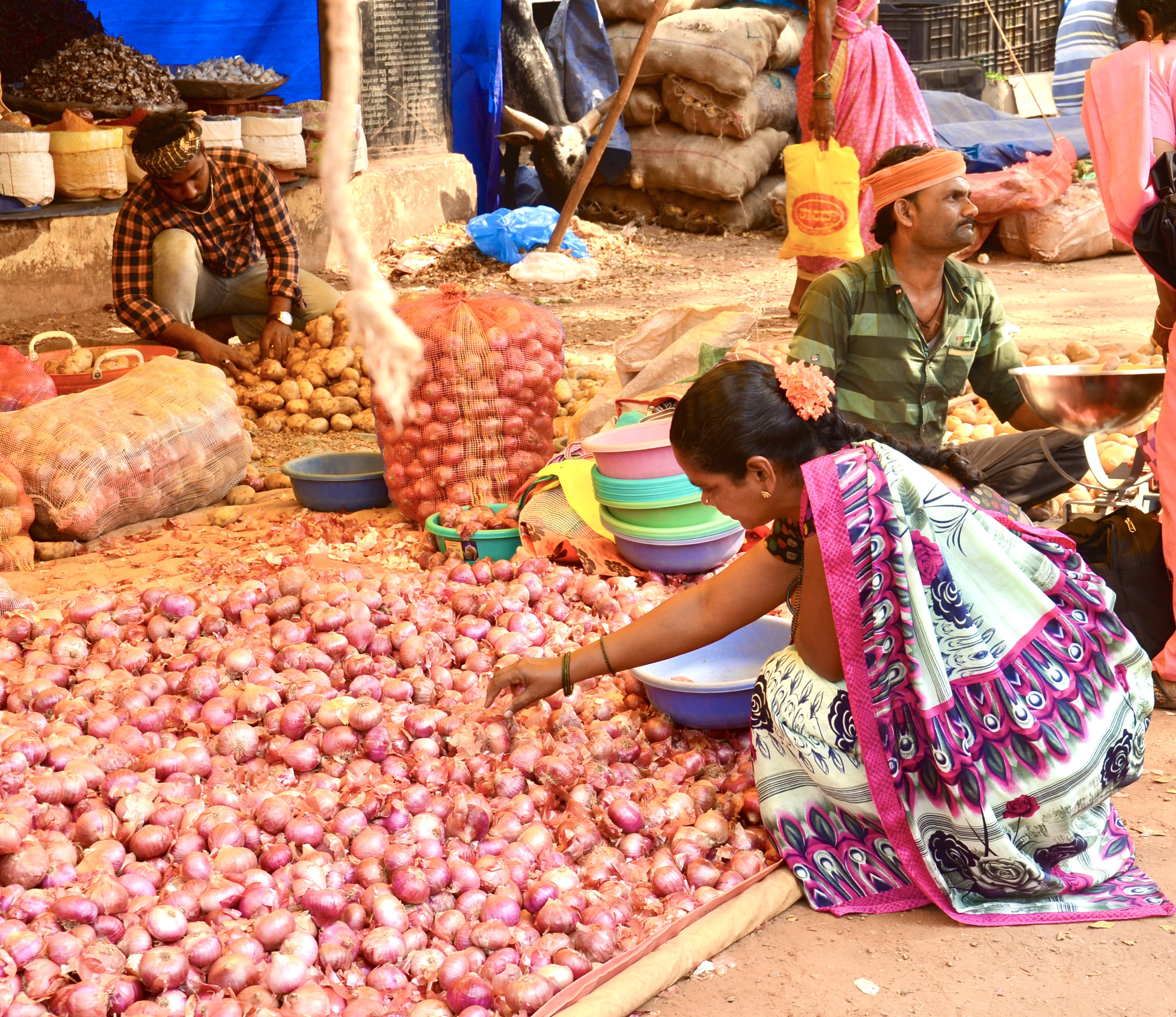
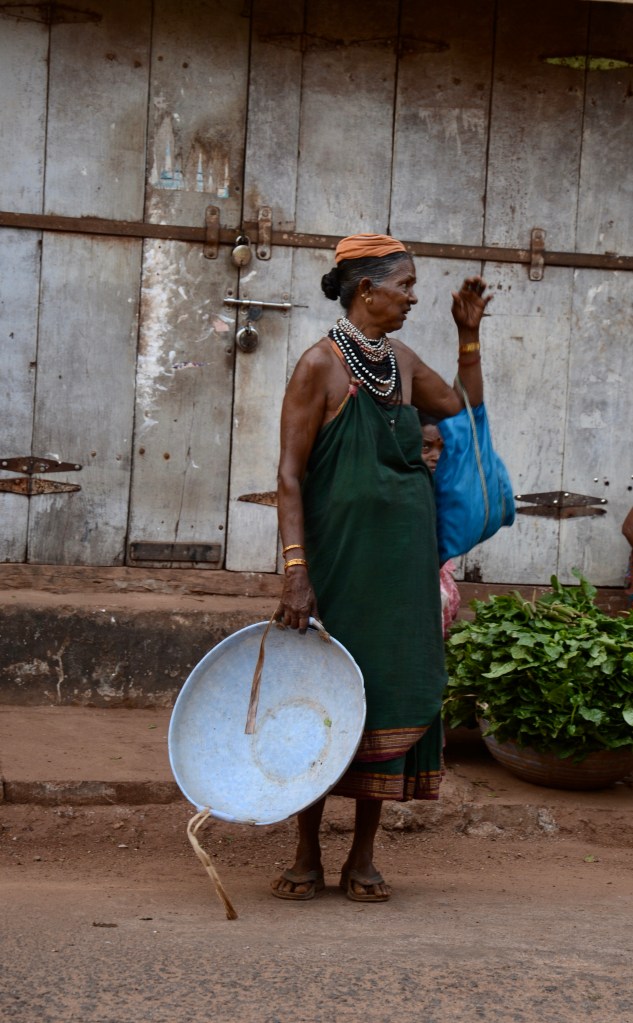
Visiting the weekly market provided a photo op.
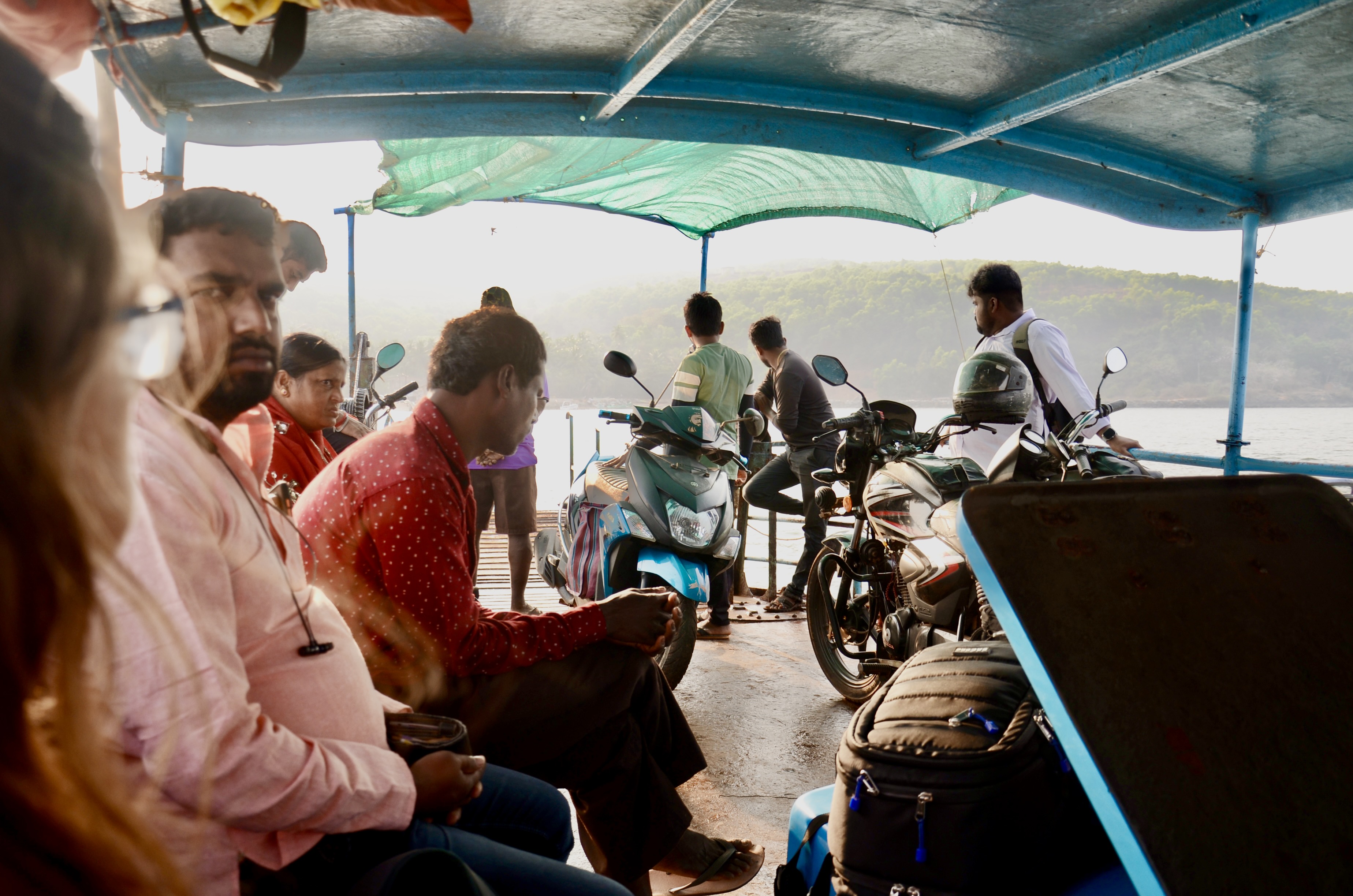
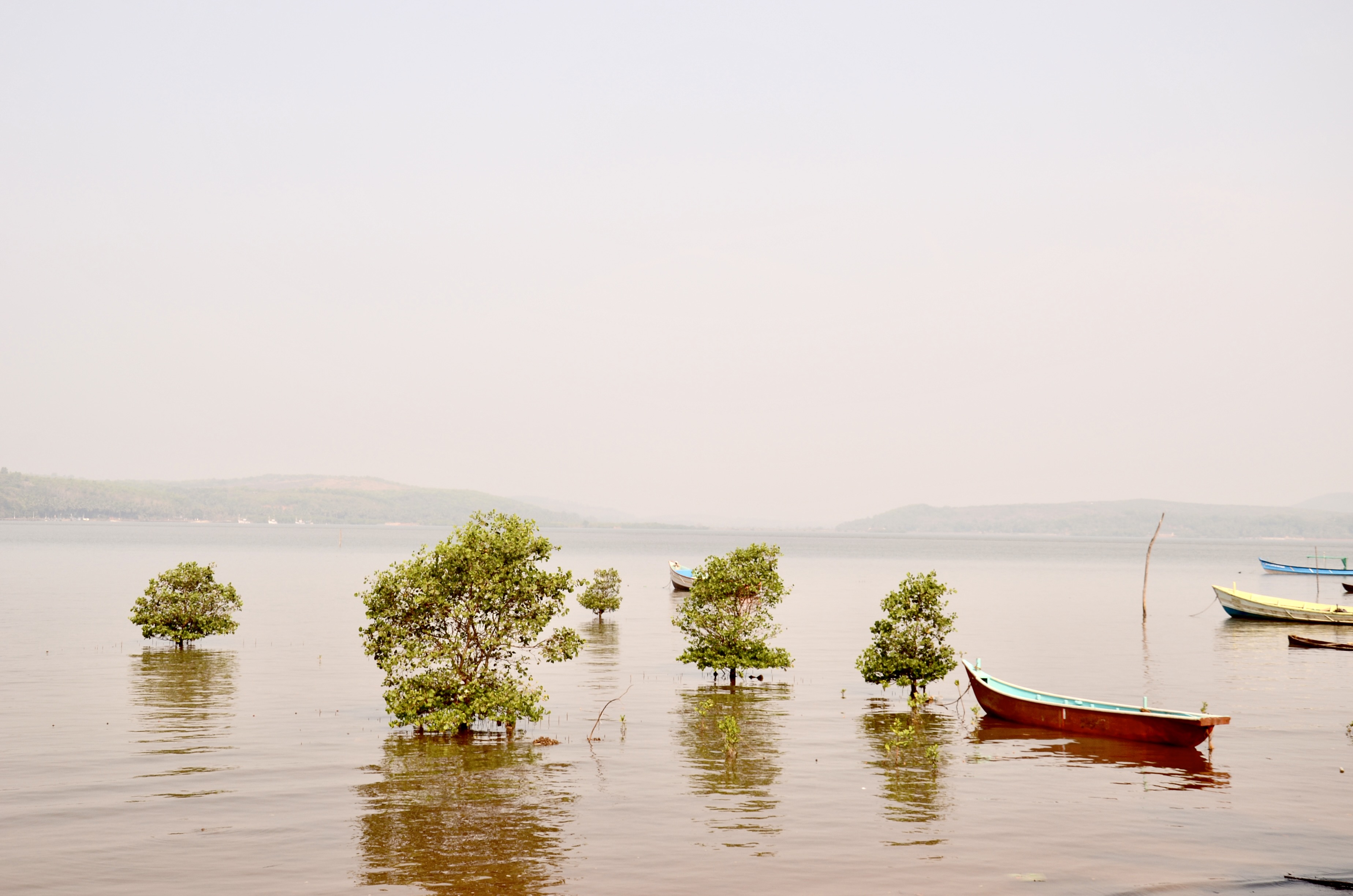
Marion and Juergen encouraged us to join them taking the ferry off the peninsula to a tiny hamlet on the mainland. Before breakfast we caught the 7.30 am bus to the port where the little ferry was waiting. People and motorbikes crowded on for the short but lovely ride.
Marina had told us of a chai shop on the other side and we set off in expectation for a nice breakfast. Four miles later, through road construction and clouds of red dust, stil no chai shop. Exhausted, thirsty and hungry we turned around.
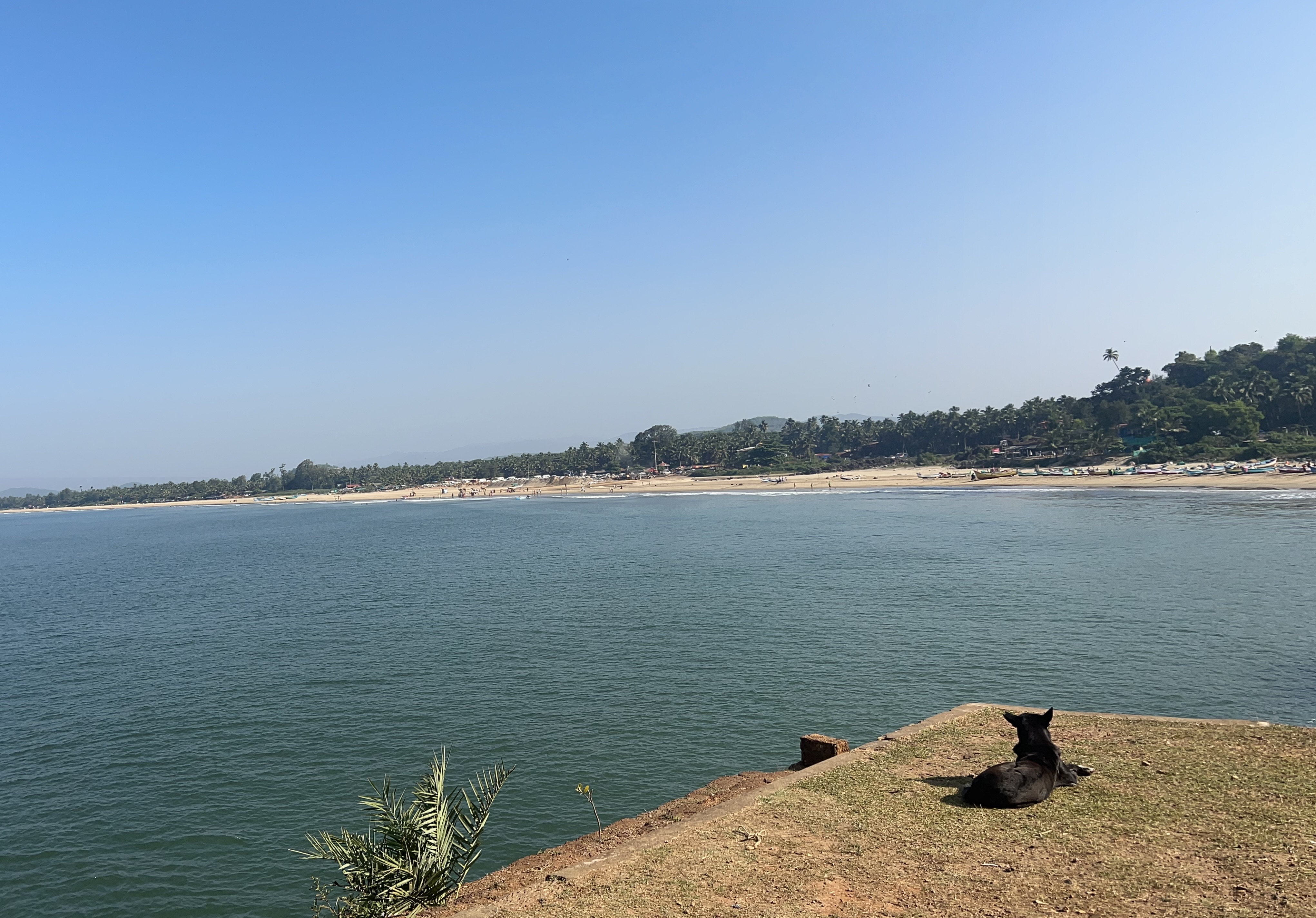
After the long walk back, we found the chai shop right where it was supposed to be and sat overlooking the bay with our chai.
But what saved the day was the unreserved friendliness of everyone. Obviously few western tourists ventured their way and we were still a curiosity: big smiles and waves from road laborers, housewives and school children. By the time we got off the ferry hoping to catch the bus back to Gokarna, it was high noon. The shopkeeper said the next bus will come in two hours. There wasn’t a rickshaw in sight. Fatigued and overheated we started walking. Eventually we caught a rickshaw back to town. Not exactly the outing we’d anticipated.
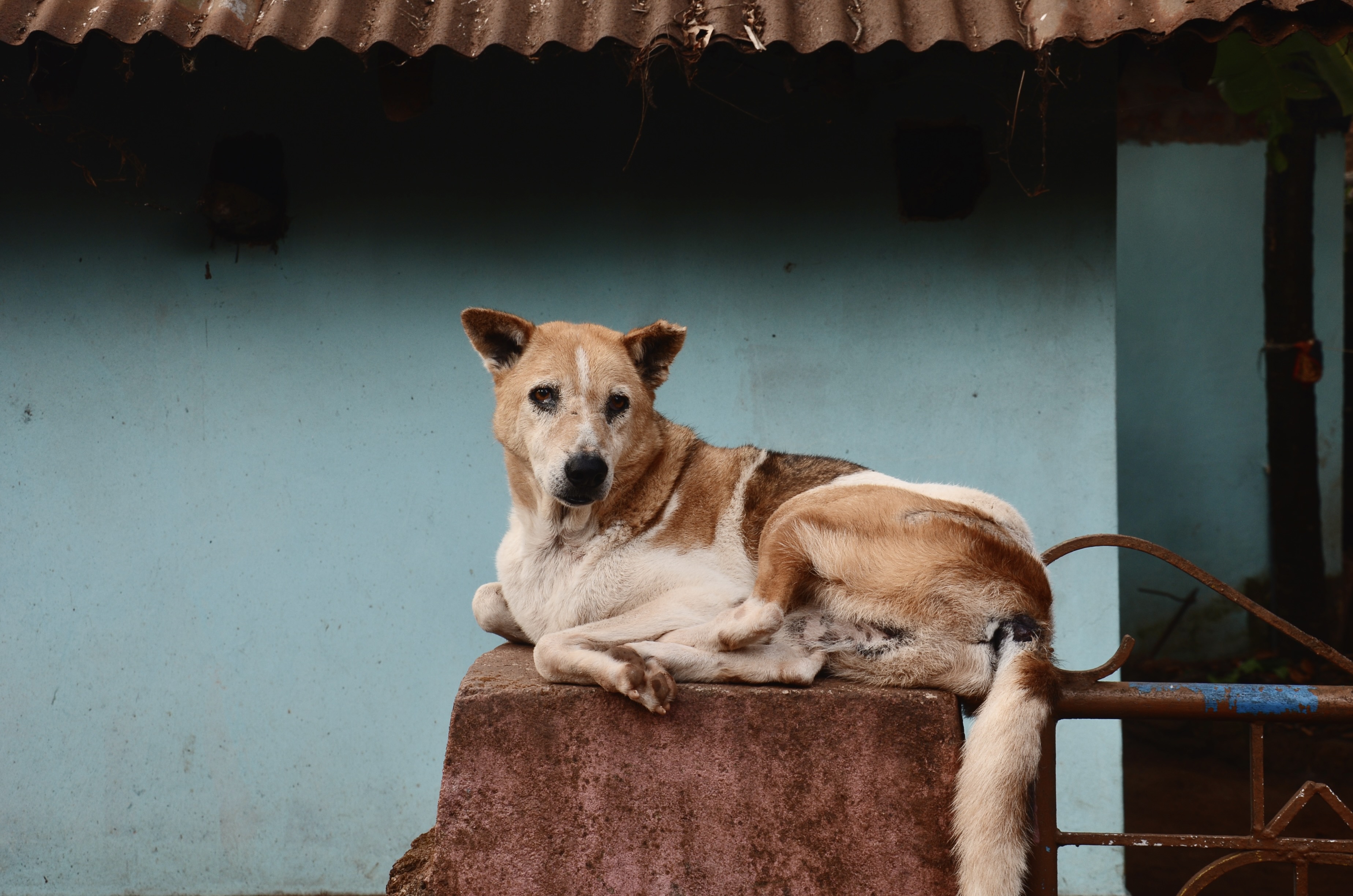
Certainly the dogs along the way could have advised us if we’d only taken the time to listen.
A few days later, bird watcher, Tina, proposed another walk to the little beach of Belekan. “About a two hour walk,” she claimed. “We’ll leave early to avoid the heat and take a bus back.”
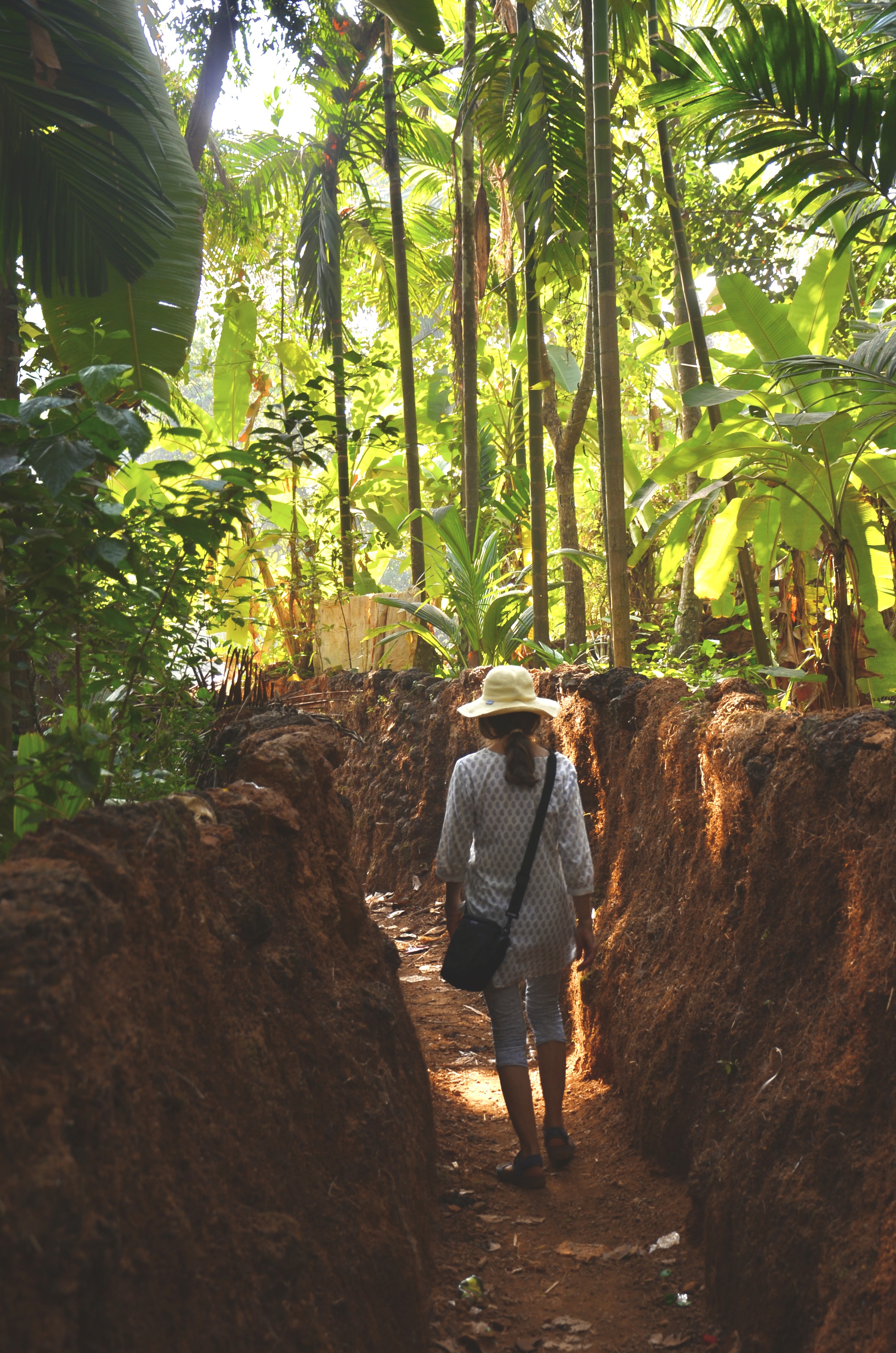
For the first hour we followed a small road through the jungle alive with bird calls. Then Tina followed a footpath that meandered past rice paddies and the odd house.
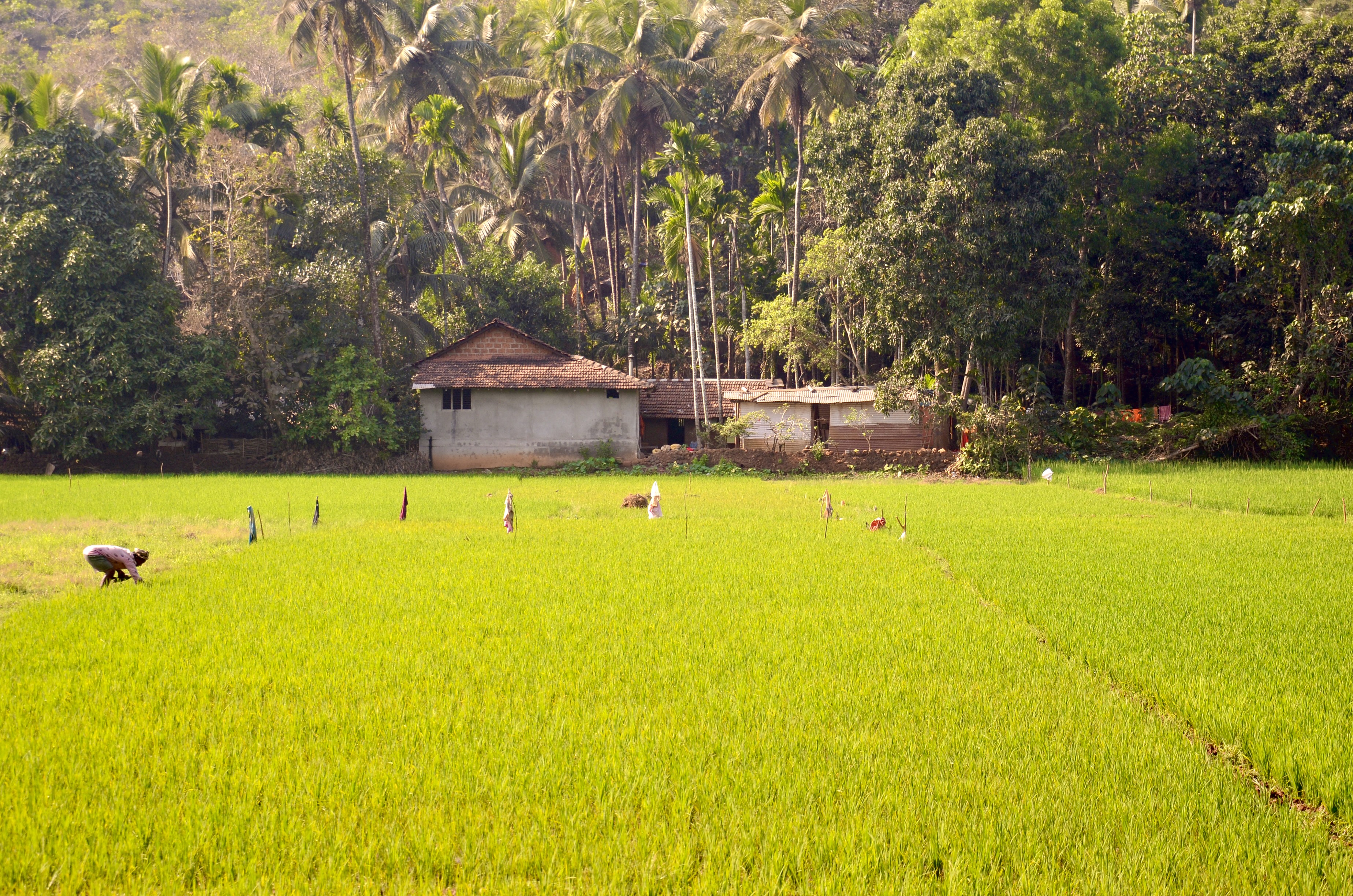
The green of the rice paddies shimmered. And if we stood still long enough we caught glimpses of white–egrets, ibis and storks. n stalks glimpses of white–egrets, ibis and storks.
Suddenly the footpath opened up to the beach. At the far end sat a cafe where the bus terminated. After our two hour trek our chai tasted even better.
Then we were informed that the bus would not be coming for another two hours. ‘Man proposes and God disposes’, someone muttered.
The general consensus was to walk back. Gerard was of a different mind, happy to hang out at the cafe and await the bus. Had I known what was being said, I would have enjoyed also staying for a swim. But not following his gut, we trudged off with the others. Now in the noon day sun, our pleasant stroll through the jungle became a test of endurance–heat, sun and no water. Finally reaching our room, Gerard collapsed on the bed. After looking at map, he huffed, “Two-hour walk, huh? That was more like ten miles!” Once again, Incredible India has its hidden surprises.
As we flew out of India last March, I had a premonition we might not be able to return again the following January. We had little idea at that time how serious coronavirus was and how deeply and long it would impact our lives. Waiting for the plane to depart, our last night in Orchha occupied my thoughts. The town had gone into an abrupt lockdown, the temple closed its doors and the streets emptied. In a pool of streetlight, a small group of beggars sat outside the temple, while our new friend from the Indian military, volunteering with the temple priests, handed out dal and chapatis. The usual hubbub of pilgrims and street vendors had already disappeared into the quiet night. I took a last photograph and silently bid Orchha goodbye. The mood was decidedly melancholy. The next day, we were back in Delhi and franticly searching for a flight to Boston. had to let go of my fantasy of hiding out in the Himalayas, and we boarded one of the last flights out of India.
We returned home to a new reality of social distancing, mask wearing and grocery store queues. But spring was coming and the garden became our refuge. We nursed it back to life, planted anew and weeded. Gerard rebuilt the stone wall and leveled the paving stones.
We lingered over breakfast, drank chai in remembrance of India, and from time-to-time entertained friends sitting six feet apart on the patio.
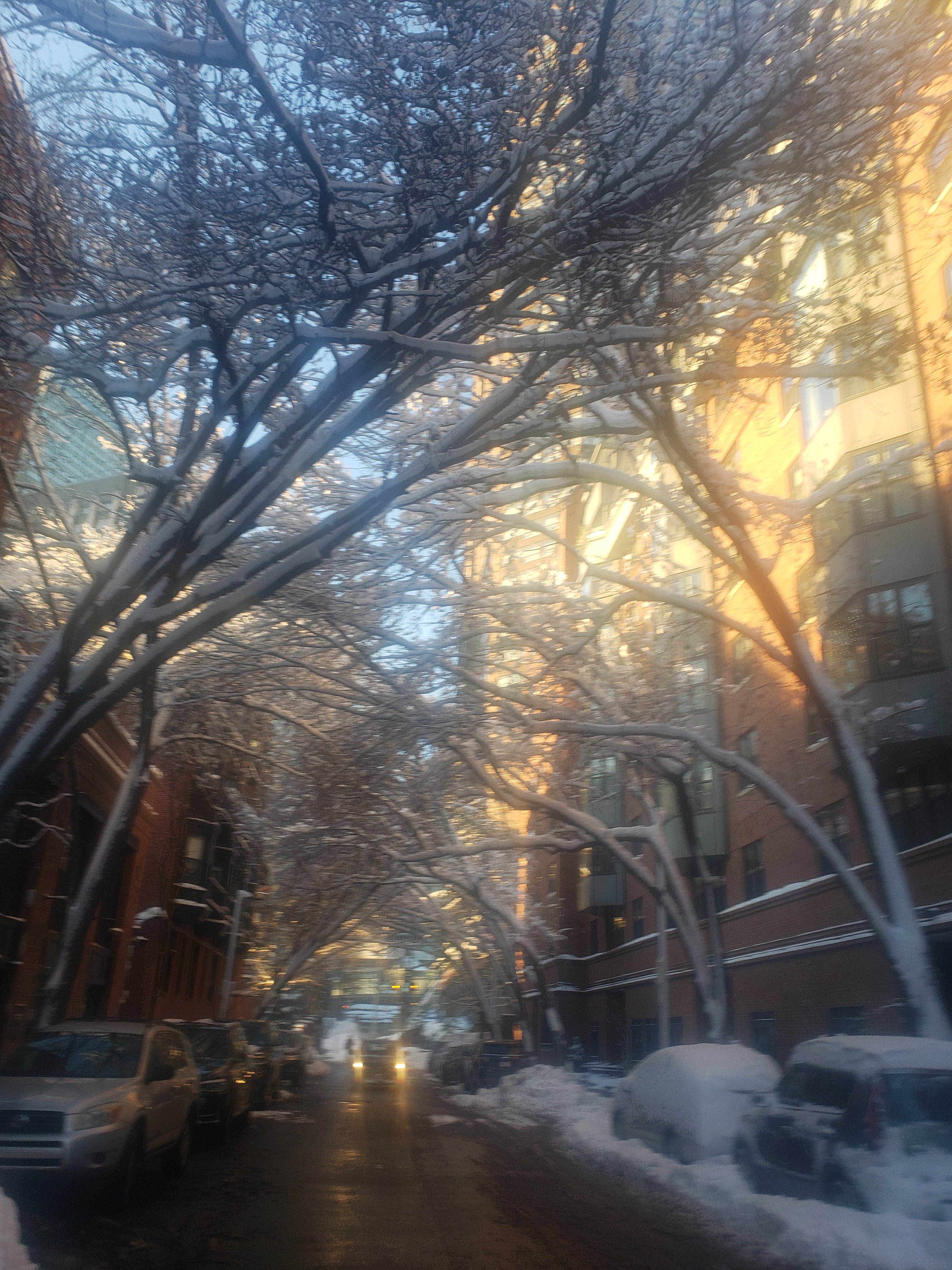
While self-quarantining, I paced the empty alleys of the South End. Soon I felt confident to ride my bike in the empty streets of Boston and discovered new bike paths in and around the city: beside the Charles River and around the vast, now empty, university campuses of Northeastern and Boston.
When summer came, I could not longer go to Manchester by the Sea; the town had closed the beach to non-residents. Boston harbor became an option; I swam wary of pollution and keeping my head well out of the water. On a sunny weekday, more often than not I swam by myself, looking back toward the city and marveling at my secluded private lagoon. (On the weekend, the crowds arrived and I stayed home)
The social restrictions have not bothered me as much as others. The pandemic has helped me to rein in my restless nature and find a new contentment in a quieter life at home. I never really liked the using the telephone and now, with my hearing loss, I’ve rediscovered the joy of writing letters. Growing up in England, letter writing was expected and something always enjoyed. I lost touch with it through the convenience and universality of telephones. Social encounters, consisting of only one or two people at a time, are easier, although masks and social distancing exacerbate my hearing loss. With the deepening political chaos I’ve spent more time reading the news, national and international trying to make sense of the insanity. And now that winter’s arrived, I’ve taken up knitting again after a long hiatus.
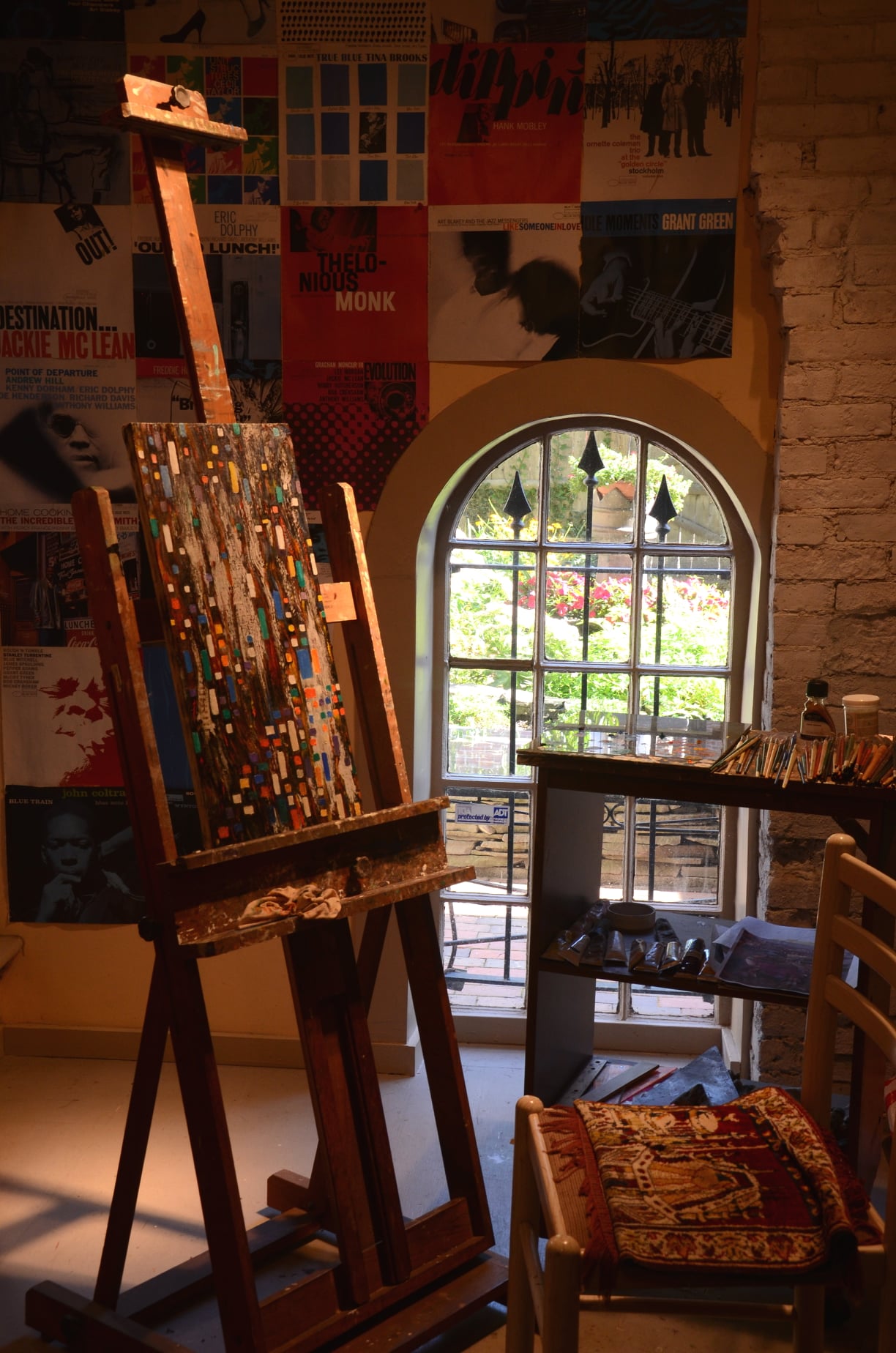
Gerard, who never has a problem occupying his time, stays busy with projects: house repair, furniture refinishing…and painting pictures when he finds time. He’s recently completed two that I especially like. Now, he’s returning to a rewrite of his memoir during the cold dark winter months. He’s never at any loss for words on the telephone, but he misses socializing, whether a casual street encounter, or a prolonged coffee shop conversation with friends. Neither of us have suffered in isolation – fortunate we don’t have to go out to work, have a lovely house and each other for company.
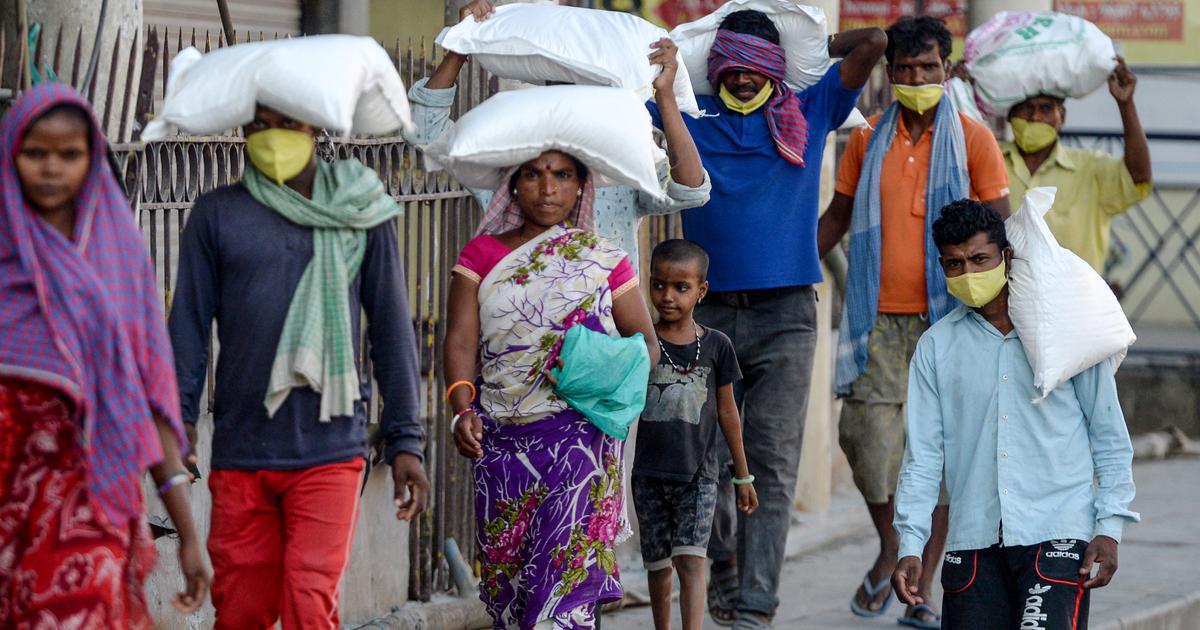
India is never far from our thoughts. Back in March, Modi ordered India’s lockdown with less than four hours’ notice. “Forget what it is like stepping out of the house for 21 days. Stay at home and only stay at home,” he ordered. But he mentioned nothing specific about the daily-wage earners—mostly migrant workers—who make up 80% of India’s workforce. Factory hands, delivery boys, cooks, painters, rickshaw pullers, or vendors standing by the roadside, selling fruits and vegetables, chai and flowers. Migrant women are indispensable as maid servants for the middle and upper class; daily they arrive to wash clothes, sweep floors, cut vegetables and make chapatis. With the pandemic, their income, in an instant, disappeared. We’ve seen horrifying pictures of these migrant workers, fleeing the shutdown cities. With bags perched on their heads and children in their arms, walking down highways in a desperate attempt to return to their villages hundreds of miles away.
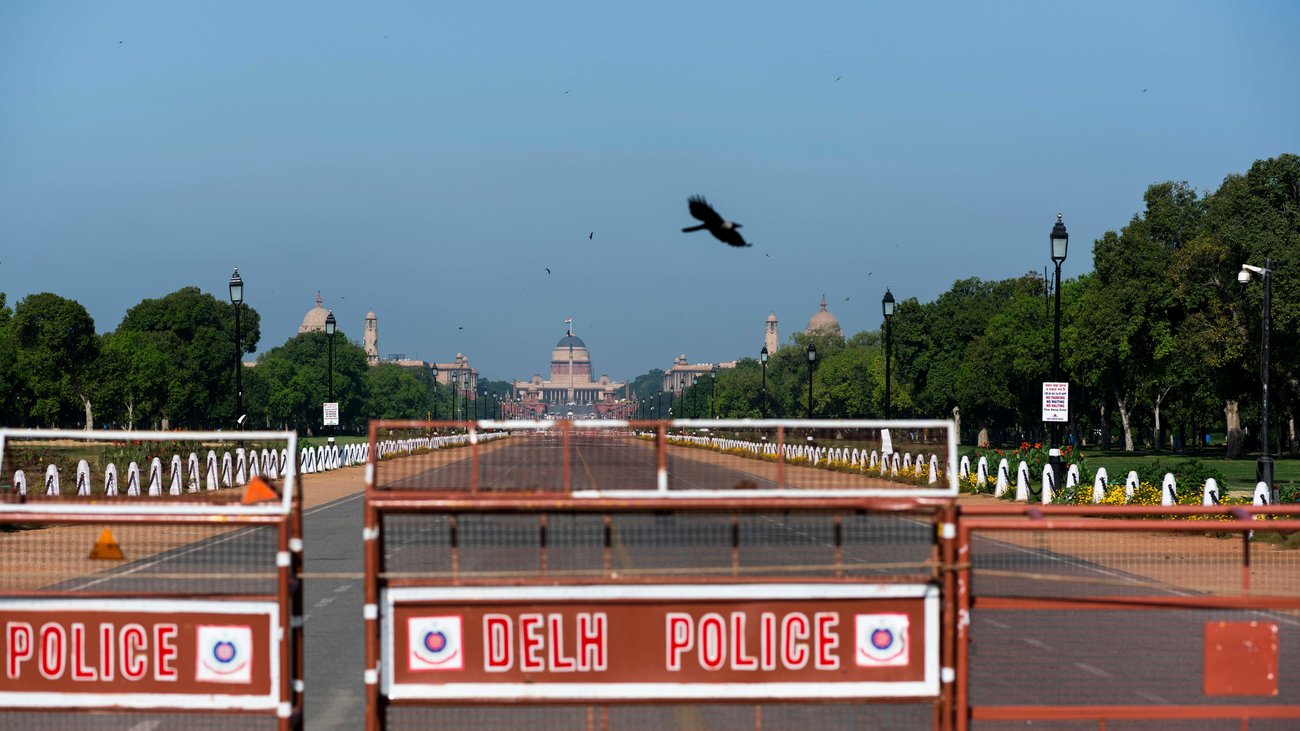
Meanwhile, back in Delhi, with few cars on the road, there is one silver lining: the sky has become clear and blue, something rarely seen in one of the most polluted cities in the world.
A crow flies near Rashtrapati Bhavan, the presidential palace in New Delhi, on April 2. Air quality has markedly improved in India’s capital since the country’s coronavirus lockdown began last month.
In the days following the shutdown, we heard stories of foreigners who didn’t get out in time. A friend sent us a video of some English tourists fleeing Varansi to make an evacuation flight in Dehi. The trip was far from smooth, the van driver fell asleep and went off the road, there was a long wait for another van, resulting in just missing their plane. I was envious of American friends, one a Krishna devotee, the other a travel guide, who were both able to remain in Himachal Pradesh. In the mountains, there’s been little evidence of covid. Two other old friends, have both become permanent residents in Auroville. Covid infections have stayed low and their lives seem to be continuing as normal within the confines of the community.
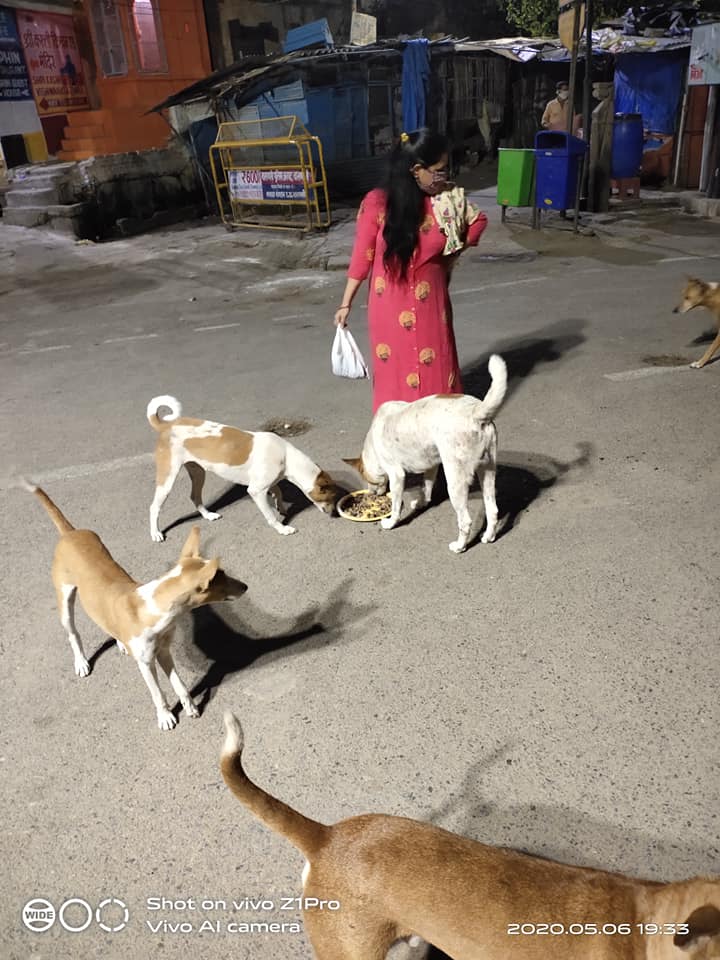
We’ve also kept in contact with our Indian friends. Their stories are quite different. Our hotel in Varanasi, Shiva Kashi, has been closed since March and Sanjiv, the manager, is trying to hang on until they can open again, probably not before next summer at the earliest. Shree Cafe is likewise closed. Santosh, his days freed up, is taking photographs of the shutdown city. Sadly, the demolition work from the Golden temple to the banks of the river still continues with a hideous pontoon mooring to offload tourists arriving by boat. His wife, Seema, has fed the stray dogs and cows on the street almost nightly and sponsors community youth activities – coaching football teams on the ghats, holding competitions.
Rajesh appears to be back at his bangle store near the Golden Temple (though we may be wrong) while still writing beautiful poems. In the photographs, few are wearing masks. In Orchha, our Kashmiri friends were forced to close their jewelry store, but couldn’t get a flight home to Srinagar. We’re still waiting for the final outcome. So many of the Indians we know rely on the now nonexistent tourist business. The Indian government is not issuing any tourist visas and this is unlikely to change as long as covid continues to surge.
Back in the US, the political mess has provided a constant distraction…or irritation. It’s felt like an emotional roller coaster. For a moment, I believed trump was going to leave the stage and he’d no longer dominate my mind with so much negativity. But that’s not trump; good news or bad news, he still continues to take center stage. After the storming of the Capitol, I feel America has deteriorated into a state of complete lawlessness — a banana republic. Wintering in India, we’ve missed recent inaugurations. In hill station, Ooty, we tried to watch Obama with a group of westerners but the TV had terrible reception. Four years ago, we happily ignored Trump’s sign-in as we sat on the beach in Agonda.
As Biden will be inaugurated in a virtual and low key ceremony, trump will orchestrate his ‘triumphant’ departure from a military air base in Maryland…but no one will be watching. It’s easy for me to compare his departure to that of Richard Nixon in 1974. But I like to think Nixon redeemed himself by having some remorse. He later admitted: “I let you down. I let the country down.” I can’t imagine trump will ever feel any similar responsibility.
At present, I’m on overload: too much trump, too much pandemic, too much distrust. Keeping our heads down, we hope for the best. Missing all of you that we will not see in India this winter, best wishes for health and happiness in 2021.
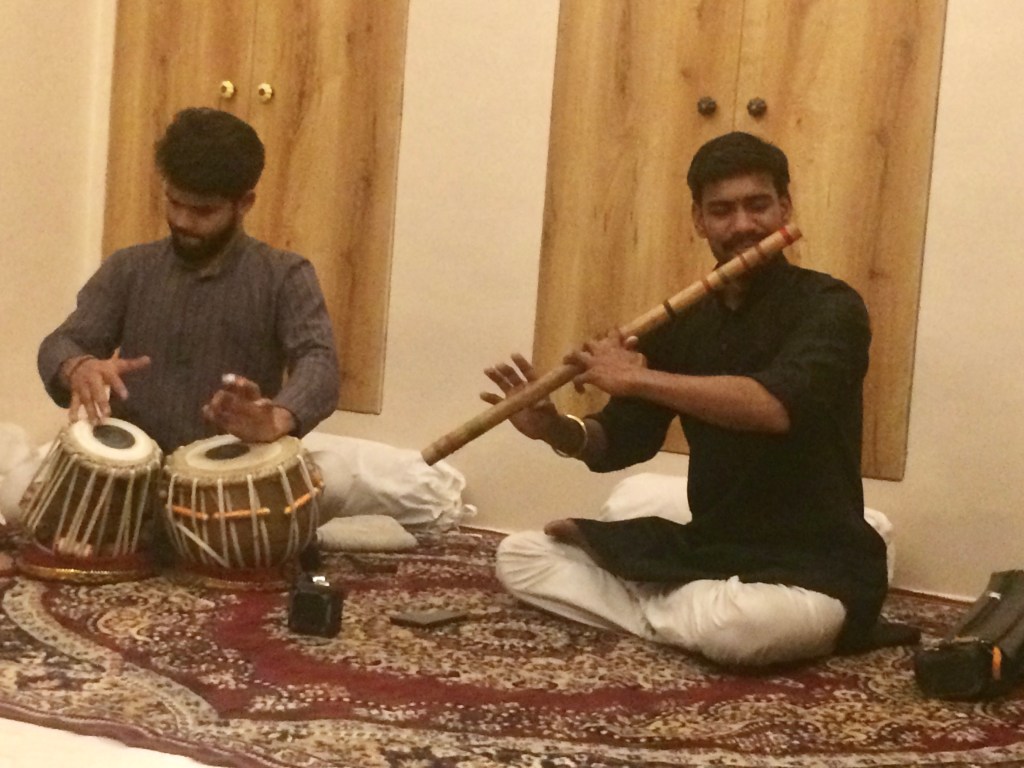
One night, we attended a very special event, a private ‘bansuri’ (bamboo flute) recital. Even though they were students, the intimate atmosphere made up for any possible lack of technique. For a minute, we thought we thought we’d entered Satyajit Ray’s film about musicians (the Bengali film producer from the ’50s). The music was not amplified, making it possible to hear the nuances of the tabla normally missed. But in my case, any hopes of being able to hear a flute were dashed because the bansuri played in the lower register.
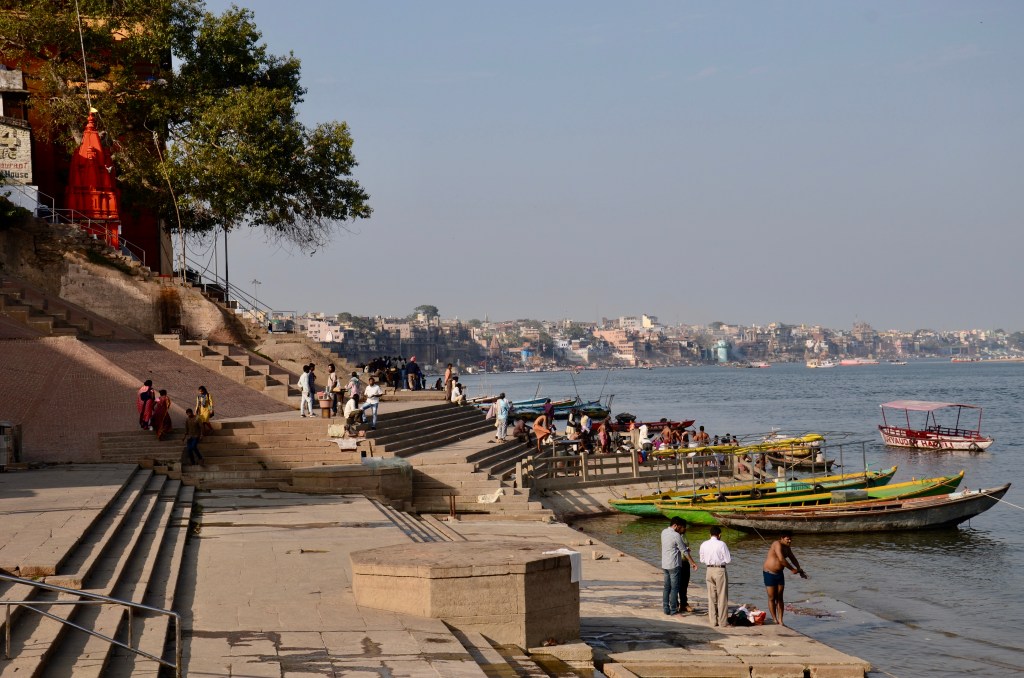
Unable to participate in many conversations that Gerard has can leave me feeling on the periphery. Only if I’m in a quiet environment and speaking to a woman can I fully participate. When the frustration mounts, I’ve found the forty minute walk up the river to Assi Ghat is a tonic.
After so many years of walking the ghat, I still marvel at what a unique place Varanasi is. Growing up in Totnes on the River Dart, walking along the Charles River and many others, I feel my whole life I’ve been refreshed by rivers, but none that compare to the Ganges.
Last week, Sandhya and Premgit, an English couple we met four years ago here. He’s a photographer working with only black and white film and focusing on religious rituals in India. His wife, Sandhya, has a chronic respiratory condition and finds help here from an ayurvedic doctor. She persuaded me to join her. The doctor took my pulse, inspected my tongue, then prescribed some pills and four sessions of Sirodhara, a therapy to reduce stress. While lying on my back, for an hour, his assistant “gently” drizzled warm oil on to my forehead, from a brass vessel hanging overhead. All I know is, it was quite euphoric, incredibly relaxing and gave me a good night’s sleep afterwards. Problematic was trying to shampoo all the oil out of my hair!
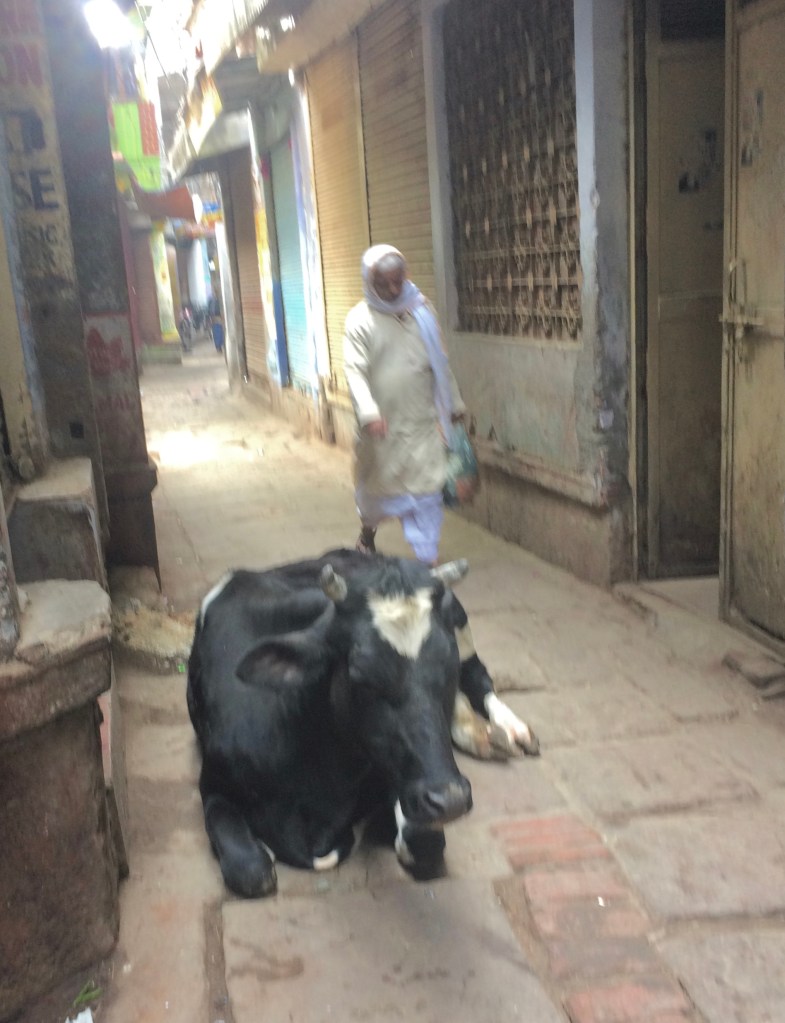
We’ll be moving on soon. God willing, we’ll be back next year and hope not to see further destruction in our favorite city. A reassuring reminder: we’re told that throughout history, Varanasi has been destroyed and rebuilt a total of four times with Modi the cause of the fifth. On a lighter note, he managed to move the cows from the lanes of Varanasi, while the British Raj could not. But there’s still a few around!
For nine years, Agonda in Goa was my beach destination. I loved it and even when the experience began to sour, I denied the undesirable changes and clung to what remained positive (the beach and the friends we’d made there). I don’t always know when to let go.
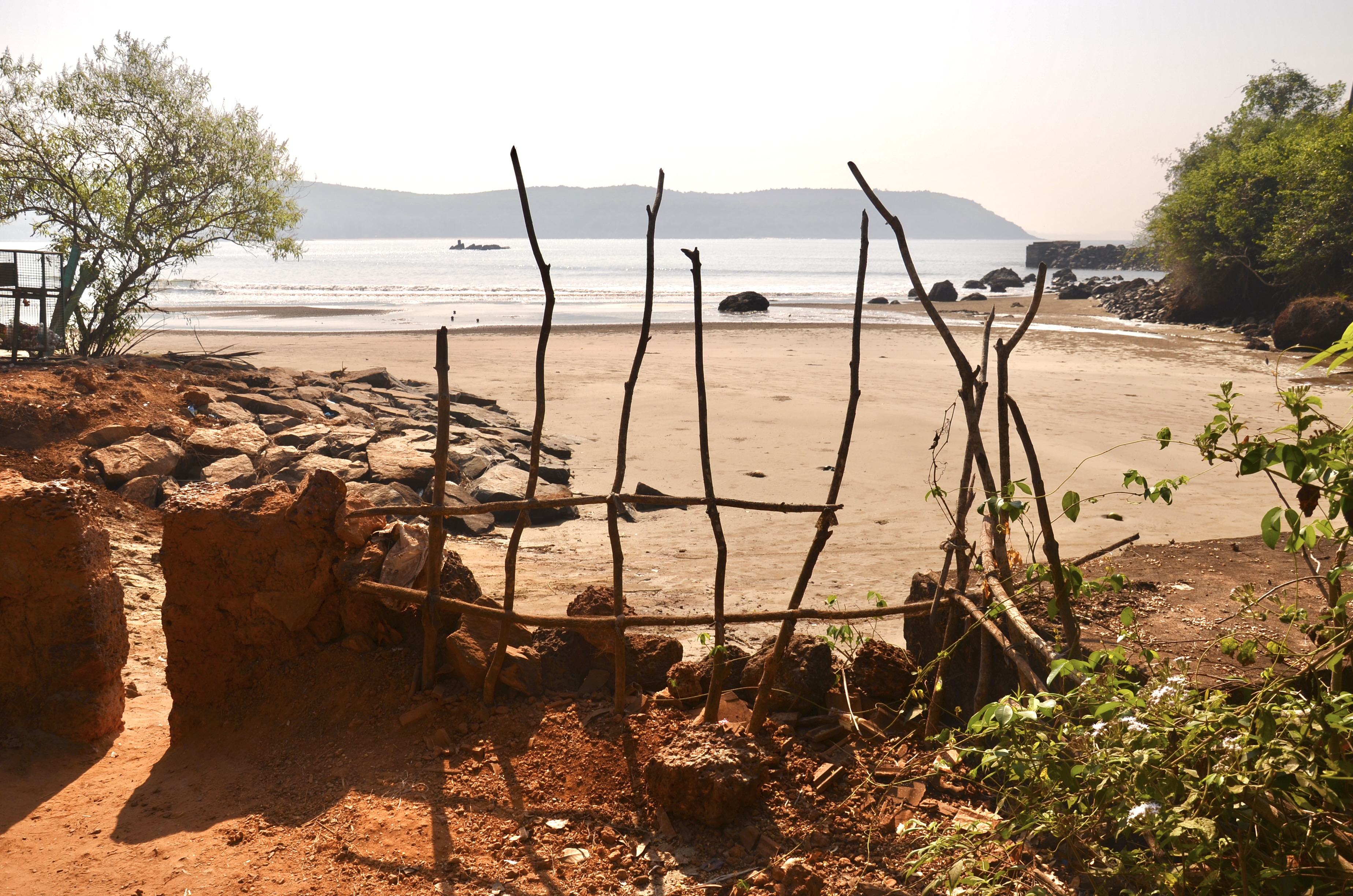
But now, we’ve found another beach with a long stretch of fine sand and clear water. The big plus for us is that Gokarna is not a tourist destination in the Goa style. There are the regulars that have been coming here for years, older hippie types, and of course, there’s the young Russians. They’re not looking for disco bars and karaoke. The other group of tourists are young Indians who flock here on weekends and don’t venture far up the beach. Huts and small restaurants border the sea front but don’t overwhelm it.
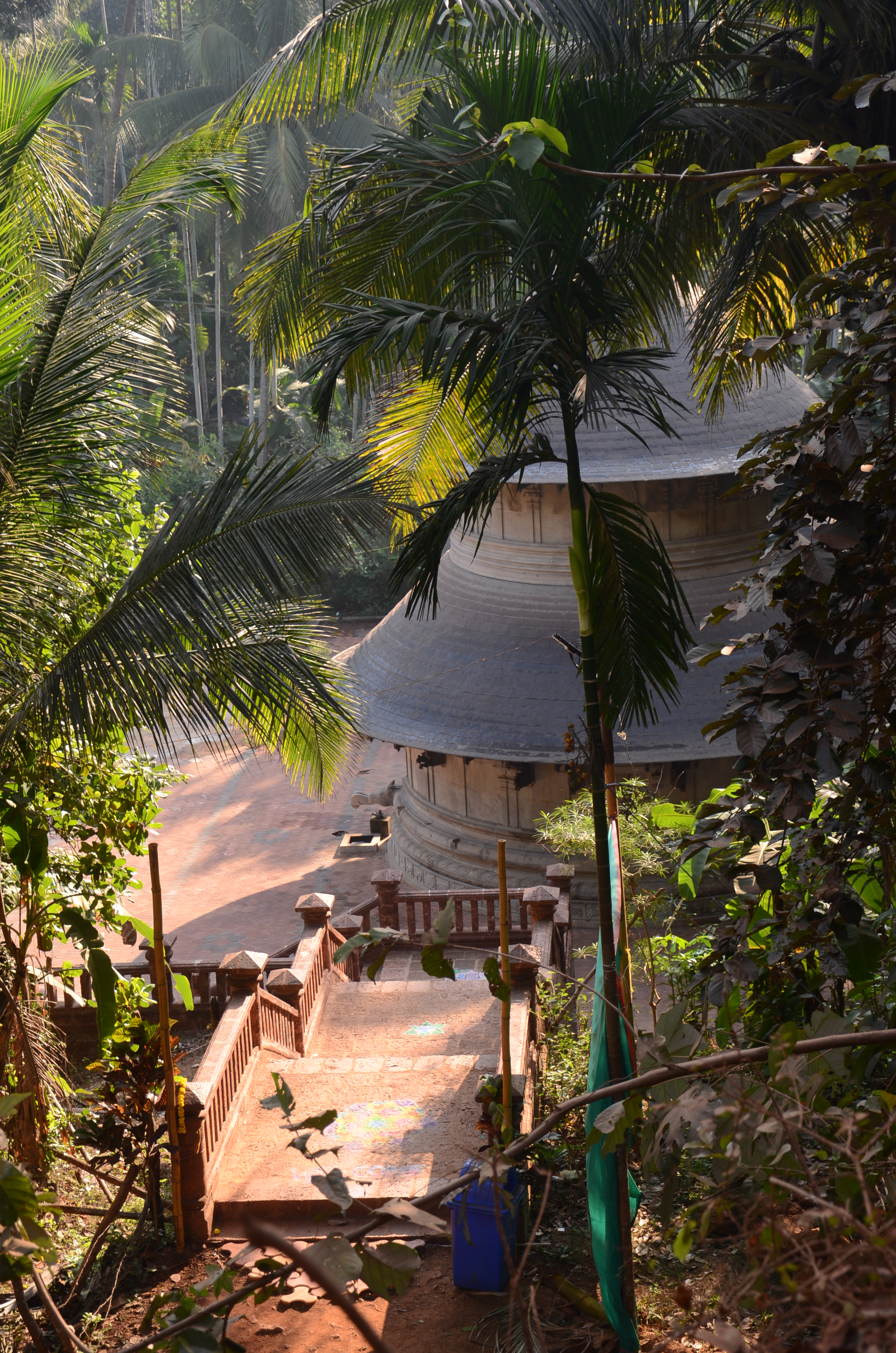
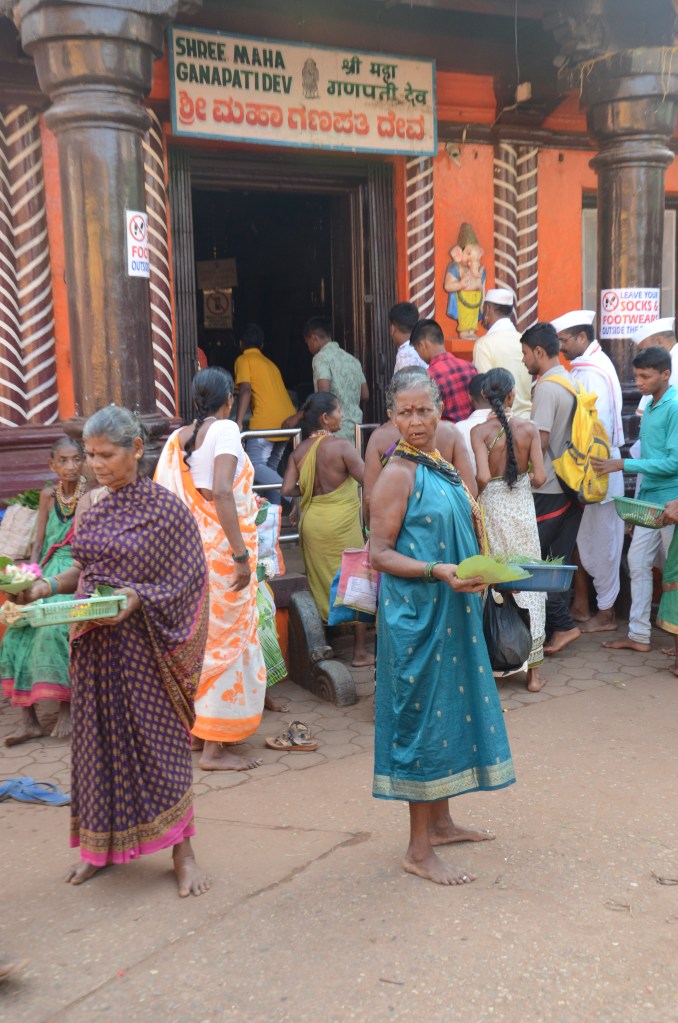
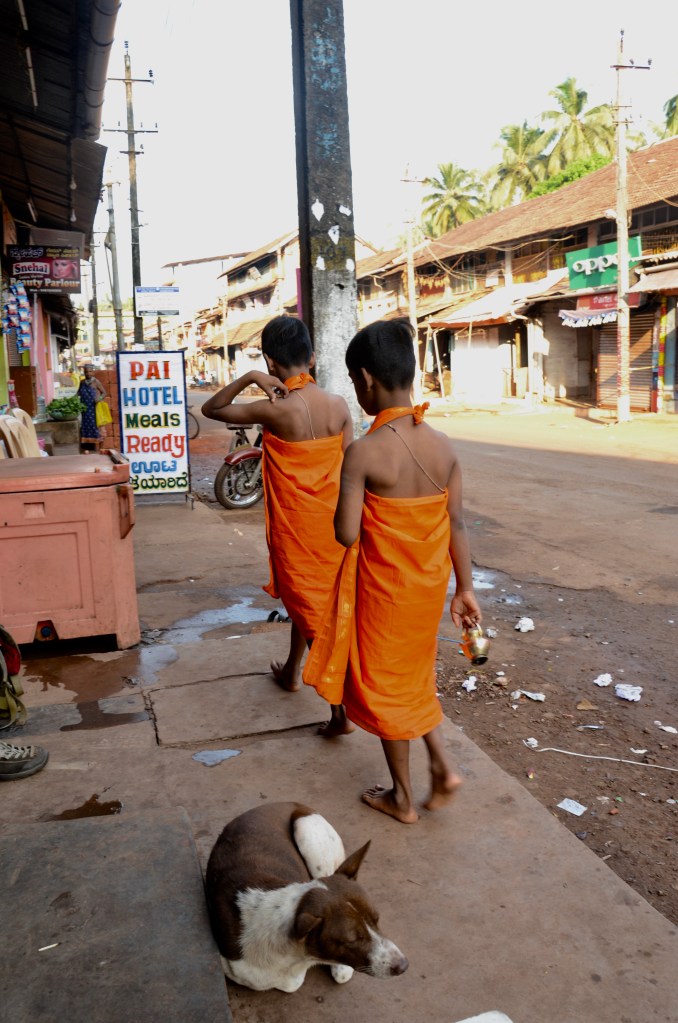
Quintessentially South Indian, Gokarna is a temple town, where pilgrims visit regularly. At the temple entrance, local women sell flowers for offerings.
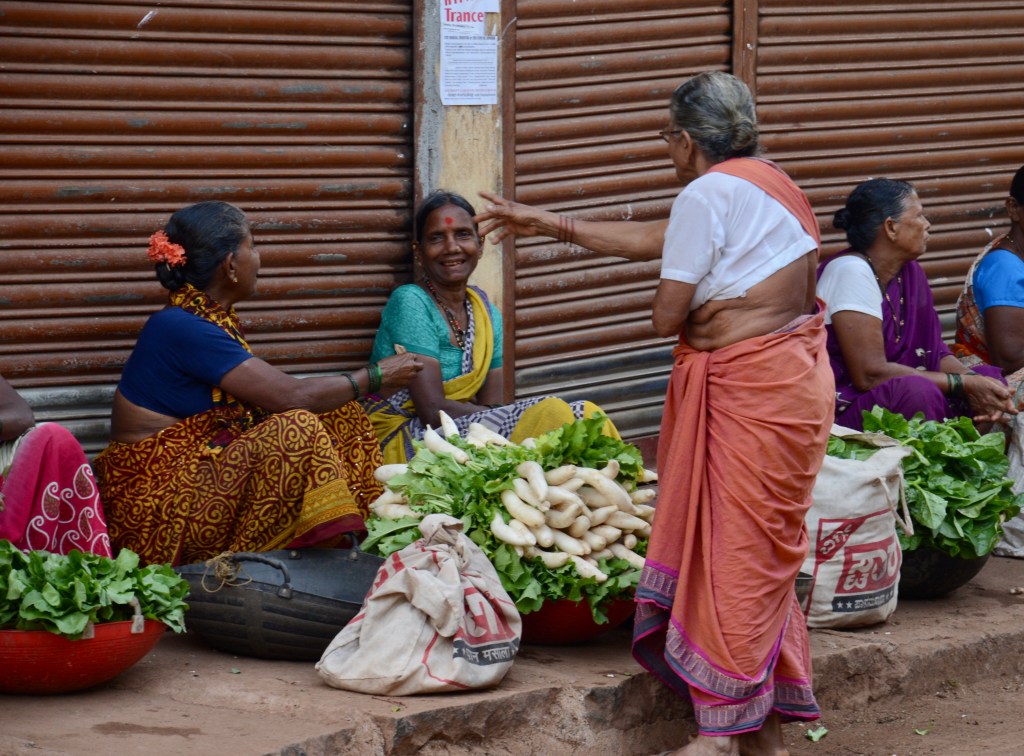
Our guest house is at the upper end of the main street, where women sell vegetables in the early morning.
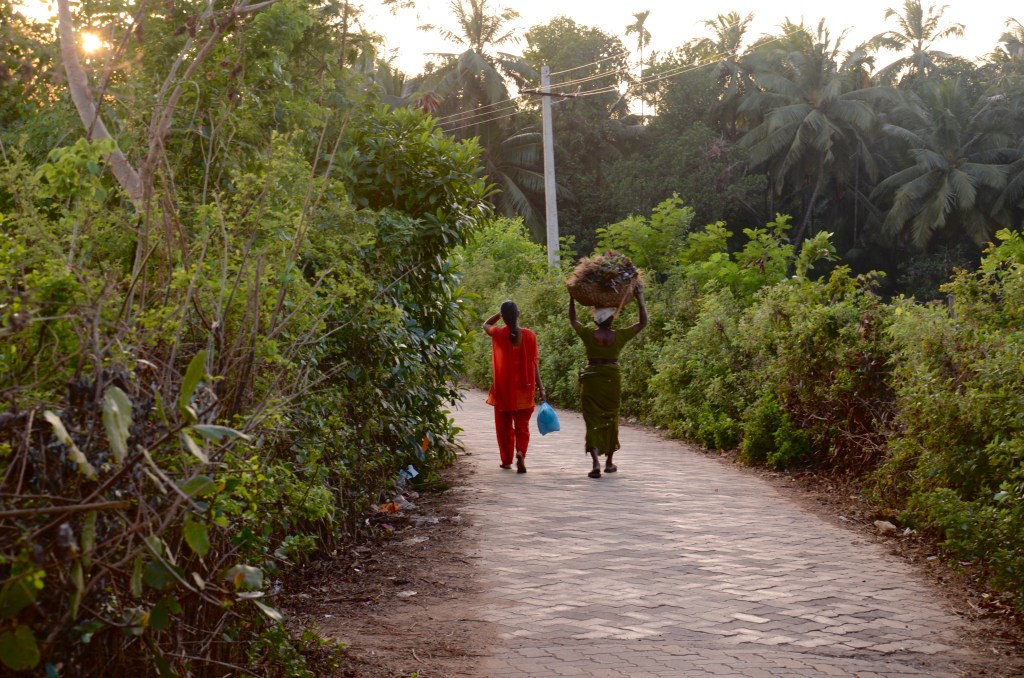
It can take twenty minutes to walk through the back lanes and fields but we don’t mind. It’s a good room, comfortable and colorfully painted, and stays cool. It also has a balcony among tall palm trees, just wide enough for my yoga practice (although the lure of the beach often outweighs yoga.)
By chance, I picked up a book left in the guesthouse, called Finding Yourself in the Kitchen, written by an American Buddhist nun. She encourages you to use the kitchen to practice mindfulness and reality acceptance. Right now, I’m enjoying being out of the kitchen, but I file it away to practice when I return. She writes with a levity and lack of self righteousness that encourages me to read what she has to say.
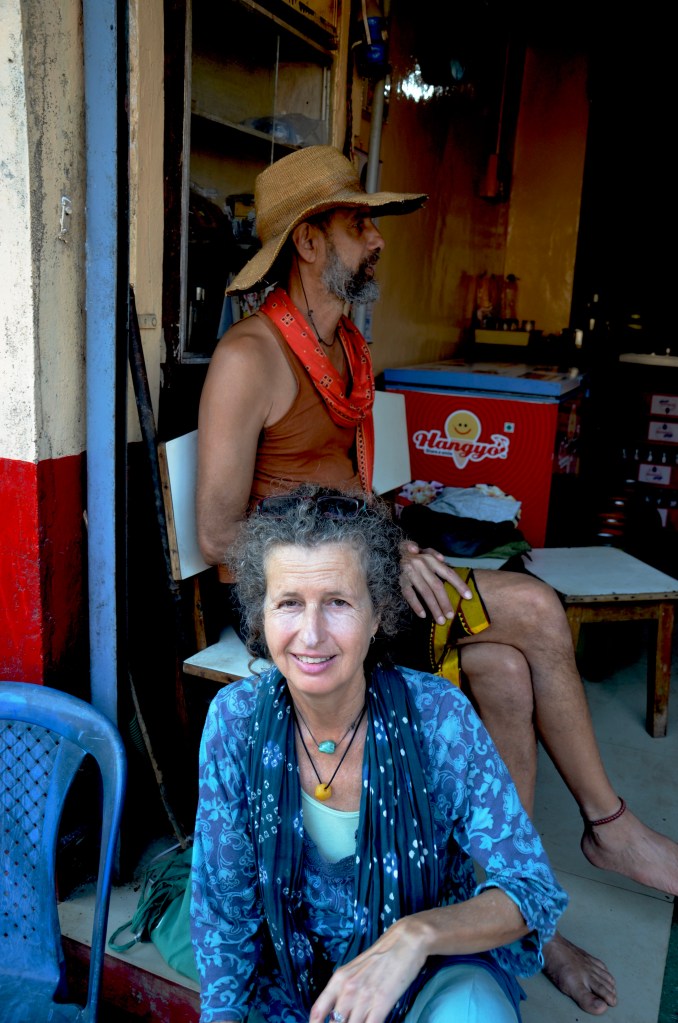
Friends, Marina and Rajiv
We’ve already met up with two couples we first befriended a few years ago in the foothills of the Himalayas. Most mornings we join them for breakfast. Another friend, Oliver, a Belgian living in Devon, England is our senior and has been coming to India for many years. Also an artist, specializing in finely detailed pen and ink drawings. He has not bothered to join the digital revolution not having a cell phone or a computer. When we are back in Boston, he sends us beautiful handwritten letters. It’s amazing that he gets around India without being online.
One morning we met an interesting fellow who was born in Auroville, the community built on the philosophy of Sri Aurobindo in Pondicherry. He left when he was seven, and after forty years, he’s now decided to move back. Over numerous cups of chai, he gave us his insight of the history of Auroville and the community today. We are particularly interested in his story because two good friends of ours now live there. He admitted that Auroville is turning into a retirement community. I was frustrated to miss out on most of what he said, but Gerard filled me in afterward. Still struggling with my hearing loss in crowded restaurants where ceiling fans, clattering dishes and echoing conversation are norms, but I’m still glad to be here.
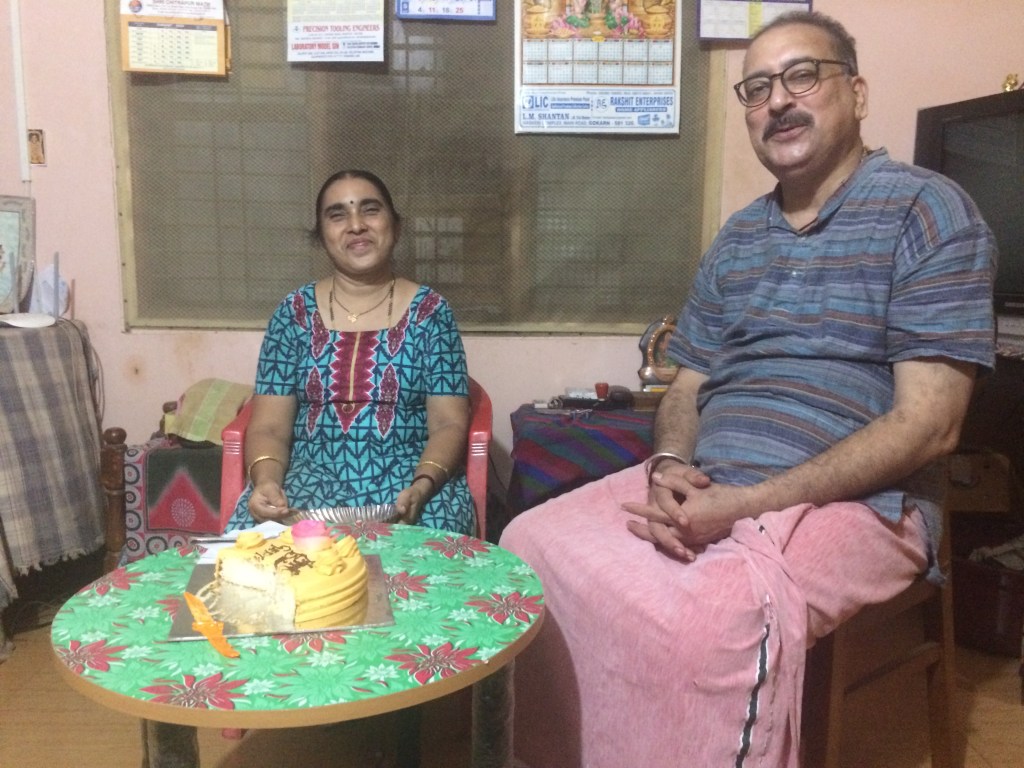
Gerard had a surprise yesterday. The landlady met him on the stair with a severe look. What have I done now? Then her face broke into a broad smile and she said, Happy Birthday! Later over morning chai I couldn’t help telling our friends it was his birthday, and more well wishes.
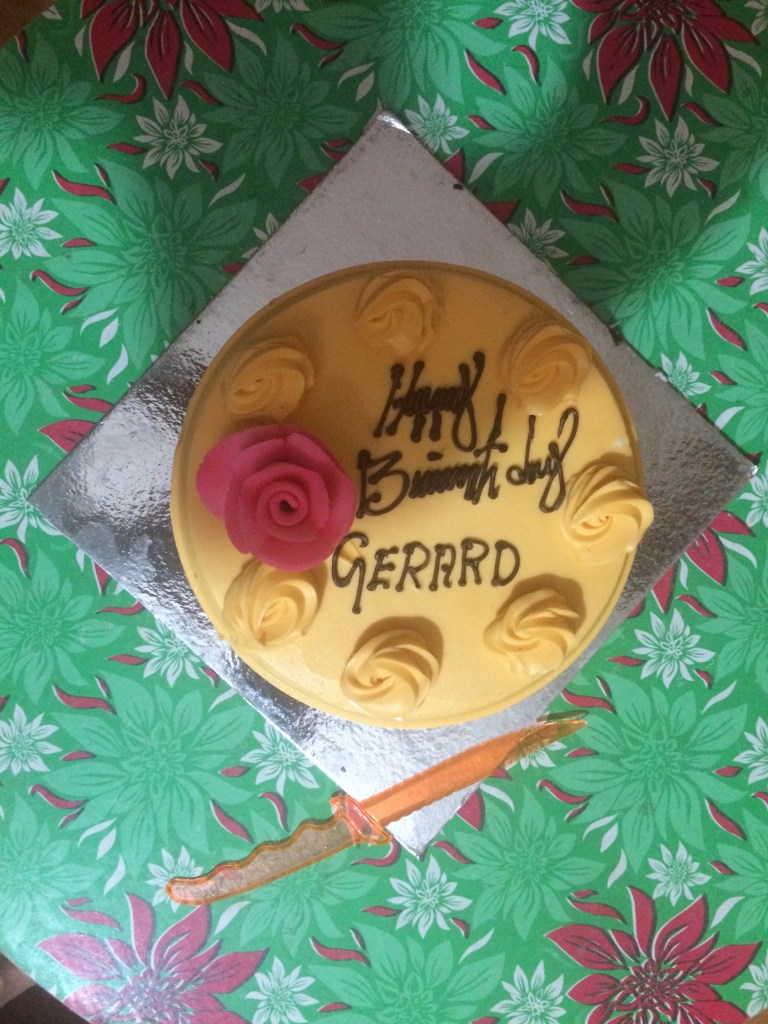
In the evening, as we were about to leave for dinner, the landlady presented Gerard with eggless birthday cake.
Our landlady, Anand, and her husband
We sat with her husband and ate a slice. Later, after masala dosas for dinner, our friends treated Gerard to large scoops of rainbow colored ice cream. Not a bad way to celebrate 73. As Gerard has said, in spite of Modi/Trump/Iran/etc, life can be good.















 A Small Case Across India