India is a cheap escape from winter. But it’s much more than that…the attraction to a country that is so large and so diverse physically, economically and spiritually is powerful. To those of us who are attracted, India can be addictive.
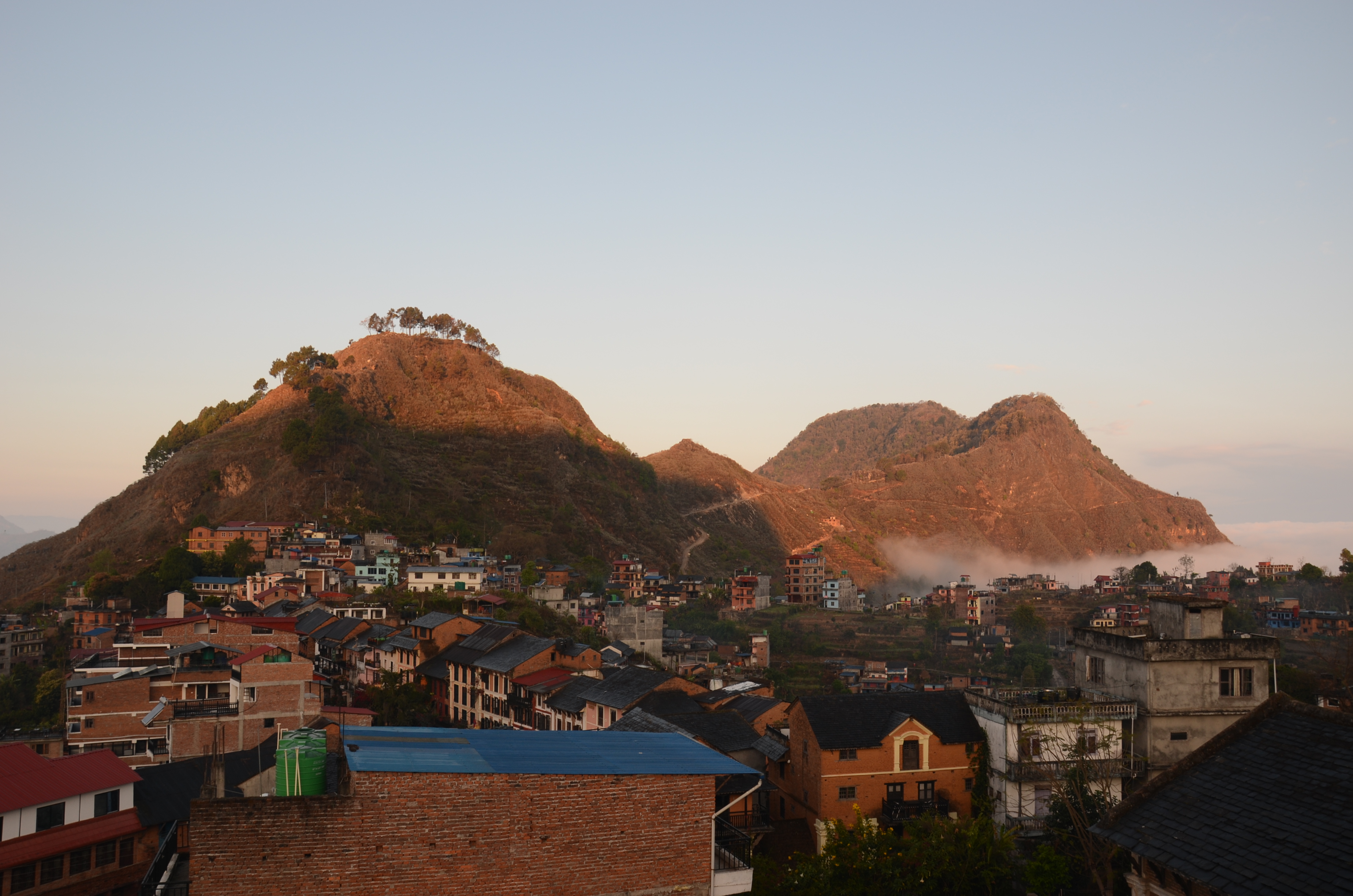
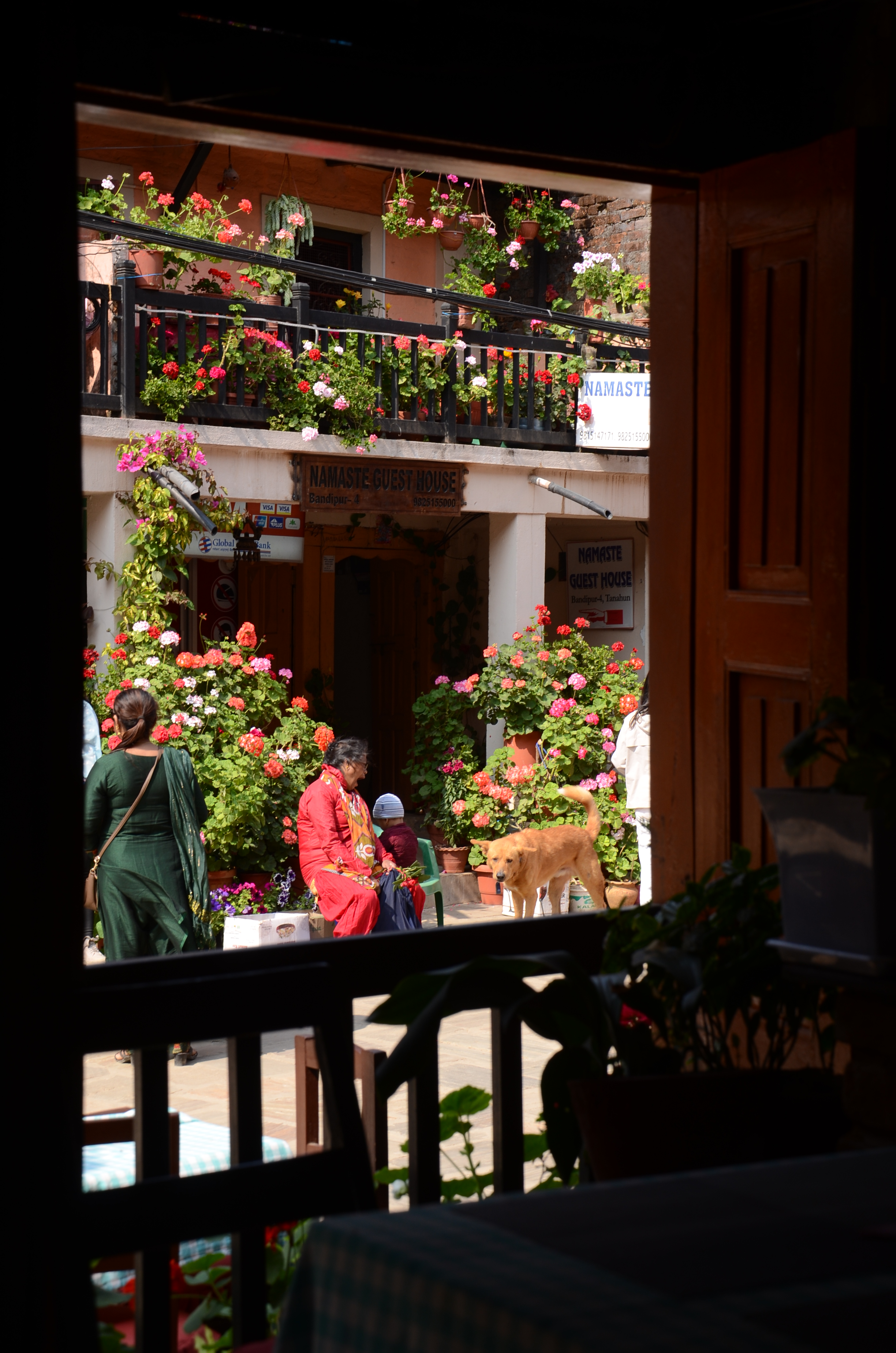
If Bhaktapur is the most exotic place we’ve travelled, then Bandipur is the most idyllic. The only fly in the ointment was the mountains weren’t clear. But the flowers in bloom made up for it.
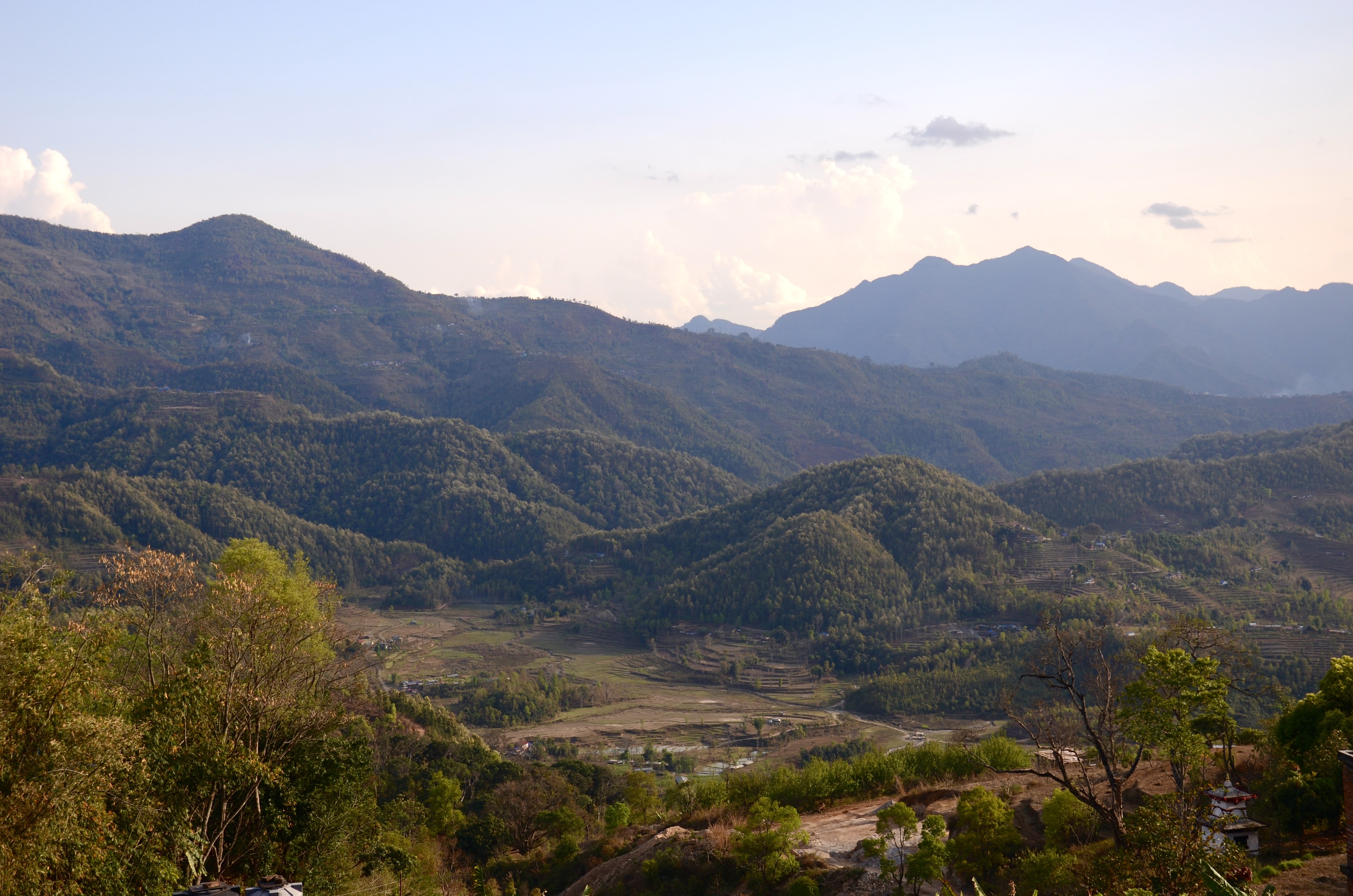
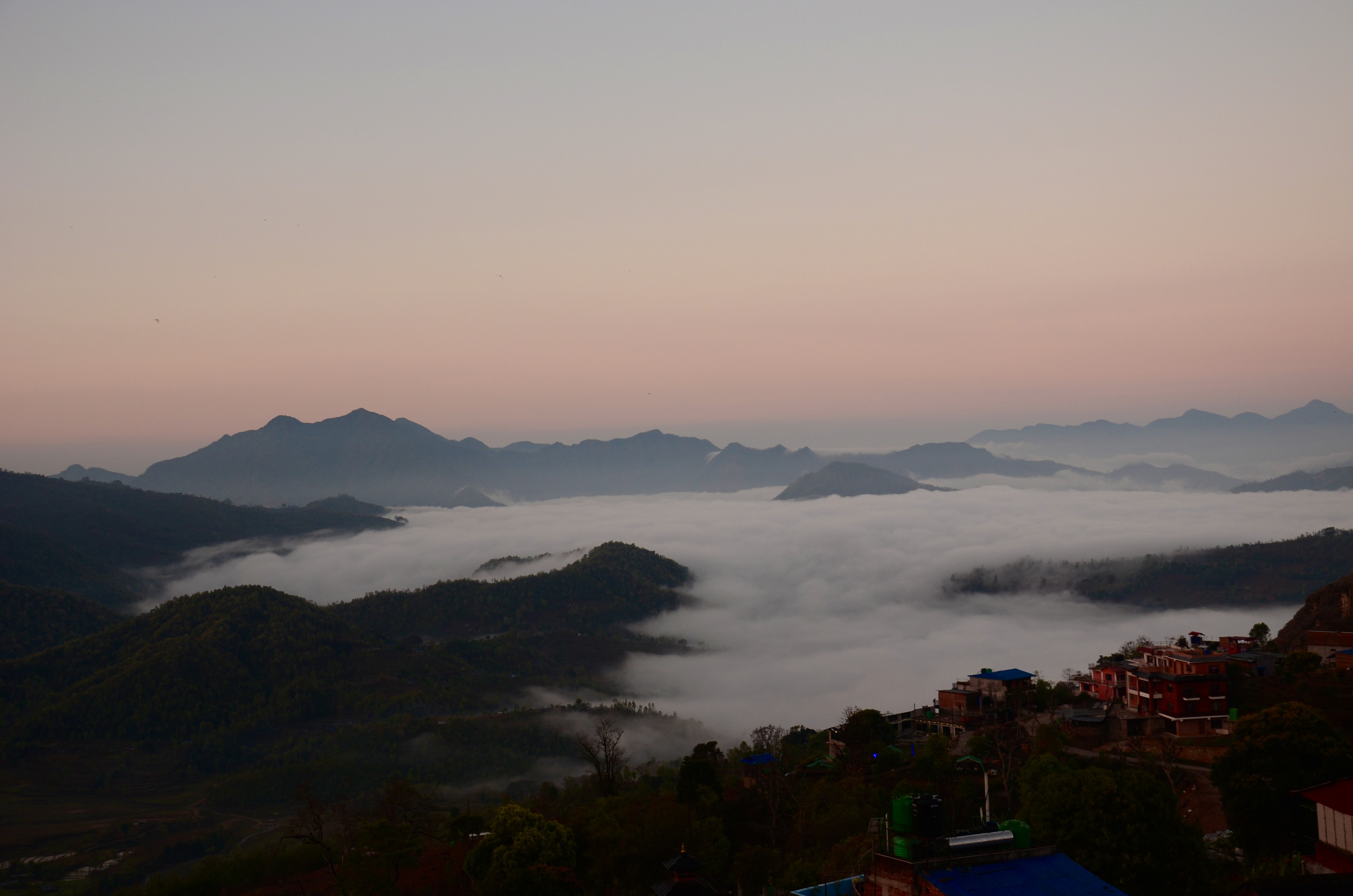
It’s rare that a place is even better on the second visit. Our guesthouse has an excellent view of the valley below on a clear day.
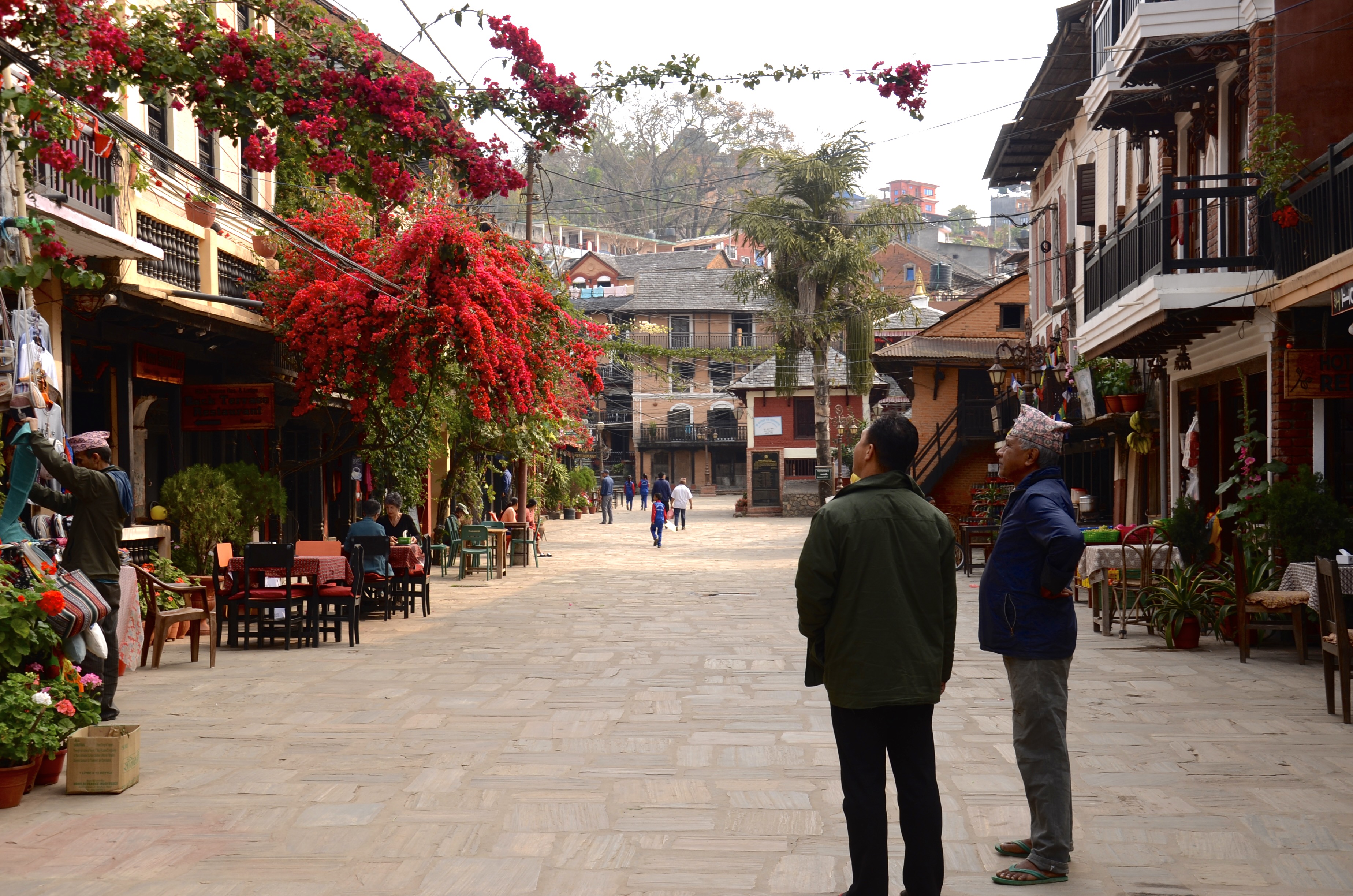
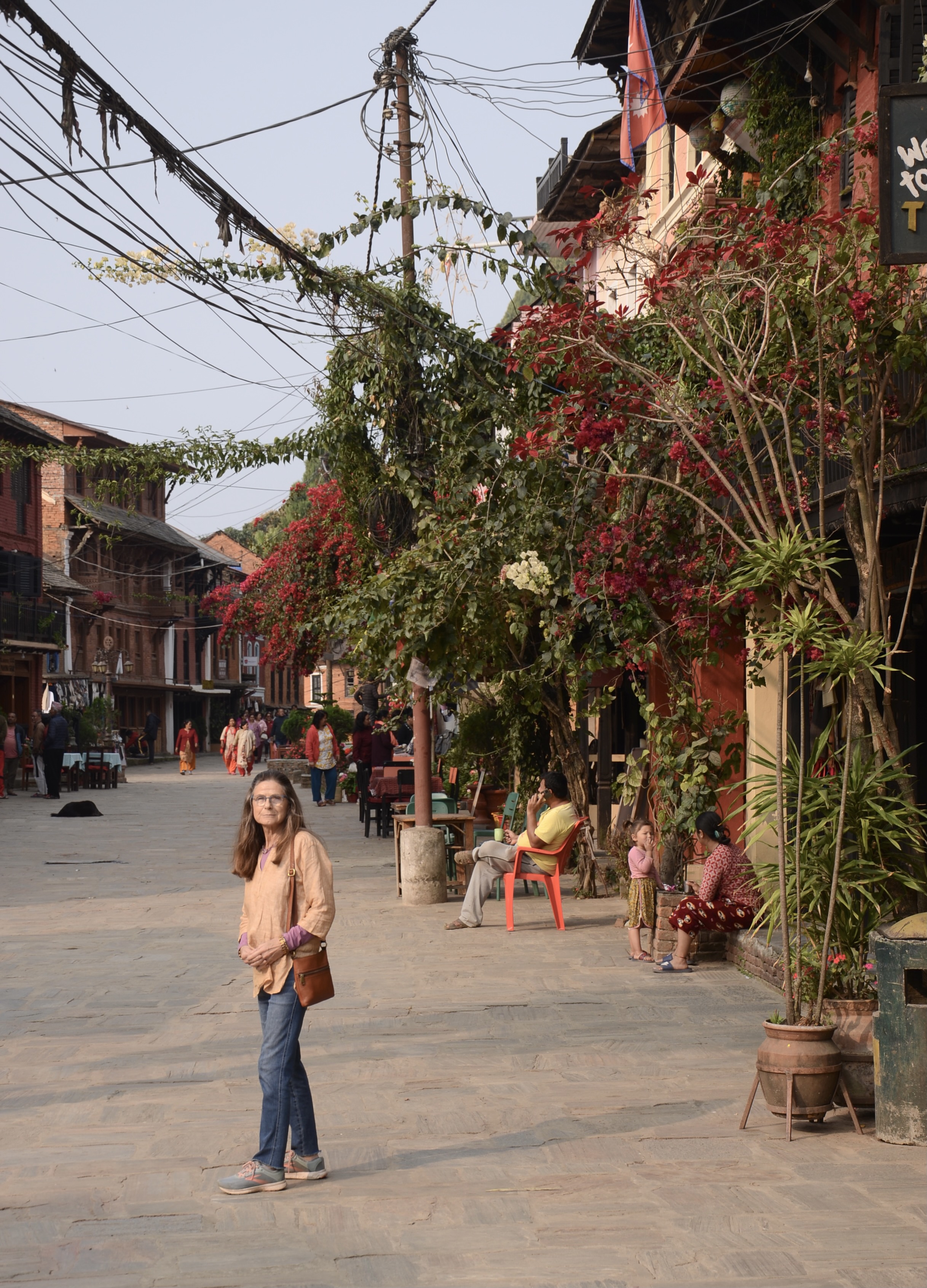
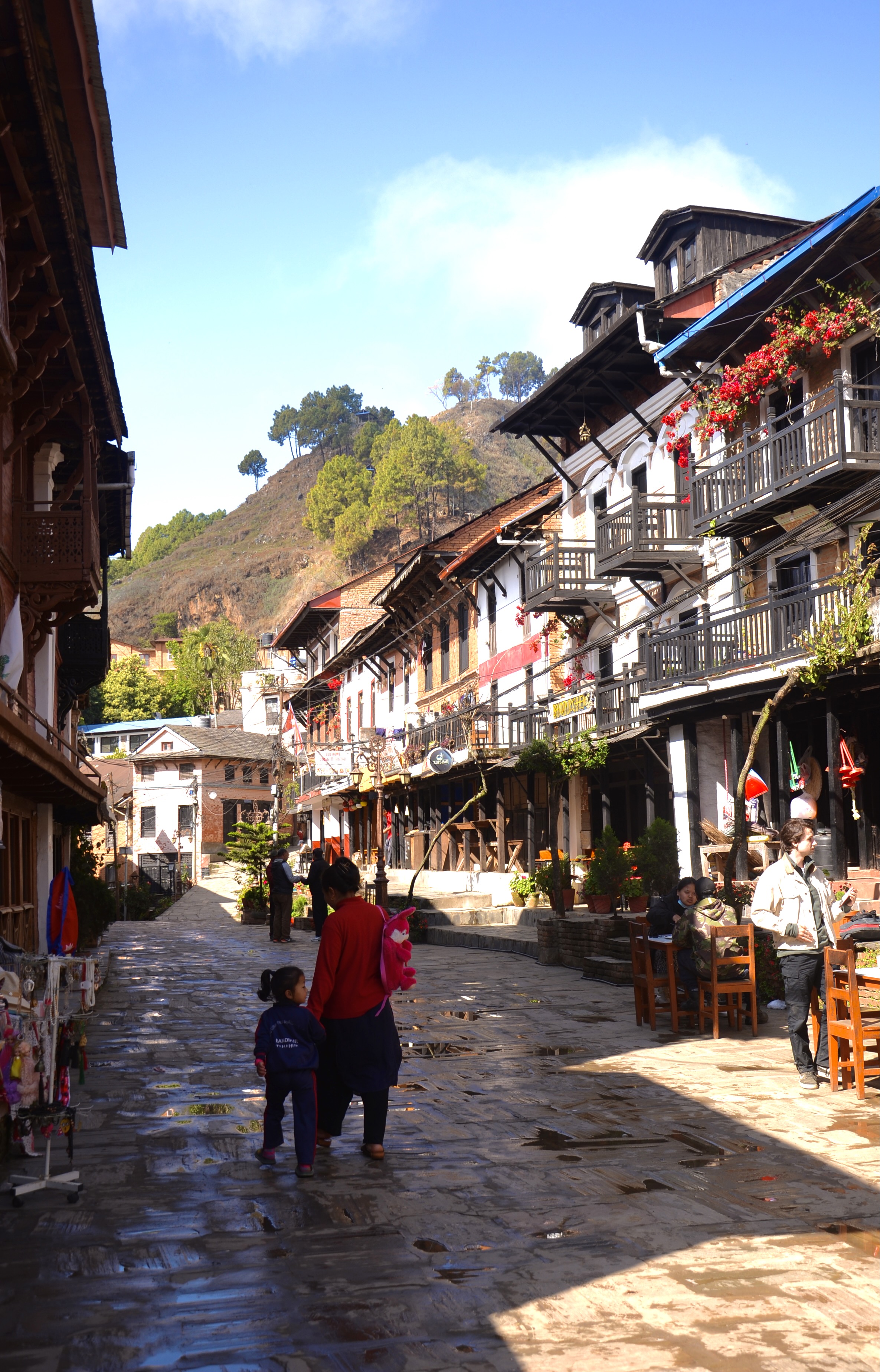
The town center has a Mediterranean feel. The stone-paved plaza is entered down several steps, so there is no traffic, not even a motorbike.
The peace and quiet is more than welcome . Even the dogs rarely bark, only the sounds of birds and school children break the silence . Bliss for me—I can actually follow a conversation again.
The center of town has scarcely changed since our first visit. Though Bandipur is geared toward tourists, they haven’t yet come in droves yet. Day trippers arrive for a few hours on private buses from Pokhara, and a few paragliders hang silently in the sky.
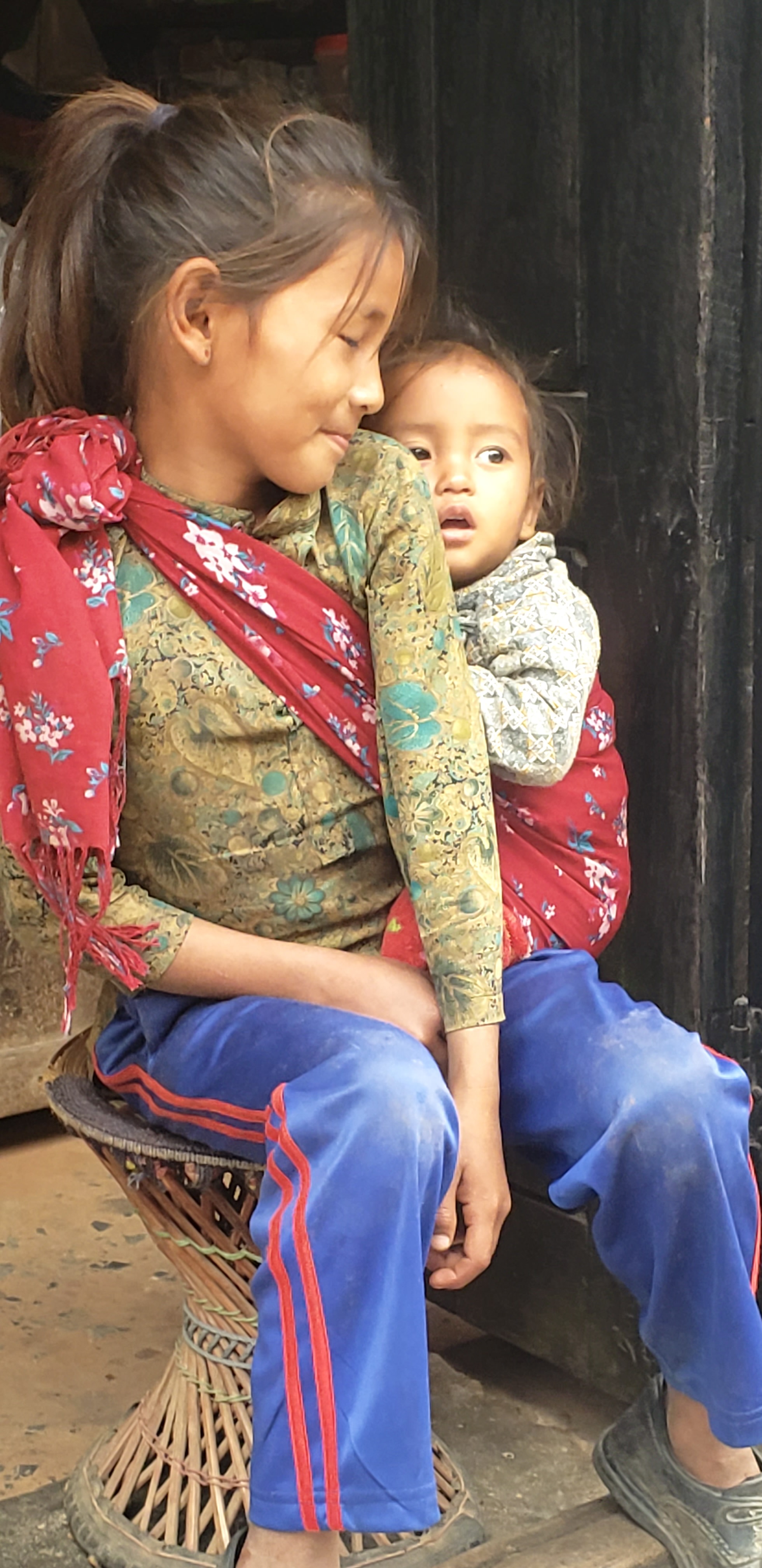
The locals are still welcoming and greet us with naamaste and a warm smile. The service couldn’t be better.
An old building at the end of the square has been beautifully restored in the traditional style and can be enjoyed for a mere $100/night.
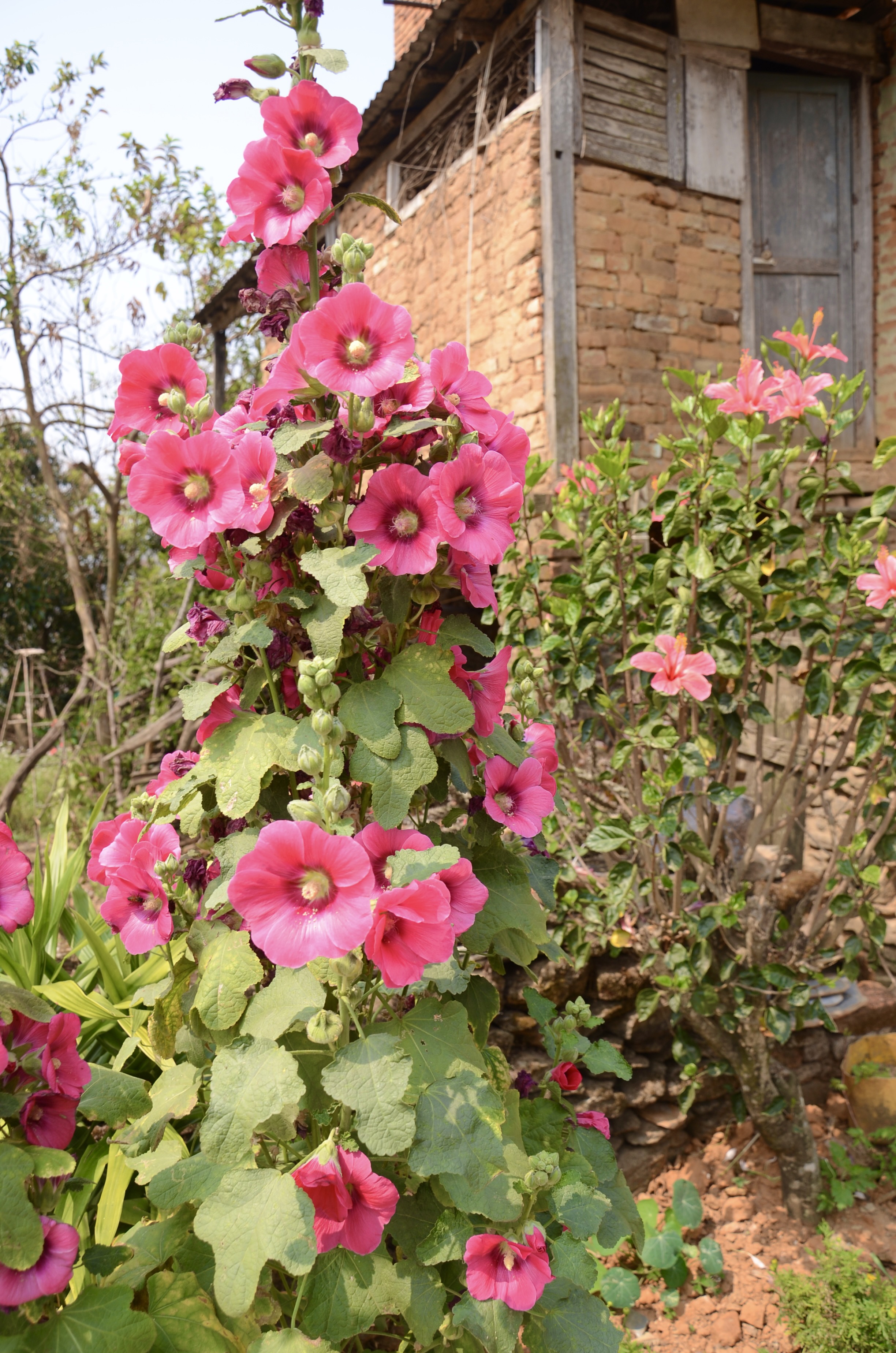
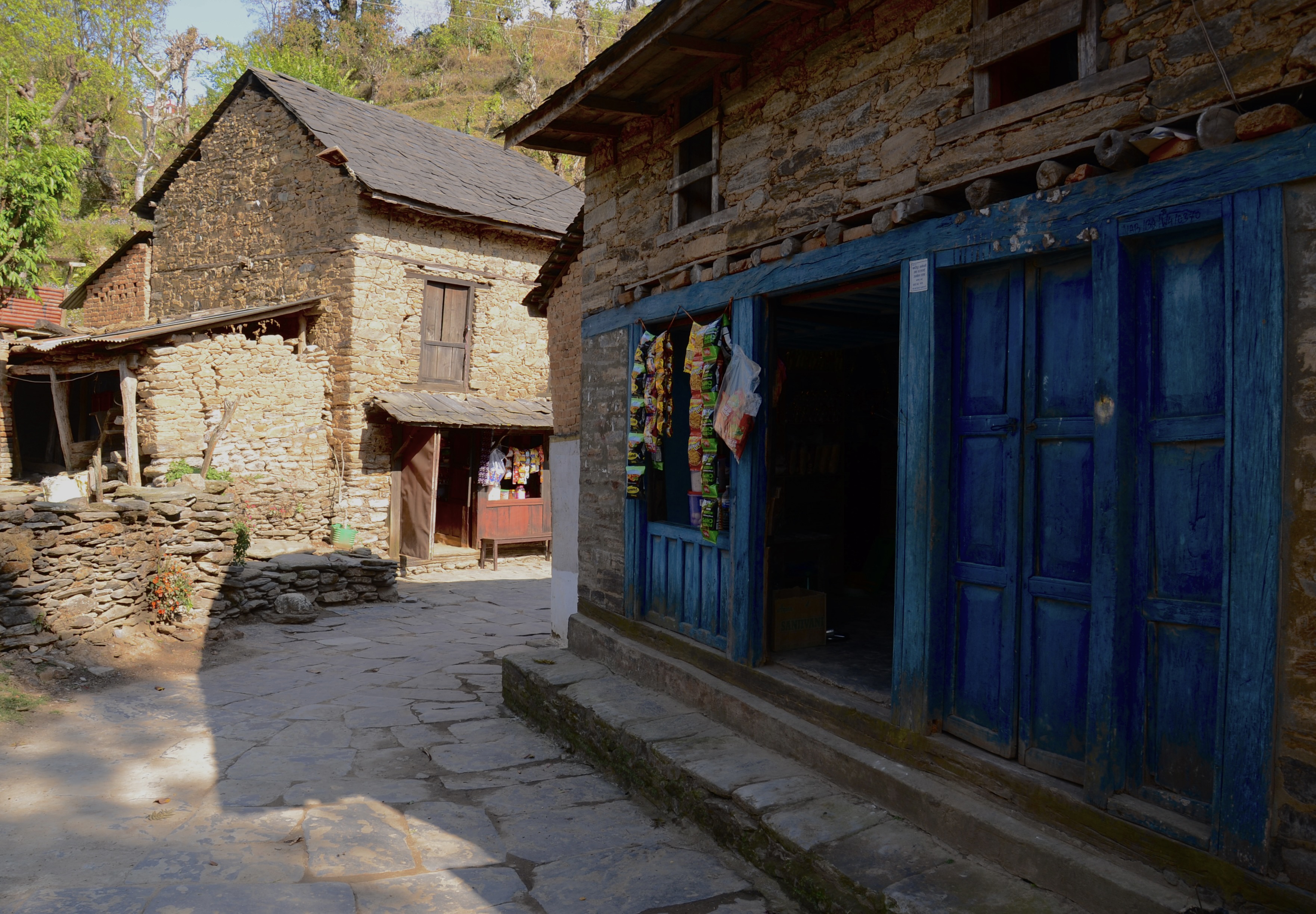
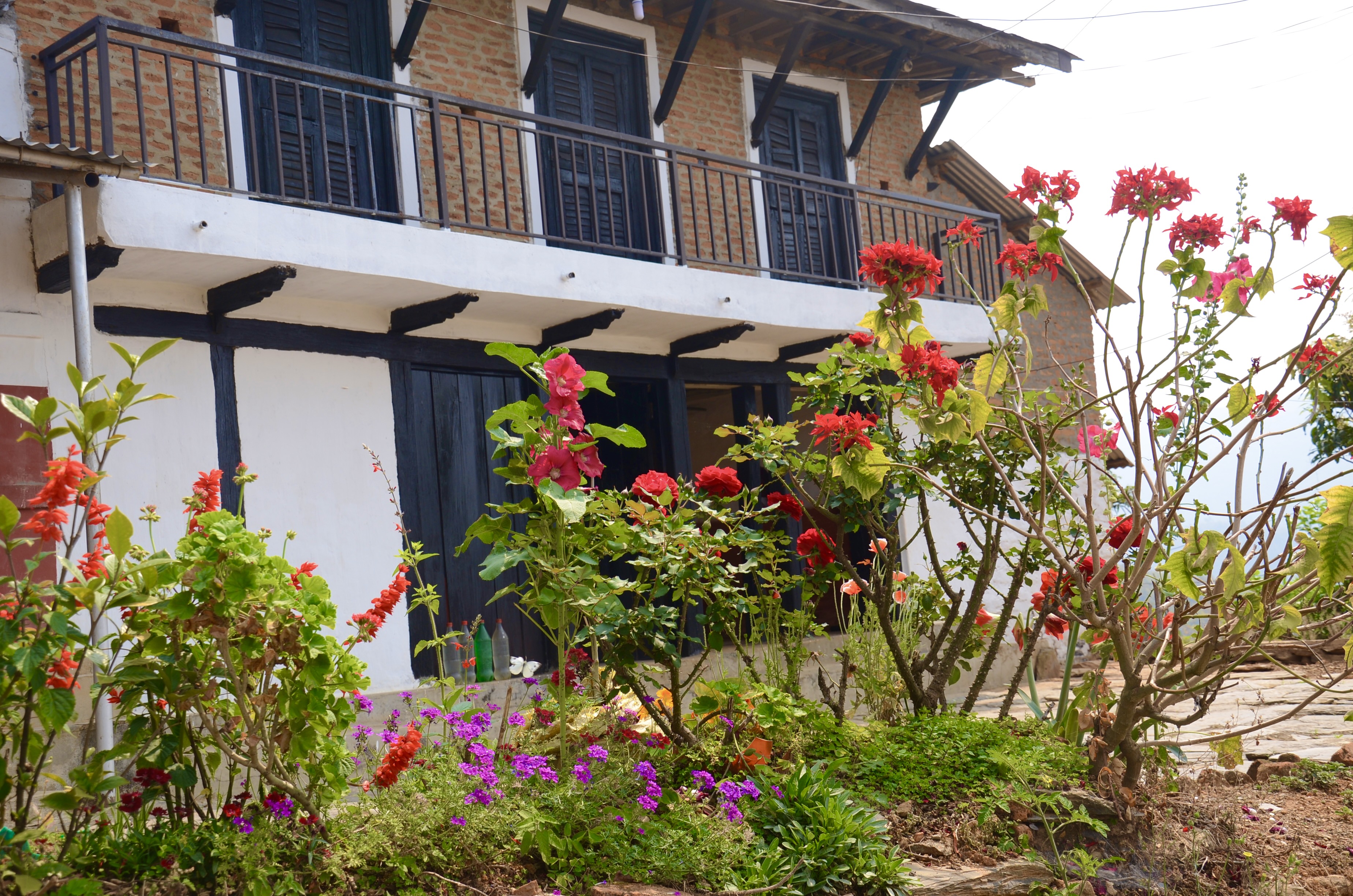
On a walk outside of town, more beautiful houses and flowers
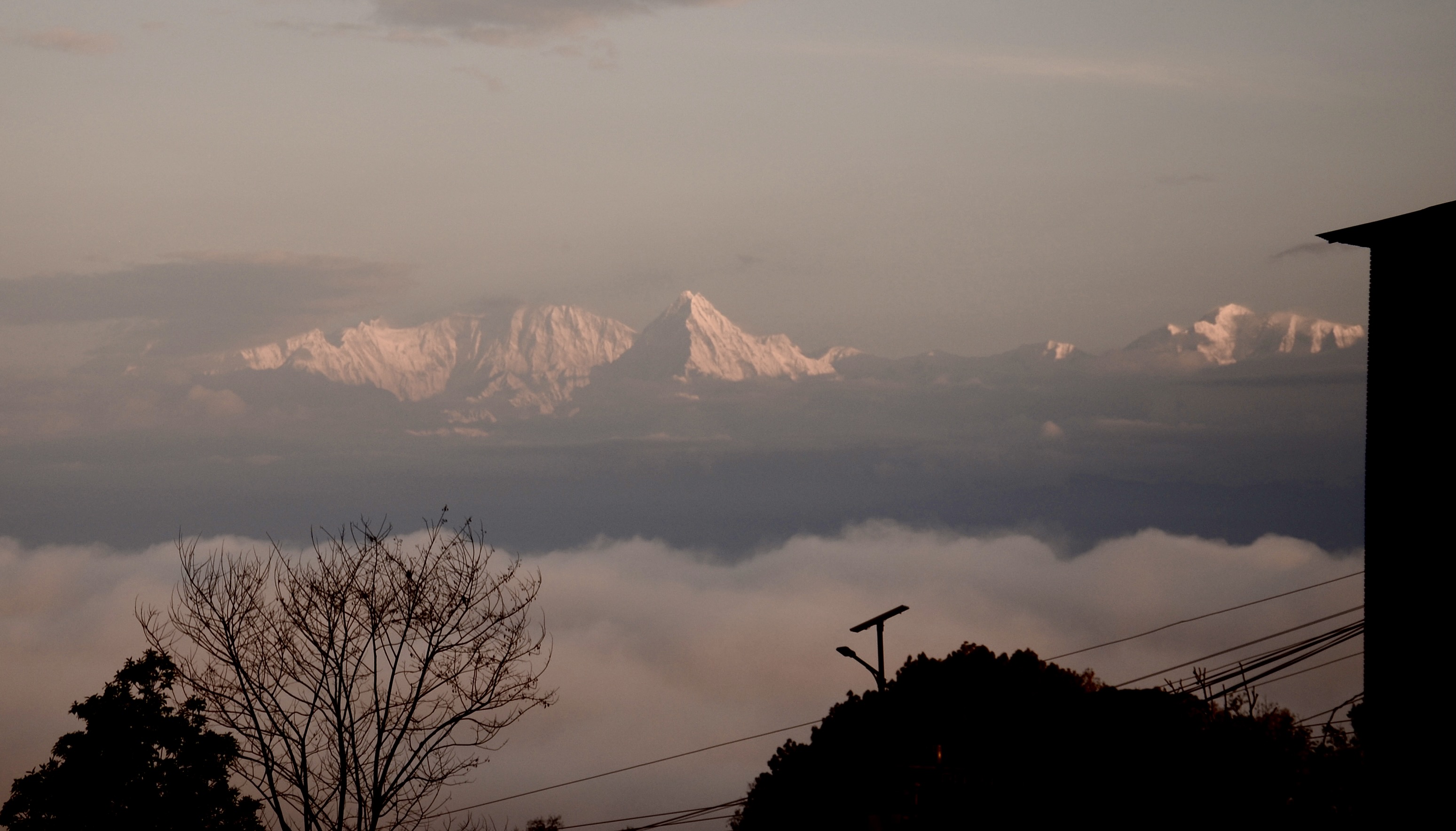
We have been in Nepal for three weeks and hadn’t seen the snow-capped mountains until this morning. After a night’s rain, in the early morning our rooftop gave us a grand view.
It’s not easy to get to Bandipur, but it’s well worth the effort.
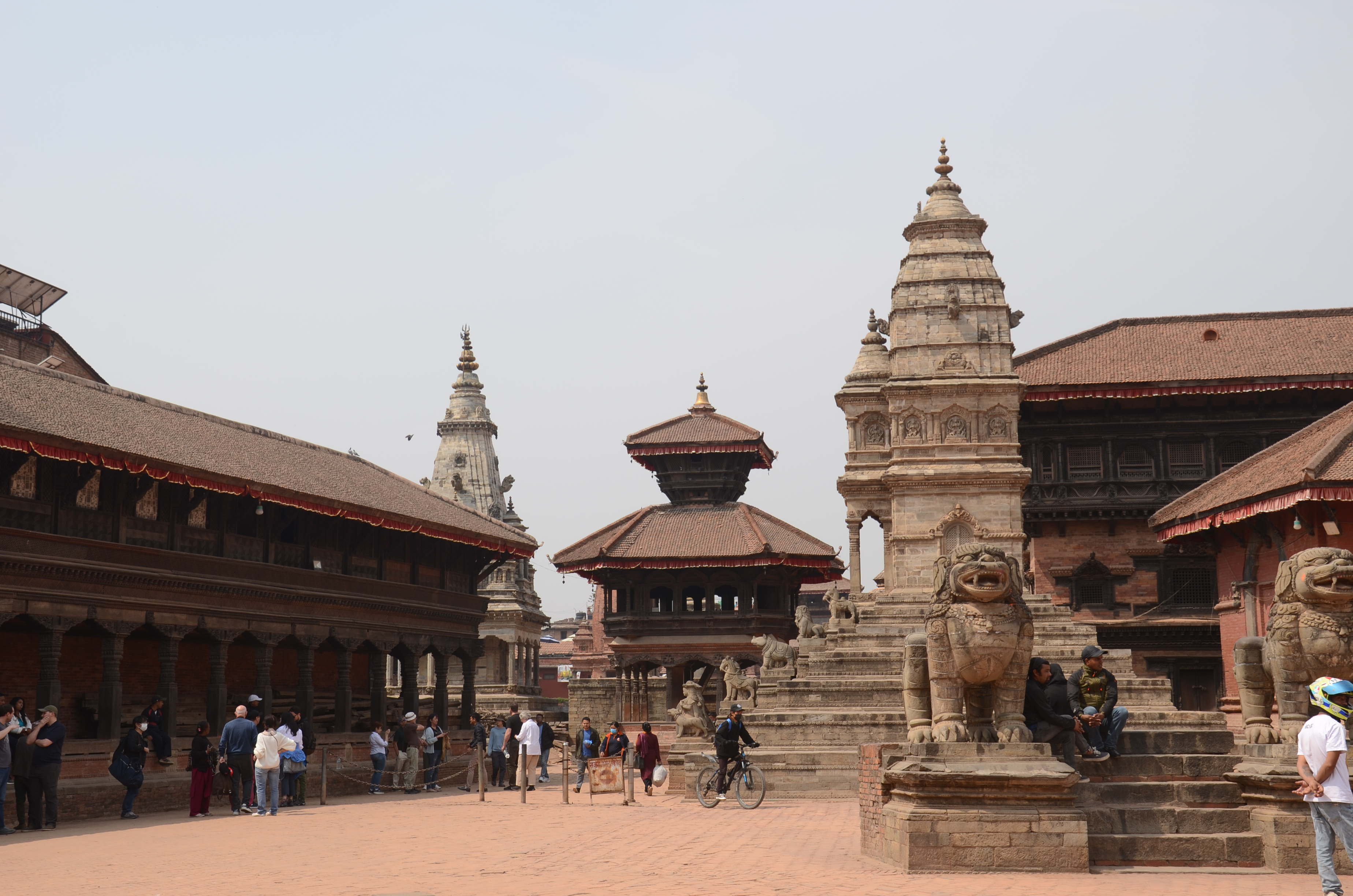
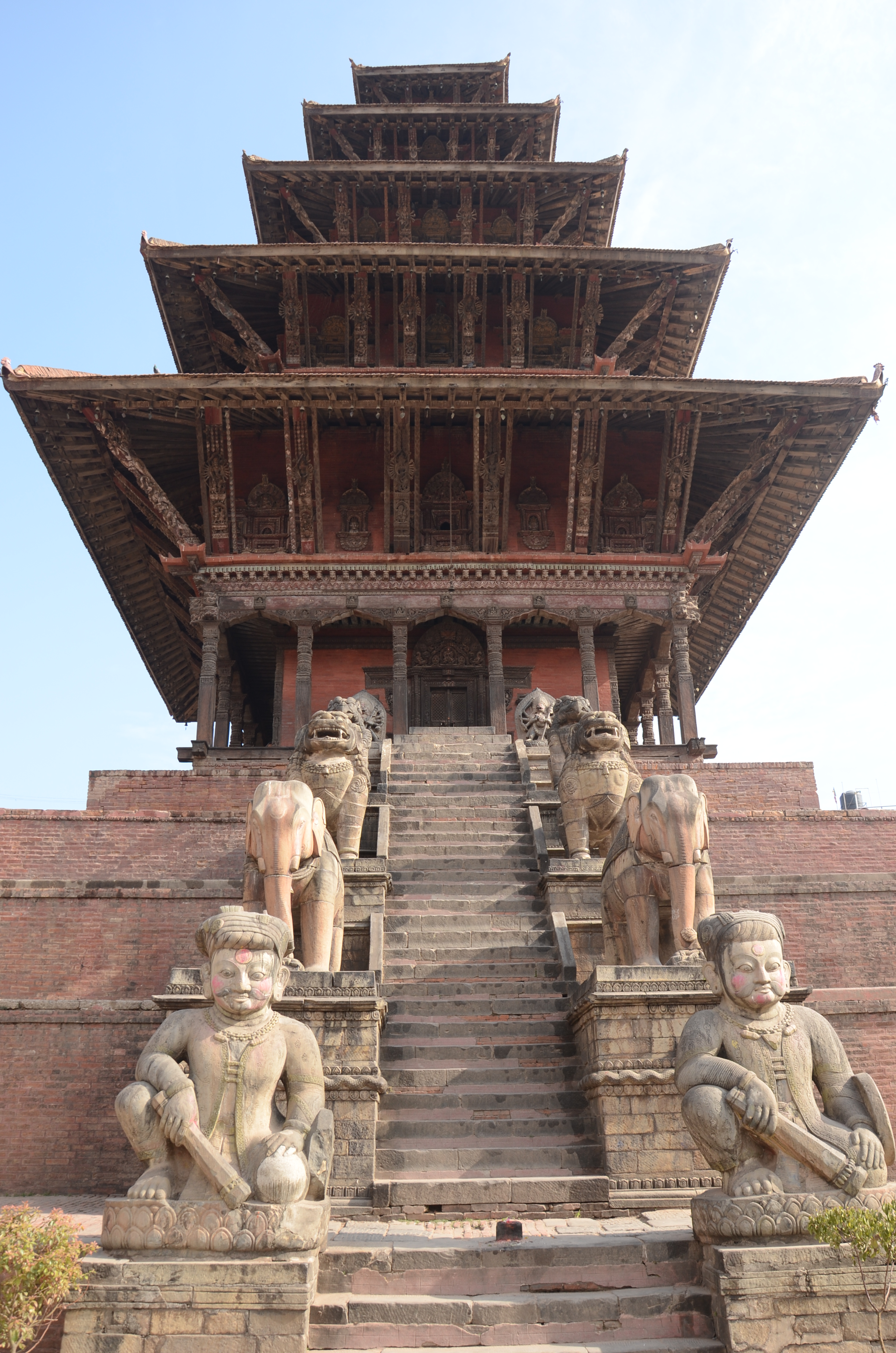
Our taxi brought us as far as cars could go inside Bhaktapur and the guesthouse owner came out to greet us. But he did not recognize our booking. “I don’t work with Expedia.” “But we’ve prepaid for seven nights!” He showed us a room. The pictures online had little resemblance, but our window looked right out on Taumaudh temple, the tallest in Nepal. “When is breakfast served?” I asked him, looking at the tables in the entryway. “Breakfast?” he said, “I don’t serve breakfast.” “But our booking included breakfast.” Mukunda, the owner was friendly but that didn’t make up for the overpriced room. It worked out in the end, we paid half of the asking price online.
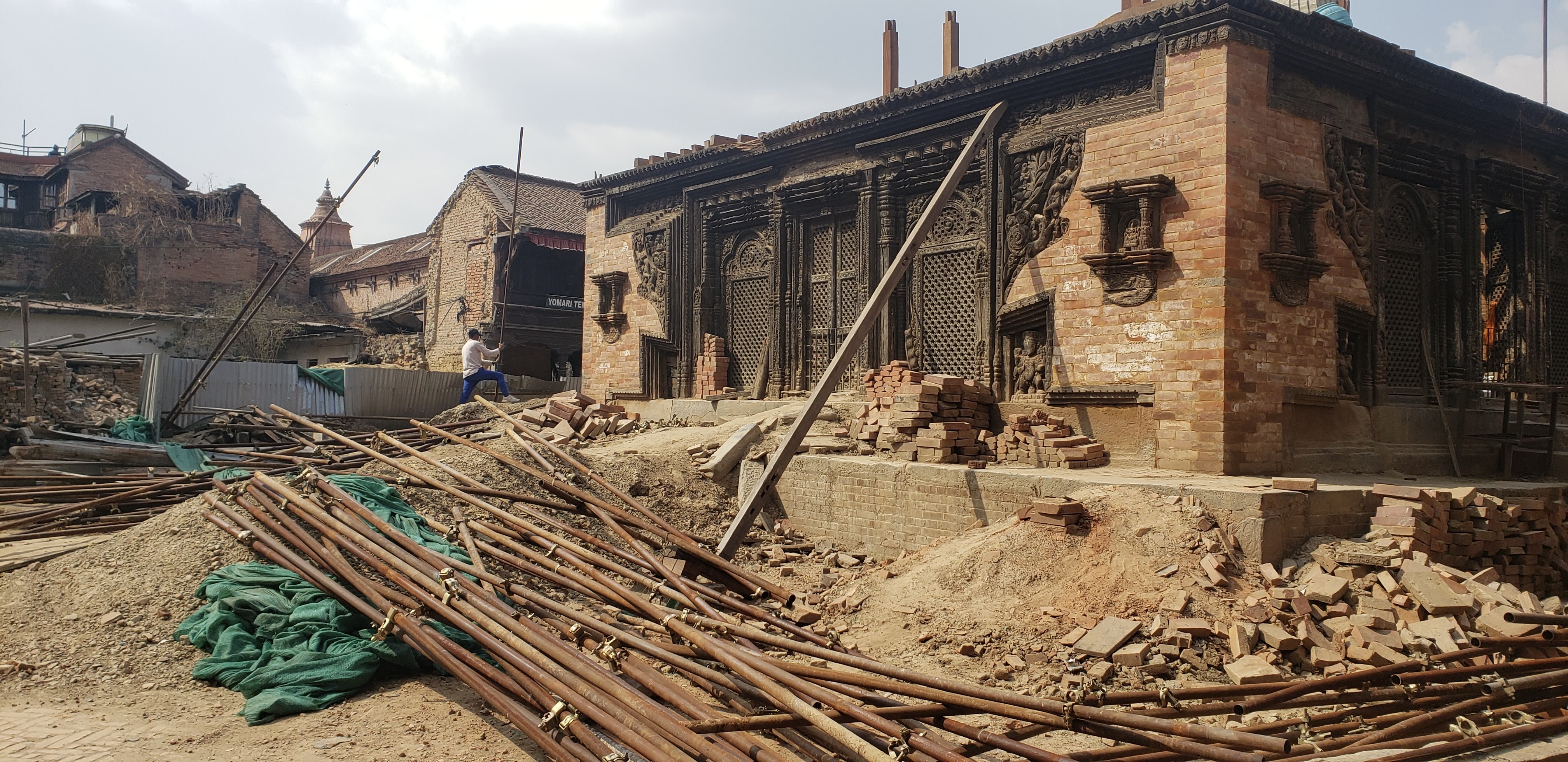
Bhaktapur was on our list of places to return, but after the earthquake (Bhaktapur sat at the 8.9M epicenter) we thought it would be too painful to see all its architectural antiquity destroyed. Time and tide…we had to go before we couldn’t.
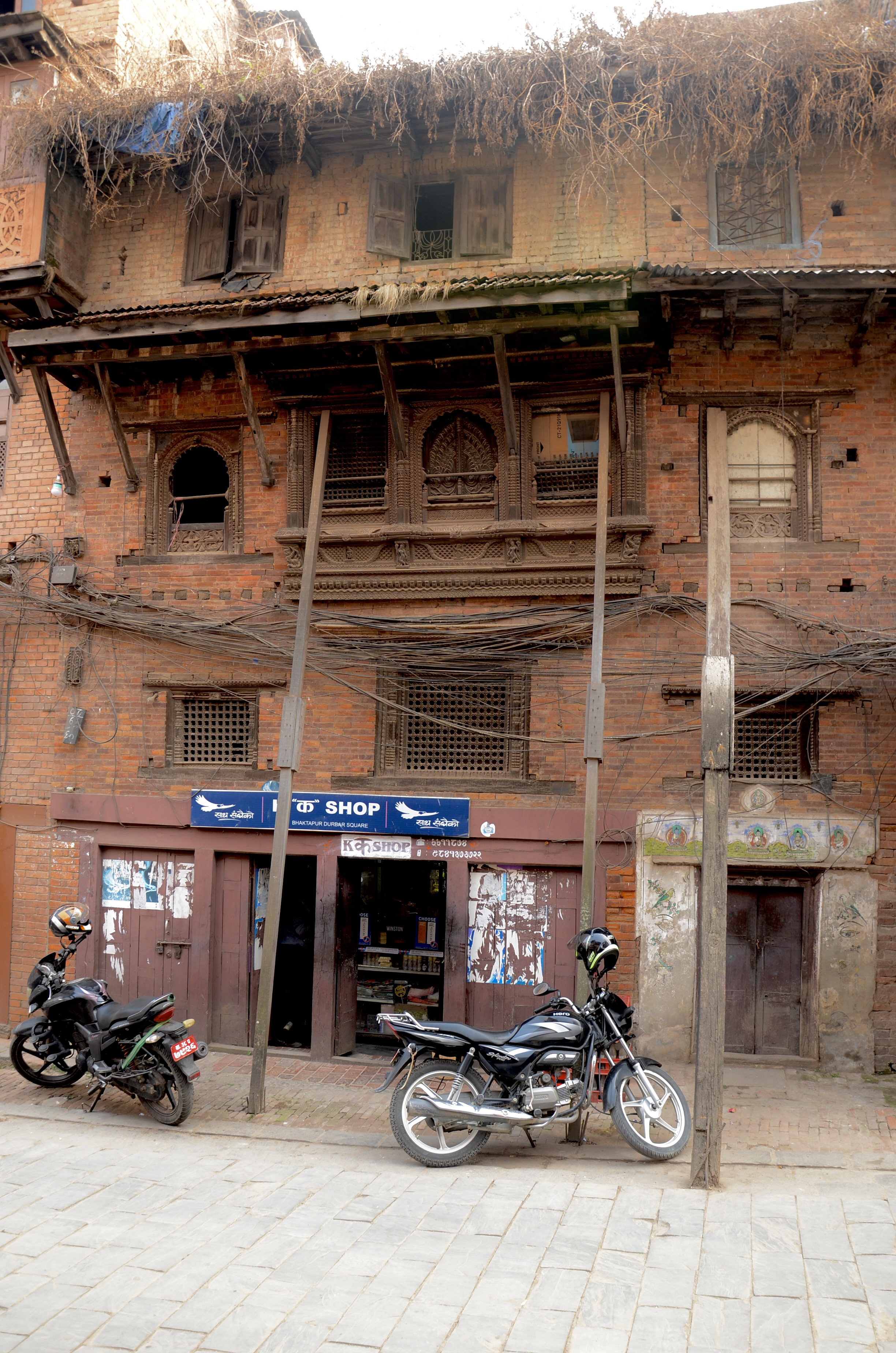
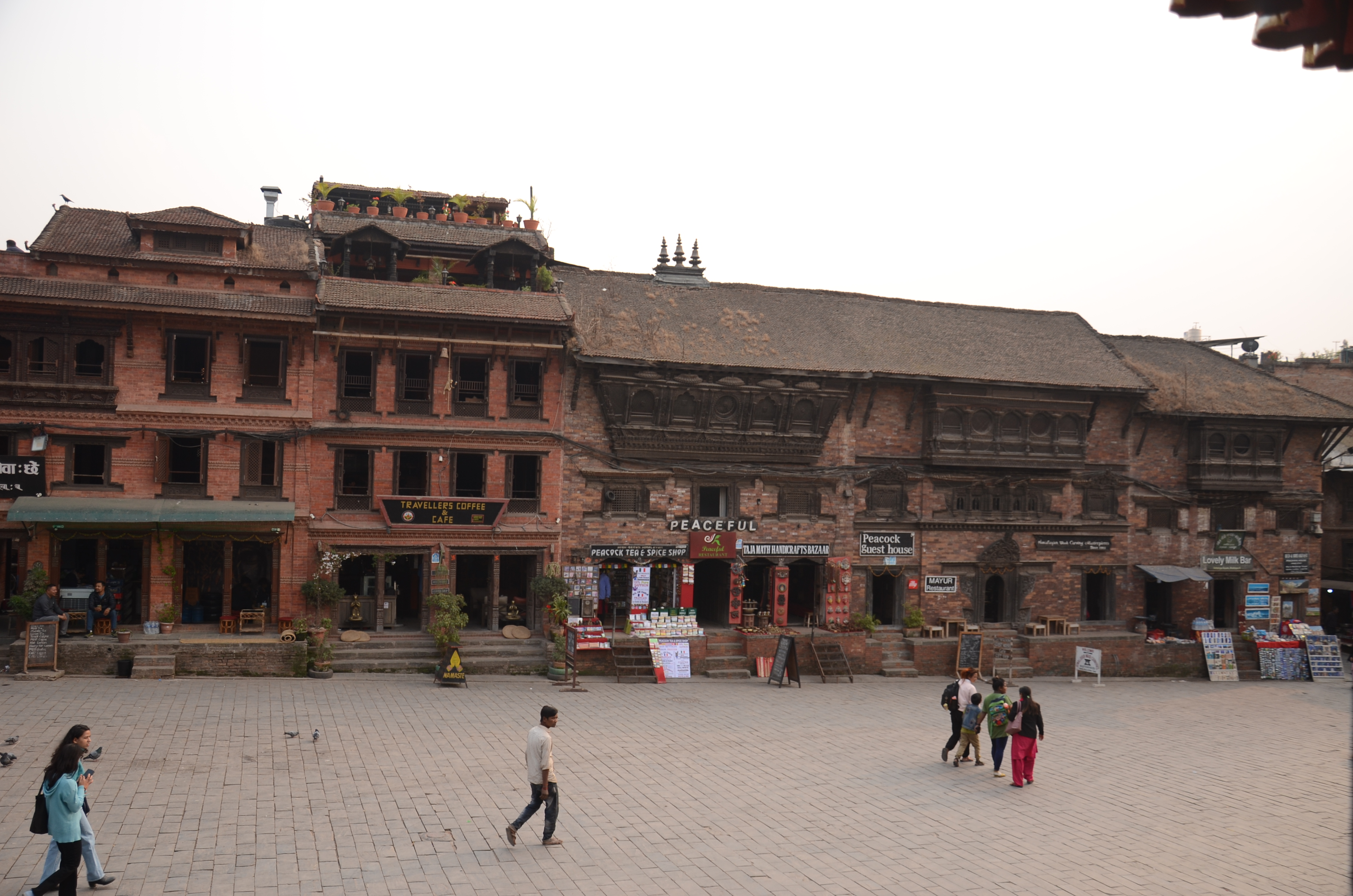
The old town (not the sprawling new one) was built between the 14th and 16thC. Three major squares are connected by narrow streets and alleys paved with flagstones. One of the advantages of the uneven surface is that that motorbikes, the only traffic allowed, are slowed down. In spite of dust from continuing construction, the city is still immaculate compared to India.
Apparently, 70% of the old buildings in the town collapsed while many of the new concrete homes survived. If the homeowner rebuilds with the traditional brick and carved timber front facade, the municipality reimburses up to 20%.
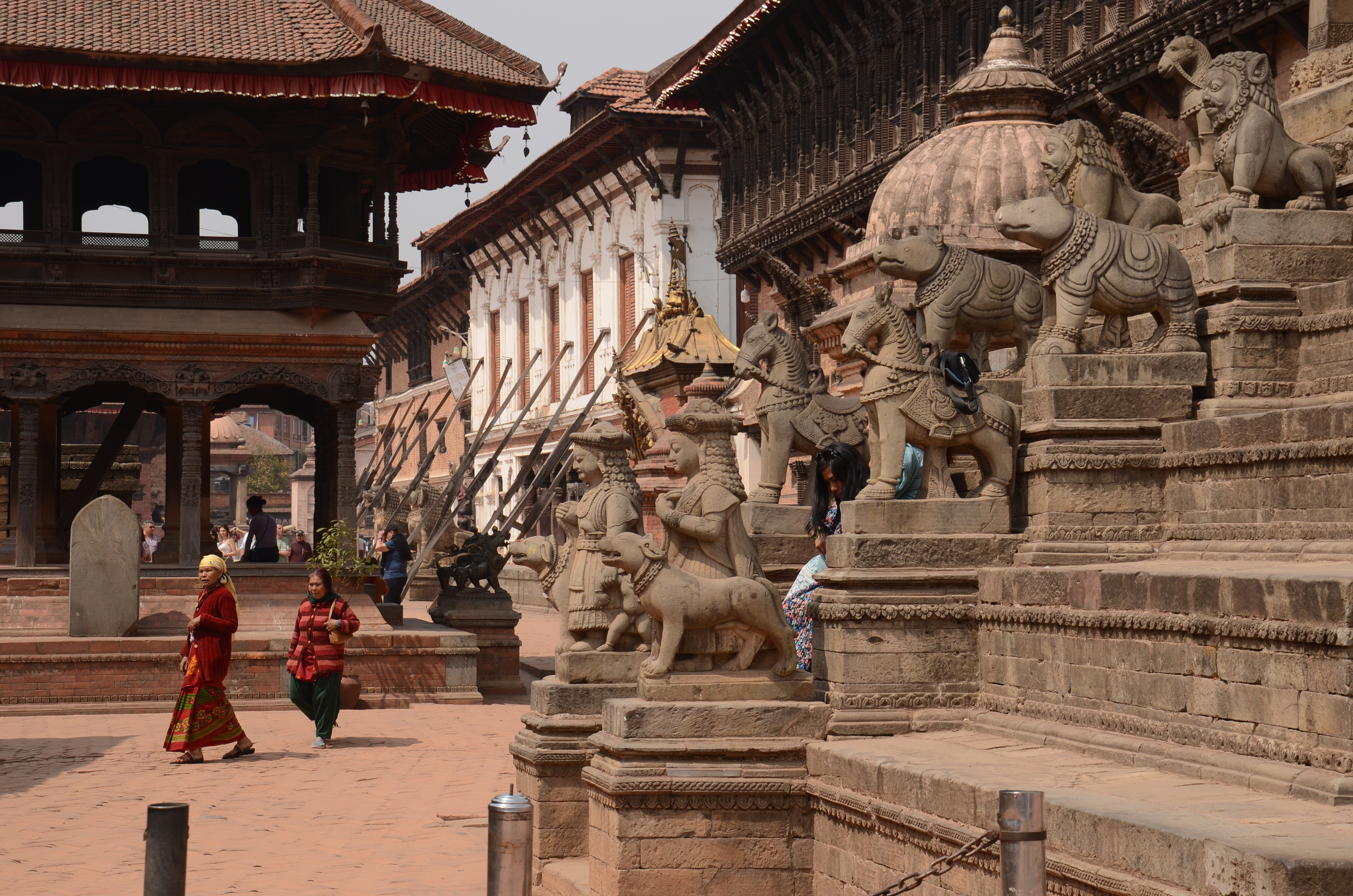
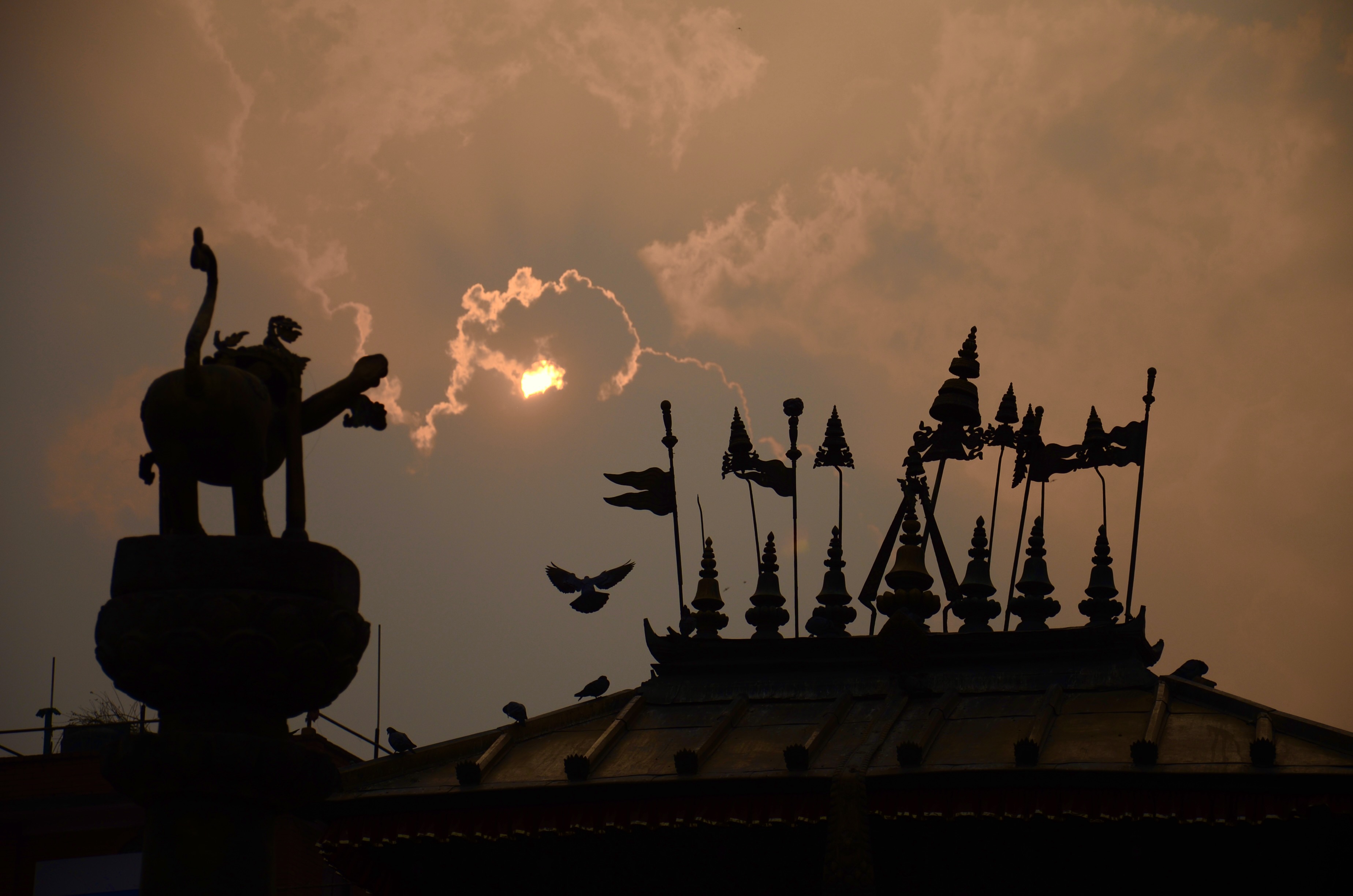
The Taumaudh temple remained intact in spite of its height while surrounding buildings collapsed. It’s enormous three tier base may explain why. Or the protecting statues along the ascending stairs did their job.
Across the square, another repaired temple houses a god that is so ferocious that no one, except the priest, is allowed to enter inside.
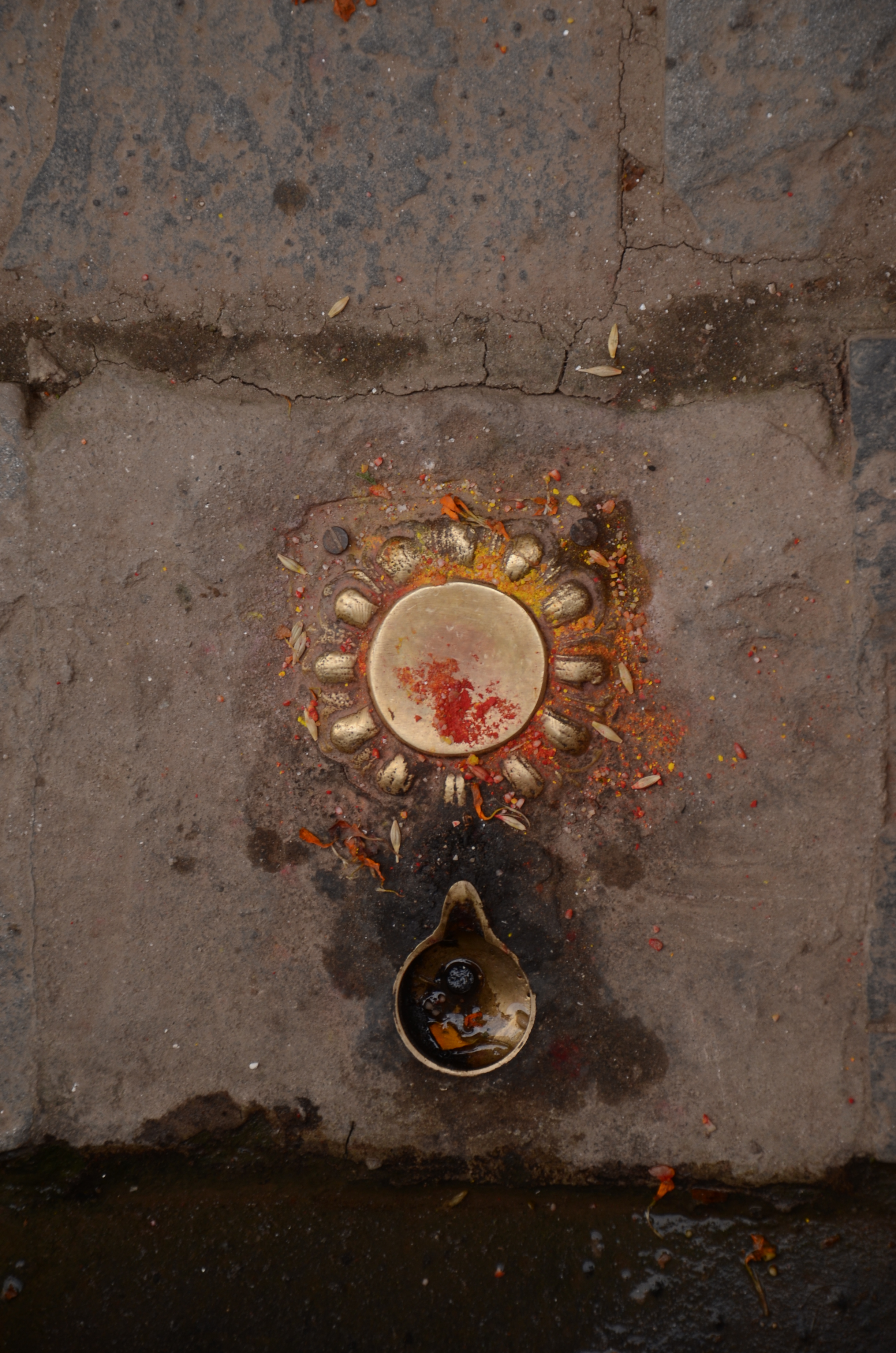
Life here is steeped in rituals. In front of every house a stone or bronze stylized flower is embedded alongside the paving stones to ensure safety and prosperity to the household. The “pikha lakhe” are lovingly blessed with flowers, rice and red powder.
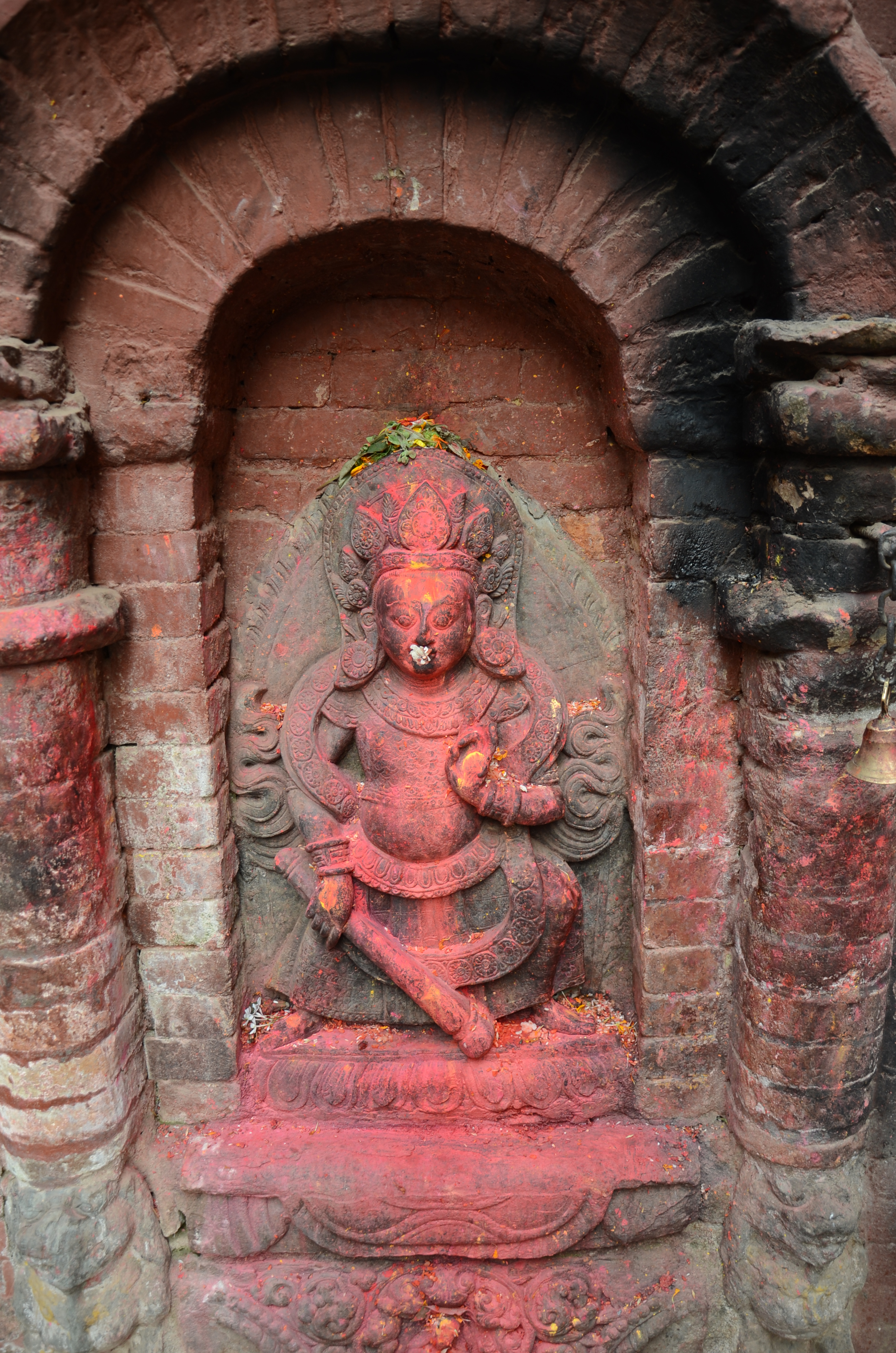
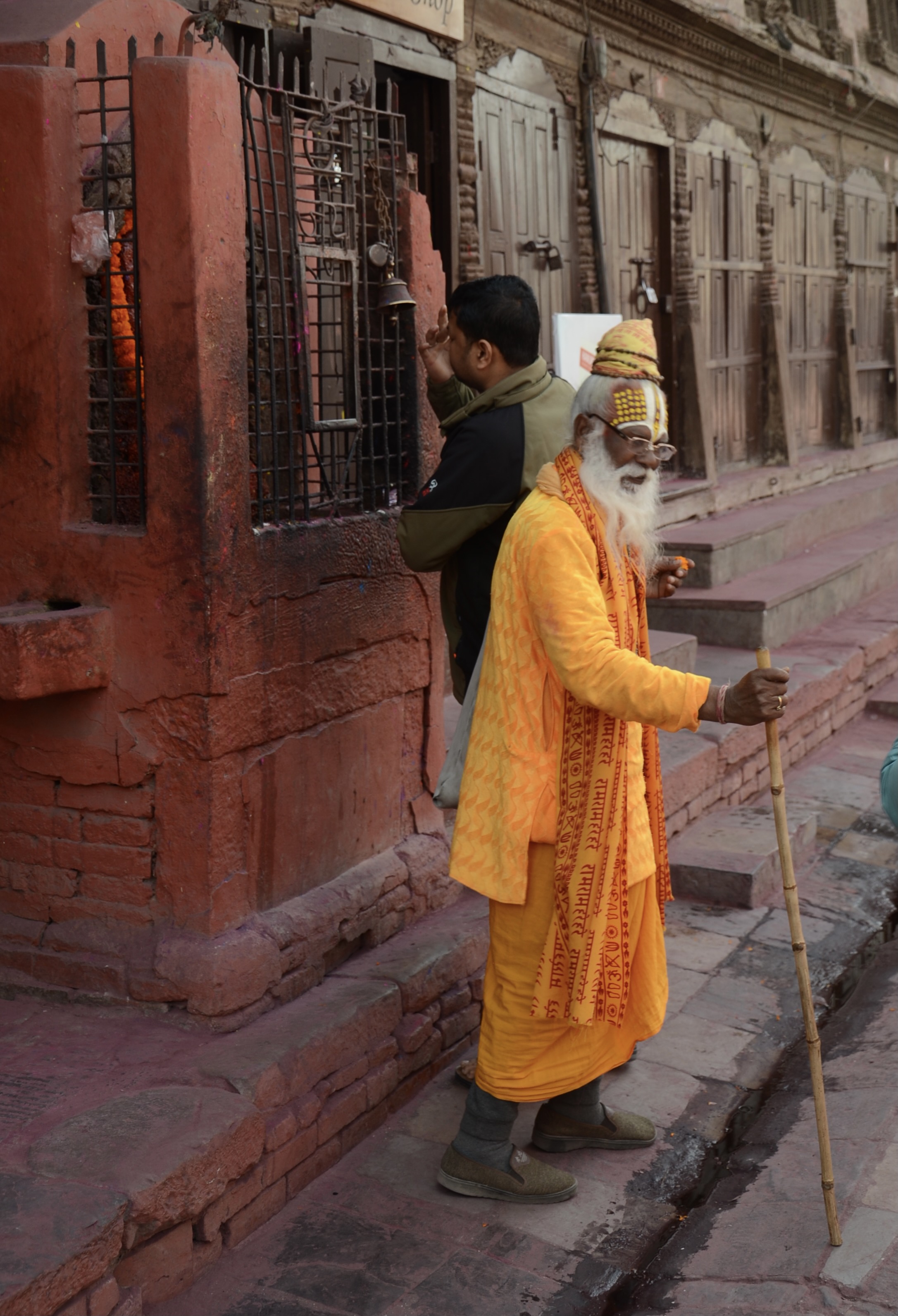
Around 4 am, the morning ritual begins with the ringing of temple bells by people passing by. With my bad hearing, the different size bells, ringing at intervals, sound like an avant guard jazz performance. Women bring trays of offerings to the ancient statutes of deities. After paying homage, they smear the red powder on their third eye.
In Bhaktapur, young and old alike take their rituals very seriously, lighting candles, touching the deity, then their forehead. As they leave, they take a flower and place it on their head. Every evening, older men sit in front of the temple and chant. One explanation for so much ritual could be Nepalis have incorporated both Buddhism and Hinduism.
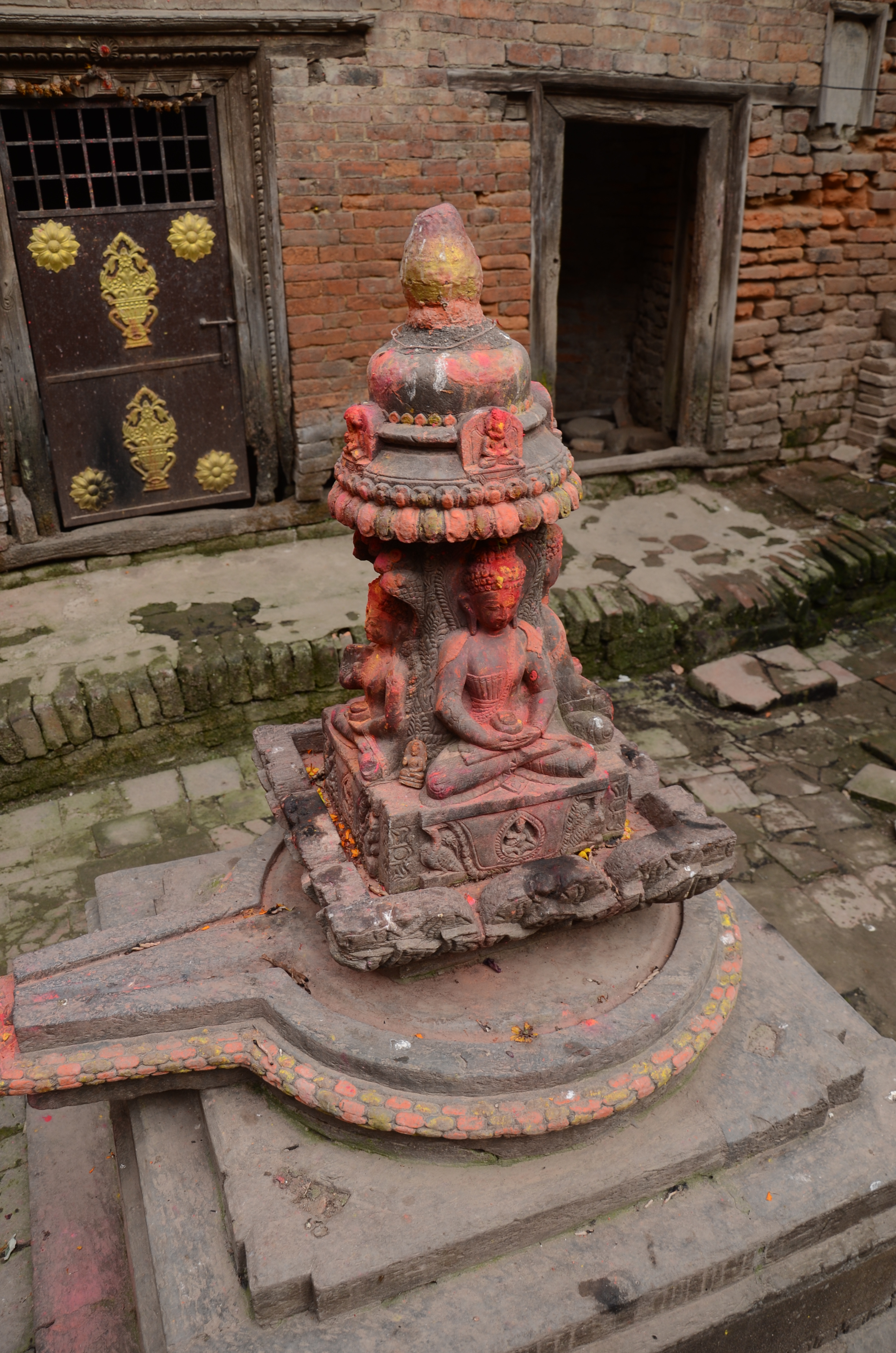
Buddhist figures sitting on a Hindu Shivalingam
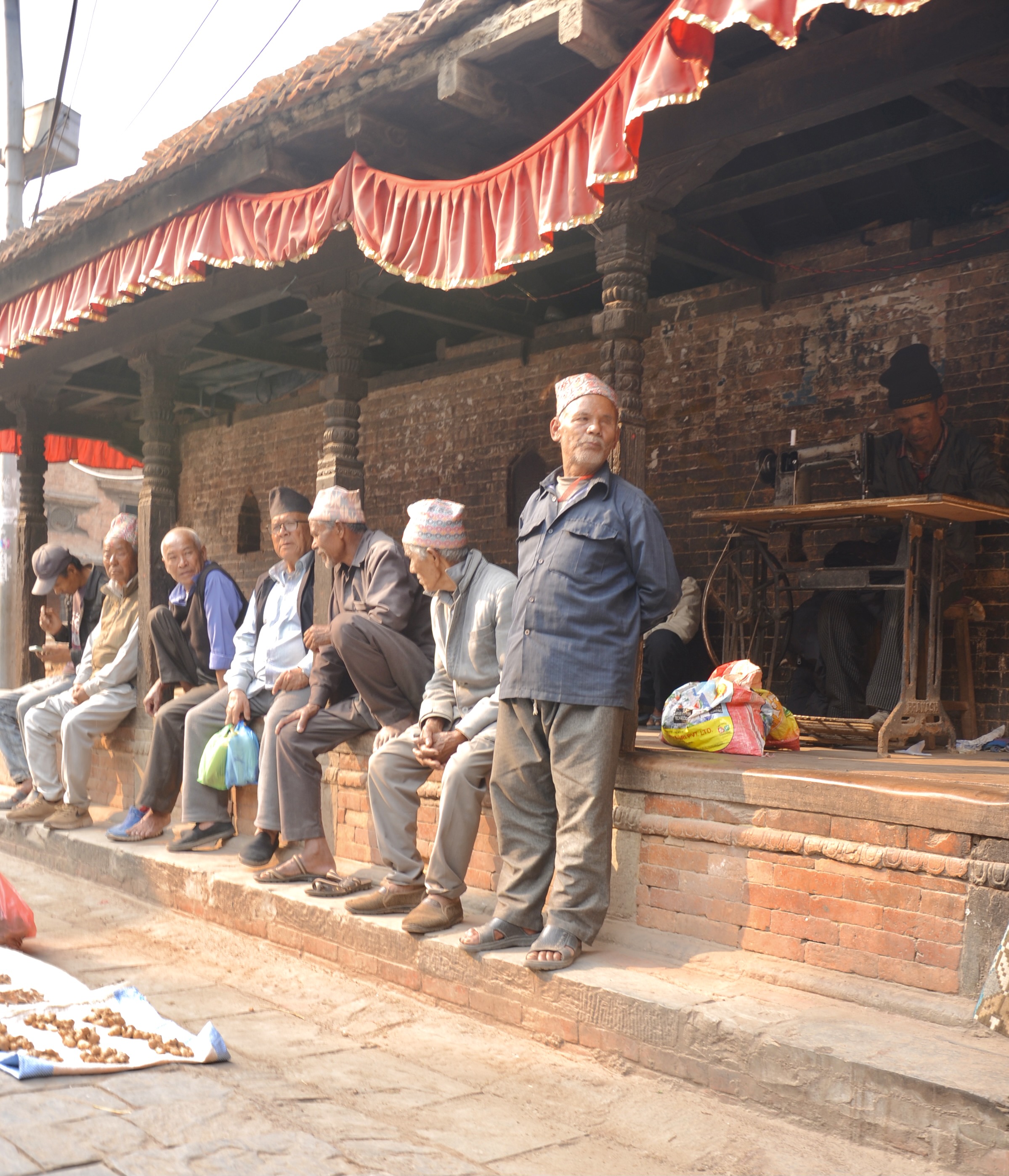
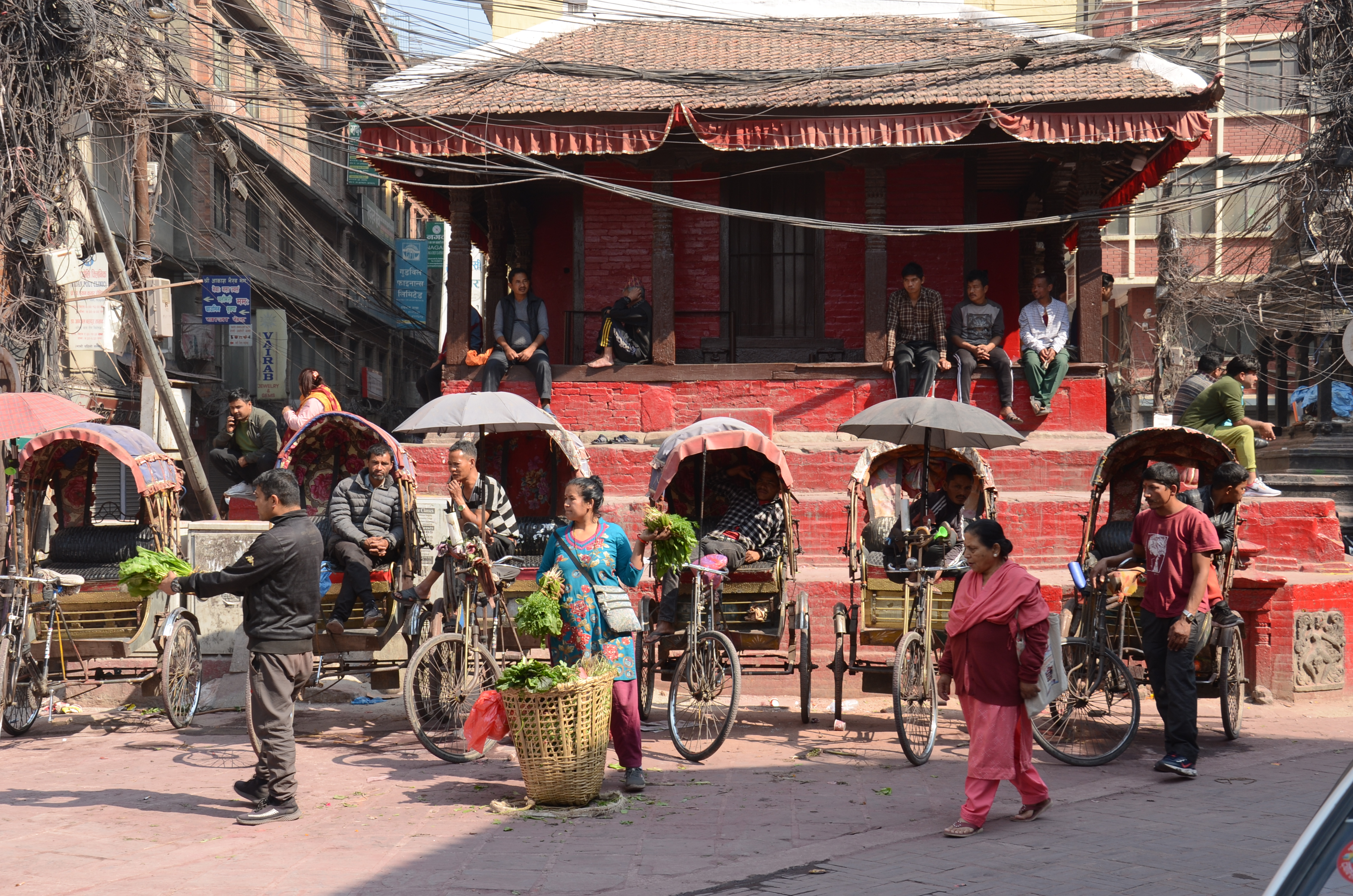
Unique to Bhaktapur are “patis”, covered sitting areas where old men hang out, chatting or playing cards.
With most of the restaurants and hotels run by young men, where are all the middle-aged men? With few work opportunities, many have left to find work or study abroad leaving the women to fend for themselves.
The guesthouse owner, Mukunda, was sympathetic of my hearing loss and told me about his Downs Syndrome 17-year old daughter. He took us to see her school.
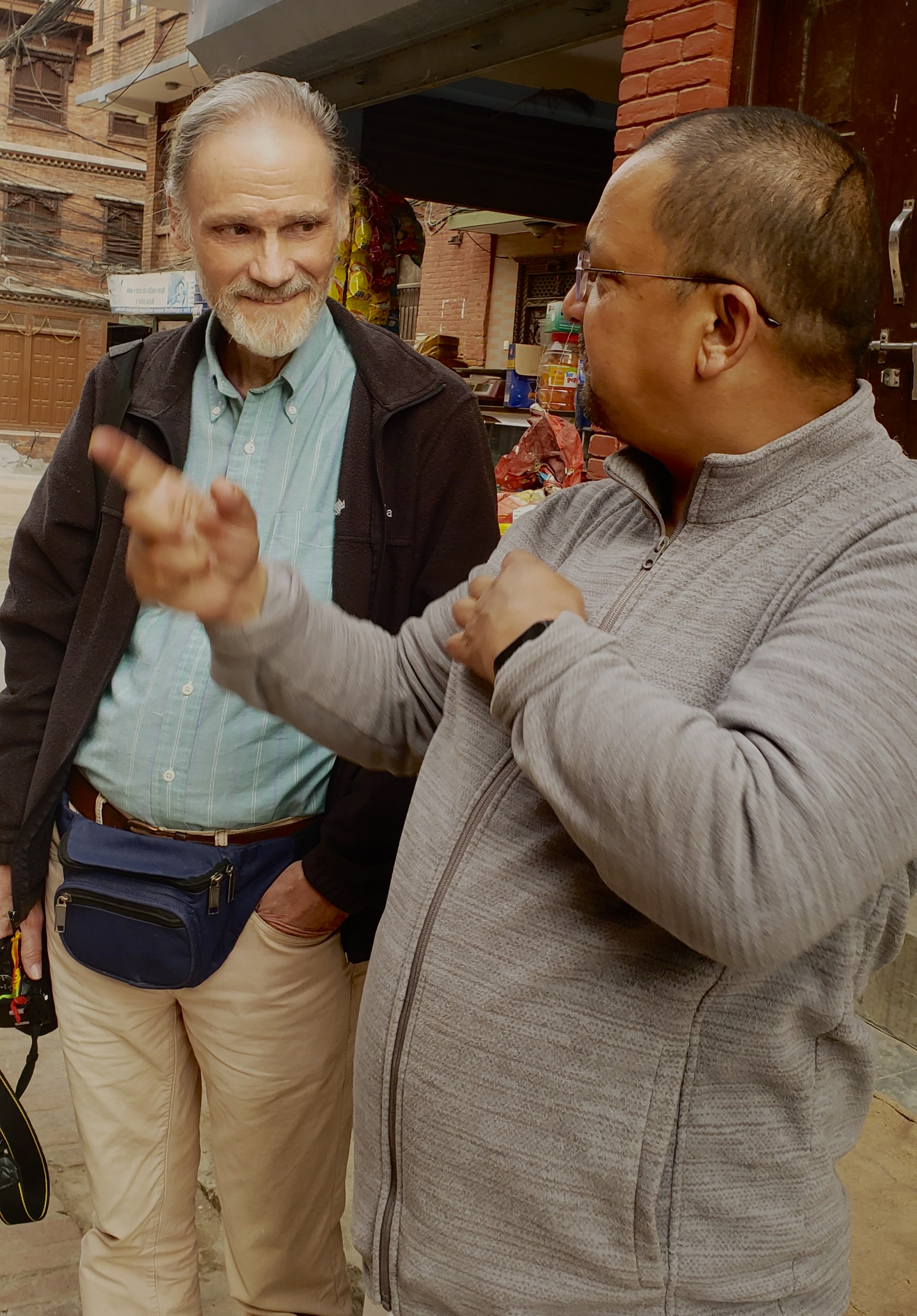
Gerard conversing with Mukunda
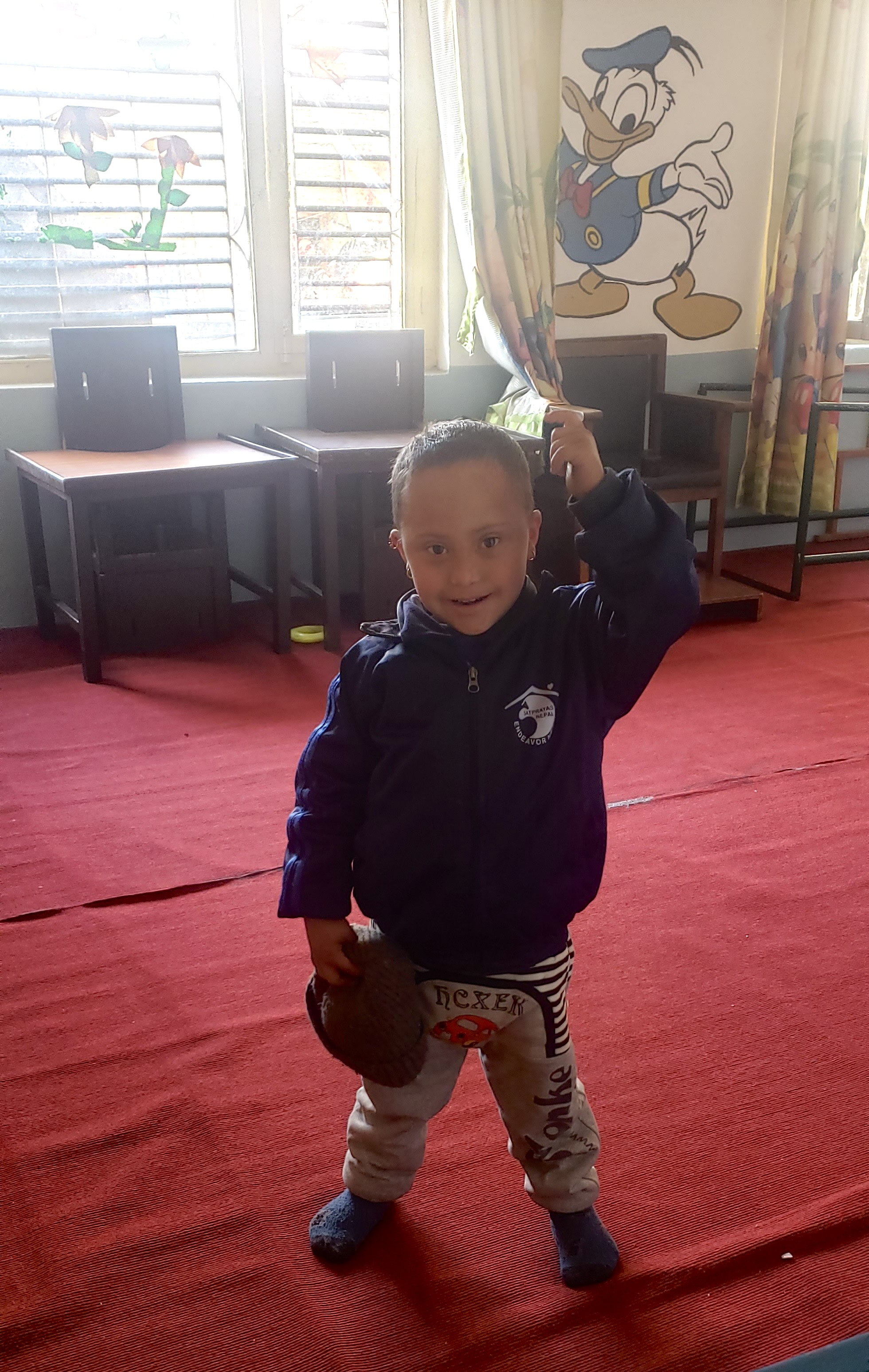
The first person we met there was an English volunteer, the other, a young physical therapist massaging the atrophied legs of Mukunda’s daughter. It was hard for me to take in; she didn’t even recognize her father’s voice. The school has 45 students, one of them a little boy was playing by himself silently in a corner. His face lit up when I went over to play with him. What a Godsend to have this school here for these children.
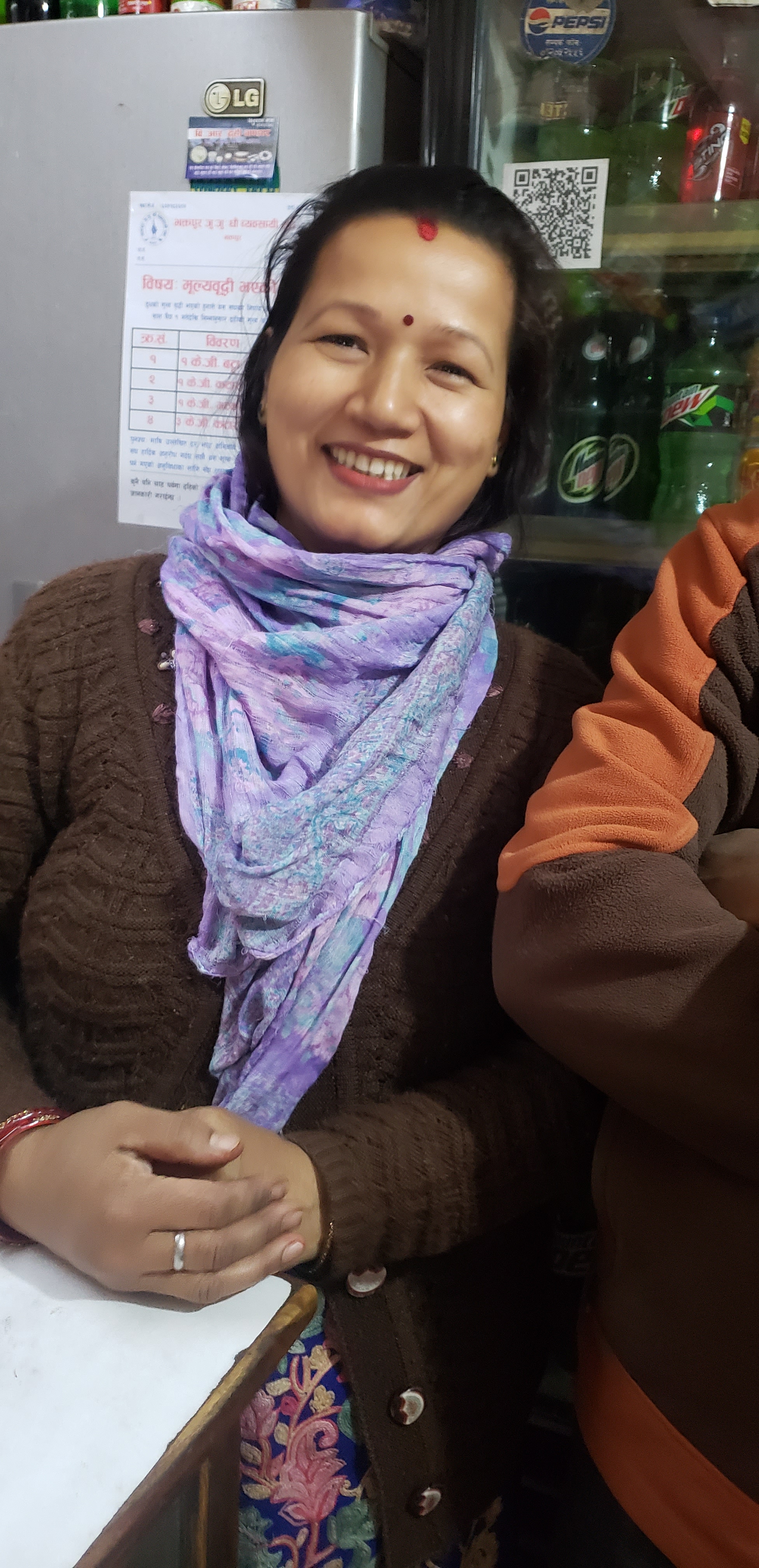
With all the changes here, we were pleased to find the tea and curd lady still in business. In India, you can always count on getting a good chai made by Nepali cooks. But in Bhaktapur they began making coffee for the tourists. Now everyone is drinking coffee and it’s hard to find tea anywhere.
In spite of air pollution and the painfully slow restoration we were glad to return. In our travels, Bhaktapur still remains unique.
Flying toward Kathmandu, the line of snow-capped mountains on the horizon looked more like a bank of clouds in the blue sky. But then we dipped down for landing into a blanket of smog. Once on the ground, we were glad of our face masks. Traffic was heavy, with mostly motorbikes, but unlike in India, Nepalis don’t sit on their horns. The level of street noise was more bearable for my now noise-sensitive ears. The population has exploded like in India.
Happy at leaving Varanasi before Holi (not our favorite festival), only to find the Nepalis also celebrating. Youth and children roamed the streets throwing color until evening when things calmed down. We should’t have been surprised since Hinduism and Buddhism are practiced side by side in Nepal. Buddhist statues sit alongside Hindu deities at all the monuments.
Nine years ago, just before the 2015 earthquake, we came here not knowing what to expect. How could we have known history would come alive through the architectural wonder of Durbar Square in both Patan and Kathmandu? We were apprehensive about returning, to face the devastation coupled with reports of increased crime and prostitution in Kathmandu. But we didn’t see it and were glad to be back.
Thamel, where the budget hotels are located, is still a rabbit warren of narrow cobblestoned streets. Tourists and trekkers seem way down but maybe because the season hasn’t started yet. Everybody seems to be on the hustle but you can’t blame them; tourism and so much else hasn’t recovered since the earthquake.
Gerard asked a few locals where they were when the earthquake hit. Among those we spoke to, no one knew anyone who died. Today the city is still a mix between empty lots and construction. In spite of foreign aid pouring in, it’s rumored that rebuilding didn’t start for years. One explanation: “If we did the repair work, the money would stop coming.” But there are other reasons including lack of organization and finding skilled artisans..
Still vibrating with the impressions of Varanasi, Durbar Square with its intricate architecture and wood carving required a cultural shift in our attention. Even though this was our second visit, the beauty of this 3rdC Royal Palace complex was a feast for our eyes and in much better condition than we’d expected.
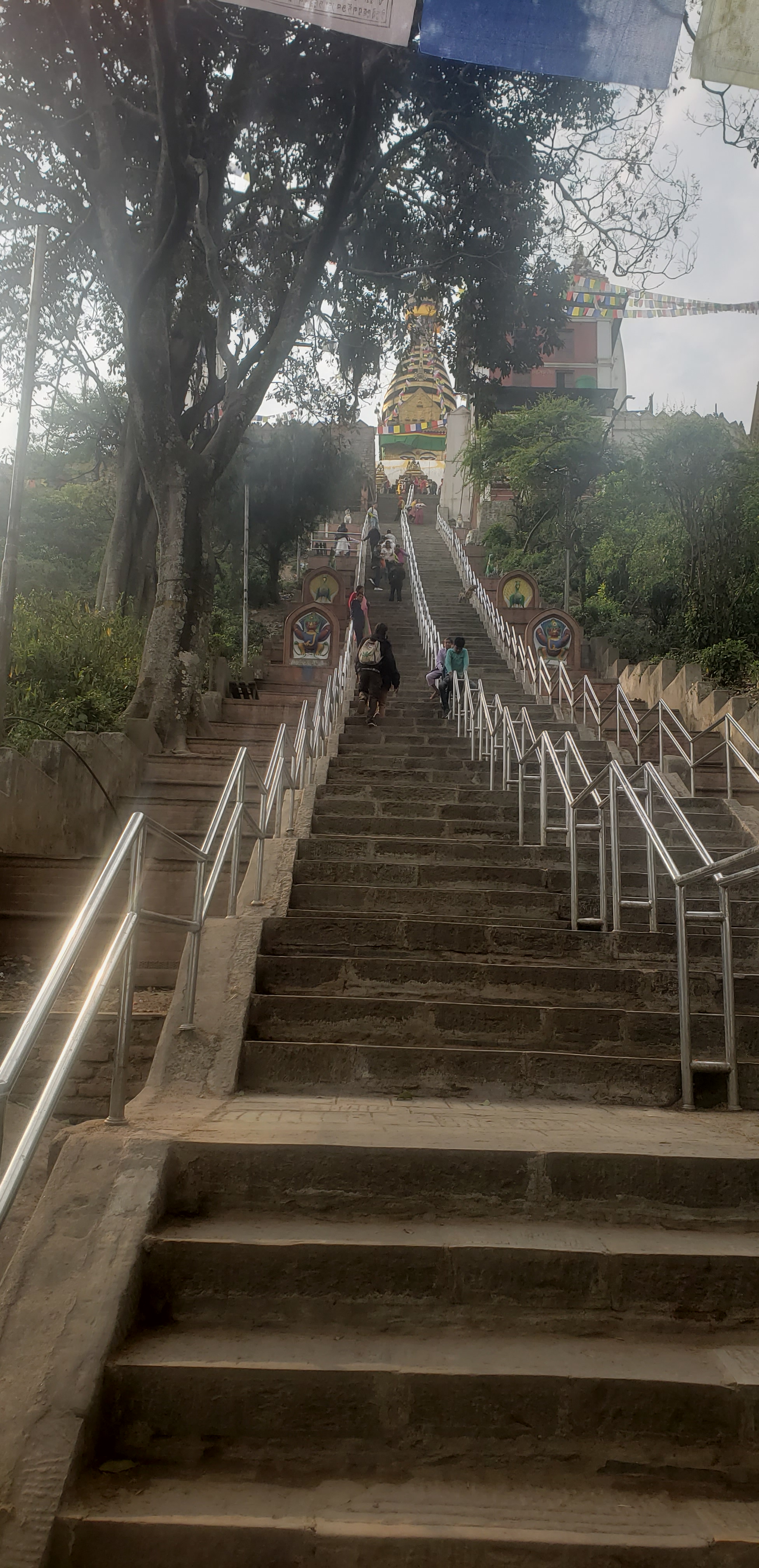
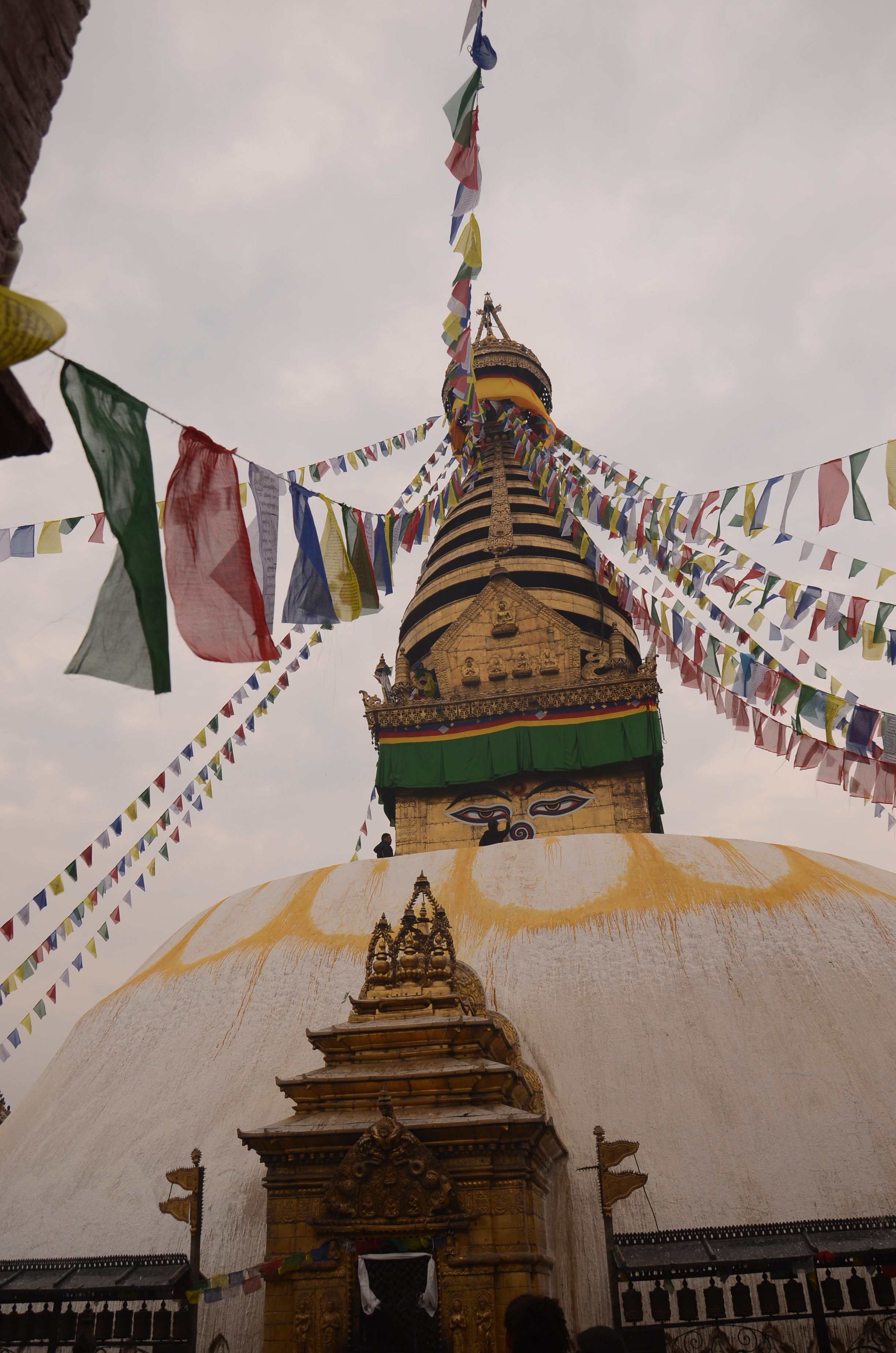
Next day we waited for the drizzle to stop, then climbed up the 365 steps to the Swayambhunath or Monkey Temple.
Nine years ago, the steps were of no consequence. So many changes during those years. Surprisingly, the hundreds of stone deities of both religions surrounding the large Buddhist stupa, escaped unscathed.
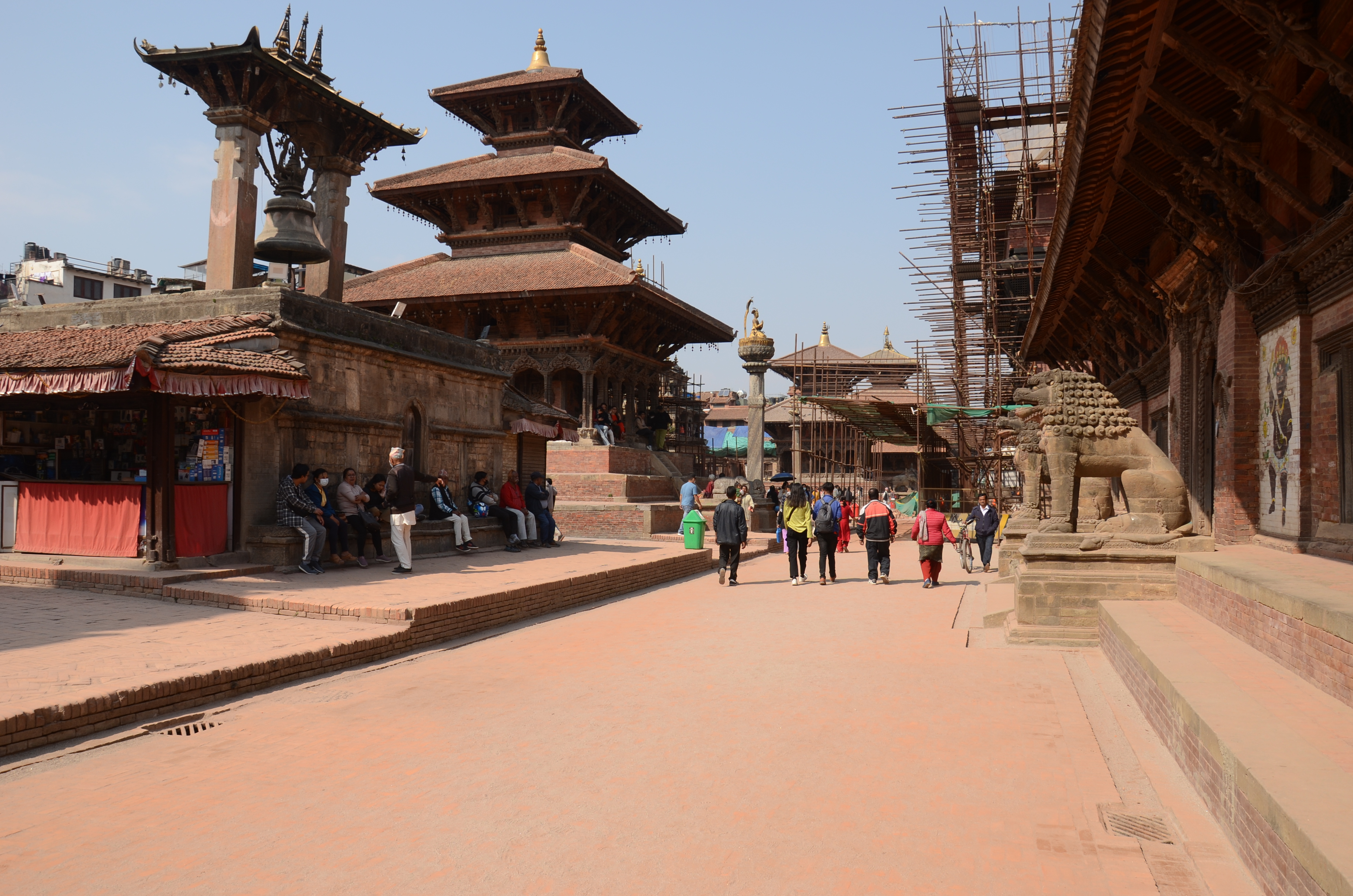
Unfortunately the nearby Patan Durbar wasn’t as restored as Kathmandu because either it suffered more damage or has taken longer to recover. It was hard to see the deterioration of what had impressed us so much before—some of the finest Newari temples and palaces in Nepal.
Posters around the complex boasted the involvement of Germany, Japan, China etc., then why is it taking so long compared to Kathmandu?
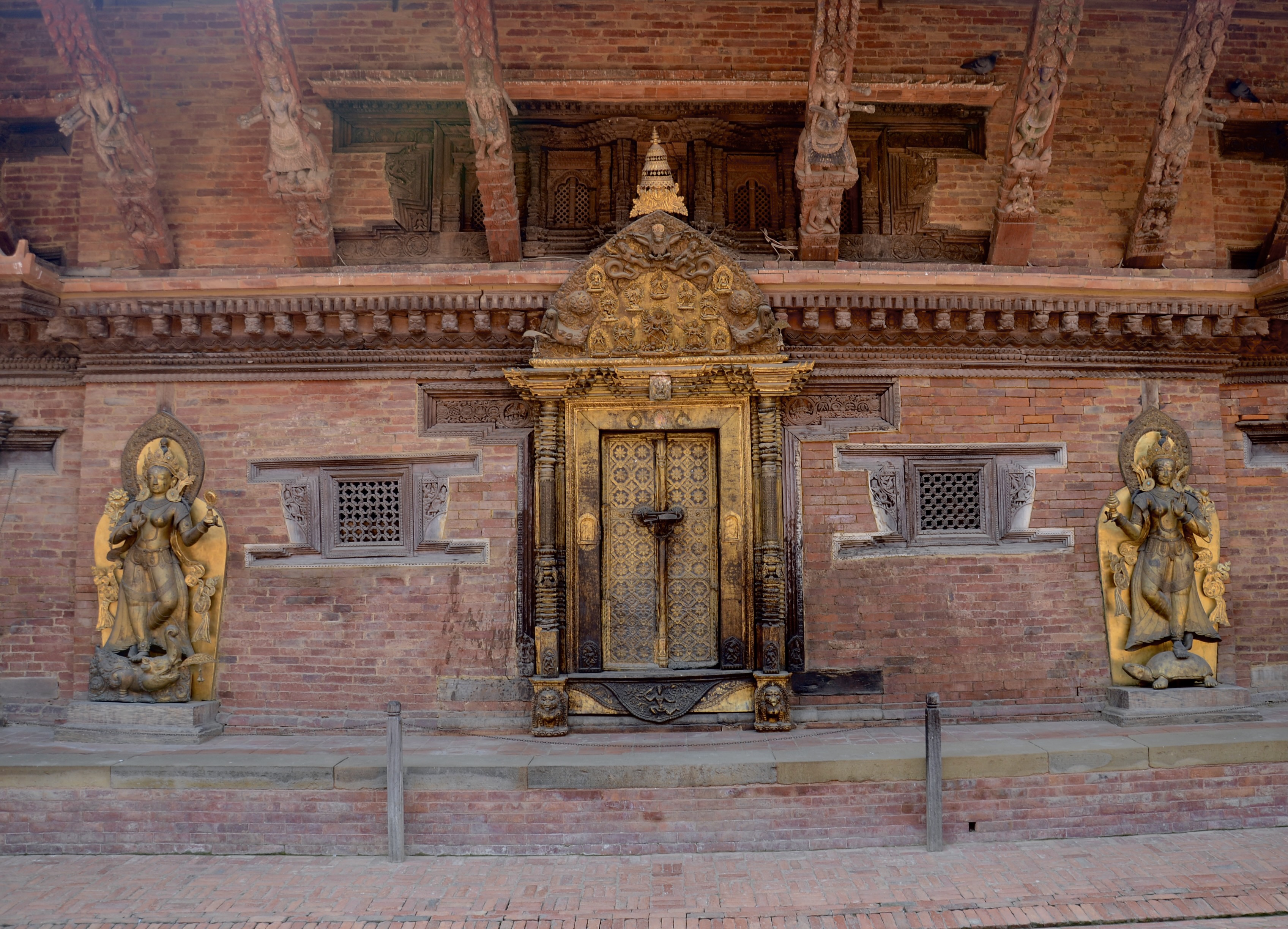
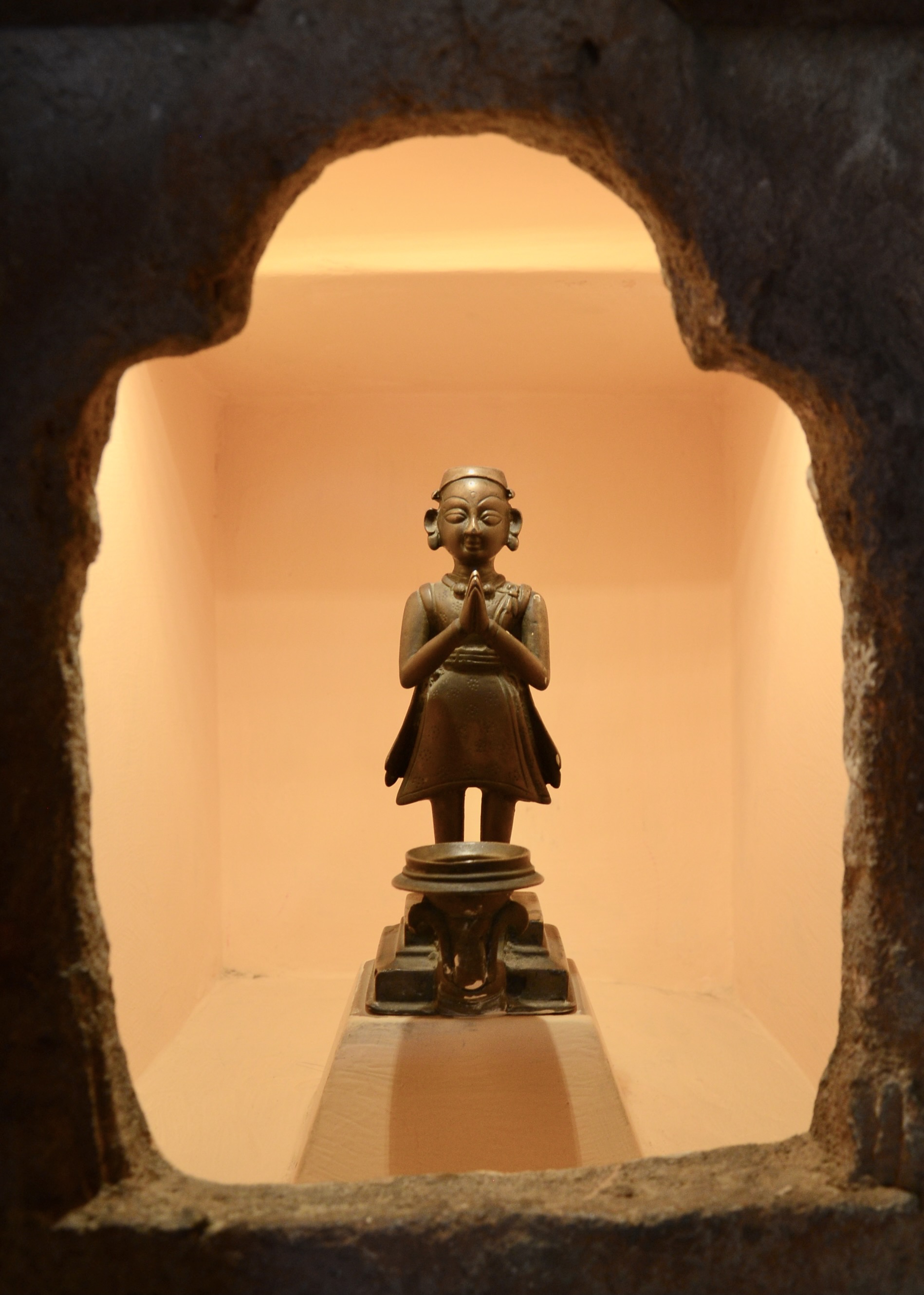
Thankfully, the Patan Museum, with financial help from Austria, has reopened its gilded entryway and still contains a wonderful collection of Newari sculptures and artifacts.







 A Small Case Across India