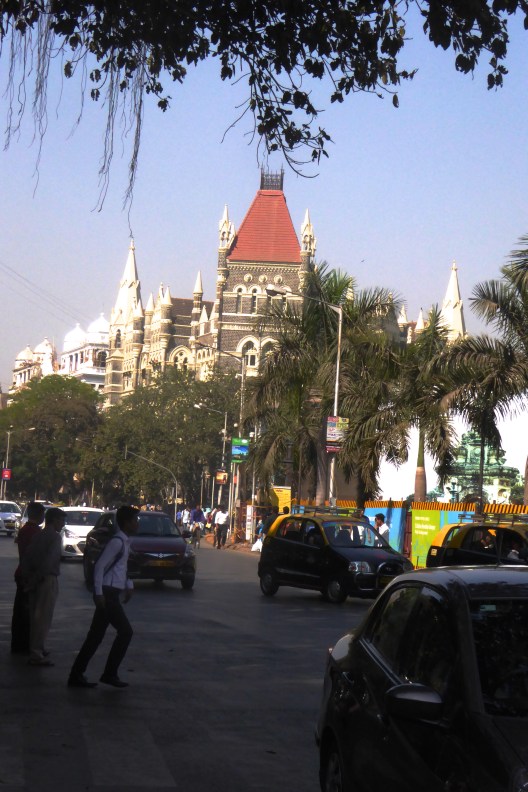
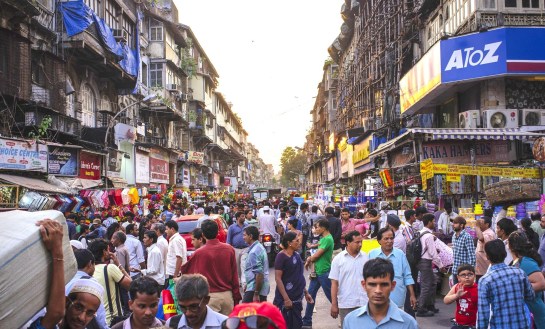
We arrived in Mumbai Central Station at night. ‘Milling crowds, millions of them, in the streets, on the railway platforms, even at night the pavements are full of people. The whole city is like an overcrowded room.’ (Kushwant Singh abridged).
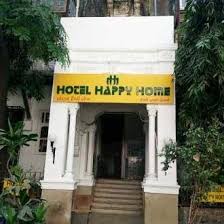
Since the family we usually stay with were out of town this weekend, we booked online. Happy Home Hotel was on a dark side street in Colaba. Old and worn, but with a certain charm. A fish tank and a birdcage in the small lobby on the third floor reached via a cramped elevator, a welcome alternative to the well-trodden staircase.
 The price we were paying would have been for a luxury hotel in most of the usual places we stay.The boy led us to our room surreptitiously spraying air freshener as he entered. We were very tired and after Gerard had made a cursory round of the room with his rag and bottle of disinfectant we fell into bed. We woke in the morning to the distinct smell of Mumbai. Now where’s the boy with the air freshener? David Gregory Roberts begins Shantaram trying to describe the smell– his first impression of Bombay. Suffice it to say it’s not a pleasant one.
As usual, our first activity was to find a restaurant close to the hotel. We were lucky to find ‘Ganesh’ in easy walking distance. Pure veg and small, it had a friendly middle-aged owner and an exceptionally good cook. We didn’t need to look further. Over our two days and three nights in Mumbai we went back repeatedly and the food was always fresh, each meal cooked individually for us. The next best thing to home cooking.
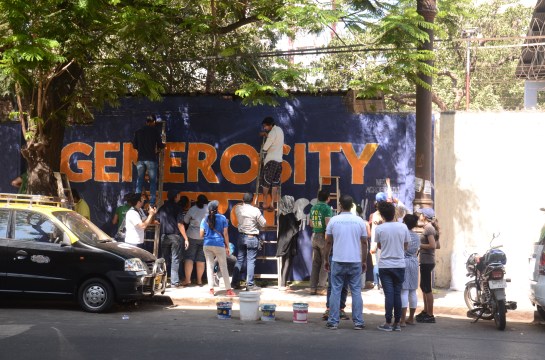
On the way back from the restaurant, we came across a group of young people, enthusiastically painting a section of the drab street wall with a slogan on bright blue. One fresh-faced young man was providing encouragement. He explained to us that they were part of a youth volunteer organization to promote ‘truth and justice.’
Colaba was busier than we’d anticipated. ‘Fashion Lane’, an old pillared arcade crowded with merchant carts – cheap clothing, sequined cloth bags, colorful scarves and so on. Further on, we found a collection of second hand bookstalls and traded our used books in for new ones. But stall was not the right word for the mountainous stacks of books piled so high and close together you had to turn sideways to work your way through. The stall owners were skillful at extrapolating a book from the middle of a precarious tower without upsetting the rest of the pile. Gerard was reminded of a story he’d once heard about an elderly man in NYC who filled his apartment with stacks of newspapers just leaving a narrow passage between. The story goes the papers toppled over, suffocating him.

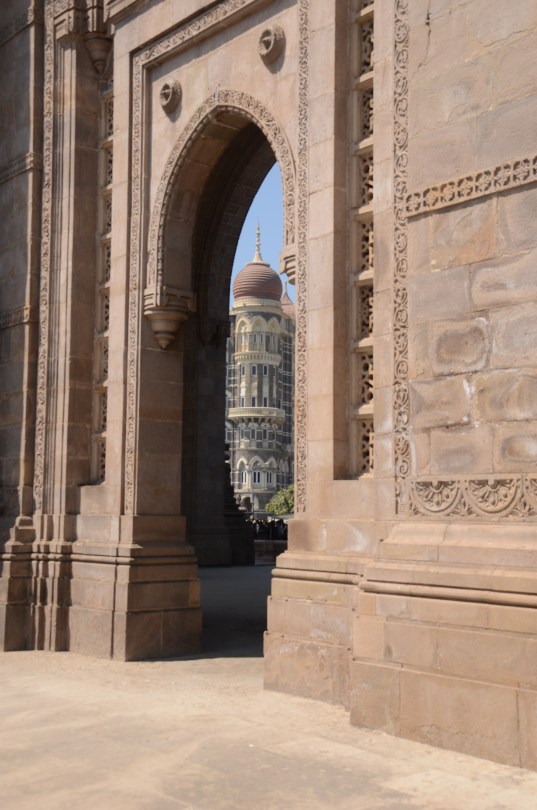
As we walked up the bay toward India Gate and the Taj Hotel, we came across a Colaba slum right next to some high-end private residences and towers. Not uncommon in India. Real estate is certainly not about ‘location, location, location.’ I insisted on sauntering through the lobby of the Taj and we were immediately hit by wafts of lilac, jasmine and rose. The hotel wanted to mask any trace of the unsavory aromas from outside it’s hallowed walls.
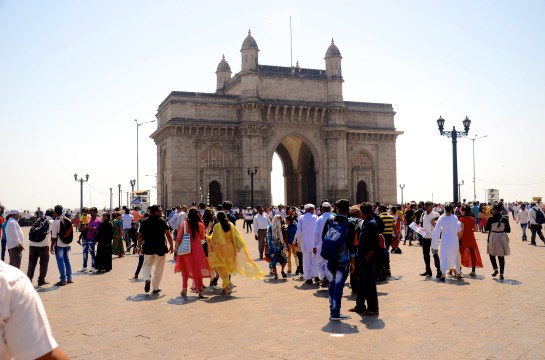
Across the road from the Taj sat India Gate, crowded with weekend tourists. A thick cloud of pollution hung over the bay and we decided to cross over to the other side of the narrow peninsula to the Marina. But the air was no clearer and the afternoon sun fierce. We decided to take a shared taxi back to Colaba and our AC hotel room to cool off and rest our weary feet. We had walked for miles, but never found the old Parsee houses that we’d caught a glimpse of last year.
Our train to Varanasi left at 630 am from a train station an hour away from Colaba. As arranged, our taxi driver Gullu was waiting outside the hotel at 4.15am his engine revving. He’d insisted we leave this early because “you never know what can happen…” But the streets were empty and we reached the station in less than an hour. Climbing over the customary sleeping bodies we found the train that was to be our home for the next 30 hours already sitting at the platform.


 A Small Case Across India