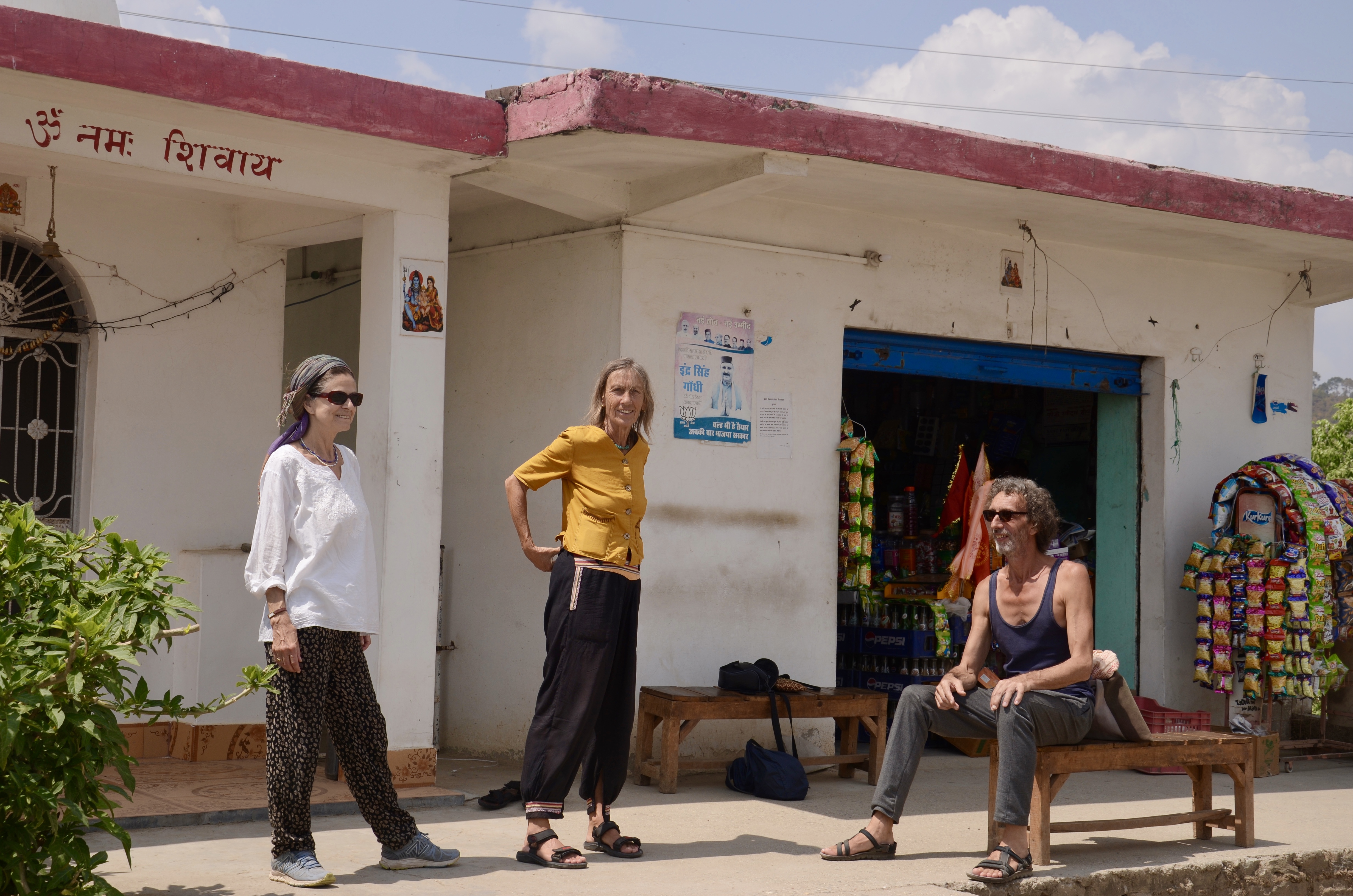
Snake on the Beach turns to Plastic

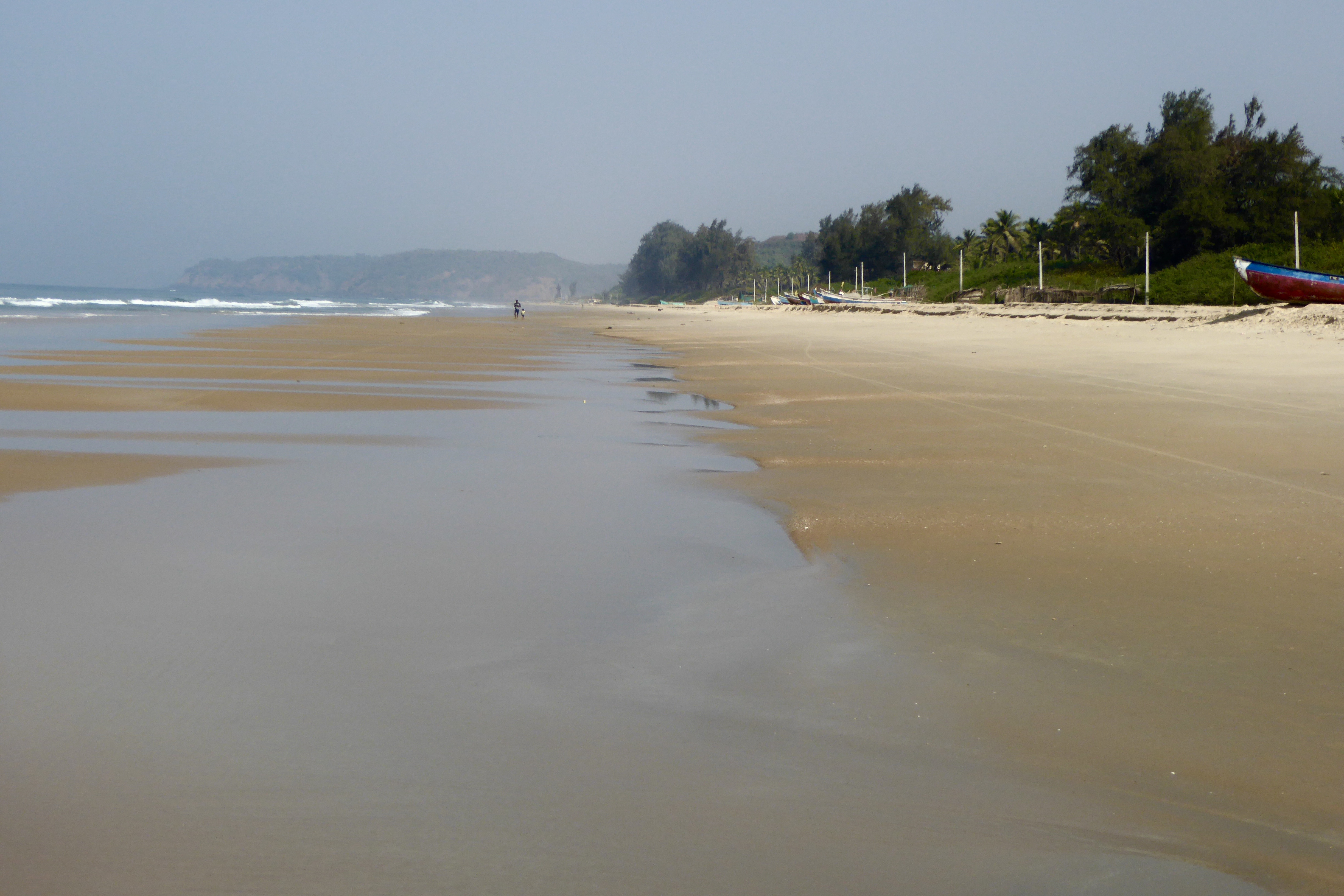
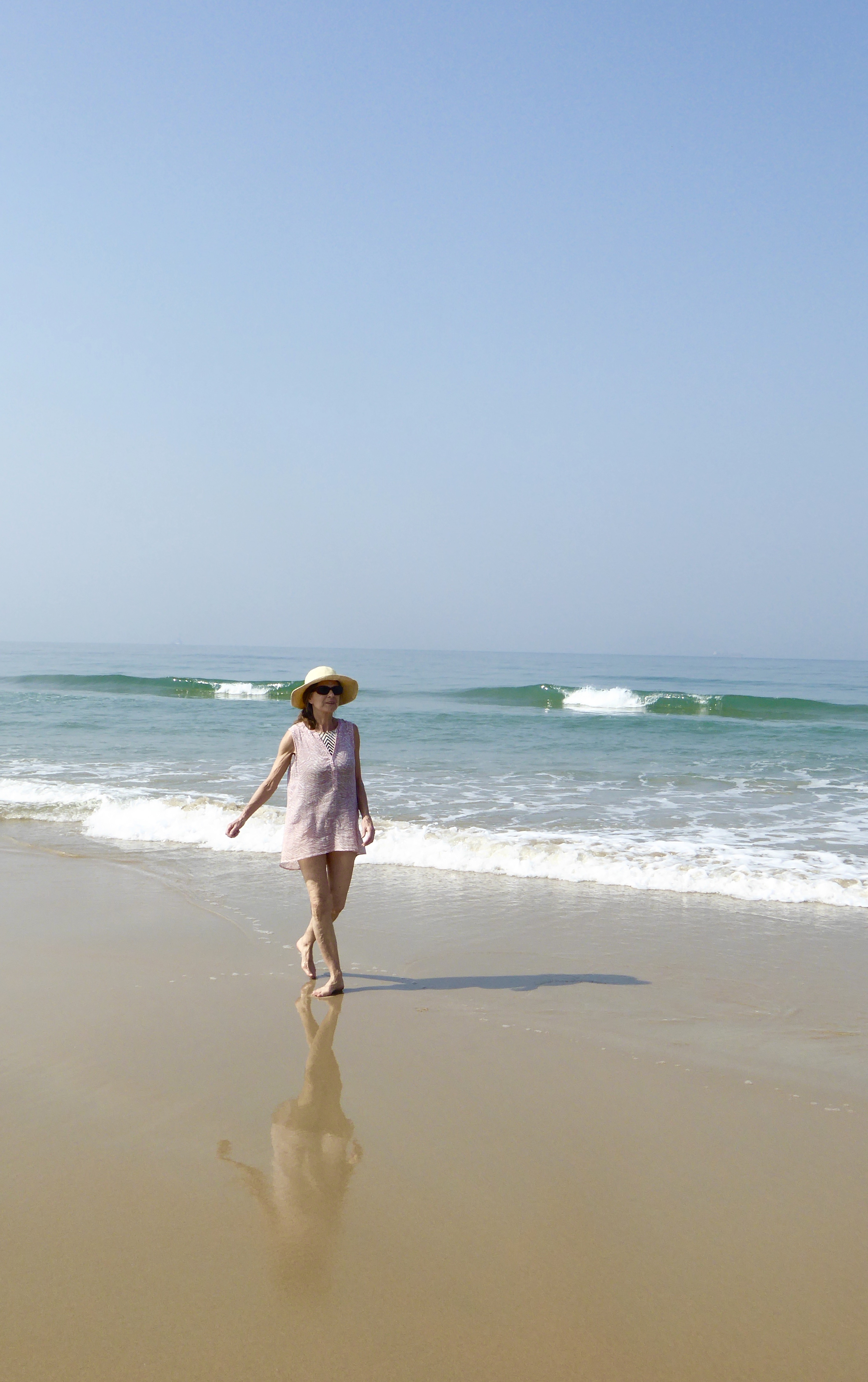
With less than a week left in Shiroda, I’m trying not to rush time at the beach. After swimming, I walk a couple of miles in one direction in the morning, and then the other in the evening, happy to still hear the noisy waves. For the first time since last July, I’m able to spend long periods of time without being reminded of my hearing loss.
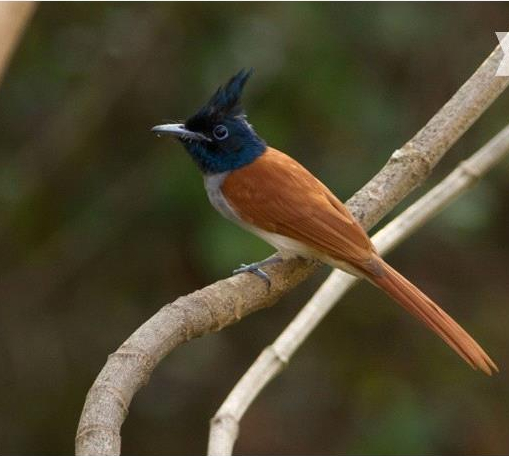
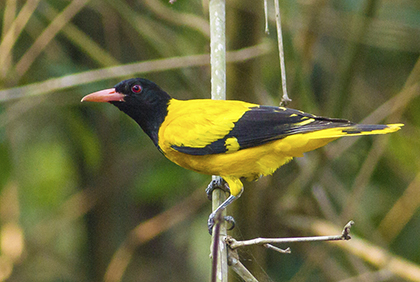
In the cool of the early morning, the array of birdsongs float through our window. A rust-colored bird with incredibly long tail feathers, his crown ultramarine blue; a fat little chirper, bright yellow with contrasting black stripes. Later, an iridescent green beauty, the size of a robin, with an orange beak. Looking harder into the mango tree, we can see a tiny bird, no bigger than your thumb, feeding on the flowers, moving so fast, it’s impossible to photograph. When we have the camera, we don’t see the birds; when we don’t have the camera, we see them!
Martin has managed to come up with new dishes nearly every day for us. Though he’s not a vegetarian he seems to have mastered the cuisine. He has chicku trees in his yard and is harvesting the fruit and serves it for dessert. The sweetness and soft texture has no comparison to the grainy fruit we eat elsewhere in India and occasionally find at home.

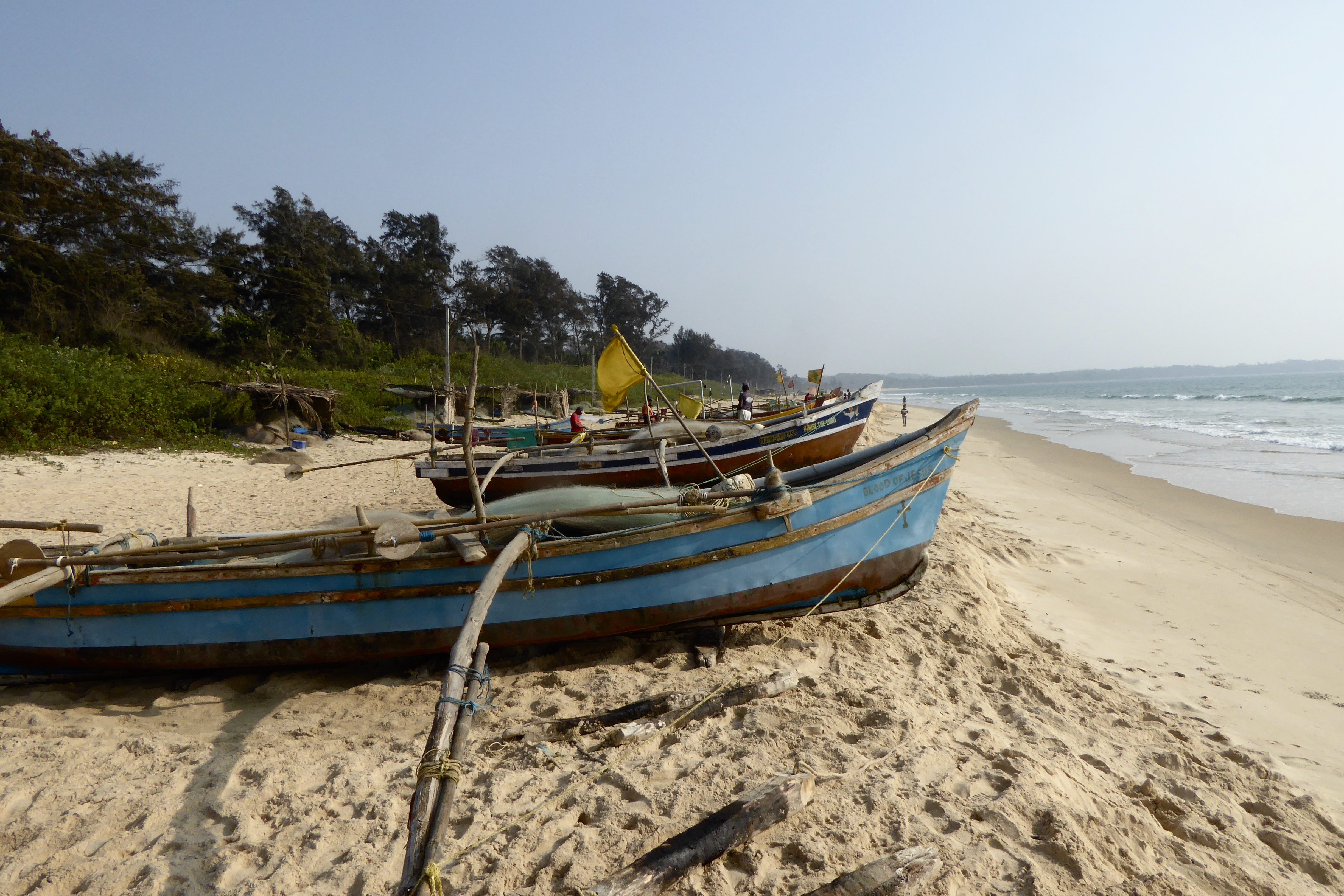
Martin mentioned the fishermen accidentally capture sea snakes and throw them half dead back in the water for the hawks to feast. Numerous times, we’ve seen a hawk flying high in the air with a snake hanging from its mouth.
“Should we be concerned about sea snakes?”
“No, they stay far out at sea. Occasionally, a sick and dying snake washes ashore.”
“What about snakes around here, around the house?”
“Oh, yes, we have plenty of snakes There’s a viper who’s so poisonous if he bites you, you’re dead before you hit the ground.”
Gerard’s voice has a trace of anxiety. “What about cobras?”
“Of course. When we were building the new house five years ago, I was walking around the property and just about to step on what I thought was a stick. Guessing that it could be a snake, I gently stepped back and waited. It slithered away. I went to get my torch and by the time I returned the snake had slipped into a large bale of wire. Fetching my neighbor, a young brazen man came with his large stick and pounded on the bale of wire. The king cobra reared up, ready to attack. With a mighty blow from the stick, the cobra was struck dead.”

In an apologetic tone, Martin said, “We had to kill it, or it would have bitten one of the workers for sure.” He thinks for a moment. “When I was a child, the leopards, snakes, monkeys all stayed in their own domain. Now, because of deforestation and mining, they have fewer places to go, encroaching on our plots.”
“Leopards?”
“Yes, they routinely prowl for pigs and dogs.”
The fate of Blackie’s mother is still fresh in our minds.
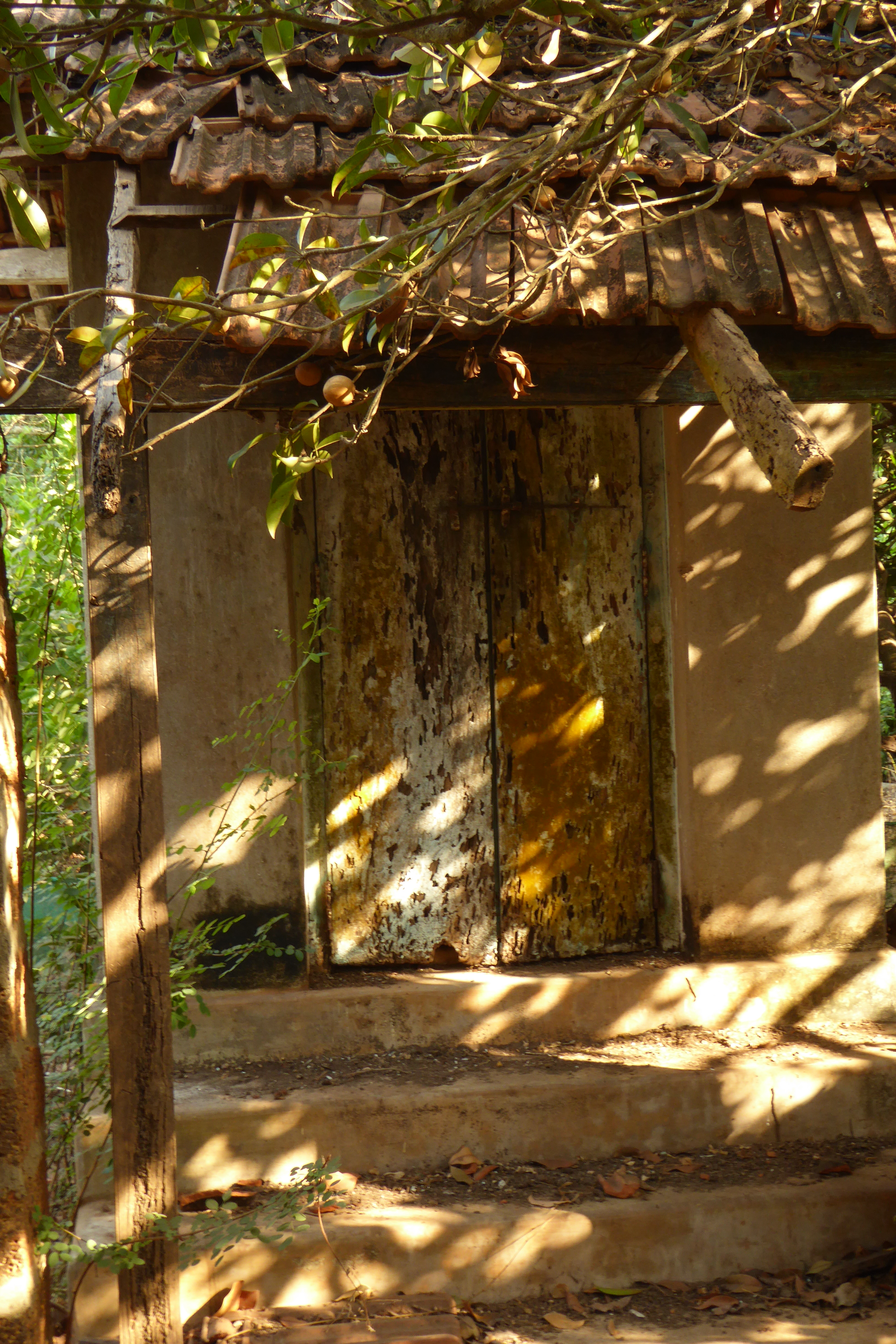
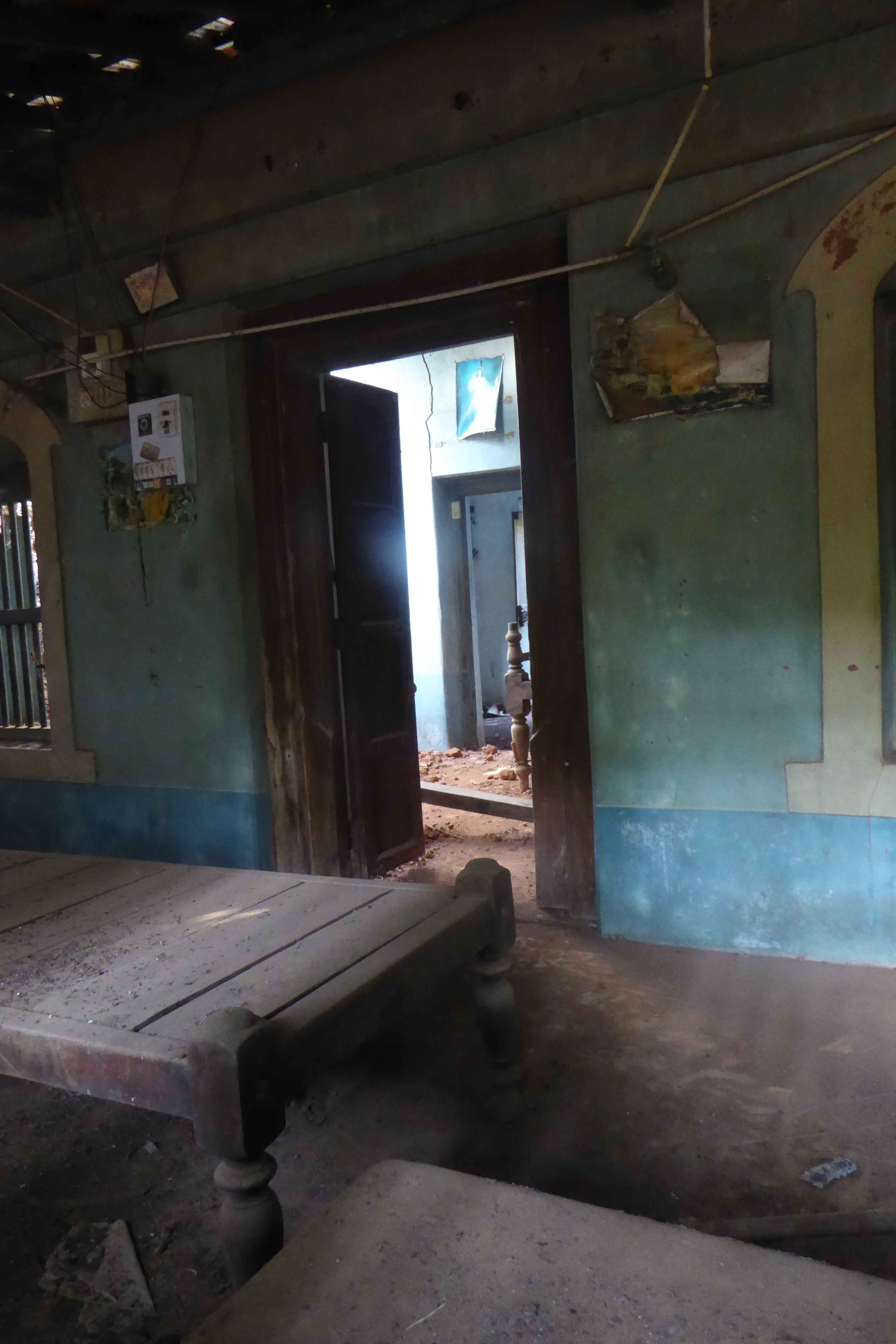
Martin grew up in Mumbai, but he would visit his grandparents in Shiroda during school holidays. The remains of the old adobe style family house sit beside the larger modern concrete guesthouse. As a child, he’d sleep outside long before ceiling fans.
“What about the mosquitoes? I ask.

“Even with the heat and humidity, you had to cover up with a sheet.”
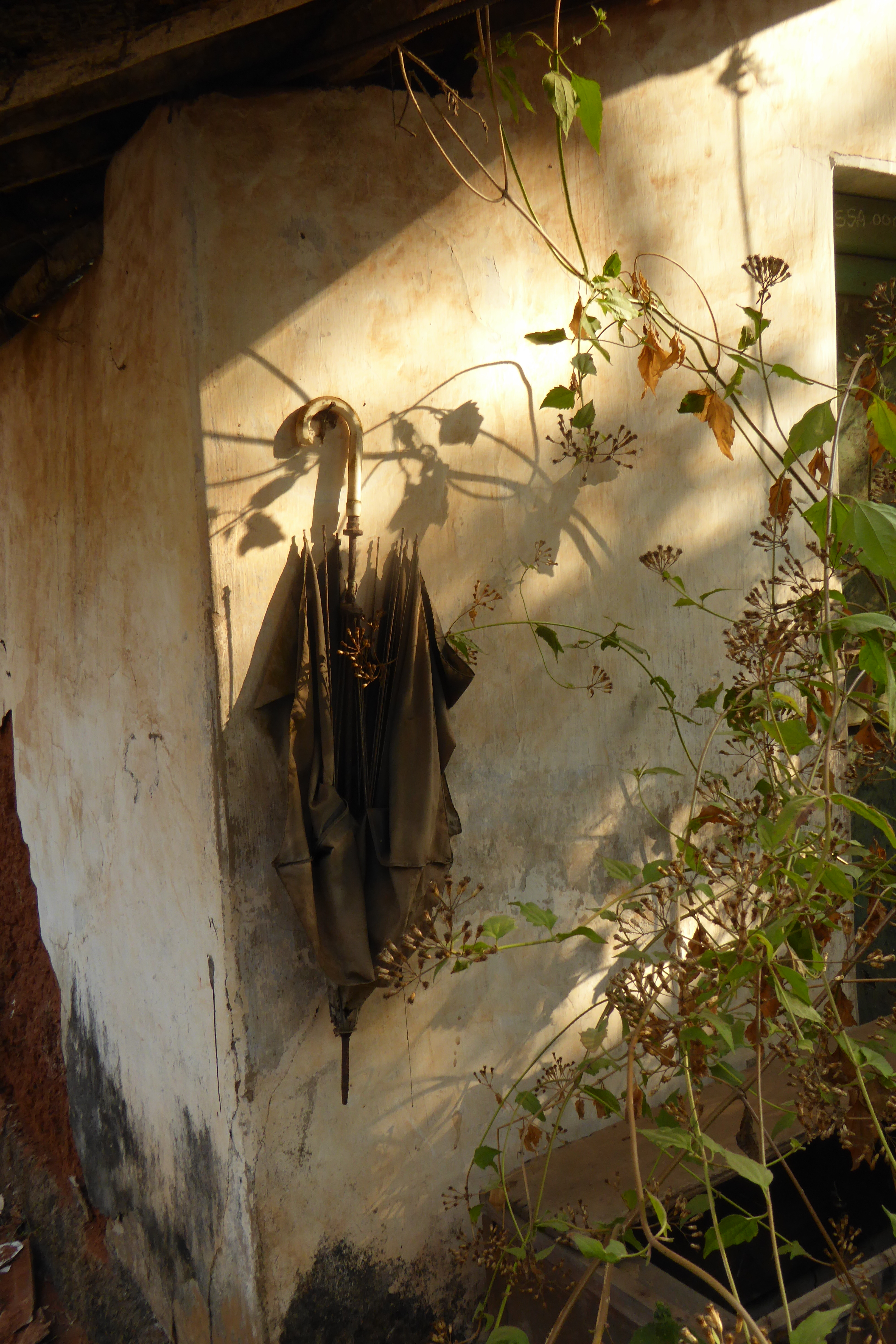
To get to the house, was an ordeal; no road for miles. Martin was of two minds: spending his holidays here; he loved nature and the fresh air, but there was little to do, no friends. At that time Indians did not go in the sea, they’re only now daring to venture further into the water than their ankles. Martin spent days on end roaming the beach and talking to the fishermen. Today, his feelings about being here are quite different. After spending thirteen years working in Dubai as a construction worker, he decided to retire. His time now spent in Shiroda is the reverse of what it was as a child. One month in Mumbai with his wife and daughter and the rest of the year, even the rainy season, here.
“Less pollution and I love nature. Just listen to all of the birds! Why would I want to spend more time in Mumbai?”
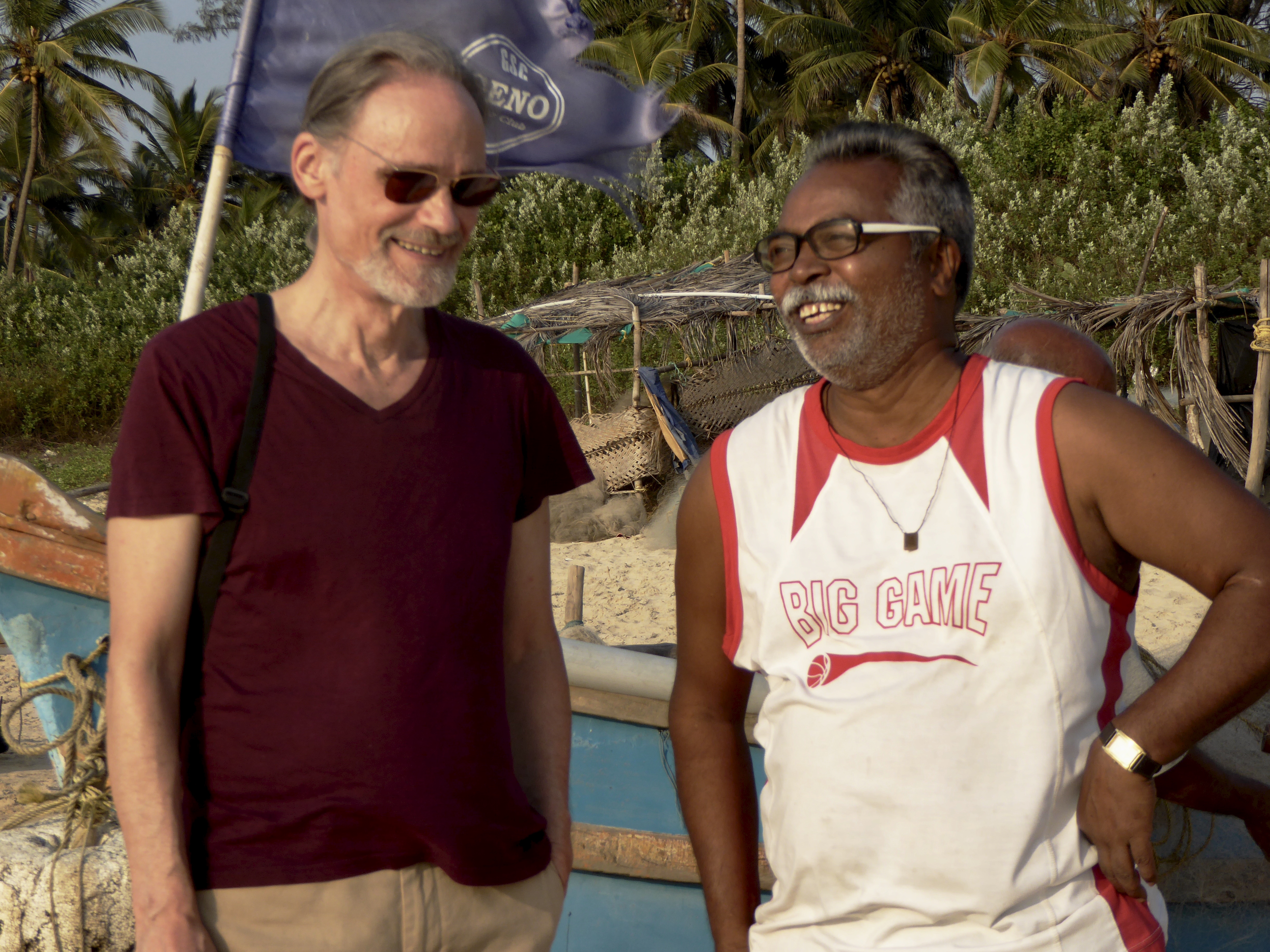
He still does not swim, but often goes down to the beach in the evening to chat with the fishermen while they’re preparing their nets for the morning catch.

Friends send us a New York Times article, “Pirate Days are Over: Goa’s Nude Hippies Give Way to India’s Yuppies.” It’s not telling us anything new. Over the past ten years, we’ve watched the increase of the wealthy young Indian tourist pushing up restaurant prices, turning sleepy cafes into raucous night clubs. The hippies are long gone and so are the characters. Like the Indians, the new westerners come with money, to sunbathe and drink. They’re not travelers.

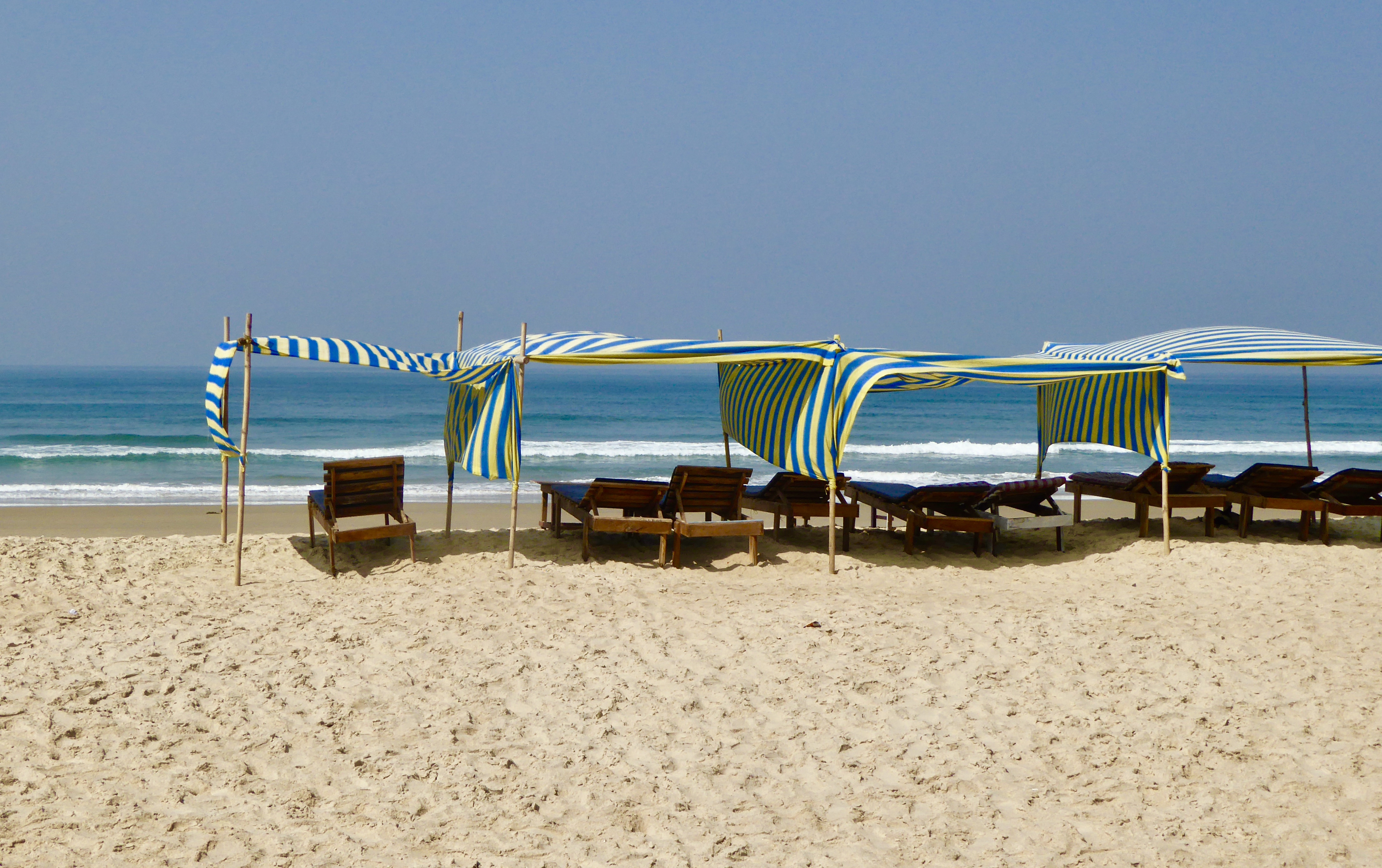
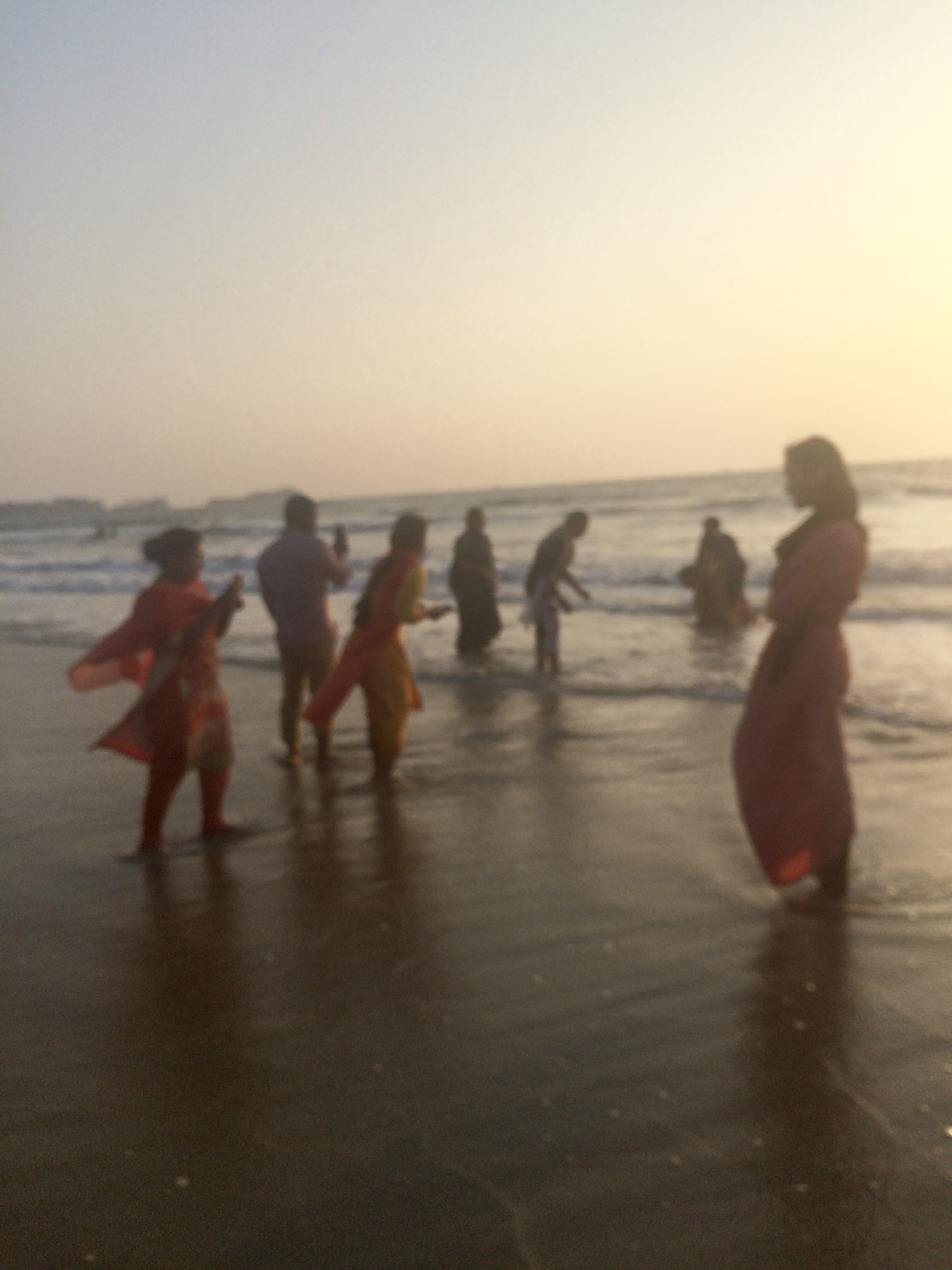
But Shiroda has not yet caught up with the times. Without facilities, it attracts only day trippers from Goa on motorbikes. The beach is long enough to absorb them. The Indian visitors dominate, but they come locally by car or bus, and with their children. Not rich, they frolic in the water in their saris and salwar kameez.
On Sunday, a return trip to the local market, crowded with fruit and vegetable sellers peddling their goods to an enthusiastic crowd. Hindu women in saris, Goan Christians in their tight floral cotton dresses, two slender Moslem girls in flowing black robes and lace veils. Only three other foreigners were seen. With no wristwatch, I make the purchase of the day for 100 rupees ($1.25). Thinking of how many hands the watch must go through before reaching the customer, how can anyone make any profit, least of all the person who first assembled it? The plastic watch stirs memories of some equally cheap watch from Woolworth’s I bought as a child, loving it for its shiny white strap!
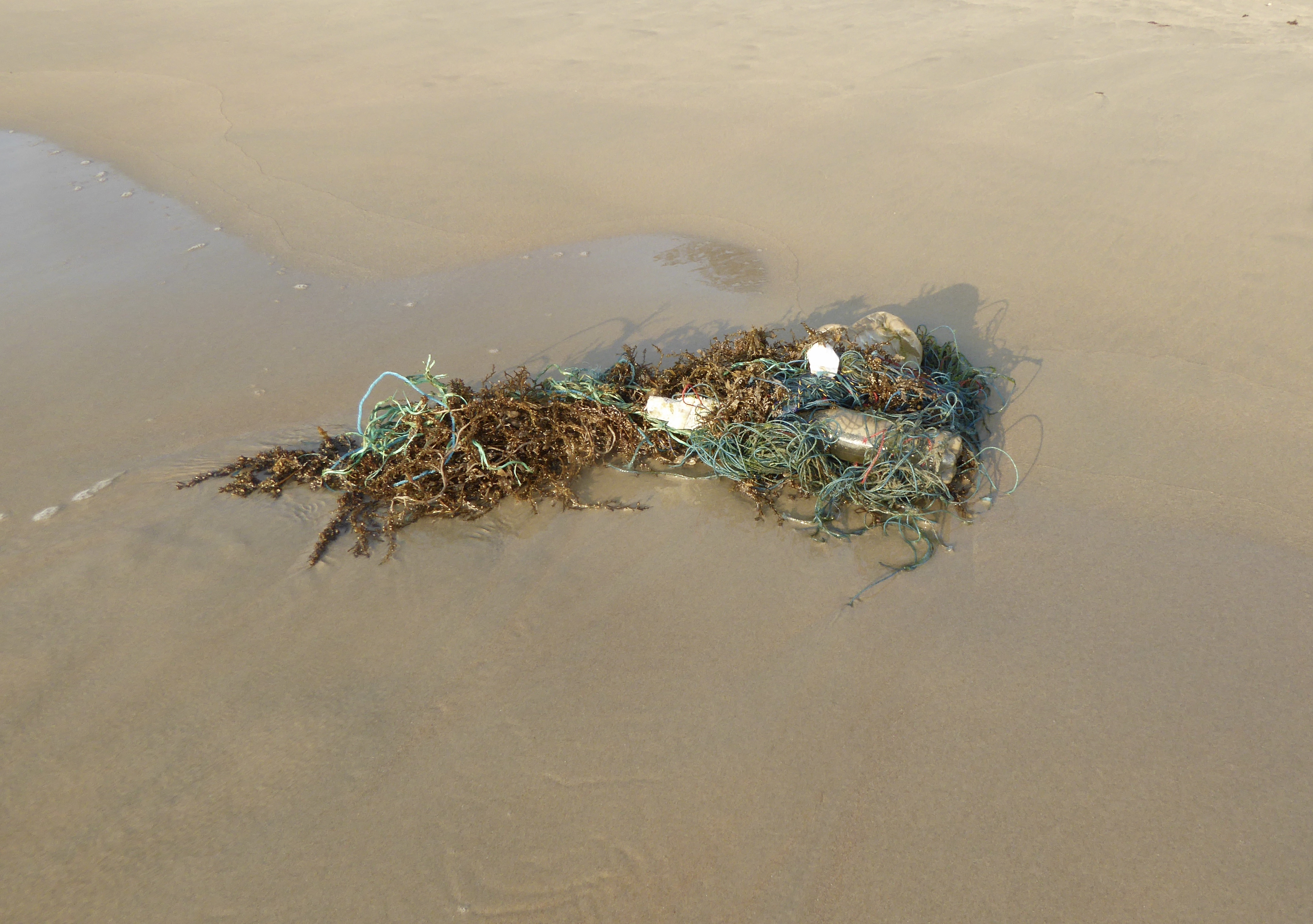
Walking on the sand at high tide in the morning, we’re horrified at how much plastic refuse there is now, discarded by tourists or washed up with the tide. Unlike Agonda, this beach is not swept by an army of saried women each morning. Fip flops, empty toothpaste tubes, whiskey bottles, ice cream wrappers – all plastic – entangling itself in seaweed. It’s a disgrace, ruining this beautiful beach. And how many other beaches? Plastic has infiltrated itself so much into our lives that it’s hard to think back to a time when there was none. As a young child, we went to the beach with a large raffia pick-nick basket, tin plates and cups strapped inside. Sandwiches wrapped in wax paper, a Cornish pasty still warm from the oven on a china plate, fish and chips in newspaper. Then the novelty of plastic began to arrive, jelly sandals, in shiny jewel colors that you could wear into the sea, clear plastic macs that folded up into a pocket-sized plastic wallet, guarding the ever-present threat of rain at the beach. My father’s portable radio with its red imitation leather lid that he’d place on his lap listening to cricket scores. We were in awe of plastic and its creative genius. Now, fifty years later, we cannot live without plastic even if we tried, while the reality of its threat to the planet is ever more real.
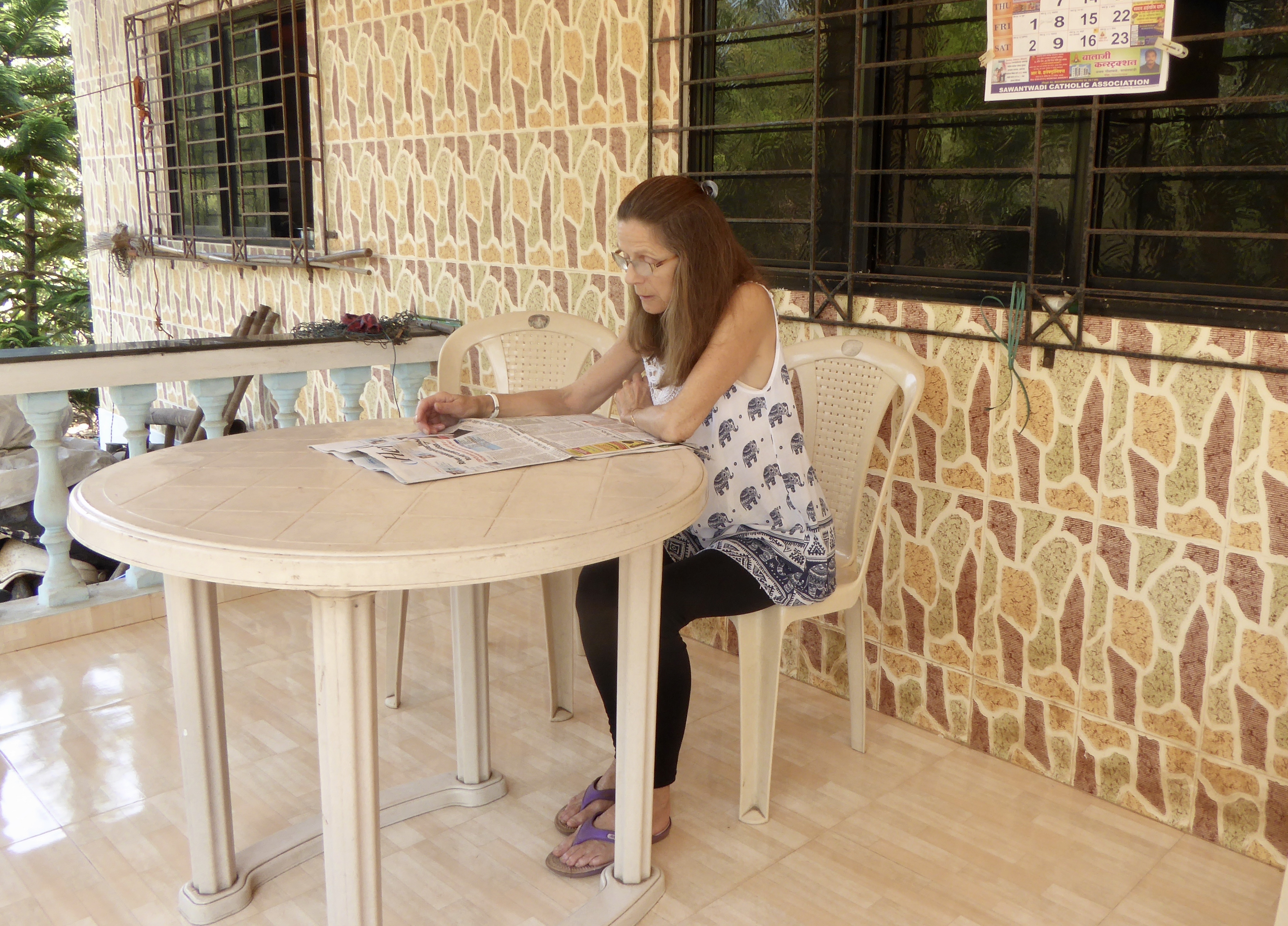
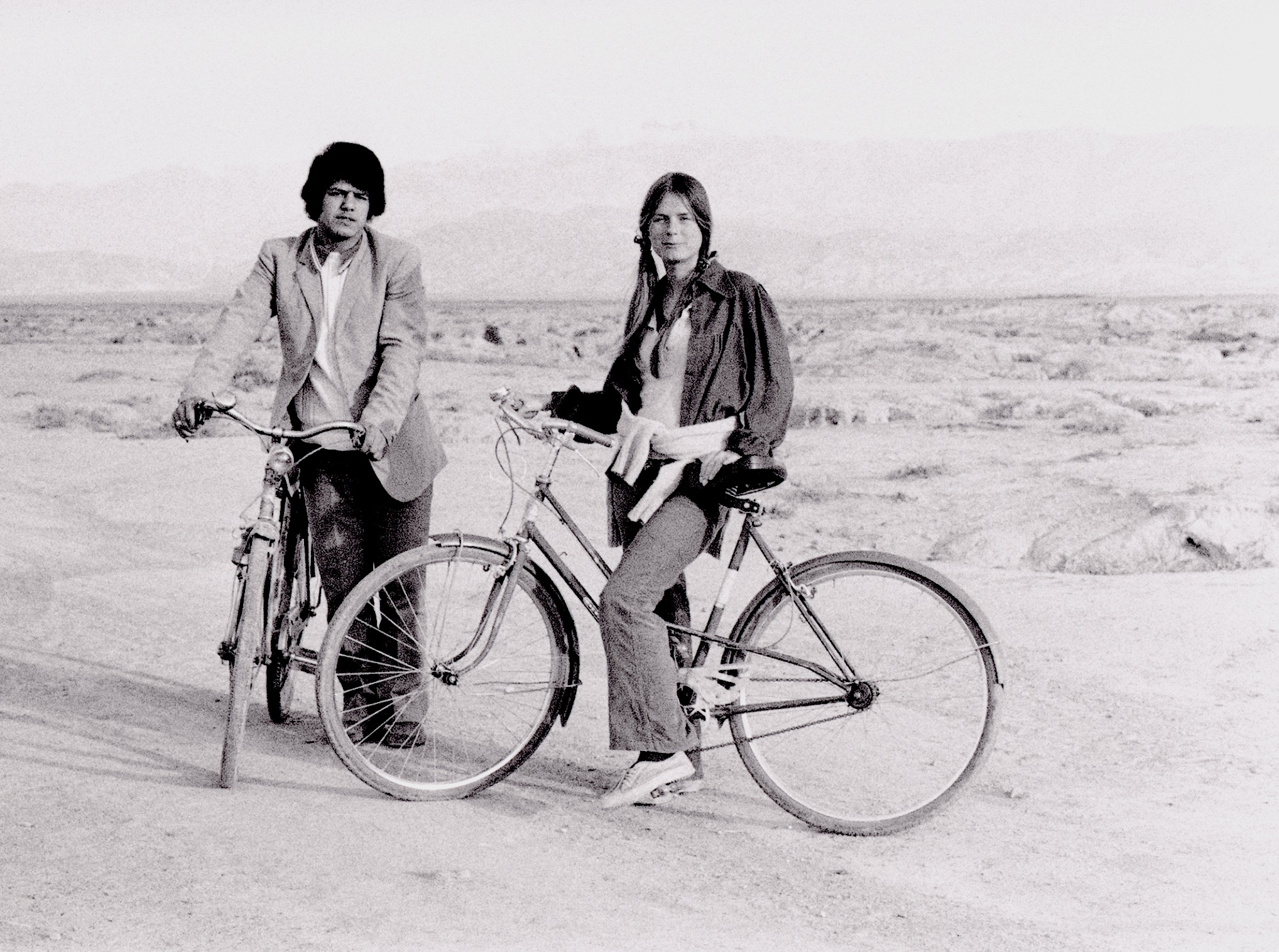
Gerard continues working on his writing, approaching it as he does a painting – first with a big brush, then revisiting, inserting the detail. He has amazing perseverance. I enjoy editing the writing, a little strange because the story has now caught up with me. I’m reading about how he felt when first meeting me in WH Smiths in Sloane Square, London and then taking me traveling for the first time to North Africa. Despite getting together with Gerard, it was not an easy time in my life, and one I’ve tended to brush over and never tried to come to terms with. Somehow, it seems constructive now, to be finally confronting this period through Gerard’s writing.
Sea of Tranquility

It was a relief to see Martin waiting for us at the airport in Goa, along with a car and driver. The drive back to Shiroda Beach was a disappointment. Expecting coastal scenic views, instead, we followed alongside the busy construction of a new highway for a long two and a half hours.

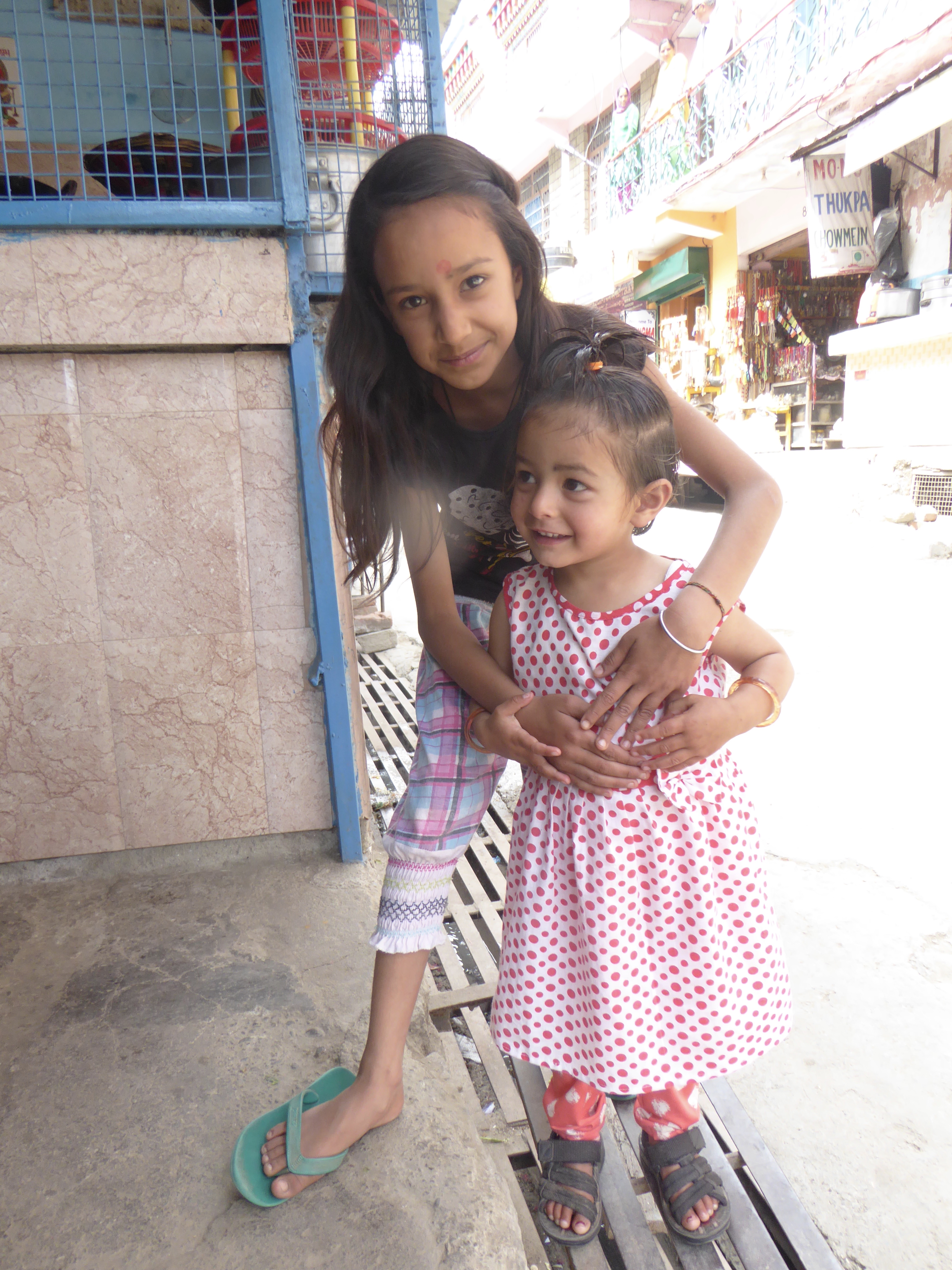
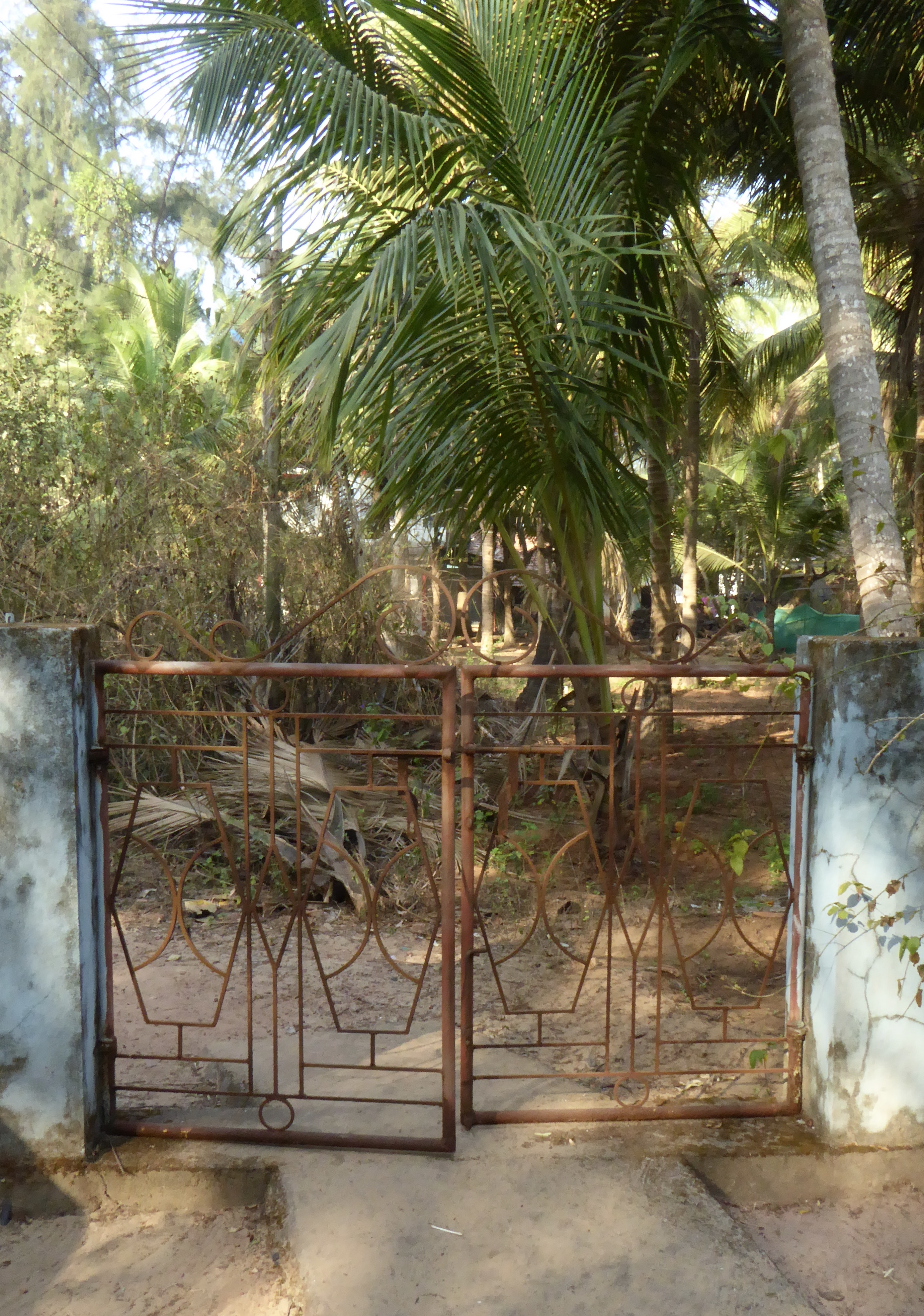
But finally, there was Martin’s house, hidden away from the road, a one-lane affair with just a little tar on it. His house, reachable only by a footpath that weaves through a neighbor’s front yard. The women smile as we walk through, invading their privacy. A little girl comes forward and shyly offers us sweet coconut balls.

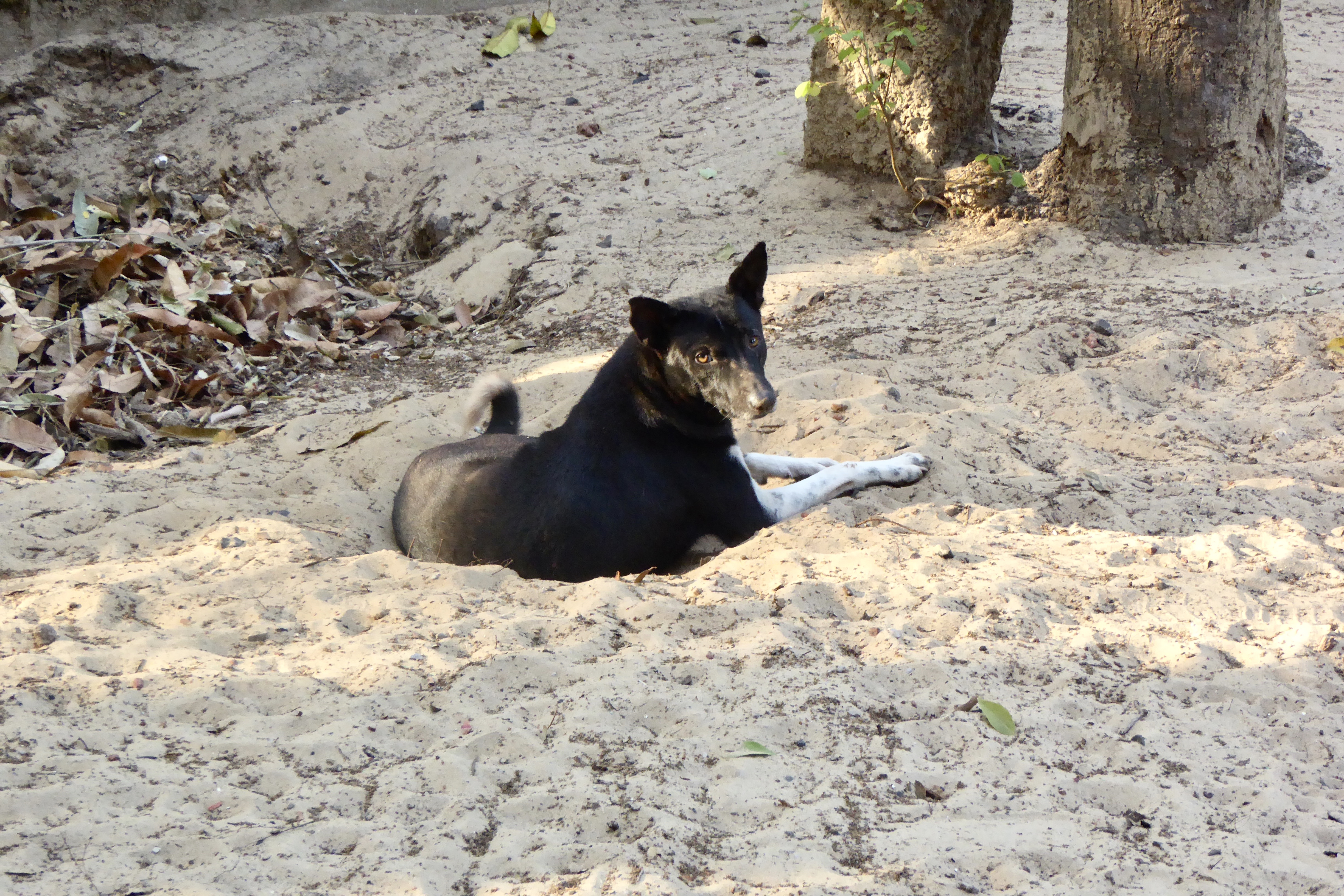
‘Blackie’, the dog we adopted last year, greets us with a toothy smile. He remembers us from a year ago. I never knew dogs had such a long memory. Owned by neighbors, Blackie prefers Martin’s front yard and now we’re here he’s waiting at the bottom of the outside staircase for us to descend in the morning. Martin tells us how Blackie’s mother was killed by a leopard when he was born. The rest of the litter all died. Blackie’s owner kept him alive by feeding him milk from an eyedropper.

Once again, there are no other guests and we could pick our room. But there’s one big change. Bonnie, who cooked for us twice a day at a little restaurant across the road is in Mumbai, the restaurant sadly shut up. Instead, Martin will cook for us.

This is an almost perfect situation for me. We’re living in an island of tranquility on the edge of the jungle. Even the minuscule traffic from the road can’t be heard. The only sound coming through our window is the chorus of subtropical birds that entertain us all day long. There’s a pleasant irony that I can hear that bird calls but not the dogs barking at night. And you know, even in the jungle, there are barking dogs. Until any other guests arrive (which is unlikely because Martin does not advertise) we are pampered by our resident cook. There is no running hot water, but if it’s needed, he heats it in a cauldron on an open fire in the back yard. The roof is mine to hang our washing and lay out my yoga mat in the morning.

Martin is a man of few words which suits me fine. His English is very good and he and Gerard have a comfortable rapport. With me, he is less comfortable, but we can still communicate enough to suffice. He has no TV, radio or internet connection. Why would I want it? he says, preferring to sit on his porch in the late afternoon and evening, content with his surroundings. He is something of a natural healer creating potions from Indian spices. Everything to heal is in the kitchen, he says. He gives me a drink of black cumin and ginger in hot water to loosen the congestion in my chest. Each day, he rides his bike to the bazaar for vegetables and fruit to prepare simple tasty dishes. On Valentine’s Day, he surprised us with two chocolates served on a silver platter!

Gerard’s spending a lot of time working hard on his memoir, tapping away on the little PC he invested in for the purpose. I compose the blog. It feels good to be writing alongside each other, later taking turns in editing what we’ve both produced. For internet access, we have to take our computers to the little cafe on the beach. Open for business but without customers, it has WiFi but very erratic. It’s taken almost a week to post this blog.

There’s still plenty of time for swims in the morning and walks on the beach in the afternoon, with or without Gerard. B

Walking on the beach, a young Indian man eagerly bounds out of the water and tries to engage me in conversation. When I shrug his initial advance, he promptly tries harder. I point to both my ears and say, “Deaf!” It’s an immediate put-off. He says.”Wow!” shrugs and walks away. Another benefit of my hearing loss, I no longer have to deal with the persistent pestering – good natured or not – of Indian men.

I’m not missing Agonda as much as I expected. Holding on to the fantasy long after Gerard did, but the thought of all the buzz – street noise, crowded restaurants, loud music – is more than I could handle now. In Shiroda, peace and quiet is just what the doctor ordered! But I do miss the couple of good friends who have still gone back this year.

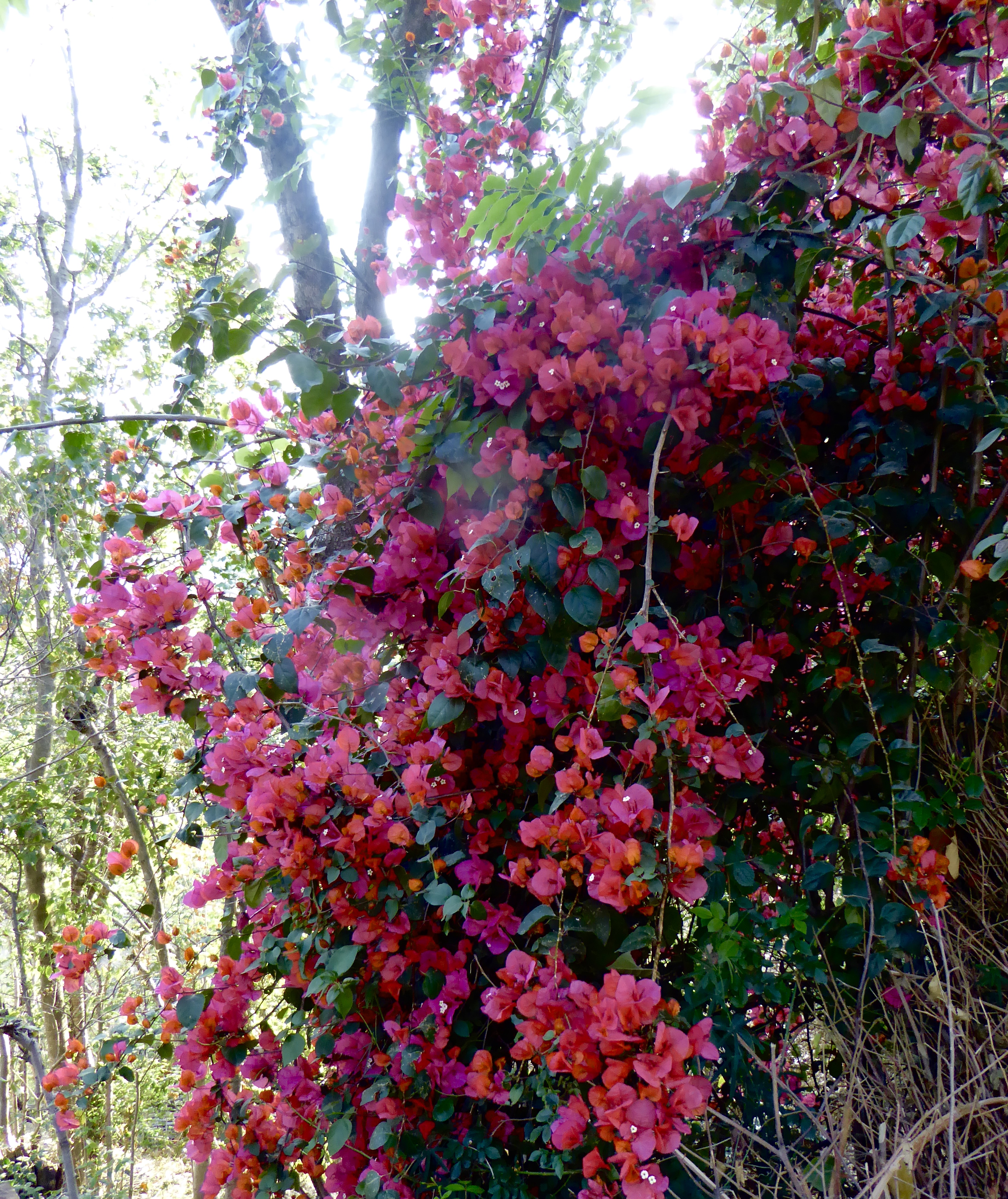
On the path from the beach to our guesthouse, I pass flowering bougainvilleas, butterflies almost the size of a small bird, pigs trotting and chickens pecking and I can’t help comparing this walk to the equivalent in Agonda, now through a maze of beach huts.

Over our morning chai, Gerard says, “In an ever-shrinking world isn’t it amazing that we can still find a place that suits our present needs. Five years ago this beach would have been way too quiet for us but now it couldn’t be better.”

For a week, I’ve tried to post this blog. Each morning, carrying the computer down to the one cafe on the beach, a green canvas shack with a couple of tables and a WiFi access point. We were duped into believing there was connectivity. One day early on, the signal was loud and clear and we posted the previous blog entry. It never happened again. Not a glimmer of connectivity. Eventually, we take a rickshaw to the local bazaar and find a cyber cafe but the girl at the counter refused to give the password to foreigners. Last resort, we walked out two miles to a cafe on the main road. Come in the evening they advised. Success! At 6 pm we were able to connect.

Flying through Delhi

Flying through Delhi

After my sudden hearing loss in July, for several months, it was questionable if we’d return to India again for the winter. But as Boston became colder and I began to adapt and feel stronger, I decided I wanted to give it a try. Two considerations were fewer destinations and flying when possible. A big concession for Gerard who loves trains, even Indian trains, with their inevitable delays of several hours, less than clean facilities, noisy children and snoring travelers.

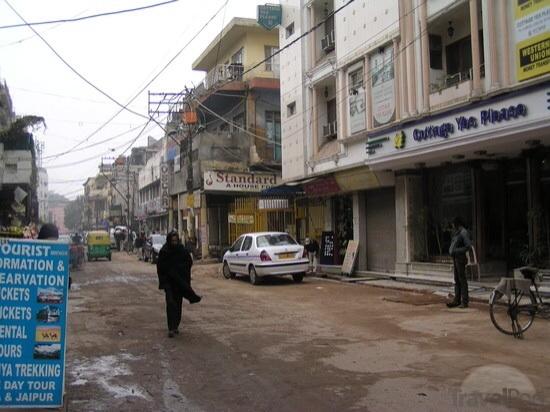
Arriving in Delhi a month later than usual had some benefits. For one, we were not met by the thick blanket of fog of January mornings but the air quality was still very poor. We stayed again in Paharganj, the area of budget hotels, but managed to find a new hotel with the welcoming name, ‘Cottage, Yes Please!’

cottage-yes-pleaseIt was indeed relatively clean, the staff engaging and helpful. The noise and bustle of Delhi seemed louder and more distracting than I remembered, exacerbated perhaps by jet lag and a cold rain. Car horns, sirens, vendors chanting their wares, even a wedding procession complete with drums, horns and the obligatory bridegroom mounted on a white horse.

After nine months, we were all so pleased to see each other again. Even two-year-old Tania showed no distress at the arrival of the pale faces. We needed to replace our expired SIM cards, something that might sound simple but not in India. A lengthy procedure of identification checks, callbacks, all of which was expedited by Bhushan. Alone, it would have taken us three to five days. Tania maintained a constant, bilingual chatter. Initially, I could keep up, but as more people arrived and the noise level rose, I was losing it. After the umpteenth time of repeating at a shriek, her big sister Simrita clearly enunciated for me, “She’s saying, Auntie, switch it on! ” The switch turned on a beauty pageant doll dressed in a crinoline skirt of blue flashing lights who twirled to, what I think was, raucous Bollywood music. Over and over again Tania wanted the doll ‘switched on.’

The next day, while on the long metro ride out to the family in Gurgaon I was fascinated watching a young couple, the pretty girl who had the misfortune of a protruding overbite of large uneven teeth. Not an uncommon sight in India where most people cannot afford cosmetic dental work. This girl had the biggest and cumbersome brace contraption I’d ever seen, which drew further attention to her jaw. But her boyfriend, who incidentally was blessed with a perfect mouth of teeth, did not appear to even acknowledge her disfigurement but acted so sweetly and lovingly toward her. What a good feeling it gave me.

metro_5545cb0c-a27f-11e7-84eb-85ab3d3e2a90By the end of the day, the jet lag caught up and we were both exhausted. On the crowded metro back to our hotel, a man offered me his seat. Given the hour-long ride and my state of exhaustion, his kindness took on a greater significance. Relaxing in comfort, I immediately nodded off, sliding on to my neighbor’s shoulder. He didn’t react as Gerard nudged me awake with his foot, giving me a pained look. It got me thinking about how many times on public transportation that in the jostling crowd, the falling into each other’s lap is routine. The crush of humanity makes rubbing shoulders unavoidable and acceptable. On other hand, if a man tries to take advantage of the situation as an opportunity to grope, he is likely to feel the swift, sharp stab of a hatpin. The young Indian women of today are quick to rebut sexual advances, refusing to become victims. With its unfortunate tradition of abuse, India is beginning to fight back.
The following morning we trekked back to the airport for our flight to Goa, a mere two hours compared with a thirty-hour train ride. But of course, that does not reflect the time taken navigating airport check-in, though nowhere near the thoroughness of TSA, then the long anxious wait for our bags at the other end. Gerard is quick to remark that train stations are still a true Indian experience, while Delhi airport is the same as any other large international hub. But for me, it’s a relief to know that by the end of the day I will be in our guesthouse nestled at the edge of the jungle with the birds singing conducive to a good night’s sleep.

Surprised by Joy: Bicycling through Life

I was full of confidence with my father’s firm grip on the back of my bicycle seat and his reassuring voice, “Keep pedaling, you’re doing fine!” Then there was silence. Suspicious, I called out for him. No reply, just his taunting laugh in the distance. But wait…I’m keeping my balance without his help. The exhilaration! Like a bird that had found its wings. In spite of his blindness, my father showed me a freedom that he had lost.

Six decades later, the freedom I experienced has not diminished. The fresh air in my face and the simplicity of pedaling clears my head, helping me to just be. The open sky is closer with a panorama of color and cloud formations. Today, a large flock of birds danced above me, changing partners. Where were they going? It’s no wonder I feel more connected to the natural world around me than in a car. (I never liked driving anyway). Even in the drizzle, I’d rather be bicycling than on a crowded bus or train.

with Mohammed in Morocco 1972

Because public transportation in Britain is plentiful if not always reliable, many people delay learning to drive and some never do. If I hadn’t moved to rural New Hampshire in 1973, I doubt I would have taken up driving. In my ignorance, I assumed there would be a bus, maybe a red double-decker, pulling up in front of Gerard’s parent’s house in Sanbornton Square. I hadn’t realized that in America everybody drives. At first, Gerard tried to teach me but it was too hard on his nerves. A work colleague picked up where he left off, happy to sit back and read, confident that I could handle his VW bus. Finally, I took my driving test on a snowy winter day. The instructor liked my English accent and there was too much snow for parallel parking. I hadn’t learned that yet. “Oh, I see you can drive well enough. Let’s go back indoors and have some hot chocolate.” A lucky break for me. For eleven years, I drove the country roads, grateful for the independence. But I was never a natural driver. When we moved to Somerville, I reduced the driving to an absolute minimum. Ten years later, moving into the heart of Boston, I happily gave up the car. It’s easy to get around by bike..to the store, the library, the Y, etc. I remember an old boyfriend once saying, you’re a good driver when the car becomes an extension of yourself. But in my case, it was the bicycle that became an extension.

When I suddenly lost most of my hearing, I despaired at the prospect of not riding my bike anymore. I no longer felt safe of my balance or ability to hear what’s going on around me. But then a friend persuaded me to join her riding three miles along a bike path to the Arnold Arboretum. Liberation! Just to be riding again…up to Central Square, along the Charles and downtown…with a new-found caution and awareness.

The Arboretum has become a favorite destination. Within 30 minutes I enter into quiet countryside – all 260 acres of it. Named after James Arnold, a whaling merchant from New Bedford, Mass, who bequeathed his estate to Harvard University, the Arboretum was designed as a public park by Frederick Law Olmsted back in 1872.

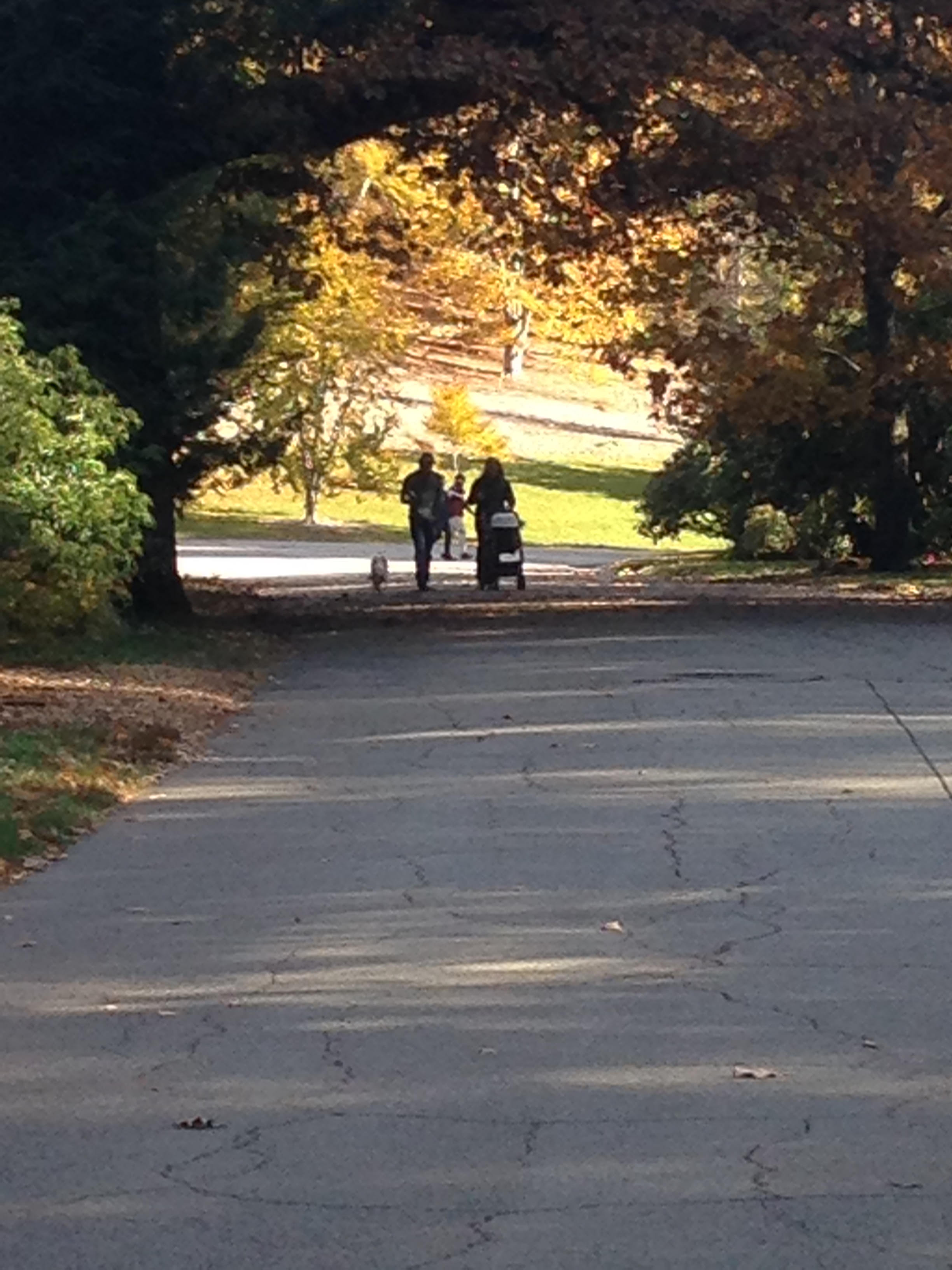
walkers

A road winds through the park – beside a rose garden and pond, past rhododendron borders and a conifer meadow that could be in Switzerland.

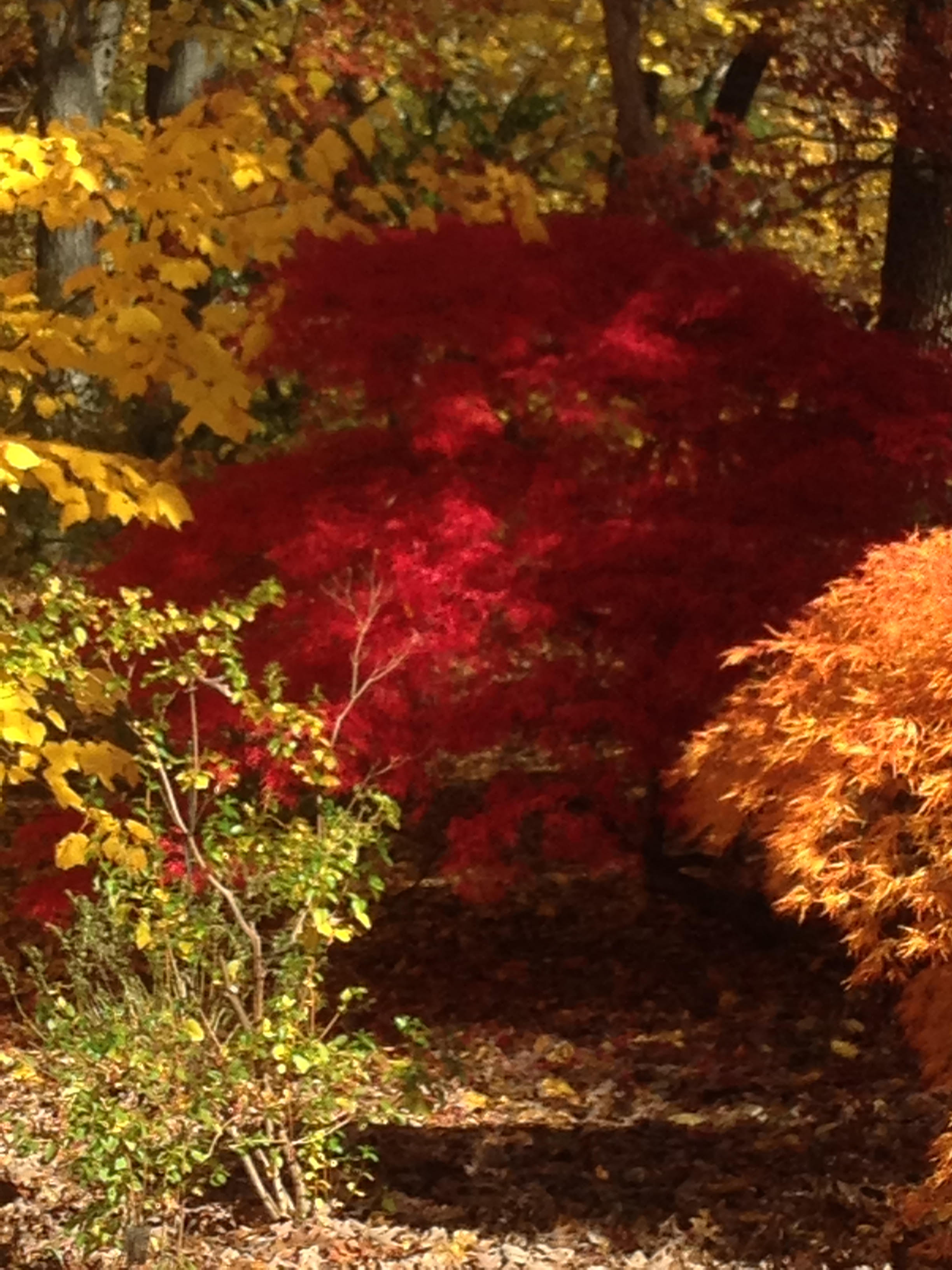
arbor 5

Red maples in the fall, clouds of flowering lilacs in the spring and even a collection of dawn redwood trees grown from seeds that came from China in 1948. (Not the ancient evergreens of California).

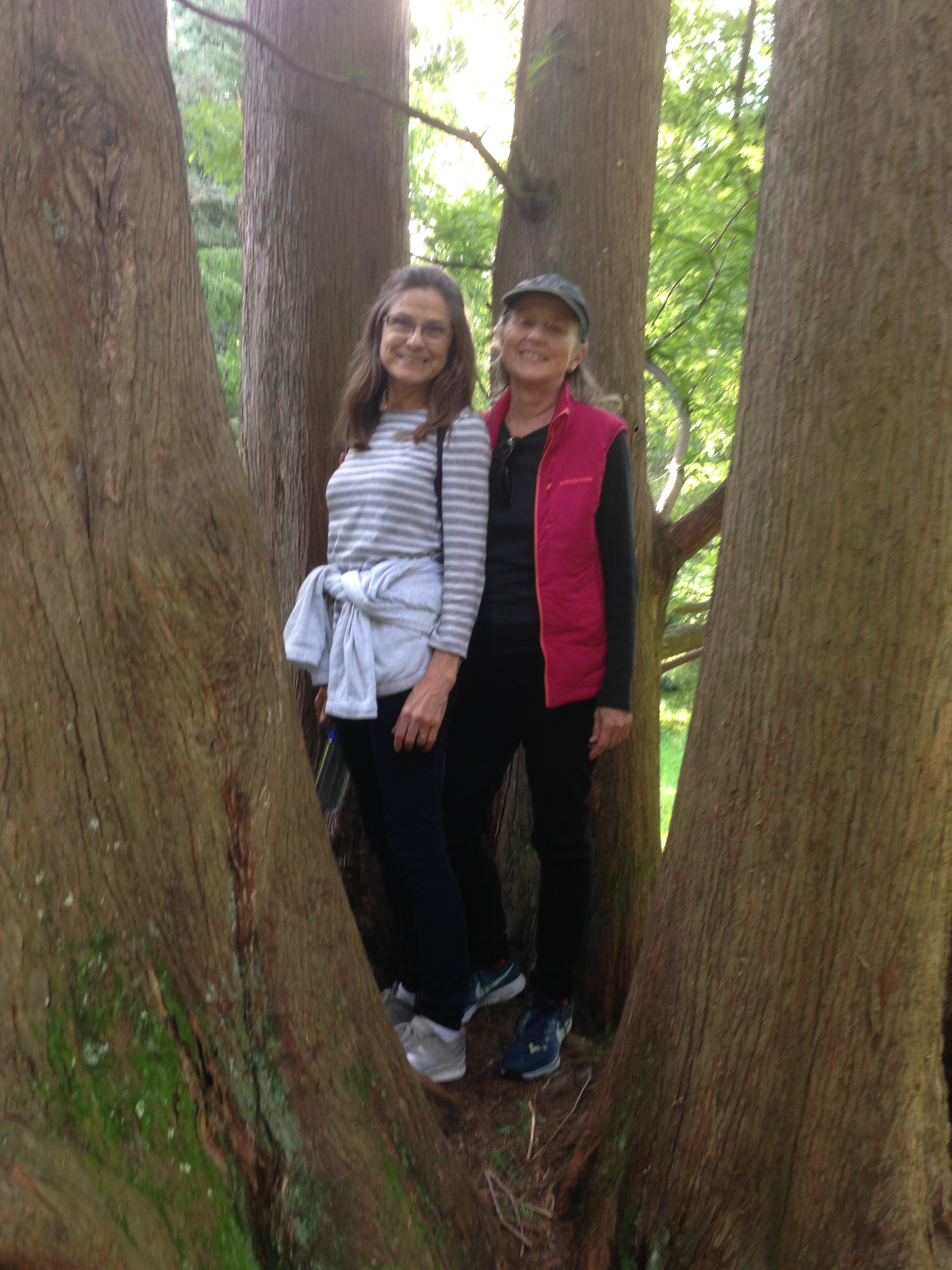
Diane and I

My friend, Diane, introduced me to her favorite – a redwood so large you can stand inside the grotto created by its separate trunks. Like an oracle, it will invite you to pose a question and wait in silence for a response.

Jamaica Pond down the street is a glacial kettle hole, also landscaped by Olmsted who was captivated by ‘its great beauty in reflections and flickering half-lights.’ I’ve lost most of my hearing but not the freedom that my bicycle gives me to stay connected to my favorite places.

Waking without Music

Dr. Siegel stared earnestly into my face and over-annunciated his words for my benefit. “I want to do everything possible to get some hearing back.” His eyes were compassionate but also now reflected the beginning of despair. After four dexamethasone injections through my eardrum and the maximum dose of prednisone (60 mg) every day for two weeks, there had been no improvement since I’d woken up on July 1 with a severe hearing loss in my right ear. Six months earlier in India, the same thing had happened to my left ear. We had just arrived in a remote beach town in the south where there were no medical resources. Eventually, we went to a prestigious Indian hospital in Rishikesh where a doctor diagnosed severe hearing loss, too late for steroids, the only known treatment and that has to be administered within 72 hours. Fortunately, at that time the hearing in my right ear was very good. Now my hearing had been reduced to about 10% with very low word recognition.

Sudden Sensorineural hearing loss (SSNHL) is a rare infliction to have in one ear but both ears…the doctor had only seen two other patients in his whole career. In his desperation, Dr. Siegel strongly suggested doubling up on the steroid therapy. “If you were my wife this is the treatment I would prescribe.” He continued saying, there’s about a 50% chance of return of SOME hearing.

We were hopeful that maybe we could save the hearing this time. I felt surprisingly calm as all of this was being discussed. In hindsight, the reality hadn’t set in. At that moment, I could look at the hearing loss to be more than just a disability. Perhaps I could learn something that had previously been unavailable to me.

The calm did not last. The steroids put me into a toxic state of high anxiety. After the fact, everyone agreed it was too much for me. The effect would take a couple of months or more to wear off. I can now testify that ‘steroid psychosis’ is real and steroids should be used with extreme caution. Certain people just cannot tolerate them. Unable to sleep, I felt constantly wound up and found it hard to settle on anything, unable to concentrate even on reading, stressed from responding to all the emails I received.

We refused the last booster shot because there’d been no improvement. Dr. Siegel sighed, gave me a compassionate look and left my life. He’d tried and it didn’t work. Now it was up to others to try and diagnose why I’d lost my hearing After meeting with various specialists and numerous tests there’s still no conclusive answers. No CT scan, MRI or Xray can provide visibility into the ear to make a diagnosis. At this point, my neurologist is the only one showing any interest in trying to diagnose the cause but not with any hope of returning my hearing. I’ve also tried acupuncture and Chinese medicine but again no improvement.

I feel locked in a noisy wind tunnel, sounds coming but from far away, my voice vibrates in my head. Compounded with the hearing loss is acute tinnitus…a roaring that is at times overwhelming and aggravated by background noise and also by stress. I can communicate one on one if I’m close to the person and the background is quiet…no running water, kettle boiling. A group setting is almost impossible. Unlike gradual hearing loss as part of aging, SSNHL is in the lower decibels…it’s easier for me to hear higher sounds, women’s voices than men’s. Gerard’s is a strange exception, perhaps because it is so familiar to me. Music has faded away to a thin single sound or a background rumble. I cannot hear phone conversations (Gerard who is now my personal secretary, reminds me that I never liked talking on the phone anyway). I’m getting better at reading closed captions and trying to master lip reading. I’ve also learned that severe hearing loss or even total deafness is not given a lot of attention or resources. It’s not officially treated as a disability like blindness and there is little financial aid for hearing aids, cochlear implants, etc. SSNHL specifically has been barely researched because it’s so rare.

Our plans for India this winter are presently on hold. As the toxic effect of the steroids diminishes, I’m now beginning to address the new circumstance. Growing up with a father blinded by diabetes and knowing his isolation, I’m grateful that I haven’t lost my sight. There is an upside side. As Howard Anderson, the founder of the Yankee Group where I worked for many years, noted, “Well you don’t have to listen to Donald Trump anymore!” I’m spared from hearing the chatter from noisy neighbors across the alley on a hot summer’s night. Meditation helps to still my turbulent mind and quiet the tinnitus, and I’m adding Tai Chi to the yoga and pilates classes at the YMCA, and grateful to be back on my bicycle, with more caution. As advised by a deaf therapist whose counsel I had the good fortune to receive, I take walks ‘observing rather than thinking’. When I get outside my head, my sight is enhanced. Life still has joy in it. The outpouring of concern from friends has been overwhelming…..and most of all the unwavering support and love of my husband; I’m not alone.

Waking Without Music

Dr. Siegel stared earnestly into my face and over-annunciated his words for my benefit. “I want to do everything possible to get some hearing back.” His eyes were compassionate but also now reflected the beginning of despair. After four dexamethasone injections through my eardrum and the maximum dose of prednisone (60 mg) every day for two weeks, there had been no improvement since I’d woken up on July 1 with a severe hearing loss in my right ear. Six months earlier in India, the same thing had happened to my left ear. We had just arrived in a remote beach town in the south where there were no medical resources. Eventually, we went to a prestigious Indian hospital in Rishikesh where a doctor diagnosed severe hearing loss, too late for steroids, the only known treatment and that has to be administered within 72 hours. Fortunately, at that time the hearing in my right ear was very good. Now my hearing had been reduced to about 10% with very low word recognition.

Sudden Sensorineural hearing loss (SSNHL) is a rare infliction to have in one ear but both ears…the doctor had only seen two other patients in his whole career. In his desperation, Dr. Siegel strongly suggested doubling up on the steroid therapy. “If you were my wife this is the treatment I would prescribe.” He continued saying, there’s about a 50% chance of return of SOME hearing.

We were hopeful that maybe we could save the hearing this time. I felt surprisingly calm as all of this was being discussed. In hindsight, the reality hadn’t set in. At that moment, I could look at the hearing loss to be more than just a disability. Perhaps I could learn something that had previously been unavailable to me.

The calm did not last. The steroids put me into a toxic state of high anxiety. After the fact, everyone agreed it was too much for me. The effect would take a couple of months or more to wear off. I can now testify that ‘steroid psychosis’ is real and steroids should be used with extreme caution. Certain people just cannot tolerate them. Unable to sleep, I felt constantly wound up and found it hard to settle on anything, unable to concentrate even on reading, stressed from responding to all the emails I received.

We refused the last booster shot because there’d been no improvement. Dr. Siegel sighed, gave me a compassionate look and left my life. He’d tried and it didn’t work. Now it was up to others to try and diagnose why I’d lost my hearing After meeting with various specialists and numerous tests there’s still no conclusive answers. No CT scan, MRI or Xray can provide visibility into the ear to make a diagnosis. At this point, my neurologist is the only one showing any interest in trying to diagnose the cause but not with any hope of returning my hearing. I’ve also tried acupuncture and Chinese medicine but again no improvement.

I feel locked in a noisy wind tunnel, sounds coming but from far away, my voice vibrates in my head. Compounded with the hearing loss is acute tinnitus…a roaring that is at times overwhelming and aggravated by background noise and also by stress. I can communicate one on one if I’m close to the person and the background is quiet…no running water, kettle boiling. A group setting is almost impossible. Unlike gradual hearing loss as part of aging, SSNHL is in the lower decibels…it’s easier for me to hear higher sounds, women’s voices than men’s. Gerard’s is a strange exception, perhaps because it is so familiar to me. Music has faded away to a thin single sound or a background rumble. I cannot hear phone conversations (Gerard who is now my personal secretary, reminds me that I never liked talking on the phone anyway). I’m getting better at reading closed captions and trying to master lip reading. I’ve also learned that severe hearing loss or even total deafness is not given a lot of attention or resources. It’s not officially treated as a disability like blindness and there is little financial aid for hearing aids, cochlear implants, etc. SSNHL specifically has been barely researched because it’s so rare.

Our plans for India this winter are presently on hold. As the toxic effect of the steroids diminishes, I’m now beginning to address the new circumstance. Growing up with a father blinded by diabetes and knowing his isolation, I’m grateful that I haven’t lost my sight. There is an upside side. As Howard Anderson, the founder of the Yankee Group where I worked for many years, noted, “Well you don’t have to listen to Donald Trump anymore!” I’m spared from hearing the chatter from noisy neighbors across the alley on a hot summer’s night. Meditation helps to still my turbulent mind and quiet the tinnitus, and I’m adding Tai Chi to the yoga and pilates classes at the YMCA, and grateful to be back on my bicycle, with more caution. As advised by a deaf therapist whose counsel I had the good fortune to receive, I take walks ‘observing rather than thinking’. When I get outside my head, my sight is enhanced. Life still has joy in it. The outpouring of concern from friends has been overwhelming…..and most of all the unwavering support and love of my husband; I’m not alone.

England in the Sun

fullsizeoutput_4f1

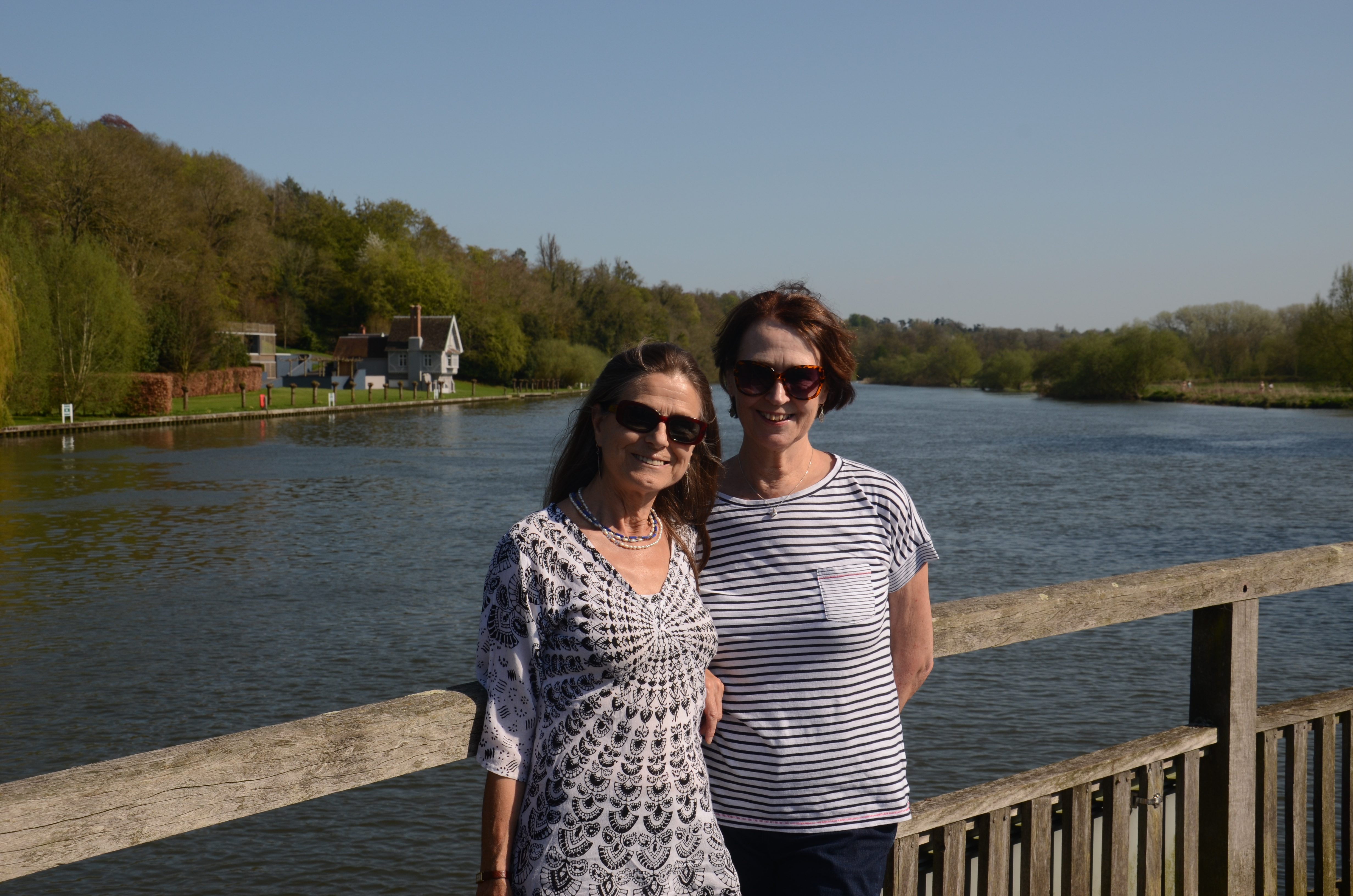
Our arrival in England was a spectacular spring day – a cloudless blue sky that Gerard could not believe. He kept saying, “This is not the England I remember!” We began our twelve-day stay with Torie who I’ve been friends with since I first arrived at boarding school at the tender age of eleven. I’ve also known Julian, who was then her next door neighbor and now her husband, almost that long. They are both amazing hosts, meeting us at the airport with a wonderful vegetarian dinner waiting, prepared by ‘Le Chef’ Julian. The following day, the weather continued to be stellar; still in disbelief, Gerard took his fleece with him. Torie showed us picturesque Henley and we walked along the Thames amid cherry blossom and blackthorn (which is actually white and not to be confused with hawthorn, not yet out).

DSC_1006

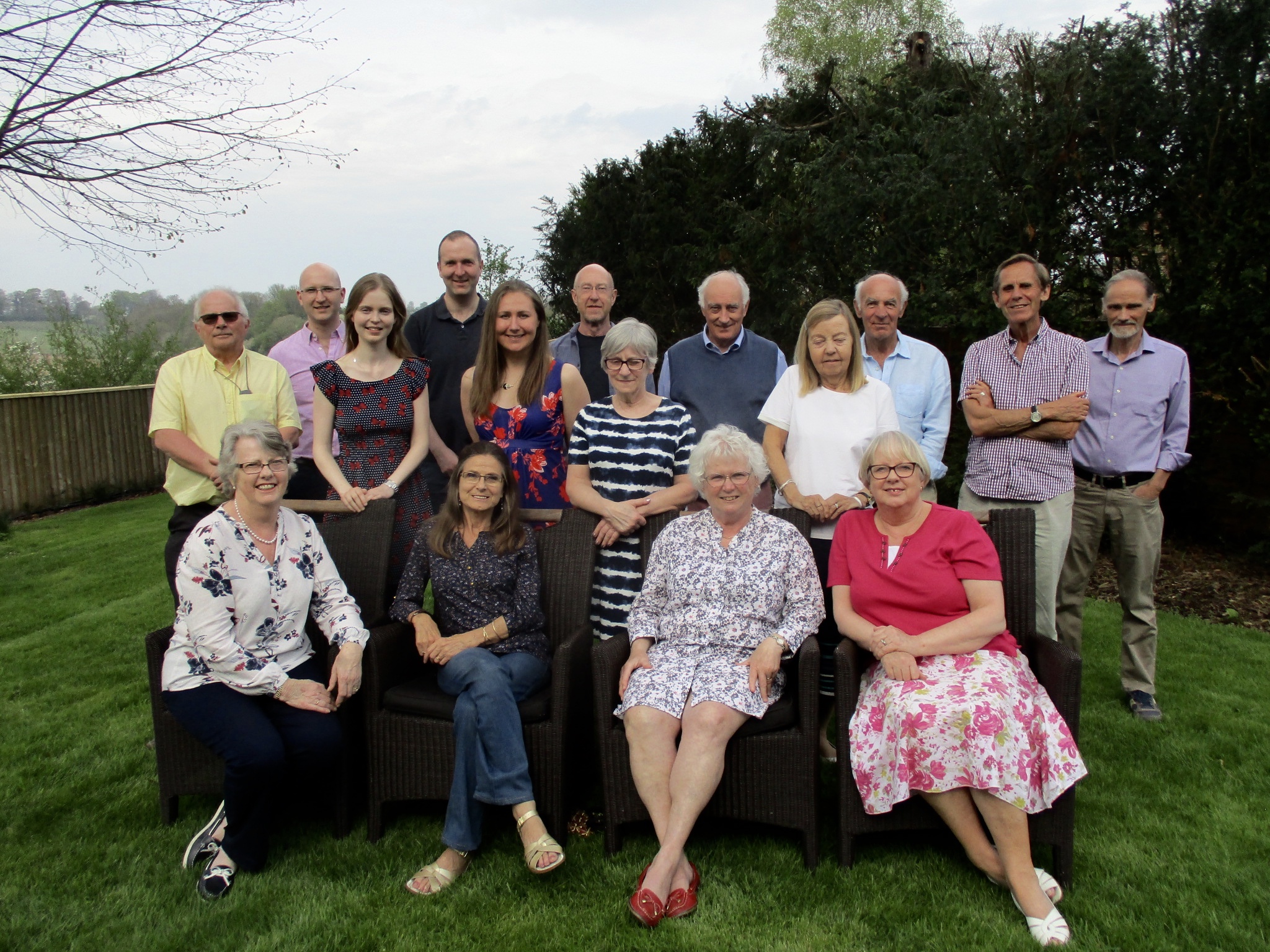
The next day, my brother drove us down to Winchester where my cousin Cherryl had graciously organized a family reunion with cousins I hadn’t seen in decades. In fact, it’s taken 50 years to meet Pippa’s husband, David. And it was the first time since 1985 that I’d seen Cherryl’s three children. There was hardly enough time to catch up with everybody; there were so many people to talk with. The meal was lavish. Again, as throughout the whole visit, everyone took great care in accommodating our diet.

fullsizeoutput_4e0

We stayed the next couple of days with Tim and Sally, both of whom go back to my Southampton University time. Gerard also knew them briefly when he joined me there. They live in the Old Rectory, next door to a thousand-year-old church and surrounded by beautiful Hampshire countryside. The view from our bedroom window stretching down their back garden and to the fields beyond is so peaceful; perhaps why I slept well there. We had a pub lunch in the New Forest with another colleague from university days. The next morning, Tim and Sally saw us off from the village railway station of Romsey, where we took the train to Bath.

fullsizeoutput_4c3

Kate, who like Torie goes back to my boarding school days, and her husband Nigel had just moved into their house in Bath when we last visited them four years ago.

fullsizeoutput_4f2

They described their renovation plans and how they were going to blow out the back to make a new large kitchen but we had no idea how transformative it was going to be. A huge glass paneled wall now looks out on a garden of shrubs and flowers that we found hard to believe was less than four years old. It was perfect, sitting at the breakfast table in bright sunshine with the glass panels open on to the garden.

Gerard who after being remarkably healthy throughout India wasn’t feeling great, some bug that hit him suddenly, was able to take it easy here while I took long walks with Kate beside the canal running right at the end of their street.

fullsizeoutput_4bd

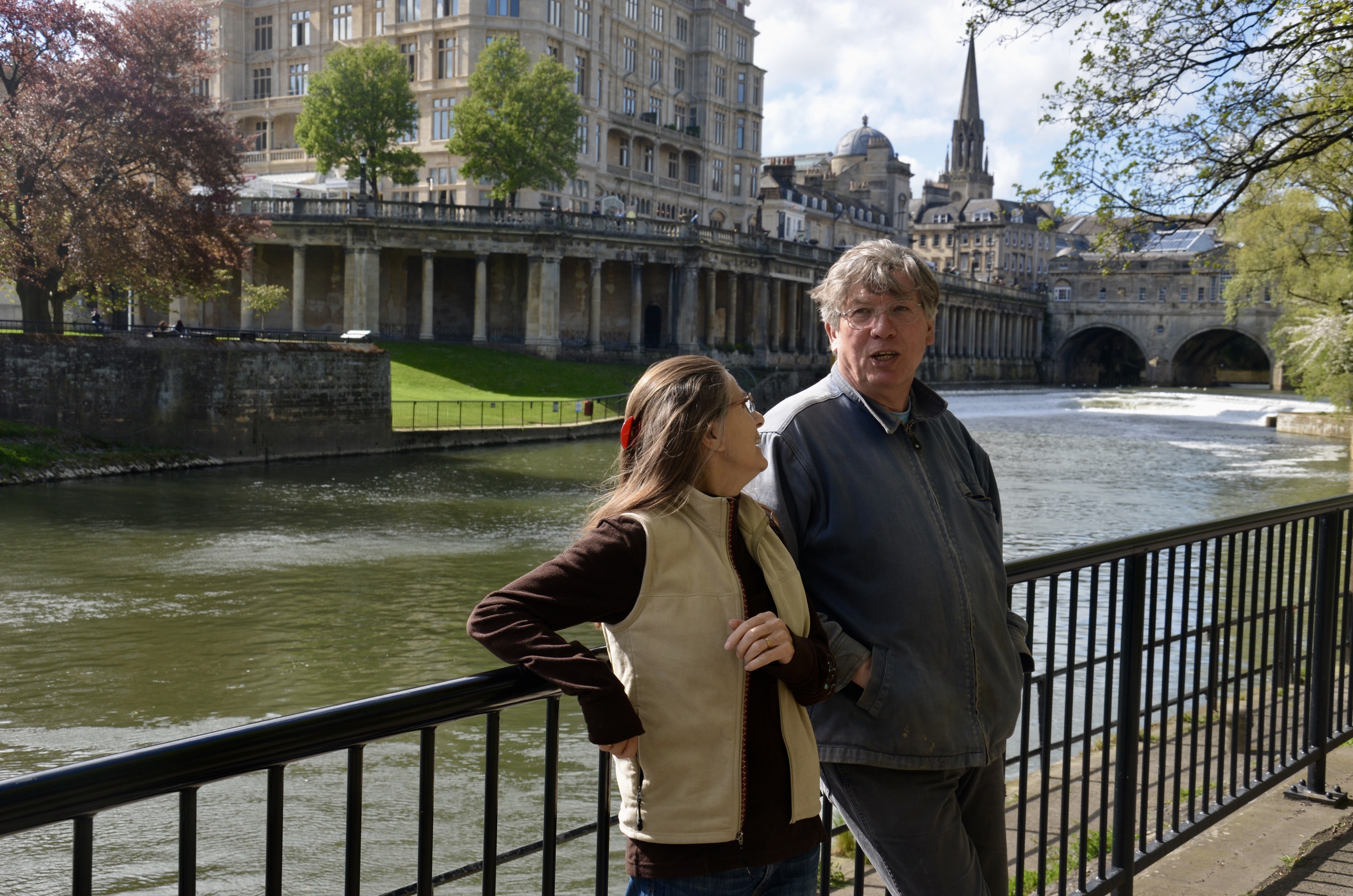
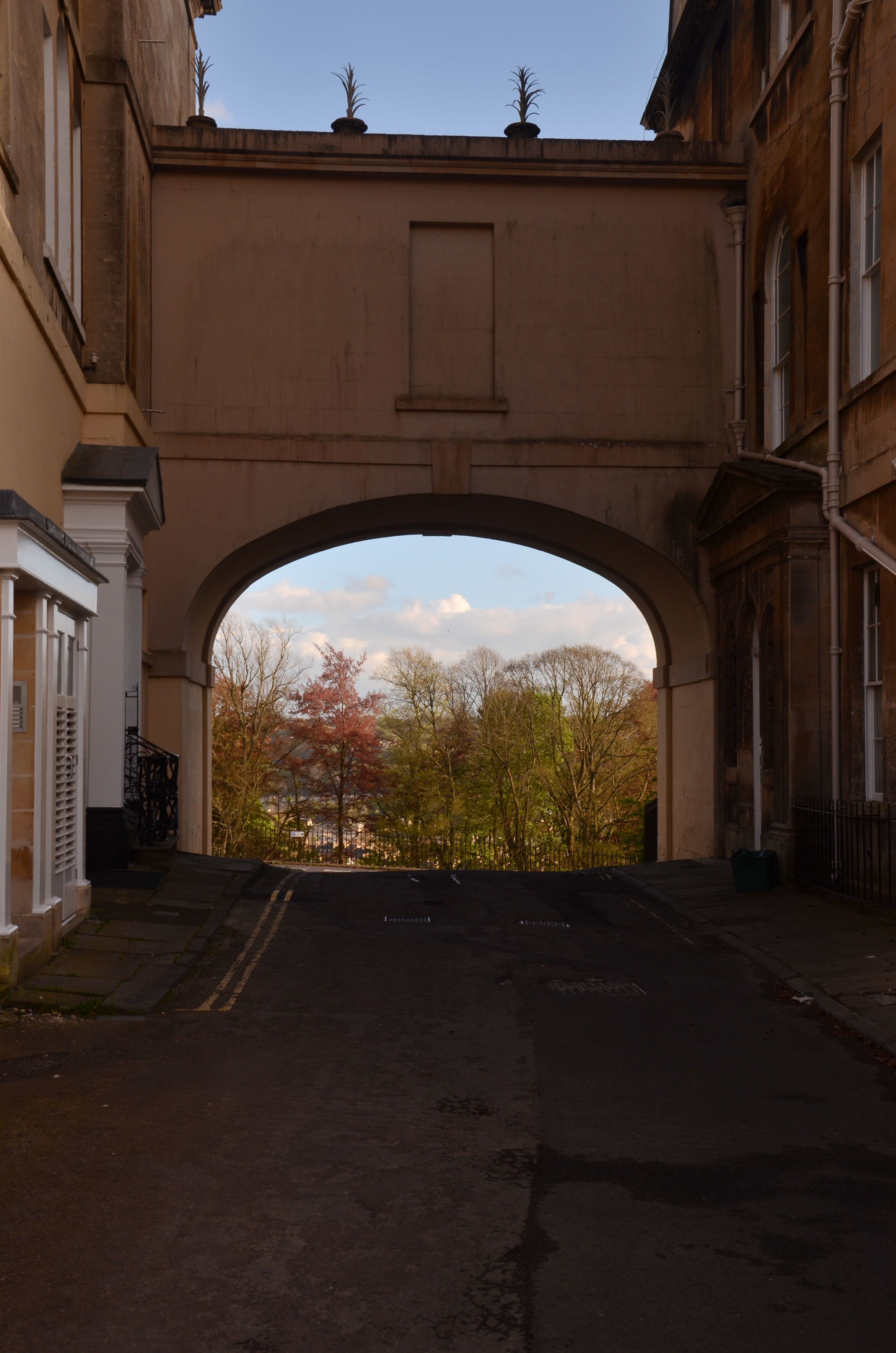
Our last afternoon, Nigel took us on a short walking tour of downtown Bath

fullsizeoutput_4c1

and then, to avoid traffic jams, on an immense detour out into the country, which was absolutely beautiful,

CSC_1098

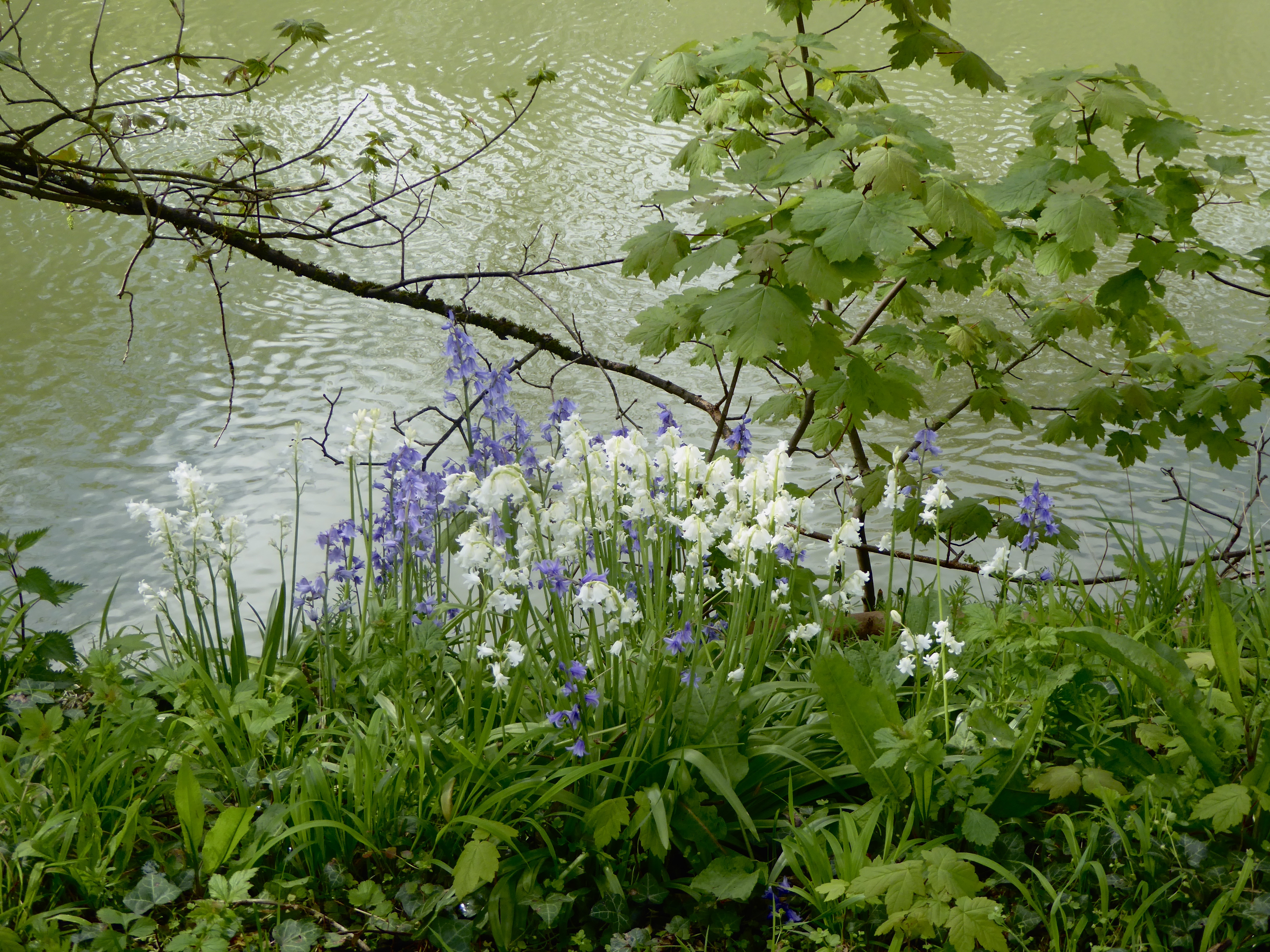
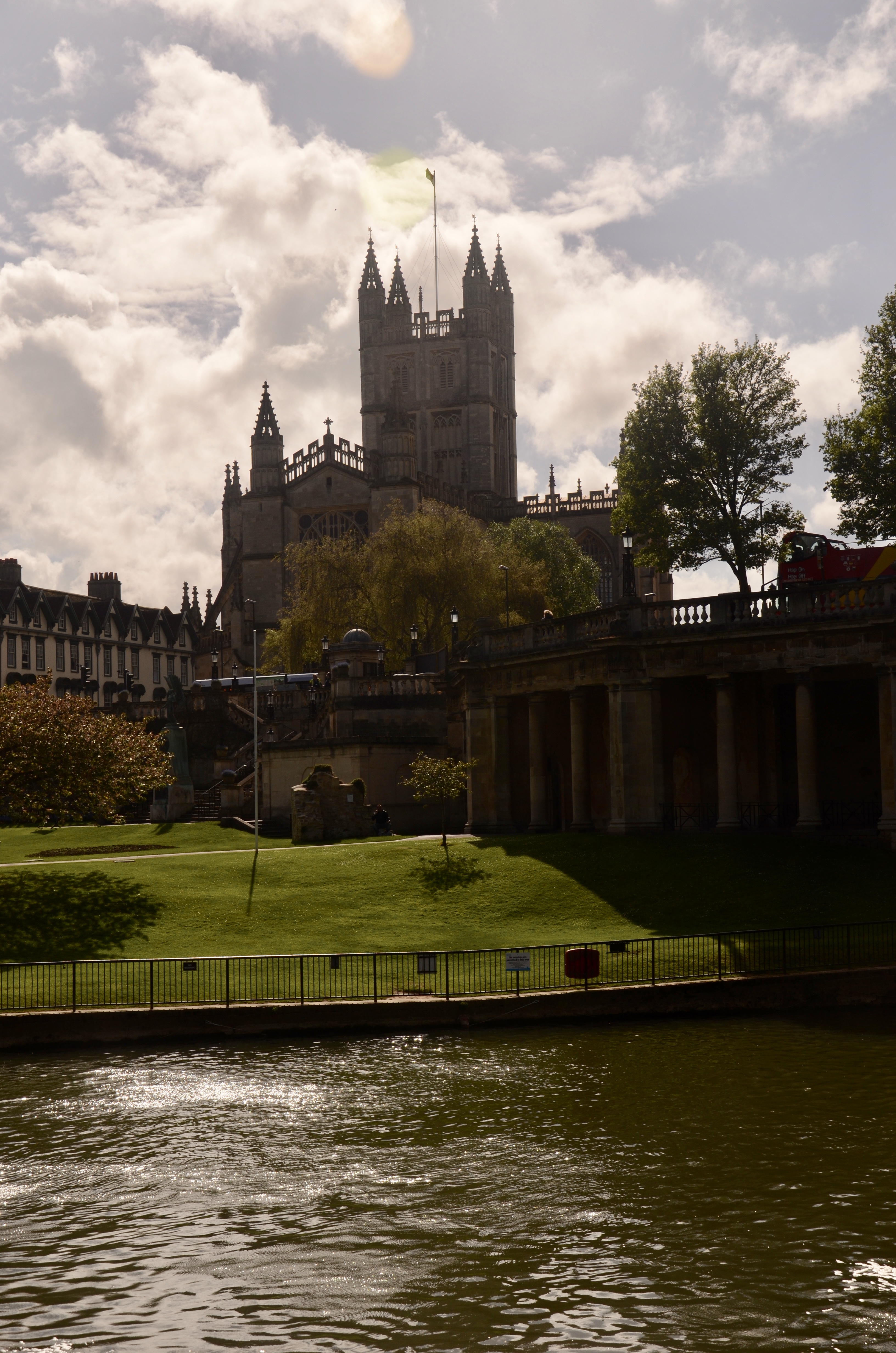
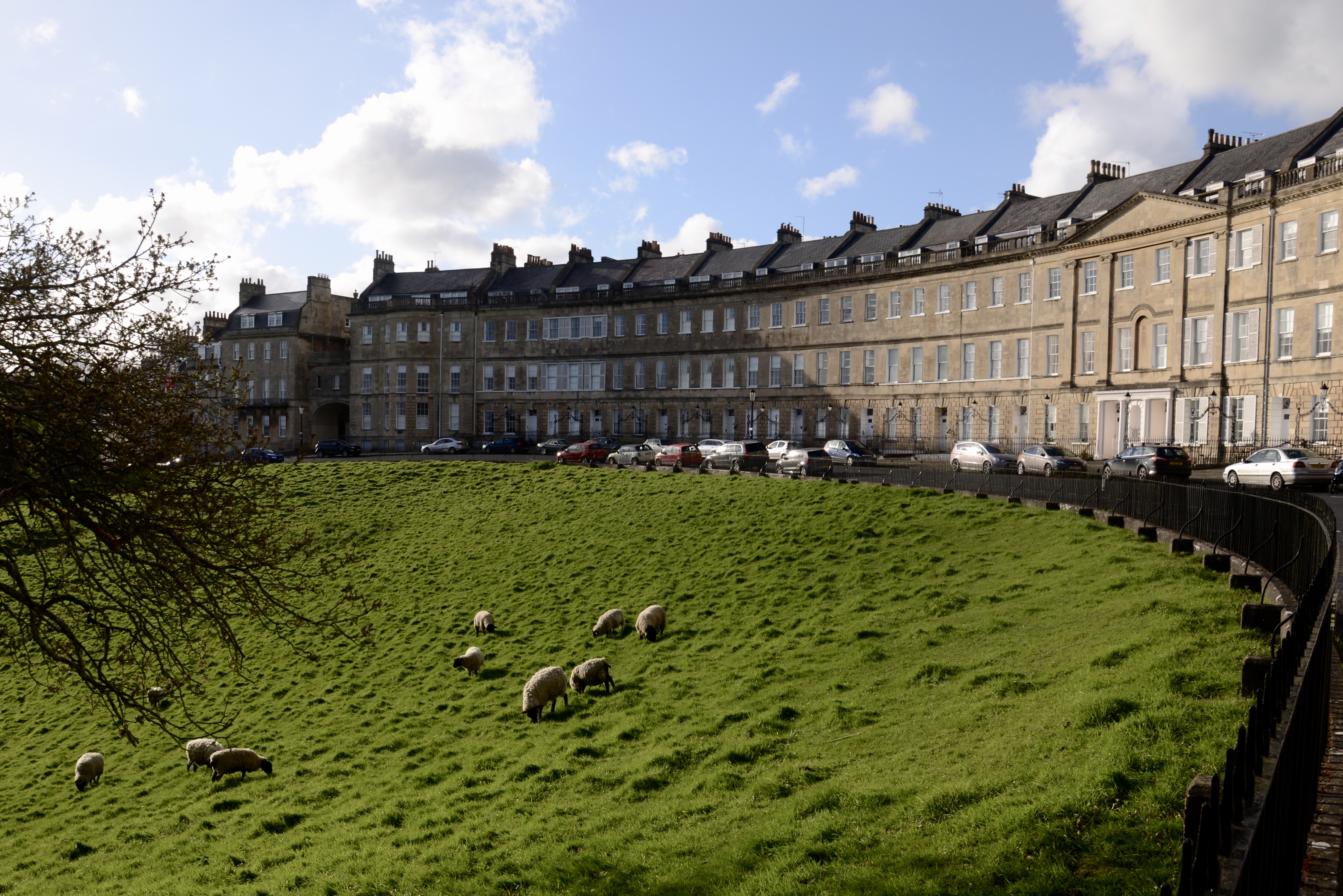
ending up at Landsdowne Crescent back in the city. The hedgerows were full of primroses, bluebells and wild garlic.

fullsizeoutput_4bf

The next morning, Kate drove us back to Wargrave where Julian had prepared yet another culinary delight. He is a caterer by profession and a chef by choice and we have been the recipients of one delectable meal after another. On Friday, our luck with the weather ran out… it had turned wet and cool. But we still managed to walk beside the river. The Sultan of Imam now owns the old Manor House and is responsible for planting the thousands of daffodils around the town.

fullsizeoutput_4be

The next day we went up to London, where I met up with Stephanie another long-standing friend I met in my last two years of boarding school and we played a strong role in my adolescence. On weekend passes, she introduced me to London’s post-bohemian scene. Gerard and I met Stephanie and her artist husband in a local cafe and then moved to a restaurant for lunch next door. Jonny, who we just recently saw in Rishikesh, joined us. He had just returned from India the night before and we were fortunate he had the energy to trek up to London from Brighton to see us. While Jonny and Gerard talked about meditation, Stephanie and I immediately picked up where we left off four years ago. A sign of good friendship. Five hours later, we I had to say goodbye, not knowing when I’d see her again.

P1050374

On Sunday, our last day, my brother arranged a family lunch, with children and spouses. All thirteen of us had a chance to talk, but with limited time I left feeling there was much more to be said. To end the day and our stay in London, we braved the bitter cold (the temperatures had now dropped to 5C an extreme change even for Britain) and boarded the bus to Shepherd’s Bush for a cup of tea with Cristiane and Crispin, friends from when I worked at Yankee Group. It was great to see them and their two girls in their new house.

fullsizeoutput_4c0

My infrequent and brief visits back to England are always nostalgic but this time was particularly so, perhaps because it’s now been forty-five years since I left to live in the U.S with Gerard. I was so young, so English and totally unprepared for America. When I would return though rarely, I was grateful to the customs man glancing at my British passport and saying Welcome Home! But now, I feel quite foreign, England has changed so much, economically, politically and culturally. Even the cooking has been revolutionized in recent years. We both agreed we ate like royalty thanks to the skill and generosity of our hosts. I’m grateful I still have friends from school and college that I can pick up with so easily and who welcome Gerard and I into their homes.

But the countryside remains enchanting as ever and when I walked along country lanes, the hedges exploding with primroses, and looked out across the open fields, everything so green and fresh (thanks to ample Spring showers) clouds scudding across the sky…I recognized the England I knew forty-five years ago.

DSC_1070

After the Rain

fullsizeoutput_49f

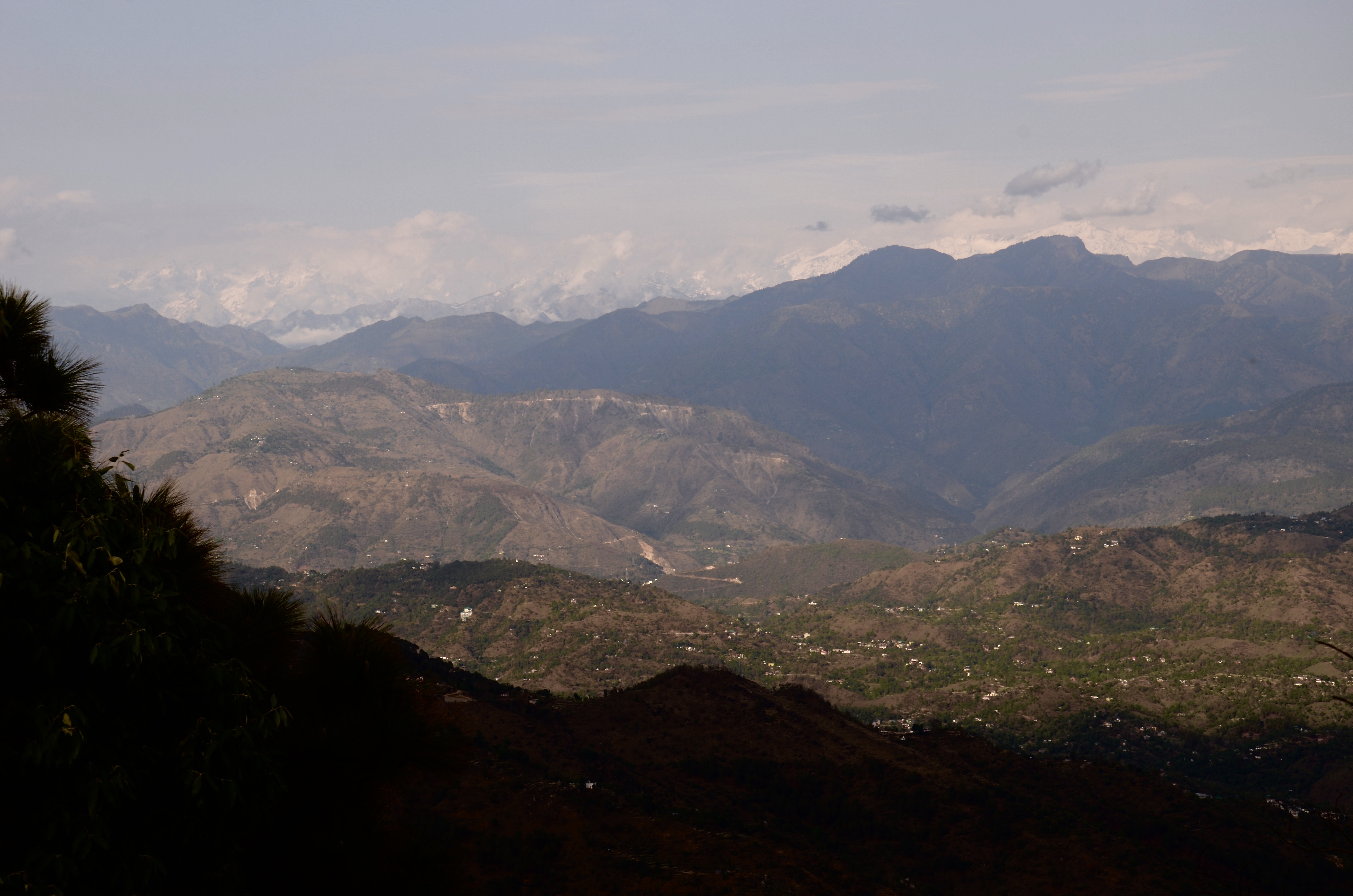
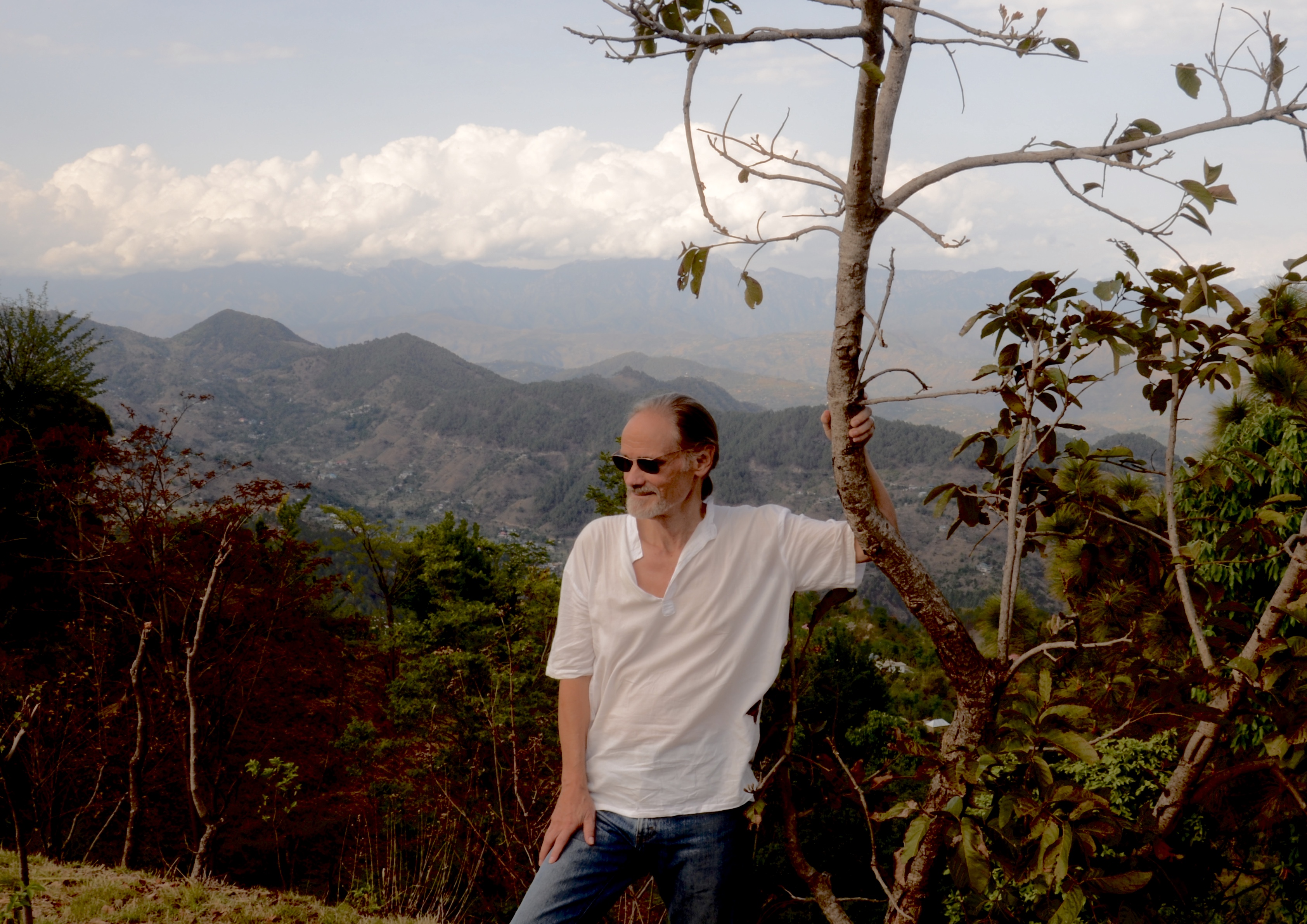
One night it rained heavily, with thunder and lightning moving around the hills. In the morning, the clouds slowly lifted out of the valley lifted, then the mountains beyond became defined.

fullsizeoutput_45bWe walked back up to the temple on the ridge and looked out towards fresh snow on the distant peaks.
fullsizeoutput_462

It was tantalizing not to be closer, but our time in India was running out and then our friend Peter wrote to say it was raining and cold in Vashisht. So we decided to just spend the last week of our stay in HP here.

fullsizeoutput_464

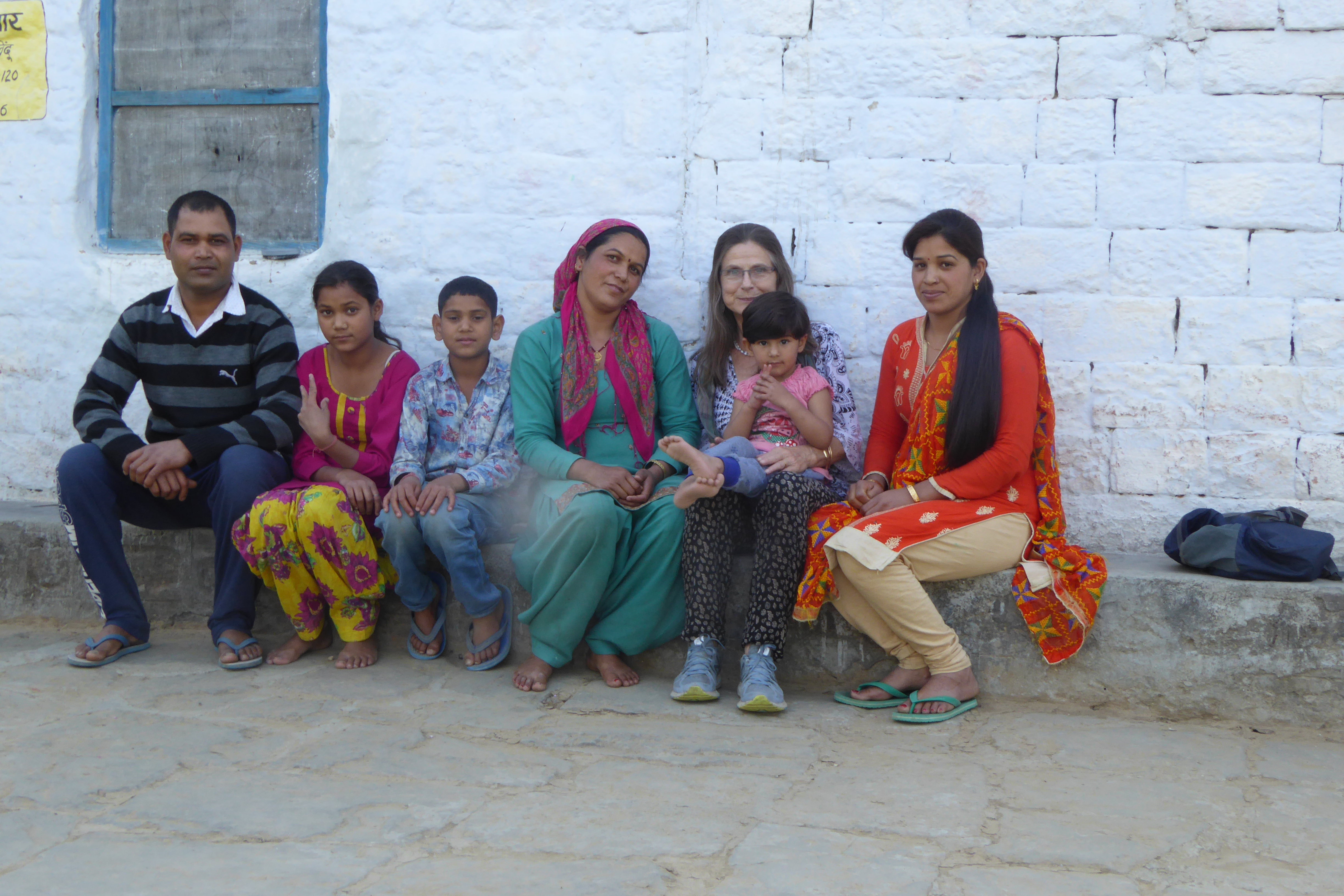
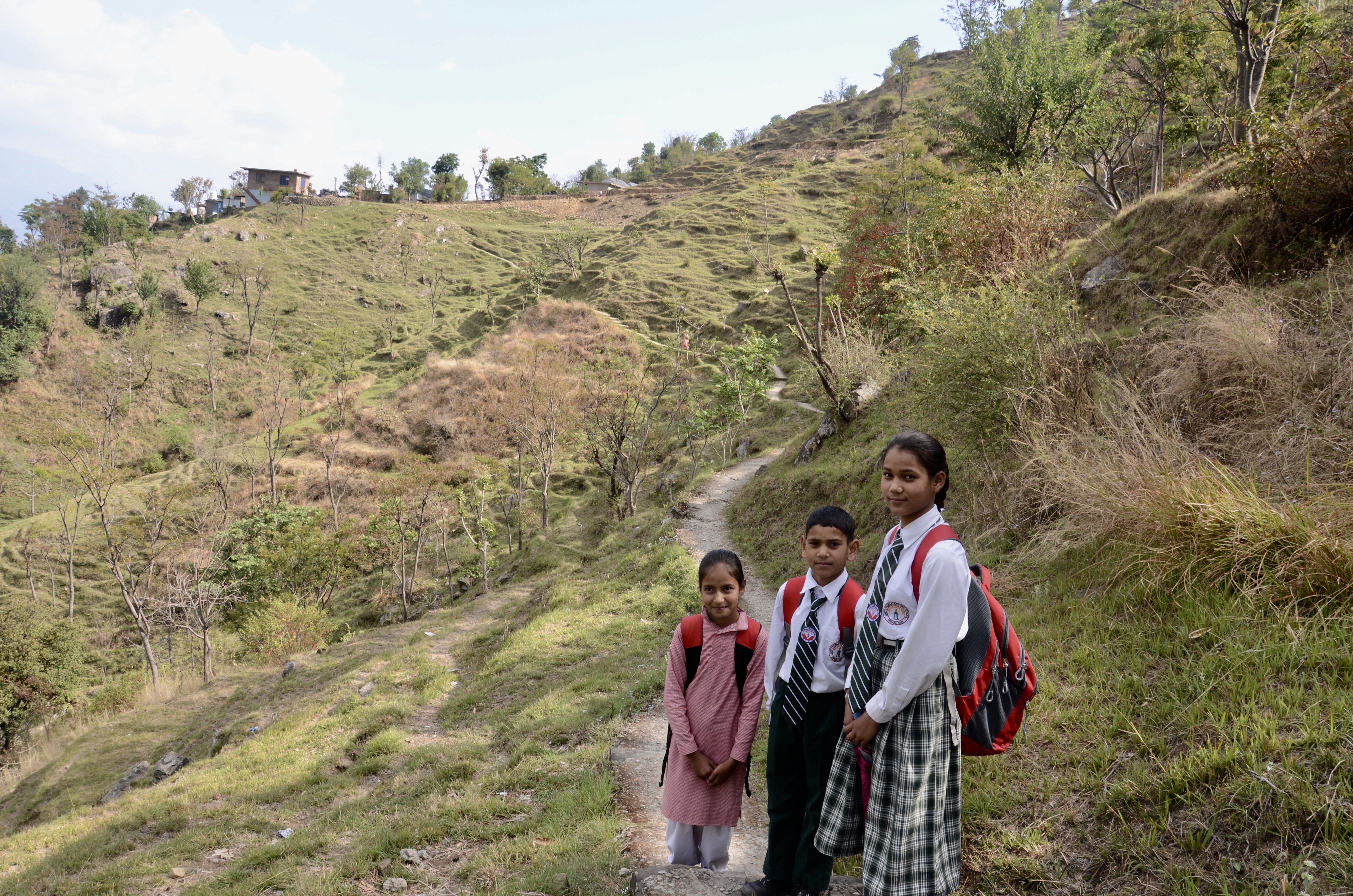
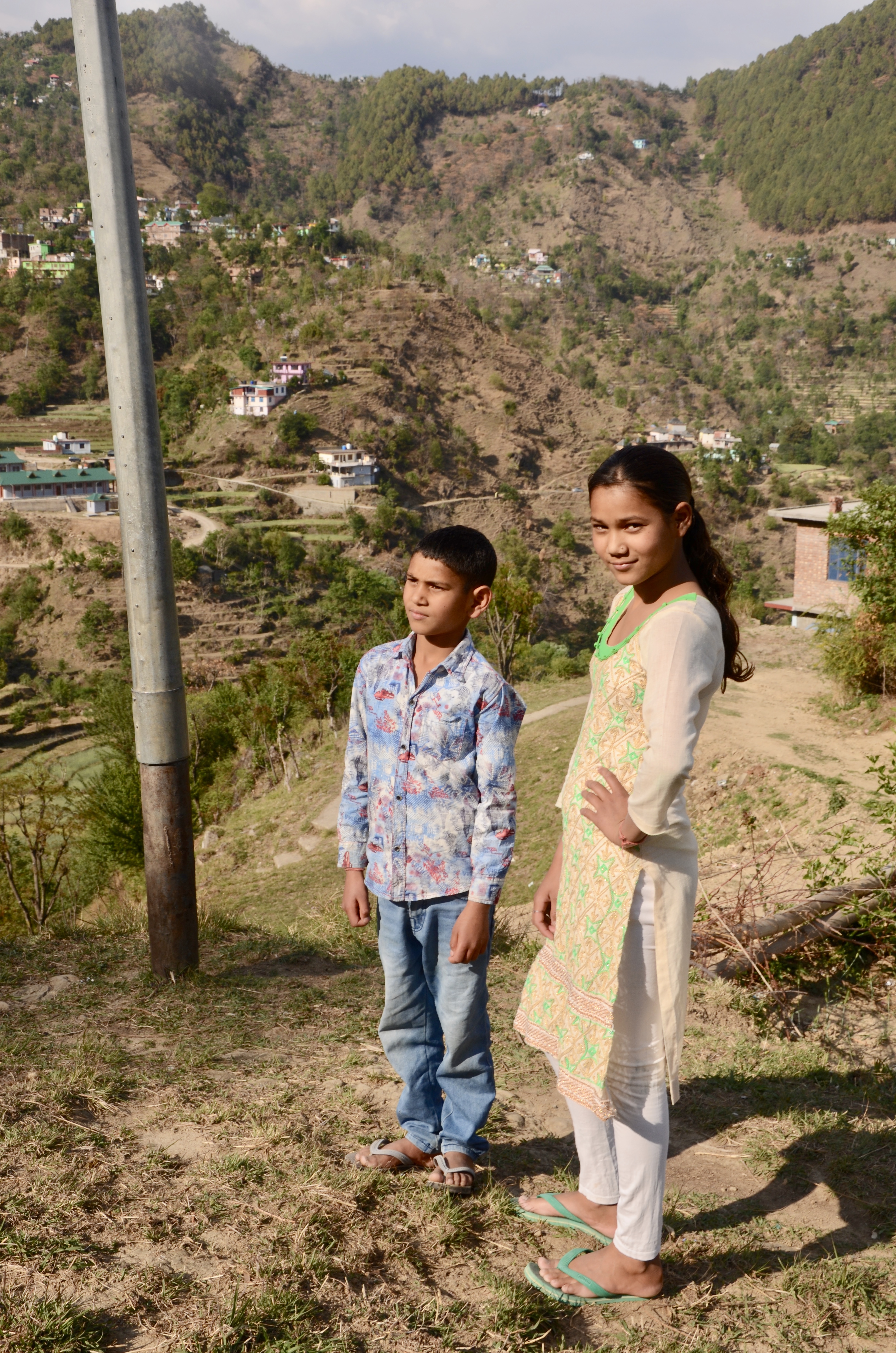
Walking out into the fields in another direction, two children called out to us. Dressed in their ridiculous British-style school uniforms, it was Suman and her younger brother, Anurag whose family we had visited the previous two years. Their father had not been there, working as a welder in Saudi Arabia for several years and we were impressed by how independently his wife managed the small farm alone. Suman insisted we come to the house. She and Anurag quickly change out of their school uniform.

fullsizeoutput_468

Everyone was pleased to see us including their father who was finally home. He confirmed the terrible stories of working conditions we hear of in Saudi Arabia; he’d received no pay for the last six months he worked there.

P1050307

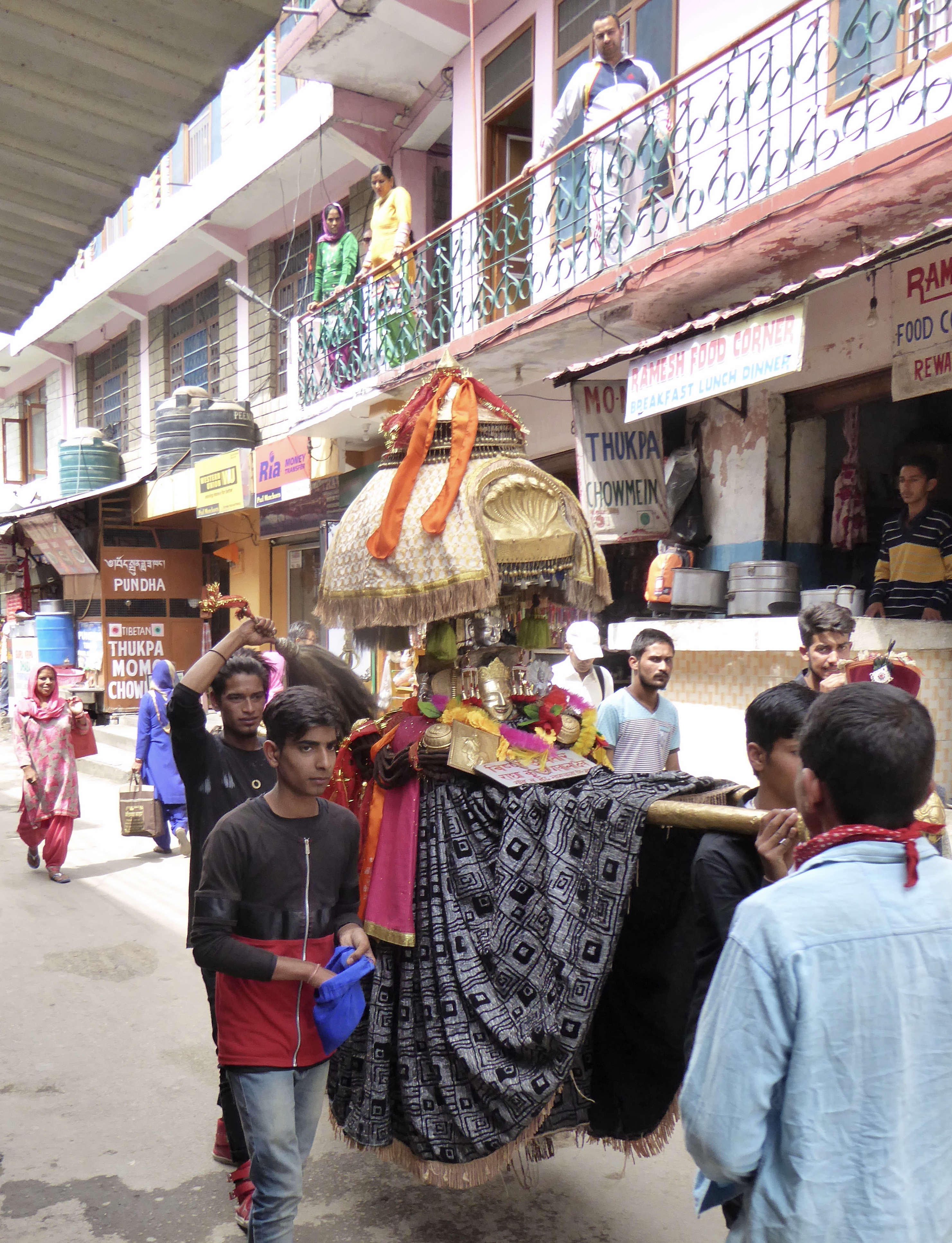
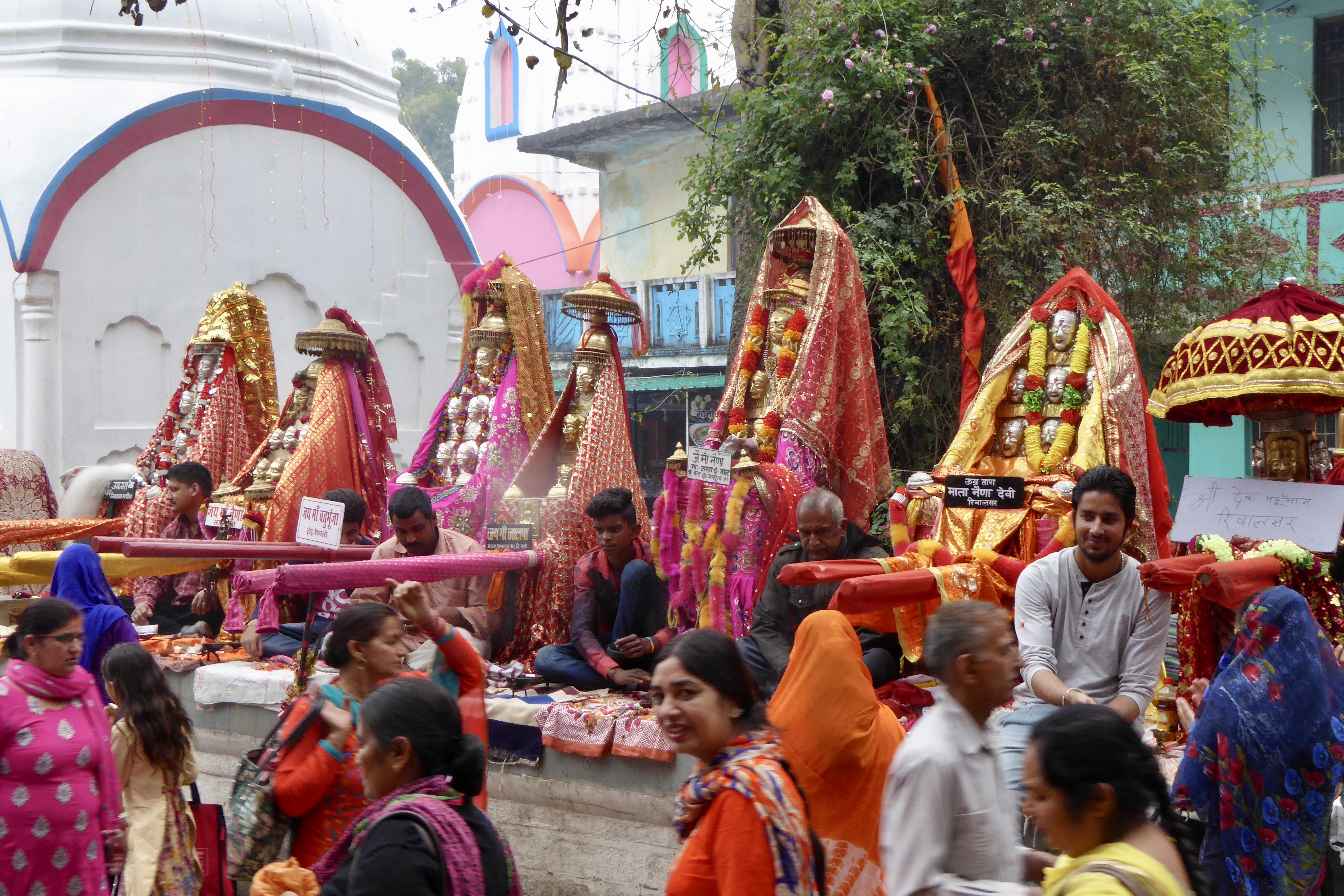
The final four days of our visit coincided with an annual festival. Baisakhi, rooted in the rural agrarian tradition, bids a final farewell to winter.  All the goddesses from local villages descend on the town, transported via wooden poles on the shoulders of village men and accompanied by drums.

fullsizeoutput_483

We’ve seen this same festival in Vashisht but not here. Celebrated by both Hindus and Sikhs, the Hindi temple and Sikh gurudwara were festooned with colored lights at night. But in the manner of all Indian festivals, it was also secular. The main thoroughfare beside the lake became a massive carnival – rows of stalls set up selling the same cheap merchandise. (We sympathised with the vendors who must have lugged it all up the mountainside, only to turn around and lug most of it down again at the end of the festival).

fullsizeoutput_488

Literally, thousands of people from the neighbouring villages visited over the four days and the town was suddenly transformed from its usual peace to a noisy hubbub. Politicians of the incumbent BJP party pontificated over loudspeakers; drums continually pounded. Each evening the politicians gave way to loud music. Singers were accompanied by electric instruments and pakawaj drums The music ranged from crooning 50s style music to Bollywood to local folk. We preferred the latter which was nostalgic of the folk music of Morocco. It was all an interesting hybrid mix, but like everything in India, the amplification was way too loud.

fullsizeoutput_49c

Finally, we said goodbye to all the friends we’ve made in this little town and took the night bus direct back to Delhi to begin our trek home via a few days in England.

DSC_0957


A Walk in the Countryside

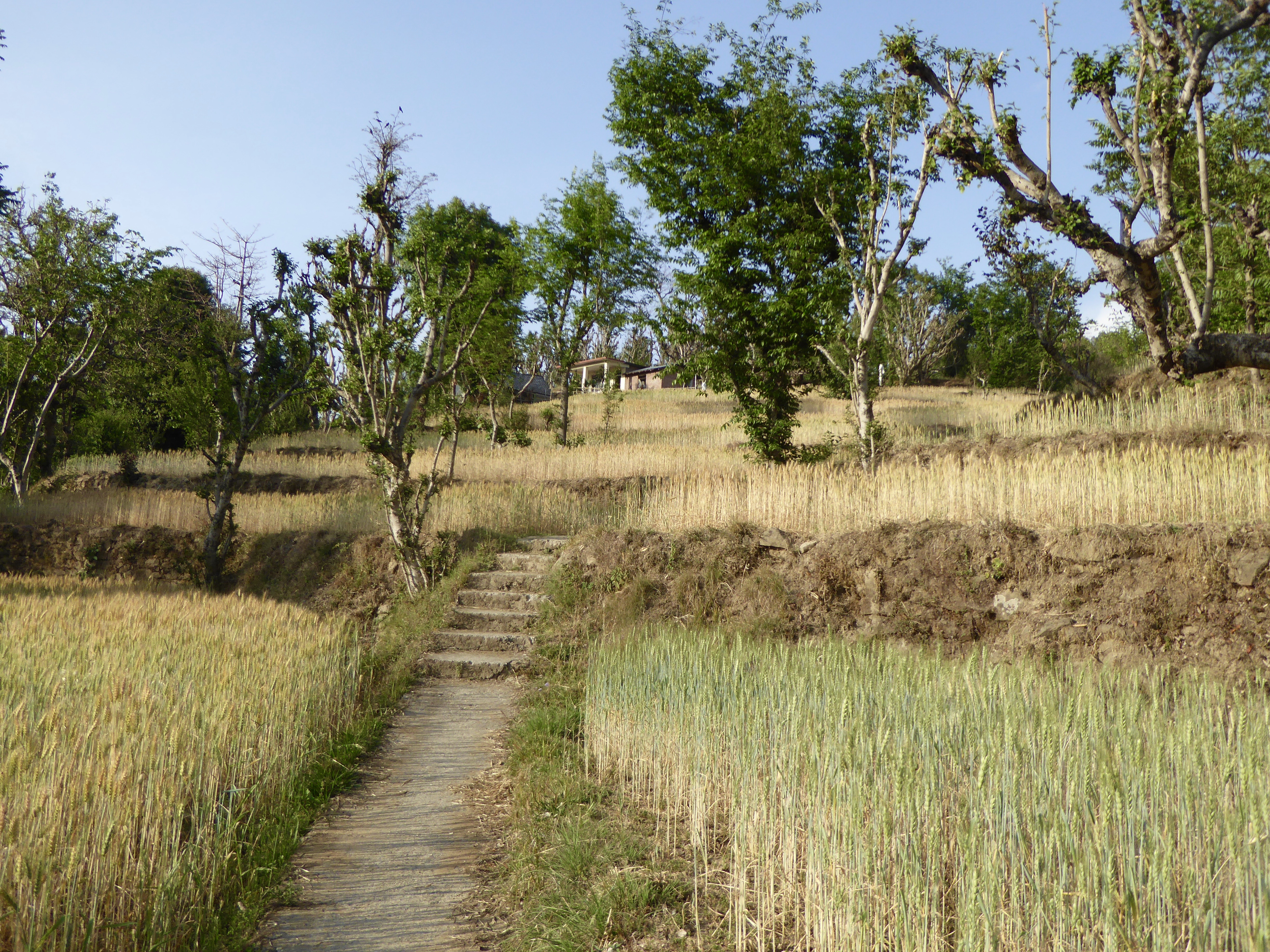
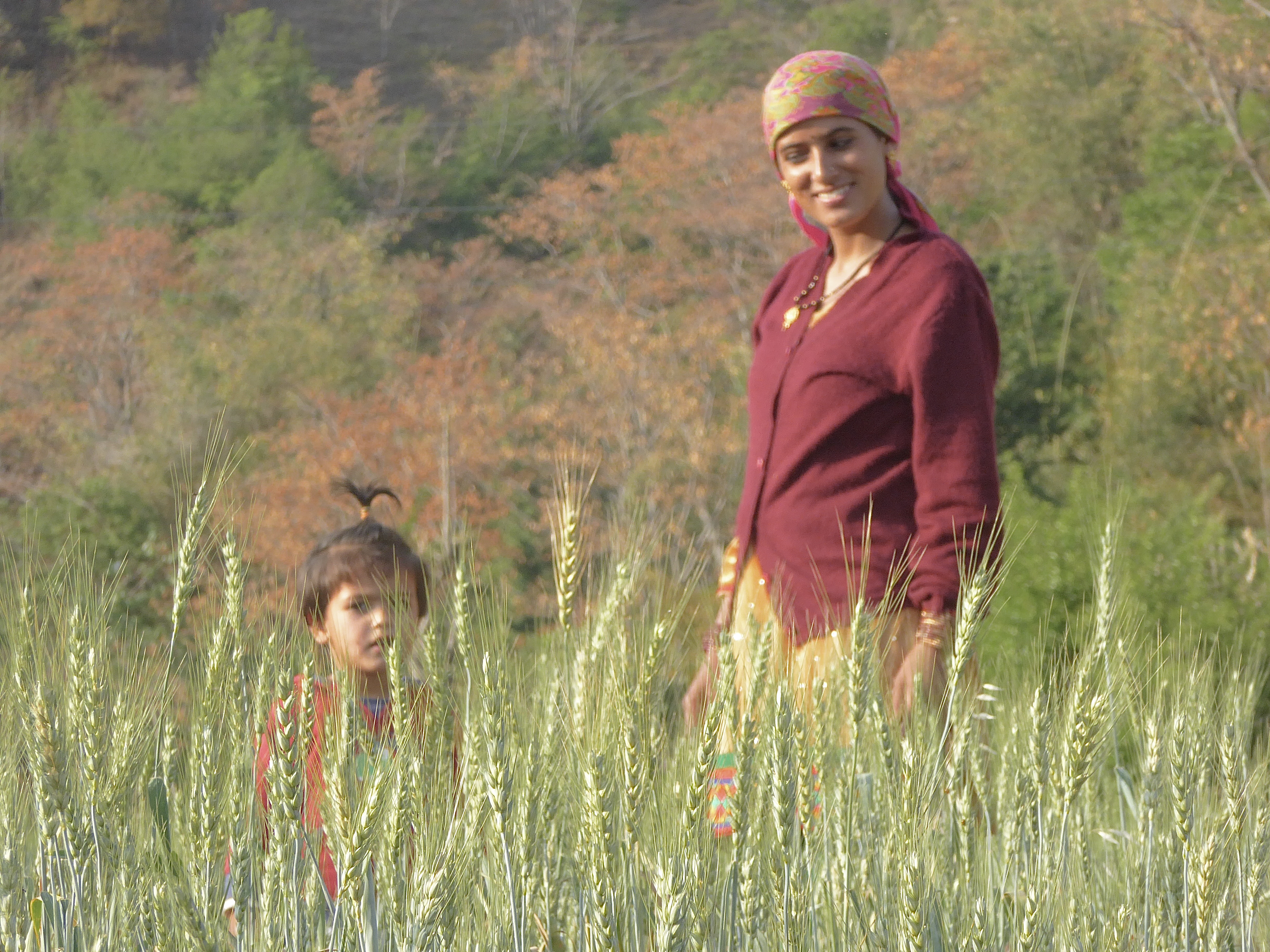
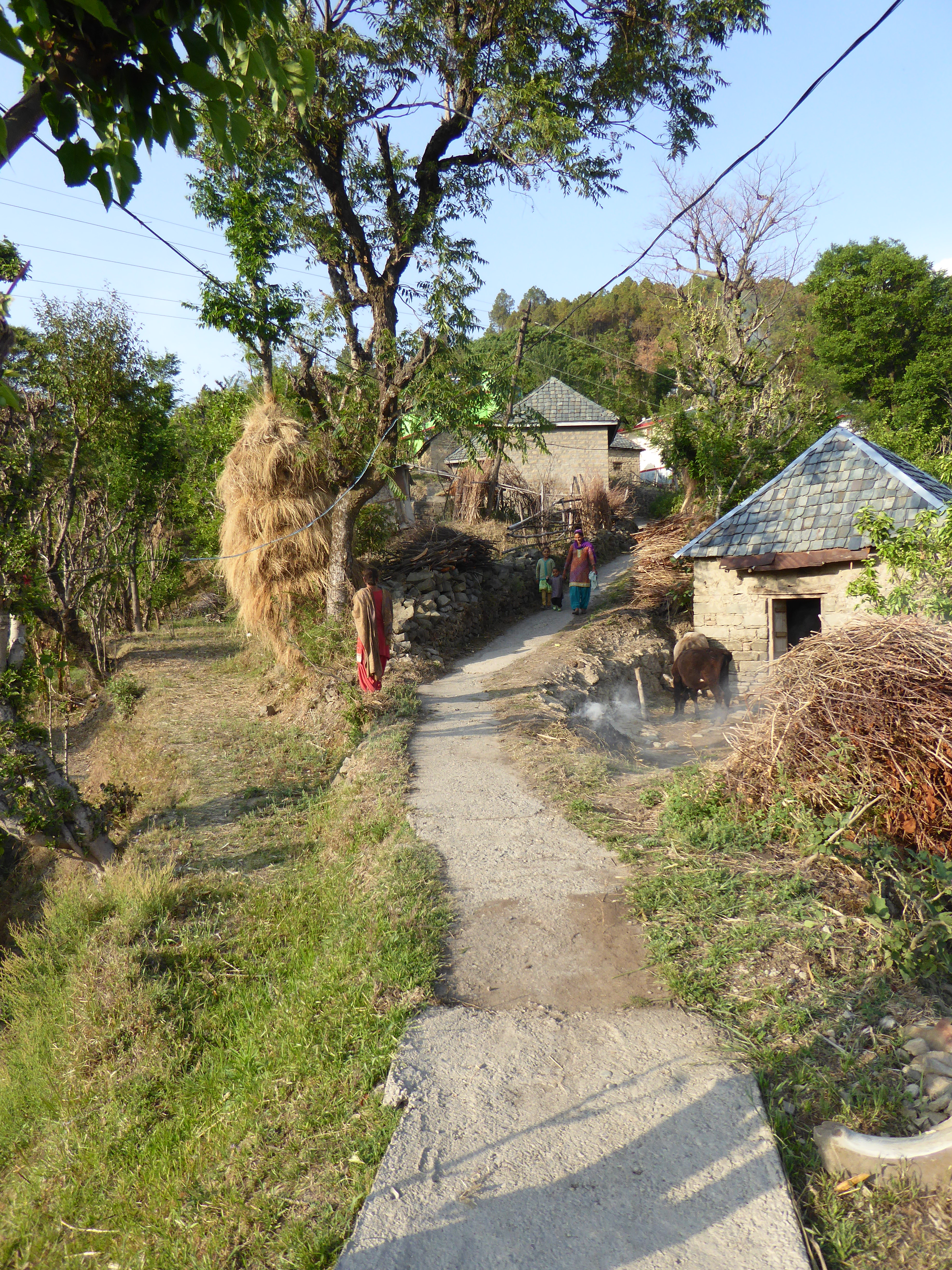
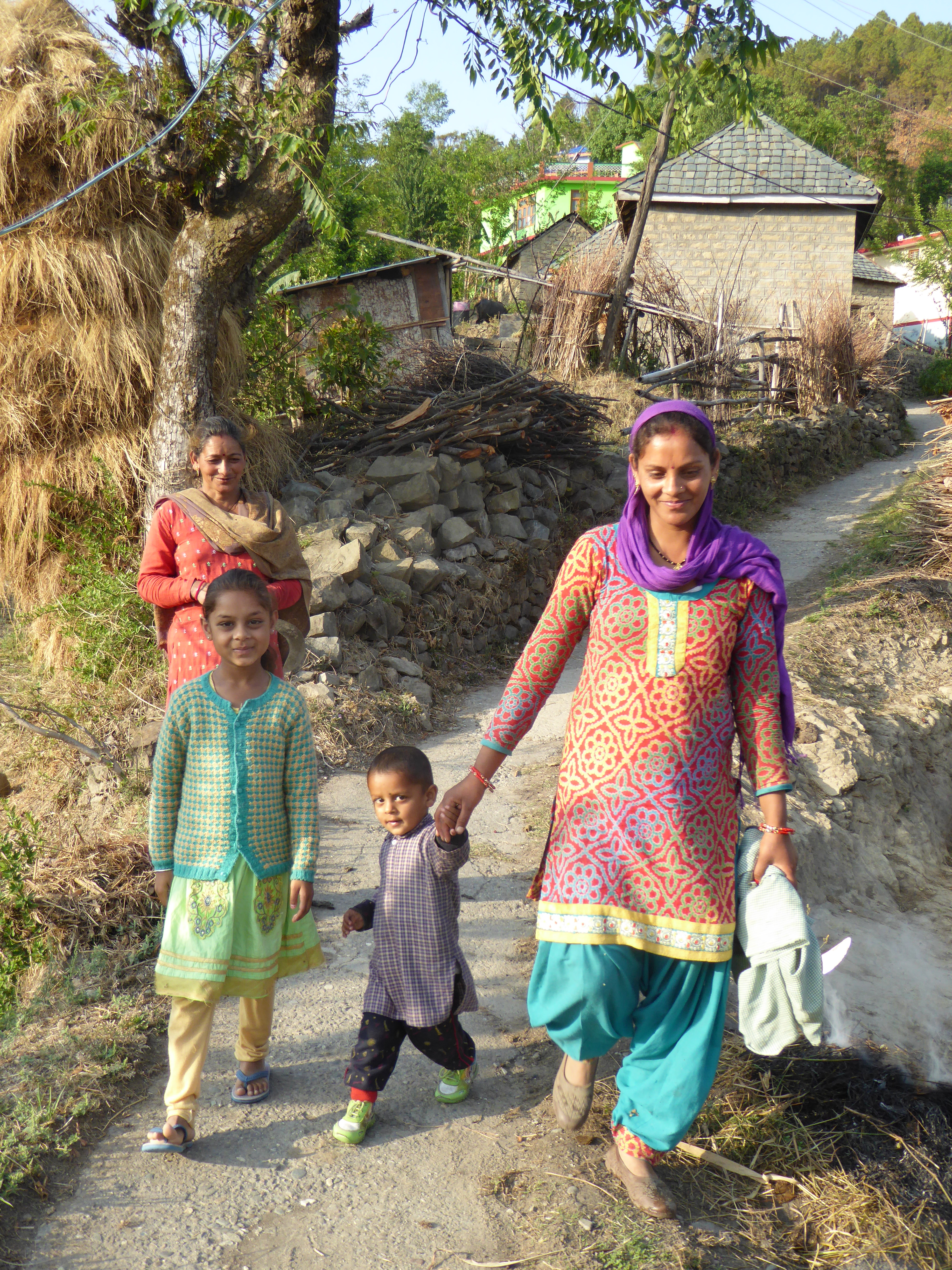
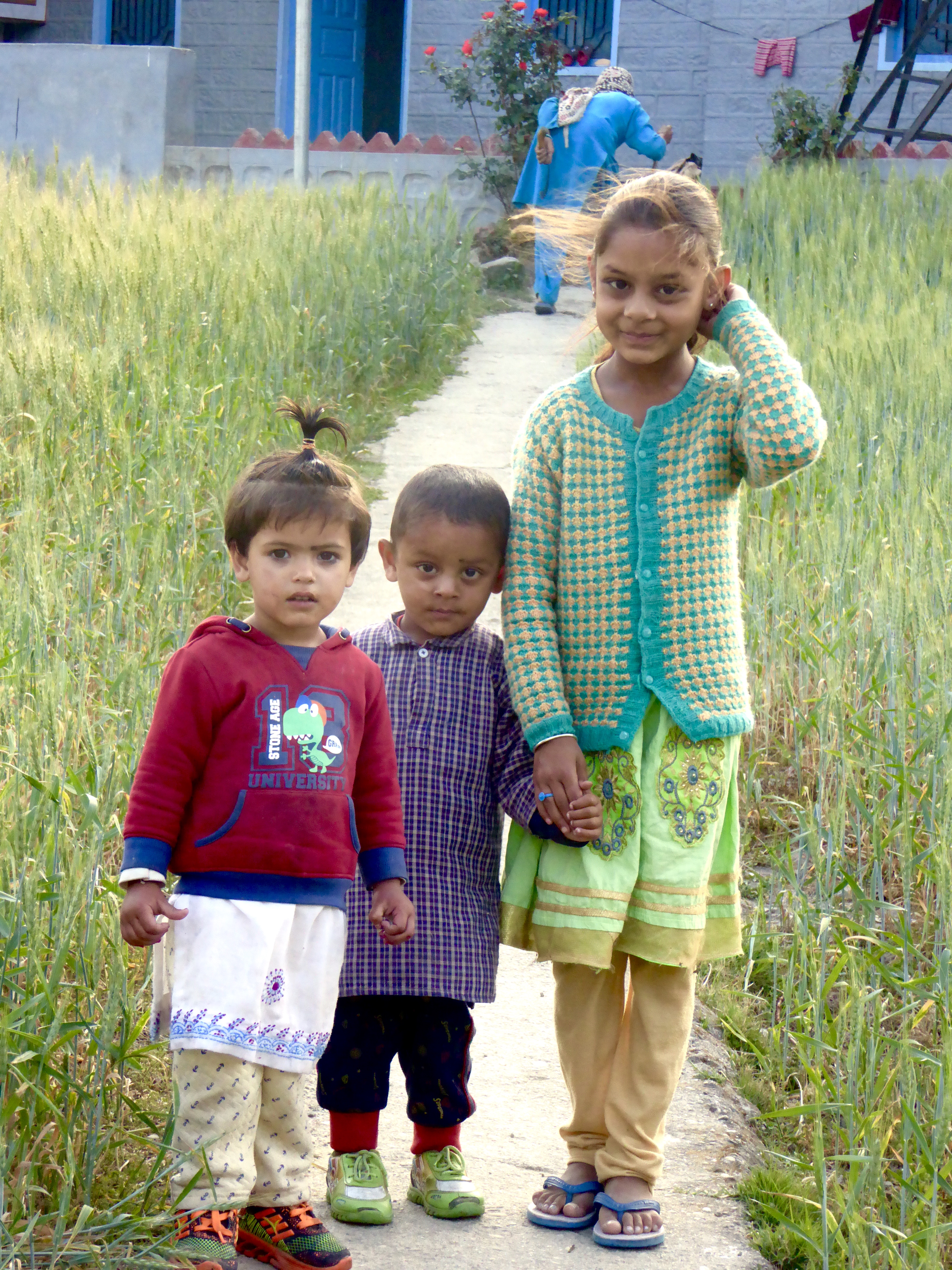
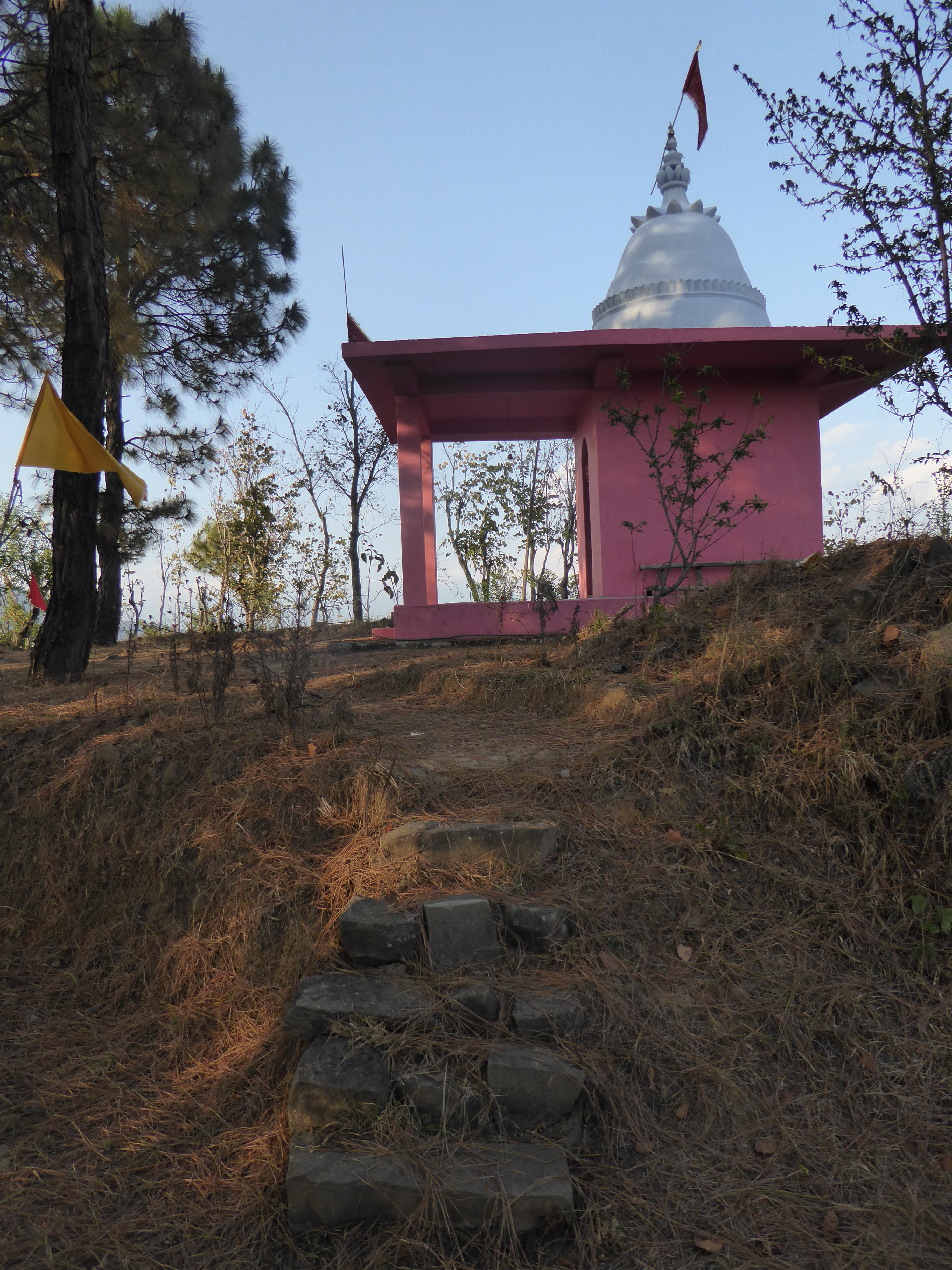
Our friends have left and we’ve decided to stay longer because of inclement weather up north. It still amazes me how we continue to meet interesting people as we travel. With little effort, we really connected with these two couples. Without the temptation of spending half the day in the chai shop chatting, we have more time to work on our writing. We trade the laptop back and forth and Gerard has made good headway on his story. One late afternoon, I went out and walked through golden wheatfields, passed smiling women and children and finally, just as the light was fading, came to a small but colorful temple, perched on a ridge. The longer we’re here the more walks we discover.fullsizeoutput_449

fullsizeoutput_44a

P1050224

P1050225

fullsizeoutput_44d

fullsizeoutput_44e

P1050250

P1050246

Mellow in Kullu

fullsizeoutput_423

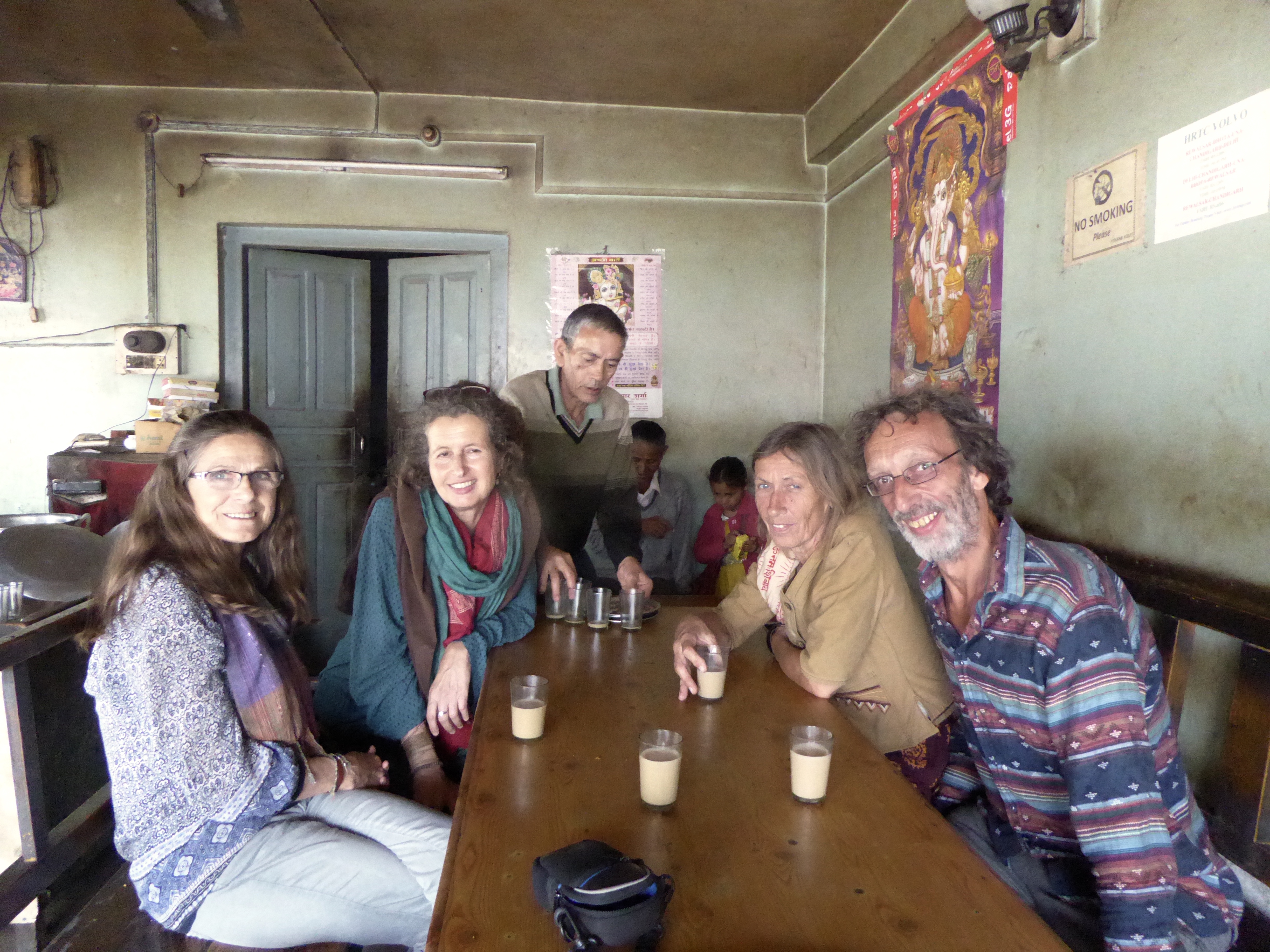
At first glance, the peaceful town nestled in the hills at the beginning of the Kullu Valley has changed very little since we first discovered it eight years ago. There are few other places in India that you can say the same. Returning here almost every year, everything is familiar – the prayer gong resounding in the monastery in the early morning, pilgrims and Tibetan refugees performing kora, circling the lake. The Hindus and Buddhists appear to live in peaceful harmony. There is still little traffic and few places to eat, though more than last year. Thankfully, this has not become a tourist destination but there are a few more westerners. In the past, the town has been the meeting place of some of our strongest friendships, Frederic from France and Peter from the US. Again, we have connected with two couples of well-seasoned travelers around our age who also return here regularly.

fullsizeoutput_41d

They each have their stories of traveling in India and how it all began. Marina from England, starting traveling immediately after leaving college. Seeing a lot of Asia, she fell in love with India. For many years, she has divided her time between England and India, returning to her flat in London in the summer to make enough money at waitressing and gardening to return to India again.  She met Rajiv in Gokarna seven years ago.

fullsizeoutput_43f

Marion first made several trips to India from Germany in the mid 70s overland via Iran, Afghanistan, and Pakistan. She told stories of the hassles of traveling as a single woman, especially in Pakistan. For a while, to finance her trip she hooked up with a scheme of delivering new Mercedes to rich Iranians who were only allowed one car. She would pick the car up in Munich, registered in her name, and drop it off in Tabriz. She also now returns to India with Jhurgon for several months each winter.

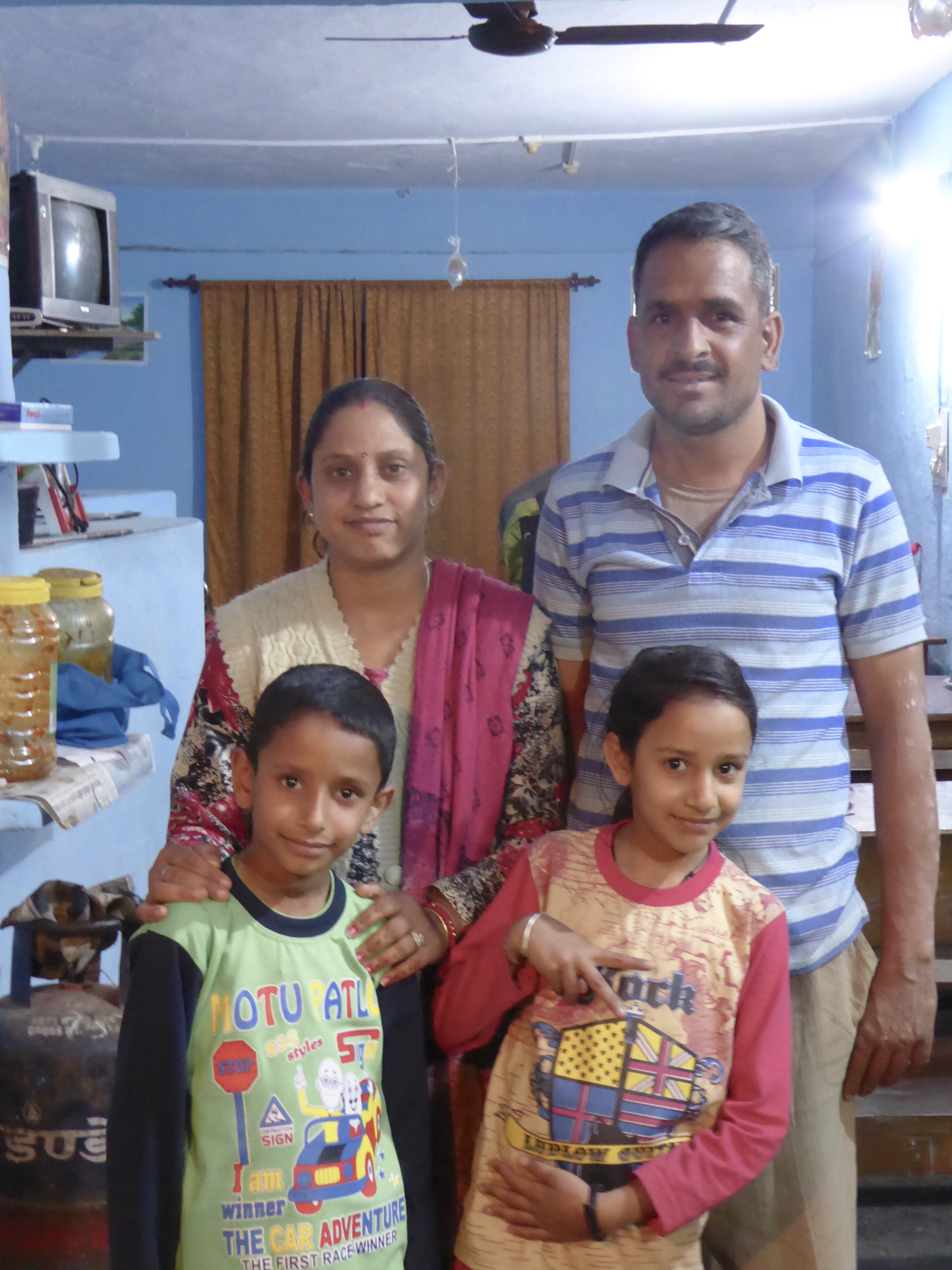
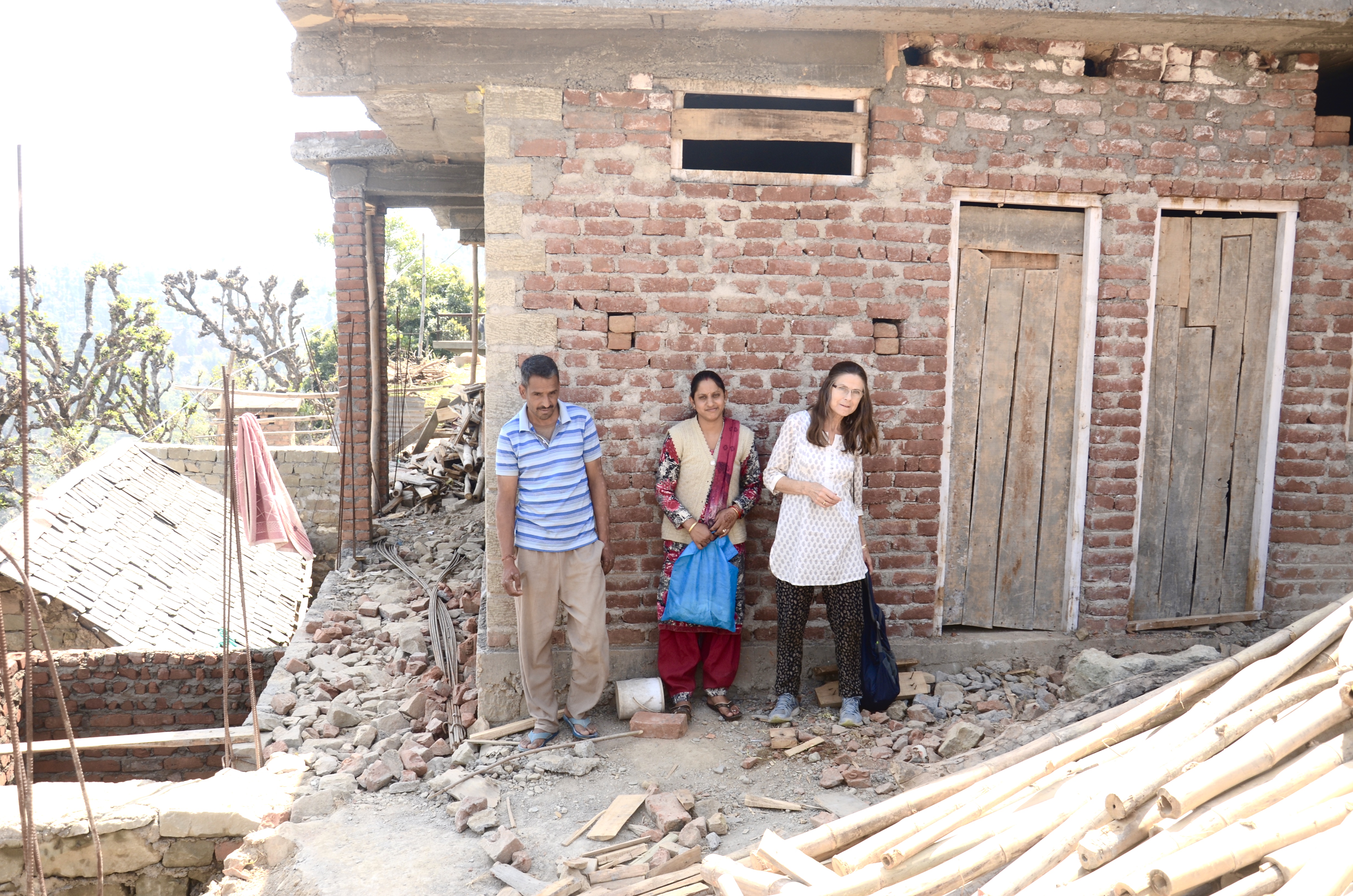
fullsizeoutput_435Seeing Sapna and her family was a reunion; they were so happy to see us you’d have thought we’d known them our whole life. Such is the Indian disposition. She’s still scraping out a living at a small restaurant on the main street (there are two streets in town).fullsizeoutput_412One afternoon, she and her husband took Gerard and I on a short trip to see the progress on their new home. With very little money, Kheem Chand is doing most of the work himself and progress is slow.
 

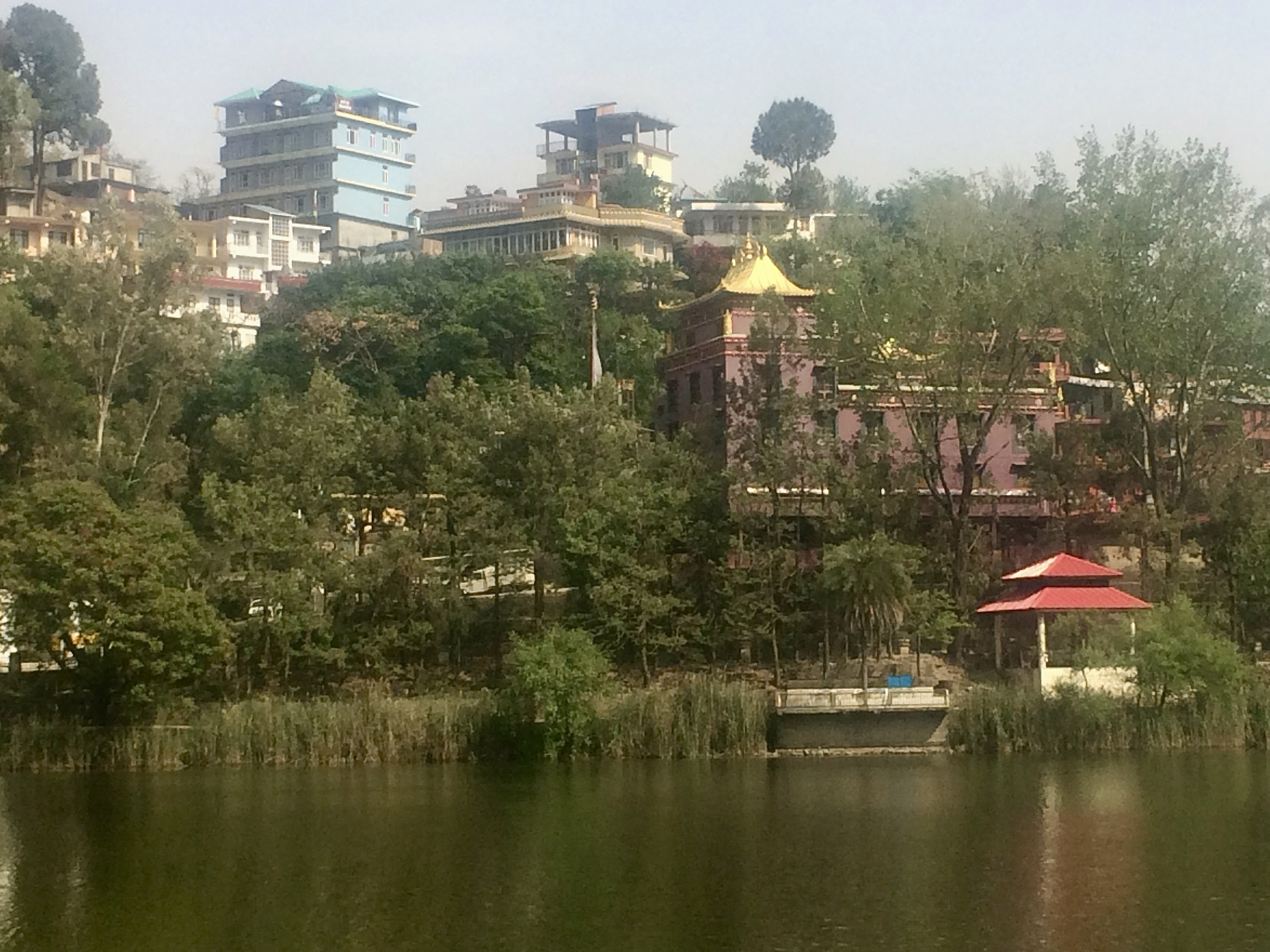
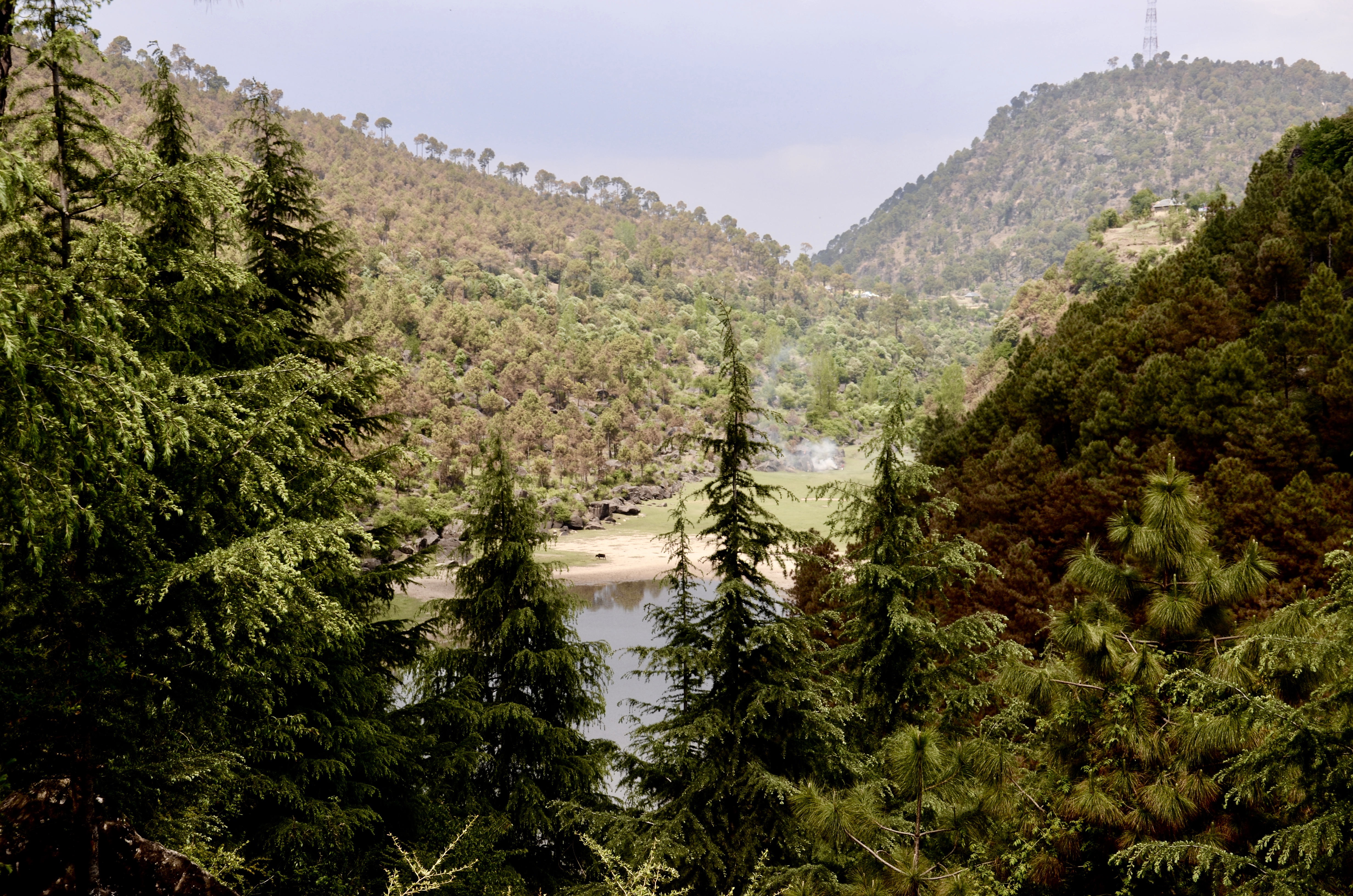
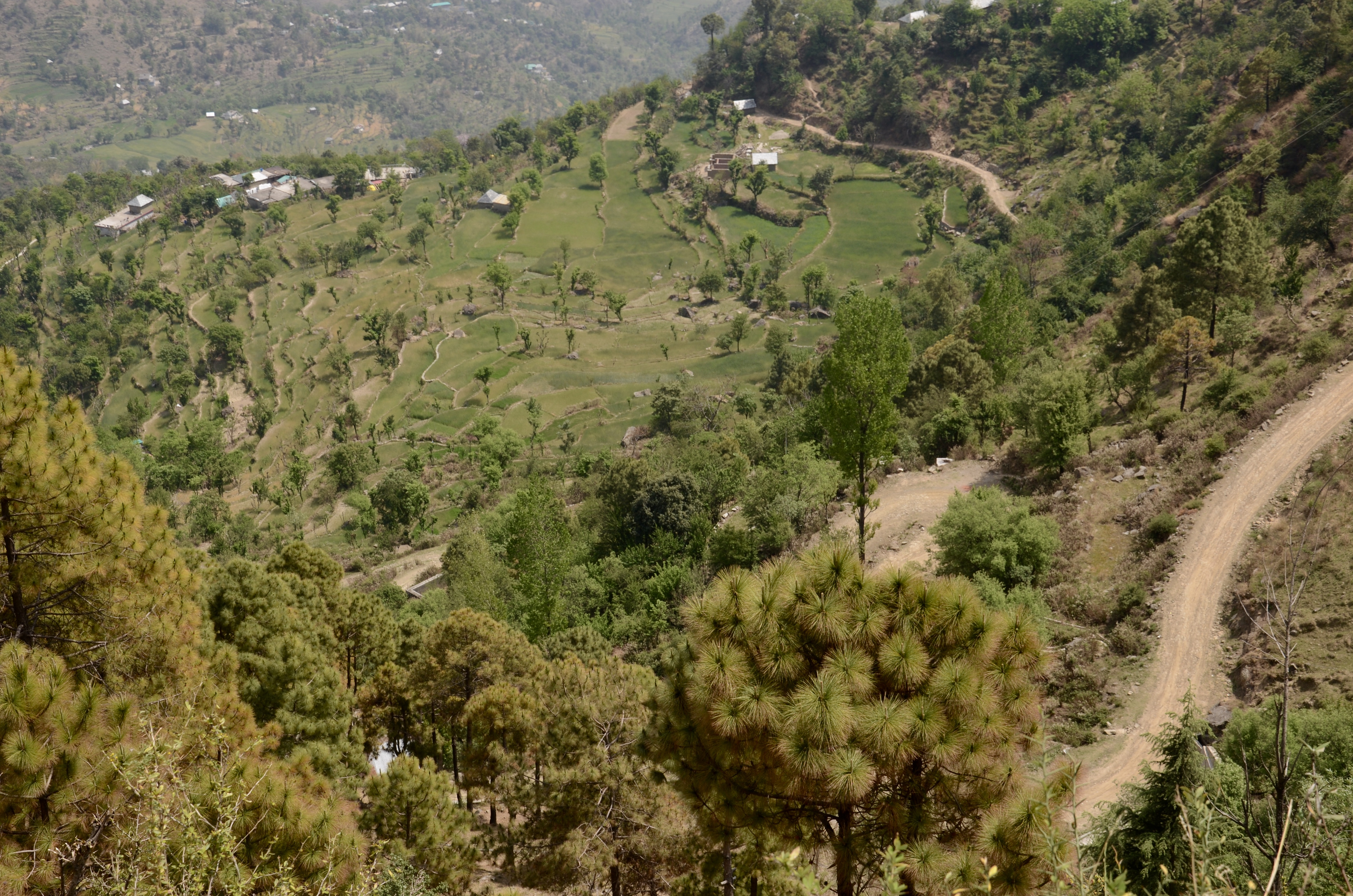
fullsizeoutput_425Our spacious “apartment” complete with kitchen and large windows looking across the hills and down on the town, is arguably the best accommodation we’ve ever found in India, and definitely the best value. 345 steps up from the town, the barking gangs of dogs are distant, and the destructive monkeys relatively sparse.
fullsizeoutput_43b

Our room is the top finished floor of the yellow building next to the big blue building.

Our Hindu landlady rang the doorbell with aloo parathas on Easter Sunday for breakfast. (Did she even know it’s Easter Sunday?) The town is so small, that whenever we come down the hill, we bump into the same people. The gentle-faced monk who opened up to us a year ago and told us the fascinating story of how he entered the monastery as a young boy. Now in his 30s, he’s still serving cappuccino in the monastery cafe below. I find this place comforting.

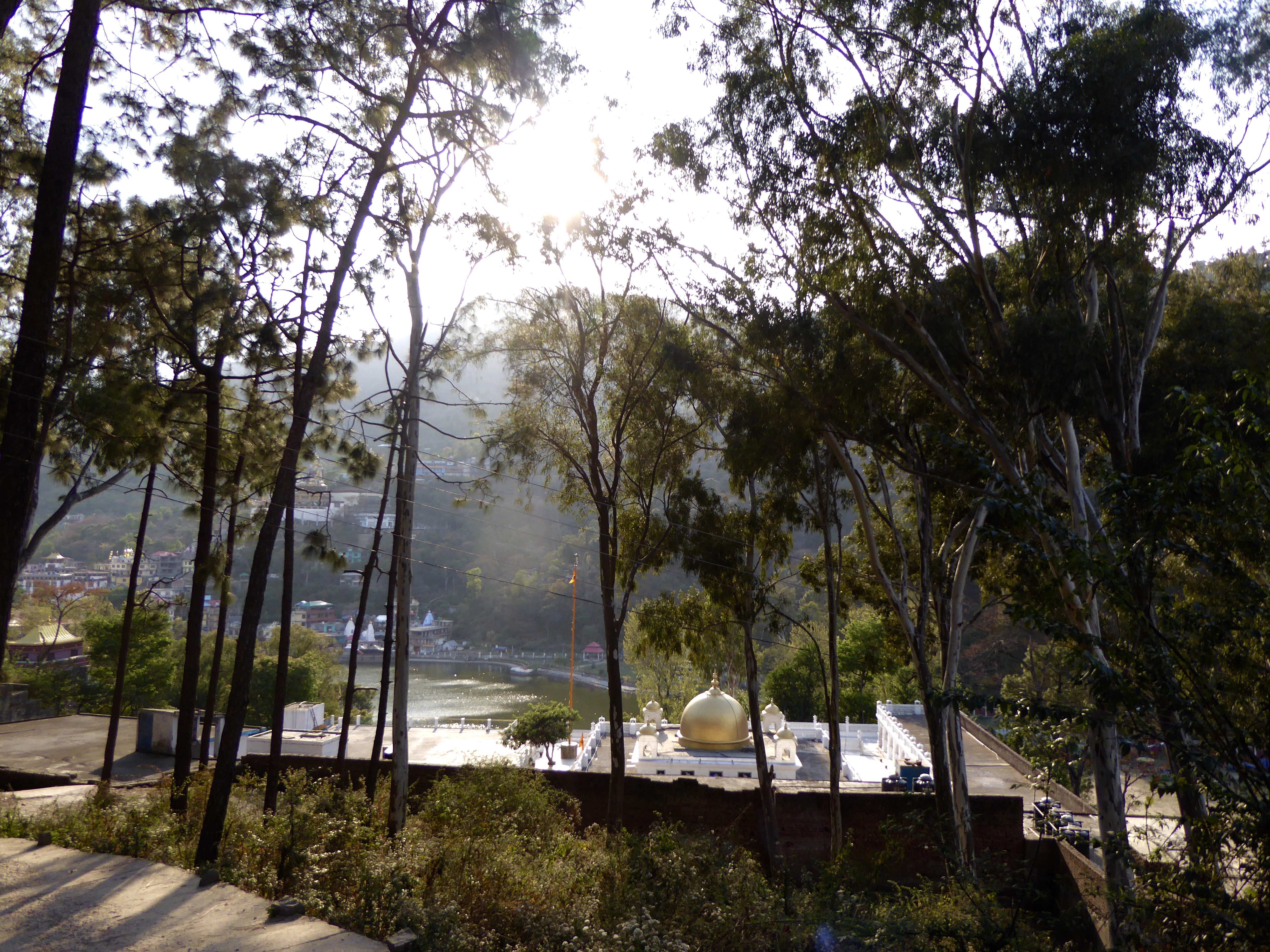
But there are changes and it may not be so tranquil beneath the surface. The town is spreading out further into the countryside, with new buildings cropping up, including more hotels serving predominantly the ever growing Indian tourism. A hard top road connecting outlying villages is being financed by the state. But more disturbing is a hint of discontent between the Hindus and Buddhists. Perhaps it was always there and we were just unaware. But it’s disturbing to see the thick curtains of prayer flags beside the lake burned. No one has taken responsibility. There may be some jealousy between the two communities, and understandably. While the Buddhist community is getting outside assistance, the Hindus have no such luck. Until now, the only murmur of discontent that we knew of was from a restaurant owner who said a few years ago that the gold statue of Guru Rimpoche overlooking the town was far bigger than expected. The Guru is famous for bringing Buddhism to Tibet, he did his spiritual practices here.


The day before our German friends left, we accompanied them on a walk to a lake several km above the town. When we set out the weather was clear, the sky blue. We climbed high up the hillside, at first via steps, later clambering over treacherously uneven and stony ground. Within a couple of hours, the sky darkened and thunder began rolling around the hills. A chai shop was in sight and everyone began climbing faster. We reached there just before a downpour. The walk would have been beautiful if we hadn’t been watching our feet and going so fast to beat the rain.fullsizeoutput_434fullsizeoutput_439