Camel Festival in Bikaner

dsc_0177

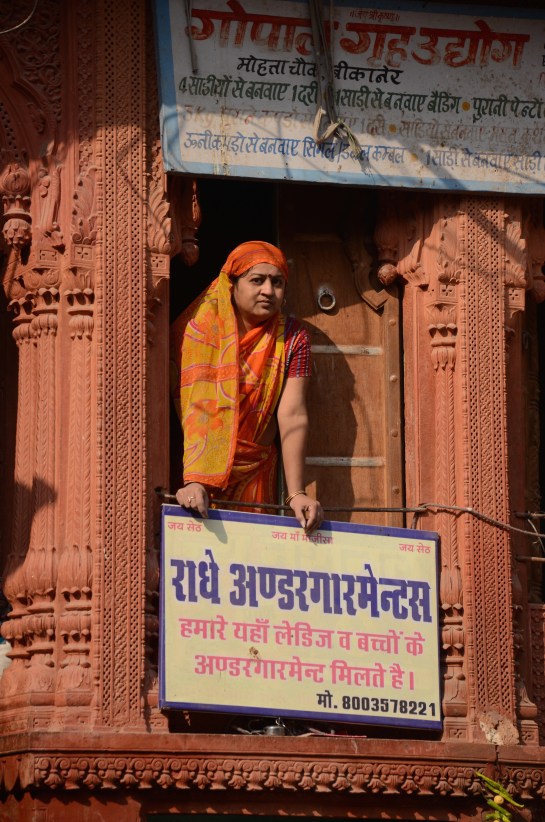
On the map, Bikaner sits on the edge of the Great Indian Desert. I’d built an image of a dusty little town with camels roaming the streets. Little to eat and less to do, especially after the sun went down and the cold night set in. This much was true – the temperatures sank to 3C at night. The town was large and sprawling, but the old walled city was crammed with imposing haveli’s that were built between 1880 and 1920. Our first day we spent mostly lost among the haveli’s; part of the fun. We scanned for a restaurant and found one on the street that was cleanish and pure veg.  The boys also spoke enough English to take our order and were entertaining to watch. The food was good though a little spicier than usual.

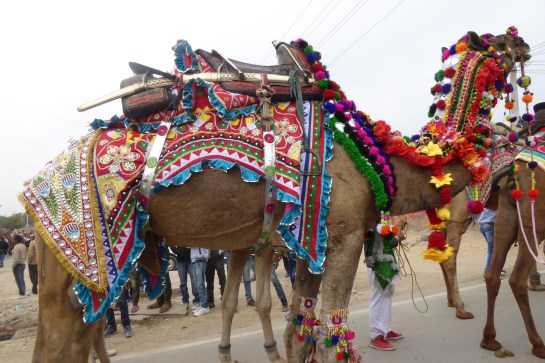
Without knowing it, we’d arrived a day before the annual Camel Festival. Again, I pictured a camel fair with a bunch of smelly flea-bitten camels rounded up for inspection. The next day, we trudged off to where a camel procession was said to begin.

p1020921

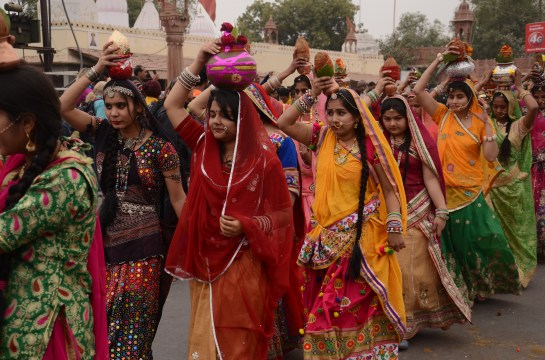
We could hardly believe our eyes. Girls parading, holding coconuts or brass pots on their heads,

dsc_0203

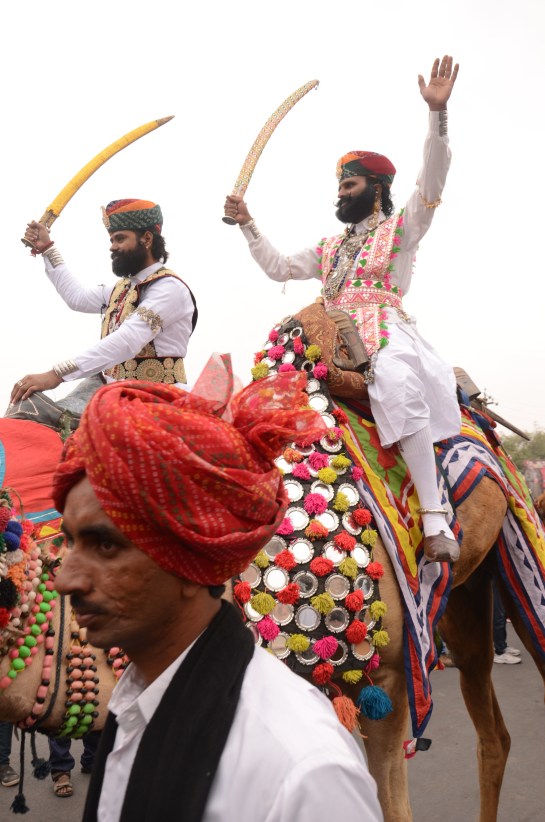
sword-wielding men on camels,

dsc_0214

bagpipe players,

dsc_0307

stick fighters…all in traditional dress and interspersed with ornately decorated camels. Pictures will do better justice than words.

I’m always trying to capture a picture of a beautiful Indian woman. Here they were in abundance, catching my eye and smiling for me.

dsc_0235

dsc_0283

The procession ended at a large stadium where a full two-day of activities began – camel decoration judging, beauty pageant, mud wrestling, fire breathing. For us, these held little attraction… our main event was the folk music and dance in the evening. A group from Jaisalmer was featured; their music an interesting blend of ghazal, folk and pop—but not Bollywood.

p1020972

Traditional dancers, spinning like dervishes, accompanied the band. The mood of the whole day was jubilant.

dsc_0262

The second day was a heritage walk. Even though the people of Rajasthan are known for being friendly, we both had a sneaking suspicion the municipal government had told the locals to be especially friendly toward us.

dsc_0342

They smiled, threw rose petals over us, handed out food and drink.

dsc_0332

One privately owned haveli even opened its doors to us.

dsc_0346

It was a great opportunity to be guided through the old town with loads of enthusiastic bystanders wanting their picture taken. There were plenty of tourists but few of them were westerners. Foreign tourism is down 60% according to our guesthouse owner, obviously because of the money exchange problems. The evening program was less compelling than the first; more a Sunday night local variety show.

We were so lucky to catch this Camel Festival. Virtually all other visitors had come specifically for it.

dsc_0375

Junagarh Fort was a focal point of the town though not so immediately impressive, in part because it doesn’t sit on a pinnacle like many other forts in Rajasthan.

dsc_0404

But its richly decorated interiors are as magnificent as any we’ve seen. Built toward end of 16th C. the Fort has been progressively extended and embellished by later rulers.

The grandest room, Anup Mahal, was adorned with red and gold filigree painting with a red satin throne framed by an arc of glass and mirrors. Inmates of the local jail made its carpet – a tradition that has only recently ceased.

dsc_0386

Overall, Bikaner was a pleasant surprise. The town was unusually clean and the railway station was a beehive of spring-cleaning. Boys were hosing down the platform with soapy water, giving iron fences a fresh coat of paint…they were even painting the railway tracks! Something we’d never witnessed before. When we asked our guesthouse owner if some dignitary like PM Modi was visiting, he said no, the railway had just received its annual maintenance budget.

Last but not least, the hotel we landed in turned out to be probably the nicest place we’ve stayed in India. It was built in 1926 for the last prime minister of Bikaner who was the great grandfather of the thirty-something present owner. He lives there with his wife, parents, and grandmother, all serving us in a Raj-like style.

hotel-bikaner

On the Way to Bikaner

train st by night

On our five-hour journey from Kuchaman to Bikaner, we shared our compartment with several R.R. engineers. One struck up a conversation saying he was teaching himself English and wanted to practice it. He had served 3 years in the paramilitary and said that he found most of the soldiers to be honest and with good morals. He contributed that to the fact that the majority came from the countryside as he did. This branch of Indian government is not corrupt, he said.

He asked us if we were interested in spirituality and was that one of the reasons we came to India. He went on to say that he was doing a meditation that was associated with Osho but was emphatic in saying he was not a follower of Osho. He also liked Eckhart Tolle’s ‘Power of Now.’ But what we found the most interesting was what he had to say about his wife. It was an arranged marriage and even though he was interested in meditating they had never discussed it.

Three years into the marriage, she asked her husband to get permission from his mother, whose house she was now living in, for her to continue her meditation practice. This was the first he’d heard about it. She told him she had meditated on Shiva since she was five years old and he was very pleased to find this out and persuaded his mother to let her do her practice. It also encouraged him to take up mediation again. He said she would leave her body when she meditated and stay in this non-responsive state for four hours or more. After they had a child, the baby would cry for his mother when she meditated. In frustration, he once put the baby in her lap and told her, take care of your baby! But he was inspired by her ability to go within. He hastened to make the point that he was not at that stage himself but found his practice fulfilled something very important in his life.

The system of arranged marriage continues to amaze us. The unseen hand brought them together.


Kuchaman: From a Sow’s Ear to a Silk Purse

Gerard had read about Kuchaman and an interesting old Fort on an obscure travel site. It sounded a quiet place off the Rajasthani tourist route. The site mentioned an ultra luxurious hotel occupying a large part of the Fort. Not that we were serious about staying there, but we emailed for the price. We got no response. And even though we couldn’t find another hotel with a working phone number — only a reference to Hotel Gorband with no contact info. Still we persevered. All in spite of the fact that whenever we mentioned we were going to Kuchaman, the response was, “Why?” The guesthouse owner in Jaipur said he’d known one guest like us move on to Kuchaman…but that was ten years ago.

As we pulled into the railway station 11 Km outside town, there wasn’t even a platform to step out on, a long way down to the ground. Without a rickshaw in sight, we had to deal with the taxi drivers who crowded around us all talking a mile a minute in Hindi. They didn’t recognize the Hotel Gorband and no one could find a phone number for it. Even the luxury hotel was not an option; it had folded two years ago. Does this mean we can’t even get into the Fort? But that’s what we came for.

Communicating as best we could with sign language, we set out to see what we could find. The sun had now faded and as we approached town, everything looked shut down. Eventually we found Hotel Gorband, sitting above a motorcycle repair shop. It did exist after all but looked far from inviting. Before the taxi could take off, Gerard made the driver understand we wanted him to hang around. It took only one cursory look at the drab room to realize the hotel wasn’t going to work. My mood was sinking at the prospect of having to stay even one night in Kuchaman, let alone four. And when I voiced this to Gerard, he replied, it wasn’t helpful. Another fine mess he’s got us into, I thought. After all, it was his idea to go off the beaten track and come here.

Back in the taxi, the driver now grasped the situation and took us back to the bypass road where there was an innocuous looking roadside stop (restaurant on the ground floor, rooms above) for Indian tourists, with the illustrious title, ‘Sharda Palace Hotel’. The manager, sitting alone in an echoingly empty restaurant, sprang to his feet to welcome us. To our relief he spoke some English and showed us a room, basic but spacious. I tried to visualise myself holed up there for the next four days. It was a struggle.

dsc_0147

Throughout the cold night I lay awake buried under two thick blankets listening to the lorries roaring by, with music blasting to keep themselves awake. As we sat at breakfast in the virtually empty restaurant looking out on a windblown highway, it was as if we’d dropped into Baghdad Café or any southwest road stop. Except here, no one spoke English. I could detect that Gerard was also beginning to wonder how we could escape. But we had already purchased our tickets for Bikaner, a good five hours away. Too far to just jump in a taxi and make a hasty exit. So what to do for the next four days?

I had forgotten that change is the inherent nature of the world and things will change here as well. But for the better?

p1020832

the beautiful girl who swept our room every afternoon

The first day we hung around the ‘Sharda Palace’; there was plenty of time to see the one attraction in town, the Fort. In the afternoon, we walked out into the surrounding countryside, so peaceful after Jaipur. In a small hamlet, a group of women and children were standing in a doorway, watching these odd looking people walk by. I said, “What a great picture!” Gerard urged, “Go ahead and take it.” Pulling out the camera encouraged others to come out and have their picture taken also. How simple and uncluttered they seemed to us. I think they enjoyed having their picture taken as much as I enjoyed taking it. It looked like things were beginning to turn around for us.

p1020791

The next day, the hotel manager, now introduced himself as Hariprasad. He offered his son to take us to the Fort on his motorbike and act as our Guide. Gerard questioned three on a motorbike with no helmets? But Hariprasad assured us that Kuchaman had no police and there would be no problem. Mohit first stopped at two ATMs – one with no money, the other with interminable long lines, one line of men, another of women. We moved on.

dsc_0129

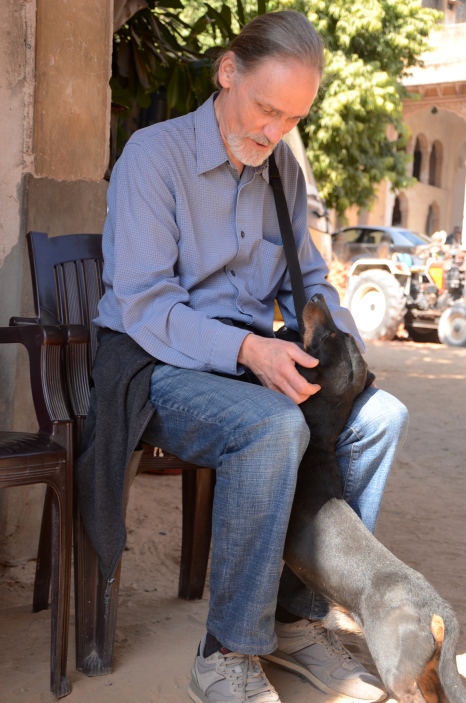
Nearer the Fort, the town became more interesting, with white and blue painted limestone buildings and narrowing old streets. We parked the bike and walked up to the Fort, followed by a friendly dachshund, belonging to the gateman.
dsc_0139

The admission included a guide who couldn’t speak one word of English; lucky for us that Mohit’s English was near perfect. Our fortune in Kuchaman was looking up.

p1020812

The sprawling Fort dates from1635. Built on a pinnacle, it’s a smaller version of the Jodhpur Fort. The Royal family of Kuchaman Province lived there until just after Independence. A large portion of the Fort had been turned into a high-end hotel with dozens of rooms, priced up to 12K Rs. But that was two years ago. A new owner is now renovating toward reopening, no doubt at even higher prices. There were endless rooms of well-preserved frescos,

dsc_0108

The Queen’s Boudoir, decorated in mirrors, the glass from Belgium, and a game room surrounded by viewing balconies, with a human chess board laid out in stone on the floor. Last but not least, a karma sutra room with risqué frescos, the locked door opened only for private viewing. Only one other party of Indian tourists arrived at the Fort the whole time we were there.

dsc_0125

The following morning, Hariprasad arrived at the hotel saying, “Come quick! There’s no queue at the ATM.” We jumped on his bike and rode back into town to find by now a line had formed. Hariprasad insisted on taking us to the front where he requested we go next. The Indians graciously complied. Thankfully there was still money in the machine and we each managed to draw out the tourist allotment for the day, effectively doubling what we expected. Staying to explore the old part of town, shopkeepers and shoppers alike stopped what they were doing in surprise as we passed. Clearly, Westerners are rare.

That evening, Hariprasad invited us to his home for dinner. I marveled at how things had evolved. Here we were going to the home of a man who three days ago I had bargained with for a room – a room that had seemed sparse and uninviting had now become our home away from home. We were going to meet his wife at their house in a town that I had dismissed as only a huddle of buildings along a highway and had wanted to leave as fast as possible. How quickly things can change in three days! These are the adventures of traveling with Gerard.

p1020825

It was a perfect ending to our stay. Hariprasad and his wife, Saroj, couldn’t have been more welcoming. They live in a house built by his grandfather eighty years ago in the old fashioned style of rooms around a courtyard. We feasted on a home cooked meal that was prepared jointly by husband and wife, not typical in traditional India. Saroj was as friendly toward us as her husband and son had been.

On the way back to the hotel, Hariprasad told us that he didn’t understand how we had become so close in such a short time. He had never got that friendly with any guest, what to say, about inviting them to his home. And it was true for us too; even with our limited ability to communicate, we felt like he was family.

dsc_0148

But this was not quite the end. The following day, while waiting for our evening train, the hotel erupted in activity.

First a meeting of local media executives, and then the rest stop of Sapna, a beautiful young Rajasthani pop singer and her entourage of musicians, bodyguards and bouncers. Granted audience, we were taken to her resting room where she lay under the blankets with her mother.

dsc_0161

She got up and greeted us warmly, hugging me as if we were old friends, and posed with us for photos. She looked even younger than her 21 years, but behaved with the poise of a celebrity. At last, Hariprasad had his driver take us to the railway station saying how much he would miss us and that now the hotel would seem empty. For our part, Kuchaman is now an especially pleasant memory.

p1020838

The Pink City and its Palaces

It’s been twelve years since we first visited Jaipur and it wasn’t one of our favorite destinations. The “Pink” City is famous for its textiles but we’d not been in the mood for shopping and were put off by the noise and chaos of its busy streets. We only managed to visit the Hawa Mahal or Wind Palace. This time, we stopped for a day and a half, primarily to visit the Amber Fort/Palace outside the city. Vinayak Guesthouse, close to the railway station, was comfortable enough with an excellent restaurant on the roof. In the afternoon we decided to brave the clogged streets to visit the City Palace. The grid of the old city lined with pink buildings and shopping arcades, survivors of modernization. Unlike most Indian cities, old Jaipur has not been torn down and rebuilt in concrete.

dsc_0005The City Palace was built in the 1720s, part of which is still occupied today by the family of the once ruling Maharajahs. We could have taken a private tour of their quarters for a mere addition to the entrance fee of 2,500 Rs each. Among the formal rooms open to the public was the Peacock Courtyard with its four painted doorways depicting the four seasons and the Public Hall of Audience, its walls adorned with old photographs of receiving dignitaries, including Lord and Lady Mountbatten.

dsc_0013

A textile museum showed elaborate clothing of woven gold and brocaded fabrics from the royal wardrobe.

fabric

As Gerard took pictures, I struggled with the manual settings on my new camera. It’s always easier to take automatic but then what’s the point in having a sophisticated digital camera? I could be walking around like everyone else with an iPhone and a ‘selfie’ stick. I imagine them going home with their pictures of Jaipur – each one with a distracting ‘selfie’ in the foreground. Every picture will be of themselves with a slightly altered background.

dsc_0050

The next morning we negotiated with the same rickshaw driver to take us 11 km out to the Amber Fort. Sitting high up on a rocky ridge, the Fort is reached by a long winding footpath, swarming with visitors (the more so being Sunday). For those less inclined to walk, the hike could be made precariously balanced on top of elephants. We were both disturbed by the sight of these regal animals, their ears decoratively painted, lumbering up and down all day.

elephant

The Fort was amazing. Built in 1727, the architecture is Rajput, although the mirrored mosaics and the Sheesh Mahal private chambers for the Maharajah and Queen are clearly influenced by Mogul ideas.

dsc_0052

dsc_0069

On the way back we stopped at the Kanak Vindravahan garden, a welcome oasis of peace and quiet after the noisy mob scene at the Fort.

dsc_0084

Further along, was an esplanade with a grand view of a Lake Palace, alive with a fun fair atmosphere. We watched three little boys clowning around while half-heartedly making dough balls for feeding to the fish, a favorite lakeside activity.

dsc_0092

We returned to the guesthouse for an excellent thali and then walked back to the railway station to catch the afternoon train to Kuchaman. An extended family crammed into our compartment, making it seem like general seating rather than reserved 3AC. We were initially annoyed at all these people pushing their way in with no regard for reserved seating. But like many times in India, things turned themselves around.

A young saried woman slid in opposite us dragging a boy who was obviously mentally disabled. She kept one arm constantly across to hold him back. The other side of her was a slightly younger boy absorbed in his iPhone. She spoke good English and introduced her two brothers accompanied by their wives and children. The woman explained they were from Bikaner and had all been visiting her husband who lived in Jaipur. Her nine-year-old son (his size made him seem much older) was born with cerebral palsy. “He is 99% disabled,” she said. “This is why I don’t live with my husband in Jaipur. Back in Bikaner, I have my parents and my in-laws to help take care of my son. I cannot leave him for a moment.” I noticed a large burn on the boy’s hand. I tried to contemplate that kind of constant care. And she’d been doing it for nine years, not to mention caring for her other son, only one year younger. Within a short time, we were all friends and she insisted that we visit her home in Bikaner where we were headed after Kuchaman.

Money Exchange Fiasco Disrupts Indian Economy and Inconveniences Tourists

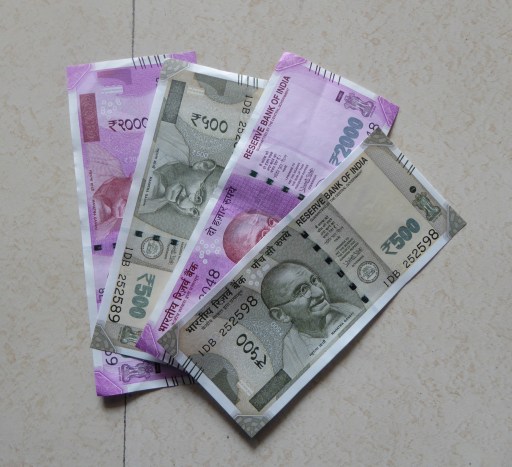
Even after spending eight winters here, India still manages to deliver the unexpected. Shortly before we left, we heard rumblings about the government’s effort to eliminate black money. Their strategy was to remove the large bills in circulation and replace them with new ones. This would flush out anyone hoarding large sums with the purpose of buying and selling off the grid. Reportedly only 2% of the population pays taxes. Prime Minister, Modi, felt the strategy had to be implemented overnight in order to catch out the hoarders. The intention is laudable; the implementation a disaster. “Black” money has long been a way of life; hiding the actual selling price. With any large purchase, for example, a house, there’s always a part of it that’s paid for with black money, reducing the taxes.

People rushed to banks to exchange old notes. But unfortunately, the government hadn’t printed anywhere near enough new bills to meet demand. Over a two month period reported 107 people throughout India died waiting in the long lines for the new currency. Now, two months later, there is still a severe scarcity of new money and limitations are imposed – Indians can only withdraw 24,000 rupees from their bank account per week. But often times it takes numerous visits to the bank, either because the queue is too long or the bank has run out of currency. For the poor it’s even worse; many peasants don’t have an ID to open up a bank account, meaning they can’t make the exchange. And the few banks that will do the exchange without an account are only in the major cities.

p1020679

But there are far broader ramifications. Because of the scarcity of currency, building projects may be on hold; clients can’t pay the contractor who in turn can’t pay his laborers. In rural areas, there was difficulty making change for a 500 Rs not in previous years, now the new 2,000 rupee note is four times the problem. And the root of the problem is not destroyed; corruption continues as people begin to hoard the new currency. It’s a one-time fix only.

It has been a disaster for the tourist industry. Foreigners can only withdraw (4,000Rs)  $75 a week. Even though for most that is adequate, going to the bank on a nearly daily basis is a huge hassle — and what about the small towns that don’t have banks? The ATMs have dried up and most of the small businesses don’t take credit or debit. We read a report in the newspaper that said tourism in Goa (the largest tourist area) has been severely impacted. Our trip this year could have turned into a nightmare if it hadn’t been for the guidance of our Indian family who has walked us through the process. We’re hoping that within the next month or so the situation will have improved and the ATMs will be functioning more normally.

Like the explosion of cellphones in India, which took off much faster than the West mainly due to lack of landlines, scarcity of cash is driving demonetization. Not just greater use of plastic, but also e-payment applications. PayTM on cellphones has rocketed. This is all fine for the technical savvy young middle class, but what about the rest of us? The older population, tourists and Indians alike, struggle with the technology. Someone in the family who used PayTM at the local grocery store, inadvertently was charged three times! Fortunately, the owner was an honest man and alerted her to the error. And again the poor, who don’t have a smartphone or a bank account to load money on PayTM, are left high and dry.

The move away from a cash economy is less appealing to us. Gerard actually likes handling cash. It’s another shift from actual to virtual and anyone that knows Gerard can guess how he feels about that.p1020672p1020678

To end on a positive note, the weather is warmer than normal for January, and we received our usual heartfelt warm greeting from our adopted family. We are most fortunate.

Friends, Blakelock and Roerich

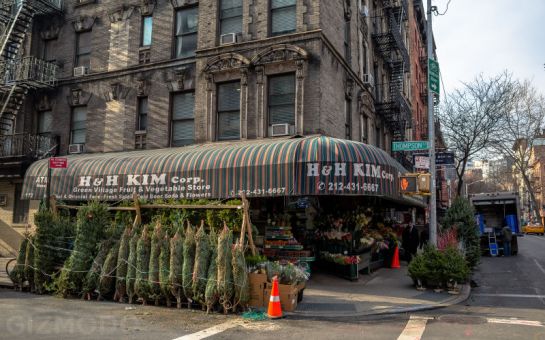
We couldn’t wrap up 2016 without another visit to New York City, to see our good friends, Michael and Dale, again before we set off for India, and to visit a gallery with a special show of paintings of a favorite artist, Ralph Albert Blakelock (1847-1919) . Christmas is always a great time to be in the city, and although it was still just under a month away, there were early signs of decorations and lights everywhere. On Saturday morning, entrepreneurs were out selling pine trees on the sidewalk or in empty lots – a little boy with eyes as large as saucers hugging a tree trunk, staking his claim…as night fell, a father with his two daughters, all three in Santa hats, jubilantly dragging a tree home.

tree-in-nyc-3

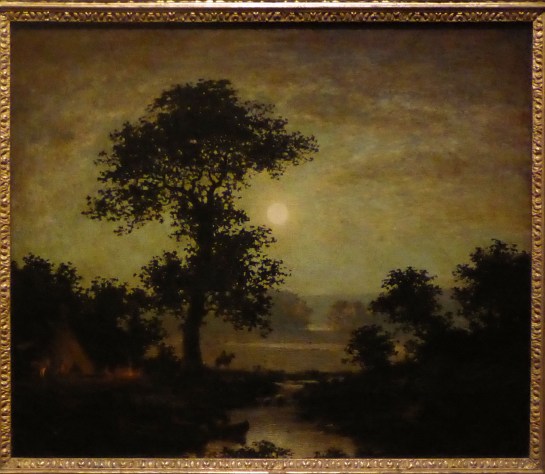
The Blakelock show was in a private gallery on Park Avenue, on the third floor of an exclusive apartment building. We rang the doorbell and a courteous young man greeted us, “Let me hang up your coats…would you like anything to drink?” The three paintings hanging in the foyer were so compelling that it was hard to move on to the labyrinth of rooms where 125 more were displayed. Overstuffed couches allowed you to sit and contemplate these remarkable works.

p1020484

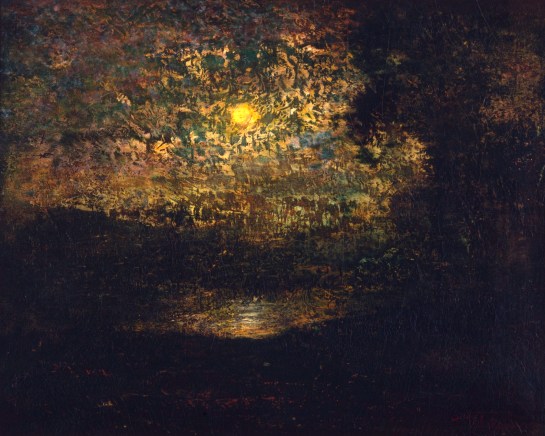
A contemporary described Blakelock’s moonlight paintings as capturing the moment when night is about to commence; “when the light in the western sky lingers, glowing… and the trees make giant patterns of lace against the light.”

His later paintings tended to become more abstract, a harbinger of things to come in the New York art scene. Gerard struck up a conversation with others in the room  (most of the people in the gallery were artists).  They offered their own insight to Blakelock ‘s technique and inspiration; one of them even called this the “Show of the Century.”

blakelock-painting

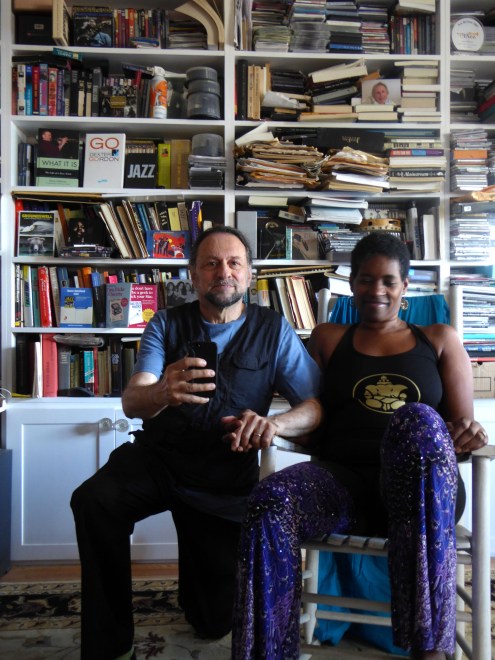
We left the show and walked across Central Park to the upper east side to meet up with an old friend from Boston. He’s Professor of jazz studies at Rutgers and is a leading expert on John Coltrane. Gerard never misses the opportunity to pump him for information. He is newly married and moved into his wife’s apartment. She served us a wonderful lunch and is as interesting and unique as her new husband.  She’s managed to accommodate his baby grand, and collection of CDs, tapes, books etc.  The apartment is bursting a the seams!

p1020423

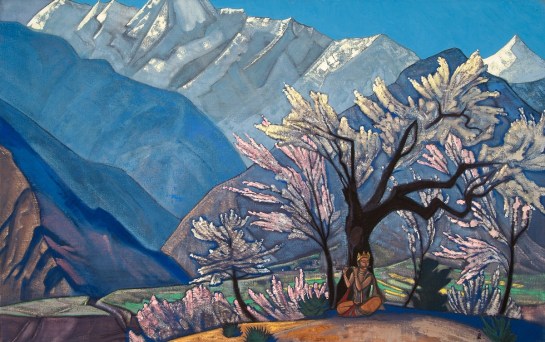
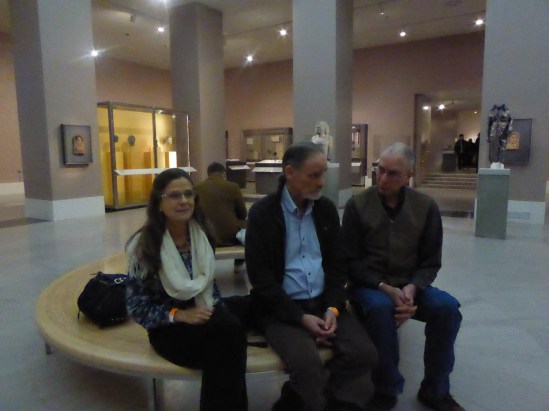
In the afternoon we took our friends over to the Nicolai Roerich museum also on the upper west side. Roerich is the Russian painter we discovered in India, where he made his home in a small town in the Himalayas. Our third visit in the past few years, his paintings continue to stand up over repeated viewings.

trekworld_nicholas-roerich_krishna-from-kulu-series-1929

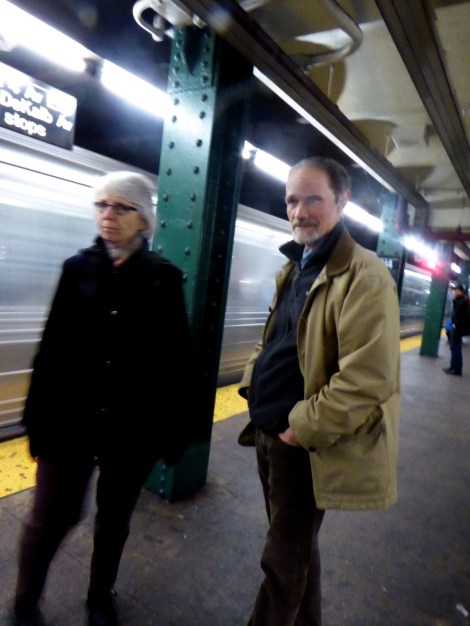
The weather wasn’t up to walking around the city, so on Sunday we decided to take the train to the Brooklyn Museum.

p1020450

It’d been over 30 years since we’d been there and we spent most of our time in the American wing, not quite up to the Met’s Collection but none the less well worth the visit.

p1020464

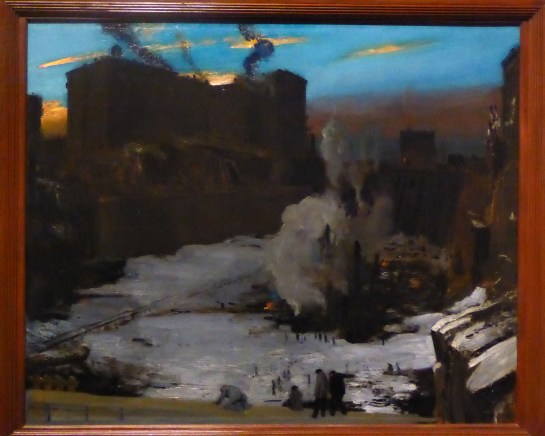
The museum has a collection of the New York “Ashcan” painters, including this one by George Bellows.

p1020495

p1020477

Monday morning came all too soon. Saturated by art, but not by New York City or the company of our good friends, we took the bus back to Boston. To our surprise, there was a light scattering of snow on the ground. But it is, after all, December and finally time to begin packing that small case!

Summer in New York City

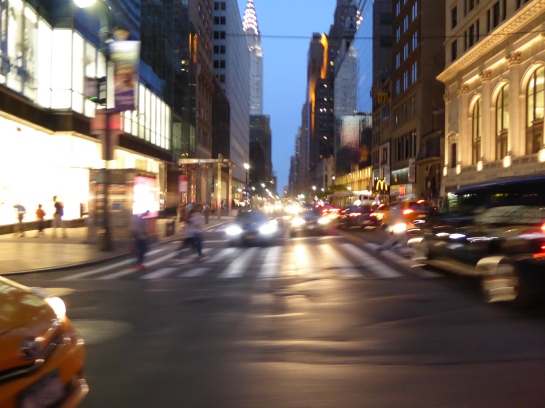
Summer is a great time to visit New York City. Like Boston, the city can be a pleasant experience providing it’s not a broiling 90F and high humidity. In this case, it was a clear balmy June weekend. It seems that the pace slows– people linger in the park, street fairs spring up over night and there’s music and entertainers everywhere.

P1020103

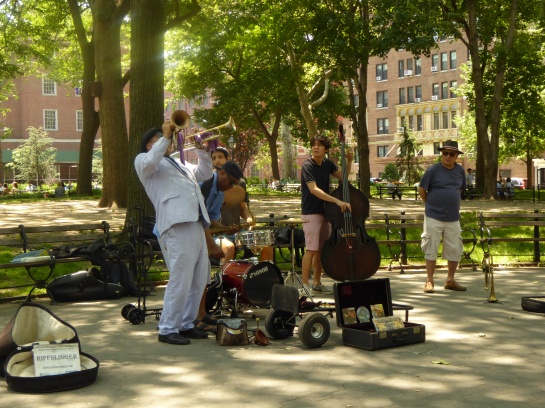
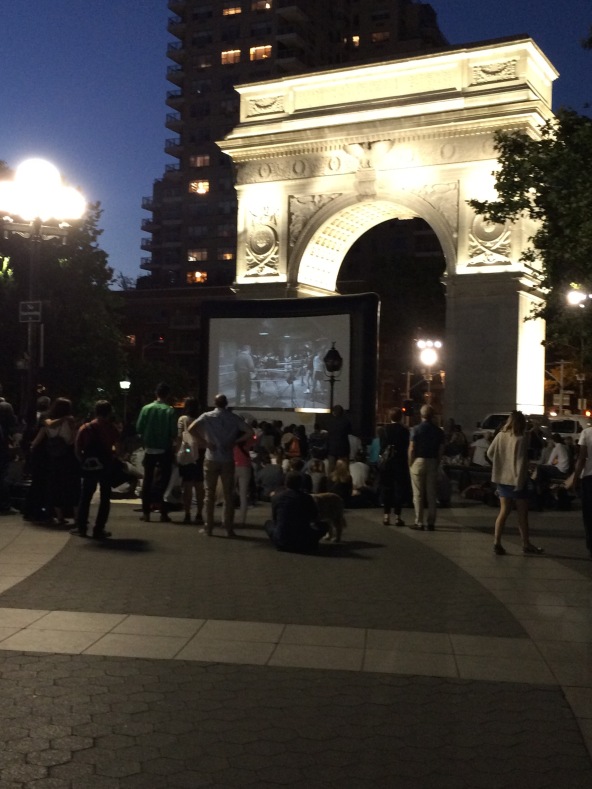
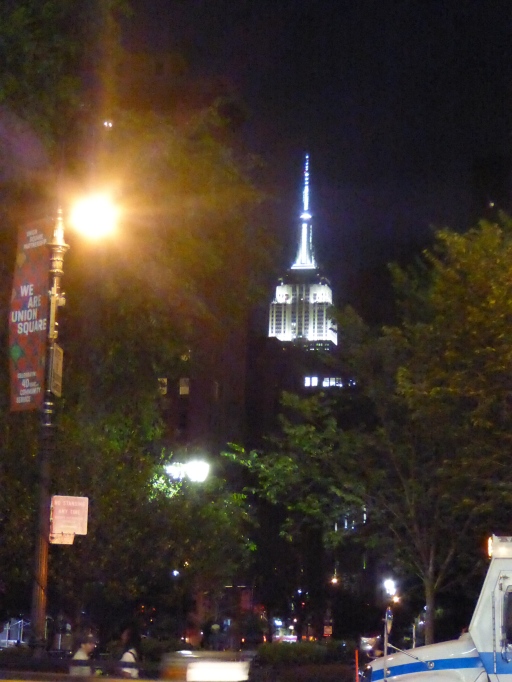
When we stepped out of the subway on Friday afternoon in Union Square, the farmers’ market was in full swing. Home baked bread, raw milk, fresh green peas… the farmers bring the country to the city. And in the center of the market, a jazz band (violin, steel drums, conga and bass) was playing a Latin version of ‘Summertime’. We’ve been to jazz clubs that were far less engaging. After dinner we strolled around Washington Square where a French subtitled movie was playing to a large audience sitting on the ground or bleachers rolled out for the occasion.

IMG_3437

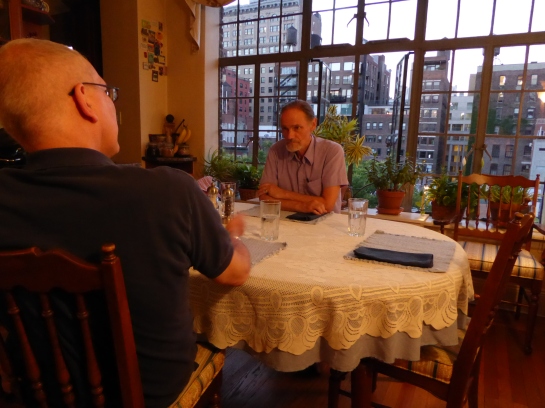
Our hosts, Michael and Dale live on the 9th floor of a prewar apartment building in a prime location between Washington Square and Union Square. Their apartment has an unparalleled view that Gerard has painted several times.

P1020057

A large bay of windows in the living room looks out above the neighboring buildings and several blocks beyond. Gerard loves NYC water towers and has counted no less than fourteen seen from the window. The view is never boring. Like most New York apartments, Michael and Dale’s is small, but well designed to utilize every inch. We’re fortunate to have our own bedroom. Sleeping directly beside the window, the view is even better, with the Empire State in the distance. I woke in the middle of the night, comforted by the activity on the street below. As the sky gradually lightened Gerard got up and we meditate.

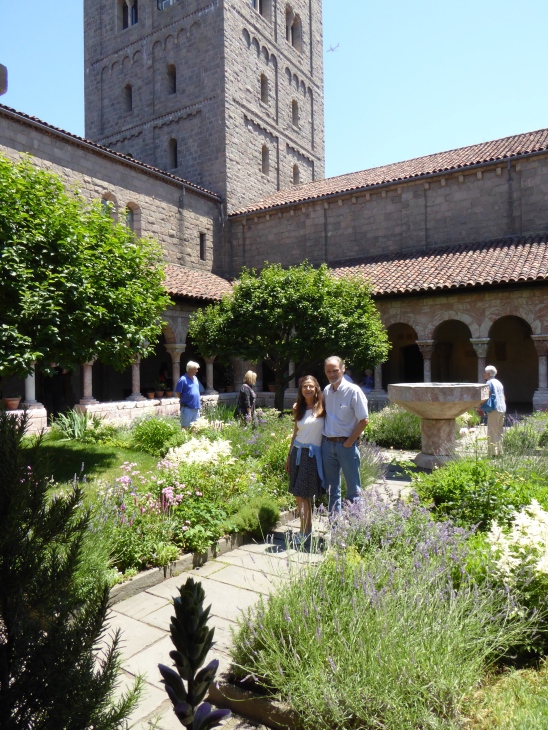
P1020125I’ve always wanted to go to the Cloisters. So on Saturday morning we roared up from 59th to 120th on the A train, while Gerard told me he took this ride, on his first trip to NYC out of high school, because of the famous Duke Ellington song “Take the A train”. We got off at 190th in a beautiful park overlooking the Hudson gleaming in the sunshine. I’d always imagined the Cloisters was once the home of some monastic order that chose to live on the outskirts of NYC. But no –John D. Rockefeller (father of Nelson) had the museum built in the 1930s to house his European medieval collection.
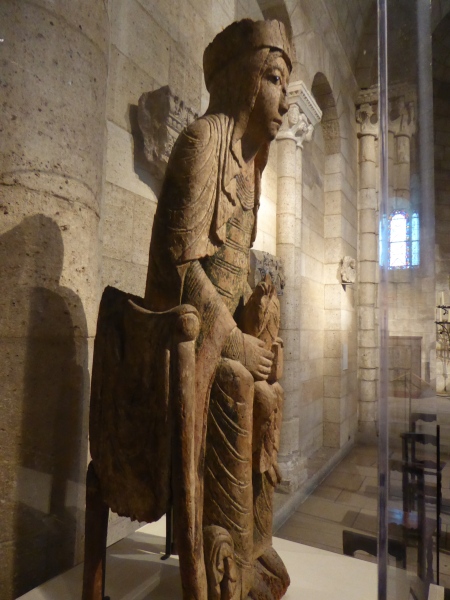
P1020074

The artifacts were all in a setting that made you forget you were in a museum. It was in fact modeled after a medieval French Abbey. In addition to the piece above, among my favorites was a wooden statue of Jesus sitting astride a donkey. The sign said it had once been in some Italian parish church. I wondered how Rockefeller negotiated the “transfer”– if indeed there was any negotiation? Or did he just hand over an irresistible sum of money to the priest and walk off with the statue? And if so, how did the congregation feel next Sunday to see it gone? We had lunch in a cloister looking out on a garden of medieval herbs and flowers.

P1020078

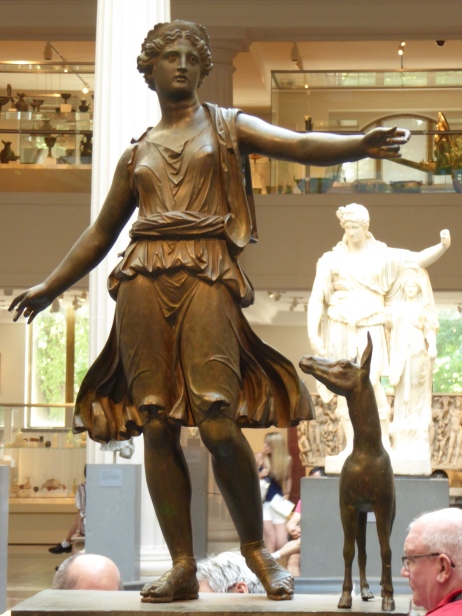
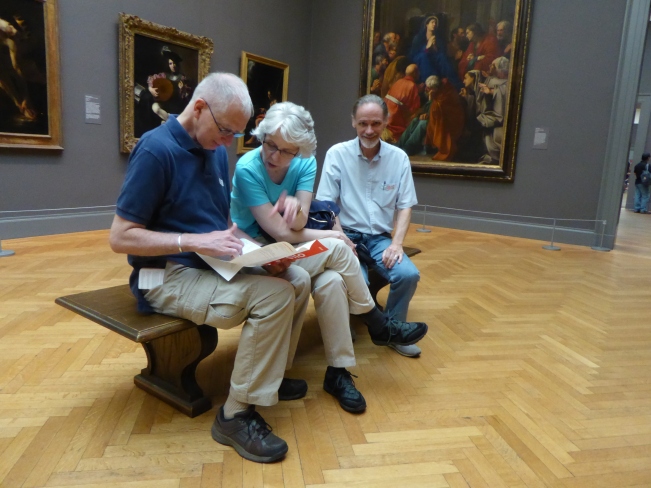
The admission fee included the Metropolitan Museum of Art, so it made sense to continue back by train and a walk through Central Park to the Met. We wanted to see the exhibit of Turner’s four Whaling Pictures. One belongs to the Met; the other three normally reside in the Tate Britain, and this is the first time the quartet has been exhibited together. Painted toward the end of Turner’s life, they were way ahead of his time and very abstract. In fact it’s believed that the only reason Turner added a boat or ship to the painting was to placate his clientele. Gerard commented that these paintings are not necessarily about a whaling trip, but should be viewed in their entirety. It’s all about energy and vision. As a child I was fascinated by a Turner print hanging in our living room. I was convinced the large rock protruding from the turbulent water was a threatening elephant wading towards the ship.

P1020088

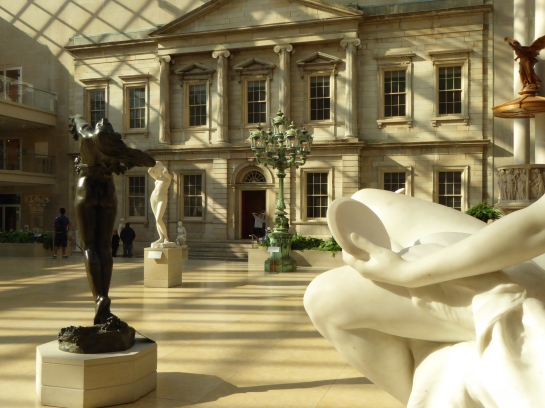
Covering two city blocks, the Met makes Boston’s MFA look decidedly provincial. You could easily spend a solid week exploring its collections.

P1020092

Gerard checked out the American wing, entered through a façade of an early 19thC building,

P1020089

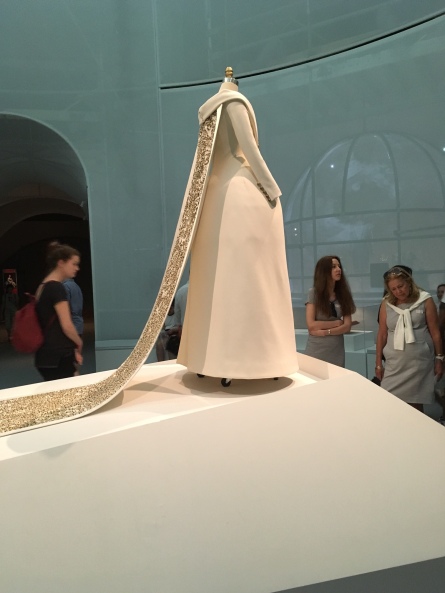
while I tried to comprehend over-the-top haute couture creations in the Manus X Machina exhibit, exploring the mergence of hand-made and machine-made in haute couture. An elaborate wedding dress designed by Karl Lagerfeld was made out of a rubbery looking scuba knit; its 20-foot train was hand-painted in metallic gold and hand-embroidered with pearls and gemstones, while a machine applied the rhinestones.

IMG_2635

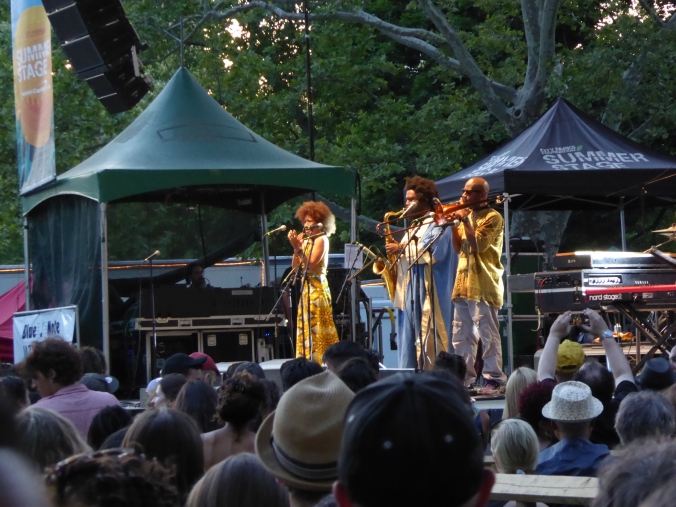
Back in Central Park, we decided to wait for an outdoor concert of a popular new jazz saxophonist.  It was a beautiful evening and we sat on the grass among a diverse crowd, young and old, eating wood oven cooked pizza, waiting through two hours of unappealing (to us) DJ mixed music.

P1020097

Finally the band arrived, but not quite what we’d anticipated. But we were amused by the modern day Go Go dancer or as Michael corrected, “interpretive dancer’. Now it was late, and, all in all, a wonderful day of city museums and parks.

P1020111

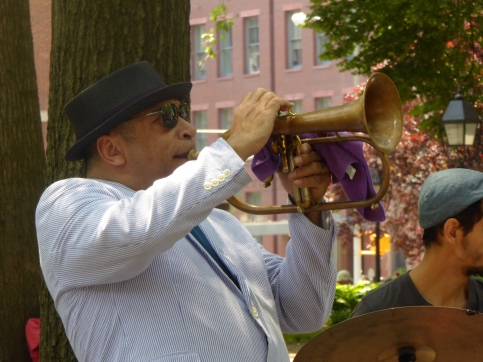
On Sunday, after a leisurely lunch at Mamouns’s famous falafel joint that we’ve been patronizing since 1973, we spent a few hours back in Washington Square listening to a very good jazz band, (see trumpeter above) and a classical pianist playing a baby grand. How does he get the piano in and out of the park?

No visit to NYC is complete without a few hours browsing at the Strand. For those who don’t know, it’s one of the few remaining—and thriving —bookstores in NYC. Just outside Union Square, it is a bibliophile’s paradise. As customary, Gerard headed for art and music on the 2nd floor, while I hovered around the tables of the Strand’s favorite new fiction and nonfiction titles. The Strand staff has great tastes and from their suggested selections I found no less than 8 titles that spiked my interest.

On Monday afternoon, we walked up to Chelsea, ostensibly to go an exclusive jazz music store. On the way I tried to convince Gerard to buy a new windbreaker that he needed, for a couple of hundred of dollars. Of course he refused, and just round the corner we ran into an upscale recycled clothing store where he picked one up for $18. Much more his speed. The music store was obviously for insiders only — no advertising, and on the eight floor of an anonymous looking office building. Crammed with books, LPs CDs, and photographs, it was run by an eccentric New Yorker, with WGBO playing in the background. WGBO is NYC’s all jazz, commercial free radio station. Gerard really would feel at home in NYC! As for me…with frequent visits to Central Park, Brighton Beach and the Far Rockaways I might be able to handle it too. On the bus ride back to Boston, we thought how lucky we were to have such good friends who take care of our every need, who happen to live in our favorite city.
P1020098

The Last Day

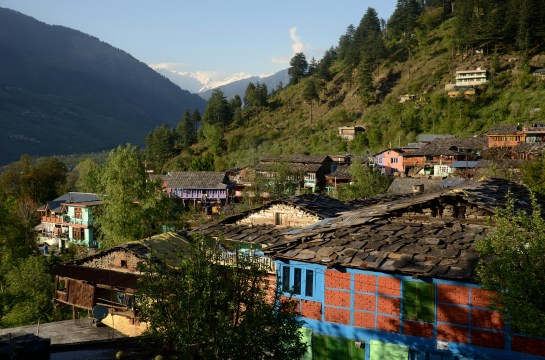
Just when we thought we would have a quiet last day in the mountains, a marriage ceremony was taking place just below our guesthouse.

DSC_1228

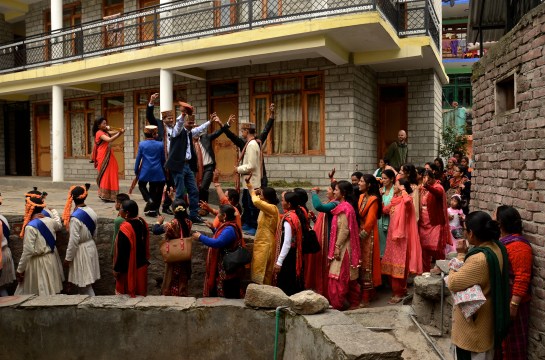
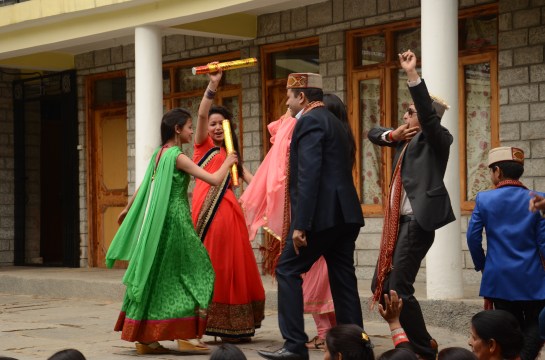
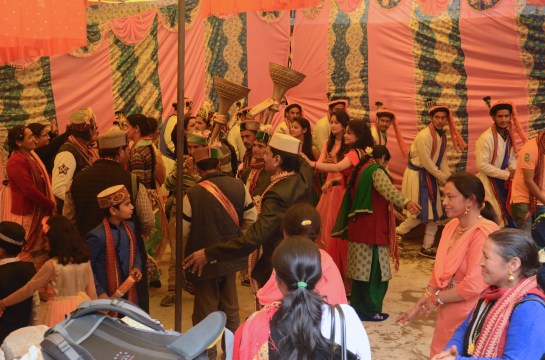
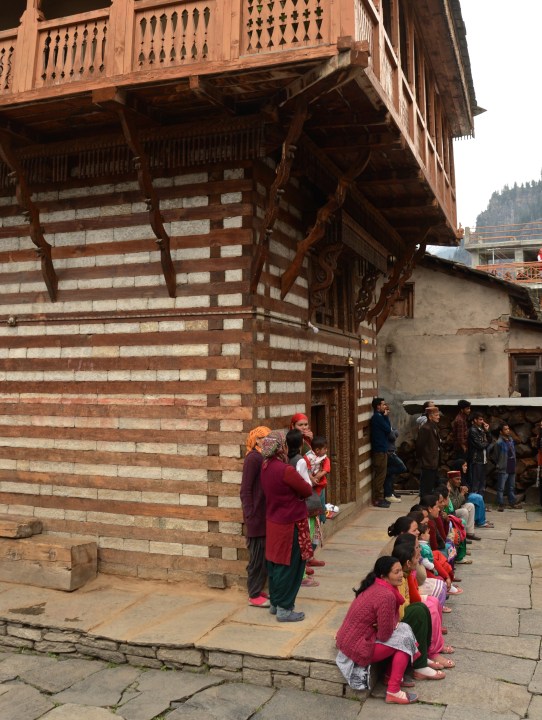
Being a small and compact town, and Indian weddings such a big affair, we were anxious to see how this would take place.  The groom and his procession were led by horns and drums with a colorful array of dancing young men and women down the narrow lanes.

DSC_1229

A langar was set up with huge brass cauldrons serving food throughout the day to the 200 odd guests – and many other gate-crashers like ourselves.

DSC_1260

DSC_1094

On another empty terrace, the marriage puja took place under a canopy complete with heart shaped balloons.

P1020010

DSC_1239


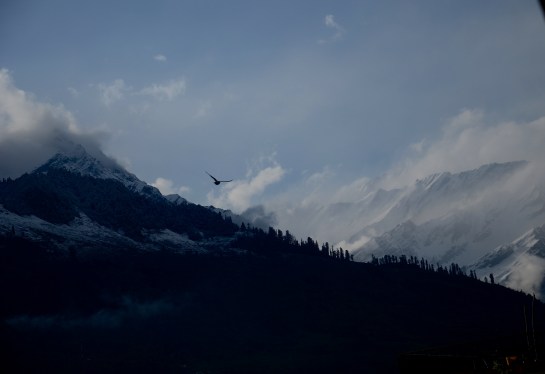
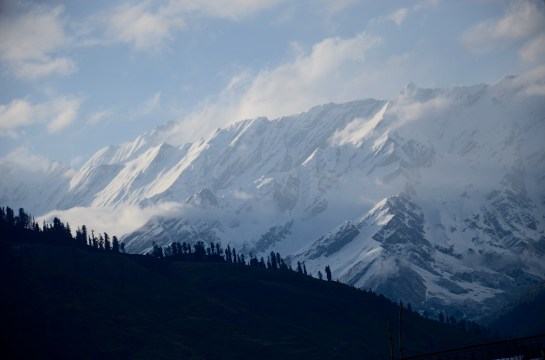
We enjoyed watching the music and dancing continue until we noticed threatening storm clouds blowing off the mountains.Retreating back to our guesthouse, just before the rain set in. All afternoon we waited for a break, noticing condensation on the windows as the room got colder.  By late afternoon the rain finally stopped and we went out on the balcony to see the mountain tops covered by fresh snow.

DSC_1283

DSC_1304

Even though the temperature was around 35F, and no heat in our room or restaurant, this was forgotten as we watched the clouds lifting off the mountain side.

Pathway to the Sky with Diamonds

P1010853

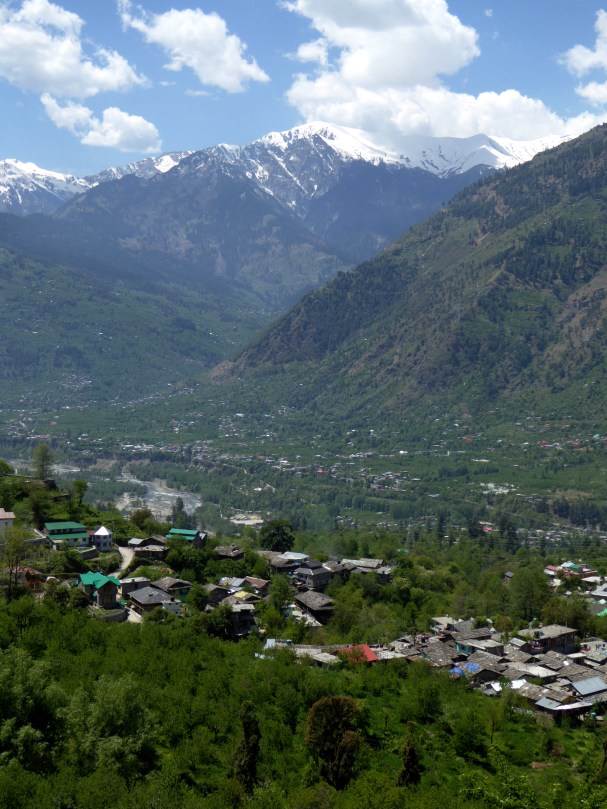
At almost 7,000 feet, Vashisht is our last stop in the mountains. Nearing the head of the Kullu Valley, the town looks directly up the Rothang Pass toward Ladakh. As the valley beside the River Beas narrows, the mountains move closer.

DSC_1172

Vashisht is larger than Naggar but the habitation in the valley is sparser. With steeper terrain, terracing is harder, leaving only apples for cash crop.

DSC_1033

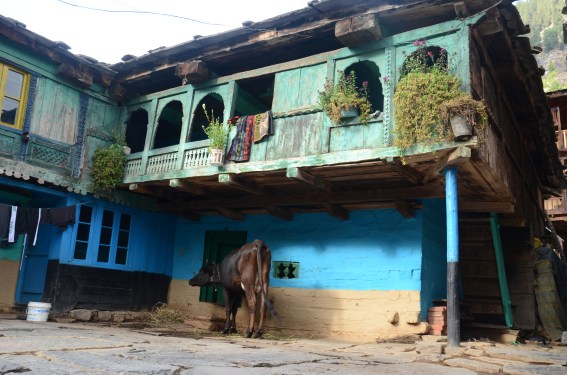
These old style houses that we love so much were built to accommodate cows on the ground level with porches on the second floor extending out. They’re somewhat reminiscent of cottages in the Swiss Alps. The cows are kept outside on the terrace during good weather and as the temperatures drop they’re brought indoors, helping to warm the house. Our guesthouse is in amongst these houses, lending to the sensation that we are staying in a farmyard.

DSC_1235


In the center of town is a temple, believed to date back more than 4000 years. Adjoining it is the third sulphur hot spring in the Valley. The town was named after a holy man, Rishi Vashisht. Legend has it that after learning that an opponent killed his children, the saddened Rishi tried to commit suicide. But the river refused to kill him. So the river was renamed Vipasha, which means ‘freedom from bondage’ and later, shortened to River Beas. The Rishi vowed to start his life anew and began meditating. When Lakshman, the younger brother of Lord Rama, paid a visit, he realized that the sage had to travel a great distance to bathe. So he shot an arrow into the ground and hot water began to gush out.

P1010922

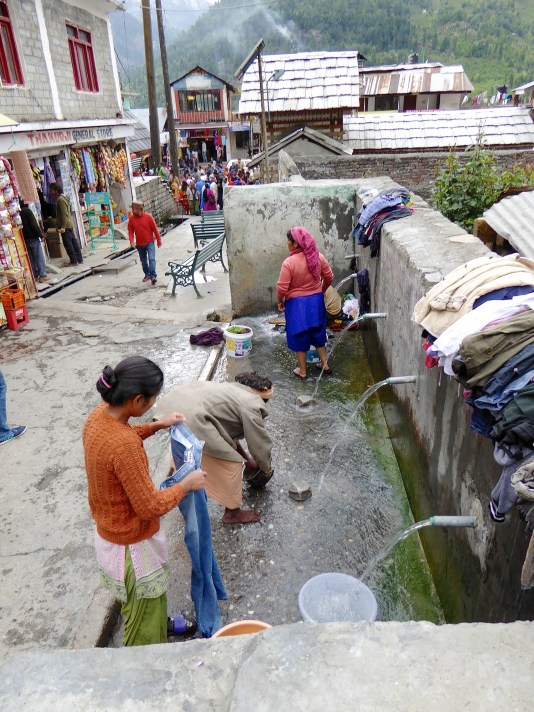
Hot water is still gushing today, and there are always people bathing or clothes washing beside the temple.

P1020015

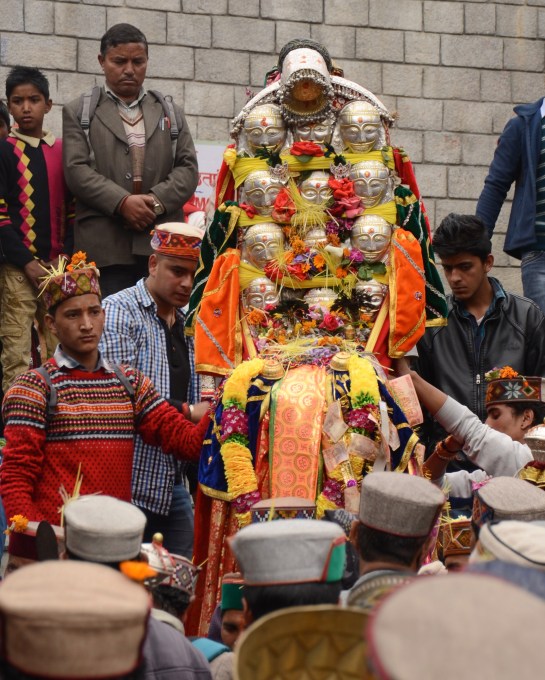
It was our good fortune to arrive at the end of a Kullu festival. Full of mystique and folklore, we understood only that a ‘local goddess’ lives in the temple and is brought out to give his blessing at the time of festivals.

DSC_1080

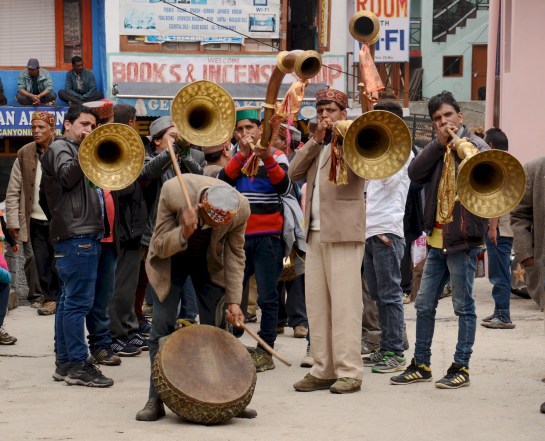
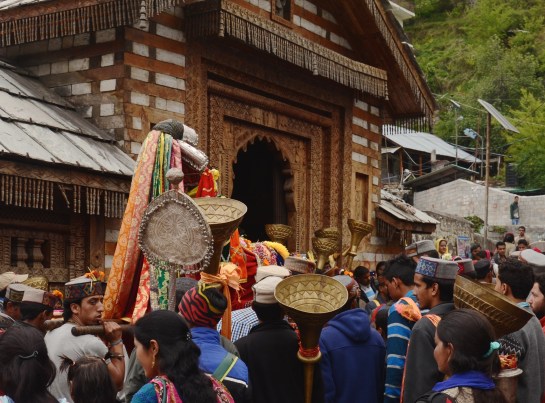
Twice we watched the richly decorated effigy being carried on a palanquin in a colourful procession from the temple and paraded through the town. Large horns and drums led the procession. Gerard’s comment is that it sounds something between the snake charmers of the Jaama el Fna in Marrakech and Cecil Taylor’s Big Band. Legend has it that the goddess leads the procession not vice versa. We watched as the ‘Gur” (spokesman of the goddess) went into a gyrating trance in front of the palanquin.
DSC_1045

This event and many others that we’ve experienced throughout India are examples of the mystery that is still so present when you look for it. Perhaps less so on the streets of Mumbai or Bangalore, or any other city that has been strongly influenced by the West. But it still may be there; just harder to recognize buried under consumerism. It reminds both of us of a quote by Paul Bowles. He defined mystery as “…a secret connection between the world of nature and the consciousness of man. A hidden but direct passage that bypasses the mind.”

DSC_1059

As we stood in the crowd, we recognized a young couple from Kerala we’d first met in Naggar a few days ago. Commenting on the unorthodox nature of the ceremony, the girl said, “There’s many things we don’t know, but that doesn’t mean they don’t exist or aren’t true.” Gerard replied, “The older I get, the more I realize how little I know.”

DSC_1214

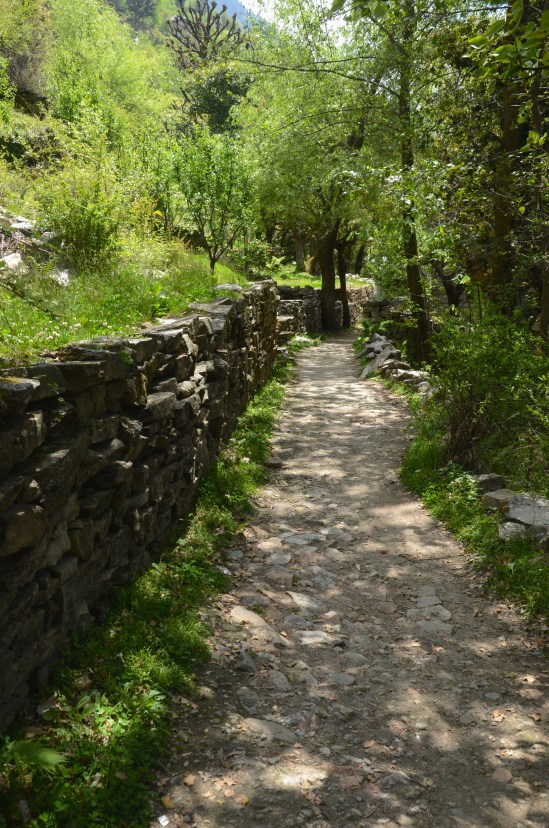
After a leisurely breakfast, we pick one of the numerous trails that lead out of town into the forest. Being from New England, Gerard has a soft spot for stone walls. The goal is to reach one of the many waterfalls that spout out of the mountaintop.

DSC_1118

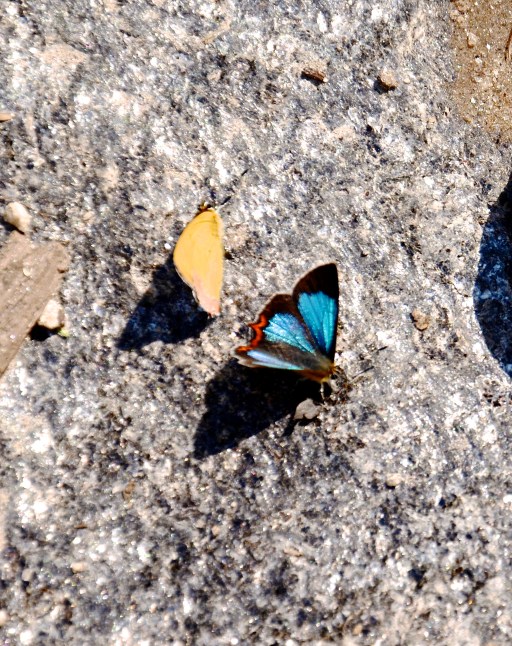
The stones on the path, filled with mica, shine in the sun like a thousand diamonds.

DSC_1194

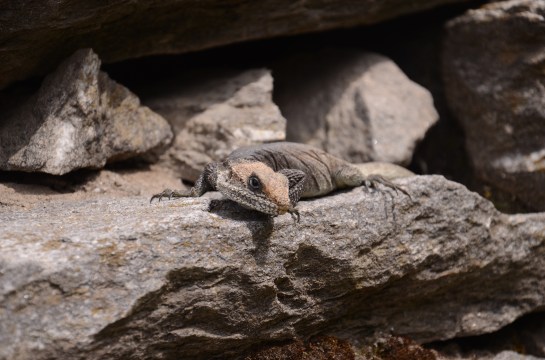
The path often guarded by ominous looking lizards warming themselves in the morning sun.

DSC_1200


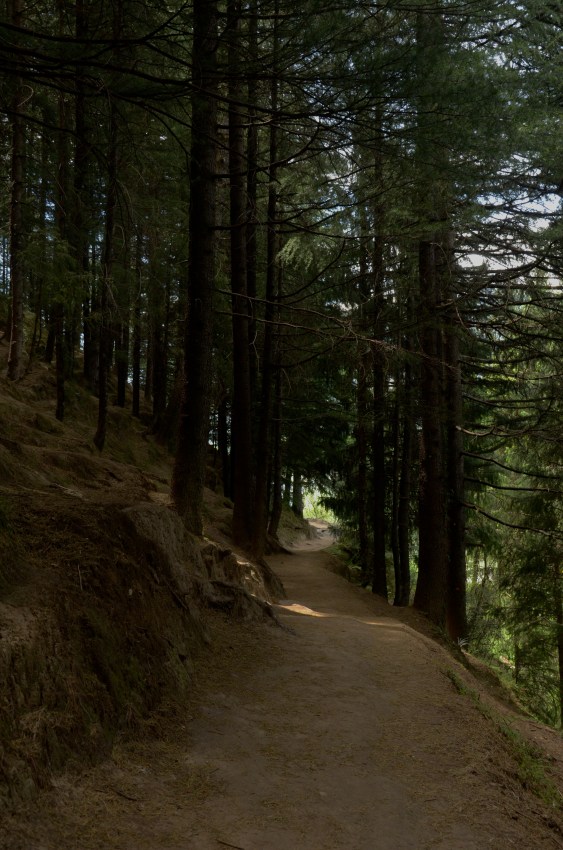
Further on, the path winds its way through evergreen forest, standing tall in majestic silence.

DSC_1154

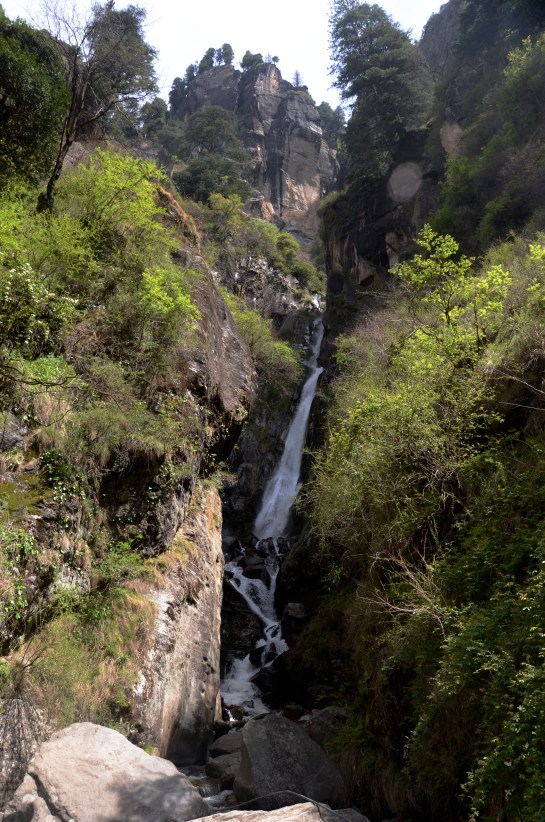
The higher and closer we get to the waterfall, the more impenetrable the path becomes with thorn bushes and sliding rocks.

DSC_1188

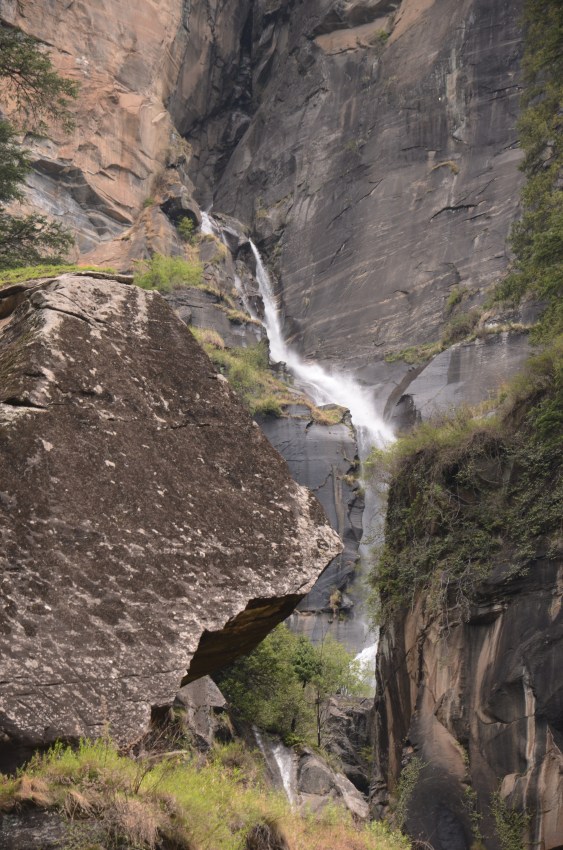
Only once did we actually reach the base of one of these gigantic falls, water spraying as it cascaded down the rock face. 

DSC_1181

As our stay in one place winds down, it’s our normal tendency to start thinking about our next stop. But that’s not the case in Vashisht. It’s not because we have such presence of mind to stay in the now; it’s more to do with the fact that we know Delhi has been well over 100F for the past ten days and will remain so on our arrival. A shock to the system after a month in the cool weather of Himachal Pradesh. In fact, with the exception of the Himalayas, most of India is suffering under a severe heat wave. But we are looking forward to seeing our adopted family in Delhi again.

DSC_1104


Meadow on the Mountain

DSC_1015

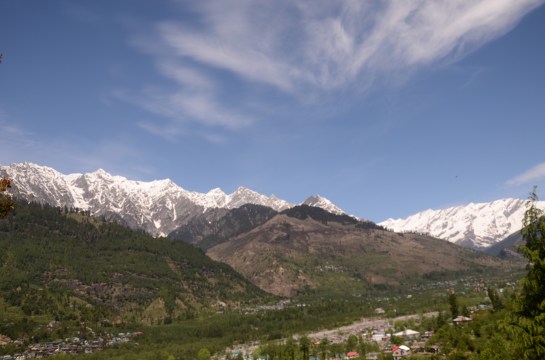
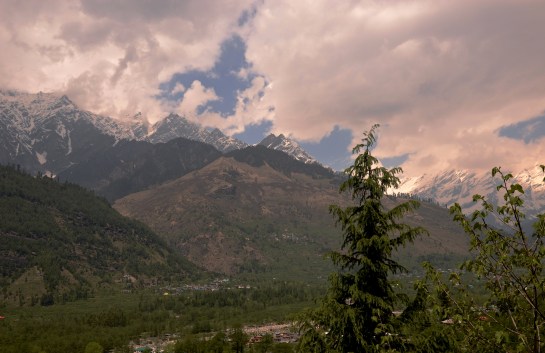
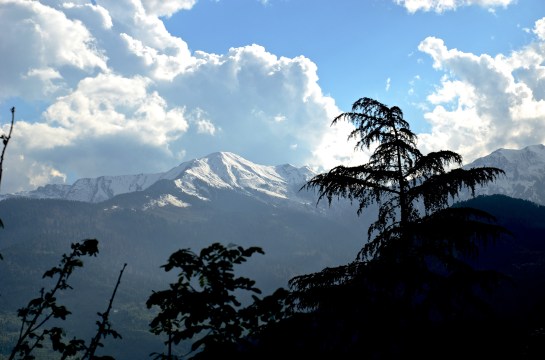
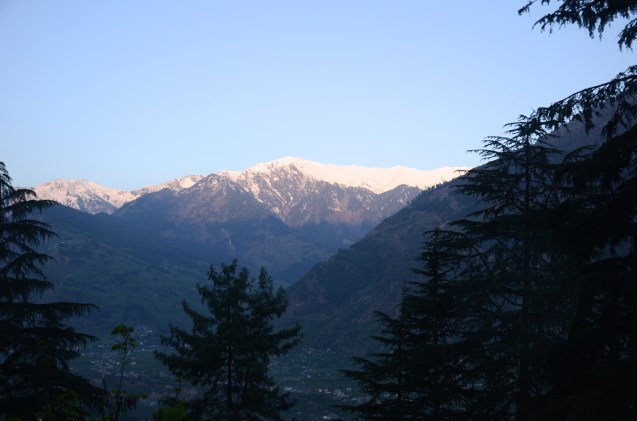
We pulled into Naggar in style. The four of us rented a car and driver to make the five-hour journey further into the mountains. Gerard and I were here four years ago and anxious to return; our enthusiasm obviously spread to Varun and Megan. Himachal Pradesh is such a beautiful state. We had just enjoyed a week and a half in a hilly countryside setting and now we’re up here – snow-capped mountains to the north, east and west of us. Being lowlanders we’re fascinated by how the mountains are constantly changing depending on the light. The Kullu Valley below twinkles at night, as do the stars overhead; the air is so clear.

DSC_0907

The town itself is small and attracts mostly day-trippers from Manali. But in the evening when the sun goes down, it becomes very quiet. Only the occasional barking dog in the distance.

DSC_0717

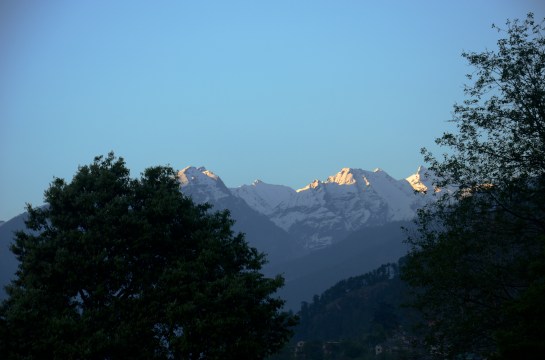
I wake early while it’s still dark, anxiously awaiting first light. A single bird sings while others join in as the sun hits the snow on the mountains directly out our windows.

DSC_0732

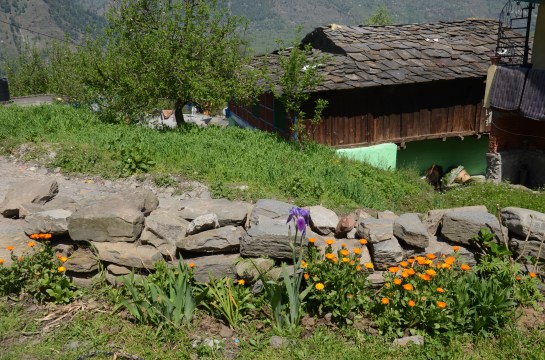
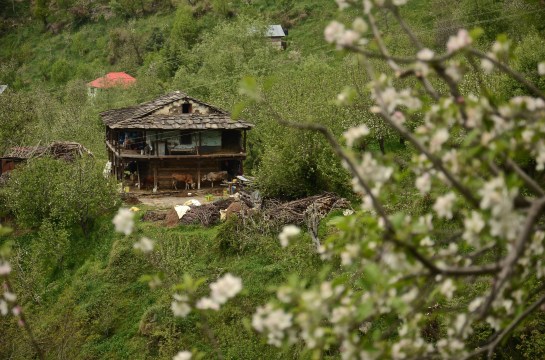
One of the big draws for Gerard is the indigenous architecture, the wooden balconied houses with stone roofs. Even though there are fewer of these homes than there were four years ago, there’s still plenty to see walking through the twisting and winding paths of the village. There are signs of restoration on some of the older buildings up to 500 years old, but as a man on the street explained to us, sadly there is no new construction in the old style because it costs twice as much as concrete. And as we know, with any old building there’s continual maintenance.

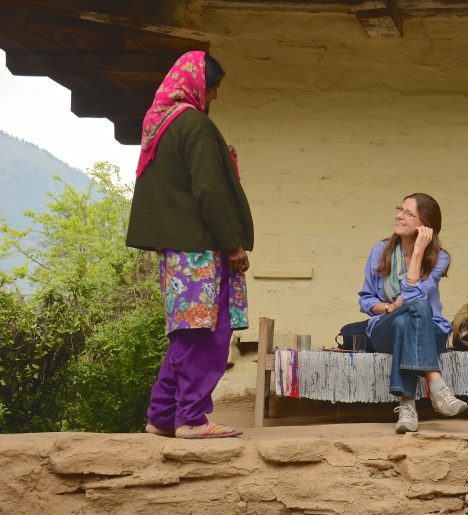
DSC_0746Another draw is the numerous walks through apple orchards and dense forest within minutes of the town. Varun and Megan go foraging for fiddleheads and stinging nettles that the friendly cook at our very basic restaurant happily cooks up for us. One day walking through the village we find the house where four years ago we were invited into the courtyard and given tea and biscuits.
DSC_0841

The woman of this wonderful old house claimed to remember and again invited us in.

FullSizeRender

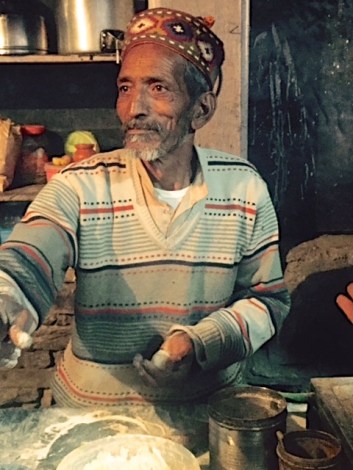
We were so surprised to learn that her husband is the cook who, with the help of his two sweet daughters ,prepares and serves our food three times a day!

DSC_0967

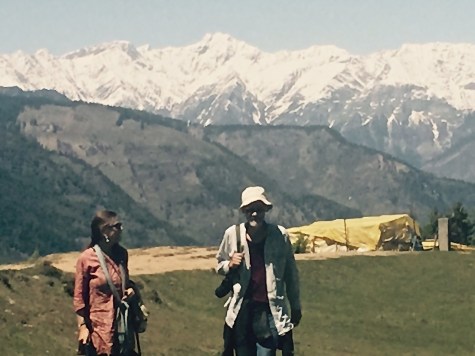
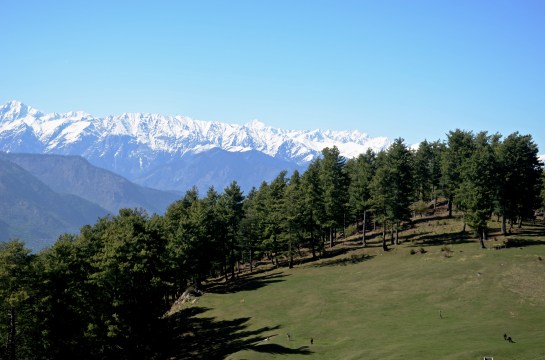
The subject of the mountain top temple, Bijli Mahadev, had come up a number of times. So again the four of us decided to rent a car and driver (there’s no other way to get there). Driving back down the valley to Kullu, then turning north and climbing 15 kms through wonderfully picturesque mountainside, we finally came to the end of the road and had to continue on foot for another 3 km. Now 3 km may not sound much of a hike, but considering that where the car stopped it was already 6500 feet high, the additional 1500 to the mountaintop was all that Gerard could do. But it was so worth the effort.

FullSizeRender (1)

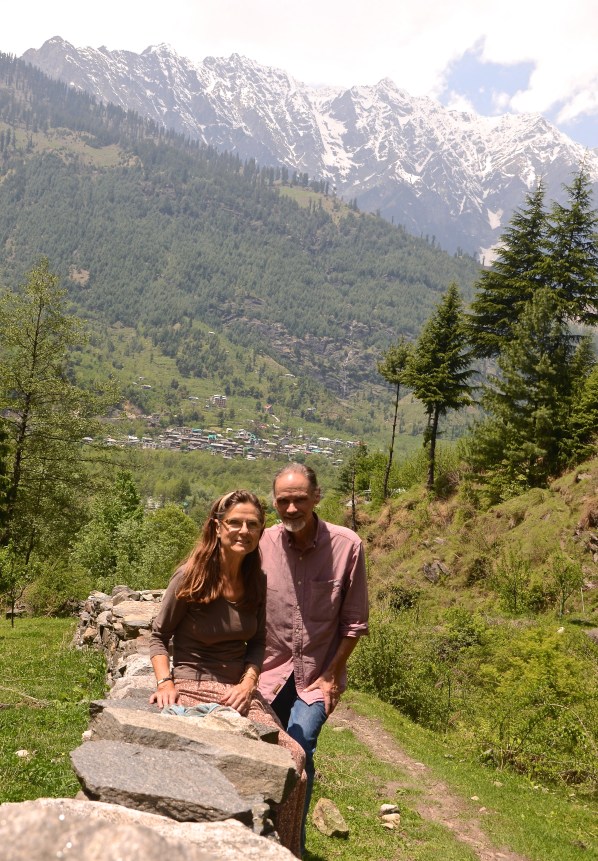
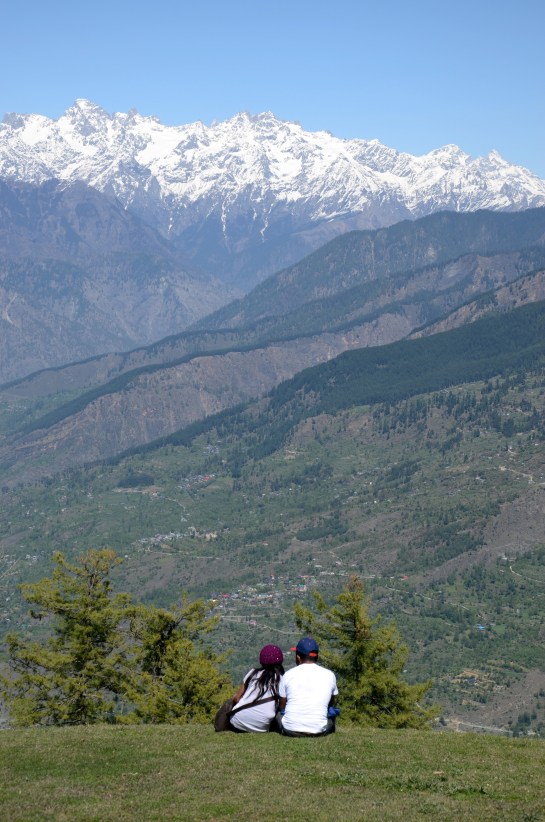
Sitting in a meadow with a 360 degrees view, it really was enough to take away whatever breath you had left.

DSC_0966

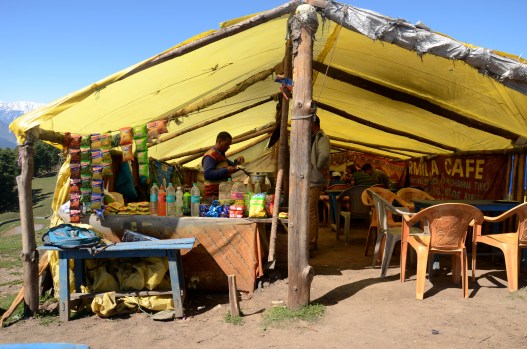
And there was even a shack that served light refreshments before we started the arduous knee-straining descent.

DSC_0999

On the trip back up the valley we watched the sun set on the snowy mountain peaks to the north just like a Roerich painting. (Nicolai Roerich was a famous Russian explorer/artist who lived in Naggar from 1928 till his death in 1948. We both love his paintings).

P1010822

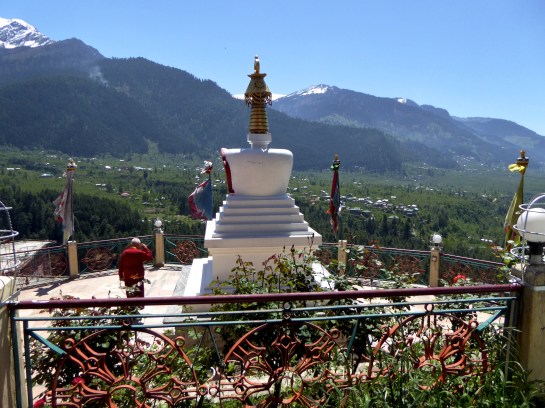
Two days later, we made another excursion across the valley to a Buddhist monastery, the only one that supposedly houses both men and women.

P1010829

Built on a steep incline it offered yet new views of the surrounding mountains in an incredibly peaceful setting of apple orchards and kitchen gardens. On the way back we stopped off at a sulfur hot spring. Not sure what the temperature was but it was HOT. Quite a treat to sit in the spring in the bright sunshine and look out over the Himalayas.

DSC_0960